This article on family relationships relates to yesterday’s posting: Caregiving: The Ultimate Team Sport. Smooth waters aren’t the norm when it comes to family involvement on the caregiving journey, as you’ll see in this posting.
A team is only as good as its members. If the playbook isn’t carefully followed, success is unattainable.
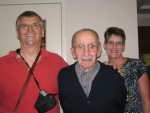
My brother, my dad, and myself in 2006 at dad’s care facility.
The scenario for this article centers around care for Mom. It doesn’t matter if Mom is still living at home and cared for primarily by one of her adult children OR Mom is living in a care facility receiving care for her day-to-day needs outside of the home. Either way the brothers and sisters of this caregiving team are in for the challenge of their lives. What follows is a simple, yet complex, listing of destructive traits that could get in the way of the family’s caregiving goal. All definitions are directly from the Oxford English Dictionary, 11th Edition, 2004.
EGO. n. a person’s sense of self-esteem or self-importance. Brothers and sisters, please check your egos at the door. The…
What’s a pitcher without a catcher? A quarterback without a receiver? A point guard without a center? Individuals – that’s what they are. They are not a team. Caregiving should never be an individual effort because quite frankly, one person can not do it all.
Take a deep breath; think happy thoughts; and do your best.
Whether the primary caregiver actually does hands-on-care or is the primary “manager” of a loved one’s day-to-day life, that caregiver needs all the support he or she can get. For the purposes of this article we’re going to assume that the loved one, Mom, lives in a long-term care (LTC) facility cared for by professionals. As with every sports team, there is a General Manager of the team – responsible for the overall smooth running of the team, and then there are the individual team members without whom there would be no support whatsoever. …
Here’s a post that is sure to lighten your day, week, month and/or year. This blogger is an extremely good writer and her humor is something I wish I could pull off on my blog. Instead, I’ll post her humor onto mine.
Over my 63 years, men have said some memorable things to me.
So I present to you my
Man-Word Awards!
Best Pick-Up Line:
I go all the way back to 1969 for this one, I was hanging around at the end of my summer job shift with some other teenagers, and I was wearing my coolest Mod Squad outfit. It was a mini-jumpsuit. A short-short kind of onesie with long sleeves, a big collar and a hip-hugger belt.
And one of the guys remarked on my outfit. He said, “I like your get-up.What do you call it?”
And another guy that I didn’t even realize might like me said, “Mine.”
Now after forty-five years, I may not be as keen on a man declaring me as his possession, but at the time, I thought, “wow.”
Sixteen year old Lisa nervously brought her most recent boyfriend home to meet her parents. Although Lisa was very fond of him, she was nervous about what sort of impression he’d make on her parents. You see, he was full of tattoos and had piercings all over his body.
“Mom,” said Lisa nervously, “I would like you to meet my boyfriend, Spike. Spike, this is my Mom.”
After a few minutes of small talk and pleasantries, Lisa’s Mom called her away to the kitchen and whispered, “Lisa, I don’t like him, he just doesn’t seem very nice!”
“Mom, pa-leeze!” retorted Lisa, “If he’s not a nice guy, how can you explain the forty hours of community service he does each week?”
Don’t take selfies in Auschwitz | Opinion | The Seattle Times by Leonard Pitts, Jr. One would think that it is not necessary to publish rules or guidelines as to when or where it is inappropriate to immortalize your grinning mug via a selfie, but Mr. Pitts clearly indicates that such guidelines are necessary. His column, attached above, tells the story of an Alabama teenage girl who took a “sunshine smile” selfie at the place that has been memorialized as the largest concentration and death camp in the world: Auschwitz, also known as Auschwitz-Birkenau. (After much fanfare over social media and elsewhere, this young lady defended her action by stating that it was meant to honor her father – on the anniversary of his death – because he passed his love of World War II history on to her.)
Keep in mind, Mr. Pitts’ column is an Opinion piece.
I happen to agree with him.
It is my opinion that it is not appropriate to take a stupid-ass smiling, self-absorbed, thumbs up, V cooties sign above someone else’s head, sticking-out-your tongue selfie or photograph in the following incidents and/or places (this is just a partial list):
Auschwitz: a place where 1.1 million humans were tortured and murdered;
9/11 Memorial: where nearly 3,000 human beings were killed by terrorists;
Vietnam Veterans Memorial: where names of the dead – 58,286 as of Memorial Day 2013 – are memorialized, 1,200 of which are designated as MIAs, POWs, and others;
At scenes of destruction such as someone’s neighborhood post hurricane or burning into non-existence from a forest fire (your selfie of non-involvement documenting your presence there is disrespectful to those who have lost everything);
At evolving crime scenes, such as the one that took place outside of a New Jersey McDonald’s restaurant (Mr. Pitts wrote an Opinion piece on that incident as well, see attached link, to which I also agreed) where one female employee beat up another female employee and while no one intervened to stop the violence, they did take photos and videos and oohed and ahhed at the unfolding action; and finally,
It is not appropriate to take a selfie in front of a corpse peacefully laid to rest in a coffin at a viewing service.
Which begs the question: did this Alabama teenager take a selfie in front of her father’s open casket (if a casket was used and if it was open)? I would bet that she did not. Why? Because it would be disrespectful, distasteful, and inappropriate. But I have a confession to make. My family is somewhat guilty of the latter.
My mother died on September 24, 1994 leaving my father a widow. Within 24-hours of her death, I and my two siblings arrived from out-of-state to support dad and help him with the numerous required tasks leading up to the funeral. Mom was cremated.
Because the entire family was present at the church funeral, including my sister-in-law and my adult daughter, someone suggested that we all stand around the urn (which sat on a table surrounded by six dozen pink roses at the front of the church) and have our picture taken.
At the conclusion of the service, our photo was taken. It is a very awkward photo, evidenced by the strained smiles on our faces. The inner dialogue went something like this, “Someone is taking a photo; you’re always supposed to smile for a photo; ergo, here’s my smile.”
Mom’s urn, placed in 1994. Dad’s urn placed in 2007.
But dad wasn’t smiling. He just lost his bride of forty-seven years; what’s to smile about? He stands there with an exhausted and grim look on his face, his left hand touching the top of mom’s urn: one last connection with her before the undertaker removes the container for appropriate storage.
I’m not showing you that funeral-day family photo because there’s no reason why you need to see that private family moment. More importantly, that photo op just didn’t feel right to me.
Maybe that’s a pretty good barometer from which to gauge the appropriateness or not of our actions.
“O.K. everyone,” said the female instructor to her attentive birthing class, “today, we are going to do an exercise to help you men sympathize with your partners.” And holding up an artificial stomach with an attached strap she adds, “What I have here is what’s called a pregnancy suit. This imitates the feeling of being pregnant.” Holding the pregnancy suit out to the class she asks, “Which of you husbands would like to volunteer to be the first one to try it on?”
“I will,” said one man, taking the suit and trying it on. “Gee, this isn’t too bad,” said the man strutting around the room, “I could easily get used to this.”
“O.K.,” said the instructor, and then she threw her pen on the floor. “Now I would like you to bend down and pick up my pen from the floor.”
“You want me to pick it up?” he asked hesitantly, “just as I would if I was pregnant?”
“Yes!” said the instructor.
“Honey,” said the man turning to his spouse, “do you mind picking up that pen for me?”
Lauren was frustrated. She had complained dozens of times to her daughter about her newest gag of kissing the bathroom mirror immediately after applying lipstick, to no avail.
Finally, one day after spending a half-hour scrubbing the mirror, only to find another kiss mark an hour later, Lauren had enough.
“Lizzy!” the mother hollered.
“What?” came her daughter’s reply from behind her bedroom door.
“I can’t find the toilet brush that I’ve been using to clean the bathroom mirror. Do you have any idea where it is?”
After hearing the gagging coming from behind the bedroom door, Lauren knew her days of cleaning kiss marks off of mirrors were over.
Attached is a very worthwhile read by blogger, Kathie Ritchie. The article includes her suggestions as well as those of caregiver adviser, Marie Marley. (Note: the links provided for Marie Marley appear to be broken, but Kathie includes Ms. Marley’s input within the body of her own blog article, making the content easily readable.)
Painting courtesy of Mary Riesche Studios
Additional articles that will provide information and suggestions to non-caregivers on how they can help their neighbor, co-worker, besieged family member:
The above will give you more than enough material to provide readers with helpful suggestions. If you don’t take the time to read the attached articles – and I sincerely hope you do – I’ll leave you with one suggestion that I hope you do follow:
If a caregiver doesn’t ask for help while on his or her caregiving journey, don’t assume they aren’t in need of your assistance. Offer specific assistance to them; don’t force them to come up with a suggestion on how you can help.
Examples: “I have some individual frozen leftover meals I’d like to bring over for your household, what’s a good time for me to drop them off?” or “I’m headed to the grocery store, what can I pick up for you?” or “It may sound crazy, but I enjoy working in the yard. I’ve completed my Spring yard cleanup, I’d like to come over and help you with yours.”
Women and men converse differently. Here’s a case in point:
Rachel: Oh! You got a haircut. It’s so cute!
Kate: Do you think so? I wasn’t sure. Do you think it’s too fluffy looking?
Rachel: Oh, God no! It’s perfect. I’d love to get my hair cut like that but I think my face is too wide.
Kate: Are you serious? I think your face is adorable, and you could easily get one of those layer cuts and it would look so cute. I was actually thinking of doing that but I was afraid it would make my neck look even longer than it already is.
Rachel: Are you kidding? I would love to have your neck! Anything to take attention away from this broad shoulder line that I have.
Kate: No way. I know girls who would kill to have your shoulders. Everything drapes so well on you; I mean look at my arms – see how short they are? If I had your shoulders it would be so much easier to find clothes to fit me.
“My God, this is horrible; someone should really do something!”
That someone is you and me.
from “The Colors and Letters of Jen Elek and Jeremy Bert” (Seattle)
In the attached article from today’s Seattle Times newspaper, Pulitzer Prize winning columnist, Leonard Pitts Jr., poses a question that all of us should readily be able to answer. If you see someone in need of help, do you wait for someone else to do the right thing, or do you step in? Do you need to look to other people, watching the same emergency situation as you, to receive the correct “cue” as to what is required of you? No, each of us should assume that if I don’t help this person, no one else will. That’s what Martin Luther King Jr. encouraged us to do when, during one of his speeches, he relayed the story of the Good Samaritan from the Bible.
Pardon my paraphrase, but his message went something like this:
When I happen upon someone in obvious need of assistance, instead of hesitating and wondering what will happen to me if I render assistance, I should be asking myself, “What will happen to this person if I don’t stop and help?”
Some needs are obvious as detailed in one of the stories in Mr. Pitts’ article: Just outside of a New Jersey McDonald’s restaurant, a female McDonald’s worker was savagely beaten by a co-worker who was upset because the other woman gossiped about her. During the beating, no one stepped in to help. While the crowd exclaimed over what they saw – and even took photos and videos of the beating – the only person who came to this victim’s aide was her two-year old son who did what he could to get the mean woman off of his mommy. Not one person at this McDonald’s eatery called 911. I encourage you to read Mr. Pitts’ account to learn the outcome of this story.
Some needs aren’t as evident: in the heat of a summer’s day, you see an elderly man walking down the street when you leave the house to do some errands, and on your return trip a couple hours later, this same elderly man is sitting on a boulder at the side of the road – a bewildered look upon his face. That’s when you need to trust your gut. You say to yourself, “This isn’t right. This guy must be lost and most certainly could be dehydrated,” and so you pull over the car. I wrote an article last summer on this very subject matter, Trust your gut!, resultant from an experience that reinforced my belief that if something feels wrong, it is wrong.
Whether a need is obvious or not-so-obvious, you’re the someone who needs to step up to meet that need. Life is too precious to be an apathetic bystander.
R.B. Bailey Jr.’s blog comes close to being a one-size fits all website because of its inclusion of multi-facted and varied postings that attract the viewing needs of a broad population.
Check out and follow his blog as I started doing just the other day.
I hope you’ll visit – and even follow – his site. It deserves to be in your Favorites folder.
Two years ago today, my sister-in-law died from Alzheimer’s disease.
Four and a half years post diagnosis, Nancy Satterberg Desonier was liberated from the cognitive chains that stifled her creative and loving essence, and dramatically shut down her stately and classic physical body.
Another thing happened on July 4, 2012: Nancy’s caregiver husband, my brother Don Desonier, lost his bride of almost 25 years. Don didn’t feel liberated – he would have gladly continued on his wife’s disease journey as the supportive and attentive husband that he was – but he could celebrate the fact that this devastating disease was done robbing he and Nancy of a quality-filled life, and he could take comfort in the fact that his wife’s suffering had come to an end.
I celebrate Nancy today and the thousands upon thousands like her whose lives were cut short by Alzheimer’s and other dementia.
I also celebrate my brother Don and all the caregivers who provided loving support to a loved one who has passed from this disease. You are a hero to many, and you are a hero to me.
The neighbors thought it was a bit unusual, but they were happy that 93-year old Morton was dating again. One Monday morning Morton woke up with a funny feeling that something important had happened the night before. It was during breakfast that Morton finally remembered what it was: he had proposed to his date, Greta. But how had she responded? He just couldn’t remember.
Morton picked up the phone and dialed his date, “Hi Greta. I have a funny question for you. Do you remember when I proposed to you last night?”
“Oh my gosh,” gushed Greta, “I’m so glad you called. I knew I said yes to somebody but I just couldn’t recall who it was!”
Alzheimer’s Foundation of America Teens (AFA Teens) brings hope that is sorely lacking from the Alzheimer’s medical community. The younger generation is doing something that many of us older adults are not: bringing more awareness to a disease that most of us have been exposed to, either peripherally or specifically. “AFA Teens, founded by a teenager, seeks to mobilize teenagers nationwide to raise awareness of Alzheimer’s disease, and to engage, educate, and support teens and their families.”
My family in the 70s. My dad died from Alzheimer’s, as did my brother’s wife.
As adults, we are affected because the person with the disease is our spouse, partner, sibling, or older relative. But what about the cousins, nephews and nieces, children, and grandchildren out there? Children and teenagers are also exposed to this disease. The challenges faced by teens who are actively involved with these relatives – living close enough to have frequent interaction with them – are challenges that adults have a hard time grasping.
“How come Pappy doesn’t recognize me any more?” “Why does mom always forget the things that are important to me – like my birthday!” That’s right; some teenagers have mothers or fathers with early-onset disease. What should be one of the most exciting times in their young lives is instead spent as a co-caregiver with their other parent. (I addressed this unfortunate family dynamic in my article, Alzheimer’s Heartache: young family members adjusting to a grandparent or parent with dementia.)
I strongly encourage you to visit the AFA Teens website. I know you will be encouraged by the efforts being made by these young advocates.
A NY Times article, When Advance Directives are Ignored, paints a frustrating picture of how and when the best laid plans can come to naught. I am an absolute, card-carrying advocate of Advance Healthcare Directives, also known as a Living Will. I am more concerned about people dotting their i’s and crossing their t’s while preparing their last healthcare wishes, than I am about what people want done – or not done – towards the end of their lives.
You see I couldn’t care less whether you wish to extend your life at all costs – allowing all heroic methods to be employed while on your death bed to take advantage of every second of life available to you – or you simply wish to be made comfortable with the usage of palliative measures while you transition from this life to the next. What does matter to me, however, is that you secure those wishes in a binding legal document while you’re still able to do so. (I am not a lawyer; I am a daughter whose mother and father gifted their three children by laying out their final wishes on paper years in advance of the end of their lives.)
I’ve written four articles addressing this topic in the past few years. I hope you will peruse them, especially if you’ve not yet taken steps to prepare for your exit from this life in the manner in which you choose.
An old man went to the doctor complaining that his wife could barely hear. The doctor suggested a test to find out the extent of the problem.
“Stand far behind her and ask her a question, and then slowly move up and see how far away you are when she first responds.”
The old man, excited to finally be working on a solution for the problem, runs home and sees his wife preparing supper.
Standing 20 feet away, the man asks, “Honey, what’s for supper?” After receiving no response, he tried it again 15 feet away; again no response. He tried it again at 10 feet away and still no response. Finally he was just 5 feet away, “Honey, what’s for supper?” to which she replied, “For the fourth time, it’s lasagna!”
The Longest Day. The attached article by Author, Ann Hedreen, can be found linked above, and you can find additional well-written articles on her blog The Restless Nest. Reader alert: Ms. Hedreen’s book, Her Beautiful Brain, will be released September of this year.
What was your longest day like?
Was it long, because it was fun-filled and absolutely fabulous, or was it long because the day was crammed with the most difficult and stressful experiences of your life?
Caregivers: you are heroes to all who understand the job that you’ve taken on as carers for your loved ones. You live the 36-hour day with all of its burdens and insurmountable challenges, while across the United States there’s much discussion – even controversy – over raising the minimum wage. In contrast, there you are earning no wage but working harder than you’ve ever worked before.
Loved ones with Alzheimer’s or other dementia: your disease-controlled days might seem to have no beginning or end; you go about your day trying to fulfill its challenges while perhaps being at the stage in your disease where you are still able to feel the frustrations of not grasping the how-to of tasks that prior to your diagnosis required no complex thought processes on your part.
Those who have yet to be intimately involved in the above-mentioned roles: look around you – you won’t have to look far – and then on this year’s longest day, Saturday, June 21st, do what you can to help the co-worker or neighbor who desperately needs your help but doesn’t know how to ask for it, or is too ashamed to admit that they can’t do it all.
When you offer help, please don’t leave it open-ended. Instead of saying to your neighbor, “Hi yah, Joe. Be sure to call me if you need anything,” be more specific so it’s easier for Joe to accept your offer, “Joe, when I get out my lawnmower this weekend, I’d love to swing by your place and take care of your lawn so you won’t have to.” Or how about, “Yah know, we’re always making more food than we can eat at our house so we just freeze the leftovers for another time. Can I come by later this week and give you a week’s worth of meals so you don’t have to concern yourself with what to fix for dinner?”
And then keep it up because your neighbor or co-worker’s life isn’t going to get any easier. Keep offering tangible ways in which to provide assistance and you’ll go a long way towards making the longest day – which is every day in the life of a caregiver – a bit easier to tackle.
The leader of the vegetarian society just couldn’t control himself anymore. He needed to try some pork, just to see what it tasted like.
One summer day he told his members he was going on a vacation. He packed, went out of town, and headed to the nearest restaurant. After sitting down he ordered a roasted pig and impatiently waited for his delicacy.
After just a few minutes, he heard someone call his name and to his great chagrin he saw one of his fellow vegetarian society members walking towards him. Just at that same moment, the waiter walked over with a huge platter that held a full roasted pig with an apple in its mouth.
Thinking quickly, the leader said, “Isn’t that something, all I do is order an apple, and look what it comes with!”
Maybe my father and father-in-law can see this from Heaven, maybe they can’t, but I’m still gonna post it in their honor. The two photos I’m posting are from February 10, 2000 on my wedding day to my fabulous husband, Jerry.
This is my favorite photo from the day. Dad was very happy that I had finally found someone like Jerry. Dad VERY much approved of my choice.
A younger me, with my dapper dad, Don Desonier.
I apologize that the next photo is kind of milky. I chose it, because it meant so much to both of us to have Stewart in that place of honor.
Stewart Olson, my husband’s Best Man during our ceremony.
That’s how our household’s latest project presented itself – at least from the outset.
My husband and I live in a rural suburb of Redmond, Washington. Because we’re rural, a sewer system is not feasible, so all the houses in our area have a septic system: septic and pump tanks fairly close to the house, a drainfield as far away as possible from the house. Our house’s system was installed in 1989 – the drainfield recently failed – and now it has to be replaced.
Maple tree before …
Dilemma: A 50 year old multi-trunked Maple needed to come down, as did a few Alders and a Cottonwood. Trees have roots, and those roots gravitate towards moisture, regardless of the source. We so wanted to keep those trees, but one cannot live without a septic/sewer system so we had to do what we had to do.
Maple after.
Monday and Tuesday of this week saw the professionals doing the deed, with my husband and I, and our neighbor Bob, taking on the task of turning a pile of tree trunks into logs suitable for a fireplace. Our neighbors Bob and Patty use a lot of firewood and our other neighbors, Irma and Larry, do as well. Rather than have the tree professionals remove the massive trunks, we wanted to be able to “recycle” it and providing it to our neighbors is what we wanted to do.
I’ll admit that my hubby and I have been under lots of pressure since we discovered the drainfield failure back in April. And now having a pile of wood that needed to be reduced to logs in less than seven days’ time freaked us out – okay, it freaked me out – but freak out or not, it sure looked like an insurmountable task, and a painful one at that.
It’s not insurmountable any more, but it’s still painful.
Just as is needed for every large task with which we are confronted – whether a complicated office project, a weight loss plan, or what have you – if you break it down into manageable steps, the project will be completed. That’s what we did, and as of the end of yesterday, what was insurmountable now appears to be doable.
Erin and my hubby; Summer 2013
Yesterday, my daughter Erin came to the house at around four o’clock after teaching her Junior Achievement class in Seattle. My hubby came home shortly thereafter and within two sweaty and painful hours: Jerry had made a dent in the pile of wood by cutting it into manageable logs and Erin and I had hauled multiple wheelbarrows full of small and HUGE logs to various locations where wood needed to be distributed. Now the remaining task actually seems palatable. An aside: that daughter of mine is such a stud – you should have seen the massive logs she lifted off the ground and tossed into the wheelbarrow. Ugh. One thing for sure is that all bodies involved in this project have not needed to do any extra workouts this week!
The moral of the story: when presented with a large task, allow yourself to freak out, then calm down, break the task into smaller chunks, and get to it. That’s what we did and I just know that eventually – but before the drainfield system is installed the beginning of next week – we will have made those massive trunks into usable logs, and all will be well.
“A new preacher was asked to speak at a country funeral. He had never been to the area where the funeral was and he got lost in the woods. After wandering around for nearly an hour, he came upon some men gathered around an open grave.
“The preacher apologized for being late and started in. Feeling bad that the deceased man only had the diggers around his grave, the preacher tried to make up for it by giving the best eulogy he could. He preached with such passion that even the workers were shouting, ‘Praise God’ and ‘Glory be!’
“After the eulogy one of the diggers said to the preacher, ‘Preacher, that was inspirin’. I ain’t never seen anything like that before, and I’ve been puttin’ in septic tanks for twenty years!'”
– excerpt from the novel, Walking on Water, by Richard Paul Evans
The 1953 Ray Bradbury novel, Fahrenheit 451,depicts a future American society where books are outlawed and those that are found are destroyed by fire via that society’s “firemen.” The premise of the novel has been described as representing the suppression of dissenting ideas from those deemed correct and appropriate: censorship at its worst. This blog entry is not about censorship; it is about the possibility of losing the tactile, hard or soft cover media that has entertained billions of us over the years: the non-electronic book.
I crave books and I am never without a selection from which to choose,
Paper vs Digital
but maybe the vehicle by which I read books – and that so immediately satisfies my hunger for more books – will bring about the demise of the tactile tome.
I’m talking about e-readers.
From June 3, 2010 through June 8, 2014, I have spent just under $3,000 on e-books. If that shocks you, imagine how I feel seeing that number because I have to admit it doesn’t feel like thousands of dollars when I download a new book in less than a minute. I purchased books now and then prior to purchasing my first e-reader four years ago, but most of my reading addiction was satisfied compliments of the local library system.
My completed novel, not yet published.
Caveat: I can justify a certain percentage of my e-book purchases by telling you that quite a bit of the research I perform for my writing career comes from fiction and non-fiction works that focus on aging – most specifically on Alzheimer’s and other dementia. But even I will admit that it’s a very small percentage.
I would gladly give up my e-reader if doing so saves soft and hard cover books.
One of my family members stopped using his e-reader; he lost the passion for reading – or more accurately – he found it difficult to find a book he could dive into. He kept going from book to book and nothing he read captured his attention. He had a light bulb moment, however, when he discerned that the content he was reading was not lacking, it was the electronic apparatus that was at fault. I’m not parting with my e-reader yet, but the anxiety I have been feeling the past couple months haunts me each time I pick up my e-reader and swipe the page from right to left, instead of lifting the top right corner of the page and laying it down on the left.
Sarah Jio’s most recent novel, Goodnight June, hints at what has already occurred and might very well occur completely: an absence of book stores and readers to keep them in business. Another voiced concern in Goodnight June is that the childhood love of reading is waning.
What do you see children doing when they have free time? Do they pick up a book like so many of us did when we were their age or are they cozying up on the couch with an electronic device?
Alternate title: Grandchildren are cooler than you think!
I believe grandparents and their grandchildren have quite a bit in common. Just because many years have passed since a grandparent or great-grandparent was born doesn’t mean that there aren’t any similarities between then and now. Here’s an example of what I mean, a quote that appeared in the Atlantic Journal:
The world is too big for us. Too much is going on. Too many crimes. Too much violence and excitement. Try as you will, you get behind in the race in spite of yourself. It’s a constant strain to keep peace – and still, you lose ground.
Science empties its discoveries on you so fast that you stagger beneath them in hopeless bewilderment. The political world now changes so rapidly, you’re out of breath trying to keep pace with who’s in and who’s out. Everything is high pressure. Human nature can’t endure much more.
An amazing sentiment that appears to reflect what’s going on right this very minute in the world in which we live. It was published on June 16, 1833, almost 181 years ago. The pervading feelings of the time are almost indistinguishable from what is in the minds of people today. Isn’t that amazing?
Let’s look at a few common items that have changed over the years. These items were used at one time but have vanished in the past several decades – or have they?
Image by Lawrence Manning/Corbis
Telephone answering machines – earlier answering machines used cassette tapes, with later versions performing the same function, albeit digitally. Answering machines still exist in the form of modern voice mail retrieved from home phones and/or cell phones.
Telephone directories/books – very few households rely on a 500-page phone book because they can now look up names and businesses on their computer or Smartphone. But phone books still exist – they’re just “housed” differently.
Printed encyclopedias – the final print edition for the Encyclopedia Britannica – a 32-volume set of books – was released in 2010. How did I find out that information? In one of today’s on-line encyclopedias of course: Wikipedia.
Floppy discs & drives – many children under the age of fifteen have never seen this storage device. You’d be hard-pressed to find any newly-released desktop or laptop computers with this type of storage capability. But storage devices still exist in the form of a thumb/flash drive or the “Cloud.”
Rolodex – some of us remember, or still have, a box or carousel version of a Rolodex. But we still own something that holds all our Contacts: our address books contained in our e-mail program and in our cell phone contact list.
Photographic film – I saved a roll of unused Kodak film. Since this product is no longer made, it may be worth something some day! Photos are still being taken, but instead of being developed and placed in a multi-paged album, most of the time these photos remain in our camera or phones, or they end up on social media sharing websites – the new type of photo album.
What I’m attempting to point out is that in many respects, grandparents and their grandchildren are performing the same functions as their younger & older age group, but the manner in which they do so is very different.
Grandparents and grandchildren are different – but the same. Establishing a common ground – and minimizing the differences between the two groups – can open the door to increased understanding and communication amongst the generations.
The city miser was on his death bed and his last request was that he be alone with his lawyer, doctor, and priest.
“I know I am going to die,” he said, “and I would like to take my money with me so I am going to give each of you $150,000 and I want you to each make sure the money gets in the coffin.”
It was a few days after the funeral when the priest, overflowing with guilt, finally confided to the other two that he only put $100,000 into the coffin. “I’m glad you brought it up,” said the doctor, “because I have also been feeling guilty. I only put $80,000 into the coffin.”
“You people should be ashamed of yourselves, stealing money like that!” stormed the lawyer. “Am I the only honest person of the three of us? Here, look at this,” he said pulling out his checkbook, “look – I wrote out a check for the full $150,000.”
Forced faith is not faith | Opinion | The Seattle Times. The syndicated columnist, Leonard Pitts Jr., has proven yet again how fabulously he writes. His writing can only attain that quality, however, if what he writes comes from a sense of justice, compassion, and truth. Therefore, hands down – his writing is fabulous.
The title for this blog piece comes from Mr. Pitts’ article where he quotes Martin Luther King’s definition of faith as being, “taking the first step, even when you don’t see the whole staircase.” The columnist says that given what the Sudanese Parliament has done by imposing the death penalty on one of its citizens who wouldn’t disavow her faith, “faith has less to do with hope and assurance and the courage to take steps in the dark, than with justifying just this kind of theological bullying.”
This story centers around choosing one religion over another. My writing on this story does not pit Christianity against Islam, (or vice versa) rather, it’s a story showing a conflict between two religions that very well might end horrifically. It’s a dramatic story because the “guilty” party, Meriam Yehya Ibrahim, a mother of two who married a Christian man, will receive 100 lashes and then she will be killed after her youngest child has been weaned – nothing short of outrageous and barbaric.
Can you require/force someone to have faith?
Can you require/force someone to love you?
Mr. Pitts asks:
Can faith ever truly be faith if it is imposed by force of law or threat of violence? Is faith faith if it is not freely chosen? If someone swore at gunpoint that she loved you, would you believe her?
Faith can move mountains; religion can’t. (Painting by artist, Mary Riesche)
The Sudanese Parliament has no concept of what faith is. Again, I’m not talking about Islam in general, I’m talking about the actions of the Sudanese Parliament. Its members are simply trying to force this 27-year old woman to leave her Christian religion and follow their religion, Islam. They are proving that they are a bunch of fearful wimps – so afraid are they of any religion that differs from theirs. But we all know the truth: the strongest person represented in this travesty is Meriam Yehya Ibrahim. She’s not holding on to her religion, she’s holding on to her faith.
Bullies are weaklings in disguise whose only weapon is to assert a strength they will never have.
At the urging of Harry’s wife and Harry’s doctor, 55-year old Harry finally made it to the gym. After consulting with one of the trainers, Harry decided to try out a steep treadmill.
“Okay, said the trainer, “I’m going to set it for ten minutes. If you want to go longer, just press START again.” At first Harry was doing fine but after 5 seconds he started getting tired. After a minute he jumped off gasping for breath.
Walking to the side to sit down he passed by a friend of his. “Man,” said Harry, “I could barely last a full minute on that treadmill!” “All right, all right,” said his buddy, “no reason to brag!”
A May 15, 2014 New York Times article, Alzheimer’s, a Neglected Epidemic by Ginia Bellafante, provides a keen look at a fatal disease that many still assume is one that only other people get. Maybe my coworker a few cubicles away from me or the neighbors down the street will have to deal with some sort of dementia, but not our household – right? You wish. Alzheimer’s is a world-wide epidemic and it’s knocking on your front door.
In 2010, Alzheimer’s was the underlying cause in 500,000 deaths in the United States.
Let’s look at another epidemic with horrific fatality totals. Remember the AIDS crisis? As of the year 2010, in thirty years’ time, AIDS was responsible for 636,000 deaths in the U.S. And yet Alzheimer’s – a very unpopular disease that is erroneously characterized as just an old person’s disease – racked up almost that many deaths in just one year.
Alzheimer’s isn’t just for geezers any more.
That’s the title of one of the chapters in my manuscript – a work of fiction that centers on the lives – patients and their family caregivers – affected by Alzheimer’s or other dementia. A couple of my characters are in their 80s but there are three characters ranging in age from early 40s to mid 60s whose disease journey began when they were no longer considered young – but definitely not considered old.
What will it take to push people out of denial and into activism?
In the New York Times article linked above, AIDS activist, Peter Staley, is quoted as saying, “The hidden blessing of H.I.V was that it hit a community, my community, a community of mostly gay men. We had a base of organizing that came out of Stonewall.” [1969 demonstrations by members of the gay community in response to a police raid at Stonewall Inn, in Greenwich Village.] And then he goes on to say, “Alzheimer’s hits old people. There is no real organized community beyond AARP.”
I’m not happy with Mr. Staley’s characterization of Alzheimer’s as an old person’s disease because it perpetuates a myth that is simply not entirely true. But I fully back his advice to all of us:
How does a large, affected community get the country to care? It means playing a strong inside game: These family members need to organize effectively; they need to find their allies in Congress; they need to show up with sick people in front of key members of health communities.
Right on.
Alzheimer’s struck my dad in his mid-80s and my sister-in-law in her early 60s – both now deceased.
A man died and went to The Judgment and was told, “Before you meet with God, I should tell you that we’ve looked over your life and to be honest, you really didn’t do anything particularly good or bad. We’re not sure what to do with you. Can you tell us anything you did that can help us make a decision?”
The newly arrived soul thought for a moment and replied, “Yes. Once I was driving along and came upon a person who was being harassed by a group of thugs. I pulled over, got out a bat from my trunk, and went up to the leader of the thugs. He was a big, muscular guy with a ring pierced straight through his lip. Well, I tore that ring out of his lip and told him he and his gang had better stop bothering this guy or they would have to deal with me!”
If you have been bitten by a dog you’re in good company. I read the following statistics in the May 16, 2014 issue of the Seattle Times newspaper:
In 2013, 4.5 million Americans were bitten by dogs in the United States;
The above total includes more than 2 million children and almost 5,600 U.S Postal Service employees.
Gee, statistics for 2014 will include me in the number of Americans bitten in the United States. I seem to have greater potential for becoming part of those statistics than making a name for myself as a published author.
Future Margarita rewards for when my manuscript gets picked up.
The title for this article is my shameless attempt to keep my novel-writing in the forefront of everyone’s minds.
I’m pretty excited however – not by the dog bite episode of May 7th – but by the status of my manuscript. I’ve almost finished reading it through – for the zillion’th time – and thus far I’m pleased with the cohesiveness of the storyline. I’m still making edits in grammar and punctuation – semi-colons and hyphens/dashes are really stymieing me – but I’m hoping if I do my very best, a copy editor will do the rest. I am 100% certain that an agent will want to represent a book that throws a personal and touching spotlight on those who are living with Alzheimer’s and dementia. There’s not an agent or publisher out there who hasn’t been affected by this disease – either peripherally or specifically.
Please stay tuned as I will be providing updates in an effort to keep me on my toes, keep me honest, and get this d@*#mn book published.
My next door neighbors, Irma and Larry, epitomize what being neighborly is all about. You can look at a previous post of mine to see what bad neighbors look like.
Today’s post provides a contrast.
In my rural Redmond neighborhood we don’t always see our neighbors face to face: some of the houses are set back from the street, and others are simply enveloped in the natural evergreen landscaping common to the area.
After last week’s neighborhood dog bite I made certain that my immediate neighbors were made aware of the vicious dogs’ location and I gave them a thumbnail sketch of what transpired. This past Friday afternoon my husband and I were just wrapping up a mini-walk and as we approached Irma and Larry’s driveway, Irma greeted us and invited us into their house for a visit. What awaited us was a beautiful bouquet of flowers harvested from their backyard.
Lilacs & Azaleas gracing my finished manuscript
Equally as precious as the flowers was the concern that both of my neighbors expressed for my doggy mishap. These same neighbors came to my aid several years ago after I had undergone major surgery. I assured my husband that he could return to work after staying home with me for several days and he reluctantly agreed to do so. A couple hours into my day I was in excruciating pain. My hubby was over an hour’s drive away, but Irma and Larry were next door. I sent them an SOS and Irma came over to stay with me while her husband drove down to the neighborhood pharmacy for a newly prescribed medicine that would make my day a better one. After Larry delivered the medication, Irma remained at my side until my daughter, Erin, arrived for her scheduled mommy-sitting visit at Noon that day.
The point is, good neighbors drop everything and attend to the needs of someone else. Irma and Larry have done that time and again for this household. It is my hope that I can catch up to their generosity and bless them as much as they have blessed me.

 My brother, my dad, and myself in 2006 at dad’s care facility.
 Take a deep breath; think happy thoughts; and do your best.


 Sixteen year old Lisa nervously brought her most recent boyfriend home to meet her parents. Although Lisa was very fond of him, she was nervous about what sort of impression he’d make on her parents. You see, he was full of tattoos and had piercings all over his body.
 Lauren was frustrated. She had complained dozens of times to her daughter about her newest gag of kissing the bathroom mirror immediately after applying lipstick, to no avail.


 Four and a half years post diagnosis, Nancy Satterberg Desonier was liberated from the cognitive chains that stifled her creative and loving essence, and dramatically shut down her stately and classic physical body.
 Another thing happened on July 4, 2012: Nancy’s caregiver husband, my brother Don Desonier, lost his bride of almost 25 years. Don didn’t feel liberated – he would have gladly continued on his wife’s disease journey as the supportive and attentive husband that he was – but he could celebrate the fact that this devastating disease was done robbing he and Nancy of a quality-filled life, and he could take comfort in the fact that his wife’s suffering had come to an end.
 The neighbors thought it was a bit unusual, but they were happy that 93-year old Morton was dating again. One Monday morning Morton woke up with a funny feeling that something important had happened the night before. It was during breakfast that Morton finally remembered what it was: he had proposed to his date, Greta. But how had she responded? He just couldn’t remember.
 You see I couldn’t care less whether you wish to extend your life at all costs – allowing all heroic methods to be employed while on your death bed to take advantage of every second of life available to you – or you simply wish to be made comfortable with the usage of palliative measures while you transition from this life to the next. What does matter to me, however, is that you secure those wishes in a binding legal document while you’re still able to do so. (I am not a lawyer; I am a daughter whose mother and father gifted their three children by laying out their final wishes on paper years in advance of the end of their lives.)
 What was your longest day like?
 When you offer help, please don’t leave it open-ended. Instead of saying to your neighbor, “Hi yah, Joe. Be sure to call me if you need anything,” be more specific so it’s easier for Joe to accept your offer, “Joe, when I get out my lawnmower this weekend, I’d love to swing by your place and take care of your lawn so you won’t have to.” Or how about, “Yah know, we’re always making more food than we can eat at our house so we just freeze the leftovers for another time. Can I come by later this week and give you a week’s worth of meals so you don’t have to concern yourself with what to fix for dinner?”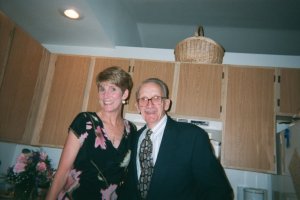






 Printed encyclopedias – the final print edition for the Encyclopedia Britannica – a 32-volume set of books – was released in 2010. How did I find out that information? In one of today’s on-line encyclopedias of course: Wikipedia.
 Floppy discs & drives – many children under the age of fifteen have never seen this storage device. You’d be hard-pressed to find any newly-released desktop or laptop computers with this type of storage capability. But storage devices still exist in the form of a thumb/flash drive or the “Cloud.”
 Photographic film – I saved a roll of unused Kodak film. Since this product is no longer made, it may be worth something some day! Photos are still being taken, but instead of being developed and placed in a multi-paged album, most of the time these photos remain in our camera or phones, or they end up on social media sharing websites – the new type of photo album.


 A man died and went to The Judgment and was told, “Before you meet with God, I should tell you that we’ve looked over your life and to be honest, you really didn’t do anything particularly good or bad. We’re not sure what to do with you. Can you tell us anything you did that can help us make a decision?”