Delivering the best customer experience
Regardless of the industry you represent your goal must always be to deliver the best customer experience.
 I have read and viewed many advertisements in which a company assures a future customer that their goal is to deliver the best customer service to each and every customer they serve. This is a very commendable goal in my eyes – a goal that must be reached by every provider of products and/or services. Whether I am a passenger on a multi-level cruise ship or a seaport’s rickety party boat;

whether I dine at a casual eatery or a popular Michelin 3-star restaurant; whether I am a guest at a Residence Inn or a resident at a senior citizen housing community, you must provide me with the best customer experience you can muster.
A couple months ago, I commented on a LinkedIn article that discussed one particular goal that should be considered by long-term care (LTC) providers, e.g., senior housing, assisted living, and memory care owners and operators. The particular goal stated in that article was to fill the buildings, attain high census, or as some industry leaders describe as putting “heads in the beds.”
 My comment to this article centered on my work as a long-term care ombudsman (advocate for residents living in long-term care facilities). I explained that when a new General Manager was hired for any of the facilities to which I was assigned, I made a point of meeting her or him to explain my role as a resident advocate and to get to know a bit about this new person who was now in charge of 50 to 100 or more residents.
I asked one particular newbie what he felt was the greatest challenge as the new General Manager for this particular independent/assisted living community. “Fill up the apartments.” I suggested that a more appropriate goal might be to retain the residents he already has. I explained that retaining residents most likely means that he and his staff are doing the right thing in delivering the best care and customer service experience to each of his residents.
- Retaining the residents he already has equates to fewer additional apartments to fill;
- Retaining the residents he already has means satisfied residents who say great things about the building thereby attracting additional friends/acquaintances as future residents;
- Family members of happy residents in LTC means happy adult children who will also spread the good news to others;
- It stands to reason, therefore, that satisfied current residents are the best tool a manager can maintain in his marketing tool chest.

I have retired from working in long-term care housing and from my advocacy work as a certified LTC ombudsman. I know first hand the pressure that employees experience each and every month to report the right numbers to the corporate office. The suits want the bottom line, baby, and if you can’t deliver the numbers they want and need, you’re outta there! (Just like all the losing pitchers the Seattle Mariners have gone through in the past ten years or so.)
I’m not saying that the Suits are only concerned about profit, but I will say that perhaps their focus needs to center more on the delivery of exceptional care for those who are entrusting the Suits with the lives of mom, dad, spouse/significant other, or sibling. Those family members want to be able to sleep at night knowing that their loved one is receiving the best care possible, the most nutritious meals known to man, and that their loved one is living in a safe environment staffed by employees who care.
All you have to to is deliver the best customer experience. Do that and the bottom line will take care of itself.
Lighten up Mondays
 Pretty much every age group has access to – and uses – an electronic device that connects to the Internet. There are, however, some holdouts, as you’ll see in the following scenario:
“Come on, Grandma, you’ve got to try it!” I pleaded with my stubborn Grandmother. I don’t know how she lasted this long without ever using the Internet, but enough was enough as far as I was concerned.
“Okay,” she said reluctantly, settling down by the computer and slowly putting on her reading glasses. “What do I do now?”
“All right Grandma, now I’m going to open the Home page of Google,” I explained, and then, “Ta da! There it is! Now type in any question you want into the bar at the top of the page and you’ll find an answer to your question,” I proudly assured her.
My Grandma looked at me warily, thought for a second or two, and slowly – very slowly – began to type, “How is my friend Gertrude doing this morning?”
Dog Owners: this one’s for you
If you are a responsible dog owner who maintains control of your animal and does not allow it to leave your property without being under the control of a leash, you don’t need to read any further.
If your dog or dogs routinely leave your property and have access to any person walking near your property, then please pay attention to what I have to say.
I was bitten by a dog yesterday.

I live in rural Redmond, Washington, a beautiful area providing many scenic areas for residential walks. Many dogs live in my rural neighborhood, and some of their owners have given these dogs carte blanche to freely run around the neighborhood – a neighborhood that has many children I might add. But I digress. Said carte-blanche-provided dogs don’t feel compelled to limit their pooping activity to their owner’s property, therefore when they roam the streets of my neighborhood and feel the urge to purge they do so and because they don’t have opposable thumbs they do not clean up their poop. Disgusting for those of us who enjoy walking through the neighborhood. But again, I digress.

These same dogs whose owners disobey the local leash law have full access to any child, adult or older adult person they come across. Now to the point of my story. I am a prolific walker and there is no street in my rural neighborhood that I have not traveled. Yesterday afternoon I was minding my own business, enjoying a break in the rainy weather by taking a walk, when I turned onto 272nd Avenue NE, Redmond, WA 98053, when half-way down the block my walk was interrupted by two white-haired maltese-like dogs running out of their human’s property directly into my path. My normal modis operandi in these instances is to tell the dog “No! No!” or words to that effect, and casually continue on my way.
Not this time. These two dogs stayed at my heels, not letting me proceed on my own, bearing their teeth, barking like there was no tomorrow, and in a progressive show of defiance, one of them jumped up and bit me on the back of my left calf. Okay, now I’m mad. I’m screaming at these dogs to get away so I can leave the area, and they’re not buying it. Where’s their human? I guess the human was yelling for her dogs, although I couldn’t hear her over their barking, because one of them ran back onto the human’s property, leaving the other dog to continue on its terroristic rant at my expense. (Perhaps said dog has “small dog syndrome”?) Anyway, I was going to use my pepper spray on the remaining mutt but it was acting so vicious, I feared I would only aggravate the situation.
I finally heard a female human’s voice calling the remaining hairy terrorist, and that dog ran back onto the owner’s property. At this point I am approximately 25 feet way from the gravel driveway and did not see the human, nor did I want to exchange conversational pleasantries. I feared that if I walked back to the foot of the driveway to confront the human, her maltese-like dogs would consider me a threat and demand a pound of flesh from me. Instead I yelled, “Your dog bit me!” to which she replied, “Sorry.” She did not walk off her property to the street to see if I was okay. I walked slowly away, looking back to see if she would do so, and she did not.
The balance of my day: at the advice of my doctor’s office when I called to tell them about my dog bite – 3 puncture wounds on my calf, drawing blood – I drove to the nearest hospital emergency room to receive any treatment the ER physician deemed necessary. Fortunately no stitches were required and because there have been no confirmed rabies cases reported in King County – the county in which I live – in the past 30 years, there was no need for preventative rabies treatment. The physician did prescribe an antibiotic, however, should the dog bite become infected.
Come on people! Be responsible dog owners!
You owe it to the general public, and you owe it to your animals, to be responsible. To their animals you ask? Of course, because a complaint such as I filed with Animal Control, including photos of the injured leg, will initiate an investigation that might result in your dog or dogs to be removed from your house.
Bottom line: If you love Fluffy, you must protect Fluffy and all with whom he may come in contact.
Mary Riesche: artist – and sister – extraordinaire
My sister, Mary, has been an artist since she could hold a crayon and a water color brush in her hand. Without giving away her age, I’ll just say that she’s been an artist for quite a few years because she is close in age to myself.

This article honors the consistency and commitment that my sister has exercised in her quest to maintain and hone her talent. Her husband was in the United States Navy when she married him, a career that deposited the two of them and their ever growing family, all over the United States and the world. She could have put down her sketching pencils, acrylics, and oils and figured that until the kids are grown up and out of the house, she wouldn’t have time for her artistic endeavors. But she didn’t. She managed her family single-handedly – and excellently I might add – while her husband was away at sea, never neglecting her family nor the craft that she loves so much.
Mary has been so diligent on this artistic journey, that I can only recall one time when she could not work on her craft. Mary broke her right wrist falling down in front of a grocery store near her Vacaville, California neighborhood several years ago, and as happens after we cross a certain age threshold, bones break easier and take longer to heal. But my sister was only sidelined for as long as absolutely necessary while she completed her physical therapy regimen and then – almost as good as new – she again took up the tools of her craft to pour her heart, soul, and energy into each piece.
And now that my sister and her husband are retired – and their five children are all grown and the number of grandchildren has recently increased to six – Mary continues to pick up the tools that she discovered as a youngster, and consistently makes efforts to expand her talents.

Now this is where you come in. I strongly encourage you to visit Mary Riesche Studios so that you can get to know a bit more about this artistic family member of mine, and while you’re at it, browse a sampling of her current inventory of pieces that are for sale. She loves what she does so much, and is so committed to what she loves to do, she will even create a custom piece to fit your home, business, or organization’s needs.
Do yourself a favor, browse the Mary Riesche Studios website, and then contact the artist to discern how her talent can benefit your personal or commercial environment.
Lighten up Mondays
 A young boy enters a barber shop and the barber whispers to his customer, “This is the dumbest kid in the world. Watch while I prove it to you.”
The barber puts a dollar in one hand and two quarters in the other, then calls the boy over and asks, “Which do you want, son?” The boy takes the quarters and leaves the barber shop. “What did I tell you?” said the barber, “That kid never learns!”
Later, when the customer leaves, he sees the same young boy coming out of the ice cream store. “Hey, kid! May I ask you a question? Why did you take the quarters instead of the dollar?”
The boy licked his cone and replied, “Because the day I take the dollar, the game’s over!”
Alzheimer’s shifting personality
The attached article from a blogger that I follow contains extraordinary prose on how dementia can fool, frustrate, and reward, all in one sitting.

Please take the time to read her accounting of how Alzheimer’s has encroached on her family.
Lighten up Mondays
The children were lined up in the cafeteria of a Catholic elementary school for lunch.
At the head of the table was a large pile of apples. The nun made a note and posted it on the apple tray: Take only ONE. God is watching.
Moving further along the lunch line at the other end of the table was a large pile of chocolate chip cookies. A child had written a note and posted it near the cookies: Take all you want; God is watching the apples.
Lighten up Mondays
With all the computer security issues that have occurred lately, I thought it might be healthy to have a few computer jokes to start our week.
Three signs that you need to get away from the computer:
- You try entering your password into the microwave oven panel;
- You email your kids in their bedrooms to tell them that dinner is ready and they email you back, “What’s for dinner?”
- You chat several times daily with a stranger from Australia, but haven’t spoken to your next door neighbor in months!”
A project manager, a computer programmer, and a computer operator are driving down the road when the car they are in gets a flat tire. The three of them try to solve the problem.
The project manager said, “Let’s catch a cab and in ten minutes, we’ll reach our destination.” The computer programmer said, “We have the driver’s guide. I can easily replace the flat tire and continue our drive.” The computer operator said, “First of all, let’s turn off the engine and turn it on again. Maybe it will fix the problem.”
Suddenly a Microsoft software engineer passed by and said, “Try to close all windows, get off the car, then get in and try again!”
That’s always the solution, isn’t it?
What is your calling?
Sue Monk Kidd, author of numerous books including the New York Times best seller (for two years) The Secret Life of Bees, was a recent guest on Oprah Winfrey’s show, Super Soul Sunday. The description of the show indicated that the author would be talking about her true calling as a writer. That got my attention, because I’m trying my darnedest to be a writer. Correction: I am a writer, I’m just not an author yet.
Perhaps you’re asking, “Do I have to have a calling?”
No, you don’t. I can only speak for myself when I say that I’ve known that I’ve had a calling for most of my adult life. I didn’t know what it was, but I knew I had one. I always seemed to be searching for the right project/job on which to spend my time. As an employee, and as a volunteer, I did my work superbly, always trying to be the best version of myself – and for the most part, I was.
But something was missing. I always felt that I hadn’t latched on to what I was called to do. I can describe how that felt by using Sue Monk Kidd’s experience when she switched from being a nurse to being a full-time writer. For her own reasons, Sue Monk Kidd felt “out of alignment” and she didn’t feel she was “in a place of belonging” as a nurse. She also described the time before she answered her calling as having “homesickness for (her) your home.” Then she made the decision to be a writer and this is how she felt, “there is no place as alive as when you’re on the edge of becoming” what you were meant to be.
Exactly.

And she added that it takes lots of courage to get there – to activate the calling that you know is yours. Several years ago I found my niche – working with the elderly. For six and a half years, I worked in the senior housing industry. For five years after that, I volunteered as an Alzheimer’s Association caregiver support group facilitator, and another five years as a Certified Long-term Care Ombudsman for the State of Washington. Good stuff, and it felt right, and it was. But I had yet to use that wealth of experience in what I would define as my calling.
Confession: I’m a fairly decent writer.
Now hold on there, Irene, shouldn’t a calling be something at which you excel, some sort of skill that you’ve honed to perfection? In my case, the answer is no. Sue Monk Kidd validates what I mean. She said there are three things you need to be a writer: 1) have something to say; 2) have the ability to say it; and 3) have the courage to say it at all.
Ergo, I am qualified.

I am one and a half years into writing my first novel. It focuses on the lives of a group of adults who have Alzheimer’s disease or other dementia and the loved ones who are their caregivers. Woo hoo! All the work I’ve done in the past ten-plus years can be used in my calling! I excelled at all of those tasks, and some day I will excel at getting my manuscript published.
Some agent and some publisher out there wants to sign what I have to offer, and I believe that my degree of writing ability won’t get in the way of them doing so.
Have no fear all you agents and publishers who might have just read that last sentence. I am doing my best and I’m working hard at my craft. I’m not of the opinion that just because I feel I’ve found my calling I can just haphazardly go about my writing, not working as diligently as I have in the past.
I’m taking this calling seriously because the subject matter is a serious and personal one to me.
My advice to you the reader? Do what you know you’re supposed to be doing, and do it well. Whether you label that as a calling or a job matters less than if you believe in what you’re doing and are committed to it.
Lighten up Mondays
Humor imitates life:
The woman was more than a little upset when her car stalled in the middle of the main street, and even more so when no amount of cajoling could get it started again.
As the light turned from red to green a third time and the car still failed to respond, the honking of the fellow in the car behind her grew even more insistent.
Finally the woman got out and walked over to his door. “Excuse me, sir,” she said politely, “if you’d like to help out by trying to get my car started yourself, I’ll be glad to sit here and honk your horn for you.”
Caregiving and The 36-Hour Day
Caring for a loved one is a full-time job, as one of my fellow bloggers clearly illustrates in the attached article. Please read her article, especially if you’re not quite aware of how full the carer’s day can be.

There’s a reason why the book, The 36-Hour Day (now in its 6th edition) is so popular with health professionals and family caregivers. The subtitle for the book reads, A Family Guide to Caring for Persons with Alzheimer’s Disease, related Dementias, and Memory Loss. As the former caregiver for my father who died from Alzheimer’s in 2007, I can verify that whether you are providing hands-on care or managerial long-distance care for a loved one, your job never ends. A normal day is a relative term that changes with every day or hour – or as is sometimes the case – every minute.
My article, A normal day, caregiving style, throws a spotlight on how a patient’s and caregiver’s life changes once a diagnosis has been delivered. The concept of normal is an ever-changing paradigm where the sand on the beach shifts so much, one can barely hold herself upright.
I celebrate all caregivers who manage this extraordinary task so well, and so devotedly. You are a hero to many.
You are a hero to me.
False positive Alzheimer’s diagnosis
Treatable Conditions that Mimic Dementia – AARP. I am so pleased that AARP published this article about false positives for Alzheimer’s disease. Because of the high incidence of Alzheimer’s disease and other dementia, we have all become very sensitive to any abnormal cognitive challenges in our lives. A few people have said to me, “I keep losing my keys. I forget where I place them. Do I have Alzheimer’s?” I’m not a medical professional but I have been trained by several in the profession. Teepa Snow, one of America’s leading educators on dementia, had this response to that type of question, and I paraphrase:
If you forget where you’ve put down your keys, you may not have dementia. If you forget what they are or what they’re used for, you could very well have dementia.
The attached AARP article provides possible reasons for cognitive abnormalities that are not Alzheimer’s disease: medication, urinary tract infection (UTI), diabetes, thyroid, and depression to name a few. That being the case, even if you forget what the car keys are for, you still may not have Alzheimer’s or other dementia.
In my attached article, Medications: harbinger of cognitive decline? I address just one of the causes for a false positive Alzheimer’s diagnosis. Please read that article, to be sure, but also read the attached piece by AARP. You deserve to have peace of mind by finding out if your symptoms, or those of a loved one, are reversible. And by all means, be bold enough to demand that your treating physician rule out all other possible conditions before putting you through the grueling neurological testing that many physicians prescribe as first steps, rather than the last resort when determining the cause of a patient’s cognitive decline.
We don’t always have to be right
 I wrote an article on April 6, 2014, entitled, Same sex marriage: we don’t have to agree. In that article I emphasized how abusive and intolerant we have become with our opinions, and how exclusionary we are setting ourselves up to be. If you think about it, the impetus for our very strongly held opinions is that we want to be right. If we are right, then the other person or group must be wrong. Damn that feels good!
American journalist and author, Kathryn Shuulz, spoke at TED a couple years ago, and the title of her 17 minute talk was: On Being Wrong. What Ms. Shuulz has to say is well worth all of you allotting 17 minutes of your day to watch this attached video. The gist of her message is that it’s a very big problem to have the feeling of always being right, and she explains why.
To begin with, she asked some of the audience members this question:
How does it feel to be wrong?
Their answers were: dreadful, embarrassing, thumbs down. She thanked them for their answers and then told them that they actually provided answers to a different question, that question being:
How does it feel to realize that you’re wrong?
You see, being wrong doesn’t feel like anything. We go along our merry way believing something or stating something, fully convinced that what we’re saying is right, so we’re not feeling what it feels like to be wrong. It isn’t until we discover that our strongly held opinion or belief is actually wrong that the dreadfulness and embarrassment creep in.
Many of us were raised to realize the importance of not making mistakes, or if we missed that lesson, we rapidly learned in school – and then in our working careers – that making mistakes is a big fat no-no.
But what about the statement: we learn from our own mistakes?
I can honestly tell you that I’ve learned far more valuable lessons from falling flat on my face than I’ve learned standing up on a self-righteous pedestal. Being wrong or making mistakes is not a defect. It’s a fact of life. St. Augustine would say it proves that we’re alive:
Fallor ergo sum. I err therefore I am.
I can live with that.
Lighten up Mondays
With that, he went to the window, jumped out, did a little spin in midair and came back in. “See how great the currents are? You can do the same thing.”
After a few more drinks and much prodding, the first man decided to test the wind currents for himself. He went to the window, jumped out, and fell to the ground.
The bartender looked at the other man sand said, “Superman, you’re really mean when you’re drunk.”
Same sex marriage: we don’t have to agree
Fanaticism on both sides of gay-rights issue | Local News | The Seattle Times. by Danny Westneat Please read the attached article if you have not already done so.
A friend from college found me through Facebook the other day and we’ve spent a couple days catching up with each other via e-mail because it has been decades since we’ve communicated with each other. I told Angie about my work with the elder-care community and I also mentioned that I’m a contributing writer for Grandparents Day Magazine (an Australian online publication), I have my own blog, and I’m writing my first novel. “Irene, did you major in English at the University?” “Nope, I majored in French. I write not because I’m an exceptional writer, but because I have something to say.”
As is the case today.
Danny Westneat of the Seattle Times wrote another brilliant column in such a way as to make you say, “Hmmmm.” What I mean is that at least for me, he opened my eyes as to how demanding some of our opinions can be. For example:
Whether you support same-sex marriage or you don’t, you have the right to say how you feel about it.
Six years ago, Mozilla CEO, Brendan Eich contributed financially to Proposition 8 in California – a proposition that opposed gay marriage. It was discovered that he had done so, and the newly installed CEO was immediately ousted. He had, however, been with the company since the 1990s, and as Danny Westneat pointed out, “There was no evidence his views against legalizing gay marriage had any effect on his various jobs at the company, including his treatment of gay co-workers.”
Putting a more local perspective on this same subject, Washington State’s 2012 Referendum 74 that would allow same-sex marriage in our state, had 5,700 names on the anti-gay-marriage monetary contributor list, including those from Amazon, Starbucks, T-Mobile, F5 Networks, Microsoft, and Boeing, to name a few. Many others were opposed to the Referendum and financially contributed against it: medical professionals, public-school teachers, a school superintendent, and a couple college instructors. The measure passed, with the voters split 53.7% to 46.3% of valid votes placed.

Isn’t that grand? Everyone was allowed to vote which ever way they wanted; a fabulous example of the right to believe/speak the way you want through the democratic voting process. But do or say something that might give ones business a bad reputation in the eyes of the majority – or even the minority – then by God, you’ve gotta go.
Where do we draw the line?
Personally, I passionately voted the way I wanted to vote regarding Referendum 74, and although I might disagree with those who voted differently from me, I respected their right to vote which ever way they wanted.
In his article, Danny Westneat talked about the fanaticism that the Boy Scouts exhibited by ousting a gay Boy Scout leader because of who he is, not because of his work performance. But the columnist added that the same fanaticism was displayed when the Mozilla CEO was ousted for what he believes.
If we are now requiring everyone to believe the way we believe; think the way we think; or vote the way we vote, aren’t we exhibiting a radical intolerance that nullifies our right to believe and speak as our conscience leads us?
I hope I never live in a world where someone figuratively puts a gun to my head to force me to think, believe, or vote the way they want me to.
Anyone who knows me, knows that would really piss me off, and it should make you pretty darn angry as well.
Lighten up Mondays
 Depending upon where you live, many schools are on Spring break, even though in many places around the United States and the world, one look out the window won’t convince you that Spring has actually arrived. But this isn’t a weather entry, rather, what follows are a few snippets of humor on the subject of school:
- I had the worst study habits, the lowest grades . . . then I found out what I was doing wrong. I was highlighting with a black Magic Marker. – Jeff Altman
- I knew comedy was for me when I was the only Asian in high school who failed math. But you know, when I failed, eight other students around me failed too. – Dat Phan
- My school was so tough, when the kids had their school pictures taken, there was one taken from the front and one from the side. – Norm Crosby
- During class, the chemistry professor was demonstrating the properties of various acids. “Now I’m dropping this silver coin into this glass of acid. Will it dissolve? “No, sir,” a student called out. “No?” queried the professor. “Perhaps you can explain why the silver coin won’t dissolve.” “Because if it would, you wouldn’t have dropped it in.”
- “Our economics professor talks to himself. Does yours?” “Yes, but he doesn’t realize it. He thinks we’re listening.”
Oso, Washington is us
Malaysia Airlines flight 370 is us.

What these two disasters and many like them have in common is that billions of us can say that they didn’t happen to us. I live in a suburb of Seattle, approximately 60 miles south of Oso, Washington – the town that was buried by a landslide that killed at least twenty four people as of this writing. This landslide didn’t physically happen to my town of Redmond, Washington, but it did happen to us.
The crash of Malaysia Airlines flight 370 took the lives of 239 people and affected thousands of people who lost one of the 239. This crash appears to have happened over the Indian Ocean, many, many miles away from where you and I live, and most of us can say that we weren’t connected to any of those victims, but we would be wrong, because that crash happened to you and me as well.
I don’t take comfort in the fact that so many of the disasters that occur in the world haven’t personally or physically happened to me. There is no distinct separation between me and those pointedly affected by the tragedy that has inserted itself into their lives; no safety shield between my location, and theirs. They are me, and I am them.
It is far too easy to sit comfortably at home and simply be grateful that such tragedies didn’t directly happen to me. You know that saying, “There but for the grace of God go I.” I think the intent of that statement is well-meaning but it must be said and felt purposefully so that we truly recognize that another misfortune, at another time, could be our own. All of us are vulnerable, and we are all connected. What happens elsewhere, happens to us.
The reason for this article is to express my hope that all of us, wherever and whomever we are, may more readily and clearly identify with all of humanity: the “them” or “they” to whom tragedies befall.
Empathy trumps distance, nationality, or circumstances.
Lighten up Mondays
Again from the Washington Post, this entry includes responses to the newspaper’s invitation to readers to take any word from the dictionary, alter it by adding, subtracting or changing one letter, and supplying a new definition.
- Bozone (n): the substance surrounding stupid people that stops bright ideas from penetrating
- Giraffiti (n): vandalism spray-painted very, very high
- Inoculatte (v): to take coffee intravenously when you are running late
- Hipatitis (n): terminal coolness
- Dopeler effect (n): the tendency of stupid ideas to seem smarter when they come at you rapidly
- Arachnoleptic fit (n): the frantic dance performed just after you’ve accidentally walked through a spider web (been there, done that many, many times)
- Glibido (v): all talk and no action.
Paper versus digital: what do you choose?
via Paper or pixel? Don’t burn those books just yet.
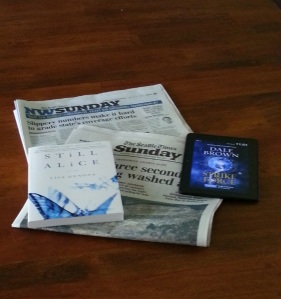 Monica Guzman wrote a thought-provoking article in the Sunday Seattle Times, linked above, that I read in the print-edition of the local newspaper today. I enjoy reading the newspaper each morning; my husband reads the same newspaper in the evening – both times providing opportunities for daily ritualistic enjoyment. Ms. Guzman describes these occasions as “a world where paper is sweet, sweet, sanctuary.”
I’m certainly a technological user. I own a desktop computer, a laptop, a tablet (Kindle), and a smartphone. Because I’ve grown accustomed to the ease with which all of these devices are used, I have been guilty of the same snobbishness (read superiority) experienced by Ms. Guzman. I observe someone reading a bound paper book in a coffee shop, or on an airplane, and I think to myself, “Welcome to the 21st century people; how lame can you be?” But like Ms. Guzman, I’m also jealous.
If we compare paper to digital as media, one is smart, and the other is dumb. If we compare them as devices, “(P)aper’s purpose is simple. You look at it or you put something on it.” Digital media, however, has as many “purposes as infinite as the operations they perform.” But is that always a great thing? Take into consideration the columnist’s statement:
Next to the capabilities of digital, paper is dumb. But next to the tranquility of paper, digital is an assault. Alive with possibilities but full of demands. Always connected but never done. (Emphasis mine) Triggers, enablers, provocateurs.
When I finish reading a print-edition newspaper, I don’t leave it on my nightstand just in case updates come in during the night that I might need to read. Ditto with a hand-written letter I receive from a friend – she put down her thoughts on paper, I’ve read it and might even save it, but the letter is finite – unlike e-mails which leap out at us with each vibrating notification.
In days past, when I finished reading a particularly riveting paperback novel, I would close the back cover, hug the book to my chest, and glory in the connection that said book created in me. I might even mourn that I had finished the book. Give me more! When I finish reading a book on my Kindle Fire HDX, regardless of how fabulous a read, there’s no device hugging going on. Instead I’m instantly downloading another title to be at the ready for my next respite of reading time. One down, millions to go.
Convenient, yes, but I must say that before I entered the Kindle generation, I thoroughly enjoyed requesting books from my local King County library, knowing that it might be a few weeks before the title finally became available to me. How exciting it was, however, when I received an electronic notification that the book was now available for pick-up. I might even drop everything, stop what I was doing, and make an extra car trip just to grab hold of the much-anticipated title.
What an extraordinary pleasure that was.
I don’t bemoan my technological gadgets – they do make my life easier and I am certainly more tuned in to the latest updates in the news, good or bad. But I don’t want paper to go away. I cancelled my Newsweek print magazine prescription when they went to an all digital format in 2012. I don’t want to sit at my computer or gaze into my tablet to read a periodical. (Hear that Seattle Times? Keep printing!) But listen to this. Earlier this month Newsweek brought back their print edition. I sincerely hope this is an indication that print periodicals aren’t dead. I share the same sentiment provided by Ms. Guzman towards the end of her article:
Not long ago I was convinced paper was outdone. Outperformed. Beaten. It wasn’t a question of whether paper would die, but when. Now, I hope it sticks around long enough for us to know why we would want it to.
What about you: paper or digital?
Lighten up Mondays
This entry is from the Washington Post, publishing the winning submissions to its yearly neologism contest, in which readers are asked to supply alternative meanings for common words. I provide a few of those for you today.
- Coffee (n): the person upon whom one coughs
- Flabbergasted (adj): appalled over how much weight you have gained
- Abdicate (v): to give up all hope of ever having a flat stomach
- Esplanade (v): to attempt an explanation while drunk
- Willy-nilly (adj): impotent
- Negligent (adj): describes a condition in which you absentmindedly answer the door in your nightgown
- Lymp (v): to walk with a lisp
- Gargoyle (n): olive-flavored mouthwash
- Flatulence (n): emergency vehicle that picks you up after you are run over by a steamroller
- Balderdash (n): a rapidly receding hairline
- Rectitude (n): the formal, dignified bearing adopted by proctologists during an exam
- Frisbeetarianism (n): the belief that, when you die, your soul flies up onto the roof and gets stuck there.
Aging successfully: “think fast!” vs reflective contemplation
The New York Times article The Science of Older and Wiser by Phyllis Korkki, provides a scientific, yet personal, foray into the location of where wisdom resides.
The article also addresses levels of importance between the speed with which information is retrieved from one’s mind versus a life filled with meaning, contentment and acceptance. Speedy retrieval of information appears to belong to those who are younger than Baby Boomers while those who take longer to tap into a data-filled mind are us Baby Boomers or older for whom information retrieval falls second. Once that information is retrieved, however, it is used to gain insights and perspectives that form the basis for wise behavior and decisions.
Must everything in our lives function at breakneck speed? Consider these synonyms for fast, or quick:
- speedy
- swift
- express
- high-speed
- immediate
- expeditious
- brisk
- hasty (haste makes waste!)

We live in such a fast-paced world that we find ourselves snapping our fingers at how long it takes to make a cup of K-Cup (pod) coffee. We want it now! Now, I tell you! What’s taking so long? We will even pay extra when traveling by plane in order to use TSA’s faster Pre-Check security lane, and we’ll pay an annual subscription to Amazon.com to get free 2-day shipping for the plethora of things we purchase there.
But is faster always better than reflective contemplation?
Consider some definitions of wisdom provided in the above-attached article:
- “True wisdom involves recognizing the negative both within and outside ourselves and trying to learn from it.” (Ursula M. Staudinger, The Berlin Wisdom Project);
- Wisdom is characterized by a “reduction in self-centeredness.” (Monika Ardelt, associate sociology professor, Univ. of Florida, Gainseville);
- If you are wise, “You’re not focusing so much on what you need and deserve, but on what you can contribute.” (Laura L. Carstensen, founding director of the Stanford Center on Longevity, California); and
- An important sign of wisdom is generativity, which means “giving back without needing anything in return.” (Dr. Daniel Goleman, author of Focus and Emotional Intelligence, psychologist, science journalist.)
Given the descriptions for the word “fast” and the characterizations for the quality known as “wisdom”, what will your life’s main focus be as you graduate through the various stages of aging? Unless your later years involve being the fastest on the ski slopes, or the quickest person to complete the NY Times crossword puzzle, consider this element of successful aging: “(M)ost psychologists agree that if you define wisdom as maintaining positive well-being and kindness in the face of challenges, it is one of the most important qualities one can possess to age successfully.” (Phyllis Korkki, New York Times)
Baby Boomer Resilience
How resilient are you?
How readily do you bounce back when you’ve been cut off at the knees? when you’ve experienced a long streak of bad luck? when your hopes and dreams are just that: hopes, and dreams?
I am inspired to write this brief piece today because of an extraordinary act of resilience that I witness about this time each year.
Eleven years ago my daughter opened up a bridal party business that was very successful. She started the business in August 2003 and the Grand Opening of the store occurred in March of that same year. One of her vendors, a custom jewelry designer, sent her a live plant in celebration of her store’s opening. The sweet smelling floral plant was appropriately named, Bridal Veil (stephanotis floribunda).
I had the privilege of working at my daughter’s boutique from its inception, and then off and on when she needed extra help with the bridal parties. Approximately two weeks after her store’s opening, the Bridal Veil plant had come to its seasonal end so I took it home and planted it in my backyard, just underneath my kitchen window, cutting the greenery down to the dirt. 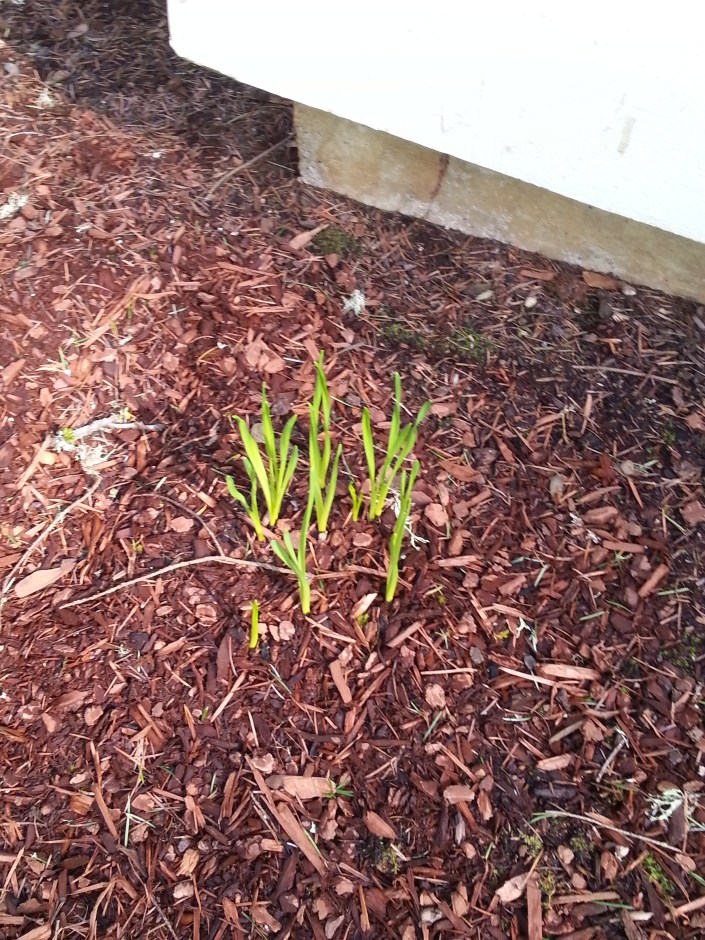 And every year about this time, the Bridal Veil shoots break through the ground and seem to announce, “Spring is back and so am I.”
I am certain that you know people who have exhibited far more heroic and miraculous resilience than this silly plant’s arrival each year – so have I – but I still can’t help but be impressed and pleased, each and every year that it does. It has survived 100 degree (Fahrenheit) temperatures and 10 degree temps, not to mention a blanket of snow that manages to cover it when the snow starts falling around Washington State.
But each year, it comes back, and each year, I’m still surprised and as pleased as Punch! Definition: feeling great delight or pride.
Many of us would give up at the first degree of scorching heat and we certainly might throw in the towel when the snowflakes start to fly. I don’t want to be less resilient than the stephanotis floribunda.
Do you?
DUI of Dementia
Fatal crash restarts conversation on aging drivers | Local News | The Seattle Times.
When is it okay to drive while impaired?
NEVER.
And yet many drivers that are cognitively impaired are doing just that. Justin Runquist’s Seattle Times article, attached above, addresses the wave of aging drivers that has swept onto our roads. I’ll be the first to admit that dementia isn’t always the impairment associated with aging drivers. Sometimes medication side effects and/or slower response times – even without Alzheimer’s or dementia – can be the cause of accidents that can harm the driver, and anyone in his or her path.
In this article, however, I address the type of DUI that does involve dementia. As I mentioned in my two part series: Driving under the influence of dementia and Part 2 of that article, there are far too many news reports covering the risks of impaired driving – many of which end in disaster.
How can we possibly take comfort in denying that either ourselves or our loved ones should no longer get behind the wheel? This type of denial is dangerous but it is possible to get around the difficulties associated with this subject without alienating yourself or others.
In my article: Driving with dementia: the dangers of denial I offer a few suggestions on how to take the keys away – or give up ones own keys – before someone else gets hurt.
For those of you who are still driving and who have considered even once that you shouldn’t be doing so – please read all the articles attached within this blog entry and then decide if you still feel comfortable driving a weapon that might kill you, or someone in your path. And for you adult children who have felt the same uncomfortableness surrounding your own parents’ driving skills – take heed and act before it’s too late.
Lighten up Mondays
Before going to Europe on business, a man drove his Rolls-Royce to a downtown New York City bank and went in to ask for an immediate loan of $5,000. Taken aback, the loan officer requested collateral and so the man said, “Well then, here are the keys to my Rolls-Royce.” The loan officer promptly had the car driven into the bank’s underground parking area for safe keeping, and gave the customer $5,000.
Two weeks later, the man walked through the bank’s doors and asked to settle up his loan and get his Rolls-Royce back. “That will be five thousand dollars in principal, and fifteen dollars and forty cents in interest,” the loan officer said. The customer wrote out a check and started to walk away.
“Wait, sir,” the loan officer said, “while you were gone I found out you are a millionaire. Why in the world would you need to borrow five thousand dollars?”
The man smiled, “Where else could I park my Rolls-Royce in Manhattan for two weeks and pay only fifteen dollars and forty cents?”
A normal day, caregiving style
Approaching The Final Destination. The attached article focuses on one caregiving journey that is coming to an end. Chris McClellan’s caregiving journey is coming to a close because his partner, TLO, is approaching his final destination. Recently, another blogger that I follow, who was the caregiver for her husband, Chuck, came to the end of her caregiving journey because Chuck approached, and reached, his final destination.
Each caregiver/blogger that I follow has said the same thing in almost the same words that echo how Chris describes the tenor of the day-to-day life of a caregiver: “I’ve come to realize that what I might think is a routine day, is totally off the charts by normal standards. I’m sure most family caregivers can get in touch with that.”
Whether a loved one needs care because of cancer, as in TLO’s case, or Alzheimer’s, as in Chuck’s case, the lives of both caregiver and patient are forever changed once a diagnosis is pronounced. The 10-15 minute medical consultation in an exam room or a doctor’s private office thrusts the recipients into the as-yet-unknown world of living with a terminal illness.
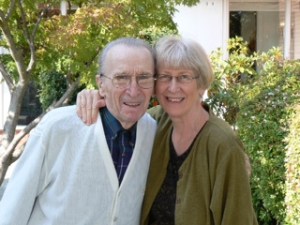
My brother’s wife, Nancy, was diagnosed with mixed dementia when she was barely 65-years old. In the first article on my brother’s caregiving blog, he also characterizes diagnosis day as the day his life, and that of his wife, changed forever.
Normal becomes a shifting paradigm that can look different from month to month or moment to moment as a loved one’s disease progresses towards its final destination. Both caregiver and patient can’t recall – for one reason or another – what normal used to mean before the disease’s arrival in their lives. I know from personal experience with my father, that the caregiver truly can’t imagine life without caregiving – so all-consuming and life-changing is a fatal disease in ones life.
Normal? What does that mean? And in the midst of caregiving, you become aware that the only escape from this new and ever-changing normal is the death of the one for whom you provide care. What liberation! What freedom lies on the horizon!
No, that is not what the caregiver is thinking. He or she is focused on the here and now, because such focus is required in order to adjust to the shifting sands of normalcy.
But the end does come as it did with my father on October 13, 2007, with my sister-in-law on July 4, 2012, with Chuck in late February 2014, and as will happen with TLO once Chris and TLO’s journey comes to an end.
What we all would give for just one more day of abnormal normalcy with our loved ones.
But all journeys come to an end, and none of us would rob our loved ones of their final escape to a destination towards which their lives had been headed since their own personal diagnosis day.
Freedom from pain; freedom from physical and cognitive restrictions. Let it be.
Chatter that matters
 My adult life has been an open book; just ask my husband. He would tell you that on our very first dinner date at a Kirkland, Washington waterfront restaurant, I pretty much told him my life from A to Z, and then some. That’s why it was so astounding that at the end of our date he asked, “Would you like to do this again?”
Wow, I didn’t scare him off.

I’m pretty sure my open book living started quite young for this girl who is one of the most talkative people I know. What can I say? Apparently a lot. As a youngster, I recall engaging my parents’ dinner guests in conversation, even sitting on their laps, without much hesitation or shyness. And along with my brother and my sister, we would sing and dance for any person who would sit down long enough for us to entertain them. I’m quite certain this ability is a Desonier family trait that has been passed down from generation to generation.
Being talkative is one thing, but if your words don’t account for much, that’s all they are – just words.
I admire those who are able to change the world – or at least improve someone’s day – with an economy of words that have more impact than any vomiting of words that I can spew during the course of an hour. My husband, Jerry, is one of those talented people. Forgive me for sounding morose, but I guarantee that years, and years, and years from now, those attending my husband’s funeral will remark on how he was a man of few words – but the words he spoke were golden.

At our wedding reception – a family-only party at our residence – I told both families that one of the things I admired most about Jerry is that he is a man of very few words, but what he says is worth listening to. Of course seeing as his siblings were also at the reception, one of his sisters yelled out, “Yah, he’s an empty book!”
That’s humorous, but far from the truth. My husband’s story is one of family, commitment, and protectiveness. He’s always thinking about what he can do to protect his two adult daughters and how he can keep me safe, wherever I may be.  I love taking walks – rain or shine – in our rural neighborhood where dogs, bobcats, and even black bears, have been known to present themselves when you least expect it – not to mention the inattentive drivers who may not notice that I’m trekking along the side of the road. In the past ten years, my husband has gifted me with: waterproof long pants, a sturdy walking stick, a fluorescent yellow vest, a pair of straps with strobe lights on them that I can either wear around my arms or my ankles, pepper spray, and the list goes on. Some wives may take offense to receiving such practical gifts, bemoaning the fact that he must not love me if these are the types of gifts he thinks I really want. I see those practical gifts as a sign of love from someone who wants me to be around for many years to come.
Words, followed up by actions, have the power to change everyone in your corner of the world. Whether hastily spoken harsh words or well-thought out words of encouragement – your corner of the world will be changed. Many of us need to learn to swallow our words and only let escape those that feed and nourish the recipient. I, for one, can cut my dialogue in half, as long as what remains serves to build up those with whom I come in contact.
One thing is for certain; the less often you open your mouth, the less opportunities exist to stick your foot in it.
Lighten up Mondays
What follows are a couple humorous discussions about marriage:
When the traveling salesman got the message at the hotel desk that his wife had given birth, he rushed to the phone.
“Hi, honey,” he cried happily. “Is it a boy or a girl?”
“Irving, Irving,” sighed his weary wife, “is that all you can think about? Sex, sex, sex?”
“That’s great, son,” enthused his father. “And one of these days you’ll work up to a speaking part.”
Mice are our friends
 It’s not often – or ever – that I would tout the beauty and benefits of mice, especially since where I live in a very rural part of my city, mice are a force with which to be reckoned during their annual winter attempts to seek warmth in crawl spaces, attics, and home interiors.
Today, however, I am making a one-time exception because it appears that mice brains have become very valuable in the medical and science worlds’ attempts to map the human brain, and mapping the human brain contributes to the effort of solving brain diseases such as Alzheimer’s. I’ll leave it up to you to read the full article, attached above, because my efforts at summarizing scientific jargon would fall short of doing that science justice.
What I will say, however, is that I am extraordinarily excited that valid attempts are being made to decipher the science of our brains; attempts that generate hope in the lives of those of us who have personally experienced the destruction of a loved one’s brain by Alzheimer’s – a disease that I’ve been known to call “a murderer.” Read my article, Alzheimer’s disease is a murderer to understand the full impact of my feelings on the subject matter.
I know that a lot of behind the scenes research is being done to eradicate a disease that is always fatal, but we aren’t always privy to what that research looks like. I’ve read numerous horrific statistics about the numbers of people who have – and will have – Alzheimer’s in the years to come. Part of those statistics include the detailed monetary impact on society as a whole, as well as the personal and emotional costs to each of us who have dealt with, and who have yet to deal with, the disease’s intrusion into our lives.
I congratulate the Seattle Times and the New York Times, for publishing the above article. And I sincerely thank the Allen Institute for Brain Science for taking on a task whose efforts will benefit every last one of us in this country, and around the world.
You are my hero Paul Allen. Keep up the good work.
Lighten up Mondays
 A motorist got his car stuck in the mud while on a drive through the country. A farmer happened to be by the side of the road and offered to pull him out for twenty dollars.
“At that price, I would think you’d be busy day and night pulling people out,” said the motorist.
“Oh, I can’t at night,” said the farmer. “That’s when I haul water for this here hole.”
Being prepared, the Alzheimer’s way
If the monster called Alzheimer’s is going to get you, you may as well be prepared.
How I’m Preparing to Get Alzheimer’s, is a 6 minute and 24 second video recorded in June 2012 at TED Global in Edinburgh, Scotland. This brief talk by Alanna Shaikh will do more to wake you up about this disease than anything you’ve heard thus far.
If there is even the slightest chance that one of us will get Alzheimer’s or other dementia – and trust me, there’s more than the slightest chance – then we’d better start shaping what Alzheimer’s will look like for you and me. Here’s an example.
Ms. Shaikh’s father has Alzheimer’s and she talks about the various hobbies and interests held by her father when he was healthier and how those interests carry through during the Alzheimer’s disease process. He was a college professor at a state school and as Alanna put it, “he knows what paperwork looks like.” Now in the depths of his disease, someone can put any type of form in front of him and he will gladly fill it out, arbitrarily writing his name or numbers on the various lines provided, and he’ll check the boxes littered throughout the form. He flourishes in that engagement of his time.
What happens, however, when your favorite hobby pre-disease is reading and editing academic journals, racing cars, or using electric shop tools to make beautiful well-crafted furniture? How will those hobbies or skills survive the disease process? Not very well. So Alanna has come up with three things that she’s doing now to prepare her for the possibility of the Alzheimer’s monster invading her life.
Please watch Alanna’s video. I think you will be impressed by her thought process.

