Personal Struggles
Knowing When to Shut Up
This is a challenge for me, because I want to have a positive influence on more than those in my immediate purview. I will be the first to admit that I oftentimes stick my nose where it shouldn’t be stuck. I don’t mean that I boss people around or insist on my way or the highway. That is not the case at all, and when someone is heavy-handed with their advice to me, I speak up on how that negatively affects me.
What I do mean, however, is that my caring nature makes me think that it’s okay to offer advice or guidance to people about whom I care. It has taken me forever, and is still taking me that long, to hold back as much unsolicited counsel as I can.
I try not to offer counsel, I really do, but that maxim goes against the grain for me. My belief is that if you care about someone, you will lovingly provide words that might make a positive difference in a person’s current circumstances. I endeavor not to be heavy handed or insistent when offering advice, rather, I put it out there and once I put it out there, I take no responsibility for whether it is received or rejected. I mean seriously, my word is not gospel; people can simply take it or leave it.
Bottom line? I am still trying to figure this whole thing out. Eventually I will find the right balance between leaving well enough alone and leaning into caring enough to offer some sort of constructive guidance. Shutting up might be in the future, but not if doing so cancels out who I am at heart.
Are Emotions Exhausting?
You’re darn right they are!
 I recently attended a Zoom common interest group of sorts wherein during an exercise to improve communication skills, each of us were charged with asking a question of someone else in the group in response to something they had said. One of the attendees told the group that she had been struggling with being tired and without energy, but with no medical diagnosis to explain that exhaustion.
I asked her the following: Do you feel that it’s your emotions that are draining your energy or is it a physical exertion cause and effect? The moderator of the group asserted that my question to the other attendee might have come across as judgmental.
I clarified that I asked that question because of my very intimate understanding of how emotions can drain the life out of a person. Fortunately, the woman to whom I had asked that question replied that she didn’t feel the question I posed was at all judgmental and that she fully understood the intent.
You see, emotions are absolutely tied in with the physical body. If I am feeling joyful, fulfilled, and on top of the world, so too does my physical body. The opposite is also true so that if I am stressed, fearful, or sad, my body reflects that emotional status big time.
 Anyone who knows me knows that I am a highly empathic person. I know that along with that sensitivity of mine also comes a heightened sense of worry, with resulting physical deficits. I am working on curtailing that outcome so that my own well-being isn’t adversely affected as a result. I guess the bottom line is that each of us needs to find the right balance of how we attend to others and attend to ourselves. At seventy-three years of age, I am still learning how to function as best as possible in this world in which I live so that when I show compassion towards others, I am not holding back compassion from myself. It takes a bit of practice, to be sure,
A Character Challenge
 And I learned better the other day when my husband and I were on a mission to do a good deed: donating a rather nice leather recliner to a charity that would hold a discount day for Senior Citizens and Military. Our intention and motivation were without fault, but our delivery fell short.
We drove to a donation center approximately a half hour away and upon arrival, placed our truck loaded with the beautiful chair at the back of a line of vehicles similarly loaded down with their charitable contributions. Once we got to the front of the line, 15 minutes later, we were told the center was overloaded with furniture and couldn’t accept our item. Ugh, all that for nothing. That was the first test of our character, which Stoics state is realizing that we don’t have control over many things but we do have control over how we respond to those matters. Double ugh!
We were disappointed at not being able to take care of this charitable offering within an hour’s time but as we drove away, I called another donation center location and was fortunate to receive a live person who said they would gladly accept our furniture donation. Great news! And then we hit road detour after road detour due to unanticipated road construction that took us hither and yon and beyond. Ugh, but we finally arrived at the donation center and again stood at the back of the line of donees. Once at the front of the line, we were greeted by an employee who was so glad to see us and absolutely loved the recliner we were gifting to the center for some happy butt – Senior Citizen or Military – who would enjoy some relaxation in a chair that had served us well over the years.
Then it was time to drive home and although we were elated that the chair was received and would be used by a worthy sitter, every driver in our path became the recipient of our scorn over driving behaviors that didn’t align with ours. Ugh again! At that point I said to my husband, “Okay, we just failed the Stoic test of responding correctly to matters out of our control and I am pretty sure our character was on the line here.”
So long story short, three hours after we left our home to do a good deed for others, we pulled into our garage feeling less than proud of how we went about fulfilling that good deed. I even said to my husband, “Well, I for one didn’t pass the character test of responding correctly to something over which I had no control.” But that training episode was worth it because it opened my eyes to how easily it is to tarnish one’s character, even if only my husband witnessed it first hand…and now, of course, it has been witnessed by you.
How’s your Mettle?
 Whether we’re talking about a person’s character or discerning what kind of metal we’re made of:
Sterling Silver?
Gold?
Titanium?
…the question still remains. What are you made of? This post that I wrote for the Australian online publication:Grandparents Day Magazine, addresses what us humans have endured and continue to endure and yet still manage to carry on.
Please Don’t Give Up!

Are you tired? Yeah, me too. Tired tired – due to lack of sleep. Emotionally tired – due to the day to day personal challenges we all face. And sick and tired of the status quo in a world that just doesn’t seem to want to get better. My intent with this post is not to single out any causes for the mess we’re in – that would not be a popular post and quite frankly, I just don’t have the energy to address that mess.
Rather, I simply want to state that all of us need to do better at the art of living and how that living affects others. One way in which to do better is to shift from a hopeless base to a hopeful one. Doing so may not be what it takes for you to have a positive mind shift, but it has worked for me in the past so it’s a tool that I am drawing on now.
Please accept the following sentiments as nourishment for your own journey of hope. These are quotes from the book, The Book of Hope: A Survival Guide for Trying Times, by Jane Goodall and Douglas Abrams:
Hope does not deny all the difficulty and all the danger that exists, but it is not stopped by them. There is a lot of darkness, but our actions create the light. Hope is being able to see that there is light despite all of the darkness.
Hope is what enables us to keep going in the face of adversity. It is what we desire to happen, but we must be prepared to work hard to make it so.
None of us need to be scientists, psychologists, or world changers in order to be effective, but all of us need to do something positive within the limited real estate of our little corner of the world. Is it easier to just give up and let others take the lead? Yes…and no. Giving up means you have no control and if you’re like me, you don’t want to surrender the reins to just anyone!
I need to pick up this tool – this hope tool – every day and treat it as though it just might be the answer to my well-being. If you and I employ it starting with our own household and then to that which exists within our control, we’ll all be better off as a result. A little bit goes a long way, especially if more people than not opt to disembark from the train of desperation and climb on board the far more promising hope train.
ALL ABOARD! LET’S GO.
The Right to Be Wrong
 American journalist and author, Kathryn Shulz, spoke at TED several years ago, and the title of her 18 minute talk was: On Being Wrong. What Ms. Shuulz has to say is well worth all of us allotting 18 minutes of our day to watch this attached video. The gist of her message is that it’s a very big problem to have the feeling of always being right, and she explains why.
To begin with, she asked some of the audience members this question:
How does it feel to be wrong?
Their answers were: dreadful, embarrassing, thumbs down. She thanked them for their answers and then told them that they actually provided answers to a different question, that question being:
How does it feel to realize that you’re wrong?
You see, being wrong doesn’t feel like anything. We go along our merry way believing something or stating something, fully convinced that what we’re saying is right, so we’re not feeling what it feels like to be wrong. It isn’t until we discover that our strongly held opinion or belief is actually wrong that the dreadfulness and embarrassment creep in.
Many of us were raised to realize the importance of not making mistakes, or if we missed that lesson, we rapidly learned in school – and then in our working careers – that making mistakes is a big fat no-no.
But what about the statement: we learn from our own mistakes?
I can honestly tell you that I’ve learned far more valuable lessons from falling flat on my face than I’ve learned standing up on a self-righteous pedestal. Being wrong or making mistakes is not a defect. It’s a fact of life. St. Augustine would say it proves that we’re alive:
Fallor ergo sum. I err therefore I am.
I can live with that.
Summer Wisdom – Our Feelings

When we can talk about our feelings, they become less overwhelming, less upsetting, and less scary.
Irene says: normalizing feelings is a normal thing to do.
Kindness Monday
 This kindness illustrates a lesson my maternal grandmother passed on to my mother, who then passed it on to me.
The best way to paint this picture is to assume you’re in the kitchen, you pull out a gallon of milk from the refrigerator, take it to the counter to pour yourself a glass of milk and the full glass of milk spills on the counter, over the edge of the counter, and onto the kitchen floor.
If another family member is in the near vicinity, that family member intervenes, tells the person who inadvertently spilled the milk to leave the kitchen, and the other family member cleans it up.
“But Mom, I spilled it, I should have to clean it up.”
“You didn’t do it on purpose, Irene. You already feel bad for spilling the milk, let me lessen your burden by cleaning it up for you.”
And that’s what happened throughout my childhood, and it’s what happens now in my adulthood. A little kindness goes a very long way…all the way from Grandma Conroy’s Edmonton, Alberta kitchen in the 1920s thru 1940s, and all the way to mine in Redmond, Washington in the 21st-century.
Where Do You Find Peace?
Do you find peace within the circle of your family; or does meditation or prayer, an inspirational book, or music fill your soul? Wherever the source – how do you keep that peace from slipping away?
Certainly when we’re exposed to sorrowful or earth-shattering news, any semblance of peace and calm seem to disappear, such as: acts of terrorism, both domestic and abroad; heartless school shootings; bigotry and hatred; and even devastating illness. How many times has your armor been pierced by such circumstances?
Too many to count. So how do we find peace amongst the chaos?
We can find peace in many small ways; probably the easiest way to do so is to acknowledge the beauty that surrounds us. It doesn’t matter whether you’re a creationist or an evolutionist, the beauty you see is the same. It’s always refreshing when I walk through my local flower and plant nursery to see the intricacies of flowers and their natural, yet seemingly unrealistic, colors. How did that happen? How can so much detail just happen and we had nothing to do with it? I relish the peace I feel when roaming the rows and rows of flowers and I capture that moment and take it home with me.
Celebrating even the smallest of victories in one’s life. Time and again I remind myself to acknowledge the small goodnesses and victories in my life. I learned this practice shortly after having major orthopedic surgery several years ago. The recovery and rehabilitation were grueling so I had to take comfort in even the smallest signs of improvement so that discouragement didn’t creep in to rob me of the positive steps I had made towards recovery.
So too is it important to pay attention to all the emotional windfalls that come our way. Someone greets me with a smile or has a word of encouragement that I absolutely needed at that moment? That feeds my soul. I greet someone else with a smile and a hug? Even better – now I’m paying it forward! It’s been said many times before that the richest and longest lasting gifts are those that don’t cost a cent. As trite as it may sound, it’s still absolutely true.
 Where or how does one find peace when hit with a wall of hurt, however that hurt may look? In my experience, I have to force myself to look away from the hurt/pain/stress/negativity in order to clearly see some peaceful element, regardless of how small, that will convince me that all is not lost, because I still have this whatever this may be. When we consciously turn away from the wall of hurt, we then have the ability to find some element of peace, somewhere, in our purview. That doesn’t mean that we ignore what is required to resolve the hurt that came our way, but we make a conscious decision to redirect our focus elsewhere so that all the focus isn’t on the hurtful things that have come our way.
To be sure, finding peace is a journey, it is not just one single decision one makes. May hope be your portion today and going forward.
Fulfilling the Need for Connection
 I recently completed a guided meditation on loneliness where it was suggested that hunger and loneliness are spurred on by the same need in a person’s brain. When our tummy tells our brain it needs nourishment, we act on that need, but do we act on our need for connection when we’re lonely?
Like many of you, my yearning for connection grew by leaps and bounds during the height of COVID. With very little recourse, my personal world became smaller and smaller, and although my husband is great company day in and day out (for over 26 years now), I still craved interaction with others. Then the world opened up, and doing something and going somewhere finally became an option.
But I was still lonely and didn’t know how to satisfy that hunger.
I have very few friends nearby. It seems that once a person no longer goes to work each day, exhausts their desirable volunteer activities, and their neighbors move away, there are fewer opportunities to make healthy connections. Fortunately, that ache was met 3 years ago when I attended a weekly Tai Chi class at a local community center. And since meeting a female class attendee who is the same age as me, that attendee has become a valuable friend with whom I spend quality time, although we no longer attend the Tai Chi class.

The need to connect is still there, but if I hadn’t sought that initial connection, the possibility of a deeper one would never have developed. I guess a good way of summing up matters is to say that if I hadn’t done my part, I would still be as isolated as I was during the pandemic, and suffering the same mental health deficit I felt at that time. As Yoda of the Star Wars movie franchise fame so succinctly said:
“Do or do not. There is no try.”
If you don’t set a goal, you’ll never reach it. If you don’t ask, you’ll never receive. We only have one life to live. Please don’t let it expire without your participation.
You do you.
How Are You?

The only thing I want to say is that:
You are enough.
You are worthy.
Any difficulties you are currently experiencing will get better in time because…
Nothing is permanent.
Be well. Get well. Stay well.
Stronger Together
Whether you follow the “It takes a village” concept – or simply believe that our lives can be positively enhanced by others – you most likely believe, as I do, that two is better than one; three is better than two; four is better than three . . .
Mind you, I am perfectly capable of accomplishing many things for which I require very little – if any – assistance. But when I attempt to do something that may benefit from others’ participation, I’m open to it.
Ariel and Shya Kane, authors of several books, including Practical Enlightenment have the following to say about not going it alone. I quote verbatim from their chapter “You Can’t Do it Alone”:
Independence and freedom are the background upon which many of our lives are played. So we may not be making use of our support system of friends around us because we’re locked into an unexamined need to prove we can do it alone . . .
Having someone to talk to, to share ideas with, to support you in going for excellence and not quitting on yourself is a rare gift. When you are feeling down and it all seems too hard to continue, those are the moments that a community can support you in rediscovering well-being. It’s easy to get discouraged. Life is full of disappointments, but when you realize you’re not traveling that road alone, you can keep going.
The simple point I want to make today, however, is that I believe we need to make a concerted effort to pull away from the Me, Myself, and I paradigm and adopt an Us outlook. Doing so opens up so many healthy possibilities:
- we’ll be more aware of the needs around us;
- conversely, we’ll be more inclined to accept help when offered;
- we’ll be giving others – friends and strangers – an opportunity to exercise their strengths in the midst of our weaknesses;
- we’ll build community where previously none existed;
- we’ll release positive energy into our little portion of the universe, rather than infect that same space with selfishness, hatred, and bitterness.
 It’s virtually impossible to be a violent person – in actions or in words – if we’re practicing what is listed in the above bullet points. If we truly live our lives outwardly, we’ll create a binding strength that will make us stronger as individuals, while also creating an indestructible civilization that can stand up against anything that gets thrown in its path. I certainly can’t say the same for the Me, Myself, and I method of existence.
No. I alone can not do it. No one can.
The sooner we realize that fact, the better off we’ll all be.
The Need for Kindness
 The other day, I discovered something about myself and about the way of kindness.
It’s really easy to be kind when life is going grand.
The kindness gene resides within me, just as it does in you if you feed it and let it flourish. What I can say for myself is that at the very least, my intentions are pure.
With that said, however, when I’m feeling far less than 100%, I have to work hard at not letting others be on the receiving end of that less-than-whole person I’ve become. I’ve had a lousy night of sleep? Ugh, I must rein in my struggles and not take it out on the receptionist at the doctor’s office or the supermarket employee. I sincerely don’t want to be responsible for ruining someone else’s perfectly, gloriously healthy, well-slept day. (Gawd, I’m envious of those who have been given the gift of sleep.) All it takes is one look, one word – or the omission of a word – to spew miserableness onto someone else.
Kindness is a way of life for me, but sometimes it threatens to take a break from the norm, and that’s when it’s needed the most in the world. You see, I’m not the only person who has less-than-stellar days. I’d be self-centered to think I’m the only person the world takes a dump on now and again. Everyone in this world is vulnerable – everyone – and far too many are on the brink of giving up. We are all in this together, in good times and in bad.
I vow to not contribute to the latter.
Be You
 This will be a very short post to encourage you to be who you are. Although I am only mentioning three aspects of being (two of which that are personally applicable to me) I think we can all agree that as individuals, we have the right to express ourselves and be ourselves in the best way possible to live authentically. It’s really the easiest task you can fulfill: TO BE YOU.
If you express yourself by what you wear or by the color of your hair, that to others may seem out of the norm: Continue to express yourself in that manner.
If, like me, your language is sometimes what is considered “swearing like a sailor”: Continue to swear like a sailor, taking into consideration sensitive young ears that aren’t ready to hear such words or in circumstances that just about everyone would consider inappropriate. I trust you to choose your audience with care as I do when swearing mightily like a sailor when I feel circumstances warrant such expletives.
And finally, but perhaps the most important of all, at least to me:
If you tend to care deeply about and for others, a caring that can cause you to lose sleep or peace of mind from time to time, or perhaps your caring is considered going overboard to some: Continue to care deeply because if each of us can improve our little corner of the world, maybe each and every corner of the world will eventually be kinder than it was before we started caring so deeply.
Whatever you do, please be you.
Love who you love. Love your neighbor as yourself. Spread kindness to your neighbor.
EVERYONE IS YOUR NEIGHBOR.
Life Experiences That Hurt and Help
 We don’t have to live a long life to have difficult episodes that we want to move on from and forget. We escape those times and are better off as a result. We are so relieved to be done with those times but guess what? We aren’t done with them.
Case in point: my father died from Alzheimer’s complications October 2007; I was the primary person involved with managing his care. A few months after Dad died, another family member was diagnosed with dementia and the caregiving journey started all over again, but my experience with Dad helped with my sister-in-law’s disease journey. And now years after she died, I find my experience still coming into play to benefit others, because let’s face it, dementia is alive and well in our world, in our cities, and in our neighborhoods. It is still difficult to draw upon my previous personal experiences from which I thought I had escaped, but it is affirming to know that because I had those experiences, others can be helped.
Whether past experiences center around health issues, relationship issues, financial devastation, or any number of not so great life experiences, we all learned something from them, and because we learned something from them, others can be guided through their own similar circumstances.
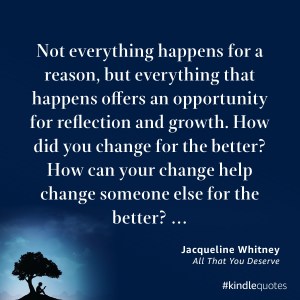 If you are able, let your own life lessons become those from which others can benefit. But if you struggle to resurrect those hard learned lessons due to the difficulty of doing so, I support you in stepping away because only you know what you can handle while still supporting your own mental health.
Weekend Misery
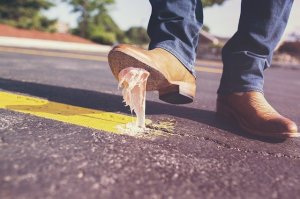 I recently had a doctor’s appointment on a Friday. After the Medical Assistant called my name, I followed her down the hallway to the exam room. I asked how her day was going, and she mumbled a response that didn’t sound too positive. My response, “Well, at least it’s Friday and tomorrow starts your weekend.”
“That’s no better.”
Oh. I apologized and restated my encouragement, saying that I guess sometimes work can be a healthy escape from what awaits us at home.
I learned at least two things that day:
- Sometimes reaching out to others can appear to fall flat
- Not everyone has a welcoming and peaceful home life
But I don’t regret reaching out to the Medical Assistant with kindness because maybe, just maybe, my presence as her patient inserted a welcome glimmer of friendship into her day. Some glimmer attempts can certainly fall flat, but I am also quite certain that just the opposite can be true.
A New Year Practice Every Minute of the Day
 This second post of 2026 proposes that every day be treated as if one does a New Year.
I am going to try to provide you with wisdom that might help you get a good start on 2026, and every day you’ve been given. Here’s what Dr. Bernie Siegel has to say in his book 365 Prescriptions of the Soul:
How can you possibly have a new year? You are the same person, and the world doesn’t start again with a clean slate just because a calendar page has been turned. Your troubles don’t miraculously disappear. Your life was anything but new when you awoke on the first day of this year; it was simply a way of measuring the passage of time. Why make such a fuss over it?
I guess it’s because we like new starts. There’s something refreshing about having the opportunity to start all over again. Not unlike second chances, I treat the commencement of a new year as an opportunity to do better. Unless you’re perfect, you too like the idea of a fresh start.
But instead of relying on 365 days to do better, I can do better in the next minute. Right now, I can do better. I can think of and speak more kindly towards others and myself. I can promote a healthier lifestyle and make plans to construct a better me and a better world, so why take all 365 days of the year to do so?
I have the chance to live my best life now, and so do you. To borrow another quote from Dr. Bernie Siegel, here’s some encouragement to make a new year more palatable.
When every evening is New Year’s Eve and every day you awaken to is New Year’s Day, you are living life as it was intended.
That makes sense to me, so you know what? I’m gonna get right on it!
Won’t you join me?
Time To Move On
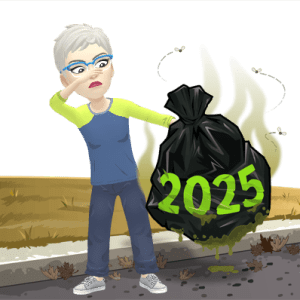
I am not trying to be dramatic, controversial, or disturbing. Nope! This is just how I am when a new year is peeking around the corner. It’s all I can do NOT to hang up next year’s home office wall calendar in October when I first purchase it. I force myself to wait until at least the day before the new year before doing so.
Guaranteed, I won’t wait that long this year.
Don’t get me wrong, I do this calendar page turning every month of the year so that by the time there are a couple days remaining in the month…FLIP! There’s a new month’s calendar page to grace my wall. Does that mean I don’t live in the present? Probably. But for me, it’s a comfort to look ahead and hope for the best.
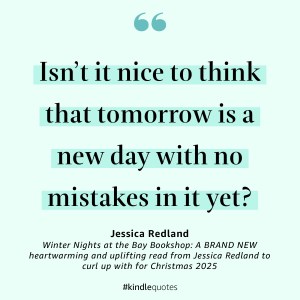
I think the above sentiment is appropriate when hoping for a better new year, both globally and locally. It works for me; I hope it works for you.
The Bravery of Kindness
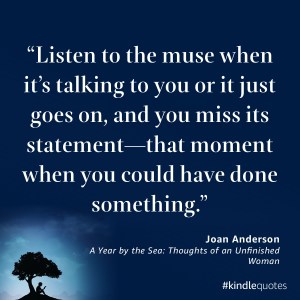
Why does it take bravery to be kind? Because sometimes we have to reach out to someone when doing so feels uncomfortable; uncomfortable because offering a kindness that might be rejected would be embarrassing. Or perhaps the intended recipient might take offense at the gesture, thereby cancelling out the kindness meant to be shared.
That’s where intuition comes into play.
The other day, the employee who checked our groceries at our neighborhood store wore a pin that indicated she was a US Air Force veteran. That was when my intuition started to buzz. I asked how her Holidays were going, and she said her son, who is on active US military duty, wouldn’t be coming home for Christmas this year. That really got my intuition buzzing…CORRECTION…my intuition was jumping around in my body.
As a member of a local botanical garden that has an extraordinary Holiday light display throughout the gardens in December, I had two free passes in my wallet. I asked “Laurie” if she was familiar with the gardens’ annual light display. Boy, was she. Her face lit up. I pulled out the passes and handed them to her. “Would you like to go this year?” She started to cry, saying she and her husband wanted to go, but it didn’t seem possible this year. She looked me in the eyes and, through her tears, said, “This means so much to me.” Let me tell you, it meant a great deal to me as well.
I have been working on amping up my bravery. As a matter of fact, BRAVERY is my word for 2026. I am very glad I was able to exercise my bravery muscles to go along with the kindness I felt compelled to extend at the grocery store.
My encouragement to everyone is just this: trust your gut.
And talk about trusting your gut, please enjoy this prime example of where bravery and courage come into play. It’s quite a dramatic piece from an extraordinary blog I follow, Boomer Banter.
Discounted Books For You!
My two novels are available in eBook format for practically free and are very affordable in paperback.
Requiem for the Status Quo is a work of fiction based on real events in which I was personally involved, and it effectively portrays the role family caregivers play in caring for loved ones with Alzheimer’s and other forms of dementia.
A Jagged Journey, also fiction, addresses the attitudes you and I exhibit and witness in a world that should allow for diversity and differing beliefs.

Unsaid Words? Don’t wait until it’s too Late.
AND LET ME TELL YOU…I KNOW OF WHAT I SPEAK.

My sister, Mary, was born 8 months before me; my parents adopted her after my mother suffered three miscarriages. As sometimes happens, before the ink was dry on the adoption papers, my mother became pregnant with me. Yay me!!!
Suffice it to say, being so close in age, my sister and I grew up together, sharing the same experiences and often the same friends. We are still very close, even though we don’t live in the same state.
Several years ago, after our mother and father had passed away, my sister located her birth mother, met her, and had a few occasions to get together with her and her other daughters, even though her birth mother lived in eastern Canada and my sister resides in California.
 Because I erroneously believed I would have all the time in the world to thank my sister’s biological mother for placing Mary up for adoption, I missed out on that opportunity because Cathy died a few years after my sister first connected with her.
Cathy’s decision to provide the best possible home for my sister was an extraordinary gift for which I wanted to express my gratitude. Still, I procrastinated and never told Cathy what a blessing her first daughter is to me. In my recent history, this is by far the biggest regret I harbor in my heart.
Kind words left unsaid benefit no one.
Create a Season of Calm

Being kind to yourself is most definitely a serious matter. You deserve to be treated with the same gentleness you would treat others for whom you care.
If the Holidays are starting to get to you, do what is needed to bring some calm and control back into your life, even if that means disappointing others. Again, you matter just as much as those you might have to disappoint, so I would advise you to try a little kindness toward yourself, a kindness you so very much deserve.
And if you’re doing absolutely well right now and can exercise some outward gentleness, check in on individuals who might need a reminder that they matter and that someone was thinking of them. You don’t have to make a huge effort – especially if doing so depletes your own reserves – but a phone call, a text, or a hello in passing – could mean the difference between making their day and not.
Do what you can, and start with yourself.
I Appreciate You!
 What a terrific statement that is, isn’t it? This statement was made twice in my presence the other day. The first time was when I said it to the grocery store checker that morning, an employee who was stretching her back and then leaning on the check stand. I asked her, “Has it already been a day for you?” To which she responded, “You have no idea how long it has already been.” I told her I was sorry and that I hoped she got relief soon, then I said,
I appreciate you, I really do.
Later that same day, I was at a medical office, having turned in some paperwork to the front desk employee who then said the following to me,
I appreciate what you have done, thank you so much.
I felt acknowledged, and I felt like my presence mattered to her. I felt present.
One definition of appreciation is:
Recognition and enjoyment of the good qualities of someone or something.
Wow. That must be why the grocery employee expressed her pleasure with my statement earlier that day and why I felt so present and worthwhile during my very brief encounter with medical staff a few hours later.
Please extend your appreciation to others as you go through your day today. You just might save that person from having the worst day of their life.
Kindness Heals
 Have world events impacted you in such a way that you feel things are hopeless?
Are you overwhelmed to the point that you say to yourself, What could I possibly do to make a difference?
The answer is:
You can make a difference because kindness overcomes all.
My last post addressed the negative power of words. I sincerely believe that random acts or words of kindness can make a difference in the world in which we live. There are so many negative and hurtful words being thrust into our universe; can’t we please try to balance out that hurt with words of encouragement, recognition, and nourishment?
 Yes, nourishment. In all our daily interactions—whether via social media or in person—we can nurture the hurt that exists all around us. Our words, our smile, and our actions may just change someone’s life forever. Haven’t you been on the receiving end of that type of transformative nourishment? Didn’t it feel good? Didn’t it fill the emptiness within you that hungered and thirsted for confirmation that you matter, that you aren’t a failure, that you have potential?
Let’s revisit how that felt and commit to quenching the thirst of each person with whom we come in contact, whether virtually or in person.
Words Hurt
Syndicated columnist Leonard Pitts Jr. wrote an Opinion piece in a January 2014 Seattle Times newspaper edition that focused on the cruelty that comes out of the mouths of people who criticize the physical differences that exist in people. His column focused on people’s cruel words that made fun of a very successful actress whom they deemed to be overweight.
The columnist questioned when and how this type of truly sadistic personal meanness became acceptable, even commonplace. And may I just say that in the year 2025, such meanness flows from the mouths of those in political office, seemingly sanctioned because of the position held by the word abuser. Why do we think it’s any of our business to criticize someone else’s supposed imperfection? Doing so is an act of judgment of someone about whom we know very little.

Mr. Pitts asked what had happened to what he called “home training” that is supposed to teach us that there are just some things you don’t say to or about people in a public forum?
Whether our “something” is shaped like the emotional scars of abuse, an eating disorder, physical or developmental disabilities, bad teeth, or a nose that is too big, too fat, or too small, no one has the right to inflict hurt on us with their words.
Let us all adopt Nobel Peace Prize winner Elie Wiesel’s statement made during an interview with Oprah Winfrey many years ago. May it be a challenge to all of us.
As a human race, we must choose between: the violence of adults, and the smiles of children; the ugliness of hate, and the will to oppose it; inflicting suffering and humiliation on our fellow man, and offering him the solidarity and hope he deserves for naught.
Even in darkness, it is possible to create light and encourage compassion. Every moment of our life is essential; every gesture is essential. Our role in life is to give an offering to each other.
How are you today?
I recently read a book on Stoicism, Reasons Not To Worry, and the author, Brigid Delaney, concluded that her goal most days is to be tranquil, rather than happy, because “Happiness…is often a fleeting emotion that seemingly comes and goes on a whim…”
 So if your response to my post’s question does not fall into the category of happiness, please don’t feel as though you’re in a bad state of being. You are not; after all, as the author also states, “…tranquility, although a less exciting state, is more constant, acting like a slow-release drug that keeps me stable and content throughout the day.”
So I ask you, what’s not to like about stability and contentment?
Anyone for a Parade?
Dr. Bernie S. Siegel provides some wisdom for our day from his 365 Prescriptions for the Soul book. The following is provided verbatim:
Parade of Life
Forget past mistakes. Forget failures. Forget everything except what you are going to do now, and do it. – William Durant
 Life is a parade. Sometimes we march along and realize we have passed by what we were looking for. What do we do? Stand there and drop out of the parade? March on with regrets? Feel bad about how we looked or that everything we wanted was on the wrong side of the street? It’s passed! Forget it and march on!
Sometimes our parade isn’t so pretty, and the crowd isn’t interested in us. If we drag everything we have passed with us, we will destroy the present. We have no future when we live in the past.
We even talk about past lives. Whether you believe in them or not, the same principle applies. If you are living a past life, you are destroying your present one. In therapy, people come to understand why they are acting the way they are and how the past is affecting them. They learn to let go, move on, and not sit in the same classroom year after year. They graduate and commence a new life.
To conclude, I, Irene Frances Olson, have this to say about Dr. Siegel’s comments:
The good news is that we can learn from our past, both the good and the bad, but if we stay cemented in the past and don’t move on? That parade Dr. Siegel talks about? It’ll pass us by.
I don’t know about you, but I don’t want to get left behind.
A Smile Isn’t Everything
Our weekly grocery store has made it through thick and thin, which of course includes the pandemic that closed down so many businesses and saw employees leaving their place of employment in droves, so much so, that retail operations are now struggling to staff their stores appropriately. Many long-time employees stay committed to their work, wanting the salary, of course, but also wanting the retail operation to survive.
The other day, in response to my comment about the cute smiley face health mask our grocery checker was wearing, this long-time employee told us that a “secret shopper” was brought into the store to monitor its employees and this shopper told management that “Jane” didn’t smile when he went through her checkout stand. Jane shows up for all her shifts, does a stellar job, and the lack of a smile becomes punishable?

As difficult as it is to fill retail shifts, I would think the lack of a smile at any given time, whether momentary or ongoing, isn’t an offense worth reporting to management. I think it was unfortunate that this employee was reprimanded. We are in your corner, Jane. May peace and prosperity be your portion.
Aging Isn’t For Sissies

I am 72 years old. Up until my 60s, I looked forward to every birthday, but when I was about to turn seventy, all bets were off. The good news is, I now know why.
My mother died at the age of 77, which, come on now, isn’t old. My mother’s cause of death doesn’t at all reflect my health status. Mom had three health conditions that adversely affected her quality of life for many, many years. I don’t have any of those conditions, but when I turned 70, I saw my life as one that was hanging in the balance.
Over the past couple of years, I have reconciled to the fact that I do not fear that I will die as Mom did. Nope! But I still don’t like being in this particular decade of my life. Perhaps I will get over it, and, quite frankly, I hope I do, because feeling averse to this decade is counterintuitive to living in the moment, which is what I truly endeavor to do. If you read last week’s post, you know that I’m trying to do better at living and accepting my age. But it’s not always an easy task, is it? But “easy” isn’t what I’m demanding out of life either; rather, I simply want to refine my ongoing attempt to accept what is.
And there you have it, unapologetically me in a nutshell.
A Stoic Lesson
 In light of the way life has unfolded in the world as of recently, I have endeavored to discover a way of surviving the day-to-day tedium, and it appears I have done so for myself. It is not a religion, with its set orthodoxies and rules; rather, it is a way of living that is extremely pliable:
Stoicism
I now provide for you the principles found in this philosophy that – quite frankly – seem worthy of our attention. This list comes directly from the book, Reasons Not to Worry – How to Be Stoic in Chaotic Times, by Brigid Delaney.
- Acknowledge that you can’t control much of what goes on in your life.
- See that your emotions are the product of how you think about the world.
- Accept that bad things are bound to happen to you from time to time, just as they do to everyone else.
- See yourself as part of a larger whole, not an isolated individual; part of the human race, part of nature.
- Think of everything you have as not your own, but simply on loan, that one day will be taken back.
And that is all I have to say to you this week because it is not I who says it, but the Stoics themselves.

