I’m attaching the above article from a fellow blogger. He, like so many of us, find it difficult to fathom how anyone would take advantage of a vulnerable human being. The very unsettling fact, however, is that incidents of abuse of the elderly occur and are far too common.
Whether the abuse is instigated by family members upon the elderly in the privacy of their home, or by “professionals” in long-term care settings such as assisted living facilities, nursing homes, or group homes – it happens. Oftentimes such incidents go unchecked for months, or years, and are discovered only when a death occurs, or when someone with a conscience steps forward and complains to the authorities. Those being abused either don’t have the ability to complain or they fear that doing so will make matters even worse for them.
Worse? Residents fear that if they complain, they’ll be thrown out of the place in which they live – the place in which they receive the abuse. I know that you and I are quick to say, “Fantastic! What a great relief that would be if the person no longer lived with his or her abusers!” We say that because we have not experienced what they have experienced; we have not heard the threats and vicious statements directed towards these vulnerable human beings. These violated human beings don’t understand that abhorrent behavior is not normal because it’s all they’ve known.
These are older human beings who at one time were innocent children showing up on their first day of school; worried teenagers fretting over what to wear to the prom; young adults heading off to college and/or a career; husbands and wives, moms and dads … people just like you and me. Now they’re nothing but broken, barely alive bodies who have been treated worse than a junk yard dog.
Alzheimer’s Disease: Your Questions Answered | PBS NewsHour. We need all the help we can get in order to make well-informed decisions about any caregiving journeys that might occur in our future. The attached article shows a snapshot of one adult daughter’s 24/7 caregiving journey with her mother.
Perhaps you’re saying that you don’t anticipate your parents requiring any caregiving assistance in their frail years (perhaps your parents have already passed so no need exists there.) Do you have any siblings? close friends? a significant other? If you answered “yes” to any of those designations, the possibility exists that you will be called upon – or you’ll volunteer – to be of assistance to someone who needs help with their activities of daily living (ADLs).
Taking care of a loved one is no easy task. It doesn’t matter how much you love the person, your patience and your abilities will be tested. I truly admire the subject of this PBS article. Rebecca Wyant is the full-time caregiver and guardian of her mother, Mary Wyant, who was diagnosed with Alzheimer’s at the age of 65. Mary moved in with her daughter in 2006, is now 74 years old, and Rebecca is in her seventh year of personally providing her mother with full-time care.
How does Rebecca do it? She thought she was prepared for the task but soon discovered that finances, and creative ways of managing her mother’s care, are dwindling resources. With that said, however, Rebecca states that she is the only person who can provide the care that she can. She agrees that professionals could provide the care, but absolutely no one could possibly care for mom as Rebecca can. That part of the video disturbs me a bit, and I’ll tell you why.
Dad, myself and one of his caregivers.
I was an Alzheimer’s Association caregiver support group facilitator for several years and heard the voiced concerns of those daughters, sons, and spouses, who carried a great deal of guilt on their shoulders for not being able to keep up with the care of their loved one. They did provide the care initially, and then found their abilities wanting – and their health declining. They eventually made the very difficult decision to place their loved one in an assisted care setting.
Here’s the story of “Constance” and “Robert.” Constance first came to my support meeting at the age of 80 having already taken care of Robert at home for the previous three years since his diagnosis. Constance’s health started to decline due to lack of sleep – Robert’s dementia had no respect for the clock. Added to that dilemma was the fact that she had no existence outside of her house. She was trapped! Her friends abandoned her, all the social activities in which she had participated fell by the wayside, but she refused to move her husband into an assisted care setting, even though she felt they had the finances to support such a move – many do not and have no choice but to provide 100% of the care. “No one can take care of Robert like I can. I would never do that to him – placing him in someone else’s care. That’s my duty as his wife; a duty I take seriously.”
Fast forward one year later, and Constance had no choice but to place Robert in an adult family home with five other residents; it was either that, or she would have been forced to relinquish her caregiving role because, quite frankly, she ran the risk of dying before Robert. Once she relocated Robert to a care home, the well-trained staff provided all the assistance Robert needed, and Constance could now have the sole role of being his wife. She visited him almost daily until the day he died one year later.
Constance admitted that she wished she had moved Robert to the adult family home earlier than she had because she realized that being a committed wife didn’t have to include caregiving that risked her own health. She relished her reprised role as his loving wife when she visited him – none of the other care staff could fulfill that role but her – and the staff did what they do best, providing all the care her husband needed.
This is the nugget I want you to come away with from my above commentary: guilt and obligation are normal emotions that might prevent you from making decisions that may very well be in your best interests and those of your loved one. Please believe that allowing someone else to take care of your loved one does not equate to you shirking your familial duties. It does, however, tell me that you know your limits, and you know what is best for your personal situation in the long run. Additionally, it shows that you value your long-standing role as a daughter/spouse/partner/sibling, more than any new role as a care provider. There’s something to be said about retaining your given role in a relationship.
Caveat: as I indicated above, finding affordable care outside of ones home is no easy task, and you may have no choice but to provide the needed care for your loved one. But if you are able to find trusted family or friends who can “spot” you from time to time so that you can enjoy a needed time of respite, please do so. You’ll be far more able to carry out your caregiving task if you take care of yourself first. See my article: Caregiver: put on your oxygen mask first.
The last Father’s Day that I spent with my dad, Don Patrick Desonier, occurred on June 17th, 2007. That year had been a definitive year in my father’s decline from Alzheimer’s so I didn’t need to be prescient to know that his time to escape the disease was drawing nigh. (Additionally, it didn’t help that his inoperable prostate cancer had decided to grace his body – like it needed something else to assault it.) I would normally not leave my husband to his own devices on Father’s Day – he’s a terrific dad and deserves to be spoiled – but I knew his adult daughters would give him his due so I left our Redmond, Washington home and flew down to Medford, Oregon for this mid-June celebration with my dad.
We enjoyed a subdued Father’s Day breakfast in the memory care unit’s dining room. My father didn’t eat all that much but he seemed to enjoy the ritual of sitting with his fellow memory-impaired friends as smiles and congratulations circled the table.
Walking with Dad in 2007.
Those of you who are familiar with a memory care unit of an assisted living facility are also acquainted with the dearth of engaging activities therein, especially when your loved one can no longer participate in a meaningful way. Because of that dilemma, I always took my father “off campus” to take a walk at a nearby park. Mind you – his ability to ambulate was hindered, but we usually managed to walk the full perimeter, as we did that day. June in Medford, Oregon is H-O-T, but like many older people whose inner thermometer doesn’t seem to be working at full power – my father was dressed in a long-sleeved heavy cotton shirt buttoned right up to the neck, and an old standby wool cardigan – one of his faves.
Part way through our walk, I somehow convinced dad to at least take off his sweater, and to enjoy some hydration from the bottled water I always carried with me. Shortly thereafter, two 20-something year old men on bicycles approached on the path in our direction; they slowed down and before they passed us one of them uttered, “Happy Father’s Day, Sir!” Dad wasn’t quite aware of what they said but I reiterated their greeting, “Dad, they said Happy Father’s Day to you – isn’t that nice?” “Yes, Irene, it really was.”
Fast forward to June 16th, 2013; this adult daughter still remembers, and cherishes, the random act of kindness by those young men. It made my day in June 2007, and it’s made my day ever since. I’ve never forgotten your greeting, given to an old man who had certainly experienced many Father’s Day events in his 89 years. Thank you – bike riders at Hawthorne Park, on Main Street, Medford, Oregon. I hope you will always be on the receiving end of timely acts of kindness.
You are my heroes because you are ordinary people who did the ordinary right thing on June 17, 2007, making my dad’s last Father’s Day an extraordinary time.
Or perhaps while sitting in the easy chair next to your bed, you tried your very best to ignore the urge to purge … but you couldn’t wait any longer for someone to assist you so you let it all out, leaving you in a shameful way, sitting in a mushy pile of excrement while a stream of urine puddled at the base of your chair.
Welcome to the life of a vulnerable adult living in a nursing home. From coast to coast across the United States skilled nursing facilities (SNF) are filled with adults needing the greatest amount of assistance with their activities of daily living (ADLs) – toileting is one of those ADLs.
The following true scenarios occurred recently at a nursing home in a Seattle suburb, and at a similar facility in a suburb of San Francisco.
(Photo credit: Wikipedia)
A man who is fully reliant on mobility assistance pushed the call button near his bed to register a need for assistance. In this case, he needed to go “Number 1” and “Number 2” and had the audacity to require assistance while the staff was busy attending to other residents’ needs – but not his needs. When a staff person finally entered his room an hour later, she did so to simply indicate that she didn’t have time to take him to the bathroom so he should just go in his pants.
A woman equally as vulnerable needed the assistance of a staff person upon waking in the morning and – knowing that breakfasts were brought around to the rooms at 7 a.m. – the 91 year old started to press her call button at 6 a.m. hoping to have her morning pee prior to the arrival of her breakfast tray an hour later. That “luxury” was one that would not be afforded her; instead, a caregiver brought a breakfast tray to this patient in the seven o’clock hour and when the patient asked if she could receive help to the toilet prior to eating her breakfast, the employee told her to just go in her pants because no one had time to help her at that moment.
I can’t help myself – here’s another incident: A staff person helps a woman to the toilet first thing in the morning. The woman who is clothed in a lightweight nightgown finishes using the toilet and is ready to receive assistance back to her bed – but lo’ and behold, the staff person forgot to place the call button within close reach of the patient so she is not able to alert someone of her desire to go back to bed. Enough time has passed that by this time the patient is shivering and screams for help – screams that went unnoticed for a quarter hour. In desperation this elderly woman somehow managed to lean far enough forward to push over a metal trash pail which she then kicked repeatedly until someone finally arrived to see what all the commotion was about.
These stories don’t paint a very pretty picture do they? They depict a low quality of life that no one deserves.
What does Quality of Life mean to you?
Eating at fine dining establishments?
Having a clothing wardrobe that rivals the catwalks of Paris?
Driving in a luxury vehicle that provides amenities previously only found in limousines?
For most of us, quality of life boils down to leading a dignified existence in which we are allowed to take advantage of the basic necessities of life. For me, those necessities should include a safe living environment, sustenance, the inclusion of loving family and friends in my life, the freedom to make choices about matters that are important to me, and being on the receiving end of respectful behavior from those with whom I come in contact.
The most vulnerable among us should expect no less than those basic necessities, but “the system” isn’t working to guarantee those basics. Try to imagine, if you will, your own grandparent, parent, spouse, partner, or other family member in any one of the above scenarios. How comfortable are you with that type of day-to-day existence for them? You’re not comfortable at all – as a matter of fact you’re feeling a bit uneasy about this whole subject matter. I’m sorry to place doubt in your mind about the care your loved one is receiving but I’ll just bet that you need to get out of the comfort of denial you’ve been enjoying and into the eye-opening role of resident advocate.
Lack of caring = lack of care. Nursing home management is a tough job to do correctly, but I know it’s possible because there are some reputable and well-run facilities out there – not perfect by any means, but fairly acceptable. So yes, some nursing facilities employ stellar care staff but there are also those employees who just don’t give a damn. “I go to work. I go home after work. I get paid. What more do you want from me?” Caring – that’s what we want. You’ve chosen to work in this particular type of environment so don’t act like you didn’t know what you were getting into. Withholding proper care for those who have no recourse but to depend upon you is not only unfair, but it’s illegal. And how about answering these questions about your own aging prospects: Do you think you’ll somehow skip the journey into old age? Do you not realize that you too will be as old as the patients whose care is entrusted to you? What type of care will you hope to receive? Does it resemble any of the scenarios I’ve illustrated above – or are you under the impression that you’ll be at a “Champagne and Chandelier” type of place where you’ll be waited on hand and foot?
Not gonna happen.
This article just scratches the surface of the sub-standard care that can be found in nursing facilities. I only mention the toileting issue because it’s been front and center in my experiences with some of my acquaintances lately. One place to start getting some positive traction where these matters are concerned is the National Long-Term Care Ombudsman Resource Center where you’ll find links to advocacy programs in your state. Call those local representatives and report any concerns you may have about how your loved one is being cared for, or not cared for, in their nursing facility, assisted living facility, or group home.
If you act on behalf of your loved one, you’re also acting on behalf of everyone else in the facility because trust me – your mom isn’t the only one being neglected on her nursing home floor.
Very little humor can be found in the world of finance – except, perhaps, for these anecdotes:
(Photo credit: Wikipedia)
A bank in New York City is now making it possible to buy and sell stock using their ATM machines. This is great – it gives muggers a chance to diversify their portfolios.
A woman visited the bank to close her account because she was convinced the institution was going under.
Asked by a startled manager why she thought so, she produced one of her checks, endorsed by the bank, “Insufficient Funds.”
An accountant answered an advertisement for a top job with a large firm. At the end of the interview, the chairman said, “One last question – what is three times seven?”
The accountant thought for a moment and replied, “Twenty-two.” Outside he checked himself on his calculator and concluded he had lost the job. But two weeks later he was offered the post.
He asked the chairman why he had been appointed when he had given the wrong answer.
You’ll see that the title of my blog article is different from what is attached. This blog title reflects what my local Seattle Times newspaper printed as a heading for Leonard Pitts’ article concerning the May 2013 bloody attack on a British soldier. The Seattle Times title said it all for me.
Now keep in mind, we’re not talking about impotence for which the pharmaceutical industry holds the panacea. The impotence addressed in this must-read article by Mr. Pitts is that which comes about because of a lack of true power. Have you ever been bullied? I have – and it wasn’t until fourteen years ago that I came to the realization that those who bully are those without power; those who feel they must wear trappings that give the illusion of power; such as the trappings of abusive language, character disparagement, and small & large scale violence – destructive acts by anyone’s assessment.
Pulitzer Prize winner, Leonard Pitts, Jr., believes that “terrorism’s threat lies not in its power, but in its effect, its ability to make us appalled, frightened, irrational, and, most of all, convinced that we are next, and nowhere is safe.” Mr. Pitts provides an example of an acquaintance who, after 9/11, told him she would never enter a skyscraper again – as if each and every tall building in our country would be on the receiving end of an airplane attack. My god, think of those people who work in these buildings and who, if they maintained the same fear and naive determination as that woman, would throw our economy even further into the toilet because of their refusal to enter their place of employment – a very tall building.
I think the biggest weapon these flaccid terrorists carry in their arsenal is the world’s ability to instantly broadcast – and then repeatedly broadcast – these desperate acts of violence, and our desire to catch such acts on television, You Tube, blog videos and photos – the list of viewing opportunities almost endless.
“We cannot control what such people do. But we can control our reaction thereto” states Mr. Pitts. Please readers near and far, let’s not fuel the fire of violence with our cravings to see it played out before us countless times through instant electronic images. Let us fuel our empathy and strengthen our determination to turn our backs on the sensational by responding in such a way as to not “become the weapon terrorists use against us.” Let’s not give these weaklings any more power – because as stated in the Miami Herald piece, “the only power they have is the power we give them.”
Here’s a new category of posts in which I will provide a circumstance, and you can provide your potential response; similar to a television show in the United States for which I’ve seen ads.
Here’s the circumstance that I encountered today that has inspired this initial post:
I walked into my local grocery store today, and waited at the Customer Service counter to cash in my winning lotto ticket: $10 Woo hoo! (The Customer Service counter is just outside of the public restrooms.)
(Photo credit: Wikipedia)
As I waited for customer service, what did I see, but a male customer exiting the men’s bathroom, with a USA Today newspaper in his hands. It doesn’t take an advanced educational degree to discern what this customer had just done – in the bathroom, with a newspaper. By the way – USA Today is just one of many newspapers found on shelves approximately 20 feet inside the store’s entrance that one can pick up and purchase at checkout.
But that’s not all. This customer then placed the very same newspaper – no longer a virgin-clean newspaper – on one of the seldom-used checkout counters, gathered his shopping cart where he had parked it while he did his business in the bathroom, and then happily proceeded to do his shopping.
As luck would have it, this same gentleman was right in front of me paying for his groceries while I loaded up the checkout counter with my soon-to-be-purchased items. He walked away, I took my place at the checkout counter, glanced over at the seldom-used counter near the public restrooms, and there lay the USA Today, in all its tainted glory.
What would you do?
Postscript: A family member/reader suggested that the newspaper reader may have indeed already paid for the USA Today. I agree, that’s a possible scenario. Let’s take that thought a wee bit further, shall we? Perhaps the paper had been paid for and the newspaper reader left it on the checkout stand so that someone else may enjoy the day’s news, free of charge. (What a generous thought on my part.)
Even going with that wonderfully generous supposition, shouldn’t the next person on the receiving end of the free newspaper have been made aware of the previous owner’s potty antics e.g., perhaps the satisfied pottier could have placed a sign on the newspaper stating that this issue of USA Today had already spent considerable time in the men’s bathroom and therefore, in full disclosure, you have first right of refusal should you decide not to read a newspaper that has been in close proximity to someone’s morning duty?
The above article chronicles a “competition” between two gentlemen in their 80’s who endeavored to become the oldest person to reach the summit of Mt. Everest. I’m happy to say that 80-year old Yuichiro Miura reached the summit successfully on May 23rd, 2013 and became the oldest person to do so. Following on his heels is an 81-year old Nepalese man, Min Bahadur Sherchan, who will make his attempt some time next week, most likely making Mr. Miura’s 15 minutes of fame just a bit of has-been news as the Nepalese man takes his place as the oldest to successfully reach the summit. Not many of us – alright, none of us – will reach the summit of Mt. Everest or even care to do so…
and that’s okay.
(Photo credit: Wikipedia)
We all have Everest moments, don’t we? Yuichiro Miura’s goal to summit Everest is not our goal. Mr. Miura stated his reason/goal to climb Everest: “It is to challenge my own ultimate limit.” We all have our personalized goals that involve reaching our own ultimate limit. I’ve had many of those moments in my 60 years of life – some of them exercise related, but more importantly, most of them were personal growth related. The most recent exercise goal has been the successful completion of two one-hour Pure Barre exercise classes…with three more to go in order to fully utilize the gift package that my daughter Erin gave me in honor of my 60 years. We’re doing this together, and please know that my 37 year old daughter is in far better shape than I am … and that’s okay. I am no expert on this type of exercise, and believe me, within minutes of completing each session, I’m in excruciating pain. But that’s okay because those exercise sessions didn’t kill me nor did they disable me; they simply made me realize that I was up to the challenge of doing more than I thought I was able.
Isn’t that the key? Maybe your Everest goal is finally having the courage to talk to someone about matters that concern you; or your Everest goal is changing jobs – or changing relationships; or perhaps your Everest summit is completing your high school or college education? Whatever your goal – whatever your Everest – when you reach that goal you are no less newsworthy than Mr. Miura or Mr. Sherchan. Quite frankly, what these octogenarians are doing is fabulous and I respect and honor their accomplishments – but I don’t admire their accomplishments any more than those of which you and I are the proudest. Mr. Miura stated that a successful climb would raise the bar for what is possible and that he had a strong determination that now is the time.
Now is always the time – because it’s the only time we have.
I’ll complete the remainder of the exercise gift package that my daughter gave me. Who knows, maybe I’ll buy some more sessions to continue on that journey – maybe I won’t. What I do know, however, is that I will always set goals, and I will always do my best to reach them.
When you do your best – you’ve done the best you can.
I hope you’ll feel proud enough of your Mt. Everest moments to share them with all of us. I, for one, can hardly wait to hear about them.
I’m thrilled about the above Blog article that just happens to have been posted today, my 60th birthday! There is a lot of substantive content in my fellow blogger’s posting: a link to a New Yorker Magazine article by Rebecca Mead, titled A Sense of an Ending; Phillip Toledano’s photographs of dementia; and, of course, the Blogger’s own contribution to the topic. The aforementioned blogger, Kathie Ritchie, maintains an exceptional blogsite, http://www.mydementedmom.com.
I hope you’ll visit all of the above – and be better off as a result.
I don’t know about you, but I need a dose of resilience right now. I may not need it next week, or the week after, but I need it now. I have a certain degree of the stuff, but I think some of it seeped out of my being. As you’ll see in the very well-written article attached above, resilience means to jump back.
(Photo credit: Larry Rosenstein)
Taken a bit further in its definition, resilience is the ability to bounce and not break when difficulties weigh you down. Being elastic; that sounds like a worthwhile goal. Until you start feeling the inability to bounce back, you may not even realize that some of the stretch has gone out of your rubber band.
I also need a bit more courage: courage to do all that I need to do, want to do, and plan to do while I’m still able. Courage comes from the Latin word, heart; to have rock-like inner strength. Sometimes we go through life thinking that our courage is completely intact until we discover that it’s been compromised due to some event – or string of events – that have come our way. Do you think that perhaps the only way to know if we’re fully stocked with the stuff is to undergo this sort of testing process?
I’ve attached the above article from a fellow blogger because I know for a fact that music memory stays with a person, perhaps longer than any other memory. I’ll give you one personal example that proved this fact for me. There are other encouraging examples readily found on the Internet, but because my family experienced this phenomenon first hand, that’s what I’ll talk about, ever so briefly.
Nancy and my father
My sister-in-law Nancy lived a life that was steeped in artistic activities. She was a well-known and respected interior designer and she was a flautist. A flautist is one who plays the flute. (I’m providing that definition because the sound of the word “flautist” sounds like an uninvited body function to me.) But I digress.
Nancy enjoyed her music involvements on a small and large scale. In the early 80’s, she met my brother during a local production of South Pacific – a production in which my brother acted, and for which my sister-in-law provided the music accompaniment. Fast forward to the year 2012. I gladly helped my brother out by taking Nancy on outings – sometimes to art museums, sometimes to music events. Regardless of the outing, I always made sure that my vehicle’s radio was tuned to the classical music station. I knew Nancy would enjoy it, and I also knew that even after being diagnosed four years earlier with mixed dementia, Nancy would be able to identify the orchestral or operatic pieces being broadcast.
Although I grew up appreciating the classics, the only pieces I can accurately identify are those often-played symphonies such as Beethoven’s 9th Choral Symphony, or Vivaldi’s Four Seasons. Nancy, on the other hand, could pick out the lesser known arrangements and could identify, with pinpoint accuracy, the conductor and the soloist for that particular piece, e.g. Leonard Bernstein; Yo Yo Ma. It saddened me to hear the hesitation in Nancy’s voice when she would speak up while sitting in the passenger seat, making the musical identifying remark but always questioning whether she had done so accurately. “I think that’s Mozart” or “I think that’s Yo Yo Ma playing his cello. I think it is.” Even before the piece was identified on the radio I would assure Nancy, “If you say that’s Yo Yo Ma, by God, it is Yo Yo Ma.”
And she was right – and she was affirmed that she still had a handle on Handel, or Mozart, or Sibelius. Yep – she never lost her abilities. What a delight, and what a pleasant interlude during an illness that took her life on July 4th, 2012 at the age of 69. One thing I know for sure, however, is that from Nancy’s viewpoint right now, she’s enjoying her favorite opera each time Wagner’s “The Ring Trilogy” is played around the world. Nancy doesn’t need season tickets anymore; she has a front row seat.
A recent article by Jim Fitzgerald of the Associated Press focuses on a few electronic methods that might relieve some of the struggles experienced by caregivers who try to balance their frantic personal lives with the oftentimes emergent needs of their loved ones. For the purposes of my article, I am only looking at the type of monitoring put in place by a family member to check on an elderly person’s well being; primarily a family member with Alzheimer’s or other dementia.
Beleaguered caregivers getting help from Apps is an eyeopening look at how Smartphone Apps, and other electronic devices, can provide some sort of relief to lessen the caregiver’s load. Many of those who are long-distance caregivers, such as I was for my father several years ago, might benefit from being able to monitor their family member’s safety and well-being from a distance.
But does such monitoring invade the loved one’s privacy? Of course it does; but I guess one could say that the benefits outweigh the disadvantages of such monitoring. Or do they? What comes to my mind is the elderly person’s gradual loss of independence – an aspect of life that many of us would equate to being a requirement for our own quality of life. But I digress.
At best, I think electronic monitoring serves as a stop-gap or interim measure of caregiving before hands-on care is put into place. The Pillbox App keeps a very tentative watch on whether or not a loved one – say a parent – has taken his medication properly. If the parent does not have compromised executive function, it’s certainly easy to “fake it” so that the daughter can feel as though all is well ten miles away. In reality, however, medication mismanagement might be taking place, carried out by the parent.
(Photo credit: ell brown)
The Alzheimer’s Association Comfort Zone program requires that a loved one wear a GPS device at all times so that family members can monitor their comings and goings throughout the day. The system is of no benefit if the person doesn’t wear the pager; and if the person has dementia, there’s a strong likelihood of that happening. I’m being the devil’s advocate here, simply pointing out that the system is only as good as the cooperation required to use it. HOWEVER, and this is a demonstrative HOWEVER, it appears to be a very worthwhile system that provides numerous benefits. Other than taking away ones right to privacy, it definitely serves as a safety net for when mom, dad, spouse, or other loved one, are heading into trouble.
I’m skeptical of Comfort Zone but I’m also its fan. I’ve linked the Comfort Zone website above so that the reader can determine if such a system is worthwhile in his or her situation. My skepticism comes about because I wish more attention and financing would be spent on a cure for Alzheimer’s and other dementia so that these current monitoring methods become a thing of the past. A world without Alzheimer’s sounds just as desirous as a world without cancer, or MS, or Lou Gehrig’s disease, to name a few. More disease control financing = more cures.
One final word: I’ve already experienced two family members with Alzheimer’s and all the caregiving migraine headaches associated with those experiences. So please know that I’m a proponent of worthwhile practices that ease the caregiver’s burden. Unfortunately, there is absolutely no fail safe method out there that will give caregivers true peace of mind. Even placement in a long-term care facility is not a 100% guarantee that mom, dad, sis, or gramps will receive the best care possible. I’m sorry to burst your bubble – but it’s true.
Keep in mind that although he writes about our elderly parents (those over age eighty), the principles he puts forward apply equally to a spouse or partner, sibling, or good friend. If you are invested in a loved one’s well-being, please consider reading this book. Bear with me as I provide a lengthy quote that characterizes this physician’s concerns:
Families must come to appreciate that “medicalized” care is very different in nature and cost from the personal health support and hands-on caring so essential for your parent. In reality, our American medical system is best at managing acute crises and supplying excellent specialized elective procedures – joint replacements, organ transplants, eye improvements, cosmetic changes – all modern technological wonders.
As for the more ordinary and common management and support of elders and families dealing with chronic problems of aging and slow-moving diseases, our medical care system has not done so well. Some elderly patients are fruitlessly subjected to what some critics now call “death by intensive care … “
Now let’s put ourselves into the shoes of a vulnerable adult sitting in an examination room waiting for the almighty doctor to walk through the door. Answer this question for me: When was the last time you personally felt rushed during a doctor’s visit for yourself? (Mine occurred last week – but I digress.) Many of us think faster than the vulnerable adult, are able to keep track of what the doctor is saying, and have sufficient cognitive awareness to discern the doctor’s recommendations or treatment options. Dr. McCullough wonders how an elderly person could possibly be treated effectively during a fifteen-minute office appointment by a doctor who peers into a computer screen, barely acknowledging the presence of the patient. How can that physician possibly treat the complexities of an elder’s needs if he/she is not fully engaged in examining the patient? Most often, the elder patient will not volunteer information that is not in direct response to a doctor’s insightful inquiries. They are of a generation that does not question a medical professional – “after all, they have the medical degree, not me.” The elderly patient may exit the exam room having not even discussed his or her medical concerns – simply because the doctor didn’t give her an opportunity to do so.
Dr. McCullough emphasizes how important it is that each vulnerable patient have a “Circle of Concern” – a group of people that provides steady support and insight into the patient’s needs. That group may consist of immediate family members, friends, neighbors – anyone dedicated to providing an “active, extended advocacy partnership” that will not only attend to the patient’s technical needs, but also the emotional and human needs that are perhaps in need of greater attention.
My article, Caregiving: The Ultimate Team Sport, promotes a similar type of caring, using the analogy of a team’s various members, and their collective roles on the team. Each person has a skill that supports the other team members’ skills. The Circle of Concern serves this same purpose.
Perhaps we should all consider how we would like to be treated by others if/when we become dependent upon their contributions to our quality of life. Dr. McCullough offers this snippet of Tibetan wisdom: Make haste slowly.
Not all decisions are emergent ones. Isn’t a person’s quality of life worth stepping back so that appropriate, “guided” decisions can be made? Rushed judgment should not take the place of carefully considered care. As Dr. McCullough states, “Time to begin to ask for more time. Short of a crisis, don’t be rushed.”
The above post is very encouraging – only the title of my re-posting is moribund. My fellow blogger beautifully captures how fleeting life is as he commemorates the two week anniversary of the birth of his son.
Beautifully written.
Exquisitely described.
A welcome respite in my day.
Thank you “The Matticus Kingdom”
From a fellow blogger whose work is primarily focused on the elderly. I wouldn’t have it any other way – it’s what I do – but I always welcome the rays of sunshine that the youngest among us can shed on our lives.
It’s not the critic who counts; it’s not the man who points out how the strong man stumbles; or where the doer of deeds could have done them better.
(Photo credit: Wikipedia)
The credit goes to the man who is actually in the arena, whose face is marred with dust and sweat and blood, who strives valiantly and who errs and fails, and is sometimes victorious. But when he fails, at least he does so daring greatly.
The above is an abbreviated quote from Theodore Roosevelt’s speech, Citizenship in a Republic a/k/a The Man in the Arena, delivered at the Sorbonne in Paris, France, on April 23, 1910.
Brené Brown, PhD, paraphrased the above when appearing on Oprah Winfrey’s show, Super Soul Sunday. I admit – I’m addicted to the types of shows that challenge the way I think, and/or that validate the way I think. This particular show that aired on OWN March 17, 2013, floored me. I needed it because I’m in the arena right now while in the midst of writing my first novel.
What if I don’t get representation by an agent?
What if I secure an agent, but the agency can’t sell it to a publisher?
What if my novel gets published, but it gets panned by book critics everywhere?
I guess if that happens I will need to be glad that I had the confidence to try; to dare to think that I could get published in the very competitive world of writing. The following is what Brené Brown said to herself – and perhaps to others – after she was severely criticized after delivering a speech at a conference a few years ago:
If you’re not in the arena getting your butt kicked, I’m not interested in your feedback.
I like her spunk because with that statement she’s basically telling her critics to suck it if they don’t care for her work – because at least she put herself out there; she showed up; she tried. Ms. Brown says that there is no innovation and creativity without failure. We all must take the risk to fail when we’re doing something that we know without a shadow of a doubt we were meant to be doing.
How ridiculous of me to be so concerned about what might happen, when I’ve yet to even finish my manuscript. I believe in what I’m doing. I’m proud of my motivation/mission statement for writing my book. Oh my God – I’m writing a book! I don’t know if it will get published but that’s a concern for which I don’t have time right now. I am only half way through writing the manuscript so I guess I’ll just have to keep showing up at my computer and get the darn thing done!
What about you? What brings you to the arena in which you are now standing? Or what prevents you from entering the arena? In the very same second that you decide to enter the arena, it’s okay to be both brave and scared.
Maybe your arena is changing your career path; or getting into – or out of – a relationship. Perhaps your arena is standing up for what you believe in and daring to express those beliefs.
You can’t get to courage without walking through vulnerability. Don’t wallow in regrets – walk into the arena without fearing failure or success.
In January of this year, I provided a workshop for middle school students (8 to 12 years old) during their school’s annual Health Fair. Given my predisposition to focus on the older population during my career, I was asked to bring forth a topic that might resonate with, and educate, the children who attended my workshops; something about old people, a topic about which they supposedly knew very little.
The title of my workshop was Your Grandparents are Cooler than you Think. My goal was to bridge the gap that exists between those aged sixty years and older, with the younger-aged set. My sophisticated, yet relatable, PowerPoint presentation offered many comparison and contrast examples that tended to disprove that any gap exists between such disparate groups. (That was my goal.) One can’t deny that some obvious differences exist, but the similarities with subject matters that really count are quite revealing. First, I offer you a quote from the Atlantic Journal, challenging you to guess when this particular entry was published. I read this same quote to the middle school students.
The world is too big for us. Too much is going on. Too many crimes. Too much violence and excitement. Try as you will, you get behind in the race in spite of yourself. It’s a constant strain to keep peace … and still, you lose ground.
Science empties its discoveries on you so fast that you stagger beneath them in hopeless bewilderment. The political world now changes so rapidly, you’re out of breath trying to keep pace with who’s in and who’s out.
Everything is high pressure. Human nature can’t endure much more!
If you guessed that the above quote was ripped from today’s headlines – or thereabouts – you are incorrect. These vital words were written 180 years ago, published on June 16, 1833. The common sentiments of that time seem almost indistinguishable from what is in the minds of people today. Amazing. I guess we’re not much different from the people living in 1833.
(Photo credit: Wikipedia)
One of the topics these middle schoolers and I discussed was Bullying. The students were divided into eight groups of five each and asked to discuss the similarities, if any, of this globally prevalent problem. Their insights were astounding. Here is my paraphrase of some of their comments:
I think bullying in the olden days was more physical, whereas today, it’s psychological in nature.
Bullying a long time ago was limited to one-on-one interaction. Today, if just one person is bullied, that act is broadcast to thousands just by the push of an “enter” key on ones computer.
I think there is little difference between bullying now, versus then. You see, the motivation is the same; the intent to make someone else feel small; to exert ones power over another. It doesn’t matter what that looks like or when it took place, the motivation remains the same.
I was humbled by these students, but I should not have been surprised by their astute thinking processes. Perhaps the person who learned the most during my workshop was the presenter. I thought I needed to convince them of how similar their elders are to them. I guess the joke was on me.
The inspiration to write this article can be attributed to the driver behind me on my way home from the store today who bullied me by riding my bumper the entire way home. My going the speed limit must have been quite an affront to her sensibilities. (I couldn’t pull over to the side of the road but she had plenty of opportunities to pass me – evidently choosing not to do so.) At almost sixty years of age, I felt threatened, powerless, and humiliated.
Being a mind reader would greatly benefit every parent of a newborn baby, and all caregivers of those with Alzheimer’s or other dementia. The article attached above, by Blogger Kathy Ritchie, is a thoroughly relatable article that is raw in its presentation, but wreaking with truth because of that rawness.
(Photo credit: Wikipedia)
Reading Kathy Ritchie’s article I was instantly reminded of a line from the television series, Up All Night, wherein new parents, played by Will Arnett and Christina Applegate, fail miserably in their efforts to get their infant daughter Amy to fall asleep and stay asleep. They try everything they can think of to address the baby’s distress: diaper changing, giving her a bottle, reading stories, making funny faces – you get the drill. In desperation, Will Arnett finally says to his infant daughter, “We’re on your side!”
When you can’t force understanding on someone you’re taking care of, you wing it or you pull every trick out of every “How To” book written on this task of caregiving. Yet more often than not, even with all the resources available at your fingertips, you make little headway in your attempts to meet the emergent needs your loved one presents to you. Or what works one day (or hour) may not work the next day. Why? Because Alzheimer’s and other dementias are very unpredictable diseases; and people with dementia are unique individuals, equally as unpredictable. There is no one formula for how to respond to any given situation.
As Kathy states in her article, “You have to work very hard to find the funny.” I think many of us, given the choice, would settle for finding all the right answers and do without finding the funny – but the funny incidents are a great addition to ones day.
Caregivers of the world – you are not alone and if you need someone to tell you what a great job you’re doing, I’m telling you right now – YOU’RE DOING A GREAT JOB!!!
Your journey is filled with speed bumps and ruts in the road, but you continue on that path anyway because of your commitment to your loved ones. After all, they had no choice in the matter when they ended up with Alzheimer’s or other dementia. You’re both innocent victims.
One of my fellow Bloggers wrote a great article (above) to bring an explosively humorous end to my work week. Thank you for sharing your humiliation with the rest of us. Been there – done that myself – far too many times.
Speaking of which … my husband and I were in Home Depot last Sunday; me walking ahead of him as he pushed the shopping cart. A 30-something couple walked towards me, and then past me towards my husband, and oh my goodness … one of them must have not been able to hold in the flatulence one second longer. I wilted amongst the fumes – turned around to look at my husband and his face was twisted in a disgusted-looking, painful way, and he quickly slapped his hand over his nose. I said to him, “I know, right? Must have left a pile somewhere in this aisle!” then I continued walking onward only to discover that the fumes filled the length of that aisle. I started running in a vain attempt to escape the blanket of stinkyness, and soon thereafter, my husband could be seen running with his heavily loaded-down shopping cart making the same attempt at escape. (I know – we’re both quite juvenile.)
When we left the store, my husband was certain that someone must have been videotaping us and no doubt, we are now You Tube stars, gaining lots of followers around the world.
In my post, President Obama says the “A” word: Alzheimer’s, I provided some Alzheimer’s statistics that focus on those who are predicted to be diagnosed with Alzheimer’s or other dementia in the years to come. I also talked about caregiver statistics.
One statistic that really resonates with me is the following: a new caregiver is set into action every 33 seconds because someone will develop Alzheimer’s every 33 seconds. In actuality, the stats are far greater than that. Caregivers are “created” every second of the day because there are countless diseases requiring the assistance of someone just like you and me – an unpaid caregiver for a loved one. I use the distinction of “unpaid” so as not to be confused with those who work as caregivers in the health care industry.
The following statement is attributed to former First Lady of the United States, Rosalynn Carter:
There are only four kinds of people in the world – those who have been caregivers,
those who are currently caregivers,
those who will be caregivers, and
those who will need caregivers.
I really don’t think there’s any way around it. How about you? Have you dodged the caregiver or being-cared-for bullet yet?
Lest you think that Alzheimer’s has nothing to do with you, look at the following statistics provided by the Alzheimer’s Association:
By the year 2050, nearly one million new cases will be diagnosed each year – that’s one American developing Alzheimer’s every 33 seconds. Taken further, that most likely equates to nearly one and a half million new family caregivers each year – considering that at least one family member will be involved in managing a loved one’s care;
Ten million Baby Boomers will get Alzheimer’s;
On average, 40% of a person’s years with Alzheimer’s are spent in the most severe stage of the disease;
The number of Americans that die each year from Alzheimer’s disease has risen 66% since the year 2000;
Alzheimer’s is the sixth-leading cause of death in the United States;
Today, there are no Alzheimer’s survivors – none.
Please take time to read the article I’ve attached above and consider the following: We are going to pay for Alzheimer’s one way or the other – now, or later.
This is a disease that will affect you, your children, your grandchildren, great-grandchildren, and beyond. Burying our heads in the sand won’t solve anything. Please consider donating to the Alzheimer’s Association as well as contacting your state’s congressional leaders asking for greater federal funding for Alzheimer’s research. Why? Because of this staggering statistic:
According to the National Institute of Health, the federal government currently spends much less money on Alzheimer’s research, prevention, and cure than on other conditions such as cancer, heart disease, and HIV.
The above article recounts the personal feelings of a blogger who experienced his first Valentine’s Day without his wife who died on July 4, 2012. For those of us not experiencing such a loss, we may too readily try to point out that this “holiday” is just a Hallmark greeting card day, or florists and chocolate manufactures making lots of money day. It’s more than that – especially when so many memories are tied to the event. Whenever a “first time without” comes around on the calendar, the dread leading up to that date can be very troublesome, as it was for this blogger.
I recently watched a show in which interior designer, Nate Berkus, said the following about the things we have in our lives:
The truth is – that things matter. They have to because they’re what we live with and touch each and every day.
They represent what we’ve seen, who we’ve loved, and where we hope to go next.
They remind us of the good times and the rough patches and everything in between that’s made us who we are.
Events, celebrations, and the like provide the same type of life-shaping experiences. That’s why today is far more than a commercial and financial windfall for the greeting card, floral, and chocolate industries. Without someone with whom to celebrate the focus of this day, it becomes a non-day from which you can not escape. Thank God for the memories, the photos, even the many things around the house that represent the touch and essence of our Valentine.
When was the last time you just soaked it all in? I’m not talking about soaking in the sun’s rays – hard to find in most places at this time of year anyway. And I’m not referring to settling your weary body down into a relaxing hot bath.
How about today, you decide to soak in all the good that is in your life?
But you say, “I have no time for that because the bad in my life far outweighs the good.” My response to that? Perhaps you need to even out the scales.
Right now, make a concerted effort to write down three things for which you can be grateful; things that encourage a smile on your face; things that make you forget – even for a second – all that weighs you down.
Now celebrate those three things by soaking in the feather light feeling they create. If that sensation is something you’d like to feel again, well – you’re in charge. Set aside time each day to allow the good to displace some of the bad.
If you celebrate even the smallest of good aspects of your life, you may discover that countless mini-parties await you. What have you got to lose?
In a recent NY Times post, Catherine Rampell writes about how the economy is affecting Baby Boomers; more specifically that it’s not just a matter of postponing retirement, it’s the need to hold down more than one job to meet the daily – and future – essentials of their lives. Ms. Rampell is quick to point out, however, “(I)n the current listless economy, every generation has a claim to have been most injured.” Certainly that seems to be the case as I have heard that Generation X and the Millennials have complained that Baby Boomers are to blame for the state of the economy – present and future.
Crowd gathering on Wall Street after the stock market crash of October 1929. (Photo credit: Wikipedia)
Of this I am certain – each generation before us, and every generation after us, will contribute positively and negatively to the world as we know it. I have to believe that every generation has pointed their fingers at generations other than theirs, and talked about the good, the bad, and the ugly that permeates their times. Let’s look at those generations as posted on CNN, American Generations Through the Years: (figures and personalities provided by the Pew Research Center and CNN)
G.I./Greatest Generation: Pre-1928; Kate Hepburn and George H. W. Bush
Silent Generation: 1925 – 1945; Martin Luther King, Jr. and Tina Turner
Baby Boomers: 1946 – 1964; Oprah Winfrey and Michael Jordan
Generation X: 1965-1980; Jay-Z and Tiger Woods
Millennials: Post 1980; Christina Aguilera and Mark Zuckerberg
We’re all struggling in some way, and we’ll continue to struggle as we mimic the overall consensus felt through all generations. There are carefree times, and then there are all the rest of our days, and we get through them, because we must. We’re better for it, but it doesn’t feel like that while we’re going through it. I have to look to Brendan Marrocco, a twenty-six year old Iraq war veteran who lost all his limbs because of a roadside bomb in 2009. In an Associated Press story, in the Seattle Times, Brendan said he could get by without his legs, but he didn’t like living without arms. “Not having arms takes so much away from you. Even your personality … You talk with your hands. You do everything with your hands, and when you don’t have that, you’re kind of lost for a while.”
The end of January 2013, six weeks after getting a double arm transplant, Brendan said the following at a coming-out press conference about how he’s made it thus far:
Just not to give up hope. You know, life always gets better, and you’re still alive. And be stubborn. There’s a lot of people who will say you can’t do something. Just be stubborn and do it anyway.
Sobering words, and ones that force us to reassess our current situations. I’m not trying to minimize what you might be going through, nor of what’s going on in my life. It’s just that I personally can’t help but focus on Brendan’s plight and then consciously turn my eyes away from my me-ness, and towards other-people-ness. Is Brendan worse off as a Millennial who lost so much but gained a huge dose of intestinal fortitude, defined as strength of character; perseverance? If it were me, I would be wallowing in a very deep pit of self-pity. That doesn’t seem to be Brendan’s current location.
I think you’ll all agree that humor can be found in almost every situation in which we find ourselves. Even the distressing disease of dementia has its lighter moments. The article above, by fellow blogger Don Desonier, provides a moment he had with his wonderful wife Nancy. I think many of you will be able to visualize the scenario that this writer so adeptly describes.
Here’s a humorous story from my caregiving time with my father who died from Alzheimer’s complications in October 2007. On one of my visits to his assisted living facility in Oregon, he asked me to help him change his hearing aid batteries. So happy to have something to do that would benefit my father, I jumped at the opportunity to help him hear better – thereby greatly enhancing our conversational abilities.
Behind the ear aid (Photo credit: Wikipedia)
He pulled out his hearing aids and I pulled the dead batteries out and placed them on the coffee table. I turned my back for a couple seconds and upon refocusing my attention, I saw that my father had put a dozen other batteries on the coffee table – MIXED IN with the two that no longer worked. Had my father not put all the batteries in a pile I might have been able to readily discern the two recently removed batteries. As it was, it took us forty-five minutes to test the batteries and as luck would have it, the used-up batteries were the last two we tested.
At least I got a laugh out of it – after the initial frustration – and dad seemed to get a kick out of the fact that I was giggling about the process. And now more than five years later – I can still reflect on that experience with a smile on my face.
The article above is from one of my favorite bloggers, Frangipani Singaporenicum. Her journey as a caregiver involves her mother. Her storytelling of what that involves is really quite genius.
(Photo credit: Wikipedia)
This article addresses the question as to whether or not the person with dementia is the same person they were prior to onset of disease; and if they are not …
then who are they?
Once you’ve read her article I believe you’ll have a clearer perception of what dementia takes away – and leaves behind – during the progression of the disease.
The article above by a fellow blogger who recently lost his wife due to complications of dementia, echos my sentiments about the need to invite others to join you on your caregiving journey. Walking the path alone is not only inadvisable, but in most instances, it’s impossible. With so many unknowns waiting around the corner, every caregiver needs to enlist the help of those who can effectively support him or her, and as a result, provide much needed assistance to the one being cared for.
(Photo credit: Wikipedia)
I’m a firm believer of team support, as I stated in my article: Caregiving: The Ultimate Team Sport. Another article, Solo Caregiving, provides encouraging ways in which to recruit team members when there are no family members on which to rely.
Taking care of yourself is not selfish. Developing a team of caregiver-helpers goes a long way towards taking care of numero uno – YOU!
I’ve attached, above, a link to a fellow blogger’s site. The message is short and instructional.
What resonated with me about the statement provided in the link, is that each of us has experienced the after effects of walking in the midst of someone’s bad day and we inadvertently become the recipient of that bad day’s vibes. And sometimes the shoe is on the other foot. It’s unavoidable. I guess that’s why the words of wisdom provided in the link, are words that we all need to take to heart.
The above link, from a December 2012 NBC News report, addresses the conversations that many of us – well, many of you anyway – still need to have with your parents. (My mother died in 1994, my father in 2007 – those conversations have long since taken place.) In many respects, my brother and sister and I were fortunate because in our family, the topic of sickness and death seemed no different from discussing that night’s dinner menu – perhaps even easier. That’s just how it was in our household growing up. But I’m aware that universally, that is not the case.
GIFTS. Who doesn’t like receiving gifts? Most of us get a kick out of being handed a package with a fully wrapped surprise within and told to “open it!” “What, for me?” Yes – for you. Perhaps the gift is something we didn’t expect, or we’ve sufficiently hinted our exact wishes and finally someone gifted us with that long sought after item. Fun, isn’t it? Someone cared enough to gift you with something you’ve always wanted or you receive something that you didn’t know you wanted, but it turns out, you do!!!
THE GIFT THAT KEEPS ON GIVING. A few years ago, I succeeded in convincing my wonderful hubby that we needed to put together our “last wishes” which of course includes a Will, but more importantly, an Advanced Health Care Directive. My husband is one of those who isn’t exactly comfortable sitting around the dinner table – or any table for that matter – talking about death. I get that – I really do. So I couched this discussion by talking about what a gift my parents, and his parents, gave their families by specifically outlining what to do when it came time to do something.
When your loved one is heading towards the great beyond, it’s comforting to already have his or her wishes on paper and ready to execute – no pun intended. I’ll use my father as an example. My father died at the age of 89 on October 13, 2007. Official cause of death was prostate cancer but advanced Alzheimer’s was a huge factor in his death. There is no way my father would have a) survived cancer surgery; and b) even wanted cancer surgery at that stage of his dying. His Advanced Health Care Directive very clearly stated his wishes and us three siblings had copies of that document and respectfully went along with his wishes. Dad saved us the stress of making an extremely difficult guesstimate of what he would have wanted in the midst of that situation. His dying was already an emotional experience so I can’t imagine having some sort of discussion about when to stop treating his illnesses.
The legal document, drafted years earlier, was drafted for this specific time. Even if dad had been conscious – and he was not – his dementia would have prevented him from making a well-informed decision. If ever there was a time when dad’s gift was ready to be presented – this was it. That gift allowed us to spend our last hours with him simply loving him; singing to him; and telling him how grateful we were to have him as our dad. Beautiful.
You don’t have to wait until you are 50 years or older to put your wishes in print. Old people aren’t the only ones dying who require some sort of affirmative decision-making. Someone in their thirties could be in a horrific vehicle accident and end up lingering on the precipice of death. A forty-year old person could have a stroke and be on that same precipice. It’s never too early to do something about your exit from this world as we know it. You can always change your mind later – you decide that you do, or do not, want hydration, so you revise the document. That’s the beauty of word processing – it’s changeable, and once you get that revised version documented by witnesses, you’re good to go! Literally.
If you choose to use an attorney, you can go through the local Bar Association for referrals or you can attempt the same outcome by doing it yourself. Many office supply stores have boiler plate legal documents you can readily purchase – but be certain to purchase the forms that contain the required legal verbiage for your state or territory. Additionally, organizations such as Compassion and Choices provides forms that you can download from their website, even a form that has a Dementia Provision. Who woulda thunk? Not me.
The Holidays may be over, but the season of gift-giving is not. Won’t you consider giving your loved ones one more gift this year?
Attention one and all! There’s a new website out that will be addressing the challenges of being a caregiver. The author/owner of this website, Don Desonier, is coming from the perspective of someone who very recently lost his spouse as a result of dementia complications.
Don’s five-year journey as a caregiver provided him with heart-rending experiences from which he garnered exceptional insight and wisdom. I personally look forward to his article postings – so much so, that I became his first blog follower. At the very least – why don’t you check out the website and visit from time to time. I feel confident that you’ll walk away feeling renewed with the realization that you’re not alone, and somehow or another – there’s a way through this difficult journey that you’re on.
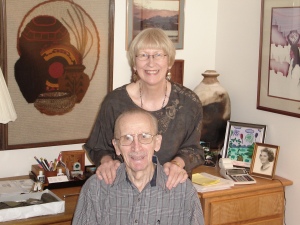
I commend this Blogger, and I love him. Don is my brother and he was an extraordinary caregiver to his wife of almost twenty-five years.




 Living: the ultimate team sport