The proposed Recognize, Assist, Include, Support, and Engage (RAISE) Family Caregivers Act would require the development of an integrated national strategy to provide resources for under-served family caregivers in the United States. If you are not currently a caregiver for a loved one, you most likely will be, and no doubt you know of someone who is already an unpaid caregiver (as opposed to a hired caregiver) for a person in their family.
Many families, even those with young children, find themselves thrust into the role of caring for a loved one when they least expect it and can ill afford to. Caregiving for a child or an adult with disabilities, or caring for an adult with a debilitating illness, has become the norm for many in the United States and abroad.
These caregivers “prepare meals, handle finances, manage medications, drive to doctors’ appointments, help with bathing and dressing, perform complex medical tasks and more – all so loved ones can live at home.”
Keep in mind, the above tasks are those they were already performing for their own household, tasks that multiplied exponentially with the increased needs of their disabled or ill family member. Add a job outside of the home to all of that, and you have to wonder how these overworked and over-stressed heroes manage at all! Read the rest of this entry »
The above article provides a clear perspective of the challenges inherent with taking care of someone whose reality doesn’t come close to matching that of the caregiver.
Whether you are an unpaid caregiver – someone who cares for a friend or a loved one – or a paid caregiver providing services for which payment is received, you need to embrace the art of lying for your benefit, and that of the person for whom you provide care.
I feel so strongly about this matter, that over the years I’ve written several articles proposing one engage in the fine art of half truths, omitted truths, and out and out lying to save the day.
Here are two articles I think you will find of interest, articles that might just infuse you with the strength to take the low road from time to time:
Applause. Please, please, please read the attached mini-article written by a 30-something year old blogger who is taking care of her mother who has Alzheimer’s.
I’ve written about how important it is to do good things, say nice things, and appreciate the people around you. There’s a group of people out there that could really use some of those good vibes: family caregivers. You encounter them everywhere you go. You may not know they’re caregivers, but believe me, if you build them up, rather than tear them down, you will have done a very good thing. You might be just the person she/he needs to get through a very trying day.
The next time you leave your house, set out to make someone’s day. Don’t rely on some other stranger to do it; it’s up to you.
That’s all you need! Walking is one of the least expensive modes of exercise you’ll ever find. Correction: you need legs, good shoes, and room to walk. The good news is that even if you don’t live in a neighborhood where walking is appropriate, you can walk around the mall; you can walk the perimeter of your apartment or house; you can walk up and down the corridors of your building; you can walk in place … I know, boring, but you get the idea … WALK!
Walking is one of the best weight-bearing exercises us humans can do to protect our bones. At a recent doctor’s appointment, I bragged to my doctor that every week I do Bar Method exercises, yoga, weight lifting, and recumbent bike … and every once in a while I walk. She said, “The only weight-bearing exercise in that list is walking. Get out there and walk!” Read the rest of this entry »
I like what I like. How many times have you been asked to choose between one thing and another, you choose the thing, and then you’re asked, “What made you choose that?” If you’re the mother of Not Quite the Plan‘s author, your answer is, “I like what I like.”
I love the example of this mini-dilemma found in the attached article. The blog author’s mother, I’ll call her Mrs. Mom, cuts to the chase; she doesn’t waste any time deliberating; she simply knows what she likes: she doesn’t like the cat that keeps jumping on her lap, but she does like fudge bars. Mrs. Mom has dementia. Perhaps because of her condition, the decisions she makes are far less complicated than they used to be. Her measuring rod: I like what I like.
Weighing the pros and cons is a very important step in the decision making process, but oftentimes we get hung up on the P & C list and fall into the paralysis by analysis quagmire. The list doesn’t have to be multiple pages long and it doesn’t have to be perfected before we take the first step. What’s the worse that could happen? Let’s look at the possibilities. Read the rest of this entry »
The attached New York Times article by Pam Belluck addresses the ambiguous loss experienced by men and women whose spouses are still alive, but not fully there. More specifically, it addresses the need for intimacy that still exists for the spouse without cognitive decline, and that can also exist for the spouse with the decline.
It is a well-known fact that advancing age doesn’t mean the end of desire for sexual intimacy. Whether in the privacy of ones home or in a long-term care housing situation, sex is alive and well. Even people with varying degrees of dementia maintain the desire for intimacy. What the above NY Times article so carefully exposes, however, is that sometimes the act of consent for such intimacy can be a subjective one when viewed by a third party. Read the rest of this entry »
Earlier this year, Richard Glatzer, co-director of the award winning movie, Still Alice, died at the age of 63 after battling ALS for four years. It would have been unfortunate if he had gone with his first reaction when approached to adapt Lisa Genova’s novel into a movie. (Evidently, he almost turned down the project.) Fortunately for us, he did not. One article on this subject indicated that it was Glatzer’s personal connection to independence-robbing illness that gave Still Alice a greater authenticity.
From what I understand, Mr. Glatzer used one finger – using a text-to-speech app – to communicate every directive. I don’t have to know anything about film directing to understand that doing so with his “limitations” would have been extraordinarily clumsy and time consuming. I wonder if his decision to accept the project was made in part because he believed he was the best person for the job. Did you see the movie? Wouldn’t you agree?
Yet all of us are faced with far less daunting struggles than those experienced by Mr. Glatzer and we cave in to our well-honed ability to find every reason not to pursue a task that requires exceptional action on our part.
I’m ashamed of all the excuses I’ve come up with to postpone – or to avoid entirely – new ventures that required more of me than I was willing to give. Ugh – I grieve those lost opportunities when I think of the benefit to me and others such ventures would have provided. But crying over spilled milk won’t undo the past.
Going forward I can commit to seizing new opportunities and disregarding the emotional and physical hurdles in my path.
NFL players are choosing early retirement. Is the future of football under scrutiny? http://wapo.st/1xvFq9p
I LOVE football. Actually, I love the Seattle Seahawks, but I cringe each time a player gets pummeled in the head.
The above Washington Post article suggests American football may some day fall away as a sport, similar to what happened to boxing. Many years ago, I remember boxing being the sport that people gathered around their televisions to watch, whether at home or in the bars. I can understand why nowadays most of us would rather not watch two people bash each other in the head; a head with virtually no protection in the boxing ring. But even with all the sophisticated helmet and body gear covering football players on the field, players are still sustaining concussions that could sooner or later place them in neurological hell. Read the rest of this entry »
My name is Irene. I am the author of the upcoming novel Requiem for the status quo.
Some of you know me as a family member, friend, or casual acquaintance. Others are familiar with me as the author of this blog, a writer who has posted hundreds of articles over the past several years. Still others know me because of my professional connections as a volunteer advocate for vulnerable adults living in long-term care (LTC) facilities, or because of my years as an Alzheimer’s Association support group facilitator.
I’m here to announce that in addition to being the family member/friend/acquaintance/volunteer/co-employee of the past and present, I am also the novelist who has something to say.
“Oh my gosh Irene, I didn’t realize your book was already published!”
It’s not, but I’m actively pursuing agent representation by contacting several agents per day until I no longer need to.
“Why should people be interested in your book?”
Because I have an engaging way of writing about Alzheimer’s disease – a disease that will affect each and every one of you because until a cure or vaccine is developed to eradicate it, this disease is here to stay. Whether a person’s diagnosis falls into the actual Alzheimer’s category, or into one of several other dementia such as: vascular, lewy body, frontal temporal, Parkinson’s, or dementia resultant from a traumatic brain injury (TBI), there’s no escaping its effect on the unpaid caregiver (that’s you and me) and the person being cared for (spouse, partner, mother, father, brother or sister).
And here’s a fact of which some of you may not be aware: Alzheimer’s is not just an older person’s disease; an increasing number of people are being diagnosed well-before the age of 60.
I hope you’ll watch the attached 4 minute video that chronicles a husband’s experience of moving his wife into a memory care facility.
This is not a decision that comes easily to anyone.
Think about it. You’ve spent decades living with the love of your life. Your days are structured around each other; the ebb and flow of all those hours are what you crave and enjoy.
You are faced with what will most certainly be an irreversible decision to leave your wife in the hands of others. You feel guilty, regardless of how well-informed and appropriate the decision. Read the rest of this entry »
I’m re-posting this article I wrote back in 2012 that discusses one of the many “first times” survivors go through after the death of a loved one.
My article contains a link to another blogger’s article in which he discusses the experience of his first Valentine’s Day without his wife. On a personal note, that blogger is my brother, a man who came through that period of his life a survivor. Although he still misses his wife who died of early-onset Alzheimer’s disease at the age of 69, he can now look back and relive the memories of the numerous happy celebrations they both shared throughout their almost 25-year marriage with gratitude and hope for the future.
This is NOT an article about football. Anyone who has a loved one for whom they provide care – whether hands-on or peripheral – knows all too well how unpredictable life can be with that 24/7 responsibility. We’d all like to think that special occasions and events are immune from medical emergencies and other disasters, but all too often that is not the case.
Welcome to the life of a caregiver.
I honestly didn’t think I had another football article in me but the unfortunate circumstances in my best friend’s life have proven otherwise. Read the rest of this entry »
This 2nd part in Ann Hedreen’s series about being an Alzheimer’s research subject will both make you cringe – ugh, lumbar puncture – and will make you proud to know that someone such as Ms. Hedreen exists in this oftentimes self-centered world in which we live. As someone whose father died from Alzheimer’s complications, I am most appreciative of her efforts. Although monetary donations are greatly needed, for me I find it far easier to open my wallet than to offer my spine for research. Not only did Ann offer her spine, she did it more than once.
Although being a control subject in Alzheimer’s research studies involves plenty of memory tests, there are neurological tests too. I was tickled with feathers, tapped on the elbows and knees, peered at with a penlight in my eyes. And there were psychological questions: On a scale of one to ten, do you usually feel life is worth living?
I was weighed and measured. I gave blood. I peed in a cup. My family tree was drawn, with special attention to anything that might be relevant: Grandma Cere’s Parkinson’s disease; Great Aunt Eine’s Alzheimer’s disease, which started in her seventies. I was approved for a lumbar puncture, more commonly known as a spinal tap, and a week later, I came back and curled up in a ball while two tablespoons of fluid were extracted from my spine with a long quivery needle: two…
In this particular instance, the thought of being a human guinea pig feels very, very comforting. Being able to help find a cure for Alzheimer’s that goes beyond monetary contributions sets up a legacy for many as a result of Ms. Hedreen’s extraordinary efforts. Ann Hedreen’s book is available on Amazon and at most retailers.
Here are two of the many things that scare me: having to change a tire all by myself (because I’ve never done it) and camping in bear country (because I have). Here are two of the few things that don’t scare me: taking pop quizzes and getting poked with needles. These slim categories of fearlessness make me a natural volunteer for Alzheimer’s research.
My mother grew up in Montana and nothing much scared her. She not only changed tires, she put chains on tires by herself, tying them together with shoelaces if they didn’t fit right, lying under the car in a snow storm. As for camping, after a twenty-year hiatus, she decided to try it again—solo, with four children in tow. We didn’t see any bears. The worst thing that happened was that we forgot spoons for our cereal. The best thing was being with Mom…
Alzheimers Research Funding Lags Other Diseases- Dementia – AARP. The January/February 2015 AARP Bulletin focuses on the prevalence of Alzheimer’s disease in America. The cover contains photos of fifteen celebrities who died from the disease. Some of those spotlighted may surprise you because their cause of death was not broadcast to the media.
What a shame.
It’s a shame that the stigma attached to the disease still manages to relegate Alzheimer’s to the closet. Cancer used to be that closeted disease – so much so that many years ago people shied away from even mentioning the word, preferring to call it “The Big C.” Before Alzheimer’s disease, cancer was the whispered disease but now the populous embraces each and every body part afflicted, even those considered of a private nature: breast, ovary, prostate, rectum. Read the rest of this entry »
If you’re like me, you’re wondering how another year has slipped by so quickly. I’m sure there were a few of the 52 weeks that seemed to slog by, but all in all we can now look back and marvel at what we accomplished, or what others accomplished in our stead, during the past 365 days.
An accomplishment with which I’m happy is having authored this blog for the past three and a half years. I’ve provided this blog for you, but I’ve also provided it for me because I truly enjoy having the opportunity to share my experiences and my viewpoints; I hope in the process that I have encouraged, helped, and entertained you. From the start of Baby Boomers and More in 2011 to the end of 2014, I posted 520 articles. I’d be a very happy blogger if the quality of those articles surpassed the quantity because if I’m just talking into thin air without benefit to others, its hardly worth the space my blog occupies.
Here are links to the five most visited articles in the year 2014 based on WordPress statistics: Read the rest of this entry »
Are you preparing right now to never lose your boogie, no matter your age? I am. The attached article is a delightful story of how music affects the elderly – whether cognitively impaired or not.
The Alive Inside program proved how beneficial music therapy is to those whose world has diminished and whose communication and connection with others has been cut off. Regardless of the music’s era, regardless of the generation listening to it, everyone can harken back to long-ago memories just by listening to familiar tunes that meant something to us then, and that mean something to us now.
Retaining ones essence and ones individuality goes far towards announcing to the world, “I’m still here; I’ve still got it; I’m still vital.” As expressed in the article I’ve shared from a fellow blogger, I hope I will indeed be the smiling lady that gets up and dances, and I hope you’ll join me on the dance floor.
How many of you have been hurt by something someone said to you without words?
To get you started, I’ll provide a couple personal examples:
Growing up, I was always taller than most kids my age; with my height, came big feet. Although I’m now in my early 60s, I still remember how it felt at approximately thirteen years of age when, while standing in line at a movie theater, an adult looked me up and down and then focused on my feet. She turned to her companion, nudged her, laughed, and held her hands apart, as though measuring the size of my feet. How do you think a gangly self-conscious young teenager felt about that situation?
As a manager for an assisted living/dementia care facility, I wore many hats – especially since the executive director of the facility was extremely ineffective as that building’s director. One day I found myself rushed beyond all measure and needed to get in touch with the Health & Wellness Nurse whom I knew was in the secured dementia wing of the building. I entered that wing at full-bore, with single-purposed intent, ignoring the dazed residents I passed in the hall, leaving a wake of distressed residents behind me. One of those residents somehow caught up with me and grabbed my arm, “What’s going on? Is there an emergency? Do we need to evacuate? Will you help us?” Shame on me. Without a word, I caused aggravation in someone who was the unfortunate recipient of my careless behavior.
How many of you have spoken volumes to someone without saying a word? Did you speak love, patience and comfort, or intolerance, annoyance, and anxiety?
Being prepared, well in advance of needing to be, will serve you well.
All our lives, we set out on new adventures having prepared for them to the best of our abilities:
First day of school;
The start of a new job;
Preparing for a first date;
Wedding preparations;
Organizing a Holiday meal;
Even something as mundane as putting together a grocery shopping list.
Painting courtesy of Mary Riesche Studios
We know how to be at our best, and being at our best means painstakingly and carefully preparing for important events in our life. You didn’t personally have the option of preparing for your birth, but you do have the option, right now, to prepare for your death.
Carpe diem.
What does it mean to end our life on our own terms? This doesn’t have to be a controversial topic. I’m not talking about assisted suicide/right to die matters. What I am talking about, however, is the importance of each of us to spell out in painstakingly and carefully prepared language, all that you want done – or not done – when you are determined to have an irreversible fatal disease.
Death is such a taboo subject.
Why is that? None of us will avoid the inevitable, but many of us avoid laying down our wishes regarding that final time in our lives. The subject matter of the attached article relates to medical insurance companies reimbursing medical professionals for end-of-life counseling provided to their patients. I repeat, this counseling is not controversial. As Ms. Harrop states, “Critics of end-of-life discussions argue the doctors would ‘push’ patients to end their lives prematurely. Why would doctors do that? Where’s the financial incentive in losing a patient?”
The report Dying in America calls on Congress “to end the ‘perverse’ financial incentives that rush fragile patients into invasive medical treatments they’d prefer to avoid.” That being the case, it seems to me that counseling a patient about their dying wishes hurts, more than helps, the physician’s bottom line, so forget the nonsense about doctors encouraging patients to die sooner than later. That’s just hogwash.
“Meanwhile, there’s evidence that for some very ill people, a palliative approach may extend life longer than industrial-strength medicine.” And certainly ones final days without the poison of chemotherapy that has no prospect of curing a cancer, would be far more comfortable than if that therapy had been employed. “In a study of terminal lung cancer patients, the group that chose hospice care actually lived three months longer than those subjected to hard chemotherapy.” Again, that would be a more pleasant exit from this life than suffering the ravages of a chemo treatment that is not curative in nature.
“An end-of-life talk with a doctor spells out the options. Patients can use it as a basis for filling out an advance care directive – a form listing which treatments they would want or not want.” And let’s not forget that such a document only comes into play if the patient can no longer speak/express his or her wishes regarding their care. An advance care directive is a legal document and as such, spells out when it can be put in motion, and when it can not. If ever there’s a time when you can benefit from being a control freak, your final days is it.
This legal document is not just for the older population.
Once you’re considered an adult, you can decide what you want regarding your life. Don’t wait until it’s too late and someone else decides medical matters without your input.
Humbled, grateful, overjoyed! Not just because I was nominated for the Very Inspiring Blogger Award, but also because I’ve inspired someone, hopefully many someones. Talking to a wall is not a very gratifying experience; if my blog is merely an electronic version of that, I will have not reached my objective: to help, encourage, and lighten your load while on this aging journey. Thank you Kay for the nomination!
Kay Bransford of Dealing with Dementia nominated me for this award. If any of you readers have yet to follow Kay’s blog you need to get to it. I will nominate several bloggers for the same award, following the Rules provided below:
Thank the amazing person who nominated you and provide a link to their website;
List the rules and display the award;
Share seven facts about yourself;
Nominate 15 other blogs and comment on their posts to let them know they’ve been nominated. I failed at listing 15, not because the blogs I follow aren’t worthy, but because my blog-following count is a limited one;
Proudly display the award logo on your blog and follow the blogger who nominated you.
Seven facts about myself:
1. I’m not ashamed to say that I’m a Baby Boomer and have been for awhile. Turning sixty was easy, however it got a wee bit more difficult at sixty-one …
2. I was born in Pasadena, California and have lived a great length of time in Los Angeles, California; Honolulu, Hawaii; Anchorage, Alaska, and the greater Seattle area of Washington State – my current and final home.
3. My favorite people – other than my loved ones – are anyone older than me – preferably senior citizens who’ve claimed that title for quite some time. This third fact about me directed most of my worthwhile adult career and volunteer pursuits: senior housing industry manager, Alzheimer’s Association caregiver support group facilitator, and Certified Long-Term Care (LTC) Ombudsman for the State of Washington.
4. I have posted over 480 articles on my blog since starting it in 2011.
5. I am currently writing a novel that focuses on the caregiving challenges faced by those who are the primary caregiver for a loved one. Through real-life stories, the reader will learn more about the disease and its effect on everyone it touches. My hope is that by putting a face on this disease – showing what it looks like in everyday life – more interest will be generated to prevent, treat, and cure Alzheimer’s disease, a disease that is always fatal, and for which all of us are at risk.
6. I have three daughters (one of my own and two of my husband’s) and two sons-in-law (one who married my own daughter and one who married my husband’s youngest.)
7. My family tree: I have two siblings, an older brother and sister. My father died from Alzheimer’s complications in October 2007 at the age of 89; my sister-in-law died of the disease in the summer of 2012 a few months before her 70th birthday9.
And that’s why I do what I do.
Nominees for Very Inspiring Blogger Award:
Mary Riesche Studios, Vacaville, California. This artist has drawn and painted since she could hold a pencil. She has tirelessly pursued her craft through every chapter of her life. She raised four children while her husband was in the military – living numerous places in Europe and the U.S. as a result – and that never stopped her from painting. When her four children were out of the house, she and her husband adopted a teenager from Russia, bringing the number of children to five. She’s a trooper, to say the least. It took her a while to have an empty nest. I hope you’ll visit her site to see a representation of the type of work she produces.
Catching Up to the Disease, by blogger, Don Desonier. The subtitle for this blog is Transitions in Dementia Caregiving. Don’s wife died of early-onset Alzheimer’s at the age of 69 on July 4th, 2012. This blogger knows something about being a dedicated, committed caregiver, and on top of that, he excelled at being the very present advocate for his wife of 25 years.
Dementia Poetry is an in your face journal of a daughter-in-law’s disease journey with her mother-in-law, in the form of extremely well-written poems. The subtitle for her blog is: The Politically Incorrect Alzheimer’s Poetry Blog.
Theresa Hupp’s blog, Story and History, is a moving journal of a family’s life covering past, present, and future. But that’s not all: Theresa is a fabulous, published author. I’d say I’m jealous, but friends, and that’s what I consider Theresa, don’t turn green with envy – at least they shouldn’t. Theresa, you nominated me for the Versatile Blogger Award in February of 2014, but I already received that award a couple years ago so I’m not going to claim it again, but I thank you profusely for nominating me.
Not My Original Plan, a blog written by a woman in her thirties who is the caregiver for her mother who has dementia. This is a very inspirational blog – how fitting for this award! – and I strongly suggest you check it out and follow it ASAP.
Not Quite Old, by blogger and author, Nancy Roman. The subtitle for her blog is Gracefully Aging with Resistance. The way Nancy writes – filled with extraordinary humor, will keep you engaged and wanting more.
Let’s Talk About Family. Lori’s blog family history starts with her mother’s failing health and death, and continues with her father’s life as a widower who eventually moves into an assisted living facility (ALF). Her blog is one that I never miss. You know how you can manage the notifications you receive so that you get a notification e-mail immediately, daily, or once weekly? Her blog is one of those that I receive immediate notifications – I can’t wait any longer! is the way I treat her blog. If you are not yet following Lori’s blog, get to it!
Jill Weatherholt, Pursuing a Passion for Writing, is a site that inspires me because while working full-time, she’s still committed to writing and what she writes is well-worth reading. Thank you, Jill, for being an online inspiration to this aspiring author. Jill started the blog to create a community for other new writers and shares her publication journey – something all wet-behind-the-ears writers need to read and be encouraged by.
10 Legs in the Kitchen is a fabulous cooking blog but a whole lot more. Stacy’s anecdotes add “meat” to every posting and provide humor and insight, not just darn good recipes. I met Stacy at a writer’s workshop in Seattle.
Yellow Mum Blog, by Wendy in the United Kingdom, documents the loss of her mother to cancer, ten weeks after diagnosis. What she writes is a journal, but in many respects, it is a guidebook for the rest of us in our grief.
A Swift Current, Letting our Parents Go, Hallie Swift’s blog is one to which many will relate. Whether your parent’s departure is a gradual one – such as is the case with Hallie’s mother due to dementia – or a sudden departure by way of a fatal accident, letting go is hard to do – oftentimes more painful that we believe we can handle.
Consider the prescriptions in your medicine cabinet/pill-minder box. Is one of those medications something that your doctor renews over and over again for you? How about that something-or-other that seems innocuous enough because you take the lowest possible dose?
Are you like many of us out there who struggle to fall asleep? The anxiety of worrying about whether or not you’re going to fall asleep being a sufficient reason for your doctor to prescribe a benzodiazepine to help you along the way? When did you first tell your doctor about your sleep struggles and how many months or years have passed since he or she prescribed a measly dose of Ativan, Valium, Xanax or Klonopin?
Each time the refill runs out and you call your doctor to renew the prescription, does she do so, even without meeting with you in person to discern whether or not it’s still needed? Your doctor is an enabler.
Your doctor might be putting you at risk of developing Alzheimer’s disease. That itsy bitsy dosage you take nightly for months and years on end? It’s not a harmless prescription if it gives you a fatal disease – which Alzheimer’s is.
Now that you’re aware of the risk, make sure your doctor is aware and don’t let him or her poo poo that risk; instead, ask her to wean you off that medication so that you can have control over this one potential cause of developing a disease that you absolutely do not want to get.
You’re in charge, not your doctor. Don’t assume that her constant renewal of such medication means it’s okay. You’re an informed patient now; it’s time you took steps to remove this Alzheimer’s risk from your life.
Did you ever get so busy that you received an award and didn’t go pick it up, and then you forgot that it was waiting for you? That’s me. Lori, one of my most favorite bloggers, has been writing her blog Let’s Talk About Family since December 2011. This fabulous person nominated me for the Best Moment Award in May of 2013. All I can say is that not “picking up” my award qualifies me for the Worst Moment Award, but I’ll try to make up for it with this post.
Lori’s blog family history starts with her mother’s failing health and death, and continues with her father’s life as a widower who eventually moves into an assisted living facility (ALF). Her blog is one that I never miss. You know how you can manage the notifications you receive so that you get a notification e-mail immediately, daily, or once weekly? Her blog is one of those that I receive immediate notifications – I can’t wait any longer! is the way I treat her blog. Thank you so much for opening up your life to us in the blogging world.
Rules for the Best Moment Award:
Winners post information about the nomination, thanking the person who nominated them, with their acceptance speech that can be written down or video recorded.
Winners have the privilege of awarding the next awardees (see below) The re-post should include a NEW list of people, blogs worthy of the award, and winners notify them the great news. Winners should also post the award badge on their own website.
What makes a good acceptance speech? Thank the people who helped you along the way, be humorous if you can to keep the reader entertained and smiling. Provide inspiration that helps your story to touch the lives of others.
And here’s mine: I’m thrilled to be acknowledged as having something good to say from time to time. I don’t think I’m an excellent writer, but I do have lots to say and I’m quite willing to write up a storm. I’m the youngest of three siblings and the only one of us who has been involved in the lives of senior citizens – and everything that involvement implies – for close to two decades. I’ve always loved people older than me; I guess it gives me comfort knowing that I’m younger than someone else. My official responsibilities over the years involved: working in the senior housing industry both in the corporate environment and in assisted living/memory care facilities, being an Alzheimer’s Association caregiver support group facilitator, and a Certified Long-Term Care (LTC) Ombudsman for the State of Washington (an advocate for vulnerable adults living in LTC facilities.) I’m retired from active work but I am actively still involved in being an advocate for the vulnerable by writing my first novel – a project I hope to complete by end of this year. My novel focuses on the lives of family members who care for a loved one with Alzheimer’s or other dementia.
My nominees for the Best Moment Award are:
Kay Bransford, for Dealing with Dementia. The reason I enjoy Kay’s blog is best described by her blog’s subtitle: A family caregiver’s journey to deliver loving care with grace and humor. We all know there is absolutely nothing humorous about Alzheimer’s or other dementia, but humor can be found in the human interactions between caregiver and family member. If you look for them, you will find them. Kay, I’ll be posting my acceptance of a different award you recently nominated me for very soon. THANK YOU!
Dementia Poetry is an in your face journal of a daughter-in-law’s disease journey with her mother-in-law, in the form of extremely well-written poems. The subtitle for her blog is: The Politically Incorrect Alzheimer’s Poetry Blog.
Theresa Hupp’s blog, Story and History, is a moving journal of a family’s life covering past, present, and future. But that’s not all: Theresa is a fabulous, published author. I’d say I’m jealous, but friends, and that’s what I consider Theresa, don’t turn green with envy – at least they shouldn’t. Theresa, you nominated me for the Versatile Blogger Award in February of 2014, but I already received that award a couple years ago so I’m not going to claim it again, but I thank you profusely for nominating me.
Reflections on Dementia, Caregiving and Life in General is a must-read blog all the way from Singapore. This blogger takes care of her mother who has Alzheimer’s and vascular dementia. Her insights and her view of her world will engage you from the very first posting you read.
But many with dementia are dead inside without any means of engaging with others in meaningful conversation. Heck, they might not even be able to talk to themselves: a practice I engage in quite frequently.
What an isolating state to be in: you’re there, but not there.
My daughter & I outside the Varsity Theatre, Seattle, after viewing the documentary.
Fortunately, those with Alzheimer’s, dementia, or other cognitively restricting illnesses, have a chance to awaken their memories – and therefore their history – but not without the tools to do so. Alive Inside, the 2014 Audience Award winner at the Sundance Film Festival, is a one and a quarter hour documentary film that touts the benefits of personalized music therapy for those who are living dead inside.
Dan Cohen, social worker, Founder and Executive Director of Music & Memory, started this awakening project several years ago. Here is a description of the project, taken from the film’s website: “Music & Memory … promotes the use of digital music players with individualized playlists to improve the quality of life for elders, regardless of their cognitive or physical status … Dan has spent most of his career helping individuals and organizations leverage technology. Music & Memory operates in hundreds of long term care homes across the U.S. and abroad.”
Watch the 2.15 minute trailer on the provided Alive Inside website to witness a few of the individual awakenings spotlighted in the film.
Even if the film is not scheduled to appear in your area, you are still able to help awaken the millions of people in the United States and abroad by your participation in Mr. Cohen’s project. Whether it’s feet on the street or a click of a mouse to donate funds, each of you can become a part of these efforts.
Additionally, if you know someone, or are caring for someone with cognitive decline, put together a personalized database of music for that someone in a digital music storage device, then connect them to it with a set of headphones. You might be able to awaken him or her with that simple effort on your part.
Imagine that you are the primary family caregiver for a loved one with dementia in your home. You have no time to yourself while in the house so how can you possibly find the time to leave your loved one alone to complete some pressing errands?
But you do leave the house and you do leave your loved one alone at home, because you haven’t figured out how to get someone else to do those errands for you, or you don’t know how to secure someone else to watch your loved one while you do the errands. I favor the latter option because a 24/7 caregiver absolutely must get out of the house and feed her soul while crossing items off her To Do list.
I went to Staples office supply store yesterday to pick up three items for my writing quest: a new thumb drive that I can trust to store my magnificent masterpiece of a manuscript; a new mouse pad because my right wrist and hand have worn out the previous one; and a ream of lined filler paper for taking notes and drafting new ideas.
Because it is currently back-to-school shopping time, Staples was crazy-busy yesterday. The checkout line was very long and directly behind me was a young mother with a shopping cart filled with supplies for her two school-aged children. An older woman with two items asked if she could please go ahead of her because she had a sick husband at home; the young mother graciously agreed to let her do so. When it was my turn at the register, I turned to the older woman and asked her to go ahead of me to which she responded, “Oh thank you so much, you see I have a situation at home and I need to get back quickly.”
Have any of you been there – done that?
Do you know someone who has?
The following advice goes to those of you who know someone in a similar predicament as the woman at the Staples store: be the respite that person needs. Don’t wait for them to ask for help – they won’t ask you; you must make the first move. Put yourself in that someone’s shoes and imagine racing through your errands, all the while freaking out wondering what’s going on in the house while you’re away: the person with dementia wandering away from the house or falling down in or around the house, turning on the stove or running the water without turning either off, or letting someone inside the house who should not be inside the house.
Now it’s your turn: imagine the worst-case scenario and apply it to this situation.
Attached is a very worthwhile read by blogger, Kathie Ritchie. The article includes her suggestions as well as those of caregiver adviser, Marie Marley. (Note: the links provided for Marie Marley appear to be broken, but Kathie includes Ms. Marley’s input within the body of her own blog article, making the content easily readable.)
Painting courtesy of Mary Riesche Studios
Additional articles that will provide information and suggestions to non-caregivers on how they can help their neighbor, co-worker, besieged family member:
The above will give you more than enough material to provide readers with helpful suggestions. If you don’t take the time to read the attached articles – and I sincerely hope you do – I’ll leave you with one suggestion that I hope you do follow:
If a caregiver doesn’t ask for help while on his or her caregiving journey, don’t assume they aren’t in need of your assistance. Offer specific assistance to them; don’t force them to come up with a suggestion on how you can help.
Examples: “I have some individual frozen leftover meals I’d like to bring over for your household, what’s a good time for me to drop them off?” or “I’m headed to the grocery store, what can I pick up for you?” or “It may sound crazy, but I enjoy working in the yard. I’ve completed my Spring yard cleanup, I’d like to come over and help you with yours.”
Two years ago today, my sister-in-law died from Alzheimer’s disease.
Four and a half years post diagnosis, Nancy Satterberg Desonier was liberated from the cognitive chains that stifled her creative and loving essence, and dramatically shut down her stately and classic physical body.
Another thing happened on July 4, 2012: Nancy’s caregiver husband, my brother Don Desonier, lost his bride of almost 25 years. Don didn’t feel liberated – he would have gladly continued on his wife’s disease journey as the supportive and attentive husband that he was – but he could celebrate the fact that this devastating disease was done robbing he and Nancy of a quality-filled life, and he could take comfort in the fact that his wife’s suffering had come to an end.
I celebrate Nancy today and the thousands upon thousands like her whose lives were cut short by Alzheimer’s and other dementia.
I also celebrate my brother Don and all the caregivers who provided loving support to a loved one who has passed from this disease. You are a hero to many, and you are a hero to me.
Alzheimer’s Foundation of America Teens (AFA Teens) brings hope that is sorely lacking from the Alzheimer’s medical community. The younger generation is doing something that many of us older adults are not: bringing more awareness to a disease that most of us have been exposed to, either peripherally or specifically. “AFA Teens, founded by a teenager, seeks to mobilize teenagers nationwide to raise awareness of Alzheimer’s disease, and to engage, educate, and support teens and their families.”
My family in the 70s. My dad died from Alzheimer’s, as did my brother’s wife.
As adults, we are affected because the person with the disease is our spouse, partner, sibling, or older relative. But what about the cousins, nephews and nieces, children, and grandchildren out there? Children and teenagers are also exposed to this disease. The challenges faced by teens who are actively involved with these relatives – living close enough to have frequent interaction with them – are challenges that adults have a hard time grasping.
“How come Pappy doesn’t recognize me any more?” “Why does mom always forget the things that are important to me – like my birthday!” That’s right; some teenagers have mothers or fathers with early-onset disease. What should be one of the most exciting times in their young lives is instead spent as a co-caregiver with their other parent. (I addressed this unfortunate family dynamic in my article, Alzheimer’s Heartache: young family members adjusting to a grandparent or parent with dementia.)
I strongly encourage you to visit the AFA Teens website. I know you will be encouraged by the efforts being made by these young advocates.
The Longest Day. The attached article by Author, Ann Hedreen, can be found linked above, and you can find additional well-written articles on her blog The Restless Nest. Reader alert: Ms. Hedreen’s book, Her Beautiful Brain, will be released September of this year.
What was your longest day like?
Was it long, because it was fun-filled and absolutely fabulous, or was it long because the day was crammed with the most difficult and stressful experiences of your life?
Caregivers: you are heroes to all who understand the job that you’ve taken on as carers for your loved ones. You live the 36-hour day with all of its burdens and insurmountable challenges, while across the United States there’s much discussion – even controversy – over raising the minimum wage. In contrast, there you are earning no wage but working harder than you’ve ever worked before.
Loved ones with Alzheimer’s or other dementia: your disease-controlled days might seem to have no beginning or end; you go about your day trying to fulfill its challenges while perhaps being at the stage in your disease where you are still able to feel the frustrations of not grasping the how-to of tasks that prior to your diagnosis required no complex thought processes on your part.
Those who have yet to be intimately involved in the above-mentioned roles: look around you – you won’t have to look far – and then on this year’s longest day, Saturday, June 21st, do what you can to help the co-worker or neighbor who desperately needs your help but doesn’t know how to ask for it, or is too ashamed to admit that they can’t do it all.
When you offer help, please don’t leave it open-ended. Instead of saying to your neighbor, “Hi yah, Joe. Be sure to call me if you need anything,” be more specific so it’s easier for Joe to accept your offer, “Joe, when I get out my lawnmower this weekend, I’d love to swing by your place and take care of your lawn so you won’t have to.” Or how about, “Yah know, we’re always making more food than we can eat at our house so we just freeze the leftovers for another time. Can I come by later this week and give you a week’s worth of meals so you don’t have to concern yourself with what to fix for dinner?”
And then keep it up because your neighbor or co-worker’s life isn’t going to get any easier. Keep offering tangible ways in which to provide assistance and you’ll go a long way towards making the longest day – which is every day in the life of a caregiver – a bit easier to tackle.
A May 15, 2014 New York Times article, Alzheimer’s, a Neglected Epidemic by Ginia Bellafante, provides a keen look at a fatal disease that many still assume is one that only other people get. Maybe my coworker a few cubicles away from me or the neighbors down the street will have to deal with some sort of dementia, but not our household – right? You wish. Alzheimer’s is a world-wide epidemic and it’s knocking on your front door.
In 2010, Alzheimer’s was the underlying cause in 500,000 deaths in the United States.
Let’s look at another epidemic with horrific fatality totals. Remember the AIDS crisis? As of the year 2010, in thirty years’ time, AIDS was responsible for 636,000 deaths in the U.S. And yet Alzheimer’s – a very unpopular disease that is erroneously characterized as just an old person’s disease – racked up almost that many deaths in just one year.
Alzheimer’s isn’t just for geezers any more.
That’s the title of one of the chapters in my manuscript – a work of fiction that centers on the lives – patients and their family caregivers – affected by Alzheimer’s or other dementia. A couple of my characters are in their 80s but there are three characters ranging in age from early 40s to mid 60s whose disease journey began when they were no longer considered young – but definitely not considered old.
What will it take to push people out of denial and into activism?
In the New York Times article linked above, AIDS activist, Peter Staley, is quoted as saying, “The hidden blessing of H.I.V was that it hit a community, my community, a community of mostly gay men. We had a base of organizing that came out of Stonewall.” [1969 demonstrations by members of the gay community in response to a police raid at Stonewall Inn, in Greenwich Village.] And then he goes on to say, “Alzheimer’s hits old people. There is no real organized community beyond AARP.”
I’m not happy with Mr. Staley’s characterization of Alzheimer’s as an old person’s disease because it perpetuates a myth that is simply not entirely true. But I fully back his advice to all of us:
How does a large, affected community get the country to care? It means playing a strong inside game: These family members need to organize effectively; they need to find their allies in Congress; they need to show up with sick people in front of key members of health communities.
Right on.
Alzheimer’s struck my dad in his mid-80s and my sister-in-law in her early 60s – both now deceased.
If you have been bitten by a dog you’re in good company. I read the following statistics in the May 16, 2014 issue of the Seattle Times newspaper:
In 2013, 4.5 million Americans were bitten by dogs in the United States;
The above total includes more than 2 million children and almost 5,600 U.S Postal Service employees.
Gee, statistics for 2014 will include me in the number of Americans bitten in the United States. I seem to have greater potential for becoming part of those statistics than making a name for myself as a published author.
Future Margarita rewards for when my manuscript gets picked up.
The title for this article is my shameless attempt to keep my novel-writing in the forefront of everyone’s minds.
I’m pretty excited however – not by the dog bite episode of May 7th – but by the status of my manuscript. I’ve almost finished reading it through – for the zillion’th time – and thus far I’m pleased with the cohesiveness of the storyline. I’m still making edits in grammar and punctuation – semi-colons and hyphens/dashes are really stymieing me – but I’m hoping if I do my very best, a copy editor will do the rest. I am 100% certain that an agent will want to represent a book that throws a personal and touching spotlight on those who are living with Alzheimer’s and dementia. There’s not an agent or publisher out there who hasn’t been affected by this disease – either peripherally or specifically.
Please stay tuned as I will be providing updates in an effort to keep me on my toes, keep me honest, and get this d@*#mn book published.
 The proposed Recognize, Assist, Include, Support, and Engage (RAISE) Family Caregivers Act would require the development of an integrated national strategy to provide resources for under-served family caregivers in the United States. If you are not currently a caregiver for a loved one, you most likely will be, and no doubt you know of someone who is already an unpaid caregiver (as opposed to a hired caregiver) for a person in their family.
 Keep in mind, the above tasks are those they were already performing for their own household, tasks that multiplied exponentially with the increased needs of their disabled or ill family member. Add a job outside of the home to all of that, and you have to wonder how these overworked and over-stressed heroes manage at all! Read the rest of this entry »
 Applause. Please, please, please read the attached mini-article written by a 30-something year old blogger who is taking care of her mother who has Alzheimer’s.
 That’s all you need! Walking is one of the least expensive modes of exercise you’ll ever find. Correction: you need legs, good shoes, and room to walk. The good news is that even if you don’t live in a neighborhood where walking is appropriate, you can walk around the mall; you can walk the perimeter of your apartment or house; you can walk up and down the corridors of your building; you can walk in place … I know, boring, but you get the idea … WALK!
 I love the example of this mini-dilemma found in the attached article. The blog author’s mother, I’ll call her Mrs. Mom, cuts to the chase; she doesn’t waste any time deliberating; she simply knows what she likes: she doesn’t like the cat that keeps jumping on her lap, but she does like fudge bars. Mrs. Mom has dementia. Perhaps because of her condition, the decisions she makes are far less complicated than they used to be. Her measuring rod: I like what I like.
 The attached New York Times article by Pam Belluck addresses the ambiguous loss experienced by men and women whose spouses are still alive, but not fully there. More specifically, it addresses the need for intimacy that still exists for the spouse without cognitive decline, and that can also exist for the spouse with the decline.
 Earlier this year, Richard Glatzer, co-director of the award winning movie, Still Alice, died at the age of 63 after battling ALS for four years. It would have been unfortunate if he had gone with his first reaction when approached to adapt Lisa Genova’s novel into a movie. (Evidently, he almost turned down the project.) Fortunately for us, he did not. One article on this subject indicated that it was Glatzer’s personal connection to independence-robbing illness that gave Still Alice a greater authenticity.
 Yet all of us are faced with far less daunting struggles than those experienced by Mr. Glatzer and we cave in to our well-honed ability to find every reason not to pursue a task that requires exceptional action on our part.
 The above Washington Post article suggests American football may some day fall away as a sport, similar to what happened to boxing. Many years ago, I remember boxing being the sport that people gathered around their televisions to watch, whether at home or in the bars. I can understand why nowadays most of us would rather not watch two people bash each other in the head; a head with virtually no protection in the boxing ring. But even with all the sophisticated helmet and body gear covering football players on the field, players are still sustaining concussions that could sooner or later place them in neurological hell. Read the rest of this entry »
 I’m here to announce that in addition to being the family member/friend/acquaintance/volunteer/co-employee of the past and present, I am also the novelist who has something to say.
 I hope you’ll watch the attached 4 minute video that chronicles a husband’s experience of moving his wife into a memory care facility.
 My article contains a link to another blogger’s article in which he discusses the experience of his first Valentine’s Day without his wife. On a personal note, that blogger is my brother, a man who came through that period of his life a survivor. Although he still misses his wife who died of early-onset Alzheimer’s disease at the age of 69, he can now look back and relive the memories of the numerous happy celebrations they both shared throughout their almost 25-year marriage with gratitude and hope for the future.


 It’s a shame that the stigma attached to the disease still manages to relegate Alzheimer’s to the closet. Cancer used to be that closeted disease – so much so that many years ago people shied away from even mentioning the word, preferring to call it “The Big C.” Before Alzheimer’s disease, cancer was the whispered disease but now the populous embraces each and every body part afflicted, even those considered of a private nature: breast, ovary, prostate, rectum. Read the rest of this entry »



 Humbled, grateful, overjoyed! Not just because I was nominated for the Very Inspiring Blogger Award, but also because I’ve inspired someone, hopefully many someones. Talking to a wall is not a very gratifying experience; if my blog is merely an electronic version of that, I will have not reached my objective: to help, encourage, and lighten your load while on this aging journey. Thank you Kay for the nomination!
 Consider the prescriptions in your medicine cabinet/pill-minder box. Is one of those medications something that your doctor renews over and over again for you? How about that something-or-other that seems innocuous enough because you take the lowest possible dose?
 Did you ever get so busy that you received an award and didn’t go pick it up, and then you forgot that it was waiting for you? That’s me. Lori, one of my most favorite bloggers, has been writing her blog Let’s Talk About Family since December 2011. This fabulous person nominated me for the Best Moment Award in May of 2013. All I can say is that not “picking up” my award qualifies me for the Worst Moment Award, but I’ll try to make up for it with this post.


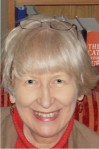 Four and a half years post diagnosis, Nancy Satterberg Desonier was liberated from the cognitive chains that stifled her creative and loving essence, and dramatically shut down her stately and classic physical body.
 Another thing happened on July 4, 2012: Nancy’s caregiver husband, my brother Don Desonier, lost his bride of almost 25 years. Don didn’t feel liberated – he would have gladly continued on his wife’s disease journey as the supportive and attentive husband that he was – but he could celebrate the fact that this devastating disease was done robbing he and Nancy of a quality-filled life, and he could take comfort in the fact that his wife’s suffering had come to an end.
 What was your longest day like?
 When you offer help, please don’t leave it open-ended. Instead of saying to your neighbor, “Hi yah, Joe. Be sure to call me if you need anything,” be more specific so it’s easier for Joe to accept your offer, “Joe, when I get out my lawnmower this weekend, I’d love to swing by your place and take care of your lawn so you won’t have to.” Or how about, “Yah know, we’re always making more food than we can eat at our house so we just freeze the leftovers for another time. Can I come by later this week and give you a week’s worth of meals so you don’t have to concern yourself with what to fix for dinner?”


 Living: the ultimate team sport