Retirement
The Man of the House and the Little Woman

This real story takes the place of this week’s Lighten up Mondays.
Most of our utility bills are in both my husband’s name and mine. Our Frontier phone/internet bill, for whatever reason, is only in my husband’s name.
We’ve lived in our current house for over fifteen years. Approximately one year into our residency at our current address I called to make a change to our services. I found out that because only my husband’s name was on the bill, I was not permitted to even talk to the Verizon (now Frontier) customer service rep. Jerry was home at the time so I requested his presence in my office and told him he needed to talk to the utility person to authorize me to do business with the utility. He did so, they supposedly noted his permission/authorization in the file, and I was able to complete my service request with the utility. Over the years, it took at least three additional calls to Verizon/Frontier before they stopped asking my husband to intervene to authorize everything I said to them. Dilemma solved, right?
WRONG.
We recently upgraded our internet from Frontier’s DSL, also known as slow-poke broadband, to internet service provided by our cable TV company, Wave. The new cable modem/router was installed and voila! Instead of a Download speed of 9.6 mbps, Wave’s Download speed is a wapping 100+ mbps. The primary user of our iMac computer – that would be me, The Little Woman – is thoroughly ecstatic with the improved service.
The day after unplugging Frontier’s DSL and plugging in Wave’s extraordinarily fast internet service, I called Frontier to cancel our internet service – but still retain our landline phone service with them – and the technician said, “Is this Jerry I’m speaking to?” to which I responded, “No, I’m, Irene, Jerry’s wife.” “I’m sorry, you’re not authorized to make changes to your service, is Jerry available?”
Imagine the top being blown off a pressure cooker on my end of the phone line.
 “Oh, do not go there. My husband authorized my involvement with this account almost fifteen years ago and did so repeatedly each and every time you questioned my authority to the point where you finally stopped requiring Jerry’s personal authorization.”
“I’m sorry Ma’am, but if your husband is there to make the request, we’ll take care of this for him.”
I hung up on them. Five minutes later I called back to make the cancellation of service request, speaking in a lower voice and identifying myself as Jerry, and the customer service rep simply asked Jerry’s birthdate, which I provided, and presto-chango, our cancellation of internet service request was granted. Keep in mind, in the past when I successfully was able to get through to Verizon/Frontier to talk about our account, I had to provide Jerry’s birthdate, our account number, and the private PIN provided by the utility to verify my authorization capabilities. If they had asked that of Jerry – the authorized person – he wouldn’t have known where to find such information. Why? Because The Little Woman is also the Finance Manager for the Olson household. Bills get paid utilizing bank account resources because I set up these recurring charges to be paid automatically just as so many of you do for your own household. I move money around from one account to another, set up new accounts, fund them and the like because as the household Finance Manager, I am dedicated to keeping us financially organized, healthy, and comfortable in our retirement.
Am I mad at Jerry as a result of this fiasco? Not in the least. He was out of the house when this most recent matter occurred and when I relayed it to him he said, “Oh oh, I hope you didn’t hurt anyone too badly.” He thinks this whole authorization requirement is a joke, especially since he relies on me to manage everything having to do with our finances. He knows I’m quite accomplished at taking on these tasks and is thrilled that he doesn’t have to mess with the minutiae of managing this aspect of our lives.
I guess I can say I had the last laugh, however. Lowering my voice and using language patterns that might be common for the Man of the Household allowed me to wield the authority that up until now had fully evaded The Little Woman of the Household.
Kindness Fridays
One way of expressing kindness is by expressing gratitude.
 Anytime we think we don’t need to thank someone for something they’ve said or done that meant something to us, we do them a disservice.
My husband and I have been gifted with daily gratitude each time we take care of our grandson during our daughter and son-in-law’s work week. We have a routine: our daughter drops off our grandson and all other items needed for his day with us and as she gets into her car she always says, “Thank you.”
Our son-in-law picks up our grandson after a grueling day of work outside and after securing our grandson into the backseat of his truck, he says, “Thanks you guys.”
We’ve been caring for our grandson a few days a week since early August and now with September coming to a close the routine is pretty much set in stone but what isn’t set in stone, what is always fresh and affirming, is that our grandson’s parents bend over backwards to express their gratitude for what we’re doing to enable them to go to work and not have to worry about the care their son is receiving.
Big deal, right?
It is absolutely a big deal. We thoroughly enjoy the time we spend with our grandson – it is such a privilege we have been given – and we enjoy seeing his parents each caregiving day. Their expressions of gratitude never get old; every time they say “Thank you” I am filled with warm fuzzies that carry me through the day and the night. Such delightful adult children.

The secret of Alzheimer’s disease
I discovered something shocking during the weeks that followed my novel’s release:
Alzheimer’s disease is still a secret.
 I know; we’ve all certainly read about it, especially when a celebrity is diagnosed with the disease. Every once and awhile there might be an Alzheimer’s Association commercial on television…that is assuming we don’t fast forward through it or walk out of the room. Another reason we’re familiar with the disease is that it is happening to so many people with whom we are acquainted – whether intimately or tangentially.
But it’s still a secret. The very definition of the word speaks to its intent: adj. not known or seen or not meant to be known or seen by others; n. something not properly understood; a mystery. from the Concise Oxford English Dictionary
In many of my promotional posts and boasts for my novel Requiem for the status quo, I’ve indicated that my book tour would probably look more like a senior center tour than what is normally the route for authors: readings and signings in major and independent bookstores. That’s the tact I took, approaching numerous senior centers in Western Washington. 25% of those I approached booked my author event on their activity calendars. But when I approached a major senior housing community foundation to get on their speakers’ calendar, I was told the residents pushed back at the foundation’s previous efforts to enlighten and inform when they hosted those who spoke to the reality of Alzheimer’s disease and other dementia.
Author Celebration: Books about Alzheimer’s disease
 To celebrate my own book’s July 20th release, a book that’s about Alzheimer’s disease and other dementia, I am tooting the horn of other authors who have done the same, a few of whom I know personally.
There’s a high degree of sadness surrounding this list because almost without fail, those authors who have written memoirs, story collections, fiction, and non-fiction books have done so because of their own personal Alzheimer’s journey.
Ann Hedreen, Her Beautiful Brain – A Memoir. Ann lives in Seattle, Washington, and has provided valuable support to me through my own publication journey. To quote Amazon.com:
Her Beautiful Brain is Ann Hedreen’s story of what it was like to become a mom just as her beautiful, brainy mother began to lose her mind to an unforgiving disease.
I can not imagine the struggle Ann endured while being a new mother whose time and energy was already spread so thin when life happened to her and her household, in a manner hardly believable to so many of us.
Collin Tong, Seattle journalist, Into the Storm – Journeys with Alzheimer’s, a compilation of true stories that starts with the very personal story of Collin’s caregiving journey with his wife, Linda. Collin’s support of my project, telling me not to give up when so many agents and publishers wouldn’t give me the time of day, inspired me to keep on keepin’ on. His story collection is amazing. Again, quoting Amazon:
In his compelling new anthology, Into the Storm: Journeys with Alzheimer’s, twenty-three writers, journalists, educators, health practitioners, social workers, clergy and other family caregivers from across the United States share their intimate stories of caring for loved ones with Alzheimer’s disease and dementia.
Each of the twenty-three stories are gems that you do not want to miss. I know you will be as impressed as I was by each and every one of them.
The next entry contains numerous authors and their books, found in one central location: AlzAuthors. The purpose for their site states:
We are AlzAuthors. In some way, each of us who have come together on this site have been affected by Alzheimer’s Disease/dementia. We share our experiences to bring knowledge, comfort, and understanding to others on this journey.
Click on this link to the AlzAuthors Bookstore to discover a wealth of informational and engaging books that will meet the needs of those who are caring for parents or grandparents, spouses or partners, those living with Alzheimer’s and dementia, fiction books, books for children and teens, and those offerings that provide helpful information for one and all.
3rd Act Magazine, not a book, but a publication addressing the third act of one’s life, usually heavy on those of us who are Baby Boomers. This publication has so much to offer its readers. I, for one, am pleased that the subtitle of their magazine reads, Aging with Confidence. You got that right! You’re not done with us yet; we have so much to offer the world that is spread out before us.
And yes, all of the above-mentioned projects prove that a lifetime of experience – the good and the not so terribly good – equates to having something to say, and not being afraid to say it. Which brings me to my part in that effort:
Requiem for the status quo is currently available at just about any bookstore you can walk into or find online. If a particular store doesn’t currently stock my novel, simply request that they order one for you and you should be able to get your hands on it in short order. You can order Requiem at Barnes & Noble and Amazon. Be sure to shop around for the best price, you won’t be sorry you did. And for those of you with eReaders, the eBook will be available at most online book retailers on, or about, July 27th. Additionally, would you like your local library to carry my novel? Simply ask them; quite often they are quite willing to accommodate individual requests.
Requiem for the status quo is dedicated to my father, Don Patrick Desonier, who wore his disease with the dignity it did not deserve.
I love you Dad.

The family caregiver’s hope quotient
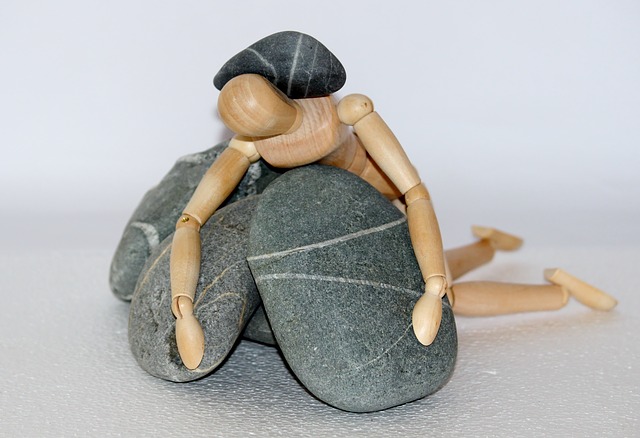 Each person reading this post has experienced a time when their hope quotient was at an all time low.
The definition of hopeless: 1) feeling or causing despair about something; 2) inadequate, incompetent.
When life happens, as it always does regardless of our preferences, we’re bound to find ourselves unable to manufacture even a modicum of hope to get us through the circumstances in which we find ourselves:
- The loss of a job and the financial repercussions resultant from that loss.
- Crimes against our body or our property.
- Relationship disruptions.
- The devastating diagnosis of a debilitating disease: cancer, ALS, Alzheimer’s disease.
Hope isn’t what a person feels when the rug has been yanked out from underneath them and their very existence as they knew it, maybe even just five minutes earlier, takes an irreversible turn.To be sure, that’s how quickly hope can take a nosedive. Equally as quick, we can not imagine we will ever feel happy again, nor can we imagine not being overwhelmed with how life has showed up. In an instant, our level of hope took a nosedive. Read the rest of this entry »
Kindness Fridays
 Today’s installment combines two passions of mine: kindness and hiking.
Since my husband’s retirement in April of 2016, we’ve managed to hike every week except during the winter months. Now with the snow a distant memory on most of the Pacific Northwest trails, we’re well into this year’s hiking season.
On Tuesday of this week, we headed out to Barclay Lake located in the lower Stevens Pass area of western Washington. This was a new hike for me and one perfectly suited for a sprained right foot, mine, needing a bit of coddling while on its healing journey. The hike was just under 5 miles and only had an elevation gain of 500 feet.
About two miles into our hike and a half mile from the lake, a couple in their late 60s were making their descent and as I always do for every hiker we meet on the trail, I greeted the man and woman which then encouraged them to pause and spend some time with us. This couple hiked 30 times last year – to our 18 times – which seriously encouraged me to continue our hiking activities during the winter season, albeit on trails at lower elevations to avoid snow encounters along the way. The kindness extended was the mutual sharing of favorite hiking destinations: for us, it was Margaret Lake, for them, Bowen Bay.
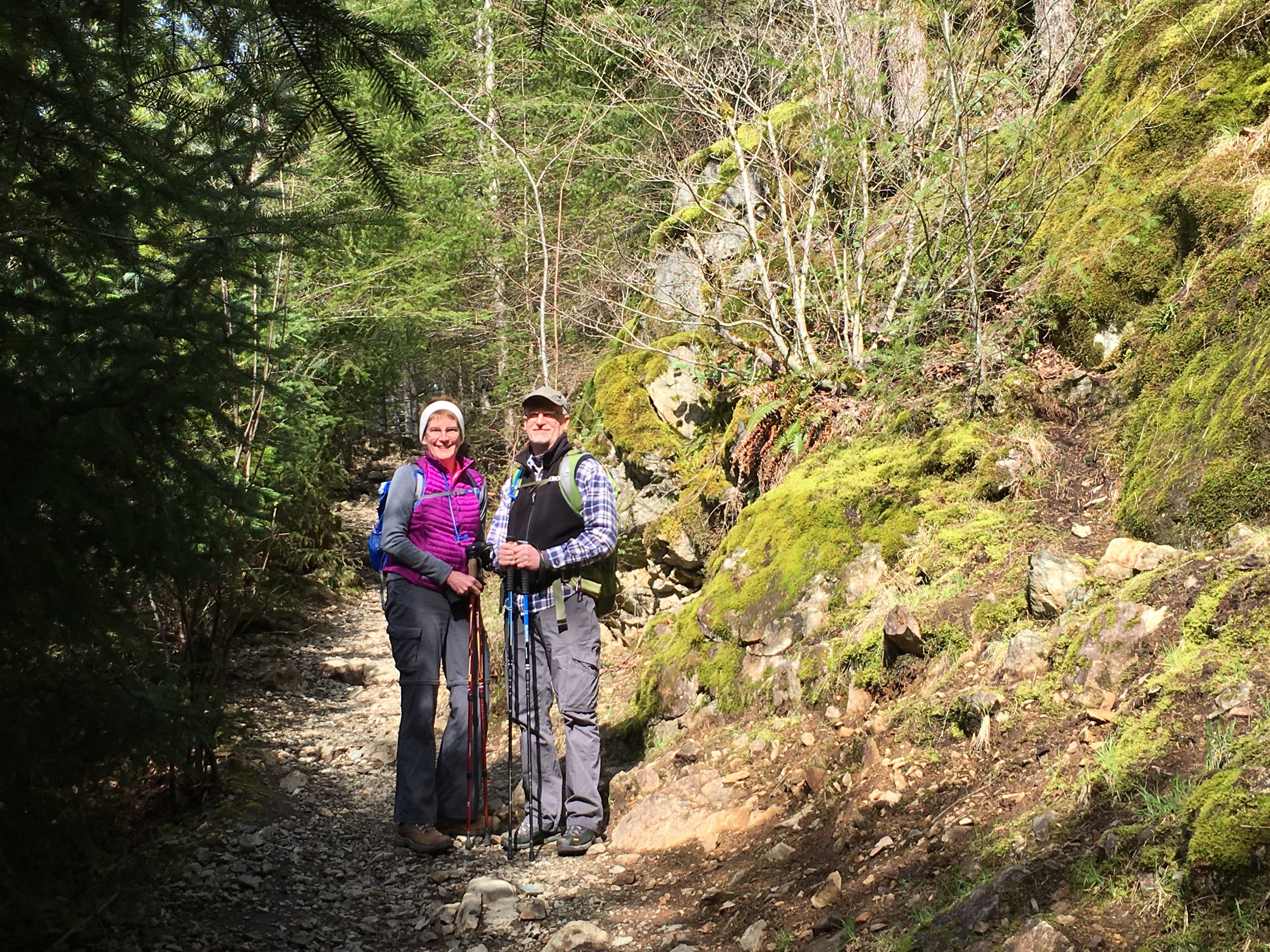
The excitement from each couple describing their particular trail favorite created a commonality of experience that went beyond any differences we may harbor within ourselves, be they political, religious, life experience, or otherwise. The four of us agreed that being out in nature and accomplishing our individual hiking goals contributed greatly to our quality of life.
On the trail, differences in beliefs or political leanings simply don’t come into play. And that, my friends, is a glorious way to experience kindness.
The Alzheimer’s caregiver: NOT a fictional character
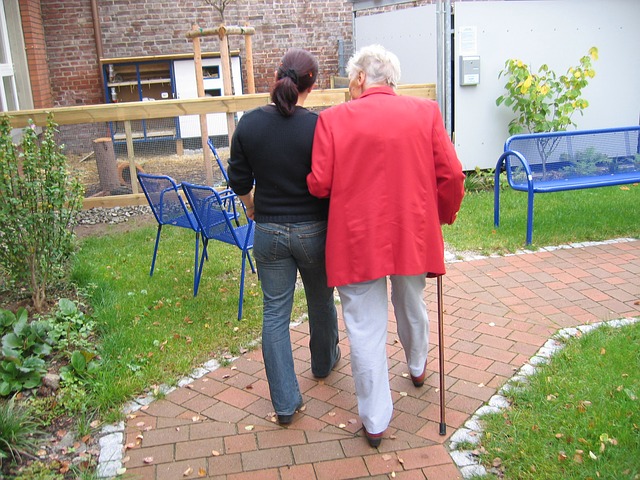 REQUIEM FOR THE STATUS QUO, to be released July 2017, contains fictional characters right out of yours and my reality. If your life hasn’t been impacted by caregiving for a loved one with Alzheimer’s or other dementia, you are at least tangentially connected to someone who has been.
- A parent’s senior moments transform into hair-raising episodes of wandering and getting lost at all hours of the day and night during varied seasonal temperatures that may very well threaten their lives.
- The husband who was Mr. Fixit for all home repairs, big and small, no longer knows how to use a screwdriver, and becomes combative when challenged.
- A sister’s successful writing career is derailed when she can no longer write coherently or understand the written word.
- The middle-aged next door neighbor pounds on your front door demanding entry to his home and threatens to call the authorities if you don’t immediately vacate the premises.
Variations of these scenarios abound, and within those story-like confines exist the caregivers who have been thrust into a role for which they were not prepared, derailing their status quo – their normalcy – beyond recognition. These same caregivers had very full lives before their days became what has become the caregiver’s 36-Hour Day. Any down time they enjoyed prior to stepping into their ill-fitting caregiver shoes has been filled with doctors’ appointments, loved one-sitting, and putting out fires. Carefully crafted family and retirement plans are no longer feasible because life as the caregiver once knew it no longer exists.
REQUIEM will give readers an intimate look at a caregiver’s day-to-day reality while also endeavoring to provide hope for what lies ahead. To be sure, there are no happy endings, but promises of resolution and lightness spring forth in the least likely of places and during some of the most awkward of times. Whether you are a caregiver, a former caregiver, or know someone who is, REQUIEM FOR THE STATUS QUO will become a most cherished and often-read bookshelf addition.
Life happens
We all have a strong preference that life should be easy, comfortable, and pain-free, but that doesn’t mean there’s something wrong with life when it isn’t those things. It’s just life and it’s not how you would prefer it to be, but that doesn’t mean there’s something wrong with it. – Constance Waverly, WaverlyRadio podcast #132
I imagine we all would prefer to live a life of health, happiness, and success (however success may be defined but certainly not limited to financial prosperity). With those three preferences met, life would be a carefree and joyful experience. Given the complexities of life, however, we are guaranteed a certain degree of physical pain, emotional heartache, want, and for some, absolute devastation.
Even an innocent newborn baby immediately discovers that his existence on this earth is anything but 100% delightful. He can’t define what that means when he’s a minute old, but he certainly feels it.
We tend to wonder why good things “always” seem to happen to bad people – an inaccurate thought, nevertheless it’s one that we entertain from time to time – but those of us who endeavor to do no harm aren’t blessed with easy, comfortable, and pain-free lives.
 I don’t have the answer to that question but I do have an answer: our assumptions about others are just make believe because we have no way of knowing what is actually going on in their lives. A person’s outward show of perfection, boundless happiness, and ease is just that: their outward public mask that very well may hide an entirely different one worn in private. Let’s face it, no one can be ecstatically happy and fulfilled 365 days of the year – or even 24 hours a day, or dare I say, a mere 60 seconds at a time – so why is it that we assume others have mastered that very impossibility?
Part of what I’ve learned in my sixty-plus years is that what matters most is how we live in the present, regardless of whether or not that present pleases us. Living in the moment, accepting that moment as our life’s current state of being without pushing back against it can be far more fruitful and enjoyable than the alternative: anger, complaints, and hatred. For example, Ariel and Shya Kane, in their book Practical Enlightenment, point out very clearly that getting angry does nothing toward changing ones current situation. Case in point: you’re running late for work in disastrous traffic. You pound the steering wheel, honk your horn, and yell at the other commuters and what do you know? Your situation hasn’t changed but you’ve become your own worst enemy because your previous misery has been considerably compounded by your fruitless actions.
- Traffic doesn’t happen to us, it just happens.
- A rent increase wasn’t directed at us personally, it was simply a business decision made by the landlord.
- Long lines in the grocery store didn’t occur to inconvenience us; quite simply, like us, other people decided to shop at the same time.
- Coming down with the flu a day after a person arrives in Hawaii for the vacation of a lifetime wasn’t preventable; germs are everywhere and will do their thing at any time and any place. Even though it sucks that the germs manifested themselves just as the vacationer was heading to the beach, please know he’s not being punished for trying to have a good time.
All the wishing in the world won’t change our current reality because anything we could have done in the past is over and done with. Anything we could possibly do in the future hasn’t yet happened, so we should give it up and just be where and when we are right now.
Piero Ferrucci had this to say about the illusion of being in control when his preferences weren’t met during a vital point in his life:
The outside world did not adapt to me: More simply and practically, it is I who must adapt to what is happening moment to moment. The Power of Kindness.
Club Alzheimer’s
 No one wants to be a member of a club characterized by a disease that robs a person of their cognitive function and is always fatal. Unfortunately, as of this writing, 5 million Americans (many more million in other countries) are living with Alzheimer’s disease or other dementias. Here are a few more facts extracted from the most current Facts and Figures document published by the Alzheimer’s Association:
- In 2016, 15 million Americans provided unpaid care for people with Alzheimer’s or other dementias;
- That equates to 18.2 billion hours of care valued at $230 billion;
- 1 in 3 adults dies with Alzheimer’s or other dementia;
- It kills more than breast cancer and prostate cancer combined;
- Since the year 2000, deaths from heart disease have decreased by 14% while deaths from Alzheimer’s disease have increased by 89%;
- Every 66 seconds, a person develops the disease.
My novel, REQUIEM FOR THE STATUS QUO, (Black Rose Writing publication, July 2017) spotlights one family’s experience in particular – the Quinn family – while also visiting other households affected by Alzheimer’s or other dementias.
- Eddie and Katherine, a couple in their 40s. Katherine has a combination Alzheimer’s/Lewy Body dementia, a type of dementia that causes somewhat violent behavior and speech;
- Frank and his son, Sean, the latter of whom suffers from a traumatic brain injury (TBI) incurred while on deployment in Afghanistan;
- Victoria and George, a couple in their 80s, trying to crawl through the maze of George’s Alzheimer’s disease;
- Rose and Sophia, sisters in their 50s, struggling with the effects of Sophia’s vascular dementia;
- Donna and Kelly, partners in their 60s, experiencing the devastating effects of Kelly’s Parkinson’s disease and the dementia associated with her disease.
These are characters like you and I. They were living their lives the best they knew how, being good people and doing good for others, yet Alzheimer’s still managed to grab them by the throat and refused to let go.
The storyline is a difficult one but the way in which I have portrayed all of these precious people will touch your heart, and at times, your funny bone. No, there’s nothing humorous about the disease, but people will be people, and when they’re confronted with the impossible, they can find – or create – a bright side onto which they can find redemption and community.
I look forward to introducing you to my characters. Just a few more months before they’ll become a part of your life.
Lighten up Mondays
 When romantic relationships last well into the stratosphere:
The couple had reached an age where the wife thought it was time to start considering wills and funeral arrangements rather than be caught unprepared. Her husband, however, wasn’t too interested in the topic.
“Would you rather be buried or cremated?” she asked him.
There was a pause, then he replied from behind his newspaper, “Surprise me.”
***
Mrs. Willencot was very frugal. When her husband died, she asked the newspaper how much it would cost for a death notice.
“Two dollars for five words.”
“Can I pay for just two words?” she asked. “Willencot dead.”
“No, two dollars is the minimum. You still have three words remaining.”
Mrs. Willencot thought a moment then said, “Cadillac for sale.”
***
A grieving widow was discussing her late husband with a friend. “My Albert was such a good man, and I miss him so. He provided well for me with that fifty-thousand dollar insurance policy – but I would give back a thousand of it, just to have him with me again.”
A winner is just a loser who tried one more time
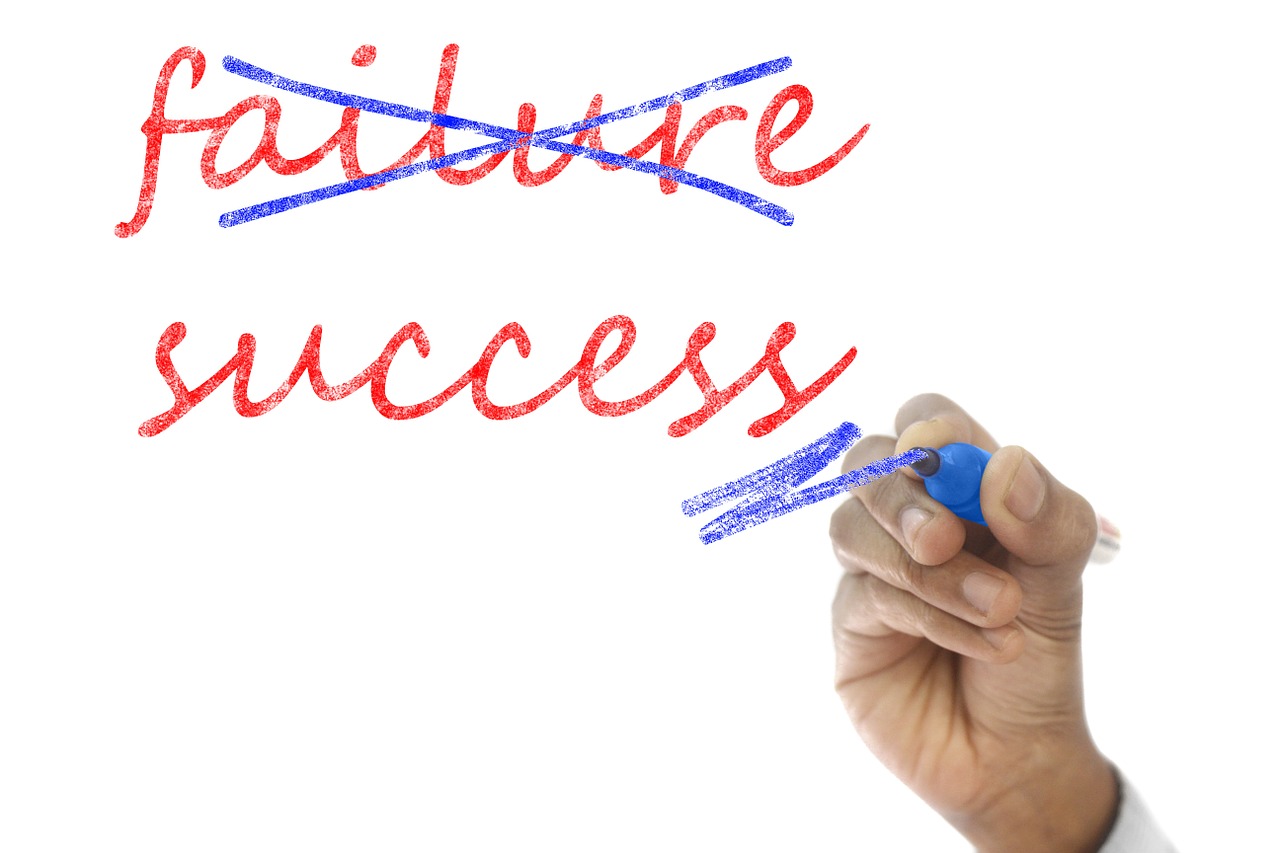 A winner is just a loser who tried one more time.
I am positive proof of that statement.
Confession time for me: after four years of pounding the pavement/internet trying to get my books published, I seriously considered walking away. I’m not proud of that revelation, but I think after awhile, the prolonged efforts in which many of us are involved start to lose their shine, don’t they? They feel cumbersome in their fruitlessness.
Until they bear fruit.
That is the simple lesson here: nothing comes easily. Nothing. There is no such thing as overnight success or instant stardom. The instances of such anomalies are so few, they’re barely a blip on the timeline of creation.
If you want to accomplish something as much as I did – for me it was becoming a published author – you must continue on that quest. Speaking personally, if I had given up on my goal of publishing a novel inspired by my experiences as my father’s Alzheimer’s caregiver, all the research, writing, and re-writing I did might have been considered a waste of time. It was a valuable and cathartic writing experience, to be sure, but its outcome – a published novel – would have never been realized.
What a shame.
My first novel, REQUIEM FOR THE STATUS QUO, was published on July 20th, 2017 and guess what? At the time, this first time published author was sixty-four years of age. Is my novel a resounding financial success? Not necessarily, but I did attain success which for me meant putting onto paper that which reflected my caregiving experiences so others might be encouraged and enlightened as a result. Family caregiving is difficult, so I figured if my novel could lessen even a few caregivers’ burdens, I will have accomplished much.
What does success mean to you? Whatever it might entail, don’t give up. I guarantee you’ll be glad you didn’t.
Kindness Fridays
Last month my husband and I went on a 3-state driving trip. We hiked in two of the states: Joshua Tree National Park in California, and Red Rock Canyon National Conservation Area in Nevada. We are crazy-ass hikers, and by that I mean that we are fully addicted to this activity and don’t function at 100% unless we hike at least two times a month. Because of our addiction – for which, thankfully, there is no 12-step recovery program – we hike whenever and wherever we can.
The hiking community is a a healthy one both socially and energetically; we’re like-minded people who love what we do so we’re all smiles and happy-go-lucky people. While on our challenging Red Rock Canyon hike – clambering over large boulders and trekking through snow and ice – we encountered one local couple who told us out-of-state visitors that the boulders in the portion of the trail we were about to encounter were extremely icy and slippery. Their helpful intel was all we needed to decide to cut our hike short.

On our return trip down this same trail, we encountered a recently retired couple from Washington State (the wife was wearing a Seattle Seahawks knit cap) and we shared in their joy of being retired by saying, “We’re retired too!” And what was so cute, a younger couple just coming up the trail met up with us and said, “We’re retired too!” Of course they weren’t, but they joined in with the jocularity and told us how much they were enjoying the hike and getting away from the Las Vegas gambling and drinking scene. The young man said, “Wow, hiking this place is like being in Lost Vegas!”
It was, and meeting up with like-minded people away from The Strip was our generous dose of kindness for the day.
When things don’t go as planned
 We’ve all been there. We lay out our carefully orchestrated plans – thinking we’ve arranged for every contingency – and then we find ourselves facing a roadblock for which we hadn’t planned. Yowza! Now what? My husband and I had that experience during a recent week-long Arizona trip. We flew into Las Vegas, NV, only using that locale as our arrival and departure location; no overnights.
The planned itinerary:
- 4 nights in Lake Havasu City, AZ to visit family. CHECK! And we had a delightful time as planned;
- 2 nights in Sedona, AZ to hike and experience all that this mystic location had to offer. NOPE! A snow storm changed those plans.
- 2 nights in the Grand Canyon, AZ area after Sedona. NOPE! A snow storm changed those plans as well.
We switched to a Plan B itinerary:
- 3 nights in Desert Hot Springs, CA to complete several hikes in Joshua Tree National Park. NOPE! Torrential rain and flooding.
 We spent 2 nights in Desert Hot Springs and managed to squeeze in one hike before the monsoon descended. We thoroughly enjoyed ourselves but we cut our visit short.
Plan C itinerary:
- 2 nights in Las Vegas, NV. CHECK!
When circumstances proved out of our control – and certainly weather falls into that category – we knew there was no sense in getting upset and raising our blood pressure over the whole matter; flexibility was the order of the day. If all those weather events hadn’t “interrupted” our vacation itinerary, we would have never had the opportunity to hike at Red Rock Canyon in Nevada. This place is so beautiful, that we decided to hike there two days in a row. The photos included in this blog are from that experience.
 We’ll return to Arizona some time in the future to fulfill our Sedona and Grand Canyon bucket list items … but then again, who knows what places we’ll actually visit should Mother Nature decide to come along with us on our vacation once again.
New Year, New Focus, New Look
 I’ve been authoring this blog, Baby Boomers and More, for five and a half years. Perhaps that’s a record for blog ownership, I’m not sure, but what I do know is that I thoroughly enjoy writing about matters of significance. I guess that’s why my blog has survived as long as it has: there are a heck of a lot of things going on in the world that fall into that category.
My website address remains the same: http://www.babyboomersandmore.com, but with a broader emphasis on life as it unfolds for all of us born within a certain year bracket:
- iGen (after 2000)
- Millennials (1980-2000)
- Gen X (1965-1979)
- Baby Boomers (1946-1964) and
- The Greatest Generation (before the end of WWII).
Yes, there are many differences between the generations but we have one major characteristic in common: although as individuals we are strong in many ways, we still need each other to get to the finish line.
With that change in overall focus comes a new, primary blog identification:
Living: the ultimate team sport
 If we consider all the people with whom we come in contact as being members of the same team, we will do all we can to support them. We’ll bolster rather than compete; we’ll pick them up rather than step over them as a means to an end; we’ll exhibit respect for each other’s talents while nurturing our own; we’ll not take advantage of weaknesses in order to falsely boost our own strengths. In short, we’ll stand by our teammates and want only the very best for them.
Another goal of mine: write more succinctly, at least after this particular post. 🙂 I know you’re all busy and have better things to do than read my oftentimes lengthy magnum opuses. I’m newly committed to being as succinct as possible, somewhere along the lines of an article I wrote on December 27, 2016: Don’t go there. Let’s face it, as a writer, I should be able to use an economy of words to get my point across to those who’ve chosen to follow me.
And one last thing: the header images you’ll see at the top of my blog (which will cycle through randomly) are from photos I took during a few of my hikes around the Pacific Northwest. Hiking is my passion, so I’m pleased to provide snapshots of views I have been privileged to see.
With that, I’ll sign off for now, so very glad to be a member of your team.
True happiness is in our control
Regardless of our circumstances we are in charge of our happiness.
 Our happiness is most dependent on how we direct our lives in any given moment, every day of our lives.
I recently viewed an episode of Super Soul Sunday on OWN in which Oprah Winfrey interviewed Jeff Weiner, CEO of LinkedIn. During that episode he spoke highly of his mentor, Ray Chambers.
Ray Chambers is the founder of an extraordinarily successful private equity holding company who walked away from it all – with more wealth than one could spend in many lifetimes – to become one of the biggest philanthropists in the world.
On this particular Super Soul Sunday television episode, Mr. Weiner listed the keys for happiness that his mentor, Ray Chambers, passed along to him. I am committed to these very principles and as much as possible, have applied them in my life, for my own good, and for the greater good of all mankind. [My editorial input is in brackets.]
Five Keys to Happiness
- Be in the moment. [This is what Ariel & Shya Kane of Transformation Made Easy have to say about this key: “This moment right now is all there is. Something in the future will not get here until it does, and when it does, it will occur as a moment of now.” If I had a penny for every worry or fear I’ve harbored throughout my lifetime, I could buy a publishing company and publish every book that I’ve ever written or have yet to write. Then with the leftover money, I’d solve world hunger, and every other plight, and have oodles of cash left over. What I’m trying to say is, I’ve been known to worry.]
- It’s better to be loving than to be right. [This takes humility – and a whole lot of practice – but it’s so very worth it. Ariel & Shya Kane say, and I’m paraphrasing, You can either be right, or alive.]
- Be a spectator to your own thoughts, especially when you become emotional. [I can’t count the number of times my knee jerk emotional reactions have benefited anyone, because they haven’t.]
- Be grateful for at least one thing every day. [Some days we may have to get creative in coming up with that one thing but I am absolutely certain that we all can come up with that one thing.]
- Be of service to others every chance you get. [Do little rather than nothing. The good we do doesn’t have to be grandiose or noteworthy. What matters is that we wear the mantle of compassion and servitude wherever we go.]
There are certainly many matters well out of our control, so isn’t it fabulous that happiness is not one of them?
That makes me very happy.
Financial help for family caregivers
 The longer our lifespan, the more likely each of us will need to be cared for. But one need not be elderly to require such care. Many illnesses strike without thought for a person’s stage in life.
Actor/comedian, Seth Rogen’s mother-in-law was diagnosed with Alzheimer’s in her 50s, an age that many consider to be the prime of life. The successful actor’s finances, plus those of several other family members, supported the care of which his wife’s mother was in need. In time, he, his wife, Lauren, and many others established Hilarity for Charity:
In 2012, Seth and Lauren (along with some amazing friends), created Hilarity for Charity. They later established the Hilarity for Charity Fund as part of the Alzheimer’s Association, through which monies raised are directed to help families struggling with Alzheimer’s care, increase support groups nationwide, and fund cutting edge research. Since its inception, Hilarity for Charity has raised more than $5 million to support these efforts.
One of the ways in which they provide this support is through caregiving grants that provide hours of home care for those struggling to survive the demands of a disease that is always fatal. Could you, or someone you know, benefit from such grants? Please avail yourself of the information provided on the Hilarity for Charity website.
See the following link for further support: Caregiving 101 through 1001
Live like you were dying

Even at my age, I live by the school year calendar. When a new school year approaches, I oftentimes find myself reassessing where I am, and where I’m going – not unlike what so many of us do the first of every new year. This post flows from that assessment and has been ruminating in my mind for some time now.
Maybe it’s my advancing age, or maybe it’s the wisdom that has come with my advancing age, but I’m constantly reminded how important it is to live NOW; in the present. We have limited time on this earth. Time is a luxury we can not afford to waste, and yet so much of our time falls into that wasteful category.
If you were diagnosed with a terminal illness, wouldn’t you do all you could to squeeze every last drop out of your life? I know I would because I would have no choice in the matter.
But those of us who have not been given a medical death sentence do have a choice. We can be engaged in this only life we’ve been given, or we can waste it.
We can wile away the hours of each day lamenting what isn’t and complaining about what is, or we can live in the present and accept what we can’t change and do something about that which we can.
The truth of the matter is, we all have restrictors strapped to our lives. They may be physical or medical restrictors; financial or situational restrictors. No one escapes what life dishes out, but we all have a choice about what we do with what we’ve been served.
That’s a very heady responsibility we’ve been given.
I mean, wow, it’s my life, I get to choose how I live it. I can choose to remain as I am, or I can do something this very day to make things better.
Waiting even one more day means that’s one more day I will have wasted.
I’m not willing to do that, I mean . . . what if tomorrow brings about that death sentence I thought I had avoided?

Lighten up Mondays
The trouble with retirement is you never get a day off!

An old guy in his Volvo is driving home from work when his wife rings him on his carphone. “Honey”, she says in a worried voice, “be careful. There was a bit on the news just now, some lunatic is driving the wrong way down the freeway”. “It’s worse than that”, he replies, “there are hundreds of them!”
*****
A reporter was interviewing a 104 year-old woman: “And what do you think is the best thing about being 104?” the reporter asked. She simply replied, “No peer pressure.”
*****
An old lady really wanted to visit England, the home of her ancestors, before she died. So she went to the Federal Office and asked for a passport. “You must take the loyalty oath first,” the passport clerk said. “Raise your right hand, please.” The old gal raised her right hand. “Do you swear to defend the Constitution of the United States against all its enemies, domestic or foreign?” The sweet old face paled and the voice trembled as she responded, “Well, I guess so, but. . .will I have help, or will I have to do it all by myself?”
*****
“Oh, I sure am glad to see you,” the little boy said to his grandmother (on his mother’s side). “Now Daddy will do the trick he’s been promising us.” The grandmother was curious. “What trick is that?” she asked. “He told Mommy that he’d climb the walls if you came to visit,” answered the boy.
*****
And finally:
What is so special about the retirement age? “It is the time when one acquires sufficient experience to lose one’s job.”
60 is the new 40 … kind of
I’m in my early 60s and I’ll be damned if I’ll use my age as an excuse to be inactive. Not on your life … certainly not on mine.

Since my husband retired late April of this year, we’ve managed to go hiking every week. (It’s such a luxury being able to do so on the less-crowded weekdays.) Prior to coming down with the hiking bug, we would look for a trail with an elevation gain FAR below 1000 feet. To be more honest, we only chose trails with a couple hundred feet elevation gain.
Elevation gain = degree of steepness of the trail
Now we choose trails with at least a 1300 foot elevation gain.
Why?

Our goal is to hike Mt. Si, 8 miles RT and 3150 elevation gain, by the end of September. That’s 1850 additional feet elevation gain than the hike we completed on July 1st.
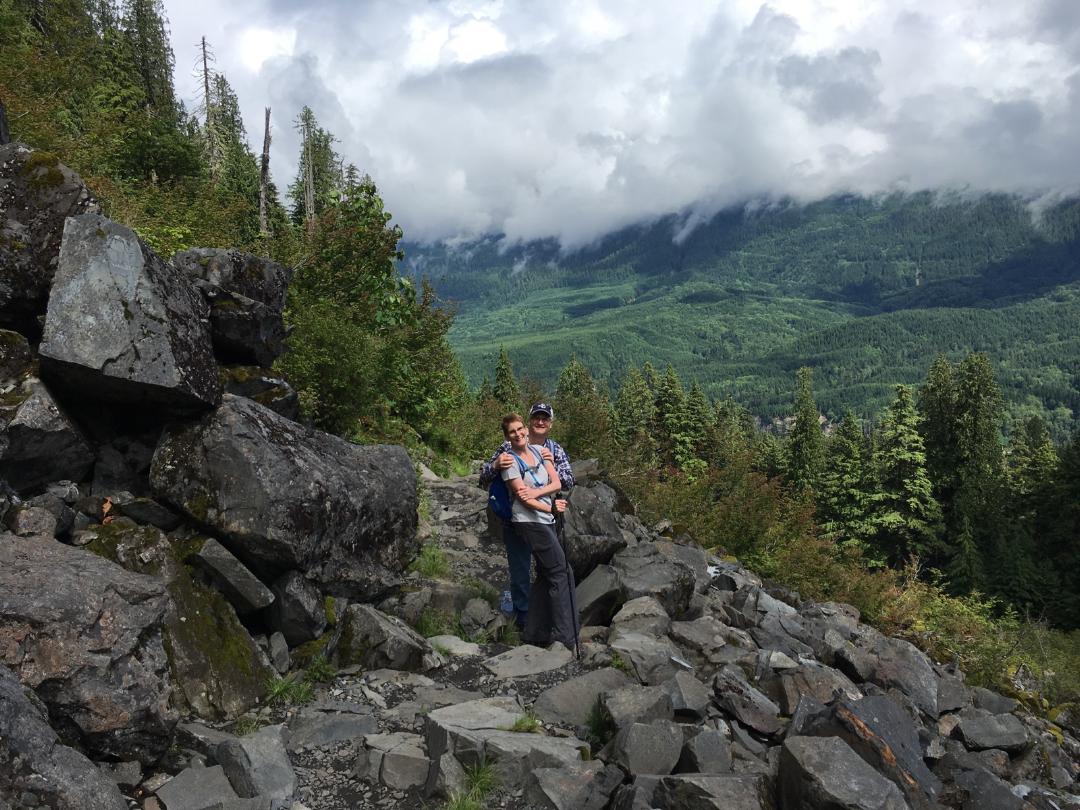
The hike we completed with my husband’s daughters on July 3rd was difficult because of all the massive rocks and boulders we had to maneuver through…I got a good bruise on my leg when my maneuvering wasn’t all that successful. (See below for the terrain.)
We have been training for the Mt. Si hike by walking in our very hilly neighborhood. We’ve labeled each training walk in the following manner: The Wall, The Monster, The Broadhurst Monster, The Figure Eight Double Monster. We’re very pleased with our increased physical endurance and lung capacity as a result of said training walks. And of course, each and every hike we take, we increase the elevation gain and the length of the hike, all the while enjoying the beauty Pacific Northwest hiking destinations have to offer.
You may ask, “Why in the hell is Irene boring us with her husband’s and her hiking exploits? Sure sounds as though she’s bragging.”
Oh, I’m not bragging, not in the least. I’m celebrating my husband’s and my decision to push through the pain and discomfort and to stretch the boundaries of what we thought we were capable of doing. Speaking for myself, being 60-ish has brought a few health challenges, not the least of which is pretty severe arthritis in both feet, several ruptured discs and tears in my lumbar spine area, and an internal issue or two that sometimes chain me to my house.
But you wanna know something? I had a good teacher when I was growing up in the form of my mother who had severe rheumatoid arthritis. She was diagnosed with RA as a teenager.
Mom made the decision early on in her life to keep moving.

My mother declared that she would rather be active and hurt more, than stay at home and hurt slightly less.
And that’s what my husband and I are doing. Let’s face it – we’re not getting any younger and every day we waste can never be retrieved and lived over. As the old saying goes, “This ain’t no dress rehearsal, folks.”
I’d rather squeeze what I can from every day I’m given … and then apply the multitude of ice packs we have at home to our various body parts when we return home to celebrate our accomplishments. What can I say, it works for us and it makes us extraordinarily happy being able to do these activities together.
Life on the sidelines vs actively engaged
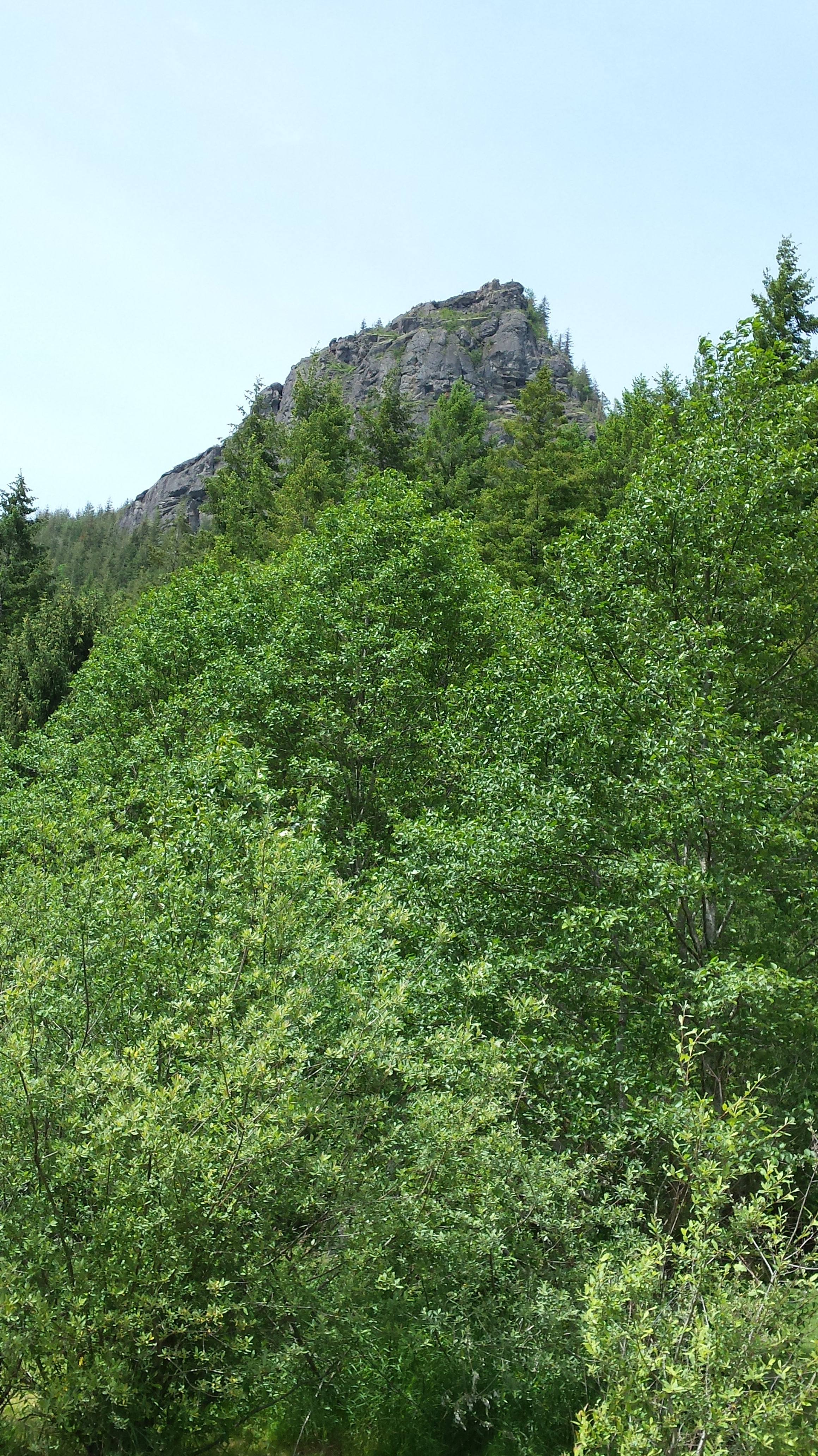
My husband and I have the privilege of being able to hike during the work week because he’s now retired and we’re not reliant on the weekends to do fun stuff any more. So I took my early 60s body on a hike the other day and let me tell you, it was a doozy.
Now some of you may think that an elevation gain of 1100 feet isn’t all that difficult but my body says otherwise. The incline up the mountain was a looooong one so you’re constantly climbing up, up, up, and your hamstrings are spouting off swear words you never thought you’d hear coming from such a close member of your body.
Added to that, your heart is accustomed to brisk walks through the hills of your neighborhood as well as high-resistance recumbent bike riding both of which should have prepared it for the heart-pumping action required for a mountain hike. Right?
Not so much.
We had never hiked Rattlesnake Ledge before so we had yet to memorize every twist and turn of the trail. We also weren’t intimately acquainted with the 1000s of evergreens along the way so we had no way of answering the question, “Are we there yet?”

Just about the time I spouted off that question what did I see ahead of me but a fellow hiker in his late 80s to early 90s coming down off the mountain…with a smile on his face…carrying a hefty backpack on his somewhat stooped over back. I turned to my husband and said, “Shit! If he can do it, I can do it!” We spoke briefly with the elderly hiker and then we huffed our way up the trail, eventually making it to the top for a picnic lunch.
We caught up with him on the way down the mountain – at his age he certainly takes a wee bit longer to ascend and descend the trail – and being who I am, I started a conversation with him. Come to find out, not only has Ray hiked Rattlesnake Ledge numerous times, but decades ago, he hiked Mount Rainier several times.
“That was decades ago. I certainly couldn’t do that now.” To which I responded, “Look, Ray, you’ve accomplished that feat and we haven’t. And not only have we not accomplished that feat but we have no aspirations of ever doing so.”
Because I tell just about everyone my hubby and I come in contact with that my husband is retired, I told Ray that Jerry had just retired from Boeing after 38 years of service at the company. Ray replied, “I’ve been retired for 30 years now and I’ve loved every minute of it.”
 So this is what I’ve concluded: Ray knows how to enjoy life, but not only how to do that but how to really and truly occupy his life. His current life is not just a placemaker until better things come along. NO, he’s making things happen while he still can rather than waiting on the sidelines where nothing ever happens.
As my husband and I were about to continue down the trail ahead of Ray I said, “Glad to know your name Ray, that way when I see you again, I’ll know what to call you.”
“Well, I don’t know how much longer I’ll be able to keep up this pace. I may not be on this trail again.”
To which I responded, “Ray, that could be said of everyone on this mountain, myself included, but something tells me we’ll be running into each other some day soon.”
So I learned lots of stuff from my hike the other day. Just because the hike was somewhat uncomfortable – okay, a lot uncomfortable – doesn’t mean I wasn’t supposed to do it. I have to say, once I got home and showered I was astonished to hear myself thinking, “I’d be willing to do that hike again, and one even more difficult than that.”
We look back on difficulties/mountains in our life that at the time seemed insurmountable but when we consider where we’ve been and where we are now we can say not only did we get through it but we’re feeling far more competent to take on even more as a result.
 We don’t have to perfect every new endeavor the first time out. Perfection isn’t our goal, is it? I tend to believe that if perfection were our goal, we’d just stay put and never venture out to discover what we’re capable of.
And a last note on this subject: as my husband and I were gleefully hiking down the mountain we came across numerous people huffing and puffing their way up the trail. One or two groups stopped us to ask how much longer it was to the top. We couldn’t lie to them, that wouldn’t be fair, so when this one group of girls in their late teens asked, “Are we there yet?” we had to inform them that they were just over a quarter way up. Oh, the groans coming from them were hilarious but we didn’t laugh at them, my husband simply said, “You can do it!”
To which I’m sure they said – out of our earshot – “If those geezers can do it, we can do it!”
Our lives in focus
 Through comments by someone I follow on Twitter, I stumbled on the key to living in – and thriving on – the present. Authors Ariel and Shya Kane [@ArielandShya] went through trial and error during their early adult lives in their attempt to find fulfillment.
If you read even one of their books, you’ll discover that they admit their journey took them to many places and venues, under varying conditions, spending great and small amounts of money, only to find the answer to their quest in their every day experiences.
If we’re aware and focusing on the present we’ll find life lessons everywhere we look.
We can be deaf and blind to those lessons, but it doesn’t take a trip to India, a luxury spa, or even a therapist’s office, to practice the art of thriving exactly where we are.
The painful yet honest truth is that we excel at complaining and stressing about situations in which we find ourselves: traffic, long lines at the TSA security checkpoint, our job or lack thereof, boredom, illness, and so on. But if we’re honest with ourselves – and lately I’ve been painfully honest with myself – we’ll conclude that complaining and stressing out over such situations does nothing toward changing them. But changing the way we view those situations does alter how we react to them and therefore how we feel about that moment of time in which we’re inconvenienced because what we would have preferred to happen, did not.
When did your complaining about a lengthy red light – when you were endeavoring to get to an appointment on time – actually make the green light come quicker?
It didn’t.
Here’s a direct quote from the Kane’s book, Practical Enlightenment: Read the rest of this entry »
Celebrating my husband

This is what retirement looks like on my extraordinary husband. Retirement day was April 28th, 2016.
We spent the night at a local resort, dining for 2.25 hours on a meal deserving of a king because that’s how I view my husband.

Just a few hours earlier, Jerry arrived home from his very last commute from work and I greeted him with a custom made sign that I designed and had made at my local Kinkos location.
And guess what, folks?! Today’s Monday and quite frankly my dear, he doesn’t give a damn.
Retirement with an awesome person
No, my husband isn’t retired quite yet but as of today there are only eight more work days until he is retired. He is certainly excited, but his excitement is tempered with the realization that after 38 years with Boeing as a trusted, well-respected, structures engineer, those skills will no longer be needed from him. Others at the company will have to take over his work, and let me tell you, that’ll be a difficult task for them to accomplish.
 Guess what? You can’t take off or land without the airplane part that my husband was responsible for. Oh sure, there are many planes in the Boeing system but Jerry was intimately involved with several generations of those planes.

Even the President of the United States relies on landing gear to get from point A to B and back again. That’s right, the current President and several before him should be thanking Jerry for having the skill level my husband has, I mean, just think about it, the entire weight of an airplane is on the nose and main landing gears … you really, really want them to be structurally sound.
This same extraordinary engineer is also my husband and has been since February of 2000. And guess what? I get to be a part of his retirement experience and I am privileged to be able to grow old (older) with him for many years to come.
The Boeing Company was honored to have my husband in their employ for thirty-eight 38!!!!! years.
Now I get to have him all to myself.
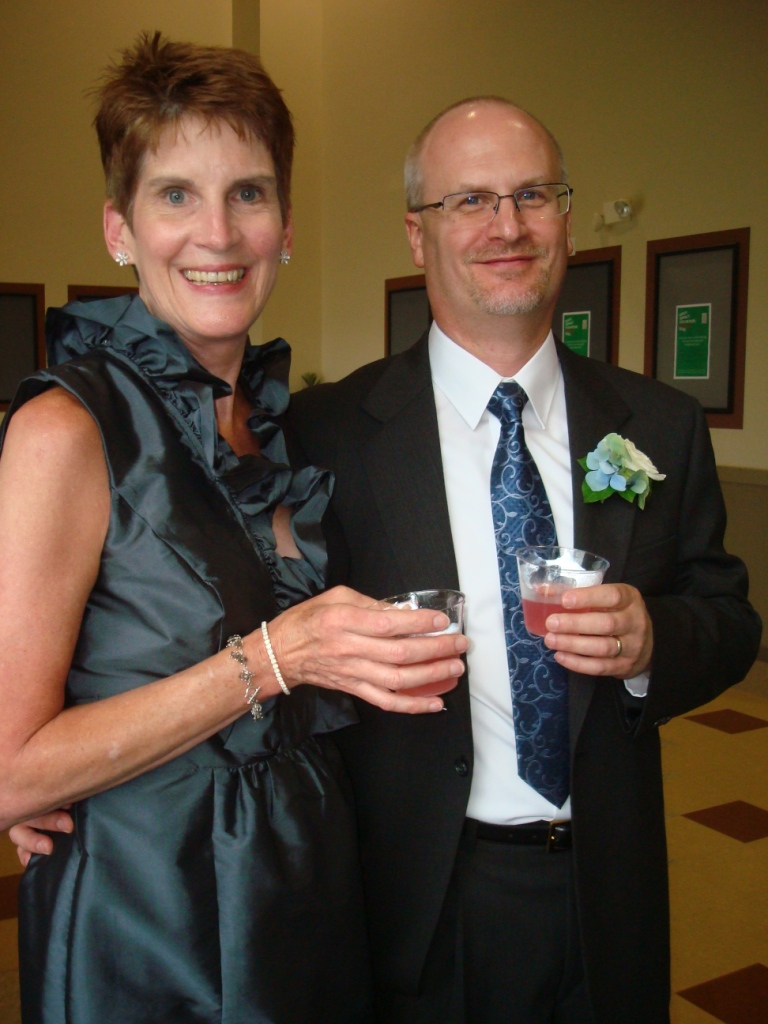 And that makes me extremely happy.
Last things
 My husband is retiring the end of April at the age of 59, the same age as did my father. I can’t recall the reason why Dad chose 59 as his retirement age. Maybe he felt the same way my husband does:
It was time.
Yes, it’s time, and my husband and I have been very diligent throughout our marriage – and before – making prudent financial decisions that will enable a somewhat early retirement compared to others. But did Jerry and I ever feel we robbed ourselves of enjoyment while being frugal? Not at all.
Between us, we financially assisted three daughters through college, still managing to travel to Hawaii every few years and other low-budget trips in-between. We’ve had our fair share of vehicles, not fancy ones, but safe metal encasements with four wheels each. 🙂
But this post isn’t about that, it’s about marking “lasts” while remembering the “firsts.” Here are some of the lasts that have already occurred and that are yet to occur:
- Voting one last time for – or against – the SPEEA engineering union contract that comes up for negotiation every few years. Done;
- Last at-work employee Holiday potluck. Done;
- Last Boeing Holiday break that gives employees a week or so off during Christmas/New Years (who needs it when every day during retirement is a break from work?) Done;
- Last employee performance review. Done;
- Jerry’s last Boeing paycheck will be received in May of this year. The first one was in June 1978;
- On Thursday, April 28th: he’ll shut off the last 3:45 am wake-up alarm, he’ll drive the last commute to/from Everett, when he walks through the door later that day, I’ll say my last, “Yay, you!” which I have said to him pretty much every day he comes home from work.
Wow. Looking forward to creating some new firsts once he’s retired, starting with: Read the rest of this entry »
The mid-life crisis myth
 The Middle-Age Surge written by columnist, David Brooks, is a fabulous expose on what it really means to be living in ones “middle ages.” He reviews the book, Life Reimagined, by Barbara Bradley Hagerty while also proposing that the idea of mid-life crisis is truly a myth that many don’t see as being applicable to them. I mean seriously, people, how many friends or coworkers of yours purchased a zippy sports car when they hit their mid-40s or later?
Many years ago I briefly dated a guy who drove a gold-colored early model Porsche. On my third date with him, I said, “You know what they say about guys who drive Porsches, don’t you?” His response was nowhere near the statement I was going to provide that centered around over-compensation for short-comings. He said, “Yeah, they have lots of money.”
Not even close.
Anyway, Mr. Brooks quotes theologian Karl Barth who described midlife in this manner:
The sowing is behind; now is the time to reap. The run has been taken; now is the time to leap. Preparation has been made; now is the time for the venture of the work itself.
 I can unabashedly declare that I can look back on my life with a more refined foundation of wisdom; I can move forward, not haphazardly, but with focus and intent. I know what’s important to accomplish before my time on this earth comes to an end, and I’m not going to let anything get in the way of my doing so. (So watch out publishers, I’m knocking on your doors!)
The people who find meaning at this stage often realize the way up is down. They get off that supervisor’s perch and put themselves in direct contact with the people they can help the most. They accept that certain glorious youthful dreams won’t be realized, but other, more relational jobs turn out to be more fulfilling.
One of the conclusions the columnist comes to is that the mature mid-life folks “are less likely, given all the judgments that have been made, to care about what other people think.”
And that describes me to a T.
See also:
The split personalities of a caregiver
Source: ON LABELS, ROLES AND MARRIAGE WITH ALZHEIMER’S This linked article does a fabulous job of putting a spotlight on the roles we take on when we become caregivers. Does our original role as: wife, husband, son, daughter, brother, sister, disappear when that role-shift takes place?
I’ve known numerous caregivers in my life. I was one.

Before I became a caregiver, I was a daughter. Was I still a daughter once my role as a caregiver became a 24/7 occupation?
It didn’t feel like it when:
- I had to cut up my father’s food for him
- I had to pack adult protective underwear when I took him on a walk in the park … just in case
- I had to correct him for behavior unbecoming of an adult
- I took him to a doctor appointment and spoke to the doctor on my father’s behalf
- I tucked him in for a nap so I could get things accomplished without him being tethered to me wherever I went …
Was I his parent? Was I his caregiver?
No. I was his daughter. I took on a variety of roles during the years of my father’s decline with Alzheimer’s, but I was always his daughter. As a matter of fact, never had I felt more like a daughter than during the five years of his illness.
During one of my walks in the park with dad, on his last Father’s Day as it turned out to be, two young men rode their bikes toward us and as they got right up to us, one of the men said, “Happy Father’s Day, Sir.”
That young man saw a daughter and a father, not a caregiver and an old man.
Dad took his parenting role very seriously. By the time I was on my own, he had been actively mentoring and caring for me for twenty-one years.
What’s five years in the grand scheme of things?
A privilege.
See also:
- Baby Boomer + Aging Parent = a changing paradigm
- Adult children who parent their parents
- Ambiguous loss – the experience of caregiver spouses
- When illness makes a spouse a stranger
How to make the best of a New Year, every day
 My last post of 2015 talked about making resolutions you can actually fulfill.
This first post of 2016 proposes that every day be treated as one does a New Year.
I’ll borrow sentiments from Dr. Bernie S. Siegel again, providing you with wisdom that might help you get a good start on 2016, and every day you’ve been given. Direct quotes will appear indented in this post.
How can you have a new year? You are the same person, and the world doesn’t start again with a clean slate. Your troubles don’t disappear. People don’t forgive you for what you did the year before…
Your life is anything but new when you awaken on the first day of the year. It is simply a way of measuring the passage of time. Why make such a fuss over it?
We like new starts, don’t we? There’s something refreshing about having the opportunity to start all over again. Not unlike second chances, I treat the commencement of a new year as an opportunity to do better. Unless you’re perfect, you too like the idea of a fresh start.
The truth lies in our desire to be reborn, to start again, to make resolutions and changes we can live up to. Then why wait for a certain date to start a new year? Why can’t tomorrow be New Year’s Day?
Maybe it is!
Wow, instead of waiting 365 days to do better, I can do better in the next minute. I don’t even have to wait until tomorrow. Right now, I can do better. I can think of and speak more kindly towards others and myself. I can promote a healthier lifestyle and make plans to construct a better me and a better world. Why wait?
I see it every day in my role as a physician; people learn they have a limited time to live, and they start their New Year behavior. They move, change jobs, spend more time with those they love, stop worrying about what everyone else thinks of them, and start to celebrate their life.
Whoa, why wait until it’s too late? Quite literally, when you’ve been given a death sentence, it is too late. I’m not going to rely on receiving such a prognosis to get things right, I’m going to make every effort to do better for myself and others, right now.
I have the chance to live my best life now, and so do you.
When every evening is New Year’s Eve and every day you awaken to is New Year’s Day, you are living life as it was intended.
Wow, given the alternative, I’ll get right on it!
It takes courage to be passionate
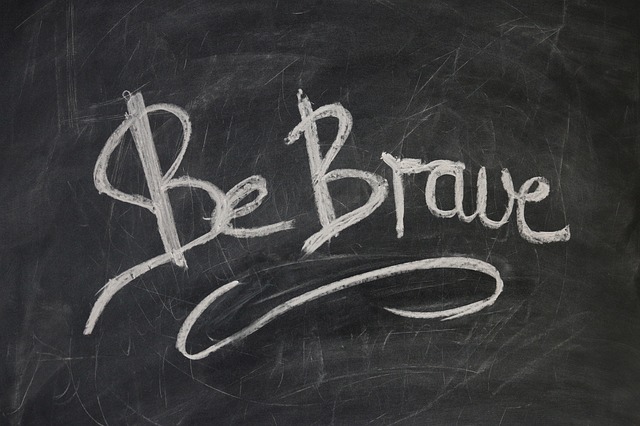 David Brooks’ article, Lady Gaga and the life of passion, speaks of putting ourselves out there for something for which we are passionate.
All that is needed for a person to conclude that Lady Gaga puts herself out there is to watch just one of her performances or appearances at awards shows. She wore a meat dress at the 2010 MTV Video Music Awards. Outsiders like ourselves look at such a display and might think unkind thoughts about a person who is extremely passionate about her craft.
For most of us, putting ourselves out there means singing at the top of our lungs in the shower or car where no one can hear us. Or perhaps our definition of being out there means matching a floral print top with checked shorts when on vacation where no one knows us.
David Brooks’ article covers the passion involved when we’re courageous enough to follow our dreams, dreams portrayed in this manner by Lady Gaga:
I suppose that I didn’t know what I would become, but I always wanted to be extremely brave and I wanted to be a constant reminder to the universe of what passion looks like. What it sounds like. What it feels like.
Given that description, us aforementioned outsiders might feel differently about how this extraordinarily talented singer/performer expresses herself.
So what does it mean to live a life of passion? Read the rest of this entry »
Tips for helping a caregiver
 The latest AARP Magazine had a fabulous article providing helpful ways in which to make a caregiver’s life just a wee bit – or quite a bit – better. Here are a few tips for you to adopt in your life.
- Bring her a low-maintenance houseplant
- Take in his mail
- Do yard upkeep, whether raking leaves, mowing the lawn, shoveling snow
- When you’re heading out to buy groceries, ask him if you can pick some things up for him
- Take her kids or grandkids to the park or to a movie
- Stop by with a board game or a movie to watch – a perfect way to get his mind off things
- Visit her with a pet that has a sweet disposition
- Take his dog on a walk – maybe on a daily or weekly basis
- Do some light housework or repairs: dishes, vacuuming, dusting, ironing, smoke alarm battery and light bulb changing, fixing a leaky faucet
- Return her library books
- Volunteer to stay at home to wait for the cable technician, repairman, etc. while he attends to other more pressing needs
- Bring him a week’s worth of meals in freezable containers
- Send her a greeting card on an ongoing basis. Who doesn’t love to receive real postal mail?
- When visiting, let the person vent, without passing verbal judgment on what they may say
- Do an item or two on her To-Do list – I promise you, her list is extraordinarily long
- Offer to make a photo album with him, using photos that mean a lot to him and the rest of the family
- Give him a gift card to a restaurant he may enjoy, or better yet, take him out to dinner
- Help him decorate for the holidays
- Drop off or pick up a prescription
- Keep in touch with her, even after her loved one passes. Too often, the grieving one has more attention than she can handle immediately after someone dies, then when she could really use some TLC, no one can be found.
Normal is highly under-rated
Have you ever experienced a time when things just weren’t going right or you were ill and felt you would never again return to normal?
Of course you have, we all have. We were so wrapped up in our current state of affairs, we couldn’t even remember what normal feels like. This phenomena may also be characterized as craving the status quo, a condition that many of us usually abhor, given the option of leading an eventful and stimulating life.
When we’re on our knees praying to the Universe for a break – or perhaps worshiping the Porcelain God with an upside down stomach – we’ll give anything for boredom, a heightened state of normalcy, or a long stretch of monotony.
My suggestion to you: the next time your yawns make you impatient for something different, be careful what you wish for and enjoy the ennui while you can.
 And when you’re going through a rough patch, remember that when you’re in the dumps, this too shall pass, and when it does, you’ll have the opportunity to relish the calming state of normalcy once again.
It’s always nice having something to look forward to, isn’t it?
- ← Previous
- 1
- 2
- 3
- …
- 5
- Next →
 Living: the ultimate team sport