Focus on Caring: The ties that bind us
This week’s story is right out of a fabulous blog that I follow, The Kindness Blog. I’m submitting the story as it was written, in the 1st person, by the person involved.
I was in a really bad three-car accident a few years ago where a drunk driver ran a red light and hit another lady and me – the other lady died. This couple who had been leaving the Mosque across the street heard the accident happen and came running to help. It was cold out and I was just sitting on the side of the road shivering and cold. Read the rest of this entry »

Lighten up Mondays
 A young man was walking through a supermarket to pick up a few things when he noticed an old lady following him around. Thinking nothing of it, he ignored her and continued on.
Finally, he went to the checkout line but she cut in front of him. “Pardon me,” she said, “I’m sorry if my staring has made you feel uncomfortable, it’s just that you look just like my son who died recently.”
“I’m very sorry,” replied the young man, “is there anything I can do for you?” Read the rest of this entry »
Our life: an ongoing parade
Here I go again, relying on Dr. Bernie S. Siegel to provide some wisdom for your day, but what can I say, his 365 Prescriptions for the Soul catches my attention more often than not and when it does, I like to share the good stuff I find. The following is provided verbatim:
Parade of Life
Forget past mistakes. Forget failures. Forget everything except what you are going to do now, and do it. – William Durant
 Life is a parade. Sometimes we march along and realize we have passed by what we were looking for. What do we do? Stand there and drop out of the parade? March on with regrets? Feel bad about how we looked or that everything we wanted was on the wrong side of the street? It’s passed! Forget it and march on!
Sometimes our parade isn’t so pretty, and the crowd isn’t interested in us. If we drag everything we have passed with us, we will destroy the present. We have no future when we live in the past.
We even talk about past lives. Whether you believe in them or not, the same principle applies. If you are living a past life, you are destroying your present one. In therapy, people come to understand why they are acting the way they are and how the past is affecting them. They learn to let go, move on, and not sit in the same classroom year after year. They graduate and commence a new life.
A closing comment by this blogger:
The good news is that we can learn from our past, both the good and the bad. But if we stay cemented in the past and don’t move on, that parade Dr. Siegel talks about? It’ll pass us by.
I don’t know about you, but I don’t want to get left behind.
Focus on Caring: Looking for trouble
 My oh my how often we are on the road, driving to our intended destination, and we observe someone with car trouble. Each and every time I observe such a scene I always say a little prayer that the Universe will step in and send someone to be of assistance to this poor soul.
Thomas Weller of San Diego, California looks for trouble and provides assistance in the form of: fuel for those who thought driving on fumes would get them to their destination, a change of tire for that troublesome flat tire that started out as a slow leak but ended as a pancake, or a lift to a safer place so that the stranded motorist could get off the highway.
This isn’t a passing fancy of his, he’s been doing it for 50 years. Read the rest of this entry »
Lighten up Mondays
Charlie experienced a bit of confusion at the liquor store the other day. When he was ready to pay for his whiskey, the check-out clerk said, “Strip down, facing me.”
Making a mental note to complain to the store owner about excessive security running amok, he did just as the clerk had instructed. Read the rest of this entry »
Time to recognize & bolster family caregivers
 The proposed Recognize, Assist, Include, Support, and Engage (RAISE) Family Caregivers Act would require the development of an integrated national strategy to provide resources for under-served family caregivers in the United States. If you are not currently a caregiver for a loved one, you most likely will be, and no doubt you know of someone who is already an unpaid caregiver (as opposed to a hired caregiver) for a person in their family.
Source: Recognize, Assist, Include, Support, and Engage (RAISE) Family Caregivers Act – AARP
Many families, even those with young children, find themselves thrust into the role of caring for a loved one when they least expect it and can ill afford to. Caregiving for a child or an adult with disabilities, or caring for an adult with a debilitating illness, has become the norm for many in the United States and abroad.
These caregivers “prepare meals, handle finances, manage medications, drive to doctors’ appointments, help with bathing and dressing, perform complex medical tasks and more – all so loved ones can live at home.”
 Keep in mind, the above tasks are those they were already performing for their own household, tasks that multiplied exponentially with the increased needs of their disabled or ill family member. Add a job outside of the home to all of that, and you have to wonder how these overworked and over-stressed heroes manage at all! Read the rest of this entry »
Walking In My Shoes
When a family member is diagnosed with Alzheimer’s, life as they know it ceases to exist. It’s unfortunate that when they need help and understanding the most, such niceties are oftentimes unattainable.

By Anita Harvey
 When a trusted neurologist told me, “Your mother has dementia, most likely Alzheimer’s,” I knew there was no escape from the cold reality that my life had changed forever. My future was set and an unavoidable path unfurled before me. The only choice I had was to accept the cruel diagnosis, gather my strength, and slip on the shoes that so many are forced to walk in.
As I adopted the role of advocate and caregiver, what shocked and surprised me most wasn’t the complexity and horror of Mother’s disease, but how little help and guidance I received from the professionals we turned to for help: doctors, nurses, hospitals, and care facilities. In fact, it seemed that instead of helping us, the system in which we placed our trust was actually designed to work against us. I came to realize that those who are responsible for the…
View original post 509 more words
Focus on Caring: The Spineless Bystander Effect
On July 7, 2014, I wrote an article Spineless inaction: the bystander effect, an article that told the story of a female McDonald’s restaurant employee who was severely beaten by another woman. No one called 911, no one tried to intervene, but everyone within a block of the beating took cell phone video of the attack. That, my friends, is an example of spineless inaction.
I’m going to counter that horrific example with a rewarding one out of Buffalo, New York.
Darnell Barton, a bus driver in Buffalo, New York, was on his multi-trip route over a bridge on the expressway. Ahead of him, he could see a woman standing over the railing on the ledge; the intent of this woman was obvious to anyone who observed her. The entire episode was caught on the bus dashboard camera. Read the rest of this entry »
Lighten up Mondays
As I age, I realize:
- I talk to myself because sometimes I need expert advice.
- Sometimes I roll my eyes out loud.
- I don’t need anger management, I need people to stop pissing me off.
- My people skills are just fine, it’s my tolerance of idiots that needs work.
- The biggest lie I tell myself is, “I don’t need to write that down, I’ll remember it later.”
- When I was a child I thought nap time was punishment, now it’s like a mini vacation.
- At my age, Getting Lucky means walking into a room and remembering what I came in there for.
- Even duct tape can’t fix stupid, but it sure as hell can muffle the sound.
- Wouldn’t it be great if we could put ourselves in the dryer for ten minutes, come out wrinkle-free, and three sizes smaller?
- If God wanted me to touch my toes, he would’ve put them on my knees.
- When the kids or grandkids text me “plz” which is shorter than “please”, I text back “no” because it’s shorter than “yes.” And last but not least …
- The day the world runs out of wine is just too terrible to think about.
The Elephant in the Room
 Have you ever jumped to conclusions or reacted ill-advisedly because you didn’t have all the information about a particular person or situation? If you haven’t, I guess I’m the only sorry person out there who has made that mistake far too many times throughout my life.
Dr. Bernie S. Siegel is my commentator today as I quote directly from his 365 Prescriptions for the Soul that starts with an Indian parable:
Three blind men touch an elephant. The first blind man was holding the elephant’s leg and said, “I think an elephant is like the trunk of a tree.” The second blind man was holding the elephant’s trunk and said, “An elephant is like a large snake.” The third blind man said, “An elephant is like a great wall,” while touching the elephant’s side.
You all know the story about the elephant that walked into an area where many blind men were living. They all wanted to know what the elephant was like. So when the elephant was captured, they were allowed to touch it. Of course their descriptions varied depending on the part of the elephant they touched. Read the rest of this entry »
Focus on Caring: Boundaries that constrain us

How are you defined? What kind of box would you fit into? Here are a few characteristics some might assign to me:
- White American
- Baby Boomer
- Pacific Northwest resident
- Wife
- Mother
- Sister, aunt, niece, cousin, friend
- Seattle Seahawks super fan
 All items on that list are correct but if that’s all that people see about me, they’ve greatly reduced the trueness of who I am because my box also contains the following:
- spiritual but definitely not religious person
- free-thinker (is that redundant?)
- writer of things that matter to me
- advocate of the elderly and just about everyone else who crosses my path in life
Setting boundaries between who I am, and who you are, benefits no one.
Leonard Pitts, Jr. spoke at a TEDx event in February of this year. His 20 minute talk, The Boundaries We Choose, is readily available on YouTube so I strongly suggest you seek it out. He suggests, “Our labels shouldn’t define who we are and place us in a strict box.” He then spoke of labels one might put in his box: African American, Christian, Husband, Father, Fan of the LA Lakers. If you’ve read any of Mr. Pitts’ literary pieces in the Miami Herald or any of his books, you already know that he is more than the contents his box may imply. (To be sure, there is a very valid reason why he was named the 2004 Pulitzer Price Winner for Commentary.)
During his February TEDx talk, he provided a fabulous story that illustrates the downside of labels or identifying markers. I’ll let you discover that beautiful and clarifying story by watching his TEDx video, but for the purposes of this blog posting, I will provide you with one of his statements from that video.
Our bonds are more than connecting with certain markers that define people.
Examine, if you will, your way of describing something that happened to you during the course of your day.
 When you relay a story about a person taking his or her time in line at the Starbucks store, holding everyone up for far too long a time, do you define the person this way?
This Asian woman in front of me acted like she owned the damn place. She was so selfish, taking her damn time ordering her fancy drink when all I wanted was a damn cup of brewed coffee.
Or did you simply say
This damn person in front of me took so much time ordering a fancy damn cup of coffee that I just about ran out of time to get my plain and simple cup of brewed coffee.
Tuesdays in September: Focus on Caring
Just a brief post to announce that I have designated each Tuesday in September as a day to Focus on Caring.
On September 1st (tomorrow) I’ll introduce the topic by providing extraordinary insight by Leonard Pitts, Jr. and my takeaway from his insight. On subsequent Tuesdays I will provide heartwarming and heart-wrenching stories about ordinary people, doing the ordinary right thing, at an extraordinary time.
In short, I will introduce you to people like you and me who, in my mind, are every day heroes: people who chose to do the right thing in an amazing way.
Lighten up Mondays
 An elderly couple went to church one Sunday. Halfway through the service the wife leaned over and whispered in her husband’s ear,
I’ve just let out a silent fart, what do you think I should do?”
The husband replied,
“Put a new battery in your hearing aid.”
Be pro-something instead of anti-something
Helene Gayle, Care USA President and CEO, learned early on in her adult life that giving to others was a necessary part of her participation in this world. It makes sense, then, that she heads a major international humanitarian agency that delivers emergency relief and support for long-term development projects. This organization is nonsectarian, impartial, and non-governmental. In my estimation, what could be better than that? In the book, Getting There by Gillian Zoe Segal, Ms. Gayle had this to say about effecting social change:
Social change is better achieved by being for something (rather) than against something. Growing up, I was part of a protest generation. We protested the war and stood in support of liberation struggles in Africa. Whenever we saw a problem, we were “against” it.
It’s easy to think that by being against something you’re standing up for a cause, but if you want to have a greater impact, you need to ask yourself, “What do I stand for and what do I want to happen?”
 In this world, there exists a me against her/us against them mentality that causes us to lose sight of where our focus should be. Read the rest of this entry »
Alzheimer’s caregiving: The Art of Lying

Alzheimer’s Australia | Therapies and communication approaches. Caregivers have it hard enough without having to crawl through the maze of ethical versus practical when it comes to communication.
The above article provides a clear perspective of the challenges inherent with taking care of someone whose reality doesn’t come close to matching that of the caregiver.
Whether you are an unpaid caregiver – someone who cares for a friend or a loved one – or a paid caregiver providing services for which payment is received, you need to embrace the art of lying for your benefit, and that of the person for whom you provide care.
I feel so strongly about this matter, that over the years I’ve written several articles proposing one engage in the fine art of half truths, omitted truths, and out and out lying to save the day.
Here are two articles I think you will find of interest, articles that might just infuse you with the strength to take the low road from time to time:
Definition of sympathy
I am again relying on Dr. Bernie Siegel’s wisdom, found in his book 365 Prescriptions for the Soul, for this post. The older I get, the more I’m faced with opportunities in which to witness tragedy in the lives of those with whom I come in contact. Even after all these years, I have to meditate on what a particular person’s tragic situation may mean to him or her so that when we meet in person or by phone, I’ll do and say the right thing. Here is Dr. Siegel’s take on the matter which I present verbatim:
Sympathy
 Sympathy is not about feeling pity for the person who has experienced a significant loss or problem. Being “simpatico” is about being congenial, winsome, and pleasant. To be sympathetic is to connect with the other person so she does not feel isolated by her problem. If you fear experiencing the other person’s pain, then you will not be able to be sympathetic.
Just as sympathy is not about pity, it is not about denial either. It is about accepting and relating to the person. When you do you will experience a fuller life and a feeling of closeness with the other person. In the sharing of sympathy we learn, and so we move up, in a sense, as human beings.
 Being a sympathetic person will also attract others to you. They come not to share wounds and complain, but for understanding. When we are alone in our world and questioning life, a sympathetic word or touch can change our experience and help us to survive. To be held in the arms of sympathy is a gift that creates true healing.
Soulution of the Day
Be sympathetic in your words and actions, you never know when you may need some sympathy yourself.
Lighten up Mondays
Reporter: “So you are 100 years old. How did you manage to live so long?”
Old man: “Well, son, I got married when I was 21. The wife and I decided that if we had arguments, the loser would take a long walk to get over being mad. I suppose I have benefited most by 79 years of fresh air.”
********
Two elderly ladies were discussing the upcoming dance at the country club.
“We’re supposed to wear something that matches our husband’s hair so I’m wearing black,” said Mrs. Smith.
“Oh my,” said Mrs. Jones, “I’d better not go.”
Good citizenship starts young
Operation Good Citizen: Teaching Kids to do the Right Thing in 2015.
 A recent article in Parade Magazine spotlighted the efforts of older adults mentoring children on how to be good citizens. Specifically, Veterans and Congressional Medal of Honor recipients volunteer as mentors in schools across the nation.
The article emphasizes the point that parents and other adult family members should be the main source of such teaching – teachers have enough work to do just getting our children educated – but with a little bit of reinforcement at school, the lesson becomes that much more vital to the young learners. Read the rest of this entry »
Single ladies, this one’s for you
 What do you look for in a man? I did a wee bit of internet research and gleaned some listed qualities from websites such as Ask Men, Men’s Health, and Psychology Today. Here are a few of the qualities listed:
- passionate
- humorous
- faithful
- dependable
- mysterious
- exciting
- kind
- generous
- confident
- good job
All but two of those qualities were on my list when I was looking for a husband. Maybe it’s just me, but a man who’s mysterious seems to cancel out a few of the other list-worthy qualities above. Additionally, I think exciting is completely overrated.
I hit the jackpot when I met my husband.
I don’t wanna brag … who am I kidding, I really wanna brag about my choice in life partners.
Lighten up Mondays
Two elderly women were out driving in a large car. Both could barely see over the dashboard. As they were cruising along, they came to an intersection. The stoplight was red, but they just went on through.
The woman in the passenger seat thought to herself, I must be losing it, I could have sworn we just went through a red light. After a few more minutes, they came to another intersection and the light was red again. They went right through it. This time, the woman in the passenger seat was almost sure that the light had been red and was really concerned that she was losing it. She was getting nervous and decided to pay very close attention to the road to see what was going on.
At the next intersection the light was definitely red, and sure enough, they went right through again. She turned to the other woman and said, “Mildred! Did you know we just ran through three red lights in a row? You could have gotten us killed!”
Mildred turn to her passenger and said, “Oh my, am I driving?”
Hot and Cold signals
 The title of this article refers to a game in which temperatures provide guidance for the searcher to locate a particular item or to guess an answer to a query. This concept can also help us pursue appropriate paths on our life journey.
That concept is spotlighted in Dr. Bernie S. Siegel’s commentary provided below, word for word from his book, 365 Prescriptions for the Soul. Read the rest of this entry »
Getting There – the road to success
This post celebrates my sister, Mary Riesche, of Mary Riesche Studios.
In current society where instant everything is perhaps more coveted than endurance and consistency, it’s a joy to write about success that comes only after many years of hard work and relentless effort.
When you know what turns you on and gives your life purpose, you’ll stop at nothing to fulfill that purpose.
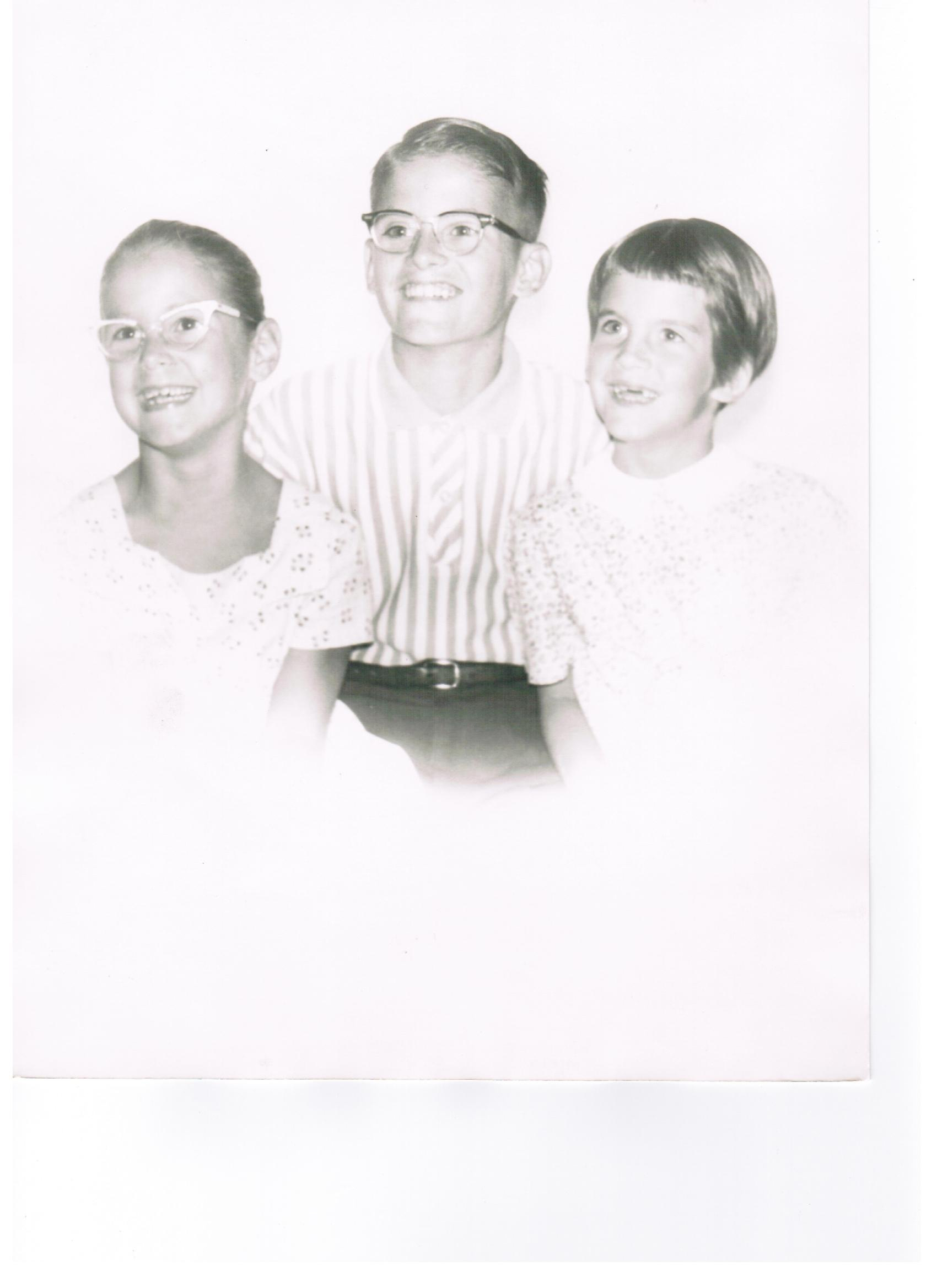
My sister has drawn or painted since she could hold a crayon. She’s just a wee bit older than me so those of you who know how old I am can surmise that my sister has stuck with her artistic endeavors for quite some time.
Perhaps at first, neither Mary nor our parents figured the early talent she exhibited would be more than a passing fancy. (Let’s face it, children change what they want to be when they grow up just about as often as they change their underwear … maybe more frequently.) Once Mary started to dig in, however, and was enrolled in classes at the Honolulu Academy of Arts, it was obvious to all of us that she was in it for the long haul, in it to win it, full speed ahead … you get the idea.

I’m currently reading a fabulous book, Getting There, by Gillian Zoe Segal, that follows the sometimes hard luck but always rewarding success stories of several business and entertainment professionals. Matthew Weiner, Mad Men creator, didn’t become a successful writer with his very first story idea – that would be way too convenient and certainly not a very interesting read. Getting There spotlights the various roads to success on which men and women have traveled, roads that contained many rejection speed bumps along the way. He had this to say about overnight success, and I quote verbatim from the book, Read the rest of this entry »
Lighten up Mondays
An old woman was arrested for shoplifting at a grocery store. When she appeared before the judge, the judge asked what she had taken.
The lady replied, “A can of peaches.”
The judge asked how many peaches were in the can, she replied, “Nine.”
The judge said, “Well then, I’m going to give you nine days in jail – one day for each peach.”
As the judge was about to drop his gavel, the lady’s husband raised his hand and asked if he might speak. The judge granted him permission.
The husband said, “Your honor, she also stole a can of peas.”
Valuable acts of kindness
NEVER Underestimate What a Little Kindness Can do.
I’ve said this before and I’ll say it again: every act of kindness we extend to others; every bit of care we provide others, is extremely valuable.
My post Do Little Rather than Nothing suggests that we have the ability to change someone else’s life, 365 days of the year. The attached article at the top of this post reveals how important one person’s generous act was to someone whose life was about to change forever.
Why do we wait until we can do something grandiose to exert a positive imprint on mankind? Why do we ignore the multitude of small opportunities presented to us in which we can impact a person’s life for the better? Whether that opportunity requires we spend 30 cents or 3 minutes on someone in need, we always have a choice of whether or not to allow a momentary inconvenience to be a part of our day – a miniscule inconvenience that nonetheless greatly benefits others. Read the rest of this entry »
Lighten up Mondays
A husband and his wife were sound asleep when suddenly the phone rang.
The husband picked up the phone and said, “Hello? How the heck do I know? What do I look like, a weatherman?” He then slammed the phone down and settled into bed.
“Who was that?” asked his wife.
“I don’t know. It was some guy who wanted to know if the coast was clear.”
********
As George got out of the shower he said to his wife “Honey, it’s too darned hot to wear clothes today, what do you think the neighbors will say if I mow the lawn naked.”
“That I married you for your money”.
Lighten up Mondays
Grandpa was telling his young grandson what life was like when he was a little boy.
“In the winter, we’d ice skate on our pond. In the summer, we could swim in the pond, and pick berries in the woods. We’d also swing on an old tire my dad hung from a tree on a rope. And we had a pony we rode all over the farm.”
The little boy was amazed and sat silently for a minute or two. Finally he said, “Granddad, I wish I’d gotten to know you a lot sooner!”
Research: create a world without Alzheimer’s
Brittany Mosser, from the Washington State Chapter of the Alzheimer’s Association, summarizes her attendance at the Alzheimer’s International Conference in this Part 1 segment and Part 2 which can be accessed to the right of the page once you’ve clicked on the full version of her article.
By Brittany Mosser
 The Alzheimer’s Association International Conference (AAIC) is the world’s largest forum where researchers and practitioners from around the world come together to share research results, discuss theories, and collaborate. Last year, AAIC saw exciting announcements about studies suggesting that changes in the sense of smell may indicate the presence of dementia and updates on clinical trials for new medications. This year, AAIC will be held in Washington, D.C. and includes the Dementia Care, Research, and Practice Track to focus on how we currently treat Alzheimer’s, care for caregivers, and respond to the impact of dementia on our broader community. This portion of the conference will explore what are we doing to address the impact of Alzheimer’s now, how well are we doing it, and how can we do it better.
I am incredibly excited to be attending AAIC this year because I feel the urgency for these…
View original post 343 more words
Tree of Life
I’m going to once again look to Dr. Bernie S. Siegel, and quote directly from a page in his book, 365 Prescriptions for the Soul.
Stand tall and proud. Remember your roots! Be content with your natural Beauty. Drink plenty of water. Enjoy the View! – Illan Shamir, Advice from a Tree

If we are busily performing deeds but never stop to reach up for knowledge and wisdom, our tree of life will have no branches and many roots. Without branches, how can it move and respond with the winds of life? Or if we accumulate great knowledge but perform no deeds, then we are like a tree with many branches but no roots, and we will be blown over by the winds of fortune.
We must see that our tree of life contains both wisdom and deeds. Then our branches will spread and our deep roots will provide support and nourishment. We will be able to survive the storms and droughts that life presents us.
Lighten up Mondays
On an overseas flight, a lawyer and an older man were in adjoining seats. The lawyer asked the senior if he’d like to play a little game. The older man was tired and told the lawyer he just wanted to sleep.
But the lawyer insisted the game was lots of fun. “Here’s how it works,” he said, “I’ll ask you a question, if you can’t come up with the answer you have to give me a dollar. Then it’s your turn to ask me a question, but if I can’t answer it, I have to give you $20.”
The senior figured if he just got this over with, maybe he could get some sleep, so he agreed to play. The first question from the lawyer was, “How far apart are the earth and the moon?” Read the rest of this entry »
Complimentary words from a literary agent
Many of you know I’ve been trolling for an agent since mid-February. Each rejection I receive is a form rejection so said e-mail doesn’t say anything about my writing per se, or the subject matter. The common thread of these rejections is as follows, from a recent rejection I received:
Thanks for sending me REQUIEM FOR THE STATUS QUO. I wish I could represent every book I enjoy. Because my resources are limited, I can only devote my energy to projects that I feel passionate about, and I’m sorry to say that your book isn’t right for me. I greatly appreciate having had the opportunity to read your work, and I wish you all the best in finding the right agent and getting published.
I follow many agents on Twitter; one such agent is Janet Reid who also runs her infamous Query Shark site where writers’ query letters are critiqued, criticized, and cut to pieces. Janet runs a flash fiction contest every once in awhile, providing 5 words that must be used within a 100 words or less story. The 5 words can be used in whichever form we choose, but they must be used, and there’s a short window of time in which to submit the piece. These were the words for the most recent contest posted over the weekend:
FANGLE, BANGLE, DONGLE, TEN, TEAR
Here was my submission:
Gloria never dressed to draw attention; her style was more Quaker Gray than Newfangled Bright, so it was a stretch parading around in a matching orange blouse and pants. A this point, however, she was ready to tear herself away from them.
She looked forward to replacing the wrist bangle she currently sported so beautifully, with a Star Wars-type ankle dongle. Gloria didn’t know how her old man would take to the addition, but he always was kinda kinky; ten to one odds he’d get turned on by her new look.
“Inmate 563214, you’re free to go.”
Okay, now the exciting part. Read the rest of this entry »
 Living: the ultimate team sport