Personal Struggles
BREAKING NEWS: Goodness abounds!
Goodness abounds, yes, it does.
We don’t hear or read about it enough but trust me, hatred and evil have got nothing on goodness and kindness in our world.

It has been said that it is the horrific stories that make headlines and quite frankly, that is true. Newspapers, magazines, television and social media news outlets clamber after Breaking News in their attempts to be the first to offer their take on ongoing incidents. Clamber means to “climb, move, or get in or out of something in an awkward and laborious way.” Can’t you visualize hungry journalists doing just that: pushing others out of the way, pulling yet others down in their singular effort to be first?
I am all for free journalism; without it I would not be writing this 990th post, so bring it on in all its raging color…however, wouldn’t it be rewarding to have our day interrupted by Breaking News that reports on the good and kind incidents that occur as well?
All right, I’ll do just that. Allow me to introduce you to two wonderful souls who have brought light into the darkness. This is Breaking News of the very best kind.
Sophie Andrews is a person who learned the hard way – one of the hardest – that The best way to help is often just to listen. Sophie was on death’s door – you have to listen to the 14-minute TED talk to learn of the details when a volunteer at UK’s Samaritan helpline picked up the phone and changed 14-year old Sophie’s life forever. Years later, Sophie gave back and paid it forward by starting a helpline for some of the most vulnerable human beings in society who are lonely and without access or means for socialization. Her Silver Line fields more than 1500 calls a day, making the lives of more than 550,000 UK senior citizens brighter, fuller and healthier each year.

Dixon Chibanda, one of 12 psychiatrists in the entire country of Zimbabwe – a country of 16 million people – created a program to treat individuals in need of psychiatric or psychological counseling: The friendship bench program – or why I train grandmothers to treat depression. This program was birthed when a desperate young woman didn’t have the minimal bus fare needed to commute the 15 kilometers to meet with him in person and who suffered the tragic consequences. Dr. Chibanda created a program that brings care and hope to those in need powered by a limitless resource: grandmothers. Sitting on a bench, talking to someone who listens without judgment serves to make a difference in the mental health of thousands across his country and other countries as well – including the United States where a similar program has been started. Please take 12 additional minutes out of your day and listen to the TED talk I have linked above.

Listening – a free resource that is oftentimes not employed when needed the most; listening that actively tunes into the person speaking.
If you are someone who sets resolutions or intentions for the new year, perhaps practicing the art of listening might be at the top of your 2019 list.
I know it is on mine.
Time’s running out: discount book sale ends late 11/13

All of the books shown in this graphic are part of the AlzAuthors Caregiver Appreciation week-long sale, starting today, November 7th. You’ll see my novel, Requiem for the status quo, in the upper right corner that is priced at 99 cents from Nov 7th through 13th. To link to all the books you see above, click on the AlzAuthors link here. Simply click on the book’s image and it will take you directly to its page on Amazon, making it extremely easy to purchase as many titles as you please. And don’t forget to gift others with titles as well. It’s so easy to do and the recipients of your gifts will be so pleased that you’ve thought of them.
I want you to have a copy of my novel
 I want everyone who would like a copy of my eBook on Amazon to have one so starting November 7th, and running through November 13th, it will be available for a mere 99 cents…less than $1.
Perhaps you’d like to gift someone with a copy. You can easily do so by clicking on the Buy for Others button found on my novel’s Amazon page. You purchase it – or several copies of it – and when prompted, you provide the email address(es) for the recipient(s) and they will receive a notification that a free book is waiting for them, generously gifted by you. You can even write a personal message to the recipient. It’s so very, very easy to do.
 This 99 cents sale period is being brought to you by AlzAuthors as these 170 authors honor caregivers during National Caregiver Appreciation Month. Not all the authors’ books will be available at a discounted rate, but many will be, so if you’re looking to add to your eBook library, November 7 – 13 is the time to do so.
This promotion serves to recognize the long hours, sacrifice, and love all caregivers bring to the task of caring for a loved one with dementia or any long-term illness.
I truly believe that caregivers are heroes: ordinary people, doing the ordinary right thing, at an extraordinary time. Reward yourself, or other caregivers with whom you are acquainted, for all tireless efforts, past or present.
I will post a link to the AlzAuthors discount page the morning of the 7th so come back then to fill your library shelves with heavily discounted books about Alzheimer’s & other dementias. In the meantime, the AlzAuthors Anthology filled with 58 caregiver short stories is available for pre-order for just $1.99 for the Kindle version!
Celebrating Community
 I started this Blog over seven years ago. This is my 986th post. I recently told a blogging friend, Jill Weatherholt, that my blogging changed over the years, especially as it relates to steering clear of topics that divide, e.g., political, religious, and the like.
In my very first post on September 20, 2011, I stated that I wanted to bring some sort of encouragement and light into the lives of, not just Baby Boomers, but everyone. I wrote hundreds and hundreds of essays centered around caregiving and Alzheimer’s, reflecting on my personal experiences with my father, as well as my professional experiences working in long-term care (LTC). But I wrote on other topics as well…
Back in 2016 – a very contentious year in US politics – I made the decision to stop writing anything that would ruin someone’s day because as many bloggers will admit, having a forum to speak your mind is a heady and powerful responsibility – about which some of us have been irresponsible. Thus the reason why, on September 12, 2016, 5 years after I started this blog, I wrote this post, Good Starts With Me – Irene’s About Face.
I am a columnist for Grandparents Day Magazine, an online publication based out of Adelaide, Australia. I wrote a piece for their July 2018 issue in which I suggested we might all do well celebrating our similarities rather than allowing our differences to divide us.
Community is so very important, more important to me than ever before. I hope that along with me, you will acknowledge our differences, celebrate our right to be individuals, and look for the good that binds us, rather than the bad that tears us apart.
Grandma and Grandpa pods
I wrote this article five years ago and I’m posting it again today because it is one of the most viewed posts on my blog. Financial figures are five years old so current, 2018/2019 figures will be considerably higher.
I read a fabulous article in the “Home” section of today’s Seattle Times newspaper. It’s a throwaway section that I always read before I toss it into the recycle basket.

All of us are getting older – there’s no cure for that other than not growing older by leaving this earth before you’re ready – so where are all of us going to live – especially Granny and Pappy who can no longer safely live on their own?
Long-term care (LTC) facilities have priced themselves out of most households’ bank accounts and the alternative solution of having grandparent sitters is cumbersome and expensive in itself. What’s an adult child to do? If you have space on your property to have a guest house newly built or better yet, if you’re willing to turn your sunporch or guesthouse into accommodations for mom and dad, the original outlay of funds will pay for itself because you will have avoided the need for a facility’s ultra-expensive long-term care services.
One company that makes the pods spotlighted in the Seattle Times’ article is called Home Care Suites. Disclaimer: I am not advocating for this company’s product. I am merely pulling information out of the article and presenting it to the reader so you can do research that applies to your situation and your budget.
The pods made by this company range in size from 256 to 588 square feet with prices ranging from $42,000 to $83,000. This is no drop in the bucket but let’s consider the cost of facility care. Genworth (who sells long-term care insurance) states that the average monthly fee for assisted-living (AL) was $3,300 in 2012. I think that’s a very naive figure based on my experience of having worked in the LTC housing industry. Maybe Genworth’s lower number is just the cost for monthly rent – but what about care services? Cha-ching!!! Now you’re looking at double that amount and the cost will only go higher as care needs increase. But even at only $3,300 per month, that amounts to $158,400 for a four-year period. See how do-able the pod concept seems now?
Many of the AL service needs are simple monitoring of a resident – tasks that you can do for your loved one: waking them up, helping them get dressed, a certain amount of medication assistance, meal provision. Many seniors living in AL facilities don’t need the massive hands-on care of bathing assistance, toileting services, physical therapy, etc. I know for a fact that if a family member has the time – and a little patience – they can provide these lower acuity services on their own for quite some time before securing hands-on medical care for the elder member of their household.
Skipping ahead to after Grandma and Grandpa/Mom and Dad have passed on, you now are left with an added structure on your property which you can transform back into the porch or game room of its earlier existence, or simply leave as is as a guest room that may accommodate someone else in your family. I have to believe that your initial investment in constructing a pod is an investment that you won’t regret. And don’t forget – the costs for such a project aren’t necessarily out of your own pocket. Perhaps Grandma or Grandpa are willing to pull some of their savings out from underneath their mattress and contribute to the cost of this alternative living arrangement that would certainly be more attractive to them than a lengthy stint at an AL facility or nursing home. Just saying.
The Alzheimer’s Community
 I have been closely involved in matters regarding Alzheimer’s disease and other dementia for eighteen years now: long-term care (LTC) housing, memory care, Alzheimer’s support group facilitator, and Washington State LTC Ombudsman. But it took me becoming a published author of a novel that focuses on a family’s Alzheimer’s disease experience before I finally found my Alzheimer’s community.
AlzAuthors is a group comprised of over 170 published authors (as of this writing) who have published fiction and non-fiction books reflective of their personal Alzheimer’s experience. The six members of the AlzAuthors Management Team (Team) is the Alzheimer’s community about which I speak.
The Team’s motto says it all:
We can sing a lonely song, or form a choir and create harmony.
Without exception, the authors featured on our site and each member of our Management Team had the experience of struggling with the learn-as-you-go-task of caring for someone with cognitive impairment. We all made mistakes, and we learned from them, but we also had successes, and we celebrated them.
As a recent addition to the AlzAuthors Management Team, I became even more convinced that my personal Alzheimer’s community resides within this group. The support, the kindness, the giving nature reflected within the Team is incomparable in my experience, and we are not just keeping it to ourselves. AlzAuthors is spreading their influence into numerous parts of the world…which is kinda why they asked me to join the team as their Global Outreach Coordinator. The six of us know our presence is evident in more countries than just the United States, but our imagination and passion is boundless so we have set out to become a household word in small and large communities throughout the world.
Why AlzAuthors? Because this 100% volunteer group has brought together some of the best books on Alzheimer’s and other dementia in one central location: our bookstore. We’ve categorized those books to make the personal caregivers’ or professionals’ shopping experiences an easy one with categories such as: Caring for Parents or Grandparents, Caring for Spouses or Partners, Living with Dementia, and Children and Teen books, to name a few. We know a caregiver’s “free” time is limited or non-existent, so we’ve done our best to make their shopping experience an easy one. They simply click on the cover of the book they’re interested in and they are taken directly to Amazon to make the paperback, eBook, or audiobook purchase.
We’re working hard so you don’t have to.
 And finally, we understand the journey of unpaid (family & friend) caregivers because:
- We have experienced the loss of a loved one with dementia.
- We know the pain of being forgotten.
- We all have witnessed decline.
- We have provided countless hours of caregiving.
- We know many others have experienced the same and we believe in the power of sharing those stories.
Sorrow Passes and We Remain
 I found a letter dated July 28, 1883, written by Henry James to his friend Grace Norton, in a reference book. He wrote a letter of encouragement to her as she was desolate, depressed, and determined not to live. I post portions of it here should anyone out there feel as Grace did, in need of life-saving encouragement.
********
You are not isolated, verily, in such states of feeling as this – that is, in the sense that you appear to make all the misery of all mankind your own; only I have a terrible sense that you give all and receive nothing – that there is no reciprocity in your sympathy – that you have all the affliction of it and none of the returns.
I don’t know why we live, but I believe we can go on living for the reason that life is the most valuable thing we know anything about and it is therefore presumptively a great mistake to surrender it while there is any yet left in the cup.
Sorrow comes in great waves, but it rolls over us, and though it may almost smother us it leaves us on the spot and we know that if it (sorrow) is strong, we are stronger, inasmuch as it passes, and we remain.
My dear friend, you are passing through a darkness in which I myself in my ignorance see nothing but that you have been made wretchedly ill by it; but it is only a darkness, it is not an end, or the end.
Don’t think, don’t feel, any more than you can help, don’t conclude or decide – don’t do anything but wait. Everything will pass … and the tenderness of a few good people, and new opportunities, and ever so much of life, in a word, will remain.
You are marked out for success, and you must not fail. You have my tenderest affection and all my confidence.
Kindness Fridays
 This week’s kindness spotlights the Women’s Fiction Writers Association (WFWA) a fabulous group for writers of women’s fiction. Most if not all the administrative staff is volunteer – the reason why their kindness is this week’s selection. As a member of this organization, I was given the opportunity to have a podcast recorded for their Hear Me Roar program because I’m a debut author. Although my novel, Requiem for the status quo was released a year ago, it was my debut publishing effort.
This podcast is approximately 30 minutes in length, and although my novel is certainly the focus, much attention was spent on the prevalence of Alzheimer’s and other dementias in the world. Perhaps this podcast will keep you company on your commute in the next few days; although it may seem a bit choppy, I think it’s worth hanging in there to hear my, and the host’s, provocative discussion.
Dynamite storybook for seniors with dementia
 I was asked to write a story or two for an anthology of short, short, stories that would be read to seniors with cognitive impairment. I jumped at the opportunity. That anthology, The Mighty Ant, is now available in paperback on Amazon.
I am one of 33 contributors to this collection of short stories for seniors who suffer from dementia and other related memory or cognitive disorders. This book is the culmination of a project from editor and contributor, Jessica Bryan, who is a caregiver and advocate for caregivers. Several years ago she began to notice that her mother, who suffers from Alzheimer’s disease, lost focus and could no longer read lengthy books. Jessica began reading to her mother and found that simple, short stories were easier for her to understand. The Mighty Ant is filled with these kinds of fiction and non-fiction stories.
The proceeds from the sales of the books will be donated to a local Council on Aging. The generous contributions of authors like myself have come from all over the world. The result is a book with different perspectives, reminiscences, and tales that reflect not only local culture, but a variety of customs, ethnicities, and lifestyles.
I am honored to have my two stories titled, A Neighborly Friendship and A Sweetheart of a Story included in this collection. A Sweetheart of a Story was selected as the final story in the book because the editor felt it was the perfect selection to provide a sweet ending to the anthology. Buy a copy or ten or more for yourself and others…perhaps your local memory care community would love to include the reading of this book to their senior activity schedule! Currently only $12 for this 322-page large print storybook.
My novel’s 1st anniversary
 Requiem for the status quo‘s anniversary is the perfect opportunity to announce my involvement with a fabulous project focused on Alzheimer’s disease.
I am one of over 150 authors from around the world who will be represented at the Alzheimer’s Association – Western Carolina Chapter’s Dementia Education conference in Charlotte, N.C., this August. I, and over 25 other AlzAuthors, have donated copies of their books, which will be given away in a raffle to conference attendees.
I wanted to support this cause because during my caregiving experience in the early 2000s, I most definitely could have used more fiction about Alzheimer’s to normalize my day-to-day stresses, and some up-to-date non-fiction to help my learn-as-you-go caregiving experience. Something else from which I surely could have benefited is the non-profit, AlzAuthors. AlzAuthors.com is a nonprofit website that shares information on books and blogs about Alzheimer’s and dementia. I am proud to say that I, too, am a member of this fine organization. Had it been available prior to my father’s death from Alzheimer’s disease, I no doubt would have tapped into its resources.
AlzAuthors started in 2015, when Founders Jean Lee from Ohio, Vicki Tapia from Montana and Marianne Sciucco from New York, who had also written books about Alzheimer’s, met in cyberspace. They discussed the growing need for resources about dementia. A year later, after Shannon Wierbitzky joined the team, the group started a website and published posts from 60 authors. In 2017, Canadian Kathryn Harrison and Ann Campanella from North Carolina joined the administrative team.
Since that time AlzAuthors has published weekly posts, sharing resources about books and blogs that focus on Alzheimer’s and other dementias. The site has grown to include over 150 AlzAuthors from around the world and has a bookstore with a vast collection of top books for individuals, doctor’s offices, assisted living facilities and other eldercare services. AlzAuthors also has a thriving presence on Facebook, Twitter, Instagram, and Pinterest. AlzAuthors Jean Lee and Ann Campanella, whose memoirs were recently named to Book Authority’s Best Alzheimer’s Books of All Time List, will share “The Story Behind the Stories” of AlzAuthors at the Alzheimer’s Association conference.
“Together We Can,” the Dementia Education Conference held by the Alzheimer’s Association – Western Carolina Chapter, will take place on Wednesday, Aug. 29, from 8:00 a.m. to 4:00 p.m.at the Friendship Missionary Baptist Church, 3400 Beatties Ford Road in Charlotte, N.C. The event is geared for healthcare professionals, caregivers, people living with Alzheimer’s or related dementia and members of the general public. Attendees will learn more about research, caregiving practices and tools to assist in the journey with Alzheimer’s. For more information, visit ALZ.org/NorthCarolina or call 800-272-3900.
For more information about AlzAuthors. visit their website: https://alzauthors.com/.
Kindness Fridays
Long distance relationships don’t always work out but the relationship I have with an Adelaide, Australia online magazine works to perfection. I’ve never wanted to be the selfish one in this relationship, but I feel I’ve received far more from it than they have.
A wee bit of history: I’ve been writing for this magazine off and on for some time and then late last year, Grandparents Day Magazine offered me my own column; my own byline. Now I’m guaranteed a page in every publication.
Then, just a couple weeks ago, the editors/founders of the magazine reached out to me wanting to promote a writers’ group to which I belong: AlzAuthors. AlzAuthors is made up of a compendium of authors who share their personal experiences with Alzheimer’s disease and other dementias to benefit others. Their motto is: To make a difference. One can sing a lonely song, but we chose to form a choir and create harmony.
So today’s celebration of kindness is two-fold: one, Grandparents Day Magazine generously reached out to me and the author group to which I belong; and two, AlzAuthors members chose to share their difficult Alzheimer’s disease journeys so that others could benefit from their vast experience – much of it learn-as-you-go. As a member of the AlzAuthors group, I can testify to the fact that once I had been through a family caregiving experience – for me it was for my father – I hoped it wasn’t for naught. Being able to share my experience with others through my novel’s publication just seemed right. The same can be said for the more than 150 books written by the AlzAuthors members.
And that, my friends, is my Kindness Fridays for this week.
Kindness Fridays
Over the years I’ve discovered that when we are part of a community of people, our quality of life increases. The support of others can’t be beat. For me, community is like-minded people with a common thread through their lives that provide meaning and purpose for one’s day to day existence.
I found community in a writer’s group called AlzAuthors, a compendium of authors who have all been affected by Alzheimer’s disease and other dementia. All of us authors share our experiences through our non-fiction and fiction works to bring knowledge, comfort, and understanding to those on a similar journey to the one we have already completed. Trust me, we all wish such a group were not necessary; that the common thread we share didn’t involve the always fatal disease of Alzheimer’s and related dementia; but it is necessary and we’re filling a need that as of this writing doesn’t show any chance of abating.
I’ve never met any of these authors – I live in Washington State and the rest of the authors represent just about every state in our nation – but because of our common journeys, we are members of a community. Are we all politically aligned identically to each other? Probably not. What about religious practices, do we follow the same spiritual practices as every member of the group? Hardly, but it doesn’t matter. What we have in common does matter: we are dedicated to encouraging and helping families and individuals whose lives have been interrupted by Alzheimer’s disease. Speaking for myself, I am so glad that my novel, Requiem for the status quo, can reflect the good and the bad decisions I made and other individuals made, so that those who are still on the Alzheimer’s journey might do better because they know better. I hope you’ll get to know us AlzAuthors through our website and that you’ll become an AlzAuthors Reader Community once you’ve browsed through our bookstore. Click here to go directly to the AlzAuthors Bookstore to find a library of books – more than 140 as of today – that link directly to Amazon or other purchase outlets.
 So that’s it. This week I celebrate the kindness I have found in the AlzAuthors Community. Sure beats going it alone.
Kindness Fridays
Having surgery, regardless of how minor, is on the bottom of my list of enjoyable activities, but my recent cataract surgeries contained a huge kindness element for me that raised that procedure closer to the top.
Plain and simple, Pacific Cataract & Laser Institute located in Bellevue, WA, knows how to treat their patients. From initial consultation to post-surgery goodbyes, each staff member offered kindness of which many medical practices aren’t convinced is necessary. Keep in mind, PCLI is an extremely busy medical and surgical office. They perform approximately 50 cataract surgeries two days a week so the comings and goings of their patients make for an oftentimes full waiting room, an always busy front desk, and a maxed out medical staff that never gave the impression that you were just another business statistic for the books.
A separate element of kindness that existed while waiting in the pre-surgery area with other cataract surgery candidates was the camaraderie that existed amongst us. Some were there for their second eye, others, their first. For my first eye, I was extraordinarily nervous in that pre-surgery room, knowing what was coming next: numbing injections into the eyeball. After receiving said injections, I sat in the next surgery waiting area adjacent to and visible by the other candidates awaiting their injections. When the nurse came to usher me into the surgical suite, I waved to those patients and said, “Goodbye my wonderful fans!” drawing a laugh from everyone there that could be heard by my husband in the general waiting area of the medical practice. Perhaps that served as a kindness to those Nervous Nellies and Neds awaiting their next step, I certainly hope so.
And now some more kudos. My personal eye doctor, Susan Wynne of Eastside Vision Care, who referred me to PCLI, mirrors the same commitment to customer service and kindness. Dr. Wynne provides the day after, week after, and month after follow up care post surgery for me. After my first cataract surgery, I more or less got freaked out because of the vision anomalies experienced during my recovery. She compassionately provided a clear explanation for what I was experiencing; she talked me down from my immediate concerns that one could characterize as being somewhat anxious, to believing my vision going forward was forever ruined. Prior to becoming a patient of Dr. Wynne’s earlier this year, my husband and I had little satisfaction for the eyecare we received over the years. We would dread the yearly vision exams because the various doctors with whom we met a) seemed not to care, and b) didn’t provide the type of attention we felt our eyes demanded. Dr. Wynne is certainly the exception.
So, there you have it: two medically focused happy endings provide this week’s edition of Kindness Fridays.
SEE you next week!
Kindness Fridays
My sister, Mary, is one of the kindest people I know. We are only eight months apart in age. You see, Mary was adopted by our parents after our mother suffered three miscarriages. Then, as oftentimes happens, once the adoption procedures commenced my mother got pregnant with me. Growing up, Mary and I always had each other as friends; we always had a playmate. People mistakenly thought we were twins; that’s how close we were, and still are.
So this wonderful, extraordinarily artistic sister of mine did something for me in response to my recent left eye cataract surgery. (See her website that spotlights some of her paintings.)
My siblings and I were raised as Roman Catholics. In our adulthood, we have followed different spiritual paths so that none of us follow the religion in which we were raised. With that said, however, Mary went to Mass the day after my eye surgery because she felt that our parents would also be there and would provide an added prayer boost to Mary’s intentions.
My sister feels very strongly about her connection with our long-deceased parents as prayer partners during Mass and has gone an additional time just this week with the intention that my left eye experiences 100% healing. She will also go next Wednesday so that my right cataract surgery that takes place the day before (April 17th) will be a complete success with no complications.
Mary has a very full and busy life with 5 children and 9 grandchildren. She volunteers every Tuesday morning to collect donated food from local grocery stores for her church’s lunch ministry. She is very attentive to her mother-in-law whose failing health requires a great deal of Mary’s and her husband’s time. She drives friends to doctor appointments, babysits her grandchildren…you get the idea. She’s busy, so adding yet another To Do to her growing list of responsibilities truly says a lot about her.
To be sure, we need more people like my sister who is the embodiment of kindness. Mary’s light shines in many places, near and far, a light that has landed on many over the years.
Kindness Fridays
This week’s kindness illustrates a lesson my maternal grandmother passed on to my mother, who then passed it on to me.
The best way to paint this picture is to assume you’re in the kitchen, you pull out a gallon of milk from the refrigerator, take it to the counter to pour yourself a glass of milk and the full glass of milk spills on the counter, over the edge of the counter, and onto the kitchen floor.
If another family member is in the near vicinity, that family member intervenes, tells the person who inadvertently spilled the milk to leave the kitchen, and the other family member cleans it up.
“But Mom, I spilled it, I should have to clean it up.”
“You didn’t do it on purpose, Irene. You already feel bad for spilling the milk, let me lessen your burden by cleaning it up for you.”
And that’s what happened throughout my childhood, and it’s what happens now in my adulthood. A little kindness goes a very long way…all the way from Grandma Conroy’s Edmonton, Alberta kitchen in the 1920s thru 1940s, all the way to mine in Redmond, Washington in the 21st-century.
Compare and Contrast: Good News vs Bad News
 Our extended family recently went through a very difficult time with one of our members diagnosed with a large brain tumor. That tumor was removed this past Monday, March 12th.
My husband and I had the privilege of keeping the spouse of this family member company at the hospital during the day’s nail-biting, angst-filled four-hour surgery. All of us, family and strangers with a loved one in surgery, were gathered in the same neurosurgery waiting room, a room where the surgeon meets up with families immediately after the surgery to deliver the exploratory news that summarizes the surgery and its outcome.
Approximately fifteen minutes prior to our surgeon’s meeting with us, another neurosurgeon met with a family fifteen feet away from us in the waiting area. Their news was not at all good. The only words I heard were, “I know you hoped this surgery would be the end of it but that is not the case I’m sorry to say.” The four daughters and husband immediately started sobbing. I felt I was an unwelcome observer because of the grief I witnessed.
Then my family member’s surgeon met with us and declared that he had removed all of the massive tumor from my sister-in-law’s brain and it was not cancerous. We were relieved and felt exhilarated but tamped down our excitement.
How can it be that in the course of a quarter hour’s worth of time, one family’s extreme happiness could co-exist with the other family’s extreme devastation?
I guess the answer is that life happens to all of us; sometimes it is good, and other times it is not. Very sobering, to be sure.
I am ecstatic that our news was good but very much aggrieved that the other family’s was not.
Kindness Fridays
 The other day, I discovered something about myself and about the way of kindness.
It’s really easy to be kind when life is going grand.
Clarification. The kindness gene resides within me, just as it does in you if you feed it and let it flourish. I feel absolutely honest saying that my pattern of thinking reflects the best of kindness one can imagine. At the very least, my intentions are pure.
With that said, however, when I’m feeling less than 100% – say, 25% – I have to work hard at not letting others be on the receiving end of that less than whole person that I’ve become. I’ve had a lousy night of sleep while also fighting seriously inflamed sinuses? Ugh, I must rein in my struggles and not take it out on the receptionist at the doctor’s office, or the supermarket employee. I sincerely don’t want to be responsible for ruining someone else’s perfect, gloriously, healthy, well-slept day. (Gawd, I’m envious of those who have been given the gift of sleep.)
All it takes is one look, one word – or the omission of a word – to spew miserableness onto someone else.
Kindness is a way of life for me but sometimes it threatens to take a break from the norm and that’s when it’s needed the most in the world. You see, I’m not the only person who has less than stellar days. I’d be self-centered to think I’m the only person the world takes a dump on now and again. Everyone in this world is vulnerable – everyone – and far too many are on the brink of giving up. We are all in this together, in good times and in bad.
I vow to not contribute to the latter.
Long-term care: squeaky wheels and raging forest fires
 Although now retired, over a twelve-year period I worked in long-term care (LTC) wearing three different hats:
- My first job in this industry was in the corporate office of a very fine assisted living and memory care company. In time, I decided to work in one of the company’s facilities so I could spend more time with the residents and families who chose our company for their LTC needs;
- When I left the company, I took several years off to care for my father who had Alzheimer’s disease. A few years after his death, I became a certified long-term care ombudsman for the State of Washington – an advocate for vulnerable adults living in LTC settings;
- Concurrent with my ombudsman work I became a trained Alzheimer’s Association caregiver support group facilitator, providing a listening ear to those on the caregiving path.
Given all that experience, I’ve seen and heard of many unfortunate and nasty occurrences where residents and patients were denied the basic rights each living person should expect to receive, especially those dependent on others for their well-being and quality of life.
I’m sorry to say that some nursing homes, assisted living/memory care communities, and adult group homes do not employ sufficient staffing to meet the needs of their residents. I can confidently say that the government agencies that oversee the LTC industry are also understaffed. When complaints are called in, those government employees have to apply grease to the squeakiest wheels and must turn their fire hoses on the most out of control fires in their case files.
That’s where you and I come in.
We must be the squeakiest darn wheels we can be so our complaint(s) are attended to.
We also need to be the hottest, most devastating fire imaginable so that our vulnerable loved one’s rights are respected.
 One grievous example. This is just one example of common issues that arise in LTC settings. The complaint process I mention later in this post provides a good starting point when issues arise.
Nursing home call lights are being ignored so that residents/patients are left to defecate and urinate in their adult sanitary garments on a routine basis. Not only is such an act demeaning to the poor soul with no option but to let go of his/her bodily wastes, but said wastes are sure to cause skin breakdown and a urinary tract infection that is not only extraordinarily painful but can also be life-threatening.
What does the family member/good friend do about this indignity? They need to complain vehemently to the administrator of said facility and when she/he does nothing or very little, family and friends contact the local area’s LTC ombudsman program. This website will direct you to ombudsman resources right where you live: National Long-Term Care Ombudsman Resource Center.
Your local ombudsman program will investigate, work with the facility’s staff, and if need be, get the full force of the law to come to the defense of those in need. State ombudsman programs are staffed by paid and volunteer employees, therefore their staffing levels are usually higher than many government agencies. These ombudsmen all receive the same extensive training required for such a vital role. Once you’ve reached a dead end at the facility, ombudsmen are your most active line of defense. They are passionate about what they do and they will ceaselessly advocate for you and your loved ones. Their proximity to appropriate resources and their intimate knowledge of residents’ rights laws makes them an approachable and viable alternative for the common man’s (yours and my) needs. Caveat: if you suspect criminal activities such as physical or sexual assault law enforcement needs to be immediately involved in the matter. Additionally, severe lack of care that endangers the lives and well-being of adults more likely than not will also require law enforcement involvement.
Adults in long-term care settings are a reflection of you and me. By that I mean they were once active and self-reliant adults, just like many of you reading this piece, but they now find themselves unable to fend for themselves and need you and me to step in for them. Imagine, if you will, being in their shoes, unable to speak up for yourself. If you or I ever find ourselves in a similarly vulnerable situation, wouldn’t you want an advocate to step in on your behalf?
Advocacy for vulnerable adults falls on all of our shoulders. You can make a difference in the life of your loved one. Won’t you please step up to become their most important advocate?
Kindness Fridays
2017 was a year of conflicting emotions for me. There were many good times. These two stood out: our grandson was born and my novel, Requiem for the status quo, was published. But there were also times I’d like to forget, and once my hip gets better after this past October’s bionic replacement, that will become one of the most forgettable events of the year.
Kindness, however, wins out and drowns out the not-so-pleasant occurrences that can cause stumbling blocks to our gentle psyche. So on this last Kindness Friday of 2017, I’m posting links to a few of my favorites in the hopes that while I’m encouraged by past Kindnesses, you can be as well.
June 30th, 2017: walk away from cruelty
April 14th, 2017: kindness trumps all
March 17th, 2017: courtesy on the road
March 10th, 2017: my husband’s perfect eyesight
January 6th, 2017: 1st Kindness Fridays – Mall kindness
Kindness Fridays
 Nicole Brodeur, a writer for the Seattle Times newspaper, posted this article about a Costco employee who always went above and beyond his normal duties to make the customers’ days better than when they arrived at the store.
Fifty-six-year-old Tom Goessman contracted polio as a child and got around in a wheelchair. While working at the Seattle Costco store, he used a standing wheelchair while validating each customer’s receipt before they left the store. But that’s not all he did. He would make a game of guessing the amount spent just by looking at the goods in a customer’s cart; more often than not, he was right on the money. He would also draw pictures on the customer’s receipt if that customer was accompanied by a child, something fun for the kids to look forward to.
But all of a sudden, Tom was no longer at Costco’s Seattle location; customers were more than a little concerned. The Seattle Times has a column titled, Asked and Answered which provides an opportunity for people to contact the newspaper with queries that are on their mind. Turns out, many Seattle Costco customers took advantage of that column to discern the whereabouts of their beloved Tom. The person who became the highlight of their Costco warehouse shopping trips was nowhere to be found.
After some research, the newspaper discovered he had moved to Glendale, Arizona after being invited to visit that state by one of Costco’s customers, a man whose son is also paralyzed and who thrives in the dry, Arizona weather. You see, Tom gets life-threatening infections each year because of his polio; the damp, Seattle weather being an aggravating factor. Tom spent some time in Arizona two years in a row and was pleased to discover that his infections became a thing of the past. So what did he do? He relocated to Glendale, Arizona, and took on the same job he held in Seattle.
When columnist Nicole Brodeur wrote her original article about Tom a colleague of hers suggested, “If you want to restore your faith in humanity, read the readers’ comments.” Ms. Brodeur knew how much vitriol can be included in readers’ comments and so doubted her colleague’s assessment.
The comments under an online news story are a saloon I step into with one hand on my holster. One person makes a valid, thoughtful point, but then two stools down, someone pops off with a sexist or racist comment. Someone else weighs in on that and one scroll later, a full-on brawl has broken out, the subject of the story long forgotten.
That was not the case for those readers who responded to her article. The comments were filled with positive stories about their interactions with Tom during their Costco warehouse shopping expeditions; they missed him so much! The kindnesses that Tom extended to busy Costco shoppers elicited more kindness, revealed in the shoppers’ recollections of their brief times spent with him.
It’s been said that hate breeds hate but I’m convinced just the opposite is true. Kindness generating kindness is what I’ve experienced time and again in my life; even the smallest of kindnesses can douse the flames of hatred.
And in the world in which we’re currently living, don’t you think it’s about time hatred was put in its place, once and for all?
Kindness Fridays
I’ll try to be brief with this week’s kindness. I have had a medical condition for the past three years that no doctor has diagnosed correctly. In September I went to a naturopath and based on my symptoms, she suggested a different type of doctor who specializes in what I most likely have.
My husband and I drove into Seattle to see this doctor on Wednesday of this week and within twenty minutes’ time, he easily made sense of what I’ve been experiencing, a condition that has caused my husband and I to cancel two vacations because of its acute nature. He clearly explained what was going on, was able to diagnose it and suggested treatments that will more likely than not improve my quality of life greatly. After one day of those new treatments, my body is adjusting and trying to function in a different way, and because it’s trying to do that, I didn’t sleep at all last night. I will aim not to be discouraged, however, knowing that once my body adjusts to this new treatment plan, I’ll be able to celebrate the start of a new quality of life.
Finally, a doctor who spent sufficient time with my husband and me who was able to apply his expertise to our situation, and provide hope and promise that I have not been able to enjoy for close to three years.
This week’s kindness celebrates this Seattle doctor with whom we met on Wednesday. This week’s kindness also celebrates the naturopath who got me on the right “path” to wellness without receiving financial benefit. She refused my insurance copay when I saw her back in September, not feeling it appropriate that she accept payment since she didn’t provide any measurable medical service to me.
That’s where she was wrong; her referral was one of the most effective treatments I have received for my condition up until this point.
Goodreads Giveaway: REQUIEM FOR THE STATUS QUO
 Those of you familiar with Goodreads know that authors give away tons of books on that site all year round. I figured, I’m an author, and I’m pretty generous, so I think I’ll give away some paperback books as well!
Go to Goodreads (you’ll have to be a registered user to participate) and enter my 6-book giveaway that starts today, December 1st, and runs through December 8th. It’s easy to register on Goodreads, you don’t even have to create a new user persona; you can register using your Facebook, Twitter, Google, or Amazon log-in information.
Once you’re a registered user, follow these steps:
- go to the Browse drop-down menu
- click on Giveaways
- towards right-hand side, click on Recently Listed
- filter by Print Giveaways – as opposed to Kindle Giveaways or All Giveaways
- and search for my novel, Requiem for the status quo.
Be certain to read the description of the giveaway that I’ve created. I want you to be clear on what it is I’m offering for free.
Goodreads does all the work in acquiring names and shipping information, they’ll notify me of the six randomly selected Giveaway winners, then I’ll send out a copy of my novel to six lucky winners within a week’s time.
You’ve got nothing to lose…what are you waiting for?
Kindness Fridays
Chivalry isn’t dead, nor is good ol’ everyday courteousness.
We had a full day this past Tuesday, the highlight of which was taking care of our grandson. In the afternoon, a new refrigerator/freezer was scheduled to be delivered but we received a call that it would be delivered a bit late…right around our dinner hour.
I decided we wouldn’t want to cook that evening because we’d be waiting for the delivery (happened just after 4:30 pm as it turns out) and we’d be getting it filled with all the food we had placed into numerous coolers earlier in the day with solid ice blocks to maintain the foods’ integrity.
While our grandson napped I slipped out of the house to pick up a pizza at the Take and Bake pizza place nearby, leaving Lucas in the very capable hands of his grandpa. I don’t yet feel comfortable walking and carrying our grandson so Jerry needed to be the one who remained at the house so he could pick Lucas up out of the crib if he woke up before my return.
I snagged a parking space right in front of the shop so I didn’t have to get out my disabled parking pass. I hobbled into the pizza place, paid the employee for our pie, and tried to juggle my purse, my cane, and the pizza all at the same time, failing miserably in my attempts to do so. The young man quickly got out from behind the counter and said, “I’ll take the pizza to your car for you.” What a relief, and what a kindness. He didn’t know my car was so close by; it could have been anywhere in the two-days-before-Thanksgiving crowded supermarket parking lot.
And that’s this week’s kindness story.
Rewarding Alzheimer’s family caregivers
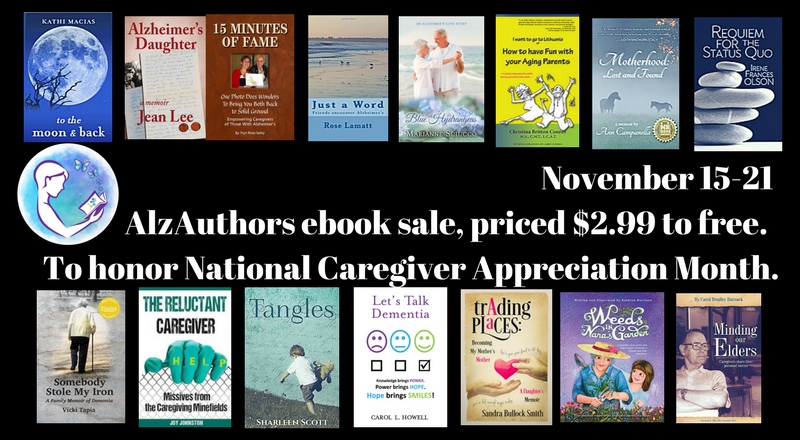 November is National Caregiver Appreciation Month, a time to recognize the long hours, sacrifice, and love all caregivers bring to the task of caring for a loved one with dementia or any long-term illness. In honor of their efforts, AlzAuthors is hosting an eBook sale and giveaway! This is a terrific way for caregivers who are looking for knowledge, guidance, and support to find carefully vetted books to help guide and inspire them every day.care
Consider this information from the Alzheimer’s Association:
- In 2016, 15.9 million family and friends provided 18.2 billion hours of unpaid assistance to those with Alzheimer’s and other dementias, a contribution to the nation valued at $230.1 billion.
- Approximately two-thirds of caregivers are women, and 34 percent are age 65 or older.
- 41 percent of caregivers have a household income of $50,000 or less.
- Approximately one-quarter of dementia caregivers are “sandwich generation” caregivers — meaning that they care not only for an aging parent, but also for children under age 18.
Starting today through November 21st, you can take advantage of this excellent opportunity to check out some of our books at reduced prices, ranging from free to $2.99. We offer a variety of genres, including fiction, memoir, non-fiction, and children’s literature. Many of our books are also available in paperback and audio, so be sure to check them out too. As a matter of fact, my novel is available on Kindle for just $2.99 through November 21st and if you prefer a paperback copy, my publisher is offering it at half price on my publisher’s site. Check it outhere!
One day at a time
Living one day at a time is a good philosophy to uphold regardless of what’s going on in one’s life. I would extend that sentiment to say, “Live each day one moment at a time.” It’s good to plan, set goals, even write a bucket list, but doing so addresses the future, not the present.
When I was admitted to a local hospital for hip replacement surgery, I knew that would be one step toward many that I would accomplish to attain complete recovery. I had no idea what accomplishments I would be able to celebrate or in what order they would appear, I simply knew I would eventually be able to move beyond my physical restrictions.
I was right.
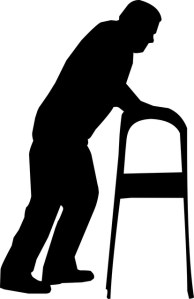 Walker. Yep, I held onto this piece of durable medical equipment (DME) like it was my lifeline…because it was. I learned how to use it while still in the hospital and once I got home I outfitted my own walker with a multi-pocketed pouch wherein I stored necessary items: water bottle, iPhone, iPad, tissues, snacks, so that wherever I landed, I was set. Two weeks post surgery I was able to retire the walker. What a lovely step in the right direction.
 Cane. Using my Hurrycane is liberating – I say is, not was, because it’s still attached to my person as a means of transportation. Today, November 6th, marks one month since my surgery and I am still nowhere near ready to retire this piece of equipment because I still need the support it provides. I’ve even learned how to use it as a pick-up-something-I-dropped-aid, as long as the dropped item is thicker than a piece of paper or bigger than the Vitamin D3 capsules I take every day but sometimes end up on the floor. I drop things often enough that my husband simply follows my trail of items to discern where I’ve been lately.
 Raised toilet seat. I know, there’s a visual all of you would prefer not to have, but early on in my recovery, it was a requirement that meant the difference between responding successfully to my most base urges, or…not, and that visual would have been far worse to contemplate. Fortunately, it served me well and I retired it three weeks post-surgery.
 Medications. Okay, this is a tricky one. I abhor having to take medications, whether over-the-counter or prescribed, but when your leg is sliced into, requiring major manipulations by the surgeon and his jolly helpers – not to mention sawing off sections of a bone that I would no longer need – a person is going to have lingering pain issues that need to be addressed, and this person sure does. I am a very slow healer; an 80-year old can have the same surgery as me and return to yoga or square dancing classes a mere two weeks after receiving their bionic hip. Not so, I.
So here I am, wishing I was further along in my rehabilitation but refusing to compare myself to others who appear to be better off post-surgery than I am. I can smile throughout my day and sleep well at night knowing I have one of the most effective rehabilitation tools a person could hope for: my husband. Jerry supports me physically and he supports me emotionally, the latter of which has been almost more important than the former. He recently held me in his arms on the couch while I bawled into his neck, saturating it and his t-shirt with my tears. On that particular day, I was tired of hurting. To be sure, pain is very taxing on one’s body and emotions – there is no separation between the two – so if my body is having a hard time, so is my psyche.
Is that a lose/lose situation? It can be, but if I remember to live one day or one moment at a time, I’ll be less inclined to allow fear and frustration to take root. Fear is based on the future: what if I never get better? what if the surgery didn’t work? what if I am never able to be as active as I want to be? what if I never stop hurting? All future-based.
When living in the moment I can celebrate my ability to:
- climb the stairs in my house two at a time instead of one;
- walk to the end of my driveway to retrieve the mail;
- get in and out of bed without assistance;
- bathe with very little assistance;
- dress myself;
- do more tasks in the kitchen than I was able to do four weeks ago; and
- hold my grandson and give him a multitude of smooches while he sits on my lap.
Regardless of how long it takes for me to get back to “normal” that time will come and when it does it’ll be right on time. In the interim, I’m going to acknowledge each moment as precious and not concern myself with that which has yet to occur.
Kindness Fridays
According to the 2017 Alzheimer’s Association Facts and Figures research, there are more than 15 million Americans providing unpaid care for people with Alzheimer’s or other dementias. Some have assembled a team of family and friends so the responsibilities are evenly spread out, but that is not always the case. The solo caregiver manages—or tries to manage—everything on his own.
That’s where those who are on the outside looking in can become a caregiver’s hero.
OFFER TANGIBLE ASSISTANCE. We will never be wrong in assuming the caregiver needs help so rather than saying, “Call me if you need anything” we can ask, “What exactly do you need?” If we remember what we needed when we were on the mend from illness or surgery we should be able to come up with an endless list of concrete gifts of assistance.
MEALS. You need to cook for yourself and/or your household anyway so make a double recipe, pack that extra portion in a disposable dish, freeze it, and keep doing that for a week and deliver one full week’s worth of frozen meals to the caregiver who, receiving your food offerings, can look forward to not having to be creative in the kitchen at the end of the caregiving day. Engage others to sign up for this dinner on wheels program so the responsibilities are spread out amongst many.
ERRANDS. You’re running to the store for a few items; take the time to ask Sam if there’s anything he might need while you’re out. He may need a half-gallon of milk—and he might have needed it for the past several days—but embarking on that task proved impossible for him. With very little effort on your part you can make a huge difference in Sam’s well-being. Maybe the needed item is toilet paper; acquiring that for him makes you a genuine hero!
CHORES. The last task a time-strapped caregiver considers doing is housework or yardwork. You will not insult your friend or neighbor by offering to vacuum their house or clean their bathrooms. Or perhaps it’s a lawn that needs mowing or a flower bed, weeding; that sprucing up will provide the caregiver with a virtual—and literal—fresh view of their circumstances.
OTHER OPTIONS. Sam may turn down home improvement offers but he might say, “What I could really use right now is some help figuring out Nancy’s health insurance statements.” Or he might say, “My wife’s not much of a conversationalist anymore, I’d give anything to have an hour to talk with someone who is. Could you stop by later today for a visit? I’ll even talk politics if it means having someone else to talk to.”
WHAT I KNOW FOR SURE. The family caregiver has so much going on physically and emotionally, offers of assistance can be the salve that gets them through each day.
Grief: Your caregiving friend is grieving the loss of a person who is still with him. Unlike the sudden death of a family member, the Alzheimer’s caregiver suffers the prolonged loss of their loved one—oftentimes called ambiguous loss—because although physically present, the person with dementia is continuously leaving their loved one.
Exhaustion. Physical, emotional, and spiritual exhaustion sneak up on the solo caregiver and they are killers. The solo caregiver must put their needs above those of the one for whom they are providing care and sometimes they need you, the outsider, to help them prioritize those needs. Just like the airlines’ seatbelt instructions, the person meeting the need requires attention before the one requiring it.
BOTTOM LINE. You have so much to offer the time-strapped family caregiver; your gifts of kindness are more valuable than you could ever imagine.
Do you want additional insight into what caregivers with whom you are acquainted are facing? You can order Requiem for the status quo at Barnes & Noble and Amazon as well as all online and brick and mortar chain and independent bookstores. And if you have already read my debut novel, please consider leaving a review on the online retailer’s website of your choice.
Meet Marita Golden, author of “The Wide Circumference of Love” — AlzAuthors

Silent Storm: What We Remember, What We Forget, What We Discover A Novelist Meditates on Writing about Alzheimer’s By Marita Golden I didn’t choose. I was called. That’s how inspiration, art, and creativity work sometimes. I am often asked why I wrote a novel about Alzheimer’s disease. I am not caring for anyone afflicted with […]
via Meet Marita Golden, author of “The Wide Circumference of Love” — AlzAuthors
Kindness Fridays
- Bionic hip
- Loss of independence
- Healthcare TLC
I received a new right hip this past Monday afternoon which rendered me fully dependent on the staff of a local hospital, Evergreen Health Medical Center in Kirkland, Washington. As a two-night inpatient at the hospital, I was reliant on staff for absolutely all of my needs.
If you can imagine everything you do during the course of a day requiring at least one medical person to provide intimate assistance, you can easily imagine all the tasks incumbent upon the nurses, certified nursing assistants(CNA), physical therapy personnel, food delivery staff, and even someone such as Barbara the housekeeper, at your beck and call.
My personality is such that I’d much rather be giving than receiving. Each time I pushed the nurse call button I carefully considered whether such a request was warranted: bladder full to rupturing, yeah, warranted; refill of my patient water carafe? Maybe I could wait and encumber the next person who walks into my room.
From the time I checked in for surgery at 11:30 Monday morning until I was discharged at 2:30 Wednesday afternoon, each person with whom I came in contact was fully dedicated to serving my needs. They noticed if my blankets were pushed asunder in my bed and straightened them comfortably around my body. When shuffling with my walker to the bathroom while wearing my backless hospital-issued gown they discreetly covered me up and made sure my dignity was kept intact.
Then there was the aforementioned employee who after knocking on my door said, “It’s just me, Barbara the housekeeper.” Upon granting the 60-something-year-old admission to my room, she said, “I want to be sure your room is clean and acceptable. You don’t need to do a thing, just lay there – and you (my husband) sit comfortably in the folding chair and I’ll work around you.”
I engage absolutely everyone I come across in conversation so it was quite natural for me to converse with Barbara the housekeeper. I asked her how long she had been working at Evergreen and it had been quite some time. “You must have seen lots of changes over the years.”
“Yeah, of course I have, but it’s good. I like what I do. I like all the people I get to meet over the course of a day.”
“I’m sure you’ve met those who, because of their circumstances, weren’t exactly the most friendly people you’ve encountered in your life.”
“Aw, sure, but you get that everywhere, not just in a place like this.”
True, so very true. As I’ve mentioned in past blog posts, each of us has a choice of whether to make or break someone’s day. I can tell you that there was not one employee at the hospital who broke my day, rather, each person made my stay there as palatable as it could possibly be. Mind you, the dings of call lights going off all day and all night from the nurses’ station directly across from my room weren’t the highlight of my stay, but those dings are far easier to accept when you realize that you initiated your share of call dings yourself and benefited from the responses of the dedicated medical personnel who had to answer such pleadings.
All in all, I’d have to say that if you have to go through the pain of getting a new and improved hip in order to lead a more comfortable life going forward, being treated with kindness during the process certainly renders the recovery far more appetizing. This former patient has no complaints whatsoever. She was treated like a queen.
Kindness Fridays
I kind of blew it this week, so here is me being very transparent with you.
Tuesday of this week was the day my husband and I had multiple appointments to take care of. After I spent all morning having pre-surgical tests completed at the hospital in preparation for my October 9th hip replacement, I raced home to grab lunch, did some writing business in my home office, and then set out again for another doctor’s appointment that was originally scheduled for 1:30 but my doctor’s office called earlier that morning to reschedule the appointment to 2:45. I wasn’t happy with that change but sometimes – all the time – you just gotta go with the flow.
The problem was, my attitude wasn’t flowing very well by the time I arrived at said doctor’s office at 2:35 pm when the front desk employee told me my appointment was not until 3 pm.
“No, when this office called me this morning to change my appointment time, they specifically said the appointment time was 2:45, there was no indication that 2:45 was the check-in time.”
“I’m sorry, but no, the check-in time is 2:45 for a 3 pm appointment.”
I knew getting all huffy wouldn’t change the current situation but I chose to be huffy – it really is a choice when we choose to be huffy and that’s what I chose to be at that particular moment in time. I’m sure the front desk employee wasn’t the one who called that morning to tell me of my revised appointment time but I guess I felt I had a right to be upset.
Don’t get me wrong, I didn’t yell, I didn’t accuse anyone of being incompetent or anything as brash as that, but I let my mood transfer to that poor unfortunate employee and it was selfish of me to do so. You see, being kind is a conscious decision we make, but not being kind is a decision we make as well.
Fortunately, I had to return the next morning for a medical test and the same employee was at the front desk. I explained that the previous afternoon when I was checking in for my appointment I exhibited a bad mood toward her and I wanted to apologize for it. She thanked me and added that she didn’t think I was in a very bad mood at all. But I’m still glad I apologized. The Universe gave me an opportunity to make things right, and this time I chose wisely.
Kindness Fridays
Community. That’s what this world needs: a unified body of individuals.
That doesn’t mean we all have to have the same political, social, or religious affiliation. What it does mean, however, is that we choose to live in unity and in support of each other.
Have you had the experience where you’re having a pretty darn good day and someone says or does something to you and your entire day’s direction is negatively altered?
In the alternative, have you experienced a bad day when someone says or does something to you and your entire day’s direction is altered for the better?
In the former, someone chose to live separate from you; chose to not recognize you as his or her fellow man; chose to harm you and widen the gap between the two of you.
In the latter, a kind-hearted person chose to come out of themselves; chose to join with a fellow survivor on this planet where division and hatred would seek to become the norm; chose to bridge the gap between the two of you.
My modus operandi is that I assume each person with whom I come in contact during my day needs my friendly words and actions in order for their day to improve. I believe in most cases I’ll be right on the money with that MO.
I mean, it sure couldn’t hurt, could it?

