We’ve all heard the admonishment that we should lead by example. The intent of that statement focuses on providing good examples for not only our own children and grandchildren, but also our neighbors’ children, school students, and all other young people with whom we come in contact. The final increment of this Focus on Caring series suggests that adopting an attitude of caring is best started at an earlier age.
If we live in such a way that our words and actions positively influence the younger set among us, we are to be rewarded. But if our actions negatively influence children, we’ve done them – and the world – a grave disservice.
The article attached above from the Kindness Blog – a website that ONLY provides stories that focus on kindness – lists seven suggestions for effectuating kindness in children.
Dr. Bernie Siegel, 365 Prescriptions for the Soul, provided the following regarding the art of focusing on the right target for our lives. The first quote is very timely advice by the late, great, Yogi Berra:
TARGET PRACTICE
You got to be careful if you don’t know where you’re going, because you might not get there. – Yogi Berra
Your target in life helps you to direct your course. So before you aim, be sure you choose the right target.
What are you aiming for? What is your goal? What goals are you trying to achieve? What are you trying to hit? These are the questions you need to ask yourself, because they tell you your direction and where you will end up.
The more target practice you engage in, the more likely you are to hit the bull’s-eye.
SOLUTION OF THE DAY
Take the time to refocus on your target. Ask the questions often to be sure to hone in on your center.
This week’s story is right out of a fabulous blog that I follow, The Kindness Blog. I’m submitting the story as it was written, in the 1st person, by the person involved.
I was in a really bad three-car accident a few years ago where a drunk driver ran a red light and hit another lady and me – the other lady died. This couple who had been leaving the Mosque across the street heard the accident happen and came running to help. It was cold out and I was just sitting on the side of the road shivering and cold. Read the rest of this entry »
My oh my how often we are on the road, driving to our intended destination, and we observe someone with car trouble. Each and every time I observe such a scene I always say a little prayer that the Universe will step in and send someone to be of assistance to this poor soul.
Thomas Weller of San Diego, California looks for trouble and provides assistance in the form of: fuel for those who thought driving on fumes would get them to their destination, a change of tire for that troublesome flat tire that started out as a slow leak but ended as a pancake, or a lift to a safer place so that the stranded motorist could get off the highway.
The proposed Recognize, Assist, Include, Support, and Engage (RAISE) Family Caregivers Act would require the development of an integrated national strategy to provide resources for under-served family caregivers in the United States. If you are not currently a caregiver for a loved one, you most likely will be, and no doubt you know of someone who is already an unpaid caregiver (as opposed to a hired caregiver) for a person in their family.
Many families, even those with young children, find themselves thrust into the role of caring for a loved one when they least expect it and can ill afford to. Caregiving for a child or an adult with disabilities, or caring for an adult with a debilitating illness, has become the norm for many in the United States and abroad.
These caregivers “prepare meals, handle finances, manage medications, drive to doctors’ appointments, help with bathing and dressing, perform complex medical tasks and more – all so loved ones can live at home.”
Keep in mind, the above tasks are those they were already performing for their own household, tasks that multiplied exponentially with the increased needs of their disabled or ill family member. Add a job outside of the home to all of that, and you have to wonder how these overworked and over-stressed heroes manage at all! Read the rest of this entry »
On July 7, 2014, I wrote an article Spineless inaction: the bystander effect, an article that told the story of a female McDonald’s restaurant employee who was severely beaten by another woman. No one called 911, no one tried to intervene, but everyone within a block of the beating took cell phone video of the attack. That, my friends, is an example of spineless inaction.
I’m going to counter that horrific example with a rewarding one out of Buffalo, New York.
Darnell Barton, a bus driver in Buffalo, New York, was on his multi-trip route over a bridge on the expressway. Ahead of him, he could see a woman standing over the railing on the ledge; the intent of this woman was obvious to anyone who observed her. The entire episode was caught on the bus dashboard camera. Read the rest of this entry »
Have you ever jumped to conclusions or reacted ill-advisedly because you didn’t have all the information about a particular person or situation? If you haven’t, I guess I’m the only sorry person out there who has made that mistake far too many times throughout my life.
Dr. Bernie S. Siegel is my commentator today as I quote directly from his 365 Prescriptions for the Soul that starts with an Indian parable:
Three blind men touch an elephant. The first blind man was holding the elephant’s leg and said, “I think an elephant is like the trunk of a tree.” The second blind man was holding the elephant’s trunk and said, “An elephant is like a large snake.” The third blind man said, “An elephant is like a great wall,” while touching the elephant’s side.
You all know the story about the elephant that walked into an area where many blind men were living. They all wanted to know what the elephant was like. So when the elephant was captured, they were allowed to touch it. Of course their descriptions varied depending on the part of the elephant they touched. Read the rest of this entry »
How are you defined? What kind of box would you fit into? Here are a few characteristics some might assign to me:
White American
Baby Boomer
Pacific Northwest resident
Wife
Mother
Sister, aunt, niece, cousin, friend
Seattle Seahawks super fan
All items on that list are correct but if that’s all that people see about me, they’ve greatly reduced the trueness of who I am because my box also contains the following:
spiritual but definitely not religious person
free-thinker (is that redundant?)
writer of things that matter to me
advocate of the elderly and just about everyone else who crosses my path in life
Setting boundaries between who I am, and who you are, benefits no one.
Leonard Pitts, Jr. spoke at a TEDx event in February of this year. His 20 minute talk, The Boundaries We Choose, is readily available on YouTube so I strongly suggest you seek it out. He suggests, “Our labels shouldn’t define who we are and place us in a strict box.” He then spoke of labels one might put in his box: African American, Christian, Husband, Father, Fan of the LA Lakers. If you’ve read any of Mr. Pitts’ literary pieces in the Miami Herald or any of his books, you already know that he is more than the contents his box may imply. (To be sure, there is a very valid reason why he was named the 2004 Pulitzer Price Winner for Commentary.)
During his February TEDx talk, he provided a fabulous story that illustrates the downside of labels or identifying markers. I’ll let you discover that beautiful and clarifying story by watching his TEDx video, but for the purposes of this blog posting, I will provide you with one of his statements from that video.
Our bonds are more than connecting with certain markers that define people.
Examine, if you will, your way of describing something that happened to you during the course of your day.
When you relay a story about a person taking his or her time in line at the Starbucks store, holding everyone up for far too long a time, do you define the person this way?
This Asian woman in front of me acted like she owned the damn place. She was so selfish, taking her damn time ordering her fancy drink when all I wanted was a damn cup of brewed coffee.
Or did you simply say
This damn person in front of me took so much time ordering a fancy damn cup of coffee that I just about ran out of time to get my plain and simple cup of brewed coffee.
Just a brief post to announce that I have designated each Tuesday in September as a day to Focus on Caring.
On September 1st (tomorrow) I’ll introduce the topic by providing extraordinary insight by Leonard Pitts, Jr. and my takeaway from his insight. On subsequent Tuesdays I will provide heartwarming and heart-wrenching stories about ordinary people, doing the ordinary right thing, at an extraordinary time.
In short, I will introduce you to people like you and me who, in my mind, are every day heroes: people who chose to do the right thing in an amazing way.
Helene Gayle, Care USA President and CEO, learned early on in her adult life that giving to others was a necessary part of her participation in this world. It makes sense, then, that she heads a major international humanitarian agency that delivers emergency relief and support for long-term development projects. This organization is nonsectarian, impartial, and non-governmental. In my estimation, what could be better than that? In the book, Getting There by Gillian Zoe Segal, Ms. Gayle had this to say about effecting social change:
Social change is better achieved by being for something (rather) than against something. Growing up, I was part of a protest generation. We protested the war and stood in support of liberation struggles in Africa. Whenever we saw a problem, we were “against” it.
It’s easy to think that by being against something you’re standing up for a cause, but if you want to have a greater impact, you need to ask yourself, “What do I stand for and what do I want to happen?”
In this world, there exists a me against her/us against them mentality that causes us to lose sight of where our focus should be. Read the rest of this entry »
I am again relying on Dr. Bernie Siegel’s wisdom, found in his book 365 Prescriptions for the Soul, for this post. The older I get, the more I’m faced with opportunities in which to witness tragedy in the lives of those with whom I come in contact. Even after all these years, I have to meditate on what a particular person’s tragic situation may mean to him or her so that when we meet in person or by phone, I’ll do and say the right thing. Here is Dr. Siegel’s take on the matter which I present verbatim:
Sympathy
Sympathy is not about feeling pity for the person who has experienced a significant loss or problem. Being “simpatico” is about being congenial, winsome, and pleasant. To be sympathetic is to connect with the other person so she does not feel isolated by her problem. If you fear experiencing the other person’s pain, then you will not be able to be sympathetic.
Just as sympathy is not about pity, it is not about denial either. It is about accepting and relating to the person. When you do you will experience a fuller life and a feeling of closeness with the other person. In the sharing of sympathy we learn, and so we move up, in a sense, as human beings.
Being a sympathetic person will also attract others to you. They come not to share wounds and complain, but for understanding. When we are alone in our world and questioning life, a sympathetic word or touch can change our experience and help us to survive. To be held in the arms of sympathy is a gift that creates true healing.
Soulution of the Day
Be sympathetic in your words and actions, you never know when you may need some sympathy yourself.
A recent article in ParadeMagazine spotlighted the efforts of older adults mentoring children on how to be good citizens. Specifically, Veterans and Congressional Medal of Honor recipients volunteer as mentors in schools across the nation.
The article emphasizes the point that parents and other adult family members should be the main source of such teaching – teachers have enough work to do just getting our children educated – but with a little bit of reinforcement at school, the lesson becomes that much more vital to the young learners. Read the rest of this entry »
In current society where instant everything is perhaps more coveted than endurance and consistency, it’s a joy to write about success that comes only after many years of hard work and relentless effort.
When you know what turns you on and gives your life purpose, you’ll stop at nothing to fulfill that purpose.
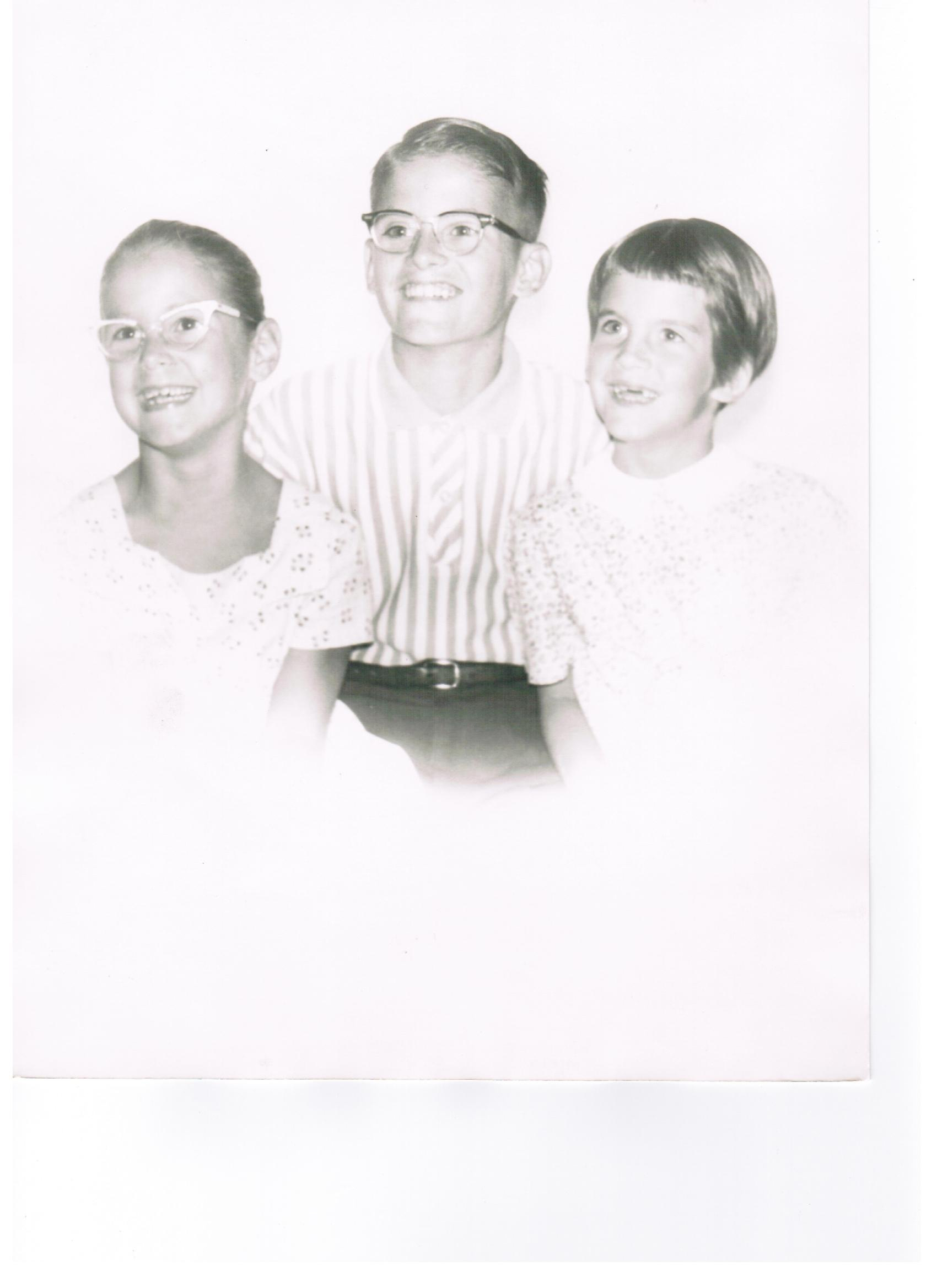
My sister (on left), my brother, and me
My sister has drawn or painted since she could hold a crayon. She’s just a wee bit older than me so those of you who know how old I am can surmise that my sister has stuck with her artistic endeavors for quite some time.
Perhaps at first, neither Mary nor our parents figured the early talent she exhibited would be more than a passing fancy. (Let’s face it, children change what they want to be when they grow up just about as often as they change their underwear … maybe more frequently.) Once Mary started to dig in, however, and was enrolled in classes at the Honolulu Academy of Arts, it was obvious to all of us that she was in it for the long haul, in it to win it, full speed ahead … you get the idea.
Courtesy of Mary Riesche Studios
I’m currently reading a fabulous book, Getting There, by Gillian Zoe Segal, that follows the sometimes hard luck but always rewarding success stories of several business and entertainment professionals. Matthew Weiner, Mad Men creator, didn’t become a successful writer with his very first story idea – that would be way too convenient and certainly not a very interesting read. Getting There spotlights the various roads to success on which men and women have traveled, roads that contained many rejection speed bumps along the way. He had this to say about overnight success, and I quote verbatim from the book, Read the rest of this entry »
I’ve said this before and I’ll say it again: every act of kindness we extend to others; every bit of care we provide others, is extremely valuable.
My post Do Little Rather than Nothing suggests that we have the ability to change someone else’s life, 365 days of the year. The attached article at the top of this post reveals how important one person’s generous act was to someone whose life was about to change forever.
Why do we wait until we can do something grandiose to exert a positive imprint on mankind? Why do we ignore the multitude of small opportunities presented to us in which we can impact a person’s life for the better? Whether that opportunity requires we spend 30 cents or 3 minutes on someone in need, we always have a choice of whether or not to allow a momentary inconvenience to be a part of our day – a miniscule inconvenience that nonetheless greatly benefits others. Read the rest of this entry »
Good Karma for Mrs. Sherman. If you think what you do – great or small – has little effect on the world at large, think again. The attached article by author Brad Meltzer tells a story that will make you a firm believer in the theory that the order of the universe isn’t random, it’s prescribed and you are one of the prescribers. (Please read this very brief commentary, then read Mr. Metzer’s fabulous article as a treat for your efforts.)
Here’s an excerpt from Mr. Meltzer’s article in which Brad illustrates the best lesson of all:
When you do something good in the world, it brings out the good in others. And it always, eventually, spreads good elsewhere.
Applause. Please, please, please read the attached mini-article written by a 30-something year old blogger who is taking care of her mother who has Alzheimer’s.
I’ve written about how important it is to do good things, say nice things, and appreciate the people around you. There’s a group of people out there that could really use some of those good vibes: family caregivers. You encounter them everywhere you go. You may not know they’re caregivers, but believe me, if you build them up, rather than tear them down, you will have done a very good thing. You might be just the person she/he needs to get through a very trying day.
The next time you leave your house, set out to make someone’s day. Don’t rely on some other stranger to do it; it’s up to you.
Every day, and every encounter during each day, we have the opportunity to do good, or to do bad; to improve upon someone’s day, or ruin it for them.
Right now, or at the end of this day, think about the opportunities presented to you. Now think of what you allowed to come forth.
Did you let a car get into your lane when a person was trying to get out of a business parking lot on a very busy street while you were in a hurry, and perhaps running late, and therefore had every reason not to stop for five seconds to allow that car into the flow of traffic?
Depending upon how you acted in that situation, the driver of that car felt this way:
or the driver of that vehicle felt this way:
He may even have felt this way:
which would eventually make him feel this way:
How did you fare today?
Just for today, let go of anger.
Just for today, let go of worry.
Just for today, give thanks for your many blessings.
Just for today, do your work honestly.
Just for today, be kind to your neighbor and every living thing.
And I’m writing about it again, but I’m going to let Dr. Bernie S. Siegel be my mouthpiece on this one because he addresses the importance of making a difference in the lives of others in this excerpt from: 365 Prescriptions for the Soul. Here’s the selection verbatim: Read the rest of this entry »
Our perspective of the world and all its needs can be very humbling. Many times we witness the need but can’t do much about it.
The earthquakes in Nepal and the world-wide response to that tragedy is startling and heart-warming at the same time. The massively horrible weather in parts of the United States with its past winter snow and torrential downpours – and the recent spring incursion of hurricanes and tornadoes – almost paralyzes the remainder of us because we have so little to offer in response, other than a monetary donation to a charitable response organization.
Is that really the case? Do we feel that because we can’t offer hands-on assistance in extremely serious and urgent circumstances as outlined above, we have nothing at all to offer a very exigent world?
I like what I like. How many times have you been asked to choose between one thing and another, you choose the thing, and then you’re asked, “What made you choose that?” If you’re the mother of Not Quite the Plan‘s author, your answer is, “I like what I like.”
I love the example of this mini-dilemma found in the attached article. The blog author’s mother, I’ll call her Mrs. Mom, cuts to the chase; she doesn’t waste any time deliberating; she simply knows what she likes: she doesn’t like the cat that keeps jumping on her lap, but she does like fudge bars. Mrs. Mom has dementia. Perhaps because of her condition, the decisions she makes are far less complicated than they used to be. Her measuring rod: I like what I like.
Weighing the pros and cons is a very important step in the decision making process, but oftentimes we get hung up on the P & C list and fall into the paralysis by analysis quagmire. The list doesn’t have to be multiple pages long and it doesn’t have to be perfected before we take the first step. What’s the worse that could happen? Let’s look at the possibilities. Read the rest of this entry »
The attached New York Times article by Pam Belluck addresses the ambiguous loss experienced by men and women whose spouses are still alive, but not fully there. More specifically, it addresses the need for intimacy that still exists for the spouse without cognitive decline, and that can also exist for the spouse with the decline.
It is a well-known fact that advancing age doesn’t mean the end of desire for sexual intimacy. Whether in the privacy of ones home or in a long-term care housing situation, sex is alive and well. Even people with varying degrees of dementia maintain the desire for intimacy. What the above NY Times article so carefully exposes, however, is that sometimes the act of consent for such intimacy can be a subjective one when viewed by a third party. Read the rest of this entry »
Abby Ellin, New York Times, writes about the late-life renaissances that many Baby Boomers experience when they re-decide what they want to be when they grow up.
When we were younger, many of us drifted into college studies and post-college careers that may or may not have been our first choice but at least paid the bills. As we near retirement, or even years before retirement, we wonder, “Is this all there is?” And when we wonder like that, we get dissatisfied, and when we get dissatisfied – if we’re gutsy – we’ll do what it takes to become satisfied. If we don’t attain our desired level of satisfaction, we’ll languish: lose vitality, grow weak, and become feeble. My oh my, is that what you want? Read the rest of this entry »
NFL players are choosing early retirement. Is the future of football under scrutiny? http://wapo.st/1xvFq9p
I LOVE football. Actually, I love the Seattle Seahawks, but I cringe each time a player gets pummeled in the head.
The above Washington Post article suggests American football may some day fall away as a sport, similar to what happened to boxing. Many years ago, I remember boxing being the sport that people gathered around their televisions to watch, whether at home or in the bars. I can understand why nowadays most of us would rather not watch two people bash each other in the head; a head with virtually no protection in the boxing ring. But even with all the sophisticated helmet and body gear covering football players on the field, players are still sustaining concussions that could sooner or later place them in neurological hell. Read the rest of this entry »
Have you ever been rejected? Read the attached NY Times article: Accepted? Rejected? Relax You’ll see that the article was retitled since it first appeared so when you click on the link, you’ll see the subject matter as being about college admissions.
Rejection affects all of us: it’s not just about college admission policies.
I’m a writer; I should know.
I’ve only been looking for an agent for 30 days, therefore the 15 rejections – or what I like to call not interesteds – I’ve received out of 60 submissions sent is only 25% of the total so far. Wow, 75% of the agents haven’t turned me down yet! Read the rest of this entry »
When I’m an old lady and end up in a care facility, I sincerely hope my personality and attitudes don’t relegate me to the category of “that crabby old lady in Room 210.” Have you visited someone in a nursing home or hospital and had the distinct feeling that the patients were treated like numbers or medical cases? You know what I mean: “the urinary tract infection in 4A” or “the decubitis in South 6.” Wow, that’s a horrible thing to consider for myself: the history of all my years on this earth being characterized as a medical condition or an intolerable behavior resulting from that condition.
What about my history of being a pretty darn good mother/wife/business person/neighbor/community volunteer/friend? Doesn’t that person still exist within the body occupying that bed?
Let’s all take the time to read this poem that depicts such a scene. Gender-wise, this could be about a crabby old man as well. Read the rest of this entry »
Washington State’s own Jim Caviezel, film and television actor, wrote a fabulous article for the Seattle Times newspaper, attached above. I echo his sentiments about the importance of unconditional support.
Most parents don’t have a problem understanding the concept of unconditional love when it comes to their children. When a child messes up, they don’t give up on him or abandon him. Parents retain the hope that their child will do better next time, and they stand by their child to help him get there. Read the rest of this entry »
This fabulous article really captures the essence of what those grieving need from those with whom they’re acquainted. It also helps those uncomfortable with the topic of death to understand that there are many ways to lighten the emotional load for the person who is grieving.
The 11th suggestion I would offer is this: If you’re with someone who has recently suffered a loss and you don’t know what to say; you feel any words you offer couldn’t possibly make a difference; offer a hug. Your sincere intentions will transfer to them and just might provide them with the assurance that you acknowledge their grief and want them to know that they are not alone. Thank you Howard Whitman for offering this article to us.
Editor’s Note: The following is an excerpt from Keys to Happiness, an anthology of articles published in 1954.
Most of us want to be helpful when grief strikes a friend, but often we don’t know how. We may end up doing nothing because we don’t know the right — and helpful — things to say and do. Because that was my own experience recently, I resolved to gather pointers which might be useful to others as well as myself.
Ministers, priests, and rabbis deal with such situations every day. I went to scores of them, of all faiths, in all parts of the country.
Here are some specific suggestions they made:
1. Don’t try to “buck them up.”
This surprised me when the Rev. Arthur E. Wilson of Providence, RI mentioned it. But the others concurred. It only makes your friend feel worse when you say, “Come now…
Dietrich Gruen, the author of the attached article, is a Green Bay Packers fan. My team, the Seattle Seahawks, beat his team in the game he references in his attached article. When I’m on the receiving end of a victory, I’m always cognizant of the fact that when I’m celebrating a win, there are those who are bemoaning a loss.
Well, let me tell you, the football field is a great equalizer, as was evident yesterday when the Seahawks lost the Super Bowl to the New England Patriots. It was a devastating loss, but it was not life-changing.
Sure, it may change some aspects of some of the Seattle team members’ lives, but it won’t alter what is truly valuable: life itself. With several hours separation between Seattle’s shocking loss and now, I’m able to re-categorize that loss as a speed bump. Read the rest of this entry »
In my blog post, BEWARE of this Craigslist scam, I highlighted an online crime that almost succeeded in robbing one of my family members. He posted a piano for sale – a piano that needed quite a bit of work to make it operational – and he almost got taken to the cleaners. (Read the BEWARE article for the details.)
A couple weeks later, a true lover of all-things piano contacted my family member and said he was interested in purchasing the piano and he and his wife wanted to have a look-see. The couple arrived – a couple in their 80s – and when the husband took one look at the beat up piano he said, “You’ve got a deal!”
It turns out, this fellow is an expert at restoring pianos. For years now, he’s been buying pianos that are on their last legs; he restores them and gives them to children who would otherwise not be able to own a piano. What a fabulous gift these future piano virtuosos – and their parents – receive because of this couple’s “ministry” of helping young musicians.
I’m thrilled I was able to provide this Craigslist redemption story that – in my mind – wipes out the bad taste in my mouth from the previous one.
And when you think you’re listening, are you really listening or are you constructing a response to the person who is talking to you? All the instructional teachings I’ve read about being fully present in any given situation indicate that true listening can’t afford the luxury of distraction.
True listening honors the person with whom you’re connecting. Conversely, being distracted reveals ones disregard for someone. Read the rest of this entry »