Health & Wellness
Tips for helping a caregiver
 The latest AARP Magazine had a fabulous article providing helpful ways in which to make a caregiver’s life just a wee bit – or quite a bit – better. Here are a few tips for you to adopt in your life.
- Bring her a low-maintenance houseplant
- Take in his mail
- Do yard upkeep, whether raking leaves, mowing the lawn, shoveling snow
- When you’re heading out to buy groceries, ask him if you can pick some things up for him
- Take her kids or grandkids to the park or to a movie
- Stop by with a board game or a movie to watch – a perfect way to get his mind off things
- Visit her with a pet that has a sweet disposition
- Take his dog on a walk – maybe on a daily or weekly basis
- Do some light housework or repairs: dishes, vacuuming, dusting, ironing, smoke alarm battery and light bulb changing, fixing a leaky faucet
- Return her library books
- Volunteer to stay at home to wait for the cable technician, repairman, etc. while he attends to other more pressing needs
- Bring him a week’s worth of meals in freezable containers
- Send her a greeting card on an ongoing basis. Who doesn’t love to receive real postal mail?
- When visiting, let the person vent, without passing verbal judgment on what they may say
- Do an item or two on her To-Do list – I promise you, her list is extraordinarily long
- Offer to make a photo album with him, using photos that mean a lot to him and the rest of the family
- Give him a gift card to a restaurant he may enjoy, or better yet, take him out to dinner
- Help him decorate for the holidays
- Drop off or pick up a prescription
- Keep in touch with her, even after her loved one passes. Too often, the grieving one has more attention than she can handle immediately after someone dies, then when she could really use some TLC, no one can be found.
Normal is highly under-rated
 Have you ever experienced a time when things just weren’t going right or you were ill and felt you would never again return to normal?
Of course you have, we all have. We were so wrapped up in our current state of affairs, we couldn’t even remember what normal feels like. This phenomena may also be characterized as craving the status quo, a condition that many of us usually abhor, given the option of leading an eventful and stimulating life.
When we’re on our knees praying to the Universe for a break – or perhaps worshiping the Porcelain God with an upside down stomach – we’ll give anything for boredom, a heightened state of normalcy, or a long stretch of monotony.
My suggestion to you: the next time your yawns make you impatient for something different, be careful what you wish for and enjoy the ennui while you can.
 And when you’re going through a rough patch, remember that when you’re in the dumps, this too shall pass, and when it does, you’ll have the opportunity to relish the calming state of normalcy once again.
It’s always nice having something to look forward to, isn’t it?
Caregiving 101 through 1001
 I’ve written several articles over the years about the importance of assembling a caregiving team when caring for a loved one – a team that doesn’t necessarily rely on family because not everyone has a participatory family when it comes to these matters. Of all the life-changes we encounter during our journey, caregiving is one of – if not the most difficult – speed bump to get over.
Caregiving: the ultimate team sport suggests how one might use the strengths of each team/family member to handle the varied needs during the caregiving journey.
Family dynamics that hamper caregiving success exposes the need to let go of stereotypes or childhood roles that don’t serve siblings well as adults. If ever there was a time to work together for the greater good – taking care of a family member with dementia or other terminal illness – this ranks right up there at the top.
Solo caregiving addresses the needs of the person who appears to be strapped with fulfilling all the roles needed for a successful caregiving venture. As the sole caregiver, you need not settle into those roles, not without the help of other, well-meaning individuals. Certainly, much relies on the neighbor, coworker, even casual acquaintance, but said entities are a resource from which much assistance can be found.
 And here are several more articles for the caregivers out there – and those acquainted with a caregiver – to provide some wisdom and encouragement through the tough times: Read the rest of this entry »
Our school of hard knocks: life
Okay, my life isn’t always crappy, quite frankly, it’s rarely crappy. I’ve had a great life and I certainly can’t complain too loudly. But I’ve learned many things in my umpteen years of life, one of which is that there are teaching moments – and teachers – all around us and if we’re diligent students, we’ll learn something new now and then.
Dr. Bernie S. Siegel in his book 365 Subscriptions for the Soul, brings up this topic in one of his daily meditations. He starts out by offering the following Taoist quote:
When the student is ready, the teacher appears.
Why I love the internet
 Sure, it’s convenient and very utilitarian for our every-day use. As a writer, I benefit greatly from an online Thesaurus to use alternate words. Case in point, there’s gotta be a better way to say, “Colleen got angry (irked, vexed, indignant, apoplectic, choleric) when traffic made her late for her hair appointment.”
And among the many other reasons for which I use the internet, I count on it for quick access to a recipe for an I’m too exhausted to be creative meal on a Monday night or in the alternative, a restaurant that’s not too far away from home and can seat us at the last minute. Bottom line, I take full advantage of what the inter-web has to offer.
But the biggest reason I love the internet is that it reaches anyone who has access to any type of computer device – especially those in need of some sort of assistance when sorting out the difficulties of life. My need for a dining alternative pales in comparison to someone searching for help when caring for someone with a debilitating illness.
One of the blogs I follow: My Dementia Experience, is written by a woman, NorCalMom, who takes care of her mother-in-law. This delightful caregiver also has five children of her own. But NorCalMom jumped into caregiving with both feet in 2013 when Marie, her mother-in-law, moved in with her and the rest of her household because of Marie’s advancing dementia. Reading just one of this blogger’s posts will show an outsider what types of challenges NorCalMom faces on an ongoing basis.
As caregivers, and I’ve been one as well, we oftentimes “wing it” when it comes to handling the day-to-day, and shockingly acute, issues that occur during our caregiving journey. The unpredictable nature of Alzheimer’s or other dementia makes even the most mundane activities frustratingly impossible to handle with only a layman’s knowledge of providing care. For example, how does one communicate with a person who can no longer understand what is said to her and who can no longer respond cogently to questions proferred by their primary care person?
Caregivers need psychic powers to unravel the mystery of care providing. Or do they? Read the rest of this entry »
Perfecting our life’s target practice

Dr. Bernie Siegel, 365 Prescriptions for the Soul, provided the following regarding the art of focusing on the right target for our lives. The first quote is very timely advice by the late, great, Yogi Berra:
TARGET PRACTICE
You got to be careful if you don’t know where you’re going, because you might not get there. – Yogi Berra
Your target in life helps you to direct your course. So before you aim, be sure you choose the right target.
What are you aiming for? What is your goal? What goals are you trying to achieve? What are you trying to hit? These are the questions you need to ask yourself, because they tell you your direction and where you will end up.
The more target practice you engage in, the more likely you are to hit the bull’s-eye.
SOLUTION OF THE DAY
Take the time to refocus on your target. Ask the questions often to be sure to hone in on your center.
Focus on Caring: The ties that bind us
This week’s story is right out of a fabulous blog that I follow, The Kindness Blog. I’m submitting the story as it was written, in the 1st person, by the person involved.
I was in a really bad three-car accident a few years ago where a drunk driver ran a red light and hit another lady and me – the other lady died. This couple who had been leaving the Mosque across the street heard the accident happen and came running to help. It was cold out and I was just sitting on the side of the road shivering and cold. Read the rest of this entry »

Our life: an ongoing parade
Here I go again, relying on Dr. Bernie S. Siegel to provide some wisdom for your day, but what can I say, his 365 Prescriptions for the Soul catches my attention more often than not and when it does, I like to share the good stuff I find. The following is provided verbatim:
Parade of Life
Forget past mistakes. Forget failures. Forget everything except what you are going to do now, and do it. – William Durant
 Life is a parade. Sometimes we march along and realize we have passed by what we were looking for. What do we do? Stand there and drop out of the parade? March on with regrets? Feel bad about how we looked or that everything we wanted was on the wrong side of the street? It’s passed! Forget it and march on!
Sometimes our parade isn’t so pretty, and the crowd isn’t interested in us. If we drag everything we have passed with us, we will destroy the present. We have no future when we live in the past.
We even talk about past lives. Whether you believe in them or not, the same principle applies. If you are living a past life, you are destroying your present one. In therapy, people come to understand why they are acting the way they are and how the past is affecting them. They learn to let go, move on, and not sit in the same classroom year after year. They graduate and commence a new life.
A closing comment by this blogger:
The good news is that we can learn from our past, both the good and the bad. But if we stay cemented in the past and don’t move on, that parade Dr. Siegel talks about? It’ll pass us by.
I don’t know about you, but I don’t want to get left behind.
Focus on Caring: Looking for trouble
 My oh my how often we are on the road, driving to our intended destination, and we observe someone with car trouble. Each and every time I observe such a scene I always say a little prayer that the Universe will step in and send someone to be of assistance to this poor soul.
Thomas Weller of San Diego, California looks for trouble and provides assistance in the form of: fuel for those who thought driving on fumes would get them to their destination, a change of tire for that troublesome flat tire that started out as a slow leak but ended as a pancake, or a lift to a safer place so that the stranded motorist could get off the highway.
This isn’t a passing fancy of his, he’s been doing it for 50 years. Read the rest of this entry »
Time to recognize & bolster family caregivers
 The proposed Recognize, Assist, Include, Support, and Engage (RAISE) Family Caregivers Act would require the development of an integrated national strategy to provide resources for under-served family caregivers in the United States. If you are not currently a caregiver for a loved one, you most likely will be, and no doubt you know of someone who is already an unpaid caregiver (as opposed to a hired caregiver) for a person in their family.
Source: Recognize, Assist, Include, Support, and Engage (RAISE) Family Caregivers Act – AARP
Many families, even those with young children, find themselves thrust into the role of caring for a loved one when they least expect it and can ill afford to. Caregiving for a child or an adult with disabilities, or caring for an adult with a debilitating illness, has become the norm for many in the United States and abroad.
These caregivers “prepare meals, handle finances, manage medications, drive to doctors’ appointments, help with bathing and dressing, perform complex medical tasks and more – all so loved ones can live at home.”
 Keep in mind, the above tasks are those they were already performing for their own household, tasks that multiplied exponentially with the increased needs of their disabled or ill family member. Add a job outside of the home to all of that, and you have to wonder how these overworked and over-stressed heroes manage at all! Read the rest of this entry »
Focus on Caring: The Spineless Bystander Effect
On July 7, 2014, I wrote an article Spineless inaction: the bystander effect, an article that told the story of a female McDonald’s restaurant employee who was severely beaten by another woman. No one called 911, no one tried to intervene, but everyone within a block of the beating took cell phone video of the attack. That, my friends, is an example of spineless inaction.
I’m going to counter that horrific example with a rewarding one out of Buffalo, New York.
Darnell Barton, a bus driver in Buffalo, New York, was on his multi-trip route over a bridge on the expressway. Ahead of him, he could see a woman standing over the railing on the ledge; the intent of this woman was obvious to anyone who observed her. The entire episode was caught on the bus dashboard camera. Read the rest of this entry »
Focus on Caring: Boundaries that constrain us

How are you defined? What kind of box would you fit into? Here are a few characteristics some might assign to me:
- White American
- Baby Boomer
- Pacific Northwest resident
- Wife
- Mother
- Sister, aunt, niece, cousin, friend
- Seattle Seahawks super fan
 All items on that list are correct but if that’s all that people see about me, they’ve greatly reduced the trueness of who I am because my box also contains the following:
- spiritual but definitely not religious person
- free-thinker (is that redundant?)
- writer of things that matter to me
- advocate of the elderly and just about everyone else who crosses my path in life
Setting boundaries between who I am, and who you are, benefits no one.
Leonard Pitts, Jr. spoke at a TEDx event in February of this year. His 20 minute talk, The Boundaries We Choose, is readily available on YouTube so I strongly suggest you seek it out. He suggests, “Our labels shouldn’t define who we are and place us in a strict box.” He then spoke of labels one might put in his box: African American, Christian, Husband, Father, Fan of the LA Lakers. If you’ve read any of Mr. Pitts’ literary pieces in the Miami Herald or any of his books, you already know that he is more than the contents his box may imply. (To be sure, there is a very valid reason why he was named the 2004 Pulitzer Price Winner for Commentary.)
During his February TEDx talk, he provided a fabulous story that illustrates the downside of labels or identifying markers. I’ll let you discover that beautiful and clarifying story by watching his TEDx video, but for the purposes of this blog posting, I will provide you with one of his statements from that video.
Our bonds are more than connecting with certain markers that define people.
Examine, if you will, your way of describing something that happened to you during the course of your day.
 When you relay a story about a person taking his or her time in line at the Starbucks store, holding everyone up for far too long a time, do you define the person this way?
This Asian woman in front of me acted like she owned the damn place. She was so selfish, taking her damn time ordering her fancy drink when all I wanted was a damn cup of brewed coffee.
Or did you simply say
This damn person in front of me took so much time ordering a fancy damn cup of coffee that I just about ran out of time to get my plain and simple cup of brewed coffee.
Tuesdays in September: Focus on Caring
Just a brief post to announce that I have designated each Tuesday in September as a day to Focus on Caring.
On September 1st (tomorrow) I’ll introduce the topic by providing extraordinary insight by Leonard Pitts, Jr. and my takeaway from his insight. On subsequent Tuesdays I will provide heartwarming and heart-wrenching stories about ordinary people, doing the ordinary right thing, at an extraordinary time.
In short, I will introduce you to people like you and me who, in my mind, are every day heroes: people who chose to do the right thing in an amazing way.
Alzheimer’s caregiving: The Art of Lying

Alzheimer’s Australia | Therapies and communication approaches. Caregivers have it hard enough without having to crawl through the maze of ethical versus practical when it comes to communication.
The above article provides a clear perspective of the challenges inherent with taking care of someone whose reality doesn’t come close to matching that of the caregiver.
Whether you are an unpaid caregiver – someone who cares for a friend or a loved one – or a paid caregiver providing services for which payment is received, you need to embrace the art of lying for your benefit, and that of the person for whom you provide care.
I feel so strongly about this matter, that over the years I’ve written several articles proposing one engage in the fine art of half truths, omitted truths, and out and out lying to save the day.
Here are two articles I think you will find of interest, articles that might just infuse you with the strength to take the low road from time to time:
Good citizenship starts young
Operation Good Citizen: Teaching Kids to do the Right Thing in 2015.
 A recent article in Parade Magazine spotlighted the efforts of older adults mentoring children on how to be good citizens. Specifically, Veterans and Congressional Medal of Honor recipients volunteer as mentors in schools across the nation.
The article emphasizes the point that parents and other adult family members should be the main source of such teaching – teachers have enough work to do just getting our children educated – but with a little bit of reinforcement at school, the lesson becomes that much more vital to the young learners. Read the rest of this entry »
Single ladies, this one’s for you
 What do you look for in a man? I did a wee bit of internet research and gleaned some listed qualities from websites such as Ask Men, Men’s Health, and Psychology Today. Here are a few of the qualities listed:
- passionate
- humorous
- faithful
- dependable
- mysterious
- exciting
- kind
- generous
- confident
- good job
All but two of those qualities were on my list when I was looking for a husband. Maybe it’s just me, but a man who’s mysterious seems to cancel out a few of the other list-worthy qualities above. Additionally, I think exciting is completely overrated.
I hit the jackpot when I met my husband.
I don’t wanna brag … who am I kidding, I really wanna brag about my choice in life partners.
Tree of Life
I’m going to once again look to Dr. Bernie S. Siegel, and quote directly from a page in his book, 365 Prescriptions for the Soul.
Stand tall and proud. Remember your roots! Be content with your natural Beauty. Drink plenty of water. Enjoy the View! – Illan Shamir, Advice from a Tree

If we are busily performing deeds but never stop to reach up for knowledge and wisdom, our tree of life will have no branches and many roots. Without branches, how can it move and respond with the winds of life? Or if we accumulate great knowledge but perform no deeds, then we are like a tree with many branches but no roots, and we will be blown over by the winds of fortune.
We must see that our tree of life contains both wisdom and deeds. Then our branches will spread and our deep roots will provide support and nourishment. We will be able to survive the storms and droughts that life presents us.
Caregivers: take a bow
 Applause. Please, please, please read the attached mini-article written by a 30-something year old blogger who is taking care of her mother who has Alzheimer’s.
I’ve written about how important it is to do good things, say nice things, and appreciate the people around you. There’s a group of people out there that could really use some of those good vibes: family caregivers. You encounter them everywhere you go. You may not know they’re caregivers, but believe me, if you build them up, rather than tear them down, you will have done a very good thing. You might be just the person she/he needs to get through a very trying day.
The next time you leave your house, set out to make someone’s day. Don’t rely on some other stranger to do it; it’s up to you.
What are you: a builder-upper or a tearer-downer?
Every day, and every encounter during each day, we have the opportunity to do good, or to do bad; to improve upon someone’s day, or ruin it for them.
Right now, or at the end of this day, think about the opportunities presented to you. Now think of what you allowed to come forth.
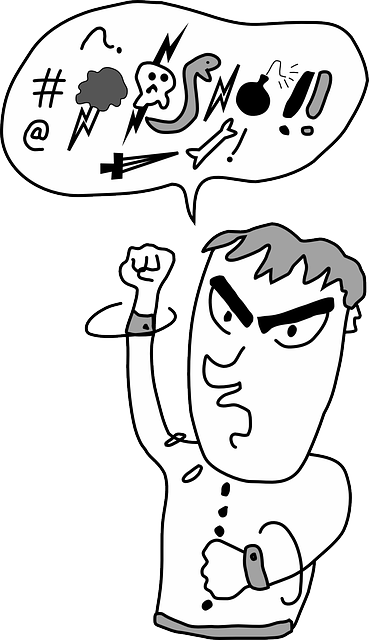
Did you let a car get into your lane when a person was trying to get out of a business parking lot on a very busy street while you were in a hurry, and perhaps running late, and therefore had every reason not to stop for five seconds to allow that car into the flow of traffic?
Depending upon how you acted in that situation, the driver of that car felt this way:
or the driver of that vehicle felt this way:
He may even have felt this way:
which would eventually make him feel this way:



How did you fare today?
- Just for today, let go of anger.
- Just for today, let go of worry.
- Just for today, give thanks for your many blessings.
- Just for today, do your work honestly.
- Just for today, be kind to your neighbor and every living thing.
And do it again tomorrow and the next day.
If you don’t wanna walk, how about hip hop?
 Canadian high school dance teacher Shirley Clements, performs with her students at a Hip-Hop competition! This amazing woman has inspired countless dancers throughout the years and continues to inspire every day!
60 YEAR OLD KILLS HIP-HOP ROUTINE. I hope you enjoy this fabulous dance routine to Bruno Mars’ song, Up Town Funk You Up. Most likely this woman will never have to walk around any shopping malls if she keeps up this level of activity.
Click on the link, turn up the volume, and enjoy!
Two legs and a good pair of shoes
We should ALL be walking, even people with dementia.
 That’s all you need! Walking is one of the least expensive modes of exercise you’ll ever find. Correction: you need legs, good shoes, and room to walk. The good news is that even if you don’t live in a neighborhood where walking is appropriate, you can walk around the mall; you can walk the perimeter of your apartment or house; you can walk up and down the corridors of your building; you can walk in place … I know, boring, but you get the idea … WALK!
Walking is one of the best weight-bearing exercises us humans can do to protect our bones. At a recent doctor’s appointment, I bragged to my doctor that every week I do Bar Method exercises, yoga, weight lifting, and recumbent bike … and every once in a while I walk. She said, “The only weight-bearing exercise in that list is walking. Get out there and walk!” Read the rest of this entry »
Your positive imprint on mankind
Our perspective of the world and all its needs can be very humbling. Many times we witness the need but can’t do much about it.
 The earthquakes in Nepal and the world-wide response to that tragedy is startling and heart-warming at the same time. The massively horrible weather in parts of the United States with its past winter snow and torrential downpours – and the recent spring incursion of hurricanes and tornadoes – almost paralyzes the remainder of us because we have so little to offer in response, other than a monetary donation to a charitable response organization.
Is that really the case? Do we feel that because we can’t offer hands-on assistance in extremely serious and urgent circumstances as outlined above, we have nothing at all to offer a very exigent world?
Why wrinkles are a very good thing
Here’s a direct quote from Dr. Bernie S. Siegel’s 365 Prescriptions for the Soul. I’ll let his, and John Kenneth Galbraith’s words, say it all:
If wrinkles must be written upon our brows, let them not be written upon the heart. The spirit should never grow old. – John Kenneth Galbraith

When you wash something, it can come out wrinkled. That’s life! Just remember, if God puts you through the wringer it’s because you’re worth laundering. If I were given the choice between dying young and developing wrinkles, the answer would be clear to me. I choose life, come what may, regardless of old age and wrinkles. Read the rest of this entry »
Decision making roadblocks
I like what I like. How many times have you been asked to choose between one thing and another, you choose the thing, and then you’re asked, “What made you choose that?” If you’re the mother of Not Quite the Plan‘s author, your answer is, “I like what I like.”
 I love the example of this mini-dilemma found in the attached article. The blog author’s mother, I’ll call her Mrs. Mom, cuts to the chase; she doesn’t waste any time deliberating; she simply knows what she likes: she doesn’t like the cat that keeps jumping on her lap, but she does like fudge bars. Mrs. Mom has dementia. Perhaps because of her condition, the decisions she makes are far less complicated than they used to be. Her measuring rod: I like what I like.
Weighing the pros and cons is a very important step in the decision making process, but oftentimes we get hung up on the P & C list and fall into the paralysis by analysis quagmire. The list doesn’t have to be multiple pages long and it doesn’t have to be perfected before we take the first step. What’s the worse that could happen? Let’s look at the possibilities. Read the rest of this entry »
Sexual intimacy in memory care
 The attached New York Times article by Pam Belluck addresses the ambiguous loss experienced by men and women whose spouses are still alive, but not fully there. More specifically, it addresses the need for intimacy that still exists for the spouse without cognitive decline, and that can also exist for the spouse with the decline.
It is a well-known fact that advancing age doesn’t mean the end of desire for sexual intimacy. Whether in the privacy of ones home or in a long-term care housing situation, sex is alive and well. Even people with varying degrees of dementia maintain the desire for intimacy. What the above NY Times article so carefully exposes, however, is that sometimes the act of consent for such intimacy can be a subjective one when viewed by a third party. Read the rest of this entry »
Setting aside our perceived limitations
 Earlier this year, Richard Glatzer, co-director of the award winning movie, Still Alice, died at the age of 63 after battling ALS for four years. It would have been unfortunate if he had gone with his first reaction when approached to adapt Lisa Genova’s novel into a movie. (Evidently, he almost turned down the project.) Fortunately for us, he did not. One article on this subject indicated that it was Glatzer’s personal connection to independence-robbing illness that gave Still Alice a greater authenticity.
From what I understand, Mr. Glatzer used one finger – using a text-to-speech app – to communicate every directive. I don’t have to know anything about film directing to understand that doing so with his “limitations” would have been extraordinarily clumsy and time consuming. I wonder if his decision to accept the project was made in part because he believed he was the best person for the job. Did you see the movie? Wouldn’t you agree?
 Yet all of us are faced with far less daunting struggles than those experienced by Mr. Glatzer and we cave in to our well-honed ability to find every reason not to pursue a task that requires exceptional action on our part.
I’m ashamed of all the excuses I’ve come up with to postpone – or to avoid entirely – new ventures that required more of me than I was willing to give. Ugh – I grieve those lost opportunities when I think of the benefit to me and others such ventures would have provided. But crying over spilled milk won’t undo the past.
Going forward I can commit to seizing new opportunities and disregarding the emotional and physical hurdles in my path.
I can, but will I?
Will you?
App-licable to retirees
 Some of us have owned smartphones for quite some time now. Others have finally joined the 21st century, just recently retiring their Motorola flip phone. (Love you Honey!)
Sure, the latest and greatest phones are used to make calls – oddly enough not as frequently as we send texts – but they can also help us through our day-to-day schedules. Jonah Bromwich, New York Times columnist, provides retirees with information on apps we might find quite useful. Read the rest of this entry »
Renaissance – Baby Boomer style
Abby Ellin, New York Times, writes about the late-life renaissances that many Baby Boomers experience when they re-decide what they want to be when they grow up.
 When we were younger, many of us drifted into college studies and post-college careers that may or may not have been our first choice but at least paid the bills. As we near retirement, or even years before retirement, we wonder, “Is this all there is?” And when we wonder like that, we get dissatisfied, and when we get dissatisfied – if we’re gutsy – we’ll do what it takes to become satisfied. If we don’t attain our desired level of satisfaction, we’ll languish: lose vitality, grow weak, and become feeble. My oh my, is that what you want? Read the rest of this entry »
Neurological hell
NFL players are choosing early retirement. Is the future of football under scrutiny?
http://wapo.st/1xvFq9p
I LOVE football. Actually, I love the Seattle Seahawks, but I cringe each time a player gets pummeled in the head.
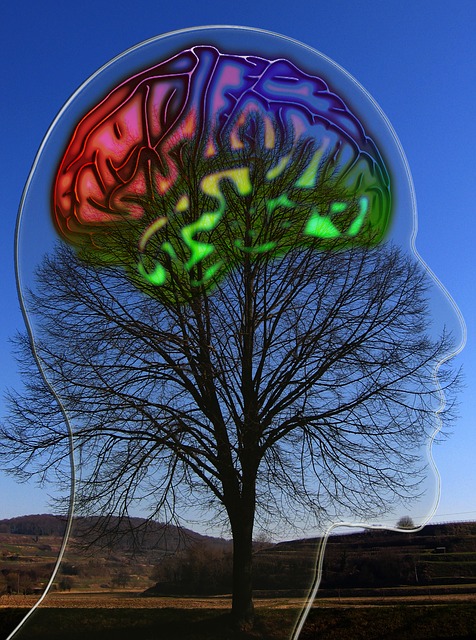 The above Washington Post article suggests American football may some day fall away as a sport, similar to what happened to boxing. Many years ago, I remember boxing being the sport that people gathered around their televisions to watch, whether at home or in the bars. I can understand why nowadays most of us would rather not watch two people bash each other in the head; a head with virtually no protection in the boxing ring. But even with all the sophisticated helmet and body gear covering football players on the field, players are still sustaining concussions that could sooner or later place them in neurological hell. Read the rest of this entry »
My Heroines: International Women’s Day
 International Women’s Day: My Heroines. My heroines may look different from those posted in the attached article, and they certainly will look different from those you may consider as your heroines. That’s a very good thing because we all have different takes on the subject but the outcome is the same: heroines we admire that made a difference in their world, and in ours.

My mother: Patricia Constance Conroy Desonier was born in 1917 and died in 1994. Mom was a fair disciplinarian to us three kids and a fabulous confidant as an adult. To lose her when I was forty years old was a devastating loss for me. My biggest disappointment is that she didn’t live long enough to meet my current husband, an extraordinary man whom I met – almost exactly to the date – two years after mom died. Words to describe my mother (in addition to the above): talented musician, seamstress, faithful and supportive wife, involved parent, community activist, volunteer extraordinaire. Read the rest of this entry »
 Living: the ultimate team sport