Family issues
My sister, Mary
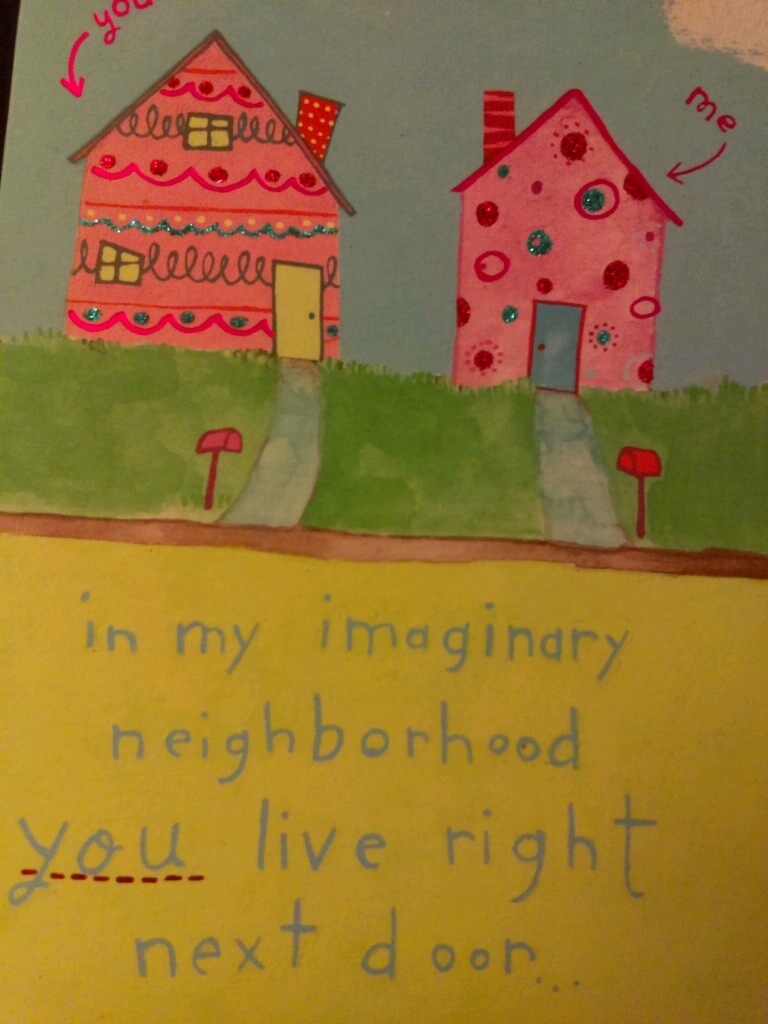 It’s National Sisters Day so naturally, I need to write about my sister, Mary.
Gosh, I wish my sister and I didn’t live 765 miles away from each other; this photo expresses exactly how I feel.
We visit each other, but not often enough, and when we do visit each other, it’s just not the same. If we lived next door to each other we could pop into each other’s homes, take walks together, and talk face to face instead of by telephone.
We’re not getting any younger, nor are our husbands. Having close proximity to each other would guarantee in-person support for when life takes a toll on our bodies and minds, and let’s face it, regardless of how healthy you think you are, life happens when you least expect it. Our mother’s death, while she slept, is proof of that. So is our father’s diagnosis of Alzheimer’s disease that took his life four years later.
My sister, Mary, and I are creatives: she’s an artist (paints and such) who holds gallery events, and I’m a writer and a published author. In so many respects, Mary is just about my most ardent supporter, as I am of her. When we’re neglecting our craft, we remind each other of the passion that brought us to this place, and that what we produce needs to be in the hands of others to benefit them.
Yep, Mary is my best friend and best friends should live closer to each other so they can have a front row seat to what life sends their way. I don’t at all predict my imaginary neighborhood will ever come to pass, but what I can predict is how close Mary and I will remain on this unpredictable and impermanent journey called life.
My novel’s 1st anniversary
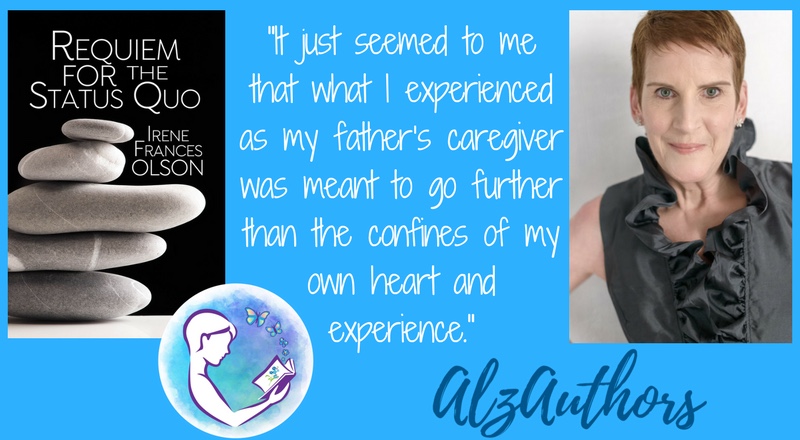
 Requiem for the status quo‘s anniversary is the perfect opportunity to announce my involvement with a fabulous project focused on Alzheimer’s disease.
I am one of over 150 authors from around the world who will be represented at the Alzheimer’s Association – Western Carolina Chapter’s Dementia Education conference in Charlotte, N.C., this August. I, and over 25 other AlzAuthors, have donated copies of their books, which will be given away in a raffle to conference attendees.
I wanted to support this cause because during my caregiving experience in the early 2000s, I most definitely could have used more fiction about Alzheimer’s to normalize my day-to-day stresses, and some up-to-date non-fiction to help my learn-as-you-go caregiving experience. Something else from which I surely could have benefited is the non-profit, AlzAuthors. AlzAuthors.com is a nonprofit website that shares information on books and blogs about Alzheimer’s and dementia. I am proud to say that I, too, am a member of this fine organization. Had it been available prior to my father’s death from Alzheimer’s disease, I no doubt would have tapped into its resources.
AlzAuthors started in 2015, when Founders Jean Lee from Ohio, Vicki Tapia from Montana and Marianne Sciucco from New York, who had also written books about Alzheimer’s, met in cyberspace. They discussed the growing need for resources about dementia. A year later, after Shannon Wierbitzky joined the team, the group started a website and published posts from 60 authors. In 2017, Canadian Kathryn Harrison and Ann Campanella from North Carolina joined the administrative team.
Since that time AlzAuthors has published weekly posts, sharing resources about books and blogs that focus on Alzheimer’s and other dementias. The site has grown to include over 150 AlzAuthors from around the world and has a bookstore with a vast collection of top books for individuals, doctor’s offices, assisted living facilities and other eldercare services. AlzAuthors also has a thriving presence on Facebook, Twitter, Instagram, and Pinterest. AlzAuthors Jean Lee and Ann Campanella, whose memoirs were recently named to Book Authority’s Best Alzheimer’s Books of All Time List, will share “The Story Behind the Stories” of AlzAuthors at the Alzheimer’s Association conference.
“Together We Can,” the Dementia Education Conference held by the Alzheimer’s Association – Western Carolina Chapter, will take place on Wednesday, Aug. 29, from 8:00 a.m. to 4:00 p.m.at the Friendship Missionary Baptist Church, 3400 Beatties Ford Road in Charlotte, N.C. The event is geared for healthcare professionals, caregivers, people living with Alzheimer’s or related dementia and members of the general public. Attendees will learn more about research, caregiving practices and tools to assist in the journey with Alzheimer’s. For more information, visit ALZ.org/NorthCarolina or call 800-272-3900.
For more information about AlzAuthors. visit their website: https://alzauthors.com/.
Kindness Fridays
 Today I celebrate an author friend who has been so supportive of my writing journey. Jill Weatherholt is a fabulous writer of inspirational romance novels. Second Chance Romance is the first in the Love Inspired series that will grab you from the very first page. The second in the series, A Father for Bella, will be released August 1, 2018, but is available for preorder right now. I already ordered my copy and can hardly wait for the continuation of a series that has warmed my heart and has me wanting more.
This delightful author friend of mine inspires kindness wherever she goes, and she certainly warrants a Kindness Friday spot on my blog today for it is today that Jill posted an essay I wrote that gives readers a peek at my personal caregiving experience with my father. You can view that post, here. I wrote about this personal experience of mine when Jill indicated she wanted to feature me yet again on her author site, and could I please write about a caregiving episode from my past.
It was my pleasure to do so, just as it is my pleasure to give you, my blog followers, a peek into this North Carolina author’s exceptional romance novel series. I certainly hope you will pick up your own copies of Jill’s two books in the Love Inspired series, and that you will perhaps gift others who also might be interested in receiving their very own copies. At the very least, be sure to share this post with your friends so they can have quick and easy access to her novels’ Amazon purchase links.
The best part about my own publishing experience has been the authors I’ve met along the way; what giving and loving individuals they have proven to be. My life is greatly enriched by them. Thank you, Jill, for your friendship.
Kindness Fridays
Long distance relationships don’t always work out but the relationship I have with an Adelaide, Australia online magazine works to perfection. I’ve never wanted to be the selfish one in this relationship, but I feel I’ve received far more from it than they have.
A wee bit of history: I’ve been writing for this magazine off and on for some time and then late last year, Grandparents Day Magazine offered me my own column; my own byline. Now I’m guaranteed a page in every publication.
Then, just a couple weeks ago, the editors/founders of the magazine reached out to me wanting to promote a writers’ group to which I belong: AlzAuthors. AlzAuthors is made up of a compendium of authors who share their personal experiences with Alzheimer’s disease and other dementias to benefit others. Their motto is: To make a difference. One can sing a lonely song, but we chose to form a choir and create harmony.
So today’s celebration of kindness is two-fold: one, Grandparents Day Magazine generously reached out to me and the author group to which I belong; and two, AlzAuthors members chose to share their difficult Alzheimer’s disease journeys so that others could benefit from their vast experience – much of it learn-as-you-go. As a member of the AlzAuthors group, I can testify to the fact that once I had been through a family caregiving experience – for me it was for my father – I hoped it wasn’t for naught. Being able to share my experience with others through my novel’s publication just seemed right. The same can be said for the more than 150 books written by the AlzAuthors members.
And that, my friends, is my Kindness Fridays for this week.
Kindness Fridays
Over the years I’ve discovered that when we are part of a community of people, our quality of life increases. The support of others can’t be beat. For me, community is like-minded people with a common thread through their lives that provide meaning and purpose for one’s day to day existence.
I found community in a writer’s group called AlzAuthors, a compendium of authors who have all been affected by Alzheimer’s disease and other dementia. All of us authors share our experiences through our non-fiction and fiction works to bring knowledge, comfort, and understanding to those on a similar journey to the one we have already completed. Trust me, we all wish such a group were not necessary; that the common thread we share didn’t involve the always fatal disease of Alzheimer’s and related dementia; but it is necessary and we’re filling a need that as of this writing doesn’t show any chance of abating.
I’ve never met any of these authors – I live in Washington State and the rest of the authors represent just about every state in our nation – but because of our common journeys, we are members of a community. Are we all politically aligned identically to each other? Probably not. What about religious practices, do we follow the same spiritual practices as every member of the group? Hardly, but it doesn’t matter. What we have in common does matter: we are dedicated to encouraging and helping families and individuals whose lives have been interrupted by Alzheimer’s disease. Speaking for myself, I am so glad that my novel, Requiem for the status quo, can reflect the good and the bad decisions I made and other individuals made, so that those who are still on the Alzheimer’s journey might do better because they know better. I hope you’ll get to know us AlzAuthors through our website and that you’ll become an AlzAuthors Reader Community once you’ve browsed through our bookstore. Click here to go directly to the AlzAuthors Bookstore to find a library of books – more than 140 as of today – that link directly to Amazon or other purchase outlets.
 So that’s it. This week I celebrate the kindness I have found in the AlzAuthors Community. Sure beats going it alone.
Kindness Fridays
This week’s kindness illustrates a lesson my maternal grandmother passed on to my mother, who then passed it on to me.
The best way to paint this picture is to assume you’re in the kitchen, you pull out a gallon of milk from the refrigerator, take it to the counter to pour yourself a glass of milk and the full glass of milk spills on the counter, over the edge of the counter, and onto the kitchen floor.
If another family member is in the near vicinity, that family member intervenes, tells the person who inadvertently spilled the milk to leave the kitchen, and the other family member cleans it up.
“But Mom, I spilled it, I should have to clean it up.”
“You didn’t do it on purpose, Irene. You already feel bad for spilling the milk, let me lessen your burden by cleaning it up for you.”
And that’s what happened throughout my childhood, and it’s what happens now in my adulthood. A little kindness goes a very long way…all the way from Grandma Conroy’s Edmonton, Alberta kitchen in the 1920s thru 1940s, all the way to mine in Redmond, Washington in the 21st-century.
Compare and Contrast: Good News vs Bad News
 Our extended family recently went through a very difficult time with one of our members diagnosed with a large brain tumor. That tumor was removed this past Monday, March 12th.
My husband and I had the privilege of keeping the spouse of this family member company at the hospital during the day’s nail-biting, angst-filled four-hour surgery. All of us, family and strangers with a loved one in surgery, were gathered in the same neurosurgery waiting room, a room where the surgeon meets up with families immediately after the surgery to deliver the exploratory news that summarizes the surgery and its outcome.
Approximately fifteen minutes prior to our surgeon’s meeting with us, another neurosurgeon met with a family fifteen feet away from us in the waiting area. Their news was not at all good. The only words I heard were, “I know you hoped this surgery would be the end of it but that is not the case I’m sorry to say.” The four daughters and husband immediately started sobbing. I felt I was an unwelcome observer because of the grief I witnessed.
Then my family member’s surgeon met with us and declared that he had removed all of the massive tumor from my sister-in-law’s brain and it was not cancerous. We were relieved and felt exhilarated but tamped down our excitement.
How can it be that in the course of a quarter hour’s worth of time, one family’s extreme happiness could co-exist with the other family’s extreme devastation?
I guess the answer is that life happens to all of us; sometimes it is good, and other times it is not. Very sobering, to be sure.
I am ecstatic that our news was good but very much aggrieved that the other family’s was not.
The Man of the House and the Little Woman

This real story takes the place of this week’s Lighten up Mondays.
Most of our utility bills are in both my husband’s name and mine. Our Frontier phone/internet bill, for whatever reason, is only in my husband’s name.
We’ve lived in our current house for over fifteen years. Approximately one year into our residency at our current address I called to make a change to our services. I found out that because only my husband’s name was on the bill, I was not permitted to even talk to the Verizon (now Frontier) customer service rep. Jerry was home at the time so I requested his presence in my office and told him he needed to talk to the utility person to authorize me to do business with the utility. He did so, they supposedly noted his permission/authorization in the file, and I was able to complete my service request with the utility. Over the years, it took at least three additional calls to Verizon/Frontier before they stopped asking my husband to intervene to authorize everything I said to them. Dilemma solved, right?
WRONG.
We recently upgraded our internet from Frontier’s DSL, also known as slow-poke broadband, to internet service provided by our cable TV company, Wave. The new cable modem/router was installed and voila! Instead of a Download speed of 9.6 mbps, Wave’s Download speed is a wapping 100+ mbps. The primary user of our iMac computer – that would be me, The Little Woman – is thoroughly ecstatic with the improved service.
The day after unplugging Frontier’s DSL and plugging in Wave’s extraordinarily fast internet service, I called Frontier to cancel our internet service – but still retain our landline phone service with them – and the technician said, “Is this Jerry I’m speaking to?” to which I responded, “No, I’m, Irene, Jerry’s wife.” “I’m sorry, you’re not authorized to make changes to your service, is Jerry available?”
Imagine the top being blown off a pressure cooker on my end of the phone line.
 “Oh, do not go there. My husband authorized my involvement with this account almost fifteen years ago and did so repeatedly each and every time you questioned my authority to the point where you finally stopped requiring Jerry’s personal authorization.”
“I’m sorry Ma’am, but if your husband is there to make the request, we’ll take care of this for him.”
I hung up on them. Five minutes later I called back to make the cancellation of service request, speaking in a lower voice and identifying myself as Jerry, and the customer service rep simply asked Jerry’s birthdate, which I provided, and presto-chango, our cancellation of internet service request was granted. Keep in mind, in the past when I successfully was able to get through to Verizon/Frontier to talk about our account, I had to provide Jerry’s birthdate, our account number, and the private PIN provided by the utility to verify my authorization capabilities. If they had asked that of Jerry – the authorized person – he wouldn’t have known where to find such information. Why? Because The Little Woman is also the Finance Manager for the Olson household. Bills get paid utilizing bank account resources because I set up these recurring charges to be paid automatically just as so many of you do for your own household. I move money around from one account to another, set up new accounts, fund them and the like because as the household Finance Manager, I am dedicated to keeping us financially organized, healthy, and comfortable in our retirement.
Am I mad at Jerry as a result of this fiasco? Not in the least. He was out of the house when this most recent matter occurred and when I relayed it to him he said, “Oh oh, I hope you didn’t hurt anyone too badly.” He thinks this whole authorization requirement is a joke, especially since he relies on me to manage everything having to do with our finances. He knows I’m quite accomplished at taking on these tasks and is thrilled that he doesn’t have to mess with the minutiae of managing this aspect of our lives.
I guess I can say I had the last laugh, however. Lowering my voice and using language patterns that might be common for the Man of the Household allowed me to wield the authority that up until now had fully evaded The Little Woman of the Household.
Kindness Fridays
 Can a baby purposefully exhibit kindness to others?
He doesn’t have to.
All of us came into this world without guile, judgment, or well-practiced hidden agendas. We didn’t learn that type of negative behavior until we got older and became seasoned in the fine art of selfishness and deception. I know, those are cruel and unfair words for me to say because I’m quite certain most of us do not purposefully act in a manner that is disingenuous or self-serving. With that said, however, I also know that one hundred percent of all babies are not capable of such mind games.
Our grandson – fully reliant on his parents, grandparents, and other adults – has every reason to consciously act in a manner that always guarantees the adults in his life will serve his every need. Fortunately, he doesn’t yet know how to do that. The innocence and pureness of his untainted mind has no room for such chicanery.
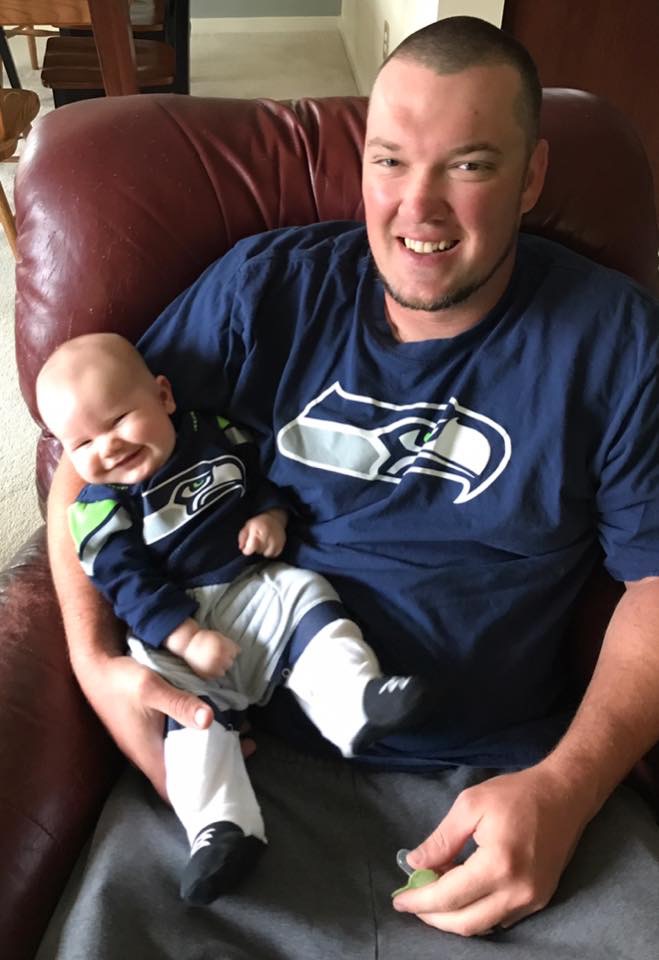
When my husband (his grandpa) repeatedly makes that silly noise that draws laughter from our grandson, the little guy isn’t running the following commentary through his head: Okay, that noise is kind of boring me at this point because it is SO yesterday, but I should probably laugh each and every time so I don’t hurt the old guy’s feelings. Nope, it doesn’t even occur to him to pretend because he is genuinely tickled by it. The laughter that comes from this absolutely adorable eight-month-old person is honest and outward-serving, not inward-serving.
When his mommy drops him off at our house on the two days we watch him every week, I can oftentimes be heard saying, “Is that my grandson? Oh my goodness, it is my grandson, I’m so happy to see you!” He breaks into that delightful, heart-melting smile of his, exuding pure kindness by his obvious delight at seeing his Grammo and Grandpa. When he smiles like that I think to myself: You’ve made my day, just by being you.
Our grandson gives out kindness free of charge, a kindness that isn’t dependent on his current circumstances, regardless of what they may be. Innocence is such a beautiful thing, isn’t it? A pure mind – that consequently holds only pure intentions – is one of the most valuable commodities on this earth. What a privilege it is for my husband and me to be on the receiving end of such goodness.
Many thanks go out to his parents for entrusting us with this grandparenting opportunity..
Long-term care: squeaky wheels and raging forest fires
 Although now retired, over a twelve-year period I worked in long-term care (LTC) wearing three different hats:
- My first job in this industry was in the corporate office of a very fine assisted living and memory care company. In time, I decided to work in one of the company’s facilities so I could spend more time with the residents and families who chose our company for their LTC needs;
- When I left the company, I took several years off to care for my father who had Alzheimer’s disease. A few years after his death, I became a certified long-term care ombudsman for the State of Washington – an advocate for vulnerable adults living in LTC settings;
- Concurrent with my ombudsman work I became a trained Alzheimer’s Association caregiver support group facilitator, providing a listening ear to those on the caregiving path.
Given all that experience, I’ve seen and heard of many unfortunate and nasty occurrences where residents and patients were denied the basic rights each living person should expect to receive, especially those dependent on others for their well-being and quality of life.
I’m sorry to say that some nursing homes, assisted living/memory care communities, and adult group homes do not employ sufficient staffing to meet the needs of their residents. I can confidently say that the government agencies that oversee the LTC industry are also understaffed. When complaints are called in, those government employees have to apply grease to the squeakiest wheels and must turn their fire hoses on the most out of control fires in their case files.
That’s where you and I come in.
We must be the squeakiest darn wheels we can be so our complaint(s) are attended to.
We also need to be the hottest, most devastating fire imaginable so that our vulnerable loved one’s rights are respected.
 One grievous example. This is just one example of common issues that arise in LTC settings. The complaint process I mention later in this post provides a good starting point when issues arise.
Nursing home call lights are being ignored so that residents/patients are left to defecate and urinate in their adult sanitary garments on a routine basis. Not only is such an act demeaning to the poor soul with no option but to let go of his/her bodily wastes, but said wastes are sure to cause skin breakdown and a urinary tract infection that is not only extraordinarily painful but can also be life-threatening.
What does the family member/good friend do about this indignity? They need to complain vehemently to the administrator of said facility and when she/he does nothing or very little, family and friends contact the local area’s LTC ombudsman program. This website will direct you to ombudsman resources right where you live: National Long-Term Care Ombudsman Resource Center.
Your local ombudsman program will investigate, work with the facility’s staff, and if need be, get the full force of the law to come to the defense of those in need. State ombudsman programs are staffed by paid and volunteer employees, therefore their staffing levels are usually higher than many government agencies. These ombudsmen all receive the same extensive training required for such a vital role. Once you’ve reached a dead end at the facility, ombudsmen are your most active line of defense. They are passionate about what they do and they will ceaselessly advocate for you and your loved ones. Their proximity to appropriate resources and their intimate knowledge of residents’ rights laws makes them an approachable and viable alternative for the common man’s (yours and my) needs. Caveat: if you suspect criminal activities such as physical or sexual assault law enforcement needs to be immediately involved in the matter. Additionally, severe lack of care that endangers the lives and well-being of adults more likely than not will also require law enforcement involvement.
Adults in long-term care settings are a reflection of you and me. By that I mean they were once active and self-reliant adults, just like many of you reading this piece, but they now find themselves unable to fend for themselves and need you and me to step in for them. Imagine, if you will, being in their shoes, unable to speak up for yourself. If you or I ever find ourselves in a similarly vulnerable situation, wouldn’t you want an advocate to step in on your behalf?
Advocacy for vulnerable adults falls on all of our shoulders. You can make a difference in the life of your loved one. Won’t you please step up to become their most important advocate?
Kindness Fridays
 Our grandson is seven-plus months old. He has experienced much kindness in his young life, kindness that exudes from each of us family members who love him so very much.
Lucas has several grandparents and even some great-grandparents who dote on him to no end. Aunties, Uncles, Great Aunties and Great Uncles, so many loving family members so that he will never want for love. We all go out of our way to assure his happiness and well-being, especially now while he is so dependent on us for each day of his life.
All three of our daughters had active grandparents in their lives. These weren’t just long-distance relatives who sent them cards now and then; they were tactile, involved family members who added greatly to their day-to-day lives.
I didn’t have grandparents, well, that’s not true, I had two grandmothers and one grandfather but only saw them for a total of maybe six times in my entire life. My dad’s father died before my mother and father were even married so there was no chance of me ever making his acquaintance. Grandpa Desaulniers died in a hospital when a doctor administered the wrong medicine to him, a medicine that killed him even though Grandpa’s reason for being admitted to the hospital was an extremely minor one. I never had the privilege of experiencing his kindness but I am certain Grandpa D’s character was also reflected in the way my father treated me, my brother and sister, and my mother.
But our grandson? He is on the receiving end of individual and joint kindnesses that will assure him great memories and an even greater life.
And his addition to all of our lives? A kindness that nurtures us adults and provides us with yet another reason to be glad that we’re alive in this world – a world that doesn’t always reward us so kindly.
Rewarding Alzheimer’s family caregivers
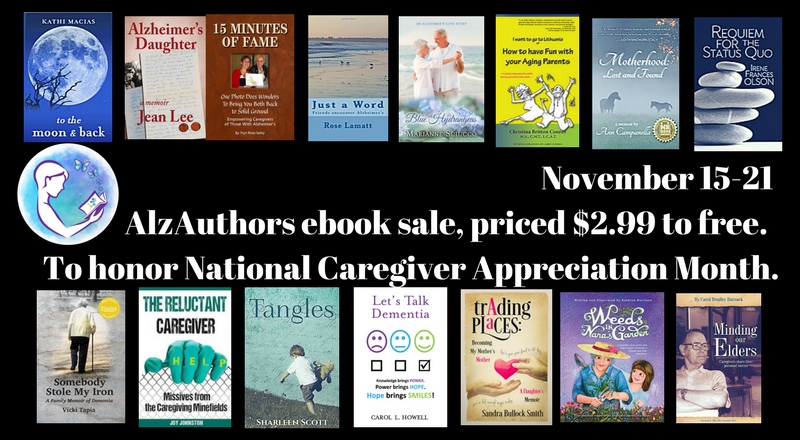 November is National Caregiver Appreciation Month, a time to recognize the long hours, sacrifice, and love all caregivers bring to the task of caring for a loved one with dementia or any long-term illness. In honor of their efforts, AlzAuthors is hosting an eBook sale and giveaway! This is a terrific way for caregivers who are looking for knowledge, guidance, and support to find carefully vetted books to help guide and inspire them every day.care
Consider this information from the Alzheimer’s Association:
- In 2016, 15.9 million family and friends provided 18.2 billion hours of unpaid assistance to those with Alzheimer’s and other dementias, a contribution to the nation valued at $230.1 billion.
- Approximately two-thirds of caregivers are women, and 34 percent are age 65 or older.
- 41 percent of caregivers have a household income of $50,000 or less.
- Approximately one-quarter of dementia caregivers are “sandwich generation” caregivers — meaning that they care not only for an aging parent, but also for children under age 18.
Starting today through November 21st, you can take advantage of this excellent opportunity to check out some of our books at reduced prices, ranging from free to $2.99. We offer a variety of genres, including fiction, memoir, non-fiction, and children’s literature. Many of our books are also available in paperback and audio, so be sure to check them out too. As a matter of fact, my novel is available on Kindle for just $2.99 through November 21st and if you prefer a paperback copy, my publisher is offering it at half price on my publisher’s site. Check it outhere!
Kindness Fridays
According to the 2017 Alzheimer’s Association Facts and Figures research, there are more than 15 million Americans providing unpaid care for people with Alzheimer’s or other dementias. Some have assembled a team of family and friends so the responsibilities are evenly spread out, but that is not always the case. The solo caregiver manages—or tries to manage—everything on his own.
That’s where those who are on the outside looking in can become a caregiver’s hero.
OFFER TANGIBLE ASSISTANCE. We will never be wrong in assuming the caregiver needs help so rather than saying, “Call me if you need anything” we can ask, “What exactly do you need?” If we remember what we needed when we were on the mend from illness or surgery we should be able to come up with an endless list of concrete gifts of assistance.
MEALS. You need to cook for yourself and/or your household anyway so make a double recipe, pack that extra portion in a disposable dish, freeze it, and keep doing that for a week and deliver one full week’s worth of frozen meals to the caregiver who, receiving your food offerings, can look forward to not having to be creative in the kitchen at the end of the caregiving day. Engage others to sign up for this dinner on wheels program so the responsibilities are spread out amongst many.
ERRANDS. You’re running to the store for a few items; take the time to ask Sam if there’s anything he might need while you’re out. He may need a half-gallon of milk—and he might have needed it for the past several days—but embarking on that task proved impossible for him. With very little effort on your part you can make a huge difference in Sam’s well-being. Maybe the needed item is toilet paper; acquiring that for him makes you a genuine hero!
CHORES. The last task a time-strapped caregiver considers doing is housework or yardwork. You will not insult your friend or neighbor by offering to vacuum their house or clean their bathrooms. Or perhaps it’s a lawn that needs mowing or a flower bed, weeding; that sprucing up will provide the caregiver with a virtual—and literal—fresh view of their circumstances.
OTHER OPTIONS. Sam may turn down home improvement offers but he might say, “What I could really use right now is some help figuring out Nancy’s health insurance statements.” Or he might say, “My wife’s not much of a conversationalist anymore, I’d give anything to have an hour to talk with someone who is. Could you stop by later today for a visit? I’ll even talk politics if it means having someone else to talk to.”
WHAT I KNOW FOR SURE. The family caregiver has so much going on physically and emotionally, offers of assistance can be the salve that gets them through each day.
Grief: Your caregiving friend is grieving the loss of a person who is still with him. Unlike the sudden death of a family member, the Alzheimer’s caregiver suffers the prolonged loss of their loved one—oftentimes called ambiguous loss—because although physically present, the person with dementia is continuously leaving their loved one.
Exhaustion. Physical, emotional, and spiritual exhaustion sneak up on the solo caregiver and they are killers. The solo caregiver must put their needs above those of the one for whom they are providing care and sometimes they need you, the outsider, to help them prioritize those needs. Just like the airlines’ seatbelt instructions, the person meeting the need requires attention before the one requiring it.
BOTTOM LINE. You have so much to offer the time-strapped family caregiver; your gifts of kindness are more valuable than you could ever imagine.
Do you want additional insight into what caregivers with whom you are acquainted are facing? You can order Requiem for the status quo at Barnes & Noble and Amazon as well as all online and brick and mortar chain and independent bookstores. And if you have already read my debut novel, please consider leaving a review on the online retailer’s website of your choice.
Kindness Fridays
- Bionic hip
- Loss of independence
- Healthcare TLC
I received a new right hip this past Monday afternoon which rendered me fully dependent on the staff of a local hospital, Evergreen Health Medical Center in Kirkland, Washington. As a two-night inpatient at the hospital, I was reliant on staff for absolutely all of my needs.
If you can imagine everything you do during the course of a day requiring at least one medical person to provide intimate assistance, you can easily imagine all the tasks incumbent upon the nurses, certified nursing assistants(CNA), physical therapy personnel, food delivery staff, and even someone such as Barbara the housekeeper, at your beck and call.
My personality is such that I’d much rather be giving than receiving. Each time I pushed the nurse call button I carefully considered whether such a request was warranted: bladder full to rupturing, yeah, warranted; refill of my patient water carafe? Maybe I could wait and encumber the next person who walks into my room.
From the time I checked in for surgery at 11:30 Monday morning until I was discharged at 2:30 Wednesday afternoon, each person with whom I came in contact was fully dedicated to serving my needs. They noticed if my blankets were pushed asunder in my bed and straightened them comfortably around my body. When shuffling with my walker to the bathroom while wearing my backless hospital-issued gown they discreetly covered me up and made sure my dignity was kept intact.
Then there was the aforementioned employee who after knocking on my door said, “It’s just me, Barbara the housekeeper.” Upon granting the 60-something-year-old admission to my room, she said, “I want to be sure your room is clean and acceptable. You don’t need to do a thing, just lay there – and you (my husband) sit comfortably in the folding chair and I’ll work around you.”
I engage absolutely everyone I come across in conversation so it was quite natural for me to converse with Barbara the housekeeper. I asked her how long she had been working at Evergreen and it had been quite some time. “You must have seen lots of changes over the years.”
“Yeah, of course I have, but it’s good. I like what I do. I like all the people I get to meet over the course of a day.”
“I’m sure you’ve met those who, because of their circumstances, weren’t exactly the most friendly people you’ve encountered in your life.”
“Aw, sure, but you get that everywhere, not just in a place like this.”
True, so very true. As I’ve mentioned in past blog posts, each of us has a choice of whether to make or break someone’s day. I can tell you that there was not one employee at the hospital who broke my day, rather, each person made my stay there as palatable as it could possibly be. Mind you, the dings of call lights going off all day and all night from the nurses’ station directly across from my room weren’t the highlight of my stay, but those dings are far easier to accept when you realize that you initiated your share of call dings yourself and benefited from the responses of the dedicated medical personnel who had to answer such pleadings.
All in all, I’d have to say that if you have to go through the pain of getting a new and improved hip in order to lead a more comfortable life going forward, being treated with kindness during the process certainly renders the recovery far more appetizing. This former patient has no complaints whatsoever. She was treated like a queen.
Kindness Fridays
One way of expressing kindness is by expressing gratitude.
Anytime we think we don’t need to thank someone for something they’ve said or done that meant something to us, we do them a disservice.
My husband and I have been gifted with daily gratitude each time we take care of our grandson during our daughter and son-in-law’s work week. We have a routine: our daughter drops off our grandson and all other items needed for his day with us and as she gets into her car she always says, “Thank you.”
Our son-in-law picks up our grandson after a grueling day of work outside and after securing our grandson into the backseat of his truck, he says, “Thanks you guys.”
We’ve been caring for our grandson a few days a week since early August and now with September coming to a close the routine is pretty much set in stone but what isn’t set in stone, what is always fresh and affirming, is that our grandson’s parents bend over backwards to express their gratitude for what we’re doing to enable them to go to work and not have to worry about the care their son is receiving.
Big deal, right?
It is absolutely a big deal. We thoroughly enjoy the time we spend with our grandson – it is such a privilege we have been given – and we enjoy seeing his parents each caregiving day. Their expressions of gratitude never get old; every time they say “Thank you” I am filled with warm fuzzies that carry me through the day and the night. Such delightful adult children.

“How to have Fun with your Aging Parents”
 I am reblogging the attached article about Christina Britton Conroy’s book that truly appears to be one all of us Baby Boomers need to add to our bookshelves. Personally, it has been a delight to be one of the AlzAuthors’ newest members. I am in such good company. Coming December 20th, you’ll be able to view my introduction as a member of this enriching group of authors.
Source: Meet Christina Britton Conroy, author of “How to have Fun with your Aging Parents”
Kindness Fridays
 Today’s kindness takes yet another turn: I simply cannot not write about our grandson, Lucas.
Lucas came into our world on May 11th, 2017. His parents were already a blessing in our lives and when their family increased by one, the blessings increased exponentially.
He just turned twelve weeks old and let me tell you, his personality is coming through very clearly.
If you’re me, you talk a lot.
If you’re my grandson Lucas, you’re subjected to all that talking.
Just as is the case with every human being out there, when he’s had his fill of my jabbering, he’ll let me know that his Grandma Olson talking threshold has been reached – for the time being – but before that happens, he gifts me with smiles and conversation to beat the band.
What a reward it is to have an impact on a young person’s life and when that young person is now able to gift others with smiles, funny faces, and “language”, my oh my, that’s a gift of kindness of greater value than all the riches in the world.
The secret of Alzheimer’s disease
I discovered something shocking during the weeks that followed my novel’s release:
Alzheimer’s disease is still a secret.
 I know; we’ve all certainly read about it, especially when a celebrity is diagnosed with the disease. Every once and awhile there might be an Alzheimer’s Association commercial on television…that is assuming we don’t fast forward through it or walk out of the room. Another reason we’re familiar with the disease is that it is happening to so many people with whom we are acquainted – whether intimately or tangentially.
But it’s still a secret. The very definition of the word speaks to its intent: adj. not known or seen or not meant to be known or seen by others; n. something not properly understood; a mystery. from the Concise Oxford English Dictionary
In many of my promotional posts and boasts for my novel Requiem for the status quo, I’ve indicated that my book tour would probably look more like a senior center tour than what is normally the route for authors: readings and signings in major and independent bookstores. That’s the tact I took, approaching numerous senior centers in Western Washington. 25% of those I approached booked my author event on their activity calendars. But when I approached a major senior housing community foundation to get on their speakers’ calendar, I was told the residents pushed back at the foundation’s previous efforts to enlighten and inform when they hosted those who spoke to the reality of Alzheimer’s disease and other dementia.
Dementia caregivers: 21st century heroes
Those family members who have had, or who currently have, a family member or close friend with Alzheimer’s or other dementia, you are my hero.

You took on the task of showing your love and compassion by signing up to become a family caregiver which at its best is a learn-as-you-go, long-term commitment. Your efforts make a difference in the life of your loved one. They may not be able to express their appreciation for all that you do, but please know that the essence of who they are acknowledges your kindness.
Your name and/or identity may be lost to them, but you are still a vital part of their lives, and your friendly and loving demeanor goes far toward affirming them and making them feel valued and loved.
Thank you for all that you have done, continue to do, and will remain doing in the future. It is an honor to be in your company.
Requiem for the status quo was released by Black Rose Writing on July 20th. You can order Requiem at Barnes & Noble and Amazon as well as all online and brick and mortar chain and independent bookstores. Be sure to shop around for the best price, you won’t be sorry you did. And for those of you with eReaders, the eBook will be available at most online book retailers on, or about, July 27th.
Release day for Requiem for the status quo
Today is release day for my debut novel.

On December 29, 2012, I first sat down to write that novel.
On the day of the fifth anniversary of my father’s October 13, 2007 death, I decided to write a novel inspired by my caregiving experiences as his Alzheimer’s care manager. I was certain novel writing would be a huge undertaking because up to that point, I had never written fiction. Because of the enormity of said project, I figured I would wait until the beginning of the following year – you know, a fresh start and all.
But the universe had other plans. My December 29, 2012 horoscope was what the universe used as the catalyst to get my attention. More than that, it shocked me into action. The horoscope so alarmed me, I cut it out of the newspaper, typed it out in large font, and after writing my novel’s very first page, I framed all three to memorialize the outstanding coincidence of what my Taurus-scope said. Here, for your enlightenment, is its wording:
Now’s perfect to start a new writing project; no need to wait until next year. Put down your thoughts without worrying about form, one word at a time.
I showed the horoscope to my husband and if it at all possible, he was more shocked than I at the horoscope’s content. He left me alone the remainder of the day, knowing the horoscope meant business, and so did I. I closed the door to my office, sat at my computer and started typing.
I didn’t know what I was doing. As I mentioned earlier, I had never written fiction. At that point, my personal blog, Living: the ultimate team sport was filled with 100s of non-fiction pieces, most of which centered around aging, long-term care, as well as numerous posts about Alzheimer’s disease, other dementia, and the caregiving struggles faced by families. But to write prose – with dialogue!!!!! – was beyond my skill set, and remained to be for quite some time.
The short of the long of it is that Requiem for the status quo was not the first title for the novel, there were many, the first being Have we met? Aren’t you glad I changed it to its current one? Not only were several titles tried on but my magnum opus went through many rewrites, most notably and importantly, the first draft contained a whopping total of 140,000 words. You see, I had a lot to say and I just kept typing until I had nothing more to add.
That’s an excellent way to get thoughts down on paper, but the first draft is by no means the final product that is pitched to agents and publishers. My now published novel is less than 68,000 words. Yes, lots of cutting and slashing took place over the years, to the point where not only am I proud of the finished product, but a publisher is also proud of it, Black Rose Writing.
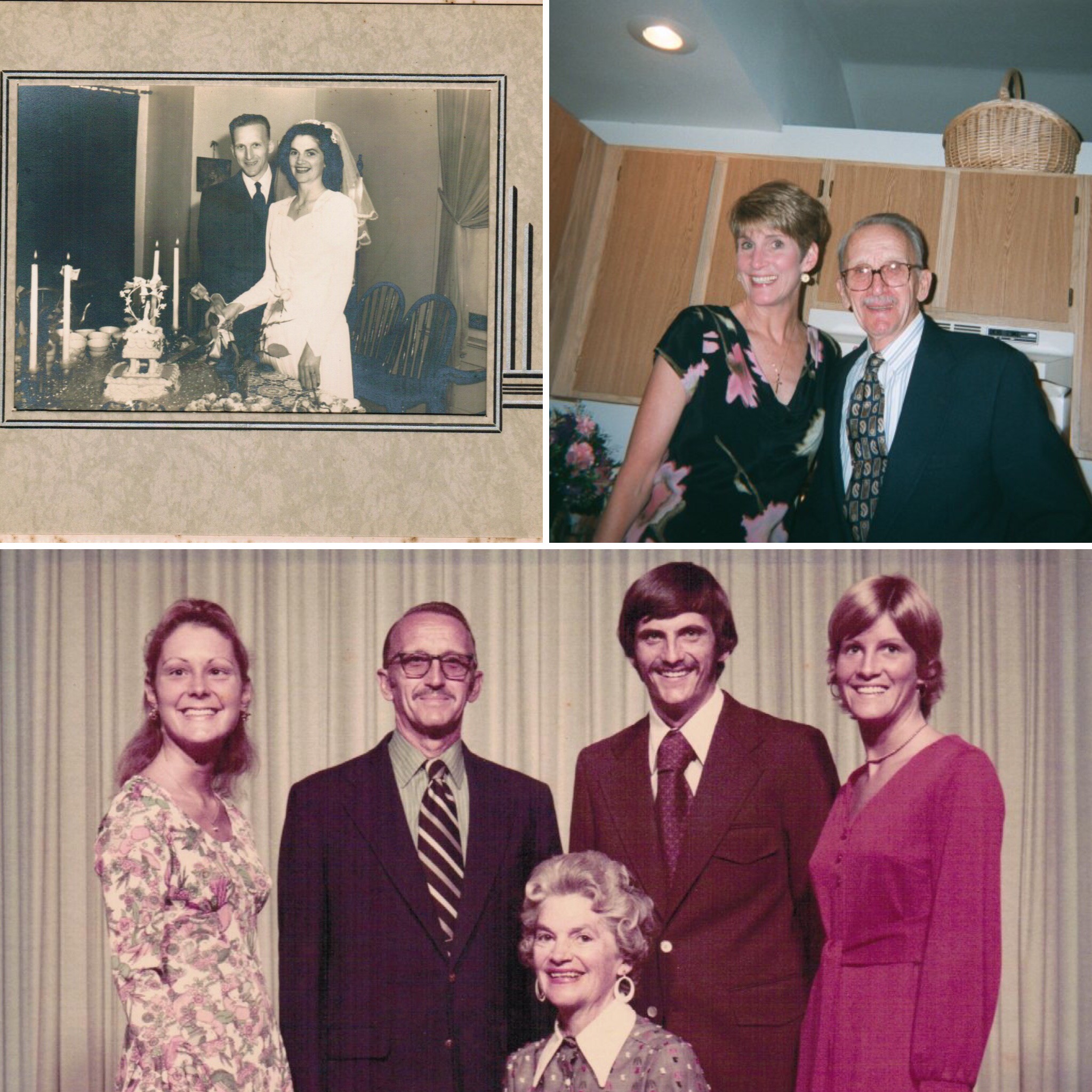
I will close this post by providing glimpses of my father to you over the years. I hope you enjoy this montage that includes, from top left: My mother and father’s wedding day, 1947; my wedding day 2000 (my favorite photo of my dad and I); and the Desonier family circa 1971.
Reader discoveries
 To celebrate my novel’s release, I held a giveaway on a Facebook readers group, A Novel Bee, and made some extraordinary reader discoveries.
I gave the members of that group 24 hours to leave a comment on my giveaway announcement if they wanted to be entered into my contest to pick one lucky (hopefully lucky) reader to receive a complimentary copy of my novel, Requiem for the status quo.
I received 37 entries, and a considerable percentage of those readers’ entries made mention of their own personal Alzheimer’s/dementia caregiving journey. Here are just a few of those comments:
- I am a geriatric care manager, can’t wait to read it!
- My friend just had to put her mom into a caregiving rest home because she could no longer handle her. She was becoming quite violent. It is a horrendous disease.
-
I love that you are writing inspiring stories! Many of us are or were caregivers and the hopelessness we feel when we dont see them getting better can be overwhelming. Your compassion is so sweet and much needed in todays world. Im really excited to find a new author I can enjoy!
- I would be honored to read this book, my father had Alzheimer’s disease. I want to tell you that the cover is totally amazing !!!!!
- I would love to win. My husband has Alzheimer’s/ dementia so it is if special interest to me.
Even as familiar as I am with the statistics for this disease – 44 million diagnosed worldwide as of this writing – it still astounds me to hear the personal stories associated with it. Like every terminal disease known to man, Alzheimer’s and other dementia are very personal diseases. The brain – the very essence of a person’s being – is the initial body part affected. What we say, how we behave, and who we are resides in the various, vital parts of our brain. Our brain is the grand traffic director of all things me.
It’s no wonder the very long goodbye associated with this disease is so devastating to the one diagnosed, as well as for the one caring for her or him. It’s very personal, isn’t it?
I am of the belief that family dementia caregivers are 21st century heroes. Additionally, all caregivers, not just those on a dementia caregiving journey are the best of the best. They are:
Ordinary people, doing the ordinary right thing, at an extraordinary time.
I am honored to be in your company.
Requiem for the status quo will be released by Black Rose Writing on July 20th. You can order Requiem at Barnes & Noble and Amazon as well as all online and brick and mortar chain and independent bookstores. Be sure to shop around for the best price, you won’t be sorry you did. And for those of you with eReaders, the eBook will be available at most online book retailers on, or about, July 27th.
Author Celebration: Books about Alzheimer’s disease
 To celebrate my own book’s July 20th release, a book that’s about Alzheimer’s disease and other dementia, I am tooting the horn of other authors who have done the same, a few of whom I know personally.
There’s a high degree of sadness surrounding this list because almost without fail, those authors who have written memoirs, story collections, fiction, and non-fiction books have done so because of their own personal Alzheimer’s journey.
Ann Hedreen, Her Beautiful Brain – A Memoir. Ann lives in Seattle, Washington, and has provided valuable support to me through my own publication journey. To quote Amazon.com:
Her Beautiful Brain is Ann Hedreen’s story of what it was like to become a mom just as her beautiful, brainy mother began to lose her mind to an unforgiving disease.
I can not imagine the struggle Ann endured while being a new mother whose time and energy was already spread so thin when life happened to her and her household, in a manner hardly believable to so many of us.
Collin Tong, Seattle journalist, Into the Storm – Journeys with Alzheimer’s, a compilation of true stories that starts with the very personal story of Collin’s caregiving journey with his wife, Linda. Collin’s support of my project, telling me not to give up when so many agents and publishers wouldn’t give me the time of day, inspired me to keep on keepin’ on. His story collection is amazing. Again, quoting Amazon:
In his compelling new anthology, Into the Storm: Journeys with Alzheimer’s, twenty-three writers, journalists, educators, health practitioners, social workers, clergy and other family caregivers from across the United States share their intimate stories of caring for loved ones with Alzheimer’s disease and dementia.
Each of the twenty-three stories are gems that you do not want to miss. I know you will be as impressed as I was by each and every one of them.
The next entry contains numerous authors and their books, found in one central location: AlzAuthors. The purpose for their site states:
We are AlzAuthors. In some way, each of us who have come together on this site have been affected by Alzheimer’s Disease/dementia. We share our experiences to bring knowledge, comfort, and understanding to others on this journey.
Click on this link to the AlzAuthors Bookstore to discover a wealth of informational and engaging books that will meet the needs of those who are caring for parents or grandparents, spouses or partners, those living with Alzheimer’s and dementia, fiction books, books for children and teens, and those offerings that provide helpful information for one and all.
3rd Act Magazine, not a book, but a publication addressing the third act of one’s life, usually heavy on those of us who are Baby Boomers. This publication has so much to offer its readers. I, for one, am pleased that the subtitle of their magazine reads, Aging with Confidence. You got that right! You’re not done with us yet; we have so much to offer the world that is spread out before us.
And yes, all of the above-mentioned projects prove that a lifetime of experience – the good and the not so terribly good – equates to having something to say, and not being afraid to say it. Which brings me to my part in that effort:
Requiem for the status quo is currently available at just about any bookstore you can walk into or find online. If a particular store doesn’t currently stock my novel, simply request that they order one for you and you should be able to get your hands on it in short order. You can order Requiem at Barnes & Noble and Amazon. Be sure to shop around for the best price, you won’t be sorry you did. And for those of you with eReaders, the eBook will be available at most online book retailers on, or about, July 27th. Additionally, would you like your local library to carry my novel? Simply ask them; quite often they are quite willing to accommodate individual requests.
Requiem for the status quo is dedicated to my father, Don Patrick Desonier, who wore his disease with the dignity it did not deserve.
I love you Dad.

The family caregiver’s hope quotient
 Each person reading this post has experienced a time when their hope quotient was at an all time low.
The definition of hopeless: 1) feeling or causing despair about something; 2) inadequate, incompetent.
When life happens, as it always does regardless of our preferences, we’re bound to find ourselves unable to manufacture even a modicum of hope to get us through the circumstances in which we find ourselves:
- The loss of a job and the financial repercussions resultant from that loss.
- Crimes against our body or our property.
- Relationship disruptions.
- The devastating diagnosis of a debilitating disease: cancer, ALS, Alzheimer’s disease.
Hope isn’t what a person feels when the rug has been yanked out from underneath them and their very existence as they knew it, maybe even just five minutes earlier, takes an irreversible turn.To be sure, that’s how quickly hope can take a nosedive. Equally as quick, we can not imagine we will ever feel happy again, nor can we imagine not being overwhelmed with how life has showed up. In an instant, our level of hope took a nosedive. Read the rest of this entry »
Kindness Fridays
I was reminded the other day about an extraordinary kindness given to me shortly after I moved to the Seattle, Washington area with my two cats, Kate & Allie, the summer of 1994.
I moved into my Kirkland, WA apartment in July, secured a job as a paralegal early August, and on September 24, 1994, I received a Saturday phone call from my father, telling me that my mother had died in her sleep the night before.
Other than my brother and his family who lived nearby, I had very few acquaintances that early in my Washington state residency. Those who have gone through this type of emotional disruption know that while dealing with the rawness of grief, other matters require immediate attention. For me it was getting together with my brother and his wife that same day, making airline reservations to Honolulu, Hawaii – where my parents lived – and notifying business associates of our need to suspend all work activities so we could gather around our father who had just suffered the loss of his wife of forty-eight years.
There was one detail that needed attention in my household: my two cats who would be left on their own for, what turned out to be, a two week period of time. What’s a person to do?
I had seen and said hello to my upstairs neighbor and her Great Dane a few times but as yet hadn’t truly met and gotten to know her. I traipsed upstairs, knocked on her door, but she was not home.
Back downstairs I wrote a note explaining my emergent situation, asking if there was any chance she could check on my cats daily, feed them twice a day and fill their water bowls, and empty their litter box. I told her I would be home all day preparing for the next day’s departure and she could either call me or come downstairs and knock on my door. After placing the note in the crack of her door, I went downstairs to finalize my packing.
An hour later, she knocked on my door, pulled me into a hug, cried with me, and gladly offered her assistance in my time of need. I returned two weeks later to find two very healthy and happy cats in my apartment. Turns out she didn’t just perform the perfunctory feeding and litter box tasks, she played with my cats, even buying additional cat toys to entertain them on a daily basis so they would receive the love and attention I would have normally paid them.
That started a delightful friendship of going on walks, spending dinners with each other, and sharing in each other’s lives. Tragedy ushered in a kindness that greatly improved my life going forward.
I found hope in the midst of tragedy.
Kindness Fridays
I’m really going in a different direction with this week’s post, so bear with me.
A person can’t live in this world without being personally offended or attacked for any number of reasons, whether founded or unfounded, countless times during the course of his life.
In this world, there exists those whose modus operandi is to criticize others, bring others down, make fun of them, even bully them. The person with that MO may have any number of “reasons” why he or she acts that way, but none of those reasons are justified, plain and simple.
What do we do when someone acts that way toward us? I know how we feel, we feel hurt and angry; we feel we must be on the defensive and maybe we even want to dish out the same pain, or worse, than what was inflicted on us. A defensive action, however, turns us into someone no better than the person who lashed out at us; we join their ranks.
When an unkindness is said or done to us, the higher road is to not respond in kind. By that I mean maybe it’s better we don’t go on the defensive, we don’t fight fire with fire. Oh, let me tell you, the base part of our character wants to let loose with our own brand of meanness, but each and every one of us has the ability to choose a contrary response. Each. And. Every. One. Of. Us.
Don’t get me wrong, I’m not suggesting you lavish the offender with peace, love, and happiness – there are very few of us who could pull that off – but what I am saying is that we can choose to stay silent. We can walk away – both figuratively and physically – and leave that person to wallow in the slime they just created.
 I learned long ago, that if someone yells at me and I choose not to yell back, their fire goes out. If I don’t feed their anger, it has nowhere to go but down. Quite frankly, my decision to walk away hurts that person far worse than any words I could ever spew back. I guess sometimes you just have to kill them with kindness.
Just. Walk. Away.
Writing to make a difference, one person at a time
First and foremost, I sat down at my computer because I had something to say about how Alzheimer’s disease affected my father. Additionally, having graduated from the unofficial school of family caregiving, I figured someone just might benefit from the good – and the not-so-good – ways in which I managed my father’s illness.
Now thirteen years after my father’s initial Alzheimer’s diagnosis, my novel will hit the virtual and brick & mortar shelves of bookstores. It will also make its way in person to a number of senior centers and senior living communities in my area. As an event on their activity calendars, I will read passages from my novel that might just ring a bell in the minds and hearts of those gathered to listen to what this Baby Boomer has to say. Maybe what I share will inspire them to purchase REQUIEM which I will gladly sell to them at a highly-discounted price. And once they’ve read my novel, perhaps they will share it with someone else, and so on down the line.
Is REQUIEM about Irene Frances Olson and her father, Don Patrick Desonier? Read the rest of this entry »
My Alzheimer’s family caregiving journey

I had the privilege of being my father’s caregiver during his multi-year struggle with Alzheimer’s disease that ended with his death in 2007. Five years after his death, I started writing my debut novel, Requiem for the status quo, to be released by an independent publisher, Black Rose Writing, on July 20th. And now five years since I started my novel, Requiem will be available to everyone in less than 30 days. My debut novel was inspired by my father’s and my caregiving journey and is dedicated to the man whose later years was robbed by a disease that is always fatal. The book’s dedication reads: Dedicated to my father, Don Patrick Desonier, who wore his disease with the dignity it did not deserve.
I am in the very distinct and healthy position of understanding that realistically, as a debut author I cannot hope to be an instant and resounding financial success. But that’s okay, because for me it has never been about the money, but very much about helping those who are experiencing or have experienced an Alzheimer’s caregiving journey similar to mine. For that reason, most of my “book tour” will encompass senior centers in the region, as well as senior living residential communities where I hope to hold readings and sell my novel to seniors at a highly-discounted price. I know it is said that when trying to fill an auditorium, it’s all about getting butts in seats, but for me, it’s about getting books into laps.
And that’s what I’m going to do.
Requiem for the status quo is currently available for preorder at Black Rose Writing, enter discount code PREORDER2017 before July 20th for a 10% discount. You can also preorder Requiem at Barnes & Noble right now, and Amazon will be providing preorder opportunities in the days ahead. And for those of you with eReaders, the eBook will be available at most online book retailers on, or about, July 27th.
Caregiving 101: when fiction meets reality
 I’ve written several articles over the years about the importance of assembling a caregiving team when caring for a loved one – a team that doesn’t necessarily rely on family because not everyone has a participatory family when it comes to these matters. That was certainly the case for REQUIEM FOR THE STATUS QUO‘s Colleen Strand while taking care of her father, Patrick Quinn. She sought help from her brother but that was not something with which he chose to be involved.
REQUIEM, my debut novel, is now available for pre-order from my publisher, Black Rose Writing. You will receive a 10% discount with code PREORDER2017 if purchased before its release date of July 20th. Additionally, in the days ahead, both Amazon and Barnes & Noble will be offering a pre-order option leading up to the novel’s release. Ebook options will be available at most online book retailers as of July 27th.
Of all the life-changes we encounter during our journey, caregiving is one of – if not the most – difficult speed bumps to get over.
Caregiving: the ultimate team sport suggests how one might use the strengths of each team/family member to handle the varied needs during the caregiving journey.
Family dynamics that hamper caregiving success exposes the need to let go of stereotypes or childhood roles that don’t serve siblings well as adults. If ever there was a time to work together for the greater good, taking care of a family member with dementia or other terminal illness ranks right up there at the top.
Solo caregiving addresses the needs of the person who appears to be strapped with fulfilling all the roles needed for a successful caregiving venture. The solo caregiver need not settle into those roles, however. The help of other, well-meaning individuals, can lessen that daunting task. Certainly, much relies on the neighbor, coworker, even casual acquaintance, but said entities are a resource from which much assistance can be found.
Here are several more articles for the caregivers out there – and those acquainted with a caregiver – to provide some wisdom and encouragement through the tough times:
- The tethered caregiver
- Helping an Alzheimer’s caregiver
- Caregiving and the 36-hour day
- A normal day, caregiving style
- Caregiving: grief, guilt, exhaustion, and discrimination
- Long distance caregiving Part I and Part II
- Caregiver: put on your oxygen mask first
- Caregivers, learning from our mistakes and finally
- But how am I supposed to do that?
Why you should own a copy of REQUIEM FOR THE STATUS QUO
 REASON ONE: You don’t have to know someone with Alzheimer’s disease to benefit from this novel. Let’s face it, when you pick up a novel wherein cancer, murder, courtroom drama, homelessness, financial devastation, or horror are part of the storyline, you don’t put down the book because none of those issues have personally affected you. I mean, when was the last time you picked up a Steven King novel and said, “Man, this is totally irrelevant to me, I’ve never been terrorized by a car named Christine, nor have I ever attended a prom where a girl named Carrie exercised her supernatural powers to ruin the evening for most everyone in attendance.” And even though no one – as of yet – has ever lived Under the Dome, you would still be glued to the pages of that novel (not so much the TV version) to discern how it would all turn out.
When you pick up a novel, you find yourself getting involved with the characters. While you’re wondering how the book may end, you read on to find out what’s going to happen next. Or maybe your eyes are opened about matters for which you previously knew very little and then you can’t wait to see where the storyline leads you. REQUIEM FOR THE STATUS QUO satisfies all of those curiosities.
 REASON TWO: You do know someone with Alzheimer’s or other dementia – whether tangentially or intimately. You might be hesitant to read yet another technical treatise or article about the devastating effects of the condition, but you still want to learn more while being entertained at the same time. Did I say a novel about Alzheimer’s can be entertaining? Yes, and I’ll tell you why. The definition of entertainment isn’t just giggles and laughs – as Steven King’s novels clearly demonstrate. According to Merriam Webster, entertainment is also something diverting or engaging. Without a doubt readers will be engaged in the story of the Quinn family from page one when the patriarch of the family, Patrick, finds himself in a very inconvenient situation while stranded on an extraordinarily busy freeway in Seattle, Washington. And you will cheer for Patrick’s daughter, Colleen, as she struggles to redefine normalcy while craving even one minute of status quo. And believe or not, you will find humor in some of the least desirable circumstances faced by a variety of characters who are members of “Club Alzheimer’s.”
REASON THREE: You read Still Alice, by Lisa Genova – maybe you even saw the movie – and you became very sympathetic to those who have faced, are facing, and will face the ravages that Alzheimer’s disease has on families such as yours and mine. And if you were fortunate, you also read the memoir, Her Beautiful Brain, Ann Hedreen’s account of the challenges she faced raising a young family and caring for a mother who was “lost in the wilderness of an unpredictable and harrowing illness.” There is much to be gained by reading various genres on the subject, and quite frankly, not enough is being published in the fiction and memoir genres.
As of this writing, there are more than 5 million people in the United States with Alzheimer’s or other dementia, and worldwide, more than 44 million suffer with the disease. Alzheimer’s disease is not going away. The more awareness and compassion we possess, the more capable we will be of helping ourselves, and others, through this protracted disease journey.
MARK YOUR CALENDARS …
REQUIEM FOR THE STATUS QUO a Black Rose Writing release, will be available July 20th, 2017.
The Alzheimer’s caregiver: NOT a fictional character
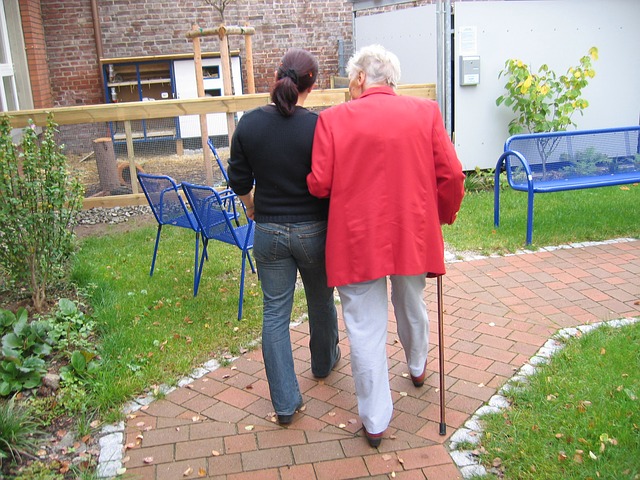 REQUIEM FOR THE STATUS QUO, to be released July 2017, contains fictional characters right out of yours and my reality. If your life hasn’t been impacted by caregiving for a loved one with Alzheimer’s or other dementia, you are at least tangentially connected to someone who has been.
- A parent’s senior moments transform into hair-raising episodes of wandering and getting lost at all hours of the day and night during varied seasonal temperatures that may very well threaten their lives.
- The husband who was Mr. Fixit for all home repairs, big and small, no longer knows how to use a screwdriver, and becomes combative when challenged.
- A sister’s successful writing career is derailed when she can no longer write coherently or understand the written word.
- The middle-aged next door neighbor pounds on your front door demanding entry to his home and threatens to call the authorities if you don’t immediately vacate the premises.
Variations of these scenarios abound, and within those story-like confines exist the caregivers who have been thrust into a role for which they were not prepared, derailing their status quo – their normalcy – beyond recognition. These same caregivers had very full lives before their days became what has become the caregiver’s 36-Hour Day. Any down time they enjoyed prior to stepping into their ill-fitting caregiver shoes has been filled with doctors’ appointments, loved one-sitting, and putting out fires. Carefully crafted family and retirement plans are no longer feasible because life as the caregiver once knew it no longer exists.
REQUIEM will give readers an intimate look at a caregiver’s day-to-day reality while also endeavoring to provide hope for what lies ahead. To be sure, there are no happy endings, but promises of resolution and lightness spring forth in the least likely of places and during some of the most awkward of times. Whether you are a caregiver, a former caregiver, or know someone who is, REQUIEM FOR THE STATUS QUO will become a most cherished and often-read bookshelf addition.
 Living: the ultimate team sport