Quality of Life
Small acts of kindness, huge benefit
 The other day I showed up ten minutes before my local pharmacy opened, wanting to be sure to get immediate assistance when I brought in a prescription to be filled.
Three extraordinary – yet small – things happened at that early hour when I was feeling less than able to even stand while I waited for the pharmacy gate to open.
- A store clerk that was doing some pricing procedures in the main part of the store in front of the pharmacy greeted me, asked how I was doing, and when I responded, “Not so great, actually” offered to help me to the pharmacy bench.
- Then the pharmacist opened the pharmacy early, 8:55 am, and told me my prescription would be ready in 10 minutes. I then left the pharmacy to go to the women’s room and as I was walking back, the third kindness occurred.
- The store clerk who had greeted me upon my arrival in the pharmacy area took the time to find me at a different area of the store to let me know my prescription was ready.
Big deal, such small courtesies are hardly worth writing a blog piece about, right?
Wrong, they lightened my burden and jump-started my day.
Don’t ever feel your efforts won’t make a difference.
They do, and they have.
The split personalities of a caregiver
Source: ON LABELS, ROLES AND MARRIAGE WITH ALZHEIMER’S This linked article does a fabulous job of putting a spotlight on the roles we take on when we become caregivers. Does our original role as: wife, husband, son, daughter, brother, sister, disappear when that role-shift takes place?
I’ve known numerous caregivers in my life. I was one.

Before I became a caregiver, I was a daughter. Was I still a daughter once my role as a caregiver became a 24/7 occupation?
It didn’t feel like it when:
- I had to cut up my father’s food for him
- I had to pack adult protective underwear when I took him on a walk in the park … just in case
- I had to correct him for behavior unbecoming of an adult
- I took him to a doctor appointment and spoke to the doctor on my father’s behalf
- I tucked him in for a nap so I could get things accomplished without him being tethered to me wherever I went …
Was I his parent? Was I his caregiver?
No. I was his daughter. I took on a variety of roles during the years of my father’s decline with Alzheimer’s, but I was always his daughter. As a matter of fact, never had I felt more like a daughter than during the five years of his illness.
During one of my walks in the park with dad, on his last Father’s Day as it turned out to be, two young men rode their bikes toward us and as they got right up to us, one of the men said, “Happy Father’s Day, Sir.”
That young man saw a daughter and a father, not a caregiver and an old man.
Dad took his parenting role very seriously. By the time I was on my own, he had been actively mentoring and caring for me for twenty-one years.
What’s five years in the grand scheme of things?
A privilege.
See also:
- Baby Boomer + Aging Parent = a changing paradigm
- Adult children who parent their parents
- Ambiguous loss – the experience of caregiver spouses
- When illness makes a spouse a stranger
Necessity is the mother of invention
Source: Sprinkled With Love
 Norcalmom writes a blog that tells it like it is when operating as the primary caregiver for a loved one. She has a full household, with children of varying ages, a mother-in-law with Alzheimer’s, a husband whose work schedule pulls him out of the home during many of the caregiving opportunities, and yet this daughter-in-law manages her household in ingenious ways.
Whether it’s purchasing and installing locks so her MIL doesn’t escape from the house at inopportune times (which, frankly, means any attempted escape from the house) or finding activities to occupy her MIL so Norcalmom can get things done, e.g., making dinner for the family, she puts on her thinking cap, listens – truly listens – to what may interest the oldest member of her household, and does what is needed to get the job done.
Her MIL is very much intrigued with sparkly things, specifically, glitter. In her eyes, if she spots specks of gold-colored glitter, it is not glitter she is feasting her eyes on it is the real deal: GOLD!
Please, click on the link provided at the beginning of this mini-post of mine, and feast your eyes on the treasure within.
Owning our mistakes
I can honestly say, if I screw up, I admit it and try to do better. I’m not perfect. I’ll never be perfect. I apologize when my imperfections impact others.
If only everyone would take responsibility for their mess-ups. It’s okay not to be perfect, join the club, there’s a large membership and I’m the president!
Walking down a hill during my solo afternoon walk today, a man was walking up that same hill approximately a half block away. His small white dog – not on a leash – ran past its owner and toward me. I turned right onto a different street, the dog followed me and barked at me. I said “no” a few times and he eventually backed off. (No involvement by the dog owner whatsoever.)
One and a half miles later, that same dog owner, with that same unleashed dog, ended up on the same street as I, a half block away, on the opposite side of the street.

How to make the best of a New Year, every day
 My last post of 2015 talked about making resolutions you can actually fulfill.
This first post of 2016 proposes that every day be treated as one does a New Year.
I’ll borrow sentiments from Dr. Bernie S. Siegel again, providing you with wisdom that might help you get a good start on 2016, and every day you’ve been given. Direct quotes will appear indented in this post.
How can you have a new year? You are the same person, and the world doesn’t start again with a clean slate. Your troubles don’t disappear. People don’t forgive you for what you did the year before…
Your life is anything but new when you awaken on the first day of the year. It is simply a way of measuring the passage of time. Why make such a fuss over it?
We like new starts, don’t we? There’s something refreshing about having the opportunity to start all over again. Not unlike second chances, I treat the commencement of a new year as an opportunity to do better. Unless you’re perfect, you too like the idea of a fresh start.
The truth lies in our desire to be reborn, to start again, to make resolutions and changes we can live up to. Then why wait for a certain date to start a new year? Why can’t tomorrow be New Year’s Day?
Maybe it is!
Wow, instead of waiting 365 days to do better, I can do better in the next minute. I don’t even have to wait until tomorrow. Right now, I can do better. I can think of and speak more kindly towards others and myself. I can promote a healthier lifestyle and make plans to construct a better me and a better world. Why wait?
I see it every day in my role as a physician; people learn they have a limited time to live, and they start their New Year behavior. They move, change jobs, spend more time with those they love, stop worrying about what everyone else thinks of them, and start to celebrate their life.
Whoa, why wait until it’s too late? Quite literally, when you’ve been given a death sentence, it is too late. I’m not going to rely on receiving such a prognosis to get things right, I’m going to make every effort to do better for myself and others, right now.
I have the chance to live my best life now, and so do you.
When every evening is New Year’s Eve and every day you awaken to is New Year’s Day, you are living life as it was intended.
Wow, given the alternative, I’ll get right on it!
The Gift
The top item on my Christmas list this year was something 100% of you would never ask Santa for:
 A new guest bathroom toilet
The current one doesn’t resemble the one pictured here, but it has been in the house since it was constructed some 25 years ago, so it’s not one of those sophisticated, high efficiency, low water type such as grace our master bathroom and powder room.
Did my husband, I mean, Santa, get my #1 gift choice?
Not on your life. Instead he gifted me with a portable electronic device from a company that rhymes with Dapple.
I guess I’ll just have to find a use for it to honor the generosity of the best husband a woman could ever hope for.
Lest you think I measure generosity with dollar signs, read further. Read the rest of this entry »
It is never wrong to do good
You’ll never be faulted for doing your best.
Regardless of the outcome, always fall back on doing something for the common good.
I’m currently reading The Road to Character, a book by columnist and political pundit, David Brooks. I recently watched an interview of his with Oprah Winfrey and was so impressed with the subject matter, I purchased the book he was promoting.
Mr. Brooks talks and writes about the difference between Adam I and Adam II, the latter being the person who has lived a eulogy life, not the resume life of Adam I. You’ll need to read the book to understand the full contextual meaning, but what follows is just one of many elements that resounded with me. I provide this excerpt verbatim:
When a person gives a poor man shoes, does he do it for the poor man or for God? He should do it for God …
The poor will often be ungrateful, and you will lose heart if you rely on immediate emotional rewards for your work. But if you do it for God, you will never grow discouraged.
A person with a deep vocation is not dependent on constant positive reinforcement. The job doesn’t have to pay off every month, or every year.
The person thus called is performing a task because it is intrinsically good, not for what it produces.

You see, we’re not responsible for the outcome. Most of the time, we’ll never witness how our good deeds helped another person. If our motivation was only to observe first-hand the benefits such deeds might produce, we’d stop doing good in short order. We must exercise faith and hope that our actions are not wasted.
Your ability to discern your vocation depends on the condition of your eyes and ears, whether they are sensitive enough to understand the assignment your context is giving you. As the Jewish Mishnah puts it, “It’s not your obligation to complete the work, but neither are you free to desist from beginning it.”
All that we do with a clear conscience is good. We must not refrain from standing up and stepping forward. The good we do may be the beginning of a widespread process of well-being for others, or it may be the finishing touches on that which was started some time before you came into the picture.
It’s never too late to do good. Why resolutionize your intentions until next year? Start now.
See also: Your positive imprint on mankind, Do little rather than nothing, Valuable acts of kindness, Positive community activism
Gone but not forgotten
Having completed my second novel, currently titled BRIDGED BY BETRAYAL, I packed up all the research I used for my first novel, REQUIEM FOR THE STATUS QUO.
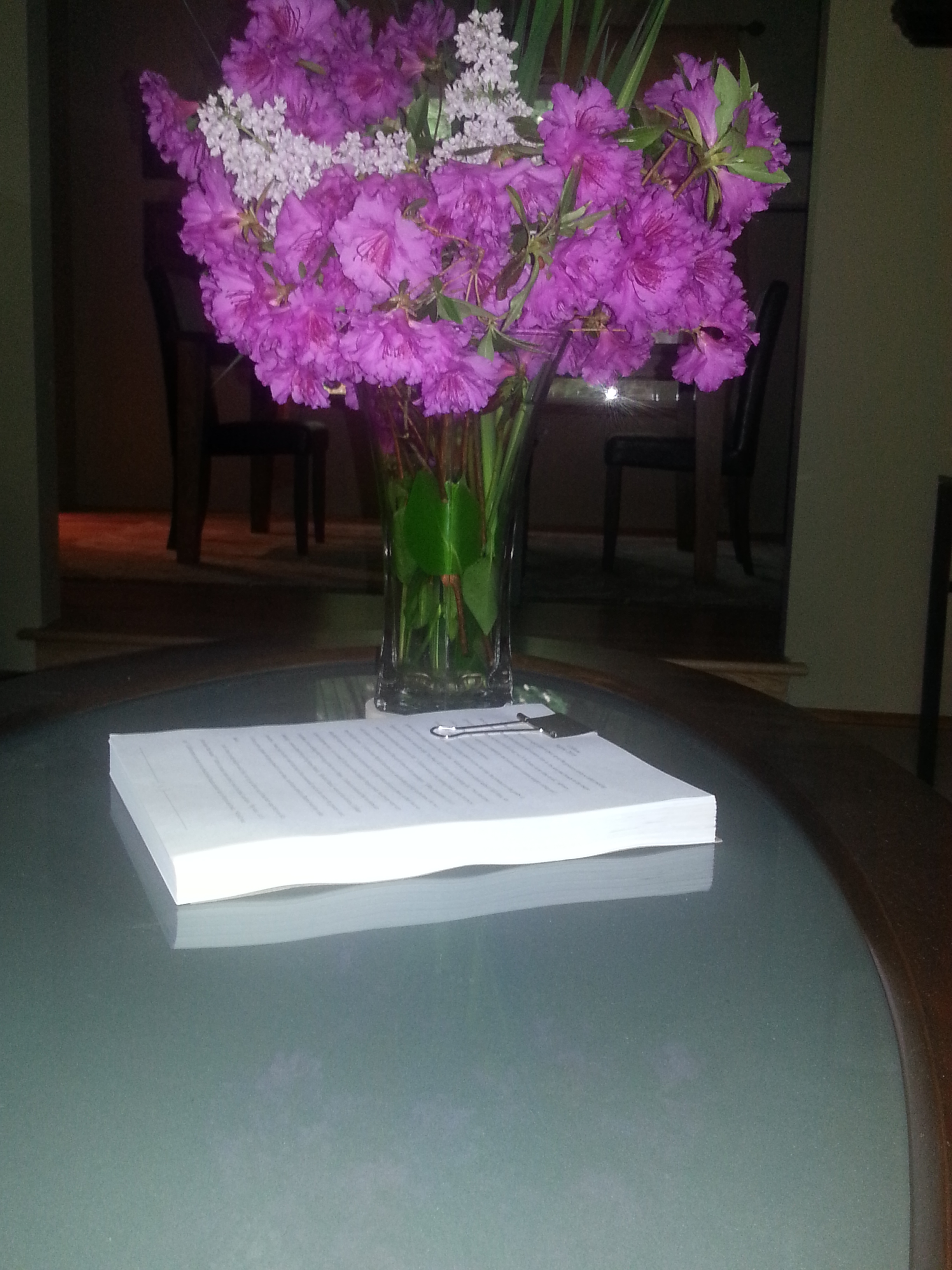
REQUIEM spotlights a family that struggles with the tangible and emotional elements inherent when battling a disease that is always fatal; a disease that gives you daily – if not hourly – reminders of its devastating effects.
I could not write about the fictional family’s journey without incorporating some of my own stories from my years as Dad’s caregiver. I also included other people’s stories as told to me through my work as an Alzheimer’s caregiver support group facilitator, and as a Washington State certified Long-Term Care Ombudsman. (Names and facts altered to protect those directly involved.)
The research materials I packed away this past weekend consisted primarily of the caregiving journals I kept while being my father’s primary long-distance caregiver while he endured Alzheimer’s disease.
That research also included reams of paper I organized into multi-tabbed folders containing the various doctor’s reports and findings from the seven years of dad’s disease journey.
I was not prepared for the emotion with which I was blanketed when I pulled out the large waterproof chest that had resided in my writing space the past three years. Placing my research in the chest, shutting it, and returning it to its original under-the-stairs location was extremely difficult for me.
In a certain sense, I felt I had betrayed Dad because I wasn’t just packing up some paper, I was putting away the physical evidence of his seven year battle of brain function loss. Read the rest of this entry »
First step for any endeavor: START
 You have an idea that turns into a personal goal. You plan for it, making a list of To Dos and To Purchase, or whatever lists are required to put your idea into motion.
Then you’re paralyzed: when do I start? how do I start? You begin to second guess your idea, your plans, your goal.
 Paralysis by analysis sets in. You freeze in place. You do nothing for a day, a week, a month, eventually discarding the project about which you were initially very excited.
Doubt sidelined your goal.
For me, taking that first step can be the beginning of failure, and because it is, oftentimes it’s a step I choose not to take.
I signed up for National Novel Writing Month, NaNoWriMo, in August or September, I don’t remember. I purchased book-drafting software called Snowflake, and went through every step needed to prepare an outline and/or book proposal for a novel, my second. I was extremely excited about the novel’s concept.
I kept receiving NaNoWriMo emails, counting down the days until November 1st when that novel writing month would commence. The second week of October I questioned the sensibility of subjecting myself to completing a novel in thirty days. The third week of October, I ceased all preparation. Monday of the fourth week of October, I decided not to participate. Read the rest of this entry »
Isolation after the death of a loved one
I had the privilege of facilitating an Alzheimer’s caregiver support group meeting this afternoon. For several years I facilitated my own caregiver support meeting but retired from doing so in 2013. Earlier this year I was the substitute facilitator for this same meeting and was so very impressed with the group of ladies I met then, a few of whom were in the meeting again today.
 One of the gals, Georgina (not her real name) lost her husband to Alzheimer’s in January. She told the group that while her husband was still alive, the two of them were always invited to a Holiday gathering of friends – all married couples – to celebrate the Christmas season. She found out recently that she was not invited to this year’s event.
Quite frankly, she hadn’t yet thought about the Holiday party, thinking the invitation might be forthcoming but certainly wasn’t stressing out about it. Quite innocently, one of her friends mentioned the party in passing, saying, “Looking forward to seeing you at the annual Christmas celebration” not realizing that the host of the party had not included Georgina on this year’s guest list.
The attendees at today’s meeting had these thoughts to say about the situation: Read the rest of this entry »
The past – and the truth – have set me free
Oftentimes we’re told that we should forget about the past. Sure, it’s okay to learn from past bad decisions, but sometimes those years are better left alone.
 The other day, I went back twenty-one years to uncover the basis for a mystery that has haunted me since September 24th, 1994. Twenty one years of fear and uncertainty came to an end in just ten minutes time.
My mother died on September 24th, 1994 in my parents’ home in Honolulu, Hawaii. She was 77 years old and she died in her sleep. Although she had some chronic health-related issues with which to contend, no one could have predicted her sudden death because she lived a vital and active life.
Dad didn’t want an autopsy performed on my mother which – at the time – I was okay with; it was his decision to make; he didn’t want her body assaulted just to find out why her life ended on that particular day.
That decision was the basis for my twenty-one years of fear.
Read the rest of this entry »
It takes courage to be passionate
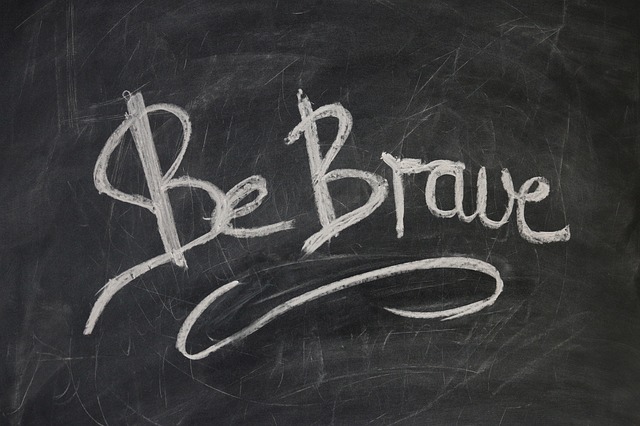 David Brooks’ article, Lady Gaga and the life of passion, speaks of putting ourselves out there for something for which we are passionate.
All that is needed for a person to conclude that Lady Gaga puts herself out there is to watch just one of her performances or appearances at awards shows. She wore a meat dress at the 2010 MTV Video Music Awards. Outsiders like ourselves look at such a display and might think unkind thoughts about a person who is extremely passionate about her craft.
For most of us, putting ourselves out there means singing at the top of our lungs in the shower or car where no one can hear us. Or perhaps our definition of being out there means matching a floral print top with checked shorts when on vacation where no one knows us.
David Brooks’ article covers the passion involved when we’re courageous enough to follow our dreams, dreams portrayed in this manner by Lady Gaga:
I suppose that I didn’t know what I would become, but I always wanted to be extremely brave and I wanted to be a constant reminder to the universe of what passion looks like. What it sounds like. What it feels like.
Given that description, us aforementioned outsiders might feel differently about how this extraordinarily talented singer/performer expresses herself.
So what does it mean to live a life of passion? Read the rest of this entry »
Pack courage in your toolbox
Whatever you do, you need courage. Whatever course you decide upon, there is always someone to tell you that you are wrong.
There are always difficulties arising that tempt you to believe your critics are right. To map out a course of action and follow it to an end requires some of the same courage that a soldier needs. – Ralph Waldo Emerson
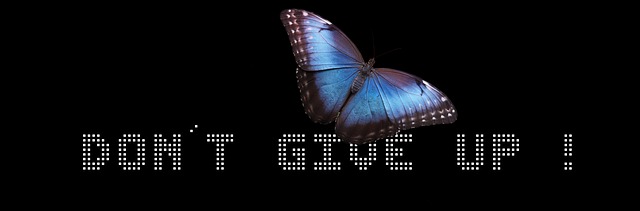
If you are facing difficulties that seem insurmountable, I want to en-courage you to draw on that which lies deep within you.
Oh, sure, you may think you lack what it takes to climb over that speed bump – or mountain – that’s directly in front of you, but I have faith that you will not only do so, but you will rise victorious to the top.
You are stronger than you think.
Believe it.
Tips for helping a caregiver
 The latest AARP Magazine had a fabulous article providing helpful ways in which to make a caregiver’s life just a wee bit – or quite a bit – better. Here are a few tips for you to adopt in your life.
- Bring her a low-maintenance houseplant
- Take in his mail
- Do yard upkeep, whether raking leaves, mowing the lawn, shoveling snow
- When you’re heading out to buy groceries, ask him if you can pick some things up for him
- Take her kids or grandkids to the park or to a movie
- Stop by with a board game or a movie to watch – a perfect way to get his mind off things
- Visit her with a pet that has a sweet disposition
- Take his dog on a walk – maybe on a daily or weekly basis
- Do some light housework or repairs: dishes, vacuuming, dusting, ironing, smoke alarm battery and light bulb changing, fixing a leaky faucet
- Return her library books
- Volunteer to stay at home to wait for the cable technician, repairman, etc. while he attends to other more pressing needs
- Bring him a week’s worth of meals in freezable containers
- Send her a greeting card on an ongoing basis. Who doesn’t love to receive real postal mail?
- When visiting, let the person vent, without passing verbal judgment on what they may say
- Do an item or two on her To-Do list – I promise you, her list is extraordinarily long
- Offer to make a photo album with him, using photos that mean a lot to him and the rest of the family
- Give him a gift card to a restaurant he may enjoy, or better yet, take him out to dinner
- Help him decorate for the holidays
- Drop off or pick up a prescription
- Keep in touch with her, even after her loved one passes. Too often, the grieving one has more attention than she can handle immediately after someone dies, then when she could really use some TLC, no one can be found.
Normal is highly under-rated
 Have you ever experienced a time when things just weren’t going right or you were ill and felt you would never again return to normal?
Of course you have, we all have. We were so wrapped up in our current state of affairs, we couldn’t even remember what normal feels like. This phenomena may also be characterized as craving the status quo, a condition that many of us usually abhor, given the option of leading an eventful and stimulating life.
When we’re on our knees praying to the Universe for a break – or perhaps worshiping the Porcelain God with an upside down stomach – we’ll give anything for boredom, a heightened state of normalcy, or a long stretch of monotony.
My suggestion to you: the next time your yawns make you impatient for something different, be careful what you wish for and enjoy the ennui while you can.
 And when you’re going through a rough patch, remember that when you’re in the dumps, this too shall pass, and when it does, you’ll have the opportunity to relish the calming state of normalcy once again.
It’s always nice having something to look forward to, isn’t it?
Caregiving 101 through 1001
 I’ve written several articles over the years about the importance of assembling a caregiving team when caring for a loved one – a team that doesn’t necessarily rely on family because not everyone has a participatory family when it comes to these matters. Of all the life-changes we encounter during our journey, caregiving is one of – if not the most difficult – speed bump to get over.
Caregiving: the ultimate team sport suggests how one might use the strengths of each team/family member to handle the varied needs during the caregiving journey.
Family dynamics that hamper caregiving success exposes the need to let go of stereotypes or childhood roles that don’t serve siblings well as adults. If ever there was a time to work together for the greater good – taking care of a family member with dementia or other terminal illness – this ranks right up there at the top.
Solo caregiving addresses the needs of the person who appears to be strapped with fulfilling all the roles needed for a successful caregiving venture. As the sole caregiver, you need not settle into those roles, not without the help of other, well-meaning individuals. Certainly, much relies on the neighbor, coworker, even casual acquaintance, but said entities are a resource from which much assistance can be found.
 And here are several more articles for the caregivers out there – and those acquainted with a caregiver – to provide some wisdom and encouragement through the tough times: Read the rest of this entry »
Our school of hard knocks: life
Okay, my life isn’t always crappy, quite frankly, it’s rarely crappy. I’ve had a great life and I certainly can’t complain too loudly. But I’ve learned many things in my umpteen years of life, one of which is that there are teaching moments – and teachers – all around us and if we’re diligent students, we’ll learn something new now and then.
Dr. Bernie S. Siegel in his book 365 Subscriptions for the Soul, brings up this topic in one of his daily meditations. He starts out by offering the following Taoist quote:
When the student is ready, the teacher appears.
Focus on Caring: raising children who care
Source: 7 Ways To Help Your Kids Embrace Kindness – By Lucy Martial
 We’ve all heard the admonishment that we should lead by example. The intent of that statement focuses on providing good examples for not only our own children and grandchildren, but also our neighbors’ children, school students, and all other young people with whom we come in contact. The final increment of this Focus on Caring series suggests that adopting an attitude of caring is best started at an earlier age.
If we live in such a way that our words and actions positively influence the younger set among us, we are to be rewarded. But if our actions negatively influence children, we’ve done them – and the world – a grave disservice.
The article attached above from the Kindness Blog – a website that ONLY provides stories that focus on kindness – lists seven suggestions for effectuating kindness in children.
My article focuses on two of the article’s very apt suggestions: Read the rest of this entry »
My plea for print news media
I love, love, love to read my local print newspaper, The Seattle Times, each morning.
If a daily edition is late due to inclement weather, I will read the paper on my tablet, but only if I’m quite certain the print edition won’t arrive, e.g., snow, power lines across the roads, the end of the world as we know it, etc.
But I don’t want to read the paper on my tablet – or sitting at my computer – as my only option.
NO!!!!!
The other local area newspaper, Seattle Post Intelligencer, switched to online-only several years ago. I’m thrilled that the Seattle PI is still available to readers but I fear the remaining local newspaper will end up with the same fate.
Why do I think so? Read the rest of this entry »
Perfecting our life’s target practice

Dr. Bernie Siegel, 365 Prescriptions for the Soul, provided the following regarding the art of focusing on the right target for our lives. The first quote is very timely advice by the late, great, Yogi Berra:
TARGET PRACTICE
You got to be careful if you don’t know where you’re going, because you might not get there. – Yogi Berra
Your target in life helps you to direct your course. So before you aim, be sure you choose the right target.
What are you aiming for? What is your goal? What goals are you trying to achieve? What are you trying to hit? These are the questions you need to ask yourself, because they tell you your direction and where you will end up.
The more target practice you engage in, the more likely you are to hit the bull’s-eye.
SOLUTION OF THE DAY
Take the time to refocus on your target. Ask the questions often to be sure to hone in on your center.
Art worth viewing: spotlight on Mary Riesche

There’s an artist in Vacaville, California, Mary Riesche, who paints in such a way that what she sees – and the way she sees it – comes alive on every canvas she fills.
Ms. Riesche is a Baby Boomer, like myself, and many of you. She has painted since she could hold a crayon and hasn’t stopped. Her retirement consists of capturing the beauty she sees in her travels, and sharing them with the public at very reasonable prices.
Mary Riesche Studios, her virtual art studio, is a great place to look for extremely well-priced pieces.

She currently has a spotlight show at the Vacaville Art League and Gallery that consists of some of her smaller, mixed media selections. This particular show only runs through October 3, 2015 so if you live in the northern California area, you must have a look-see of some of her paintings.

Additionally, her entire inventory of paintings can be found on her Mary Riesche Studios website and unless otherwise noted, are available for sale.
Focus on Caring: The ties that bind us
This week’s story is right out of a fabulous blog that I follow, The Kindness Blog. I’m submitting the story as it was written, in the 1st person, by the person involved.
I was in a really bad three-car accident a few years ago where a drunk driver ran a red light and hit another lady and me – the other lady died. This couple who had been leaving the Mosque across the street heard the accident happen and came running to help. It was cold out and I was just sitting on the side of the road shivering and cold. Read the rest of this entry »

Our life: an ongoing parade
Here I go again, relying on Dr. Bernie S. Siegel to provide some wisdom for your day, but what can I say, his 365 Prescriptions for the Soul catches my attention more often than not and when it does, I like to share the good stuff I find. The following is provided verbatim:
Parade of Life
Forget past mistakes. Forget failures. Forget everything except what you are going to do now, and do it. – William Durant
 Life is a parade. Sometimes we march along and realize we have passed by what we were looking for. What do we do? Stand there and drop out of the parade? March on with regrets? Feel bad about how we looked or that everything we wanted was on the wrong side of the street? It’s passed! Forget it and march on!
Sometimes our parade isn’t so pretty, and the crowd isn’t interested in us. If we drag everything we have passed with us, we will destroy the present. We have no future when we live in the past.
We even talk about past lives. Whether you believe in them or not, the same principle applies. If you are living a past life, you are destroying your present one. In therapy, people come to understand why they are acting the way they are and how the past is affecting them. They learn to let go, move on, and not sit in the same classroom year after year. They graduate and commence a new life.
A closing comment by this blogger:
The good news is that we can learn from our past, both the good and the bad. But if we stay cemented in the past and don’t move on, that parade Dr. Siegel talks about? It’ll pass us by.
I don’t know about you, but I don’t want to get left behind.
Focus on Caring: Looking for trouble
My oh my how often we are on the road, driving to our intended destination, and we observe someone with car trouble. Each and every time I observe such a scene I always say a little prayer that the Universe will step in and send someone to be of assistance to this poor soul.
Thomas Weller of San Diego, California looks for trouble and provides assistance in the form of: fuel for those who thought driving on fumes would get them to their destination, a change of tire for that troublesome flat tire that started out as a slow leak but ended as a pancake, or a lift to a safer place so that the stranded motorist could get off the highway.
This isn’t a passing fancy of his, he’s been doing it for 50 years. Read the rest of this entry »
Time to recognize & bolster family caregivers
 The proposed Recognize, Assist, Include, Support, and Engage (RAISE) Family Caregivers Act would require the development of an integrated national strategy to provide resources for under-served family caregivers in the United States. If you are not currently a caregiver for a loved one, you most likely will be, and no doubt you know of someone who is already an unpaid caregiver (as opposed to a hired caregiver) for a person in their family.
Source: Recognize, Assist, Include, Support, and Engage (RAISE) Family Caregivers Act – AARP
Many families, even those with young children, find themselves thrust into the role of caring for a loved one when they least expect it and can ill afford to. Caregiving for a child or an adult with disabilities, or caring for an adult with a debilitating illness, has become the norm for many in the United States and abroad.
These caregivers “prepare meals, handle finances, manage medications, drive to doctors’ appointments, help with bathing and dressing, perform complex medical tasks and more – all so loved ones can live at home.”
 Keep in mind, the above tasks are those they were already performing for their own household, tasks that multiplied exponentially with the increased needs of their disabled or ill family member. Add a job outside of the home to all of that, and you have to wonder how these overworked and over-stressed heroes manage at all! Read the rest of this entry »
Focus on Caring: The Spineless Bystander Effect
On July 7, 2014, I wrote an article Spineless inaction: the bystander effect, an article that told the story of a female McDonald’s restaurant employee who was severely beaten by another woman. No one called 911, no one tried to intervene, but everyone within a block of the beating took cell phone video of the attack. That, my friends, is an example of spineless inaction.
I’m going to counter that horrific example with a rewarding one out of Buffalo, New York.
Darnell Barton, a bus driver in Buffalo, New York, was on his multi-trip route over a bridge on the expressway. Ahead of him, he could see a woman standing over the railing on the ledge; the intent of this woman was obvious to anyone who observed her. The entire episode was caught on the bus dashboard camera. Read the rest of this entry »
Focus on Caring: Boundaries that constrain us

How are you defined? What kind of box would you fit into? Here are a few characteristics some might assign to me:
- White American
- Baby Boomer
- Pacific Northwest resident
- Wife
- Mother
- Sister, aunt, niece, cousin, friend
- Seattle Seahawks super fan
 All items on that list are correct but if that’s all that people see about me, they’ve greatly reduced the trueness of who I am because my box also contains the following:
- spiritual but definitely not religious person
- free-thinker (is that redundant?)
- writer of things that matter to me
- advocate of the elderly and just about everyone else who crosses my path in life
Setting boundaries between who I am, and who you are, benefits no one.
Leonard Pitts, Jr. spoke at a TEDx event in February of this year. His 20 minute talk, The Boundaries We Choose, is readily available on YouTube so I strongly suggest you seek it out. He suggests, “Our labels shouldn’t define who we are and place us in a strict box.” He then spoke of labels one might put in his box: African American, Christian, Husband, Father, Fan of the LA Lakers. If you’ve read any of Mr. Pitts’ literary pieces in the Miami Herald or any of his books, you already know that he is more than the contents his box may imply. (To be sure, there is a very valid reason why he was named the 2004 Pulitzer Price Winner for Commentary.)
During his February TEDx talk, he provided a fabulous story that illustrates the downside of labels or identifying markers. I’ll let you discover that beautiful and clarifying story by watching his TEDx video, but for the purposes of this blog posting, I will provide you with one of his statements from that video.
Our bonds are more than connecting with certain markers that define people.
Examine, if you will, your way of describing something that happened to you during the course of your day.
 When you relay a story about a person taking his or her time in line at the Starbucks store, holding everyone up for far too long a time, do you define the person this way?
This Asian woman in front of me acted like she owned the damn place. She was so selfish, taking her damn time ordering her fancy drink when all I wanted was a damn cup of brewed coffee.
Or did you simply say
This damn person in front of me took so much time ordering a fancy damn cup of coffee that I just about ran out of time to get my plain and simple cup of brewed coffee.
Tuesdays in September: Focus on Caring
Just a brief post to announce that I have designated each Tuesday in September as a day to Focus on Caring.
On September 1st (tomorrow) I’ll introduce the topic by providing extraordinary insight by Leonard Pitts, Jr. and my takeaway from his insight. On subsequent Tuesdays I will provide heartwarming and heart-wrenching stories about ordinary people, doing the ordinary right thing, at an extraordinary time.
In short, I will introduce you to people like you and me who, in my mind, are every day heroes: people who chose to do the right thing in an amazing way.
Be pro-something instead of anti-something
Helene Gayle, Care USA President and CEO, learned early on in her adult life that giving to others was a necessary part of her participation in this world. It makes sense, then, that she heads a major international humanitarian agency that delivers emergency relief and support for long-term development projects. This organization is nonsectarian, impartial, and non-governmental. In my estimation, what could be better than that? In the book, Getting There by Gillian Zoe Segal, Ms. Gayle had this to say about effecting social change:
Social change is better achieved by being for something (rather) than against something. Growing up, I was part of a protest generation. We protested the war and stood in support of liberation struggles in Africa. Whenever we saw a problem, we were “against” it.
It’s easy to think that by being against something you’re standing up for a cause, but if you want to have a greater impact, you need to ask yourself, “What do I stand for and what do I want to happen?”
 In this world, there exists a me against her/us against them mentality that causes us to lose sight of where our focus should be. Read the rest of this entry »
Definition of sympathy
I am again relying on Dr. Bernie Siegel’s wisdom, found in his book 365 Prescriptions for the Soul, for this post. The older I get, the more I’m faced with opportunities in which to witness tragedy in the lives of those with whom I come in contact. Even after all these years, I have to meditate on what a particular person’s tragic situation may mean to him or her so that when we meet in person or by phone, I’ll do and say the right thing. Here is Dr. Siegel’s take on the matter which I present verbatim:
Sympathy
 Sympathy is not about feeling pity for the person who has experienced a significant loss or problem. Being “simpatico” is about being congenial, winsome, and pleasant. To be sympathetic is to connect with the other person so she does not feel isolated by her problem. If you fear experiencing the other person’s pain, then you will not be able to be sympathetic.
Just as sympathy is not about pity, it is not about denial either. It is about accepting and relating to the person. When you do you will experience a fuller life and a feeling of closeness with the other person. In the sharing of sympathy we learn, and so we move up, in a sense, as human beings.
Being a sympathetic person will also attract others to you. They come not to share wounds and complain, but for understanding. When we are alone in our world and questioning life, a sympathetic word or touch can change our experience and help us to survive. To be held in the arms of sympathy is a gift that creates true healing.
Soulution of the Day
Be sympathetic in your words and actions, you never know when you may need some sympathy yourself.
 Living: the ultimate team sport