My sister, Mary, has been an artist since she could hold a crayon and a water color brush in her hand. Without giving away her age, I’ll just say that she’s been an artist for quite a few years because she is close in age to myself.
Mary in her garage studio
This article honors the consistency and commitment that my sister has exercised in her quest to maintain and hone her talent. Her husband was in the United States Navy when she married him, a career that deposited the two of them and their ever growing family, all over the United States and the world. She could have put down her sketching pencils, acrylics, and oils and figured that until the kids are grown up and out of the house, she wouldn’t have time for her artistic endeavors. But she didn’t. She managed her family single-handedly – and excellently I might add – while her husband was away at sea, never neglecting her family nor the craft that she loves so much.
Mary has been so diligent on this artistic journey, that I can only recall one time when she could not work on her craft. Mary broke her right wrist falling down in front of a grocery store near her Vacaville, California neighborhood several years ago, and as happens after we cross a certain age threshold, bones break easier and take longer to heal. But my sister was only sidelined for as long as absolutely necessary while she completed her physical therapy regimen and then – almost as good as new – she again took up the tools of her craft to pour her heart, soul, and energy into each piece.
And now that my sister and her husband are retired – and their five children are all grown and the number of grandchildren has recently increased to six – Mary continues to pick up the tools that she discovered as a youngster, and consistently makes efforts to expand her talents.
The artist in April 2014 at one of many craft fairs she attends through the year.
Now this is where you come in. I strongly encourage you to visit Mary Riesche Studiosso that you can get to know a bit more about this artistic family member of mine, and while you’re at it, browse a sampling of her current inventory of pieces that are for sale. She loves what she does so much, and is so committed to what she loves to do, she will even create a custom piece to fit your home, business, or organization’s needs.
Do yourself a favor, browse the Mary Riesche Studios website, and then contact the artist to discern how her talent can benefit your personal or commercial environment.
Sue Monk Kidd, author of numerous books including the New York Times best seller (for two years) The Secret Life of Bees, was a recent guest on Oprah Winfrey’s show, Super Soul Sunday. The description of the show indicated that the author would be talking about her true calling as a writer. That got my attention, because I’m trying my darnedest to be a writer. Correction: I am a writer, I’m just not an author yet.
Perhaps you’re asking, “Do I have to have a calling?”
No, you don’t. I can only speak for myself when I say that I’ve known that I’ve had a calling for most of my adult life. I didn’t know what it was, but I knew I had one. I always seemed to be searching for the right project/job on which to spend my time. As an employee, and as a volunteer, I did my work superbly, always trying to be the best version of myself – and for the most part, I was.
But something was missing. I always felt that I hadn’t latched on to what I was called to do. I can describe how that felt by using Sue Monk Kidd’s experience when she switched from being a nurse to being a full-time writer. For her own reasons, Sue Monk Kidd felt “out of alignment” and she didn’t feel she was “in a place of belonging” as a nurse. She also described the time before she answered her calling as having “homesickness for (her) your home.” Then she made the decision to be a writer and this is how she felt, “there is no place as alive as when you’re on the edge of becoming” what you were meant to be.
Exactly.
Household garage sale to raise funds for the Alzheimer’s Association.
And she added that it takes lots of courage to get there – to activate the calling that you know is yours. Several years ago I found my niche – working with the elderly. For six and a half years, I worked in the senior housing industry. For five years after that, I volunteered as an Alzheimer’s Association caregiver support group facilitator, and another five years as a Certified Long-term Care Ombudsman for the State of Washington. Good stuff, and it felt right, and it was. But I had yet to use that wealth of experience in what I would define as my calling.
Confession: I’m a fairly decent writer.
Now hold on there, Irene, shouldn’t a calling be something at which you excel, some sort of skill that you’ve honed to perfection? In my case, the answer is no. Sue Monk Kidd validates what I mean. She said there are three things you need to be a writer: 1) have something to say; 2) have the ability to say it; and 3) have the courage to say it at all.
Ergo, I am qualified.
I believe in what I’m doing.
I am one and a half years into writing my first novel. It focuses on the lives of a group of adults who have Alzheimer’s disease or other dementia and the loved ones who are their caregivers. Woo hoo! All the work I’ve done in the past ten-plus years can be used in my calling! I excelled at all of those tasks, and some day I will excel at getting my manuscript published.
Some agent and some publisher out there wants to sign what I have to offer, and I believe that my degree of writing ability won’t get in the way of them doing so.
Have no fear all you agents and publishers who might have just read that last sentence. I am doing my best and I’m working hard at my craft. I’m not of the opinion that just because I feel I’ve found my calling I can just haphazardly go about my writing, not working as diligently as I have in the past.
I’m taking this calling seriously because the subject matter is a serious and personal one to me.
My advice to you the reader? Do what you know you’re supposed to be doing, and do it well. Whether you label that as a calling or a job matters less than if you believe in what you’re doing and are committed to it.
Caring for a loved one is a full-time job, as one of my fellow bloggers clearly illustrates in the attached article. Please read her article, especially if you’re not quite aware of how full the carer’s day can be.
My father died of Alzheimer’s 10/13/2007. I’m on the left, then my hubby, then my brother.
There’s a reason why the book, The 36-Hour Day (now in its 6th edition) is so popular with health professionals and family caregivers. The subtitle for the book reads, A Family Guide to Caring for Persons with Alzheimer’s Disease, related Dementias, and Memory Loss. As the former caregiver for my father who died from Alzheimer’s in 2007, I can verify that whether you are providing hands-on care or managerial long-distance care for a loved one, your job never ends. A normal day is a relative term that changes with every day or hour – or as is sometimes the case – every minute.
My article, A normal day, caregiving style, throws a spotlight on how a patient’s and caregiver’s life changes once a diagnosis has been delivered. The concept of normal is an ever-changing paradigm where the sand on the beach shifts so much, one can barely hold herself upright.
I celebrate all caregivers who manage this extraordinary task so well, and so devotedly. You are a hero to many.
The New York Times article The Science of Older and Wiser by Phyllis Korkki, provides a scientific, yet personal, foray into the location of where wisdom resides.
The article also addresses levels of importance between the speed with which information is retrieved from one’s mind versus a life filled with meaning, contentment and acceptance. Speedy retrieval of information appears to belong to those who are younger than Baby Boomers while those who take longer to tap into a data-filled mind are us Baby Boomers or older for whom information retrieval falls second. Once that information is retrieved, however, it is used to gain insights and perspectives that form the basis for wise behavior and decisions.
Must everything in our lives function at breakneck speed? Consider these synonyms for fast, or quick:
speedy
swift
express
high-speed
immediate
expeditious
brisk
hasty (haste makes waste!)
from “The Colors and Letters of Jen Elek and Jeremy Bert” (Seattle-based artists)
We live in such a fast-paced world that we find ourselves snapping our fingers at how long it takes to make a cup of K-Cup (pod) coffee. We want it now! Now, I tell you! What’s taking so long? We will even pay extra when traveling by plane in order to use TSA’s faster Pre-Check security lane, and we’ll pay an annual subscription to Amazon.com to get free 2-day shipping for the plethora of things we purchase there.
But is faster always better than reflective contemplation?
Consider some definitions of wisdom provided in the above-attached article:
“True wisdom involves recognizing the negative both within and outside ourselves and trying to learn from it.” (Ursula M. Staudinger, The Berlin Wisdom Project);
Wisdom is characterized by a “reduction in self-centeredness.” (Monika Ardelt, associate sociology professor, Univ. of Florida, Gainseville);
If you are wise, “You’re not focusing so much on what you need and deserve, but on what you can contribute.” (Laura L. Carstensen, founding director of the Stanford Center on Longevity, California); and
An important sign of wisdom is generativity, which means “giving back without needing anything in return.” (Dr. Daniel Goleman, author of Focus and Emotional Intelligence, psychologist, science journalist.)
Given the descriptions for the word “fast” and the characterizations for the quality known as “wisdom”, what will your life’s main focus be as you graduate through the various stages of aging? Unless your later years involve being the fastest on the ski slopes, or the quickest person to complete the NY Times crossword puzzle, consider this element of successful aging: “(M)ost psychologists agree that if you define wisdom as maintaining positive well-being and kindness in the face of challenges, it is one of the most important qualities one can possess to age successfully.” (Phyllis Korkki, New York Times)
And yet many drivers that are cognitively impaired are doing just that. Justin Runquist’s Seattle Times article, attached above, addresses the wave of aging drivers that has swept onto our roads. I’ll be the first to admit that dementia isn’t always the impairment associated with aging drivers. Sometimes medication side effects and/or slower response times – even without Alzheimer’s or dementia – can be the cause of accidents that can harm the driver, and anyone in his or her path.
In this article, however, I address the type of DUI that does involve dementia. As I mentioned in my two part series: Driving under the influence of dementia and Part 2 of that article, there are far too many news reports covering the risks of impaired driving – many of which end in disaster.
My dad (circa 1980’s) gave up his car keys shortly before being diagnosed with Alzheimer’s.
How can we possibly take comfort in denying that either ourselves or our loved ones should no longer get behind the wheel? This type of denial is dangerous but it is possible to get around the difficulties associated with this subject without alienating yourself or others.
For those of you who are still driving and who have considered even once that you shouldn’t be doing so – please read all the articles attached within this blog entry and then decide if you still feel comfortable driving a weapon that might kill you, or someone in your path. And for you adult children who have felt the same uncomfortableness surrounding your own parents’ driving skills – take heed and act before it’s too late.
My adult life has been an open book; just ask my husband. He would tell you that on our very first dinner date at a Kirkland, Washington waterfront restaurant, I pretty much told him my life from A to Z, and then some. That’s why it was so astounding that at the end of our date he asked, “Would you like to do this again?”
Wow, I didn’t scare him off.
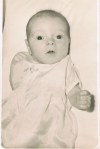
My earlier social networking profile.
I’m pretty sure my open book living started quite young for this girl who is one of the most talkative people I know. What can I say? Apparently a lot. As a youngster, I recall engaging my parents’ dinner guests in conversation, even sitting on their laps, without much hesitation or shyness. And along with my brother and my sister, we would sing and dance for any person who would sit down long enough for us to entertain them. I’m quite certain this ability is a Desonier family trait that has been passed down from generation to generation.
Being talkative is one thing, but if your words don’t account for much, that’s all they are – just words.
I admire those who are able to change the world – or at least improve someone’s day – with an economy of words that have more impact than any vomiting of words that I can spew during the course of an hour. My husband, Jerry, is one of those talented people. Forgive me for sounding morose, but I guarantee that years, and years, and years from now, those attending my husband’s funeral will remark on how he was a man of few words – but the words he spoke were golden.
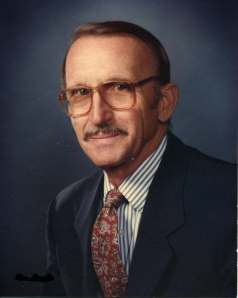
We were younger then.
At our wedding reception – a family-only party at our residence – I told both families that one of the things I admired most about Jerry is that he is a man of very few words, but what he says is worth listening to. Of course seeing as his siblings were also at the reception, one of his sisters yelled out, “Yah, he’s an empty book!”
That’s humorous, but far from the truth. My husband’s story is one of family, commitment, and protectiveness. He’s always thinking about what he can do to protect his two adult daughters and how he can keep me safe, wherever I may be. I love taking walks – rain or shine – in our rural neighborhood where dogs, bobcats, and even black bears, have been known to present themselves when you least expect it – not to mention the inattentive drivers who may not notice that I’m trekking along the side of the road. In the past ten years, my husband has gifted me with: waterproof long pants, a sturdy walking stick, a fluorescent yellow vest, a pair of straps with strobe lights on them that I can either wear around my arms or my ankles, pepper spray, and the list goes on. Some wives may take offense to receiving such practical gifts, bemoaning the fact that he must not love me if these are the types of gifts he thinks I really want. I see those practical gifts as a sign of love from someone who wants me to be around for many years to come.
Words, followed up by actions, have the power to change everyone in your corner of the world. Whether hastily spoken harsh words or well-thought out words of encouragement – your corner of the world will be changed. Many of us need to learn to swallow our words and only let escape those that feed and nourish the recipient. I, for one, can cut my dialogue in half, as long as what remains serves to build up those with whom I come in contact.
One thing is for certain; the less often you open your mouth, the less opportunities exist to stick your foot in it.
If the monster called Alzheimer’s is going to get you, you may as well be prepared.
How I’m Preparing to Get Alzheimer’s, is a 6 minute and 24 second video recorded in June 2012 at TED Global in Edinburgh, Scotland. This brief talk by Alanna Shaikh will do more to wake you up about this disease than anything you’ve heard thus far.
If there is even the slightest chance that one of us will get Alzheimer’s or other dementia – and trust me, there’s more than the slightest chance – then we’d better start shaping what Alzheimer’s will look like for you and me. Here’s an example.
Ms. Shaikh’s father has Alzheimer’s and she talks about the various hobbies and interests held by her father when he was healthier and how those interests carry through during the Alzheimer’s disease process. He was a college professor at a state school and as Alanna put it, “he knows what paperwork looks like.” Now in the depths of his disease, someone can put any type of form in front of him and he will gladly fill it out, arbitrarily writing his name or numbers on the various lines provided, and he’ll check the boxes littered throughout the form. He flourishes in that engagement of his time.
What happens, however, when your favorite hobby pre-disease is reading and editing academic journals, racing cars, or using electric shop tools to make beautiful well-crafted furniture? How will those hobbies or skills survive the disease process? Not very well. So Alanna has come up with three things that she’s doing now to prepare her for the possibility of the Alzheimer’s monster invading her life.
Please watch Alanna’s video. I think you will be impressed by her thought process.
Click on the link above to read about one man’s journey from spousal caregiver to professional coach of those who are caring for loved ones with Alzheimer’s or other dementia.
My hero – my father: 1918 – 2007
During my time of caregiving, (my father died in 2007 from complications relating to Alzheimer’s disease) I oftentimes sought out the advice of anyone I could get my hands on who might a) lighten the emotional load I was carrying; b) lead me in the right direction when looking for next steps in the caregiving process; and c) let me cry a river as I pondered whether I was doing enough for the one for whom I provided care.
Way back when I was enmeshed on my caregiving journey, I was not aware that this type of coaching service was available – perhaps it wasn’t. What speaks volumes to me is that the prevalence of Alzheimer’s and other dementia is such that more and more people seem to be adrift and searching for that beacon of light that might pull them safely to shore.
One thing I know for sure, however, is that if it takes a village to raise a child, it certainly takes at least that when trying to take care of a cognitively challenged parent, spouse, sibling, partner, or friend.
Forgive me, if you will, because I am going to start this blog piece by quoting some of the lyrics from Katy Perry’s song, Roar. You may not have heard of this popular singer or if you have, you may not follow her career, but one of her songs resonated with me and challenged me, so thus begins a few of the lyrics:
I used to bite my tongue and hold my breath; scared to rock the boat and make a mess, so I sat quietly, agreed politely. I guess that I forgot I had a choice; I let you push me past the breaking point; I stood for nothing so I fell for everything.
When was the last time you swayed in the wind of other people’s opinions and fearing ostracism, you swayed in silence even though you disagreed with those opinions being expressed around you? What did that feel like?
You held me down, but I got up, already brushing off the dust. You hear my voice, you hear that sound, like thunder gonna shake the ground; you held me down, but I got up; get ready ’cause I’ve had enough. I see it all, I see it now…
How long did it take to break the hold that your silence had on you? How much time passed before you got up and let your “you-ness” shine forth amongst the crowds – whether those crowds consisted of strangers or close loved ones? What did it take for you to divert from the ebb and flow of popular opinion and launch your own?
I got the eye of the tiger, a fighter, dancing through the fire; ’cause I am a champion and you’re gonna hear me roar. Louder than a lion, ’cause I am a champion and you’re gonna hear me roar.
Break out of the prison where your stifled opinions have placed you.
The purpose of this open-ended article is to encourage some personal internal dialogue wherein you answer the above questions for yourselves and discern whether or not you’ve been stifling beliefs or opinions that define the essence of who you are, but which you’ve held to yourself because you don’t want to rock the boat.
What are you waiting for? The author, Eckhart Tolle would say that Now is all you have. You can’t go back and correct the past; it doesn’t exist anymore. You can’t rely on there being a future. All you have is the present moment, so do yourself a favor and stop denying who you are, and what you believe in. Take it from someone who knows – you’ll like and respect yourself a whole lot more when the real you starts living.
A recent NY Times article, On Dying After Your Time, poses many topics for discussion that must be addressed. I knew before I even started to read the article that readers will have varying opinions on the matter of extending life beyond its appointed time to die. These opinions will be based on ethics, biases, age of the reader, and religious beliefs, to be sure, but another factor that comes into play is the personal experience of each reader.
My father and my sister-in-law, both of whom have died from Alzheimer’s in the past five years.
If the reader has watched a loved one perilously balanced in limbo with a ravaged-by-disease body and/or mind, that reader might lean towards declaring that too much is being done to artificially prolong life. In the past five years of my life, I have watched both my father and my sister-in-law die from Alzheimer’s. Who they were at the end of their lives didn’t come close to resembling who they were pre-disease. If the reader has had no experience with this aspect of life and death, that reader may feel more comfortable with the decision to throw every treatment possible at the patient with the goal of allowing that person to live as long as humanly – or scientifically – possible.
One of the issues presented in the NY Times article is the fact that as we live longer, there is an increase in the amount of chronic illnesses – a fact that certainly stands to reason. “This rise in chronic illness should also give us pause about the idea, common to proponents of radical life extension, that we can slow aging in a way that leaves us in perfectly good health…The evolutionary theory of senescence [growing old; biological aging] can be stated as follows: while bodies are not designed to fail, neither are they designed for extended operation.”
The author of the NY Times article is an 83 year old man who closes out the piece by stating, “We are not, however, obliged to help the old become indefinitely older. Indeed, our duty may be just the reverse: to let death have its day.”
If you haven’t yet formed an opinion on the matter of life-extension at all costs – I encourage you to do so before it’s too late. Life and death decisions are best made well in advance of the necessity of such decisions.
I am very pleased to say that I am a subscriber of the only Seattle newspaper still in print – the Seattle Times. This newspaper writes and publishes varying opinions on local and global issues – even when one journalist disagrees with his or her fellow journalists or – dare I say – the Editors of the paper. A timely example of freedom of the press was displayed during the showdown between the aerospace machinists unions representing Puget Sound Boeing machinists (blue collar workers) and the higher-up Boeing management who replaced Seattle with Chicago as their ivory tower home base in the year 2001.
(Photo credit: Wikipedia)
Washington State Governor, Jay Inslee, asked for – and received – a special legislative session to present a bill that would award Boeing with delightful tax incentives to entice the company to continue the practice of building their airplanes in the greater Seattle area, a/k/a the Puget Sound region. This bill was passed but was contingent on the machinists agreeing to an extension of their current union contract period from 2016 to the year 2024. Additionally, the newly revised contract would not come close to resembling the current contract that both the machinists and the Boeing executives agreed upon when signed a few years back. If the union membership would vote “Yes” on this newly devised contract, Boeing would keep the 777X in Washington forever more. If the machinists voted “No” on the contract, Boeing leadership would approach other non-local Boeing sites – those not in Washington State. Now why would this Washington business want to give their work to another state’s economy? It’s all about the unions, baby.
Boeing leadership, and the major shareholders of Boeing stock, are sick and tired of machinists and engineers caring about – and fighting for – their rights regarding employee benefits. Shifting work to non-union locations means that the company doesn’t have to deal with the petty demands of their dedicated workers who are just trying to make a decent living now, while building a decent retirement for later. One of the major take-aways of the newly crafted contract is the cessation of the machinist’s pension plan, replacing it with a traditional 401(k) savings plan. Go ahead and say it – many people are thinking the same thing you are: “Shit! Companies all over the United States are ending employee pensions and cutting back. You SOB Boeing machinists should stop your whining and just be glad that you have a job!”
On November 11, 2013, the Seattle Times editorial staff printed their opinion of what the machinists should do: Vote Yes for the Boeing 777X. I encourage you to read the attached article because the Editors no doubt speak for a certain percentage of their readership who believed that the machinists should give up their current contract and take on a new contract – let’s call it Machinists’ ContractX. Danny Westneat’s “Squeeze play” opinion piece attached at the top of my article, speaks for a different percentage of the newspaper readership – many who work for Boeing – but also those non-Boeing people who understand that when employees are told to sacrifice and cut back on their benefits for the good of the company – everyone in the company should be a part of that sacrifice.
Let’s look at the facts and you can decide if the executives are sacrificing to the same extent as their employees. Boeing has been racking up profits with its stock exhibiting impressive numbers. When the markets closed on Monday, November 18th, the stock price was $138.36 per share. “If Boeing’s CEO, Jim McNerney, retires right now, he will get $265,575 a month. That’s not a misprint: The man presiding over a drive to slash retirement for his own workers, and for stiffs in the rest of America, stands to glide out on a company pension that pays a quarter-million dollars per month.” See Anguish many of us understand, by Danny Westneat dated 11/9/2013.
At play here are many emotions and opinions – both in the newsroom and in our living rooms. On the one hand, people are saying that the machinists ruined it for Washington State by not agreeing to replace their current contract in 2016 with the hastily revised one. This new contract came about as a result of the Governor and his legislators getting into bed with the Boeing executives and some of the machinist union leaders, to discuss in private what they felt was best for their employees. As a result, the squeeze was indeed put on the machinists and now they are being blamed for Boeing’s decision to look elsewhere for airplane production that would have provided guaranteed work for current – and future – Boeing employees in the Puget Sound region.
Let’s get back to the disgruntled people who say that Boeing employees should just be glad that they have a job. Boeing employees are highly skilled workers, and historically they have been paid salary and benefits commensurate to their skills – as is the case with Boeing engineers – many of whom have been with the company for decades. All the salary and benefit details were agreed upon by Boeing management and Boeing laborers at the beginning of their current contract – the contract for which the terms don’t expire until 2016. If the machinists voted “Yes” on the newly proposed contract, they would have eight years’ worth of financial takeaways for which they weren’t prepared at the 2016 contract end.
Based on what had been legally agreed upon, these employees had been managing their present lives and gearing up for their future lives, when all of a sudden they were presented with a different financial formula than the one promised in the contract upon which they based these financial plans. Then the rug was pulled out from under them and the people pulling the rug were those who will bank monthly pension amounts of approximately $300,000 at today’s rate. Where’s the sacrifice baby? What am I missing? Don’t forget, the aforementioned amount is just the pension amount – there are many other richly held benefits held by the executives. And even if $300k per month was all the compensation each executive were to receive in retirement, that’s $3,600,000 a year. Shouldn’t that leave some sacrificial wiggle room?
But the article I set out to write is about Freedom of the Press and the wonderful ability for one newspaper to express conflicting views while still being able to retain their jobs. Newspapers and other periodicals would do well to model the Times so that the reading public can read conflicting journalistic opinions in order to arrive at their own opinions on hotly contested subject matters…
Life as a Caregiver and Dealing With Stress Caring for Aging Parents – AARP. The attached article, written by Dr. Nancy Snyderman, chief medical editor for NBC News, shows us that even doctor-caregivers are not immune from the stress brought on by caregiving. A year after Nancy and her siblings moved their parents to live near her, Dr. Snyderman became “one of almost 44 million U.S. adults caring for an older friend or family member.”
My dad and I, five years before I became his caregiver; seven years before he died from Alzheimer’s.
Statistics show that caregivers tend to patients who are loved ones, an average of 20 hours each week – many times on top of part-time or full-time employment. Before long, Dr. Snyderman came to the realization that she had forgotten to check in on how she was doing. She gained weight, she slept only a few hours a night, and she experienced burnout – not unlike what many of us have felt as caregivers – or former caregivers – for family members.
In my article, Caregiver: put on your oxygen mask first, I address the importance of caring for yourself first, and the patient second. “No way,” you say, “my mom/dad/spouse come first; they need me!” You’re absolutely correct – they do need you, but if you get sick or disabled, you can’t be there for them. That’s why you need to place the oxygen mask on yourself first, and then on the person for whom you are providing care.
Most of us learn the hard way. We get burned out and emotionally or physically incapacitated, and then we start taking care of numero uno. Do yourself – and your loved one – a favor. If you’ve been ignoring the signs of stress that are enveloping you, stop being such a hero and start taking care of yourself. You will benefit from such care, and so will your loved one.
Ms. Froma Harrop’s Opinion piece, linked above, challenges all of us Baby Boomers to not surrender to the other groups coming up in the generational ranks.
Are you done at 61? Closing the door at 64? Barely alive at 75? Or are you skipping to my Lou at 82?
Come on everyone – don’t throw in the towel! As Ms. Harrop said in her Opinion piece, “there’s nothing noble about declaring oneself out of the game, whatever the game is.” I’m not saying that us Baby Boomers and older don’t have age-related changes – of course we do – but that doesn’t mean that nothing remains for us in the years ahead. In my recent blog article, A surprising fete by a Baby Boomer! I complained about a Florida reporter’s characterization of something that a 55-year old woman was able to accomplish – even at her advanced age. Click on the link to my article to get the full gist of my whining diatribe.
Circa 1960’s: my dad running a marathon in his late 50’s.
I am not advocating that you suddenly decide to beat 64-year old Diana Nyad’s swimming record, unless, of course you feel like doing so. I am advocating, however, that you explore what you’re able to do and capitalize on it. Start a new business, volunteer for organizations that you support, or just keep working at your current job as long as you still want to. Who’s stopping you? My former father-in-law turned 90-years old on September 18, 2013, and he still plays tennis and is still working at his commercial real estate development company. If Jimmy were to stop working, he’d probably collapse and die on the spot. Why? Because he enjoys being active and productive. So should you.
Don’t let the younger folks – anyone less than 50-years old – have all the fun! You can have fun too! I turned 60-years old this past May. I’ve always been an active person exercise-wise but most of that centered around taking lengthy neighborhood walks and gentle hikes. My exceptional and persistent daughter, Erin, decided I could do more. She purchased six sessions of Bar Method classes for each of us and presented it as my birthday/Mother’s Day gift. “It’ll be fun! Once you get there, I know you’ll love it.”
My daughter (the Bar Enforcer), me in the middle, and my sister Mary.
Very presumptuous on her part, but she was right! After six sessions, Erin dropped out (she has other mind-boggling exercises that she does) but I continued with the program. The biggest lesson that I learned through this process is that I can do more than I thought I could do. Bar Method is extremely difficult, but it’s not impossible. After the first six lessons, I was able to conclude that a) it didn’t kill me; b) it didn’t disable me; and c) I kicked ass! That’s right – I kicked ass. I am in a class of mostly 20-50 year olds, and I not only keep up, but sometimes I outlast the younger students. I go to class once a week and two to three additional times a week I exercise to the Bar Method DVDs at home – courtesy of my husband who installed a ballet bar in our exercise room. Thanks hubby!
If you lack confidence, go find some! If you’re hesitant to go it alone, find someone else with your same interests, and go for it together.
You are not done yet. To quote Ms. Harrop, “Every age group brings something to the party. And for every generation, the party’s not over until it’s over.”
“Mr. Desonier, I think you can stop scheduling an annual colonoscopy from this point forward. You’ve been very diligent about this aspect of your health care for many years, but at your age, I think this procedure provides inconvenience and discomfort that you can do without.”
My dad was 84-years old when his gastroenterologist made that declaration. I never thought I’d say this, but that gastroenterologist is my hero. My father had one suspicious colonoscopy a decade or so earlier, and was advised to undergo that test every year to be certain that no cancer was present. If you’ve ever undergone this test – and you should have a baseline one after the age of 50 or earlier if you’re symptomatic – you’ll understand when I say that I’d rather have a root canal than have my colon flushed and probed every year. Here’s TMI for you: I’m 60 and had my first exam of that sort seven years ago and passed with flying colors. I’m on the ten-year plan so I have a couple years left before I hop on that table again. But I digress.
The above article will shock you to your senses as to how incentivized doctors are to keep prescribing outlandish medical procedures on their elderly patients. Most, but not all, such procedures benefit medical professionals and facilities and provide no benefit to the patients that undergo such procedures. Here’s a quote from the above article that is sickening in its implications:
(Photo credit: Wikipedia)
Medicare spends a quarter of its $551 billion annual budget on medical treatment in the last year of life. A third of Medicare patients undergo surgery or an intensive-care-unit stay in their final year (of life.)
The author’s 80-year old father had a “stroke-blasted” body and underwent the surgical procedure of having a pacemaker installed to correct a slow heartbeat that gave him no health problems. Medicare paid $12,500 for that procedure. Her father’s family doctor didn’t approve of the cardiologist’s decision to perform that surgery. Medicare would have only paid that doctor $54 for a medical consultation with the family to weigh the pros and cons of such a procedure.
What’s the lesson here? There needs to be a greater focus on slow medicine in the form of palliative care, rather than fast medicine that dictates quick consults and immediate – and oftentimes drastic – medical intervention that robs the elderly patient of living on his own terms, and dying when its the body’s time to do so.
When your children attained the age wherein having “The Talk” about sex and other scary things became unavoidable, you simply jumped in and winged it – wanting to explain as much to your kids as they needed to know but trying not to lend any encouragement towards participation in said scary things. Didn’t you feel better once you checked that “To Do” item off your child-rearing list? I know I did.
My father in mid-stage Alzheimer’s.
“The Other Talk” is that which you need to have with your adult-sized children, regardless of how uncomfortable you – or your children – are about topics such as: illness, death, and finances. Acccckkkkk!
My mother and my daughter, circa 1977.
Or perhaps it’s the other way around. The adult children are broaching these difficult topics with their parents in the hopes that said parents will do something about these unavoidable issues. Regardless of who is on the receiving end of these discussions, they should be considered mandatory in every family.
Consider this scenario: Dad is dying of cancer and in a coma. Your mother has already passed on, and you have no idea what your dad wants. His cancer is inoperable and he’s having more and more difficulty breathing and he hasn’t had any nourishment by mouth since he went into a coma. Does he want breathing assistance? Does he want intravenous liquids and nourishment? Does he want pain medication to help him through the extreme pain that cancer causes, even if the medication hastens his death?
What’s a son or daughter to do? Wing it?
Let’s look at another scenario: Mom is in the advanced stages of Alzheimer’s and is unconscious more than she is conscious. There is no reversal possible of the debilitating effect this disease has had on her body: her doctor tells the family that their mother’s ability to swallow is greatly compromised, her breathing is becoming more and more labored, and she has shown no interest whatsoever in food or liquids. Her body is in the active stages of dying.
In this scenario, dad is still living and cognitively competent and he has told the family and your mother’s doctor that he wants every single measure possible to be employed to keep his bride of sixty-five years alive. You, however, have a copy of your mother’s living will/advanced health care directive – as does your father – which contains conflicting wishes to those of your father. Your mother wants no extraordinary measures employed – not a respirator, not a gastric feeding tube, no intravenous nourishment, nothing except for medication that will make her as comfortable as possible as she leaves this world. When your mother was fully aware and cognitively healthy, she had her wishes incorporated into a legal document, determined to take the responsibility of making such decisions out of her loved ones’ hands.
What’s a son or daughter to do? Follow mom’s wishes.
What a gift that is – carrying out your loved one’s wishes when she is no longer able to verbalize them. It would still be a gift if mom’s wishes were clearly spelled out that she wanted everything done to keep her alive as long as possible. The point is not what was decided that is important – it’s that the decision had already been made – a decision that remained in the hands of the patient/family member.
Both of my parents gifted me and my two siblings with documented specific wishes for their life and death. My mother unexpectedly died in her sleep on September 24th, 1994 at the age of 77 – something she had wished and hoped for her entire life – who doesn’t? My father died on October 13th, 2007 at the age of 89 from complications of Alzheimer’s and cancer. There was no guessing when it came to the time when us three adult kids rushed to his bedside. He was comfortable in his death, and we honored him by following his wishes for no intervention. Did I want my dad to die? God no. I wanted him to live forever; but none of us gets to do that, so I’m glad that my father was allowed to take his last breath and leave this world his way.
A fellow blogger whom I greatly respect, wrote the above article that tells a story of aging, loneliness, intuition, and follow through.
There is a holiday celebrated on September 28th called National Good Neighbor Day. In the above linked story, a good neighbor noticed that she hadn’t seen one of her neighbors in awhile, so she acted on her concern. The story that unfolds could be a made-for-TV drama! Concern drew her to investigate and her gut wouldn’t let her turn away.
I think all of us need to trust our gut more frequently, which I learned for myself back in July. I’ve attached an article I wrote on that experience called – coincidentally – Trust Your Gut.
No one is an island, entire of itself; every man is a piece of the continent. – John Donne
Here’s a new category of posts in which I will provide a circumstance, and you can provide your potential response; similar to a television show in the United States for which I’ve seen ads.
Here’s the circumstance that I encountered today that has inspired this initial post:
I walked into my local grocery store today, and waited at the Customer Service counter to cash in my winning lotto ticket: $10 Woo hoo! (The Customer Service counter is just outside of the public restrooms.)
(Photo credit: Wikipedia)
As I waited for customer service, what did I see, but a male customer exiting the men’s bathroom, with a USA Today newspaper in his hands. It doesn’t take an advanced educational degree to discern what this customer had just done – in the bathroom, with a newspaper. By the way – USA Today is just one of many newspapers found on shelves approximately 20 feet inside the store’s entrance that one can pick up and purchase at checkout.
But that’s not all. This customer then placed the very same newspaper – no longer a virgin-clean newspaper – on one of the seldom-used checkout counters, gathered his shopping cart where he had parked it while he did his business in the bathroom, and then happily proceeded to do his shopping.
As luck would have it, this same gentleman was right in front of me paying for his groceries while I loaded up the checkout counter with my soon-to-be-purchased items. He walked away, I took my place at the checkout counter, glanced over at the seldom-used counter near the public restrooms, and there lay the USA Today, in all its tainted glory.
What would you do?
Postscript: A family member/reader suggested that the newspaper reader may have indeed already paid for the USA Today. I agree, that’s a possible scenario. Let’s take that thought a wee bit further, shall we? Perhaps the paper had been paid for and the newspaper reader left it on the checkout stand so that someone else may enjoy the day’s news, free of charge. (What a generous thought on my part.)
Even going with that wonderfully generous supposition, shouldn’t the next person on the receiving end of the free newspaper have been made aware of the previous owner’s potty antics e.g., perhaps the satisfied pottier could have placed a sign on the newspaper stating that this issue of USA Today had already spent considerable time in the men’s bathroom and therefore, in full disclosure, you have first right of refusal should you decide not to read a newspaper that has been in close proximity to someone’s morning duty?
The above article chronicles a “competition” between two gentlemen in their 80’s who endeavored to become the oldest person to reach the summit of Mt. Everest. I’m happy to say that 80-year old Yuichiro Miura reached the summit successfully on May 23rd, 2013 and became the oldest person to do so. Following on his heels is an 81-year old Nepalese man, Min Bahadur Sherchan, who will make his attempt some time next week, most likely making Mr. Miura’s 15 minutes of fame just a bit of has-been news as the Nepalese man takes his place as the oldest to successfully reach the summit. Not many of us – alright, none of us – will reach the summit of Mt. Everest or even care to do so…
and that’s okay.
(Photo credit: Wikipedia)
We all have Everest moments, don’t we? Yuichiro Miura’s goal to summit Everest is not our goal. Mr. Miura stated his reason/goal to climb Everest: “It is to challenge my own ultimate limit.” We all have our personalized goals that involve reaching our own ultimate limit. I’ve had many of those moments in my 60 years of life – some of them exercise related, but more importantly, most of them were personal growth related. The most recent exercise goal has been the successful completion of two one-hour Pure Barre exercise classes…with three more to go in order to fully utilize the gift package that my daughter Erin gave me in honor of my 60 years. We’re doing this together, and please know that my 37 year old daughter is in far better shape than I am … and that’s okay. I am no expert on this type of exercise, and believe me, within minutes of completing each session, I’m in excruciating pain. But that’s okay because those exercise sessions didn’t kill me nor did they disable me; they simply made me realize that I was up to the challenge of doing more than I thought I was able.
Isn’t that the key? Maybe your Everest goal is finally having the courage to talk to someone about matters that concern you; or your Everest goal is changing jobs – or changing relationships; or perhaps your Everest summit is completing your high school or college education? Whatever your goal – whatever your Everest – when you reach that goal you are no less newsworthy than Mr. Miura or Mr. Sherchan. Quite frankly, what these octogenarians are doing is fabulous and I respect and honor their accomplishments – but I don’t admire their accomplishments any more than those of which you and I are the proudest. Mr. Miura stated that a successful climb would raise the bar for what is possible and that he had a strong determination that now is the time.
Now is always the time – because it’s the only time we have.
I’ll complete the remainder of the exercise gift package that my daughter gave me. Who knows, maybe I’ll buy some more sessions to continue on that journey – maybe I won’t. What I do know, however, is that I will always set goals, and I will always do my best to reach them.
When you do your best – you’ve done the best you can.
I hope you’ll feel proud enough of your Mt. Everest moments to share them with all of us. I, for one, can hardly wait to hear about them.
Lest you think that Alzheimer’s has nothing to do with you, look at the following statistics provided by the Alzheimer’s Association:
By the year 2050, nearly one million new cases will be diagnosed each year – that’s one American developing Alzheimer’s every 33 seconds. Taken further, that most likely equates to nearly one and a half million new family caregivers each year – considering that at least one family member will be involved in managing a loved one’s care;
Ten million Baby Boomers will get Alzheimer’s;
On average, 40% of a person’s years with Alzheimer’s are spent in the most severe stage of the disease;
The number of Americans that die each year from Alzheimer’s disease has risen 66% since the year 2000;
Alzheimer’s is the sixth-leading cause of death in the United States;
Today, there are no Alzheimer’s survivors – none.
Please take time to read the article I’ve attached above and consider the following: We are going to pay for Alzheimer’s one way or the other – now, or later.
This is a disease that will affect you, your children, your grandchildren, great-grandchildren, and beyond. Burying our heads in the sand won’t solve anything. Please consider donating to the Alzheimer’s Association as well as contacting your state’s congressional leaders asking for greater federal funding for Alzheimer’s research. Why? Because of this staggering statistic:
According to the National Institute of Health, the federal government currently spends much less money on Alzheimer’s research, prevention, and cure than on other conditions such as cancer, heart disease, and HIV.
In a recent NY Times post, Catherine Rampell writes about how the economy is affecting Baby Boomers; more specifically that it’s not just a matter of postponing retirement, it’s the need to hold down more than one job to meet the daily – and future – essentials of their lives. Ms. Rampell is quick to point out, however, “(I)n the current listless economy, every generation has a claim to have been most injured.” Certainly that seems to be the case as I have heard that Generation X and the Millennials have complained that Baby Boomers are to blame for the state of the economy – present and future.
Crowd gathering on Wall Street after the stock market crash of October 1929. (Photo credit: Wikipedia)
Of this I am certain – each generation before us, and every generation after us, will contribute positively and negatively to the world as we know it. I have to believe that every generation has pointed their fingers at generations other than theirs, and talked about the good, the bad, and the ugly that permeates their times. Let’s look at those generations as posted on CNN, American Generations Through the Years: (figures and personalities provided by the Pew Research Center and CNN)
G.I./Greatest Generation: Pre-1928; Kate Hepburn and George H. W. Bush
Silent Generation: 1925 – 1945; Martin Luther King, Jr. and Tina Turner
Baby Boomers: 1946 – 1964; Oprah Winfrey and Michael Jordan
Generation X: 1965-1980; Jay-Z and Tiger Woods
Millennials: Post 1980; Christina Aguilera and Mark Zuckerberg
We’re all struggling in some way, and we’ll continue to struggle as we mimic the overall consensus felt through all generations. There are carefree times, and then there are all the rest of our days, and we get through them, because we must. We’re better for it, but it doesn’t feel like that while we’re going through it. I have to look to Brendan Marrocco, a twenty-six year old Iraq war veteran who lost all his limbs because of a roadside bomb in 2009. In an Associated Press story, in the Seattle Times, Brendan said he could get by without his legs, but he didn’t like living without arms. “Not having arms takes so much away from you. Even your personality … You talk with your hands. You do everything with your hands, and when you don’t have that, you’re kind of lost for a while.”
The end of January 2013, six weeks after getting a double arm transplant, Brendan said the following at a coming-out press conference about how he’s made it thus far:
Just not to give up hope. You know, life always gets better, and you’re still alive. And be stubborn. There’s a lot of people who will say you can’t do something. Just be stubborn and do it anyway.
Sobering words, and ones that force us to reassess our current situations. I’m not trying to minimize what you might be going through, nor of what’s going on in my life. It’s just that I personally can’t help but focus on Brendan’s plight and then consciously turn my eyes away from my me-ness, and towards other-people-ness. Is Brendan worse off as a Millennial who lost so much but gained a huge dose of intestinal fortitude, defined as strength of character; perseverance? If it were me, I would be wallowing in a very deep pit of self-pity. That doesn’t seem to be Brendan’s current location.
The above link, from a December 2012 NBC News report, addresses the conversations that many of us – well, many of you anyway – still need to have with your parents. (My mother died in 1994, my father in 2007 – those conversations have long since taken place.) In many respects, my brother and sister and I were fortunate because in our family, the topic of sickness and death seemed no different from discussing that night’s dinner menu – perhaps even easier. That’s just how it was in our household growing up. But I’m aware that universally, that is not the case.
GIFTS. Who doesn’t like receiving gifts? Most of us get a kick out of being handed a package with a fully wrapped surprise within and told to “open it!” “What, for me?” Yes – for you. Perhaps the gift is something we didn’t expect, or we’ve sufficiently hinted our exact wishes and finally someone gifted us with that long sought after item. Fun, isn’t it? Someone cared enough to gift you with something you’ve always wanted or you receive something that you didn’t know you wanted, but it turns out, you do!!!
THE GIFT THAT KEEPS ON GIVING. A few years ago, I succeeded in convincing my wonderful hubby that we needed to put together our “last wishes” which of course includes a Will, but more importantly, an Advanced Health Care Directive. My husband is one of those who isn’t exactly comfortable sitting around the dinner table – or any table for that matter – talking about death. I get that – I really do. So I couched this discussion by talking about what a gift my parents, and his parents, gave their families by specifically outlining what to do when it came time to do something.
When your loved one is heading towards the great beyond, it’s comforting to already have his or her wishes on paper and ready to execute – no pun intended. I’ll use my father as an example. My father died at the age of 89 on October 13, 2007. Official cause of death was prostate cancer but advanced Alzheimer’s was a huge factor in his death. There is no way my father would have a) survived cancer surgery; and b) even wanted cancer surgery at that stage of his dying. His Advanced Health Care Directive very clearly stated his wishes and us three siblings had copies of that document and respectfully went along with his wishes. Dad saved us the stress of making an extremely difficult guesstimate of what he would have wanted in the midst of that situation. His dying was already an emotional experience so I can’t imagine having some sort of discussion about when to stop treating his illnesses.
The legal document, drafted years earlier, was drafted for this specific time. Even if dad had been conscious – and he was not – his dementia would have prevented him from making a well-informed decision. If ever there was a time when dad’s gift was ready to be presented – this was it. That gift allowed us to spend our last hours with him simply loving him; singing to him; and telling him how grateful we were to have him as our dad. Beautiful.
You don’t have to wait until you are 50 years or older to put your wishes in print. Old people aren’t the only ones dying who require some sort of affirmative decision-making. Someone in their thirties could be in a horrific vehicle accident and end up lingering on the precipice of death. A forty-year old person could have a stroke and be on that same precipice. It’s never too early to do something about your exit from this world as we know it. You can always change your mind later – you decide that you do, or do not, want hydration, so you revise the document. That’s the beauty of word processing – it’s changeable, and once you get that revised version documented by witnesses, you’re good to go! Literally.
If you choose to use an attorney, you can go through the local Bar Association for referrals or you can attempt the same outcome by doing it yourself. Many office supply stores have boiler plate legal documents you can readily purchase – but be certain to purchase the forms that contain the required legal verbiage for your state or territory. Additionally, organizations such as Compassion and Choices provides forms that you can download from their website, even a form that has a Dementia Provision. Who woulda thunk? Not me.
The Holidays may be over, but the season of gift-giving is not. Won’t you consider giving your loved ones one more gift this year?
I have been asked to hold workshops at two different Middle School/Junior High Schools in the next few weeks in an attempt to show that the gap between us Baby Boomers and the pre-teen/young teen population isn’t as big as one might think.
Photo by KF. (Photo credit: Wikipedia)
The age group of this audience is not one with which I have ever worked but I absolutely love stretching my skill set so I’m very excited to take on this task. I hope to deliver a workshop that engages the younger age group and leaves them with the tools needed to be more comfortable connecting with people in older age groups.
Description of the workshop, submitted to the schools: There is so much to be shared between generations, but we often miss out because we feel as though we speak different languages – and sometimes we do. For example, when you say that something’s “filthy,” your grandparents might have said it was “boss.” Believe it or not, your grandparents, and your great grandparents, were your age once so you do have that in common, and while it’s true that there is a lot to learn from older generations, they can learn a lot from you, too.
That’s where you come in. We all know that there are obvious differences between the two generations, given the advancement of technology and the like, but I think a closer look at those differences brings about the realization that many similarities exist but they are just dressed differently.
I covet your input so please feel free to leave some suggestions and/or comments below.
One evening, a family brought their frail, elderly mother to a nursing home and left her, knowing that after all the research they did to find a great place, she would be well cared for.
The next morning, the nurses bathed her, fed her a tasty breakfast of an omelet, sausages, and pancakes, and set her in a chair at a window overlooking a lovely flower garden.
She seemed okay, but after a while, she slowly started to lean over sideways in her chair. Two very attentive nurses immediately rushed to her side to catch her and straighten her up. Again, she seemed okay but after a while, she started to tilt to the other side. The nurses rushed back, and once more moved her upright. This went on all morning.
Later the family arrived to see how their mother was adjusting to her new home.
“So Ma, how is it here? Are they treating you alright?”
“It’s pretty nice here,” she replied, “except they won’t let me fart!”
Historically, it’s the adult children who move back into the parents’ home, oftentimes because of financial issues. Apparently that is no longer the sole definition of multi-generational living.
In a USA Today article, Who’s moving in? Adult kids, aging parents, Haya El Nasser writes, “(A)bout one in seven say they already have a ‘boomerang kid’ – an adult child who moves back home – or elderly parent living under their roof.”
This brings about two unexpected events:
The parents who enjoyed their empty nest and started to reestablish themselves as a couple, instead of just as parents, suddenly have an adult living with them who just happens to be the kid they gave birth to 30 years ago; or
The adult child who strove to establish his home with his spouse and their 2.5 kids suddenly have a parent living with them requiring just as much attention, if not more, than the young children they themselves brought into this world.
The USA Today article above focuses on a rising trend towards families deciding to purchase larger homes than they would have previously considered with the anticipation that it would be more economical to have other adult family members living in – and contributing to – the same household. Talk about a paradigm shift! Stephen Melman, director of economic services at the National Association of Home Builders says, “I remember when I was in college, no one wanted to be near their parents.” That thought certainly resonates with me. When I was single in my 20s and early 30s there was no such luxury of renting a place on my own and living-at-home was definitely not an option. At one time I had two roommates so all three of us shared the same bathroom, kitchen and common living space. Inconvenient and not as private as we would have liked? Certainly – but the only way to afford housing and have the ability to put away money for our future was to split costs with other like-minded adults.
A Pew Research report earlier this year showed that “the share of Americans living in multi-generational households is at its highest since the 1950s.” OMG! As a Baby Boomer who was born in 1953, I just have to repeat, “OMG!!!!!”
My focus today is on the caregiving issue – that adult children and/or Baby Boomers find themselves with the added responsibility as caregiver to a loved one. In my article Start your retirement – start your job as a family caregiver I address the caregiving aspect of Baby Boomer retirement which sometimes evolves into multi-generational living. Our quality of life definition tends to change as family caregiving is added to our lives. But it’s a fact of life for many of us and one that very few can escape. But herein lies the problem…
Most of us aren’t prepared for that eventuality. Those of us who are counting the days until retirement kid ourselves into believing that caregiving happens to others, not to us. And our adult children find it difficult to wrap their minds around that type of living scenario whilst in the midst of their hectic career development and ever-changing family dynamics.
So what happens? We find ourselves in an emergent situation that requires immediate action that may not be well-thought out because we don’t have the time to make a well-informed decision. We all know that the worse time to make a life-changing decision is in an emergency. There is a wealth of information available at our fingertips – the worldwide web is replete with helpful resources. Even this website has many articles written on the subject. As you browse through this website’s categories, be sure to enter a search term in the “Search My Site” box located at the right-hand side of each content page.
I’m not suggesting that you finalize plans that might not be implemented until many years down the road – or at all. What I am suggesting, however, is that we all become aware that a) these issues exist and could very well happen in our own lives; and b) we’re going to do what we can now to make wise decisions later.
When the Mind Says Goodbye is a thoroughly touching mini-video (less than 5 minutes long with beautiful music accompaniment) chronicling a married couple’s journey as best friends in early childhood, all the way through their marriage – currently a more than 87 year-long relationship.
This couple, George and Adriana Cuevas, show us how a lack of words does not have to limit ones ability to relate to, and comfort, a loved one. I hope you will take the time to observe this loving couple as they walk through the hallways of Adriana’s memory care unit, and as they sit side-by-side with only touch and eye contact as a communicator.
It seems to work for them. How lovely that their marriage commitment lives on, even when the mind has already said goodbye.
During this highly contentious and rude political season, it’s really difficult to discern fact from fiction. Oftentimes we get caught up in the rhetoric spoken by Talking Heads and dismiss what we’re hearing based on which Talking Head is doing the talking.
For the most part, I’ve trusted what the AARP has put out regarding issues and candidates over the years so I felt fairly confident in posting this article.
If you want clarification about the following myths, please take the time to read the above link.
Myth 1: The new law cuts Medicare drastically, so I won’t be able to get quality health care;
Myth 2: I’ve heard that Medicare Advantage plans will be cut or taken away;
Myth 3: I’ll have to wait longer to see my doctor – or I won’t be able to see my doctor at all;
Myth 4: If I have Medicare, I will need to get more or different insurance;
Myth 5: The new law “raids Medicare of $716 billion”;
Myth 6: The law is going to bankrupt America;
Myth 7: The new law will drive up premiums astronomically;
Myth 8: If I can’t afford to buy health insurance, I’ll be taxed – or worse;
Myth 9: I’m a small-business owner and I’ll pay big fines if I don’t provide health insurance to my employees;
Myth 10: The Affordable Care Act (ACA) basically turns our health care system into universal health care. So now some government bureaucrat will decide how and when I get treated;
Myth 11: If my state doesn’t set up an insurance exchange, I can’t get health coverage.
b) know that she is affectionately called “The Divine Miss M.”
It’s comforting to know that us normal Baby Boomers aren’t the only ones getting older. Even world-renowned actors and singers fall victim to the passage of time. Ms. Midler turns 67-years old on December 1, 2012, and I have to say that she looks fabulous in the October/November 2012 issue of AARP Magazine! Let me provide some additional Baby Boomers that should ring a bell with you:
Tom Cruise 50-years old;
Madonna 54-years old;
Jay Leno 62-years old;
Meryl Streep 63-years old;
Cher 66-years old; and
Dustin Hoffman and Warren Beatty 75-years old.
In the article linked above, Ms. Midler mentions that she came to the realization that, “Life is not your personal express lane…It doesn’t all have to be about me!” She also talks about dreams, destiny and deciding what matters. I like that last point – deciding what matters – because oftentimes I find myself sweating the small stuff and you know what they say, “it’s all small stuff.”
Katie Couric is redesigning her news career with a daytime talk show; and Jeff Probst of the “Survivor” television series has done the same. I guess you don’t have to be a normal non-celebrity middle class person to be bored or unsatisfied with life to have an excuse to recreate yourself.
But I’m not the only one who is currently redefining or recreating ones life.
I am personally acquainted with a 79-year old woman, a 64-year old man, and a 63-year old, 59-year old, and 36-year old woman, who are actively pursuing a transition from one chapter of their lives to the next. Personally, I feel that such a pursuit is good for the psyche; it brings a fresh outlook on what we’re still able to accomplish, and, equally as important, might prove beneficial to others as we stretch our wings – and perhaps even our comfort zone – in our efforts to make the most of our talents.
Does this mean that if a person spends decades in the same career they are less evolved or community-focused?
Hell no. I happen to be married to a wonderful man who has been with the same company since he graduated from college more than 30 years ago, and not only is he doing all he can, and then some, in his career, he also reaches out to others for whom his other non-job skills – and there are many – can be used. And boy do we need those dedicated employees in this world who are not only committed to their chosen career path but who also defy the odds – and improve the economic forecast – by staying with the same employer. I’m glad some of you are doing that, and doing it so very well.
I think I can credit, and thank, my limited attention span for the catalyst that keeps me on the look out for that “something else” that might be out there for me to do. Fortunately, most of the reboots I’ve experienced have worked out for the better. Not all of them are money-makers, but I can honestly say that they have all had a more positive than negative impact on the world around me. I’m the only one who has to account for whether or not I’ve been a “good and faithful servant” of this life that I’ve been given and I’m committed to keep trying until I get it right.
A full-page newspaper ad for hearing aids, walkers, and safe bathtubs drew my attention the other morning:
“Seniors fear loss of independence more than death.”
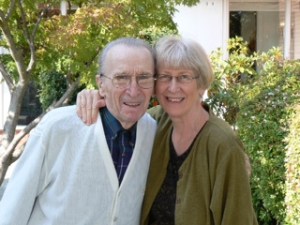
My husband & I, still youngsters in our mid to late 50’s.
I agree with that catch phrase, even though the final act of death brings its own fear level centered around how it will occur or whether or not it will be painful. But the loss of independence creates greater fear in me because of what it could mean:
perhaps having to move out of my private residence;
having my car keys taken away from me and being reliant on others for all of my transportation needs;
being told what to wear, what and when to eat, and when to go to bed;
not being able to bathe privately; reliant on someone else to make sure I get the job done right;
speaking of which, needing assistance on the toilet OR having an alternate means of evacuating my bowels – ugh!;
you name it – anything for which I am reliant, dependent, or beholden to someone else, scares me half to – well – death!
But maybe that’s just me. Maybe I’m super sensitive to this issue because of my work with vulnerable adults in long-term care facilities. So I asked friends, family, and others with whom I’m acquainted what stands out as their greatest fear in their Baby Boomer years. Here is a summary of numerous responses to my query:
loss of independence which oftentimes involves chronic illness and/or dementia that drains the household finances;
loss of independence resultant from dementia as it seems to be prevalent in so many families;
loss of independence thereby putting the burden of care on my spouse;
loss of mobility;
flatulence!
I couldn’t resist listing the last response because it made me laugh while contemplating a subject matter that brings little humor to the table.
While taking a walk with a neighbor the other day, he concurred with the above, also adding that if a person had unlimited finances, loss of independence wouldn’t hurt as much: use of your own private driver, 24/7 caregiving in your own home, the best Chef money could buy so you’re not relegated to institutional “cuisine.” But you know, I’m not so sure that being able to afford all of the above would make me feel less dependent upon others than if I had a standard of living like most everyone else. Sure, the amenities are better, but the underlying cause for needing those amenities remains the same – the inability to do things for myself.
Now that we’ve all agreed that living an independent life is very precious to us – I know we understand more clearly why our parents or other loved ones fought the aging process every step of the way. I thought I was very empathetic to my father when he had to surrender his car keys. But now that I’m a wee bit older than I was at that time, I’m thinking I had no inkling of what my father went through as little by little he lost the independence he had enjoyed for eighty-some years.
But how can we prepare so as to avoid a complete loss of independence?
Well, if you find the magic formula, please let us all know. As for me and my household, I’m concentrating on the here and now in preparation for the future. Here’s my contribution:
Exercise like your life depends upon it – because it does. That doesn’t equate to running marathons or riding the Tour de France, rather, it’s participating in a variety of exercise options to which you know you can commit. What works for you – not what everyone else is doing.
Enjoy the food you eat but don’t be addicted to it. My husband and I have dessert every night and we use butter instead of margarine when we cook. Those are luxuries that we decided to enjoy while making sure that the rest of our diet is balanced and more healthy than not.
Speaking of balanced, we love our wine, so nightly, we enjoy a glass during those post-workday (and post-exercise) moments while we catch up on our respective days. Oh, and we also enjoy another glass as it goes so wonderfully with dinner, don’t you think?
Use your brain in ways that you don’t use it while at work. There’s still no fool-proof method of preventing Alzheimer’s or other dementia, but you’ll feel better about yourself if you continue to challenge what you know – and what you don’t know.
Seek peace amongst the chaos. In my article, Where do you find peace?, I explore both how to find peace, and how to keep that peace from slipping away. Rather than repeat what I previously said, I hope you’ll find time to read my “peaceful” article.
Now it’s your turn. What are you doing to avoid what many of us fear the most? I know many Baby Boomers would benefit from hearing what you have to say. We’re all in this together – regardless of how far from each other we live – so let’s work together towards attaining the goal of remaining independent as long as we possibly can.


 My adult life has been an open book; just ask my husband. He would tell you that on our very first dinner date at a Kirkland, Washington waterfront restaurant, I pretty much told him my life from A to Z, and then some. That’s why it was so astounding that at the end of our date he asked, “Would you like to do this again?”

 I love taking walks – rain or shine – in our rural neighborhood where dogs, bobcats, and even black bears, have been known to present themselves when you least expect it – not to mention the inattentive drivers who may not notice that I’m trekking along the side of the road. In the past ten years, my husband has gifted me with: waterproof long pants, a sturdy walking stick, a fluorescent yellow vest, a pair of straps with strobe lights on them that I can either wear around my arms or my ankles, pepper spray, and the list goes on. Some wives may take offense to receiving such practical gifts, bemoaning the fact that he must not love me if these are the types of gifts he thinks I really want. I see those practical gifts as a sign of love from someone who wants me to be around for many years to come.






One evening, a family brought their frail, elderly mother to a nursing home and left her, knowing that after all the research they did to find a great place, she would be well cared for.


 Living: the ultimate team sport