The attached article, written by a blogger in the UK, is straight-forward and thought provoking – it should be.
I live in Washington state, and I am glad that Death with Dignity is a legal option assuming all the legal requirements are met. This is a very personal subject matter, as is the choice that individuals will make to seize the opportunity, or to reject the opportunity. There is definitely a separate element of this option when the law is utilized for those with dementia. When is someone still capable of making the decision?
A non-profit in my state, Compassion & Choices of Washington, is an excellent resource for materials and information. They have even developed an Alzheimer’s Disease and Dementia Mental Health Directive – a first-of-its-kind directive that allows people – while still competent – to document their wishes related to who will provide their care, where care will be provided, how it will be financed, how to deal with difficult behaviors that may arise, and many other matters that both caregiver and patient face. Bless all of you who face this horrific disease that has no effective treatment, and certainly no cure.
I’m attaching the above article from a fellow blogger. He, like so many of us, find it difficult to fathom how anyone would take advantage of a vulnerable human being. The very unsettling fact, however, is that incidents of abuse of the elderly occur and are far too common.
Whether the abuse is instigated by family members upon the elderly in the privacy of their home, or by “professionals” in long-term care settings such as assisted living facilities, nursing homes, or group homes – it happens. Oftentimes such incidents go unchecked for months, or years, and are discovered only when a death occurs, or when someone with a conscience steps forward and complains to the authorities. Those being abused either don’t have the ability to complain or they fear that doing so will make matters even worse for them.
Worse? Residents fear that if they complain, they’ll be thrown out of the place in which they live – the place in which they receive the abuse. I know that you and I are quick to say, “Fantastic! What a great relief that would be if the person no longer lived with his or her abusers!” We say that because we have not experienced what they have experienced; we have not heard the threats and vicious statements directed towards these vulnerable human beings. These violated human beings don’t understand that abhorrent behavior is not normal because it’s all they’ve known.
These are older human beings who at one time were innocent children showing up on their first day of school; worried teenagers fretting over what to wear to the prom; young adults heading off to college and/or a career; husbands and wives, moms and dads … people just like you and me. Now they’re nothing but broken, barely alive bodies who have been treated worse than a junk yard dog.
Or perhaps while sitting in the easy chair next to your bed, you tried your very best to ignore the urge to purge … but you couldn’t wait any longer for someone to assist you so you let it all out, leaving you in a shameful way, sitting in a mushy pile of excrement while a stream of urine puddled at the base of your chair.
Welcome to the life of a vulnerable adult living in a nursing home. From coast to coast across the United States skilled nursing facilities (SNF) are filled with adults needing the greatest amount of assistance with their activities of daily living (ADLs) – toileting is one of those ADLs.
The following true scenarios occurred recently at a nursing home in a Seattle suburb, and at a similar facility in a suburb of San Francisco.
(Photo credit: Wikipedia)
A man who is fully reliant on mobility assistance pushed the call button near his bed to register a need for assistance. In this case, he needed to go “Number 1” and “Number 2” and had the audacity to require assistance while the staff was busy attending to other residents’ needs – but not his needs. When a staff person finally entered his room an hour later, she did so to simply indicate that she didn’t have time to take him to the bathroom so he should just go in his pants.
A woman equally as vulnerable needed the assistance of a staff person upon waking in the morning and – knowing that breakfasts were brought around to the rooms at 7 a.m. – the 91 year old started to press her call button at 6 a.m. hoping to have her morning pee prior to the arrival of her breakfast tray an hour later. That “luxury” was one that would not be afforded her; instead, a caregiver brought a breakfast tray to this patient in the seven o’clock hour and when the patient asked if she could receive help to the toilet prior to eating her breakfast, the employee told her to just go in her pants because no one had time to help her at that moment.
I can’t help myself – here’s another incident: A staff person helps a woman to the toilet first thing in the morning. The woman who is clothed in a lightweight nightgown finishes using the toilet and is ready to receive assistance back to her bed – but lo’ and behold, the staff person forgot to place the call button within close reach of the patient so she is not able to alert someone of her desire to go back to bed. Enough time has passed that by this time the patient is shivering and screams for help – screams that went unnoticed for a quarter hour. In desperation this elderly woman somehow managed to lean far enough forward to push over a metal trash pail which she then kicked repeatedly until someone finally arrived to see what all the commotion was about.
These stories don’t paint a very pretty picture do they? They depict a low quality of life that no one deserves.
What does Quality of Life mean to you?
Eating at fine dining establishments?
Having a clothing wardrobe that rivals the catwalks of Paris?
Driving in a luxury vehicle that provides amenities previously only found in limousines?
For most of us, quality of life boils down to leading a dignified existence in which we are allowed to take advantage of the basic necessities of life. For me, those necessities should include a safe living environment, sustenance, the inclusion of loving family and friends in my life, the freedom to make choices about matters that are important to me, and being on the receiving end of respectful behavior from those with whom I come in contact.
The most vulnerable among us should expect no less than those basic necessities, but “the system” isn’t working to guarantee those basics. Try to imagine, if you will, your own grandparent, parent, spouse, partner, or other family member in any one of the above scenarios. How comfortable are you with that type of day-to-day existence for them? You’re not comfortable at all – as a matter of fact you’re feeling a bit uneasy about this whole subject matter. I’m sorry to place doubt in your mind about the care your loved one is receiving but I’ll just bet that you need to get out of the comfort of denial you’ve been enjoying and into the eye-opening role of resident advocate.
Lack of caring = lack of care. Nursing home management is a tough job to do correctly, but I know it’s possible because there are some reputable and well-run facilities out there – not perfect by any means, but fairly acceptable. So yes, some nursing facilities employ stellar care staff but there are also those employees who just don’t give a damn. “I go to work. I go home after work. I get paid. What more do you want from me?” Caring – that’s what we want. You’ve chosen to work in this particular type of environment so don’t act like you didn’t know what you were getting into. Withholding proper care for those who have no recourse but to depend upon you is not only unfair, but it’s illegal. And how about answering these questions about your own aging prospects: Do you think you’ll somehow skip the journey into old age? Do you not realize that you too will be as old as the patients whose care is entrusted to you? What type of care will you hope to receive? Does it resemble any of the scenarios I’ve illustrated above – or are you under the impression that you’ll be at a “Champagne and Chandelier” type of place where you’ll be waited on hand and foot?
Not gonna happen.
This article just scratches the surface of the sub-standard care that can be found in nursing facilities. I only mention the toileting issue because it’s been front and center in my experiences with some of my acquaintances lately. One place to start getting some positive traction where these matters are concerned is the National Long-Term Care Ombudsman Resource Center where you’ll find links to advocacy programs in your state. Call those local representatives and report any concerns you may have about how your loved one is being cared for, or not cared for, in their nursing facility, assisted living facility, or group home.
If you act on behalf of your loved one, you’re also acting on behalf of everyone else in the facility because trust me – your mom isn’t the only one being neglected on her nursing home floor.
I’m thrilled about the above Blog article that just happens to have been posted today, my 60th birthday! There is a lot of substantive content in my fellow blogger’s posting: a link to a New Yorker Magazine article by Rebecca Mead, titled A Sense of an Ending; Phillip Toledano’s photographs of dementia; and, of course, the Blogger’s own contribution to the topic. The aforementioned blogger, Kathie Ritchie, maintains an exceptional blogsite, http://www.mydementedmom.com.
I hope you’ll visit all of the above – and be better off as a result.
I’ve attached the above article from a fellow blogger because I know for a fact that music memory stays with a person, perhaps longer than any other memory. I’ll give you one personal example that proved this fact for me. There are other encouraging examples readily found on the Internet, but because my family experienced this phenomenon first hand, that’s what I’ll talk about, ever so briefly.
Nancy and my father
My sister-in-law Nancy lived a life that was steeped in artistic activities. She was a well-known and respected interior designer and she was a flautist. A flautist is one who plays the flute. (I’m providing that definition because the sound of the word “flautist” sounds like an uninvited body function to me.) But I digress.
Nancy enjoyed her music involvements on a small and large scale. In the early 80’s, she met my brother during a local production of South Pacific – a production in which my brother acted, and for which my sister-in-law provided the music accompaniment. Fast forward to the year 2012. I gladly helped my brother out by taking Nancy on outings – sometimes to art museums, sometimes to music events. Regardless of the outing, I always made sure that my vehicle’s radio was tuned to the classical music station. I knew Nancy would enjoy it, and I also knew that even after being diagnosed four years earlier with mixed dementia, Nancy would be able to identify the orchestral or operatic pieces being broadcast.
Although I grew up appreciating the classics, the only pieces I can accurately identify are those often-played symphonies such as Beethoven’s 9th Choral Symphony, or Vivaldi’s Four Seasons. Nancy, on the other hand, could pick out the lesser known arrangements and could identify, with pinpoint accuracy, the conductor and the soloist for that particular piece, e.g. Leonard Bernstein; Yo Yo Ma. It saddened me to hear the hesitation in Nancy’s voice when she would speak up while sitting in the passenger seat, making the musical identifying remark but always questioning whether she had done so accurately. “I think that’s Mozart” or “I think that’s Yo Yo Ma playing his cello. I think it is.” Even before the piece was identified on the radio I would assure Nancy, “If you say that’s Yo Yo Ma, by God, it is Yo Yo Ma.”
And she was right – and she was affirmed that she still had a handle on Handel, or Mozart, or Sibelius. Yep – she never lost her abilities. What a delight, and what a pleasant interlude during an illness that took her life on July 4th, 2012 at the age of 69. One thing I know for sure, however, is that from Nancy’s viewpoint right now, she’s enjoying her favorite opera each time Wagner’s “The Ring Trilogy” is played around the world. Nancy doesn’t need season tickets anymore; she has a front row seat.
A recent article by Jim Fitzgerald of the Associated Press focuses on a few electronic methods that might relieve some of the struggles experienced by caregivers who try to balance their frantic personal lives with the oftentimes emergent needs of their loved ones. For the purposes of my article, I am only looking at the type of monitoring put in place by a family member to check on an elderly person’s well being; primarily a family member with Alzheimer’s or other dementia.
Beleaguered caregivers getting help from Apps is an eyeopening look at how Smartphone Apps, and other electronic devices, can provide some sort of relief to lessen the caregiver’s load. Many of those who are long-distance caregivers, such as I was for my father several years ago, might benefit from being able to monitor their family member’s safety and well-being from a distance.
But does such monitoring invade the loved one’s privacy? Of course it does; but I guess one could say that the benefits outweigh the disadvantages of such monitoring. Or do they? What comes to my mind is the elderly person’s gradual loss of independence – an aspect of life that many of us would equate to being a requirement for our own quality of life. But I digress.
At best, I think electronic monitoring serves as a stop-gap or interim measure of caregiving before hands-on care is put into place. The Pillbox App keeps a very tentative watch on whether or not a loved one – say a parent – has taken his medication properly. If the parent does not have compromised executive function, it’s certainly easy to “fake it” so that the daughter can feel as though all is well ten miles away. In reality, however, medication mismanagement might be taking place, carried out by the parent.
(Photo credit: ell brown)
The Alzheimer’s Association Comfort Zone program requires that a loved one wear a GPS device at all times so that family members can monitor their comings and goings throughout the day. The system is of no benefit if the person doesn’t wear the pager; and if the person has dementia, there’s a strong likelihood of that happening. I’m being the devil’s advocate here, simply pointing out that the system is only as good as the cooperation required to use it. HOWEVER, and this is a demonstrative HOWEVER, it appears to be a very worthwhile system that provides numerous benefits. Other than taking away ones right to privacy, it definitely serves as a safety net for when mom, dad, spouse, or other loved one, are heading into trouble.
I’m skeptical of Comfort Zone but I’m also its fan. I’ve linked the Comfort Zone website above so that the reader can determine if such a system is worthwhile in his or her situation. My skepticism comes about because I wish more attention and financing would be spent on a cure for Alzheimer’s and other dementia so that these current monitoring methods become a thing of the past. A world without Alzheimer’s sounds just as desirous as a world without cancer, or MS, or Lou Gehrig’s disease, to name a few. More disease control financing = more cures.
One final word: I’ve already experienced two family members with Alzheimer’s and all the caregiving migraine headaches associated with those experiences. So please know that I’m a proponent of worthwhile practices that ease the caregiver’s burden. Unfortunately, there is absolutely no fail safe method out there that will give caregivers true peace of mind. Even placement in a long-term care facility is not a 100% guarantee that mom, dad, sis, or gramps will receive the best care possible. I’m sorry to burst your bubble – but it’s true.
Perhaps you read the brief title of my article and before delving into its content you’re wondering: The morning after a night of drinking? The morning after doing something regretful – perhaps synonymous with the previous question? The morning after a horrific news event?
None of the above. In the attached article, a fellow blogger writes about his experience of waking up the day after his wife passed away; a day in which he felt the full impact of the loss of his wife and the cessation of his role as her caregiver – his identity for so many years.
Unless, and until, you experience this type of blurry identity, you can’t fully understand the feeling. Those of you who devoted any amount of time caring for a loved one prior to their death understand all too well the emptiness and lack of purpose that oftentimes follows the end of the caregiving journey.
I was the long-distance caregiver for my father after he was diagnosed with Alzheimer’s disease. He lived in a memory care unit of a Southern Oregon continuing care retirement community (CCRC) while I commuted from Seattle by plane, by telephone, and by 24/7 worrying and thinking. By choice, I left my full-time job and for the next four years, dedicated my time to managing his care and being the primary on-site visitor. Many of you worked full-time at your “real” job while being a caregiver for a loved one and I respect and honor you for somehow juggling all of those responsibilities. I knew my limitations, however, and reached that limit quite early in the process. The emotional and physical toll of caregiving was more than I was capable of handling on top of my other job, so with my husband’s blessing and encouragement, we did without my financial contributions while I carried on as my father’s care person.
After my father’s October 13, 2007 death at the age of 89, I returned to Seattle having spent the last hours of my father’s life at his bedside; then several days wrapping matters up with the funeral home; with the bank trustee, and with the facility in which he had lived for close to thirteen years. Although there would be many weeks of tying up loose ends upon my return home to the Seattle area, I was effectively unemployed – laid off from a job to which I was extraordinarily committed. As the blogger in the attached article mentioned – those in this position wake up the day after, and the day after the day after, feeling as though they have lost their purpose. Additionally, the identity which defined them for several years no longer applies.
Grieving and re-purposing our lives can take place during this time, a process which may take months or years; a process that is as individual and unique as ones fingerprint. As the blogger wrote in his article, he appears to be transitioning in a way that utilizes his years of being the primary caregiver and advocate for his wife. He’s recreating his working life; reshaping it to fit the caregiver role in which he flourished. Like this blogger, I too quite naturally segued into employment positions in which I could continue on the path that I had started years earlier with my father: elder advocacy, Alzheimer’s Association volunteerism, and most recently, putting all of those past and present experiences down on paper in the form of a novel.
But that is not necessarily the norm. Some of you may have felt the need to totally disassociate from anything remotely related to the caregiving or care managing roles. I understand that decision and I agree 100% that it’s the right thing for you to do. Again – how we recover and/or regenerate after the caregiving experience is a distinctive aspect of our ongoing lives. What we do have in common, however, is that we have all experienced the morning after the end of our caregiving journey. Whether we’re relieved, angered, aggrieved, or a combination thereof – the morning after is unavoidable.
In closing, I want to celebrate you – the caregiver heroes who are ordinary people, who did the ordinary right thing, at an extraordinary time. You are a hero to many, and you are a hero to me.
Keep in mind that although he writes about our elderly parents (those over age eighty), the principles he puts forward apply equally to a spouse or partner, sibling, or good friend. If you are invested in a loved one’s well-being, please consider reading this book. Bear with me as I provide a lengthy quote that characterizes this physician’s concerns:
Families must come to appreciate that “medicalized” care is very different in nature and cost from the personal health support and hands-on caring so essential for your parent. In reality, our American medical system is best at managing acute crises and supplying excellent specialized elective procedures – joint replacements, organ transplants, eye improvements, cosmetic changes – all modern technological wonders.
As for the more ordinary and common management and support of elders and families dealing with chronic problems of aging and slow-moving diseases, our medical care system has not done so well. Some elderly patients are fruitlessly subjected to what some critics now call “death by intensive care … “
Now let’s put ourselves into the shoes of a vulnerable adult sitting in an examination room waiting for the almighty doctor to walk through the door. Answer this question for me: When was the last time you personally felt rushed during a doctor’s visit for yourself? (Mine occurred last week – but I digress.) Many of us think faster than the vulnerable adult, are able to keep track of what the doctor is saying, and have sufficient cognitive awareness to discern the doctor’s recommendations or treatment options. Dr. McCullough wonders how an elderly person could possibly be treated effectively during a fifteen-minute office appointment by a doctor who peers into a computer screen, barely acknowledging the presence of the patient. How can that physician possibly treat the complexities of an elder’s needs if he/she is not fully engaged in examining the patient? Most often, the elder patient will not volunteer information that is not in direct response to a doctor’s insightful inquiries. They are of a generation that does not question a medical professional – “after all, they have the medical degree, not me.” The elderly patient may exit the exam room having not even discussed his or her medical concerns – simply because the doctor didn’t give her an opportunity to do so.
Dr. McCullough emphasizes how important it is that each vulnerable patient have a “Circle of Concern” – a group of people that provides steady support and insight into the patient’s needs. That group may consist of immediate family members, friends, neighbors – anyone dedicated to providing an “active, extended advocacy partnership” that will not only attend to the patient’s technical needs, but also the emotional and human needs that are perhaps in need of greater attention.
My article, Caregiving: The Ultimate Team Sport, promotes a similar type of caring, using the analogy of a team’s various members, and their collective roles on the team. Each person has a skill that supports the other team members’ skills. The Circle of Concern serves this same purpose.
Perhaps we should all consider how we would like to be treated by others if/when we become dependent upon their contributions to our quality of life. Dr. McCullough offers this snippet of Tibetan wisdom: Make haste slowly.
Not all decisions are emergent ones. Isn’t a person’s quality of life worth stepping back so that appropriate, “guided” decisions can be made? Rushed judgment should not take the place of carefully considered care. As Dr. McCullough states, “Time to begin to ask for more time. Short of a crisis, don’t be rushed.”
Being a mind reader would greatly benefit every parent of a newborn baby, and all caregivers of those with Alzheimer’s or other dementia. The article attached above, by Blogger Kathy Ritchie, is a thoroughly relatable article that is raw in its presentation, but wreaking with truth because of that rawness.
(Photo credit: Wikipedia)
Reading Kathy Ritchie’s article I was instantly reminded of a line from the television series, Up All Night, wherein new parents, played by Will Arnett and Christina Applegate, fail miserably in their efforts to get their infant daughter Amy to fall asleep and stay asleep. They try everything they can think of to address the baby’s distress: diaper changing, giving her a bottle, reading stories, making funny faces – you get the drill. In desperation, Will Arnett finally says to his infant daughter, “We’re on your side!”
When you can’t force understanding on someone you’re taking care of, you wing it or you pull every trick out of every “How To” book written on this task of caregiving. Yet more often than not, even with all the resources available at your fingertips, you make little headway in your attempts to meet the emergent needs your loved one presents to you. Or what works one day (or hour) may not work the next day. Why? Because Alzheimer’s and other dementias are very unpredictable diseases; and people with dementia are unique individuals, equally as unpredictable. There is no one formula for how to respond to any given situation.
As Kathy states in her article, “You have to work very hard to find the funny.” I think many of us, given the choice, would settle for finding all the right answers and do without finding the funny – but the funny incidents are a great addition to ones day.
Caregivers of the world – you are not alone and if you need someone to tell you what a great job you’re doing, I’m telling you right now – YOU’RE DOING A GREAT JOB!!!
Your journey is filled with speed bumps and ruts in the road, but you continue on that path anyway because of your commitment to your loved ones. After all, they had no choice in the matter when they ended up with Alzheimer’s or other dementia. You’re both innocent victims.
Read the above article if you’re not convinced that traveling with a loved one who has dementia can be challenging. Or read it if you too have experienced this particular type of stress because you have already ventured into the travel hell that this Blogger describes. I make that statement with no disrespect intended. It doesn’t matter how much you love your co-traveler, it doesn’t matter how wonderful your destination – getting there is not without its mishaps and aggravations for both the caregiver, and the cognitively impaired traveler.
(Photo credit: caribb)
Then there is the other side of the coin: imagine that you are a person with mid-stage Alzheimer’s or other dementia who is not accustomed to staying put – you actually wander constantly when you’re on the ground – and you’ve been put on an airplane by yourself and you have no concept of what is taking place. You don’t have the capacity to understand that this metal tube in which you are sitting is a confined space and trying to “get home” is not an option. If you can’t imagine that scenario read the attached article, Alzheimer’s “exit-seeking” behavior at 35,000 feet, an article I wrote shortly after returning from Bar Harbor, Maine in October 2012.
In my post, President Obama says the “A” word: Alzheimer’s, I provided some Alzheimer’s statistics that focus on those who are predicted to be diagnosed with Alzheimer’s or other dementia in the years to come. I also talked about caregiver statistics.
One statistic that really resonates with me is the following: a new caregiver is set into action every 33 seconds because someone will develop Alzheimer’s every 33 seconds. In actuality, the stats are far greater than that. Caregivers are “created” every second of the day because there are countless diseases requiring the assistance of someone just like you and me – an unpaid caregiver for a loved one. I use the distinction of “unpaid” so as not to be confused with those who work as caregivers in the health care industry.
The following statement is attributed to former First Lady of the United States, Rosalynn Carter:
There are only four kinds of people in the world – those who have been caregivers,
those who are currently caregivers,
those who will be caregivers, and
those who will need caregivers.
I really don’t think there’s any way around it. How about you? Have you dodged the caregiver or being-cared-for bullet yet?
Lest you think that Alzheimer’s has nothing to do with you, look at the following statistics provided by the Alzheimer’s Association:
By the year 2050, nearly one million new cases will be diagnosed each year – that’s one American developing Alzheimer’s every 33 seconds. Taken further, that most likely equates to nearly one and a half million new family caregivers each year – considering that at least one family member will be involved in managing a loved one’s care;
Ten million Baby Boomers will get Alzheimer’s;
On average, 40% of a person’s years with Alzheimer’s are spent in the most severe stage of the disease;
The number of Americans that die each year from Alzheimer’s disease has risen 66% since the year 2000;
Alzheimer’s is the sixth-leading cause of death in the United States;
Today, there are no Alzheimer’s survivors – none.
Please take time to read the article I’ve attached above and consider the following: We are going to pay for Alzheimer’s one way or the other – now, or later.
This is a disease that will affect you, your children, your grandchildren, great-grandchildren, and beyond. Burying our heads in the sand won’t solve anything. Please consider donating to the Alzheimer’s Association as well as contacting your state’s congressional leaders asking for greater federal funding for Alzheimer’s research. Why? Because of this staggering statistic:
According to the National Institute of Health, the federal government currently spends much less money on Alzheimer’s research, prevention, and cure than on other conditions such as cancer, heart disease, and HIV.
The article above, written by blogger Richard Kenny, illustrates his ability to adapt to his mother’s dementia – especially when doing so involves carrying on a conversation with her. I love how Richard has figured out how to get around the frustrations that can exist when “normal” and meaningful conversations are few and far between – and nonsensical ones become the norm.
My dad and I thirteen years ago; and seven years before Alzheimer’s took him away from us.
Going with the flow is the rule of the day, the month, and the year, if you want to avoid stressing out when trying to converse with someone who is not able to enter your reality. The Alzheimer’s Association encourages this mantra: “If you don’t insist, they can’t resist.” Go with it – and you just might enjoy yourself!
A very brief blog entry from a fellow blogger. Some of you on your caregiving journey – or those who have recently ended that journey – will understand what is being said here.
I think you’ll all agree that humor can be found in almost every situation in which we find ourselves. Even the distressing disease of dementia has its lighter moments. The article above, by fellow blogger Don Desonier, provides a moment he had with his wonderful wife Nancy. I think many of you will be able to visualize the scenario that this writer so adeptly describes.
Here’s a humorous story from my caregiving time with my father who died from Alzheimer’s complications in October 2007. On one of my visits to his assisted living facility in Oregon, he asked me to help him change his hearing aid batteries. So happy to have something to do that would benefit my father, I jumped at the opportunity to help him hear better – thereby greatly enhancing our conversational abilities.
Behind the ear aid (Photo credit: Wikipedia)
He pulled out his hearing aids and I pulled the dead batteries out and placed them on the coffee table. I turned my back for a couple seconds and upon refocusing my attention, I saw that my father had put a dozen other batteries on the coffee table – MIXED IN with the two that no longer worked. Had my father not put all the batteries in a pile I might have been able to readily discern the two recently removed batteries. As it was, it took us forty-five minutes to test the batteries and as luck would have it, the used-up batteries were the last two we tested.
At least I got a laugh out of it – after the initial frustration – and dad seemed to get a kick out of the fact that I was giggling about the process. And now more than five years later – I can still reflect on that experience with a smile on my face.
The article above is from one of my favorite bloggers, Frangipani Singaporenicum. Her journey as a caregiver involves her mother. Her storytelling of what that involves is really quite genius.
(Photo credit: Wikipedia)
This article addresses the question as to whether or not the person with dementia is the same person they were prior to onset of disease; and if they are not …
then who are they?
Once you’ve read her article I believe you’ll have a clearer perception of what dementia takes away – and leaves behind – during the progression of the disease.
I’ve attached, above, a link to a fellow blogger’s site. The message is short and instructional.
What resonated with me about the statement provided in the link, is that each of us has experienced the after effects of walking in the midst of someone’s bad day and we inadvertently become the recipient of that bad day’s vibes. And sometimes the shoe is on the other foot. It’s unavoidable. I guess that’s why the words of wisdom provided in the link, are words that we all need to take to heart.
When I think about the subject of having to tell someone some bad news, I think of the conversation: “I’m not gonna tell them – YOU tell them!” “No, I’m not gonna tell them – YOU tell them!”
No one wants to be the harbinger of bad news – especially news that will change peoples’ lives forever. When friends and family need to hear the news that someone in the family has recently been diagnosed with Alzheimer’s or other dementia you wish it was as easy as the task you avoided at work – telling your cubical-mate that he has bad breath. Nope – when lives are at stake – and quality of life issues are at stake – the ballgame changes – certainly not for the better.
In the attached article above, you’ll read the story about a family who had to make the agonizing decision about who to tell about a wife’s early dementia diagnosis – and when to tell them of the news. What’s so beautiful about this husband’s telling of the story, is how much he took his wife’s feelings into account when determining the best conversational course to take. The route he and his adult stepchildren chose was not one of denial, such as can be the case in some instances, rather, they faced the reality of this cosmic shift in their lives, and did what worked best for them and for their loved one.
Each circumstance is different – and those involved need to make appropriate decisions that fit the dynamics of their particular situation. (It’s certainly not a one size fits all solution.) And let’s face it – when someone starts out on this caregiving journey – it’s definitely a matter of on-the-job training. In the above family – it appears to have been done quite well.
The above link, from a December 2012 NBC News report, addresses the conversations that many of us – well, many of you anyway – still need to have with your parents. (My mother died in 1994, my father in 2007 – those conversations have long since taken place.) In many respects, my brother and sister and I were fortunate because in our family, the topic of sickness and death seemed no different from discussing that night’s dinner menu – perhaps even easier. That’s just how it was in our household growing up. But I’m aware that universally, that is not the case.
GIFTS. Who doesn’t like receiving gifts? Most of us get a kick out of being handed a package with a fully wrapped surprise within and told to “open it!” “What, for me?” Yes – for you. Perhaps the gift is something we didn’t expect, or we’ve sufficiently hinted our exact wishes and finally someone gifted us with that long sought after item. Fun, isn’t it? Someone cared enough to gift you with something you’ve always wanted or you receive something that you didn’t know you wanted, but it turns out, you do!!!
THE GIFT THAT KEEPS ON GIVING. A few years ago, I succeeded in convincing my wonderful hubby that we needed to put together our “last wishes” which of course includes a Will, but more importantly, an Advanced Health Care Directive. My husband is one of those who isn’t exactly comfortable sitting around the dinner table – or any table for that matter – talking about death. I get that – I really do. So I couched this discussion by talking about what a gift my parents, and his parents, gave their families by specifically outlining what to do when it came time to do something.
When your loved one is heading towards the great beyond, it’s comforting to already have his or her wishes on paper and ready to execute – no pun intended. I’ll use my father as an example. My father died at the age of 89 on October 13, 2007. Official cause of death was prostate cancer but advanced Alzheimer’s was a huge factor in his death. There is no way my father would have a) survived cancer surgery; and b) even wanted cancer surgery at that stage of his dying. His Advanced Health Care Directive very clearly stated his wishes and us three siblings had copies of that document and respectfully went along with his wishes. Dad saved us the stress of making an extremely difficult guesstimate of what he would have wanted in the midst of that situation. His dying was already an emotional experience so I can’t imagine having some sort of discussion about when to stop treating his illnesses.
The legal document, drafted years earlier, was drafted for this specific time. Even if dad had been conscious – and he was not – his dementia would have prevented him from making a well-informed decision. If ever there was a time when dad’s gift was ready to be presented – this was it. That gift allowed us to spend our last hours with him simply loving him; singing to him; and telling him how grateful we were to have him as our dad. Beautiful.
You don’t have to wait until you are 50 years or older to put your wishes in print. Old people aren’t the only ones dying who require some sort of affirmative decision-making. Someone in their thirties could be in a horrific vehicle accident and end up lingering on the precipice of death. A forty-year old person could have a stroke and be on that same precipice. It’s never too early to do something about your exit from this world as we know it. You can always change your mind later – you decide that you do, or do not, want hydration, so you revise the document. That’s the beauty of word processing – it’s changeable, and once you get that revised version documented by witnesses, you’re good to go! Literally.
If you choose to use an attorney, you can go through the local Bar Association for referrals or you can attempt the same outcome by doing it yourself. Many office supply stores have boiler plate legal documents you can readily purchase – but be certain to purchase the forms that contain the required legal verbiage for your state or territory. Additionally, organizations such as Compassion and Choices provides forms that you can download from their website, even a form that has a Dementia Provision. Who woulda thunk? Not me.
The Holidays may be over, but the season of gift-giving is not. Won’t you consider giving your loved ones one more gift this year?
Attention one and all! There’s a new website out that will be addressing the challenges of being a caregiver. The author/owner of this website, Don Desonier, is coming from the perspective of someone who very recently lost his spouse as a result of dementia complications.
Don’s five-year journey as a caregiver provided him with heart-rending experiences from which he garnered exceptional insight and wisdom. I personally look forward to his article postings – so much so, that I became his first blog follower. At the very least – why don’t you check out the website and visit from time to time. I feel confident that you’ll walk away feeling renewed with the realization that you’re not alone, and somehow or another – there’s a way through this difficult journey that you’re on.
I commend this Blogger, and I love him. Don is my brother and he was an extraordinary caregiver to his wife of almost twenty-five years.
In Washington State, there are currently 150,000 people diagnosed with Alzheimer’s Disease. In the rest of the Nation, more than 5 million have Alzheimer’s disease. That number will jump to 16 million by the year 2050. Most of us envision an elderly person with some sort of dementia. We might even expect it to occur in those 85 or older. Listen to me Baby Boomers – young and not-so-young – the number of people diagnosed before the age of 65 – known as early-onset Alzheimer’s – is more common than you think. In the United States alone, those with early-onset disease currently number 200,000.
That number decreased by one when my exceptional sister-in-law died on July 4, 2012 at the age of 69. Just about the time that Baby Boomers should be anxiously making their final retirement plans – such as was the case with my brother and his wife – they are instead dealing with the challenges of managing a disease for which there is no cure.
Sixty-four year old Lon Cole, a resident of Puyallup, Washington, is one of the 200,000. The local NBC affiliate, King5 in Seattle, Washington, ran a touching story about this gentleman. I hope you will take the time to look at this news article: Alive and Thankful: Living with early-onset Alzheimer’s. Those who have managed, or are currently managing, the care of a loved one with early-onset disease, will be touched by this family’s story.
In the article linked above, a fellow blogger provides an exquisite sampling of the types of circumstances some life journeyers may be going through resultant from losses that have placed them in a difficult transitionary time in their lives.
Chances are all of us will experience more than one of the transitions that Don frames in this article that so delicately – and movingly – touches on the topic of grief and loss that occur when “first” occasions without someone come around on the calendar.
May all of you receive the comfort you need during the “first” times on your grief journey.
Grief – when one experiences a loss, there is no way around this emotion. It has no clearly defined end. It manifests itself differently for every individual. The writer of the above article shares the personal side of how this emotion presented itself in his own life in this continuation of his series of articles on grief.
This “personal snapshot” is a follow up to his first article in the series that addressed an event in ones life for which everyone’s grieving experience takes on a slightly different character. I hope you’ll read the article attached above, and his previous article – also available on his website.
The attached article, written by a fellow blogger, needs no introduction other than for me to tell you that Margo beautifully describes a perfect evening with her hubby who was diagnosed with Alzheimer’s several years ago.
Sally Abrahms’ article linked above does a fantastic job of addressing some common emotions felt by the family caregiving community – those who provide free caregiving services to their loved ones. Let’s look at the three emotions she mentions and also look at the struggles many caregivers experience at their place of employment.
Grief. We grieve the loss of the person who is still with us. “When someone dies, it is an overwhelming and horrible experience, but it is the end of something,” says Suzanne Mintz, cofounder of the National Family Caregivers Association. “But with a caregiver, the grief is perpetual; it goes on and on and on.” Until you’ve experienced the ambiguous loss of your loved one, you can not say that you understand that particular type of grief. This ambiguous loss may result from a loved one’s dementia, debilitating disease, or other conditions that rob the patient of their physical or cognitive abilities. Ms. Mintz states that when one person receives a diagnosis, you both receive the diagnosis. You both experience the gradual loss of the life you once had and you know it won’t be coming back. That is a grief that keeps on giving because as time goes on, more and more of one’s previous abilities disappear right before your eyes.
Guilt. “I wish this would all be over so I can get my life back.” Oh my gosh, did I just say that? Many of you have felt that way and then struggled to rid yourself of the ensuing guilt. But guilt is constant – whether it manifests itself in believing that you are not doing enough for your loved one, not doing enough for your family, feeling negative towards the one receiving your care – it is constant. And it is normal. These negative feelings don’t make you a bad person. Rather, they are proof that you are a sensitive, aware and evolving being who hasn’t yet perfected the art of living.
(Photo credit: TNLNYC)
Exhaustion. Physical, emotional, and spiritual exhaustion sneak up on you and if not attended to early enough, they are killers. In my article, Caregiver: put on your oxygen mask first, I address the need to place yourself as more important than the person for whom you are providing care. “Gee, that’s pretty darn selfish!” Not at all. If you get what I’m talking about, you’ll agree that your loved one’s care is fully reliant on your ability to provide it. You can’t do so if you are on the brink of exhaustion, or worse, you die before your loved one, which is more common than you would like to think. You need a caregiving team. That team may consist of other family members and/or neighbors and acquaintances. You can’t do it all by yourself. If you’re a solo caregiver, check out the article, Solo Caregiving. This article provides tips on how to get the help that you need from those around you.
Discrimination. According to the recent report, Protecting Family Caregivers From Employment Discrimination, “roughly 42% of U.S. workers have provided unpaid elder care in the past five years” and that number is expected to rise to about 49% by the year 2017. With so many family caregivers out there, especially with the incidences of Alzheimer’s and other dementia on the rise, we all hope that employers will be more inclined to help their employees. But discrimination does occur in the workplace in the form of: limited schedule flexibility, denied leave or time off, and even dismissal from ones job.
The Family Medical Leave Act (FMLA) protects some caregivers but is an imperfect protection that is not required of employers with fewer than 50 employees. Additionally, of those employers required to adhere to FMLA guidelines, the employee must have been with their company for at least twelve months and have worked at least 1,250 hours during the previous year. With no FMLA protection, your job is at risk – especially in an economy when so many other workers would be glad to put in the hours that you’re not able to fulfill.
A word to employers. I know that it’s hard to maintain success while some employees just aren’t pulling their weight. But I think you’ll agree that some of you need to be more sensitive to the struggles experienced by your caregiver employees – employees who have never let you down prior to this difficult time in their lives. These exhausted souls can’t tread water fast enough – won’t you help them? Please do what you can to make reasonable accommodations that will lessen this temporary turn of events in your employees’ lives.
The brief article, above, is one of admonishment and encouragement. Thank you my fellow blogger in Singapore for your extraordinary insight.
I think many of us can dredge up similar instances when someone responsible for the care of our loved ones dropped the ball. In my case, I flew down from Seattle, Washington to visit my father at a hospital in Oregon where he had been admitted because of a medical condition that had became acute in light of his Alzheimer’s disease.
I entered his room and saw him sitting up in his hospital bed, frantically rubbing his back on the stack of pillows behind him. “Dad, you look really uncomfortable. What’s going on?” “I don’t know,” he said, “but my back feels hot.” One look at my father’s back was enough to raise my blood pressure, and it takes a lot to do that since my BP is usually around 100/65. My father’s back was raw with welts. What he was feeling when he said that his back was hot was extreme itching.
(Photo credit: Ralf Heß)
I summoned a nurse – no small feat since it appeared that an old person with dementia in a hospital room was not as important as the other patients on the hospital floor. The nurse told me, “Oh, he must be experiencing an allergic reaction to the solution we used for his bath in bed. It’s the type of cleanser you don’t have to rinse off.” “Well, evidently, you do have to rinse it off! Look at the welts on my father’s back. He’s in misery! You have to get this dried soapy solution off him in order to relieve the itching!”
The nurse left the room, only to return a couple minutes later with a stack of washcloths. “Here, use these.” Then she walked out.
Left to my own devices, I drenched several of the washcloths in cold water, opened the back of my father’s hospital gown and proceeded to clean off, and cool off, his back. “Dad, this is going to feel real cold but it will make you feel better.” And it did. Ministering to my father in this way was a gift. I still wasn’t happy with the hospital staff, but I began to appreciate what turned out to be one of the final personal acts of caregiving for my father.
A month later I again flew down to Oregon, but this time, the cold washcloths I applied to my father were employed to bring down his temperature as he spent the last hours of his life in his assisted living bedroom dying. My father’s cancer – inoperable at that stage of his body’s vulnerability – had placed him in a stage of unconsciousness. As the staff alleviated the discomfort of his cancer with morphine, I lowered the fever brought about by the shutting down of his body’s organs.
A month earlier, what good would have come about if I had read the riot act to the nursing staff at the hospital? None whatsoever. Instead, I can be thankful for the gift of hands-on caregiving and comfort that I was able to provide my father while he was still alert and able to express his relief at having a cool, itch-free body.
I’m sad thinking about these incidents that occurred in the Fall of 2007, but I’m also delighted with having had the opportunity to minister so personally to my extraordinary father during the last weeks of his life.
This Blogger, Richard Kenny, really has a way with words as he describes the challenges – and sometimes the joys – of his caregiving role as a son to his mother who has Alzheimer’s and to his father who struggles to be the spouse of a wife with Alzheimer’s.
Very much worth the read – and I don’t just mean this one article. Many of Richard Kenny’s observations and musings so clearly reflect his day-t0-day frustrations as well as his somewhat new found ability to adapt to every unforeseen circumstance.
The attached link, written by a blogger in Singapore, describes his experience as a cab driver when he picked up a woman with dementia who needed to get from Point A to Point B but who lacked the cognitive capacity to effectively do so.
Personally, I think he excelled at compassion and even though he feels he could have done more, I respect him for what he did do. We don’t want to entertain the thought of someone who might have taken advantage of this woman but there are many who would have looked at this situation as an opportunity to exploit her vulnerability.
I congratulate you, Lim James, for showing all of us that goodness exists, and it exists in your soul.
When the Mind Says Goodbye is a thoroughly touching mini-video (less than 5 minutes long with beautiful music accompaniment) chronicling a married couple’s journey as best friends in early childhood, all the way through their marriage – currently a more than 87 year-long relationship.
This couple, George and Adriana Cuevas, show us how a lack of words does not have to limit ones ability to relate to, and comfort, a loved one. I hope you will take the time to observe this loving couple as they walk through the hallways of Adriana’s memory care unit, and as they sit side-by-side with only touch and eye contact as a communicator.
It seems to work for them. How lovely that their marriage commitment lives on, even when the mind has already said goodbye.
I strongly encourage you to read the above article. Too often physicians with insufficient training on elder-health issues dismiss the early signs of Alzheimer’s or other dementia as simply being age-related developments. Doing so presents the risk of missing the small window of opportunity in which to treat cognitive issues early on, rather than when they have fully taken up residence in a patient.
Sure, there’s nothing yet that prevents or cures the disease, but being able to manage the symptoms early on certainly adds to the quality of life that both the patient, and their loved ones, seek to experience.
For those of you who have taken on the role of advocating for your loved one: when you escort your loved one with early memory loss or confusion to the doctor’s office, do not back down when he/she concludes the symptoms are to be expected due to advancing age. NO! Those symptoms could very well be indicative of disease-related dementia, OR the symptoms could be caused by medication side-effects (blood pressure medication, seizure medication and the like) or other medical conditions, such as urinary tract infection (UTI.)
It’s all about advocacy. Do you go the easy route and take the doctor’s word for it, or do you push for worthwhile diagnostics to rule out any other serious or life-changing causes?

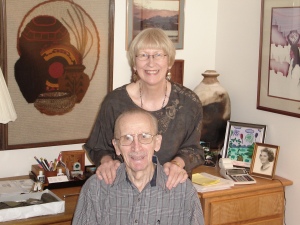


 Chances are all of us will experience more than one of the transitions that Don frames in this article that so delicately – and movingly – touches on the topic of grief and loss that occur when “first” occasions without someone come around on the calendar.


 Living: the ultimate team sport