This post, from a wonderful Blog about caregiving, http://www.letstalkaboutfamily.wordpress.com provides an excellent idea. It’s never too late to start this project for a loved one with Alzheimer’s or other dementia.
Local and Federal governments have more red on their accounting ledgers than black. Citizens balk against any raise in taxes, regardless of how infinitesimal the increase. The same citizens demand more services from their government. How does one get what they need without paying for it?
THEY DON’T.
I’m not a politician – and never will be. I’m not a brilliant person nor do I fully understand all the nuances inherent in government bureaucracies. About this one thing, however, I am absolutely certain: many valuable services that were initially set in place for those considered vulnerable in our society are still desperately needed for even a modicum of dignity and quality of life. Did the needs suddenly disappear? NO. Did the vulnerable in our society somehow experience a miracle and are now fully capable of managing their lives on their own? NO. The needs are still there and the vulnerable in our society are being pushed to the wayside and are slipping through the cracks. Do I like paying taxes? NO. I guess I’m wondering how to generate funds for needed programs without “robbing Peter to pay Paul.” Taking from one program and sliding it over to a different program robs other needed services. If ever there was a Catch-22, this is it.
Let’s look at caregiver training. In Washington State, in the year 1996, caregivers were only required to pass First Aid training, CPR and HIV training, the Fundamentals of Caregiving training (22 hours), and had to successfully pass the State’s criminal background check.
With a first-aid card and some training about CPR and HIV, you can find yourself a challenging new job caring for the elderly and infirm, bathing them, feeding them, and fielding punches from them. For this you can make about $7.50 an hour. At McDonald’s, you can make more slinging burgers and fries. It’s a wonder anyone cares for the elderly and infirm at all.
The year 2000. For the third time in four years, the Washington State’s long-term-care ombudsman (who is independent of any government agency) pushed for more training for caregivers. “The Legislature and the industry both need to step up and say this is an important key profession…People who take care of human beings are important people.” State bill I-1029 passed which would increase the number of required training hours and implement specialty training for residents with special needs such as dementia, mental health, and developmental disabilities. Implementation of this Bill’s provisions was delayed and set to go into effect March 1st, 2002.
Fast forward to February 2002. Let’s look at another Seattle Times article, Caregiver-training issue causes split in state’s long-term-care community. After the Bill from the year 2000 passed, the Department of Social and Health Services didn’t get the training curriculum revised in time for the March 1st, 2002 implementation so the State Legislature delayed the start-up of the new training requirements to September 1, 2002. Private providers of long-term care – those not accepting Medicaid – would have to foot the bill to provide employee training, most certainly passing the costs along to their residents. Long-term care facilities that accept Medicaid payments would rely on the State Medicaid program to provide the mandatory additional training and the State contended that the budget does not exist to provide the mandated training voted into law from initiative I-1029. Time to go back to the drawing board.
Bear with me. Fast forward to November 2008. Let’s look again at another Seattle Times article, Voters back more caregiver training. In 2008 a revised caregiver training Bill was passed requiring a training increase from 34 to 75 hours for new long-term care workers and required caregivers to undergo a Federal criminal background check. This bill passed overwhelmingly. It’s great that the citizens of my fair State decided that anyone taking care of the vulnerable should be held to a high standard. Oops – in the same voting cycle, initiatives that would have imposed taxes on candy, soda pop, and other piecemeal purchases failed big time. These miniscule, microscopic taxes would have saved vital services for the vulnerable and would have helped the State pay for the “mandated” new training. No money – no increased training – no Federal background checks.
One more time. Fast forward to November 2011.Washington voters asked to boost caregiver training again, Seattle Times. The Legislature delayed the implementation of the 2008 Bill because of budget cuts. And during the voting cycle of 2011, a re-worked caregiver training initiative made it to the ballot once again as Initiative I-1163, right in the middle of an ever-increasing budget crisis, and the Washington State voters overwhelming approved it. Implementation of the new training and background check requirements are set to start in 2012. Lawmakers pushed implementation to 2014 but the good news is that the Legislature won’t be able to delay implementation of the new requirements without a two-thirds majority. As of March 1, 2012 – the Washington State legislature has yet to finalize any enactment of the Bill protecting vulnerable adults; those that the voters of my state approved – and voted for – numerous times since the early 1990’s…stay tuned…
WHAT’S HAPPENING IN YOUR STATE?
HOW IS YOUR STATE PROTECTING YOUR VULNERABLE ADULT POPULATION?
I’ve found the Alzheimer’s Reading Room to be very helpful in my efforts to continually improve my understanding of Alzheimer’s and other dementia. The good news? Subscribing to the Reading Room is free! I hope all benefit from this attached article about dementia in the 21st century.
No is the biggest, most frequently used word in the Alzheimer’s World Dictionary. This article, reblogged from the Alzheimer’s Reading Room, addresses the difficulties of communicating with a person with dementia. Remember – don’t always take No for an answer.
Most people don’t want to talk about end-of-life issues but all of us know it’s a topic requiring early discussion and appropriate timing to be of any use when emotional, and sometimes emergent, decisions must be made.
Image via Wikipedia of a patient for whom Dr. Alzheimer provided care. This patient became the model for diagnosing Alzheimer's dementia.
My siblings and I benefited from my parents’ end-of-life documents that dictated their wishes should we need to become involved. My mother died in her sleep in 1994 so no active involvement was necessary but my father, suffering with Alzheimer’s for five years by the time he died in 2007, gave us a gift by spelling out in detail his end-of-life wishes set in place at least a decade before he died. Think of an Advanced Directive or Living Will as a gift to your loved ones. It certainly was a gift to my siblings and me.
An organization in Washington state, Compassion & Choices, worked with Seattle University Clinical Law Professor, Lisa Brodoff, to create a new advance directive for people with Alzheimer’s and other dementia. This same law professor was instrumental in the passage of legislation in Washington State creating the Mental Health Advance Directive for people with mental illness. This statute is considered to be model legislation for other states wanting to expand the rights and planning options for people with mental illness. Bravo Washington State!!!
Although not yet available, the new Alzheimer’s/Dementia Advance Directive will be based on one created by Professor Brodoff for a 2009 Elder Law Journal article titled (excerpt attached): Planning for Alzheimer’s Disease with Mental Health Directives. The new Alzheimer’s/Dementia advance directive is not intended to replace existing end-of-life documents such as a Living Will and/or Durable Power of Attorney for Health Care, but is designed to work in concert with those documents to ensure that any issues important to the patient with dementia that are not addressed in standard advance directives are honored as much as possible.
What additional issues are addressed in the new advance directive for those with Alzheimer’s or other dementia?
Potential issues that might be addressed are preferences regarding:
care in and outside of the home;
financing of said care;
caregiver choices;
involuntary commitment;
consent to participation in drug trials;
suspension of driving privileges; and
any future intimate relationships.
To get on the mailing list in Washington state to receive a copy of the new advance directive contact Compassion Washington: by email, info@CompassionWA.org or by calling their office at: 206.256.1636 or Toll free: 1-877-222-2816. At the very least, regardless of where you live, using their model as a guide when creating your own Advance Directive may be helpful when such Directive affects the life of a loved one with dementia. Being prepared for the unexpected, or even what you indeed suspect might be a future health issue, provide peace of mind for the patient and for his or her caregiver.
There is no such thing as easy caregiving – anyone who has been, or is currently, a caregiver for a loved one with Alzheimer’s or other dementia can attest to that fact. The good news, however, is that every once and awhile we’re fortunate enough to be exposed to glorious snippits of wonderfulness that help us through the day. Here’s hoping that this link does just that for you.
You are not destined for Alcatraz just because of a little well-placed dishonesty.
If you are primarily responsible for a loved one with Alzheimer’s or other dementia, or perhaps you assist an elderly relative who relies on you for help, do you find yourself telling little white lies? Do you stretch the truth a bit in order to keep the peace? Without doing any harm to your loved one or anyone else, do those little white lies help you accomplish tasks on behalf of your loved one, thus improving their life? Congratulations – you understand that honesty isn’t always the best route to take and you’re in good company.
How do you jump over the hurdles of negotiating with a loved one for whom you provide care? Here are a few examples that come to mind.
Scenario one: the need to get creative in order to leave the house for personal business. For example, if telling your wife that you’re going to a caregiver support group meeting makes her mad, sad, or distrustful of your intentions, (“I’m sure you’re going to say bad things about me!”), why not tell your spouse that you’re going out with the guys, and you promise you will be back in two hours. Then make sure you’re back on time! If you’re not comfortable with that lie, by all means, every month you can continue to explain how helpful this caregiver support group is to you and how much it helps you be a better husband; and month after month your wife will not understand your rationale and will feel ashamed. Knowing that you’re going to a support group only confirms how miserable she’s made your life. Read the rest of this entry »
If ever there is an example of how life can turn on a dime, it’s Congresswoman Gabrielle Giffords’ tragic experience. January 8, 2012 marks one year since Ms. Giffords was shot in the head while meeting with her constituents in Tucson, Arizona.
The bullet traveled 1000 feet per second into her brain and not only did she survive, even her neurosurgeons termed her recovery a miracle. Is Ms. Giffords back to 100%? No. Will she be? There is a strong hope that she will. As her husband said to Diane Sawyer when asked if he’s holding out too much hope: “You can’t have too much hope! That’s not practical!” In her ABC special on 20/20 chronicling Congressman Giffords’ and her husband, Astronaut Mark Kelly’s journey, Diane Sawyer characterized their endeavors in this manner:
The courage & love you bring when the life you live, is not the life you planned.
Life turns on a dime in many ways: in relationships; in difficult financial times; and in sickness and in health, to name just a few.
Some of you reading this Blog are in the midst of a life trauma that you certainly didn’t plan, and from which you wish you were released. What challenge do you face? Did you see it coming?
One story of life’s changes. I volunteer as a Facilitator for an Alzheimer’s Association caregiver support group. Every member of our group has a loved one with some sort of dementia diagnosis. Some are in the early stages, some are in the middle stages, and three in particular recently experienced the end stage.
RRRING! A telephone rings in the middle of the night and life changes for caregivers gearing up for the Holidays with their family.
In the wink of an eye, life as they knew it took a sharp turn. It’s the Holiday season and suddenly one set of caregivers hires in-home hospice care for their parent and another caregiver rides in an ambulance with her spouse to a local hospice center because of a terminal change in health. Within days both sets of caregivers arrange memorial services for which they hadn’t planned at this stage of their loved one’s life.
BANG! Six lives are lost, and Gabrielle Giffords’ and Mark Kelly’s lives change forever.
Congresswoman Giffords loved spending time with her constituents. The night before she was shot, she took a long bike ride with a friend and was eager for the next day to begin. A week later she and her husband were to undergo in vitro fertilization so they could start planning the birth of their first child together. And those attending this gathering, both staff and general citizenry, hoped for a successful and enjoyable experience. The bottom line is that you can’t plan for what you can’t see coming.
Oftentimes when we hear of tragedies such as those mentioned above, we naively say to ourselves, “Those are the types of things that happen to other people; not us.” Well, the truth of the matter is, those types of things happen to people, and that’s us.
Congresswoman Giffords’ neurosurgeons stated that they don’t know where in the brain one finds charm, optimism, humor or charisma. Certainly no where in the brain can one find sufficient prescience that allows us to see what’s coming around the corner.
No matter how hard we try; no matter how careful we are; life turns on a dime. And sometimes, the life we live becomes the life we did not plan.
I received inspiration for this article from the caregiver heroes with whom I am acquainted, and from Gabrielle Giffords and Mark Kelly in their book: Gabby: A Story of Courage and Hope.
More frequently than I can tolerate, I have visited long-term care (LTC) facilities during Holiday celebrations: July 4th, Christmas, New Years Eve, etc., and I find residents in the dementia wing with accoutrements, e.g., July 4th hats, reindeer horns, festive party hats, that the resident with Alzheimer’s or other dementia would NEVER consider wearing if they had a choice.
My suggestion: before you allow anyone to adorn your parent, spouse, grandma/grandpa, aunt/uncle with a party adornment, ask yourself this question:
What would ______ want?
Why do facility employees feel obligated to dress up their residents with what can only be described as hideous garments/accessories during Holiday seasons? It’s demeaning. It’s borderline abusive. It’s just not right unless the resident himself has chosen to wear such accessories.
Becoming a clown does not equate to living a dignified existence.
My father, on the right, with his brother. My dad was in the Canadian artillery during World War II.
Prior to living in long-term care facilities, these senior citizens lead distinguished lives, fought in wars, managed households and families, and most likely survived tough financial times. These men and women just happen to be older now, but no less important; no less dignified. In one of my earlier articles, Be an advocate for your aging loved one, I stated, “If your loved one no longer has a voice in which to defend or advocate for herself, who better to do so than you?” Chances are in these costumed situations during the Holidays, your loved one doesn’t even see themselves in a mirror, and if they do see themselves, the image they’re seeing may not be comprehensible to them. Would they want to look like a child wearing a season-appropriate party hat? Would they have worn that hat in public prior to the advancement of dementia?
This brings to mind another article, Senior citizens are NOT children! In that article, I broached the topic of talking down to Senior Citizens by using cutesy names: caregivers do it, customer service employees do it, DON’T YOU DO IT! We have to get out of the mindset that our older population is somehow less worthy of respect simply because of their advancing age. If anything, the opposite should be occurring. All of us should honor the lives that were – and the lives that still remain. This station in life, these circumstances, are not who they are. They are simply where they are right now. Use the memories that you retain of your loved one to promote the true person they are. Don’t let others – caregivers or well-meaning friends – define your parent/spouse/family member. It is my firm belief that regardless of the severity of a person’s Alzheimer’s or other dementia, the essence of the person remains in tact. Make it your responsibility to enhance other people’s understanding of your loved one by correctly defining their true essence.
Dignity and quality of life are a right, not a privilege.
In the book, Gabby, by Gabrielle Giffords and Mark Kelly, Congresswoman Giffords’ husband, Mark, provides statements about optimism that have greatly encouraged me. Here are just a few:
“I saw how optimism is a form of therapy and hope is a form of love.”
“Doctors at TIRR, the rehab hospital, told us that our optimism and encouragement could make a great difference in Gabby’s recovery…”
“To be of help to a brain-injury patient, we were told, families need to find a way to balance pragmatism and optimism.”
In a Time Magazine article published December 13, 2011, Congresswoman Giffords addresses the struggles she and her husband have endured as they continue to adjust to the “new normal” brought about as a result of a bullet that pierced her brain on January 8, 2011 when she was reaching out to her Congressional district in Arizona. So many of us have new normals as we walk, or fall, head first into Baby Boomerism. This normal may involve a loved one who has a fatal or debilitating illness. This new normal may be characterized as our own bodily/physical struggles inherent with our age. Each of us have some sort of chronic something-or-other that inhibits our ability to function at 100%.
What is the chronic something-or-other that inhibits your ability to function at 100%?
The above question is a rhetorical one. Neither myself nor the public need to know the specifics – but you know the specifics and you’re the one making long-term adjustments as a result.
What processes do you follow to unearth the optimism that exists somewhere in your psyche? How do you overcome your personal challenges so that you end most days victorious, rather than defeated?
My wonderful sister, on my left, and I at a Napa winery - tasting wine of course! Cheers!
For me, it’s acceptance. For me, acceptance doesn’t mean giving in or giving up; rather, acceptance means being o.k. with how things currently are and finding ways to succeed within that new normal. This mentality or attitude is more optimistic than you may think. Again, for me, I decided to allow optimism to nurture the hope that oftentimes is buried deep within me. Things could very well change for the better – which doesn’t have to be defined as being 100% problem-free. Nope. If I garner optimism at the start of each day, I’m making a conscious and aware decision to acknowledge and celebrate even the smallest of victories that might occur in the next 24-hours. If I wait for a humongous, star-spangled mega-victory, I may wait forever. Instead, I attempt to be aware of even the smallest improvements/goodnesses in my day so that my life is filled with many victories to celebrate. The previous sentence says that “I attempt” to garner optimism throughout my day. I don’t always succeed – but I try.
What small victory can you celebrate today?
What works for you? The rest of us would love to celebrate that victory with you.
Your Dad lives in a long-term care (LTC) facility and you’ve found that these visits really take a lot out of you and your Dad. You’re bored, your Dad is bored, and you’re beginning to wonder if these visits are even worth it. Do you want some encouraging ideas to make your visits beneficial to everyone involved? Here are some suggestions that might take the hurt out of the equation.
ACKNOWLEDGE THAT THE LTC FACILITY IS NOW YOUR DAD’S HOME.
Southern Oregon CCRC where my Dad lived.
The longer your Dad lives in this LTC facility, the more it will feel like his home. That’s a hard pill to swallow when you’re accustomed to visiting him on his home turf. His new normal is his 200 square foot (if he’s lucky) LTC apartment. Remember how painful it was for your Dad to move away from the family home to his apartment in the facility? One can not minimize the difficulty of downsizing a lifetime of emotional attachment to a household of personal objects to a mere few that will fit in his small living space. Respect for the remaining space allotted to him will go a long way towards making him more comfortable when you invade that space.
HOW I ADJUSTED TO MY DAD’S LTC LIVING SITUATION.
My distingushed Dad in the 1980's.
I would never attempt to offer any advice if I too hadn’t been through what you’re going through. At the age of 84 my father was diagnosed with Alzheimer’s. Dad lived in a Continuing Care Retirement Community (CCRC) in Oregon state. At the time of his diagnosis he was living in a decently sized one-bedroom apartment “on campus” and for a few years was able to function quite well in that space. When I visited from Seattle, it was pretty challenging coming up with ways in which to engage him and make my visit a valuable time for him. He was still active, however, so we went on picnics, took walks, shopped for needed personal items, and our days were filled with purposeful activities. As his disease progressed, however, he moved to the dementia unit of the CCRC and shared a room with another gentleman who also had dementia. Now what? I certainly can’t visit him in his room, and the common areas were populated with other residents who presented challenges to creating a valuable visiting experience for both my father and me. Visits outside the CCRC campus became more and more difficult as my dad’s ability to function outside of his routine rapidly decreased. How could just sitting with him in the dementia unit’s living room make any difference in his day?
IT’S NOT ABOUT YOU – IT’S ABOUT YOUR LOVED ONE.
Well, it is about you, to be sure, but if your loved one’s experience is a good one, chances are your experience will be equally as satisfying. Depending upon your loved one’s executive function, your activity options may not be limited at first. You’re still able to take your loved one to movies and museums. You’re able to go out to dinner and attend family gatherings. You pick your Dad up, he’s happy to go with you, and your time with him is about as normal as it gets. If Dad is physically or cognitively impaired, however, your activity options decrease considerably.
BEING PRESENT WHEN YOU’RE PRESENT.
I think you’ll be amazed at how far a smile and a pleasant attitude will go when visiting your parent or other loved one. You’re of the opinion that you have to be doing, doing, doing to have a successful LTC visit. If being active is a thing of the past, I encourage you to simply be present when you’re visiting Mom, Dad or your spouse. Does he still like to read or watch TV? There’s no reason why he can’t continue to do that while you sit nearby and use your laptop or read a good book. When was the last time you had nothing but time in which to do so? Consider this down-time as some sort of blessing in disguise. Does Dad like certain types of movies – or one in particular – that you can put in the DVD player for his entertainment? Watch that movie with him even though it’s the 100th time you’ve done so. It’s difficult for us to define the movie-watching experience as quality time spent with Dad, but for him it may be just what he needs that day. I know very well how slowly time passes when visiting a loved one whose world has been significantly diminished. But imagine, if you can, being your Dad’s age and unable to come and go as you please. When you visit him, you bring the outside world to him and give the day a whole new meaning.
WHY VISIT DAD IF HE DOESN’T RECOGNIZE ME ANYMORE?
This is one of the most challenging times for a son, daughter (or spouse) to go through when our loved one’s cognitive levels continue to decline. (Please check out other articles on this subject under this Blog’s “Alzheimer’s/Dementia” tab for additional encouragement.) You’ll be doing yourself and your loved one a favor by not trying to force him to recognize you. The Alzheimer’s Association suggests that it is far easier for you to walk into his or her world than it is for him to be present in yours. When you walk into his room for a visit, simply announce yourself, “Hi Dad, Irene is here for a visit.” You don’t even need to qualify your name by saying, “your daughter, Irene.” Your title is not as important as who you are when you visit him. Smile. Speak in a lively tone – not loud, just lively – and let him feel your friendliness and your love. Caregivers can’t give your loved one the love that you have for him – only you can. As difficult as it is to seemingly have lost your identity with him – and it truly is difficult – the fact remains that you are his/her daughter/son/spouse and only you can love him like a family member can.
I sure don’t own the franchise on ideas to employ when visiting at a LTC facility. What has worked for you? What do you suggest? Your ideas may be just the thing that helps someone else weather this difficult time.
The 7-year-old child says, “I don’t want to visit Grammy anymore. She doesn’t remember me and she scares me!”
My daughter in 1st grade. Would she have been able to handle visits with her Grandpa at that age?
This is a major dilemma with adult children whose parent has dementia. It’s difficult for the adult to reconcile their parent’s disease progression – and they have a fairly comprehensive understanding of the disease that is robbing them of their parent. Now imagine a child’s inability to comprehend the disease. All they know is that Grandma seems upset when the child visits and on top of that, no longer recognizes him. When one considers that adult children sometimes dread visits with their mother or father with Alzheimer’s or other dementia, it seems easier to just let those visits slide for the younger members of the family. My daughter was an adult when her Grandpa was diagnosed with Alzheimer’s. I can only proffer a guess at what I might have tried in order to make her visits with him a comfortable experience.
Should parents force their children to visit the person whom the child has started to fear?
Forcing anyone to do anything isn’t always the best strategy to follow. In these circumstances, it could almost be considered cruel. My grandparents lived in a different country than my family. Us three kids saw our grandparents maybe six times before they died. Having the opportunity to live near an older relative would have been a novelty for me as I’ve always envied those who grew up with Grandma and Grandpa nearby. With that said, however, I acknowledge that close proximity alone in this situation is not a sufficient motivator.
How can grandchildren still maintain a relationship with their Grandma and Grandpa?
The distracted visit – visiting but doing his own thing as well. If the parents are able to provide some sort of distracting activity while visiting Grandma, the child might get more accustomed to their grandparent’s behavior. The child casually observes how mom and dad interact with Grandma – while still being able to watch their favorite video or play with their hand-held electronic game – and gradually feels more secure being there. Over time, but certainly not immediately, he may realize that Grandma is no longer someone to be feared and may attempt his own interaction with her.
Parents visit without the child and provide engaging updates to their child when they get home. Parents can keep their child connected by telling him the funny/cute thing Grandma said that day when they visited and also making the child aware of the positive things that are happening in Grandma’s life to balance out the overwhelming negative that pervades it. Who knows, this reporting tactic might actually lead to the child’s “distracted visit” next week. Curiosity may be just the ticket that gives the child the desire to see Grandma.
There’s SO much more that needs to be said on this topic.
I haven’t even addressed the issue of early-onset dementia that thrusts young children and teens into an extremely challenging relationship with a parent whose disease robs their children of the guidance that their parent might normally provide during their adolescence. What can you, the Baby Boomers and More Blog audience, contribute to that very unfortunate, and ever-increasing reality, in today’s world?
I’m very much looking forward to what you can add – successes and failures – that will benefit those of us searching for advice and guidance.
What do you want to read and comment on? I thoroughly enjoy this blogging experience but it’s not satisfying enough for me to have a one-way written conversation. My family would be the first to say that once I get going, it’s hard to shut me up. (As of March 2016, I’ve posted 700 articles.)
But I want to enhance my own Baby Boomer experience with your wisdom, advice, successes, even failures. It’s in those practical experiences that we grow the most.
So I sincerely covet your input as to what would draw you to my “Baby Boomers and More” Blog more frequently. What topics interest you enough that you would provide comments and even contribute your own articles that I’ll press/link to my own Blog site?
Truth be told? This is not just my site – it’s out there for everyone. I hope you’ll be candid and honest with your input. Bring it on – I’m good and ready for your Baby Boomer Blog ideas.
The more a person becomes dependent on others, the more protection he needs. A person with dementia needing the assistance of others is considered a vulnerable adult. He can’t defend himself or speak up for himself. He can’t demand exceptional care, courtesy, and respect. As his advocate – that’s where you come in. When he doesn’t have a voice – you step in to be that voice. Your reward will be great if you succeed in doing so.
Part of what I do in my working life is to advocate for vulnerable adults by doing what I can to promote dignity and quality of life for those I have the privilege to serve. As a family member, or good friend, to an adult with dementia, your task is a monumental one because along with your caregiving role, you must also excel at the task of advocacy. In my blog article, “Be an Advocate for your Loved One” posted on this blog November 14, 2011, I discuss the various ways in which you can advocate for your loved one. This current article is the last article in my “Understanding Alzheimer’s and other dementia” series and it addresses the issue of dignity and privacy.
My dad in the 1960's; a former Marathon runner
As those of us who have, or have had, loved ones with dementia we know without a shadow of doubt, that our loved one’s current condition does not reflect the pre-Alzheimer’s/dementia person. A grandmother who previously never spoke the “F-word” now speaks it as though it were just another word in her vocabulary. A previously modest and distinguished gentleman now routinely removes his clothes in front of others, and/or may be inclined to grope his caregivers or other residents. A former globally recognized businessman, sought after for his abundant knowledge in his field, now needs others to feed him and has lost the ability to string a meaningful sentence together. Our loved one’s new normal is shocking to those of us who are close to the person with dementia, and completely foreign to those who are not.
Keeping people informed about your loved one’s condition.
Those who definitely have an attachment to your loved one: friends, coworkers, close neighbors, and of course family members, will probably appreciate knowing what’s going on with him. It’s important to use discernment when deciding who needs to know – and who doesn’t. And thanks to e-mail and texting, we can update people immediately and thoroughly with no need to pick up the phone. That’s truly a bonus, isn’t it? You’re already stressed and emotionally drained by your situation so having to conduct numerous telephone calls and provide the same update to several people would be prohibitive at best.
But with the ease of e-mail comes the temptation to be too thorough in the e-mail missive. You’ve already discerned who needs to be kept updated; now you need to use judgment on how much you say and how you say it. Does your neighbor really need to know about your husband’s incontinence? How would it benefit your mother’s former coworkers to learn that their former Marketing Executive now drools throughout the day and can no longer feed herself? More to the point – ask yourself this question: How would my spouse/parent/partner/sibling/friend feel if they knew I was providing all the gory details of their dementia progression to those near and dear to them? The answer, I believe, is obvious. If they could, your loved one would say, “Please don’t let everyone know what I’ve been reduced to.” Showing respect for your loved one includes protecting her privacy, and thereby her dignity. And I’ll tell you from experience – those on the receiving end of the information would rather you be brief and not overly descriptive.
Celebrate the uniqueness of your loved one.
My dad in the 1960's "fixing" the toilet. He always was a jokester!!!
Your loved one is not just some generic living and breathing person in the Early, Middle or Late stage of Alzheimer’s. He may not be able to do everything he previously could – maybe he’s not even able to speak – but you can still celebrate him as a human being. Everyone mourns what’s been lost; hardly any one celebrates their loved one’s remaining attributes. I learned a lesson from my father during the middle stages of his dementia. I was quick to finish his sentences, or rush him along by answering people’s questions for him. My dad didn’t have to use words to express his displeasure when I did that. He slumped in his chair, looked at me, and let out an exasperated sigh. I stopped right then and there and made no further attempts to rush him as he conversed. Doing so would take away one of the abilities he still had – talking and getting his point across. It may have taken him a long time to complete his thought, but he still had the ability to do so. Please don’t take away the remaining vestiges of your loved one’s independence and abilities. If you feel compelled to feed your loved one just because they take a long time to eat their meal, you’re training them to rely on you for that assistance when they could have been doing it on their own. Who cares if it takes 60 minutes instead of 15 to finish a plate of food? If they’re still able to feed themselves – celebrate that ability. Don’t take it away for your own convenience.
Walk into their reality – don’t force them to enter into yours.
We’ve all experienced conversations with our loved one wherein he or she talks about things that didn’t really happen, although they are convinced that they did. What’s the harm in agreeing with them and going along with their story. Your wife says, “Didn’t you enjoy that trip to the Grand Canyon we took with the kids a few years ago?” O.K. – first of all you don’t have any children, and second of all, you’ve never been to the Grand Canyon. Instead of trying to convince her of what’s real – and making her feel bad/ashamed in the process – talk about the great view, or how all the kids fell asleep in the car and missed the entire gorgeous spectacle. I can guarantee that if you change your paradigm regarding this development, both you and your loved one will be better off. The Alzheimer’s Association has a great adage that they offer us caregivers to help us along the way. If you don’t insist – they can’t resist. I challenge you to go with the flow instead of trying to paddle upstream. Don’t cause contention. A little make-believe goes a long way and harms no one.
AARP magazine reviewed the book Dancing with Rose: Finding Life in the Land of Alzheimer’s by Lauren Kessler. This memoir by Ms. Kessler is portrayed as “an Alzheimer’s tale that’s warm, uplifting, even hopeful – qualities not normally associated with the illness. This odd dichotomy – joy atop a ravaging disease – makes this book a refreshing standout.” Alzheimer’s and other dementia have the ability to peel away a person’s former mask to allow what’s underneath to surface – pleasant or not. What Ms. Kessler learned in her journey with her mother is that “if viewed from a different perspective, Alzheimer’s is not the end of personhood.”
Yes – dementia changes who your loved one is. It oftentimes reduces him or her to childish, and then infantile behavior. But they are still a person. They are no less worthy of your respect and your compassion. This hardest task of your life will end some day. In the interim, may you be merciful to your loved one and may those with whom you are associated support you along the way.
Whether your aging parent lives in a long-term care (LTC) facility or in his or her own home, if you live more than an hour away from them, you’re their long distance caregiver. What are you doing to protect them, and yourself, during this trying time?
As I mentioned in Part I of this article, published December 3, 2011, bridging the gap between you and your parent can be a difficult task. Being able to monitor your parent’s day-to-day life from a distance, especially when a parent has dementia, is a frightening task, and it’s one for which you need suitable support. What follows are suggestions gleaned from my experiences with my father.
If your parent lives in a long-term facility:
If you haven’t done so already, meet all the department heads entrusted with your parent’s care. Do what you can to be on record as the go-to person. If you are your parent’s health care representative and/or financial representative, make sure that the facility has the appropriate legal documents in your parent’s file. Whether a crisis arises or you simply need to discuss your parent’s condition, making sure the staff know of your legal authority to discuss care will make your, and their, job a smoother one. If you don’t have those specific legal documents in place, and if your parent is still able to designate you as the approved contact regarding care, do so as soon as possible.
When it’s time for your parent’s care conference, a time when the resident – if able – and care staff discuss the resident’s plan of care, be present by phone. This is a more common occurrence than you may think. Share your observations of your parent’s behavior, phone abilities – or lack thereof – and don’t be shy about asking detailed questions about your parent’s care, regardless of how intimate the details. As your parent’s advocate, you have the right to question the staff’s care plan – and you should.
Meet your parent’s primary care physician. Be sure that he/she has it on record that you are your parent’s health care representative. Being able to talk to my father’s doctor to discuss all of his medical conditions, as well as all treatments, including medications, kept me in-the-know and enabled me to keep my siblings informed. My brother and sister were also a big part of my dad’s life and they were also long distance caregivers. They told me time and again how appreciative they were that I was on top of dad’s care, and that I was able to keep them informed at all times.
If your parent lives at home and is in the early stages of dementia:
Follow point 3 above because even if both of your parents live in the home, you probably can not rely on them to be on top of their own care. The parent without dementia is the on-site caregiver, and at his or her advanced age, might not be able to adequately function on his own behalf, forget trying to do so for his spouse with dementia. If your parent is living alone without the presence of a family member, you have no choice but to nurture a relationship with his/her medical team so that you know what treatment your parent is receiving; what medications have been prescribed; and what long-range care goals should be addressed.
Engaging the help of trusted friends, church members, and neighbors might provide some sort of care continuity as they do drop-in wellness checks of your parent. If you have people who are able to provide this type of observational visiting, I suggest you utilize web services, such as the following, that can help get you organized: Lotsa Helping Hands, which is “Free, private, web-based communities for organizing friends, family, and colleagues – your circles of community – during times of need. Easily coordinate activities and manage volunteers with our intuitive group calendar”; or Caring Bridge which is “Free, personal and private websites that connect people experiencing a significant health challenge to family and friends, making each health journey easier.” Additionally, Caring From a Distance provides resources that are available in your parent’s local area: “Whether you live across-the-world or an hour away, you and your family face special challenges. Where can you find the local resources they require? How can you, your family, and friends communicate in an emergency?”
What if the burden is too much for you to bear?
You’re in good company. If I had been familiar with the services listed above I think my caregiving journey would have been a smoother one. But believe it or not, this type of caregiving challenge is one that is relatively new in the grand scheme of things. If you’re losing ground as your parent’s long distance caregiver, it might be time to consider the services of a Geriatric Care Manager. The National Association of Professional Care Managers is a non-profit resource that can put you in touch with someone who might be able to provide the bridge you’re looking for.
Consider the cost of managing your parent’s care from a distance:
time off from work;
driving and flying time to your parent’s location;
hotel accommodations, food and other travel expenses; and
the emotional and physical toll on yourself.
Paying a Geriatric Care Manager to manage your parent’s care, whether he lives at a long-term care facility or in his own home, may greatly pay off in the long run.
Whatever you choose, and which ever direction you take, I hope you will carefully consider the best option for your particular situation. As I’ve said in past articles, only you know what is the best fit for your family. Consider all the alternatives and move forward confidently.
Numerous authority figures are entrusted with your loved one’s care – most of them a fraction of their age. If you can’t be a physical presence for your loved one what will you do to bridge the gap between physical absence and an effective long distance presence?
My mother and my daughter, circa 1976.
My father was diagnosed with Alzheimer’s at the age of 84 and died in 2007 at the age of 89. By the time of his diagnosis he had been living in a Continuing Care Retirement Community (CCRC) for seven years. His wife, my mother, died a month before they both were to move to this CCRC located in Oregon state. My mother was truly looking forward to the move with my dad but on September 24, 1994, she was granted the wish that she had thrown into the universe many years earlier – that when her time came, she wanted to die in her sleep. My father still moved to the Oregon CCRC because at the age of 77, he knew he still had a valid reason to move there. Both he and mom didn’t want to be a burden to us three children, so moving into a retirement community that would meet all the needs of his aging body and mind was dad’s gift to us.
Dad, myself, and his wife Barbara on his 87th birthday.
A few years after my mother’s death, dad married a resident of the CCRC and they had a wonderful late-in-life marriage. Dad’s wife, Barbara, died from complications of Parkinson’s in 2003 so once again, dad became a widower, but this time his biggest challenge was that he was in the early stages of Alzheimer’s disease. He was still able to live semi-independently in an assisted living apartment at the complex and he was able to perform his activities of daily living (ADLs.) Of us three adult children, the job of being dad’s caregiving team leader quite naturally fell to me. I had worked in the senior care industry for several years so I was quite familiar with caregiving lingo and body frailties, not the least of which was Alzheimer’s and other dementia.
Dining room at my father's facility.
Initially, the miles that separated us wasn’t all that challenging. He was still active, was fully capable of getting himself up in the morning, taking his medications, getting to the dining room, etc. Us children would call dad frequently – and he still had the ability to call us – and we continued our visits throughout the year and although his dementia was obvious to us, we knew he was in good hands and that he was functioning quite well. The staff was very attentive to him and if they had concerns, as his health care representative and financial power of attorney, they kept me abreast of the latest, the greatest, and the ever-increasing not-so-greatest.
The not-so-greatest happened one frightful evening. Dad called me telling me that he felt very agitated and he couldn’t stop walking around his apartment; he couldn’t settle down; he didn’t know what was going on. I asked him if he had recently taken any medication and he replied, “Just some cough syrup.” “How much did you take?” “I don’t know.” So while I had my father on my home phone line, I called the front desk of the facility on my cell phone and told them that my father was having an emergency in apartment #94 and a nurse needed to get there immediately. I kept my dad on the phone and told him that a nurse was on the way to see him and that he would be taken care of very soon. The nurse arrived quickly, and the emergency was averted.
Bottom line? We now knew that dad was no longer capable of managing his own medications. He took way too much cough syrup that evening and it caused his heart to race, resulting in extreme agitation. This precipitating event was the start of his noticeable decline and medication management became the first ADL for which my dad needed assistance.
The above example barely scratches the surface of what many of you are dealing with. Your long distance eyes and ears seem thoroughly ineffective and you’re concerned about your loved one’s well-being. There is hope for the long distance caregiver. It’s not the same as being there, but this hope somewhat bridges the long distance caregiving gap. Part II of this article, published December 4, 2011, addresses some practical steps you can take to help in your caregiving journey.
As family members, we are desperate to believe that dad’s driving is absolutely fine. We try to convince ourselves that even with dementia, dad presents no hazard to himself or others and we even trick ourselves into believing it. When a precipitating, oftentimes, climactic event occurs, our best-case-scenario dream becomes a nightmare.
My family was one of the lucky ones – those in the very small minority whose loved ones come to their own decision to retire their automobile keys. My dad decided that he wasn’t comfortable driving anymore and stopped driving cold turkey. Boy did we dodge a bullet! I know, however, that more often than not- male or female – your loved one will be very resistant to any suggestion that their driving experience come to an end. And it’s not always a case of dementia causing the questionable driving behavior. Declining hearing and/or vision, combined with slow response times, can render just about anyone a hazard to humanity behind the wheel.
Be supportive, not argumentative.
Whatever you do, acknowledge that this function of your loved one’s life equates to independence – going wherever you please, whenever you please. Imagine being told that you have to give up that freedom. How would you feel? Very carefully consider what steps will be most successful in addressing this issue with your loved one.
Make serious efforts to preserve the dignity and pride of the person while protecting the safety of that person and others;
Involve your loved one in the discussion; by doing so you emphasize that person’s ability to be a part of the solution which might bring about a more successful outcome;
Be realistic and honest with yourselves. Don’t take comfort in the fact that the person with dementia “only drives to the store and back” or “only drives in her immediate residential area.” Many accidents occur during the shortest and most mundane trips;
If you’re the primary point person for your loved one, enlist the help of other family members and friends, and/or a respected professional – such as a doctor or lawyer – to support you in your efforts.
What does the law have to say on the matter?
Just about every state in the Nation has driving restrictions for those who exhibit questionable driving aptitude. I’m about to provide some links to laws that are applicable in the State of Washington but I’m certain that similar statutes exist in most states. In Washington Sate, the Revised Code of Washington, RCW 46.20.207 states that the Department of Licensing can cancel any license wherein the driver is not competent to operate a motor vehicle under RCW 46.20.031 which addresses a person’s inability to safely operate a vehicle due to physical or mental disability or disease. RCW 46.20.305 further details the reexamination process for those who fall within this category. This is not a laughing matter to be sure. Not only is your loved one at risk, but everyone within sight of his vehicle is unknowingly being subjected to your loved one’s dangerous driving. Imagine how you will feel if an innocent person dies or becomes disabled as a result of your family member’s driving. And there are liability issues to consider.
Who shares liability in these types of circumstances?
The Western and Central Washington State Chapter of the Alzheimer’s Association has much to say on this matter. You can request and receive, free of charge, their booklet, At the Crossroads: Family Conversations about Alzheimer’s Disease, Dementia & Driving. In a separate article, Seattle elder law attorney, Janet L. Smith outlines our legal obligations as family members of those who drive with dementia. Are you letting your wife or husband drive with diminished abilities? According to this article by Ms. Smith, because Washington is a community property state, the marital community is generally responsible for any injury or damage caused by either spouse. This article further states that an attorney-in-fact, acting under a Durable Power of Attorney, opens himself up for possible legal action should the impaired driver cause significant damage to another. In both of these circumstances you simply need to ask yourself if you feel comfortable enough to take that risk, knowing that the driver is unfit but taking no action to prevent that person from driving. It all boils down to a matter of conscience, and a matter of moral obligation. Only you can decide what type of risks you’re willing to take and/or the degree of responsibility you’re willing to shoulder.
Consider the frequency and severity of these signs and symptoms of dementia-impaired driving:
inability to locate familiar places;
failure to observe traffic signs, perhaps because they may no longer understand what they mean;
making slow or poor decisions in traffic, such as slow response times, and making incorrect responses to traffic conditions;
driving at an inappropriate speed – usually too slow;
becoming angry or confused while driving.
Soft ways to eliminate driving opportunities.
Arrange an independent driving evaluation through the local AARP or your State Department of Licensing;
With the help of your loved one, assign driving responsibilities to family members, neighbors, and church friends;
Take your loved one on errands that she needs fulfilled and make a date of it – grabbing a cup of tea somewhere, or combining the errand with a lunch opportunity;
Drastic ways to eliminate driving opportunities that should only be employed as a last resort:
gain control over access to the car keys;
disable the car by removing the distributor cap, a battery cable, or the starter wire;
arrange to sell or donate the car;
secure a letter from a physician declaring the person incapable of safe operation of a vehicle and present it to the Dept. of Motor Vehicles/Department of Licensing.
I can not emphasize enough how important it is to make sure that you’ve assembled a team of well-intended friends and family members to fill in the transportation gaps. Helping Mom and Dad, or your spouse, maintain an acceptable level of independence will go a long way toward softening the blow of losing the ability to get behind the wheel on their own.
STATEMENT: Carol’s having a little problem with her memory. Initially this might be an accurate statement. Two years later, it’s a euphemism that doesn’t benefit anyone, the least of which is Carol.
Imagine denying a person’s cancer diagnosis. There’s no need to treat it. I just have an uncontrolled division of abnormal cells in my body. It’s not that bad. It’s early in the diagnosis anyway and I’m not even experiencing any major symptoms. I’ll do something about it when it really gets bad. Ill-advised, right? Most people would not follow that path. But Alzheimer’s disease, and other dementia, are no less serious. As a matter of fact, cancer isn’t always fatal, but Alzheimer’s is. There is no cure and no potential for one at this time.
Most people would spring into action upon receiving a cancer diagnosis: learning as much as possible about it; taking measures to curtail the cancer’s effects on their lives. The sooner one does something about it, the better the chances of successful treatment. For some reason, when a person receives an Alzheimer’s diagnosis there’s a self-inflicted stigma attached to it; as if the afflicted person brought the condition on themselves. This is an unfortunate perception and one that should be put to rest. Whereas clinical depression or mental illness used to be a taboo subject, those conditions are now more readily accepted in the public eye. Alzheimer’s must be brought out into the open, especially as it affects you or a loved one.
THREE MAJOR REASONS WHY ONE SHOULD ACT ON AN ALZHEIMER’S DIAGNOSIS:
The window of opportunity to start early drug therapy can be a very narrow one.
The time to seek medical assistance is when symptoms become fairly consistent and more than just a “senior moment.” A thorough medical exam should be conducted to rule out any cause other than dementia. Some medical conditions and/or medication usage can mimic cognitive decline. All the more reason to act early to rule out what might be a readily fixable temporary condition.
If after the thorough medical exam a cognitive workup is warranted, you’ll have a defined cognitive baseline and can start treatments and/or make adjustments in the household that will minimize the disease’s impact on your lives. Now you’re in the driver’s seat, regaining some amount of control over the disease.
Those close to you need to be informed.
As mentioned in an earlier post, “Caregiving: The Ultimate Team Sport” (article located in the “Caregiving” tab) you can’t assemble a care team if you’re ignoring the needs and challenges facing you and your loved one. You’ll be amazed at the relief you’ll feel knowing that you’re not battling this disease on your own. Let your family and close friends know early on what you need from them. Partner with them to become a formidable force upon which you can rely. You need support and it’s available from several resources.
Join a local Alzheimer’s Association support group.
The Alzheimer’s Association lists support groups in most geographical regions that should prove extremely helpful to you. Type in your zip code in the “Find Us Anywhere” upper right area of their website and you’ll be connected with the Chapter located nearest to you. Within that local Chapter you’ll then be able to search for a support group by typing in your city, county, or zip code. You’ll find groups for family members who are attempting to support their loved one who has received a dementia diagnosis. You might also find support groups for patients who are in the earliest stages of their illness. Both groups can do much towards providing you with confidence and hope when none can be found. These groups become a practical resource into which you can tap to benefit from others’ experiences in managing the disease. If by chance there is no nearby Alzheimer’s Association Chapter, check with your local hospitals, community colleges, senior centers, and the like as they oftentimes hold groups that are facilitated by trained professionals. These alternative groups are very adequate options when no other groups are available.
If you or a loved one has received an Alzheimer’s/dementia diagnosis, you’ve just entered one of the most difficult chapters of your life. You deserve all the support and medical attention you can get. Ignoring the condition doesn’t make it any less real so please take the steps needed to manage this stage of your life effectively.
The next article in this “Understanding Alzheimer’s & other dementia” series is : “Driving with dementia: the dangers of denial.”
There are diagnostic tools in place that try to make sense of the symptoms of Alzheimer’s and other dementia; some are conclusive, while others are simply an educated guess because knowledge of this disease is evolving day by day in the medical and scientific fields. And for certain, no two people with the disease have the same manifestation thereof.
Whether or not an actual diagnosis is presented, you as family members, or perhaps as the patient, are struggling with this new reality and are attempting to carry on as normally as possible.
In the days ahead I am going to submit four articles addressing some of the challenges inherent with this disease. I am not an expert – I have no PhDs and no medical degrees – but what I do offer is advice gleaned from my own practical experience and from that of those with whom I have been fortunate to be acquainted.
The four articles will be as follows:
Denial: Roadblock to better health and better care.
Driving with dementia: the dangers of denial.
Long distance caregiving (provided in two parts.)
Preserving your loved one’s dignity.
My wonderful brother Don, and our dad in June 2005, a year after dad's Alzheimer's diagnosis.
As Charles Darwin once said: “It is not the strongest of the species that survive, nor the most intelligent. It is the one that is the most adaptable to change.”
I hope that ALL of us will have something to offer as these four articles are presented. I covet your input and hope that you feel free to provide it.
Because of your flexible work schedule, you are the designated driver when it comes to taking Mom and/or Dad to doctor appointments. Well, the older your parents get, the more feeble their bodies, and the more potential for aggravating factors such as cognitive decline. What should have been a 2-hour outing has become an all-day event.
Remember the good ol'days? Neither do I.
I’m quite certain that many of you reading this article have struggled in your efforts to drive Mom or Dad to their many doctor appointments. Getting Dad into the car is one thing, but getting him out? My goodness – through no fault of his own, he’s forgotten the process and you don’t have the strength to lift him out. With Dad’s cognitive decline, his understanding of what it means to sit or stand on command has decreased. The ol’ “Ally Oop!’ maneuver or the “1-2-3 Stand!” command just won’t work any more. What’s a person to do when you are not able to exert the strength to facilitate such an action on your father’s behalf?
Dad and I on a picnic, Spring 2005.
When I visited my father in the long-term care (LTC) facility in which he lived, my goal was to get him out of the facility as frequently as possible. I took him on picnics, on walks around a park’s perimeter, up and down the aisles of a supermarket – anything to provide a change of scenery for him.
As my father’s dementia increased, however, these outings became less and less practicable. I was not blessed with a strong back so my attempts to lift him out of the car or onto a park bench were met with horrendous failure. I grieved the cessation of these activities but I just couldn’t manage my father’s body any more. And not being able to go on these outings really curtailed the enjoyment of our visits together.
Had I lived in the same town as my father, another person could have accompanied me who was capable of assisting with the transfer of my father in and out of the vehicle. Unfortunately, my father lived in Southern Oregon and I live in the Seattle, Washington area so calling upon a friend to go along on these outings was not an option for me. If you, however, live near your loved one, do yourself, and your loved one, a favor by bringing another family member or a friend who has the ability to assist with the mechanics of transporting Dad on outings. Not only will the physical assistance help, but you’ll have someone else with whom to visit when the conversation with Mom or Dad lags due to cognitive decline – or hearing difficulties.
Another benefit of having an additional person with you is that you are introducing your friend to the unavoidable process of aging. This may sound like a negative benefit, but truly, it is not. You will open your friend’s eyes to the future that awaits us all while also providing him with a lesson on how to enhance the life of someone whose world has been drastically reduced in size.
See? It’s a win-win-win situation! You receive the help you need, your parent gets a change of scenery, and your friend learns a valuable lesson.
I want to encourage you to check into local resources that provide suggestions on how to be the best caregiver you can be. For example, your local chapter of the Alzheimer’s Association is a very valuable resource. They have numerous articles within their website and a 24-hour Helpline 1-800-272-3900 to ease you through this process. There’s one thing on which all of us caregivers can agree – we can’t do it all by ourselves. Reach out to receive the assistance that you so richly deserve, and that others are willing to provide.
I am so pleased that I FINALLY figured out how to post someone else’s blog entry and I do so with this one by Lark Elizabeth Kirkwood. How wonderful that Lark was able to have that musical connection with her father at that time in his disease. One of the last songs I sang to my father, a couple hours before he died, was “Aloha Oe” which is a good-bye song in Hawaiian. I know he heard the song as he rode on the wave of departure from this Earth. Reading Lark’s many posts about the positive effects of music on those with dementia or brain injuries is so timely as I am still reeling from the positiveness of Diane Sawyer’s 20/20 program on ABC that was broadcast earlier this week. Her story of Gabrielle Giffords and Mark Kelly was inspirational on so many levels. Music had, and continues to have, an AMAZING healing effect on Congresswomen Giffords recovery from that horrific gun shot injury on January 8th, 2011.
A senior citizen receives mail that promises her the opportunity to receive a $10,000 Sweepstakes check but first she has to send the organization a $25 check or she is told to wire money in order to receive the proffered $10K. This same lonely person receives CONSTANT phone calls in which many demands are placed upon her to send money or they will come to her residence and cause her bodily harm.
It doesn’t matter how many times you tell your loved one to hang up when she receives one of these calls. It doesn’t matter how many times you try to convince her that responding to the mail and/or the phone calls will not net her any positive financial results. She always responds, and because she’s still able to mail a check or drive to Western Union and wire money to these nefarious people, she keeps doing so and finds herself in a heap of financial trouble.
Let’s consider the following mail fraud scenario: at a long-term care (LTC) facility, the staff, along with the resident’s family members, changed the resident’s phone number numerous times and rerouted her mail to go elsewhere, but because of the persistence and trickery of these unscrupulous people, they always managed to get through the filters set up to eradicate them. This particular resident’s apartment was finally searched by staff, at the suggestion of local law enforcement and with the permission of the resident, and what they found would make your blood boil. This resident had shoe boxes full of “Sweepstakes” documents, and once the apartment had been cleaned out, over a dozen large garbage bags filled with documents had been removed. Once this resident responded to these criminals by sending money, they had a victim upon which they could rely.
I’m not going to address the issue of identity theft per se which is another prevalent type of fraud exacted upon elderly adults. Let’s concentrate on mail fraud which can certainly lead to identity theft. With mail fraud, which eventually can lead to “phone fraud,” the victim in question is oftentimes isolated, lonely, and as most senior citizens will tell you, is worried about having enough money to get her through her later years. The promise of a $10,000, or higher, windfall is just too good to resist. Let’s be honest with ourselves – we can’t resist this type of temptation either. If you’ve ever purchased a lottery ticket, and I’ve purchased many, you hope beyond all reason that this time the lottery ticket will have the winning numbers, because after all – somebody has to win! When you’re a senior citizen and money is tight, why not hope beyond all hope that the $10K Sweepstakes could be real, as unlikely as that may seem to us?
So how does one put safeguards in place to ward off these types of criminals?
My sister-in-law and my father in front of his desk.
If you live close enough to your elderly loved one, have a look-see around their living space. Do you see any piles of envelopes that look suspiciously like one of these mail fraud schemes? When my father lived in a one-bedroom apartment in an assisted living facility, as he left the room to use the bathroom and/or to take a nap, I did some Irene-sized investigative work. I didn’t stop at simply looking at what was on top of his desk, I rummaged through the drawers. I looked at his checkbook register for suspicious outgoing checks (there were a few.) I tried to discern if there were any Sweepstakes letters from repeat offenders who thanked him for his previous money submission and asking for more – again, there were a few. I know that this investigative activity reeks of privacy invasion but if that meant protecting my very generous father who was in the early stages of dementia – I was willing to do so. And I didn’t stop there. I cleared his desk of all but one or two Sweepstakes envelopes so he wouldn’t notice that absolutely everything was gone, and I stuffed them in my backpack and took them home to shred. If you don’t live close enough to visit on an ongoing basis and suspect that your parent who lives in a long-term care facility is succumbing to this type of mail fraud, call a staff department head and ask him/her to have a look at what is visible on top of your loved one’s desk/coffee table. You shouldn’t ask staff members to open drawers – that’s inappropriate and is actually against most facilities’ resident privacy policies. Once you are aware of a concerning outcome, then you can take steps to provide personal intervention on your loved one’s behalf. A phone call to the local Long-Term Care Ombudsman Office located near your loved one will initiate a complaint and that office will attempt to resolve this matter on behalf of the resident – your family member.
Phone fraud harassment – one step closer to elder abuse.
I became aware of a woman who received numerous calls a week from these scammers, threatening her with bodily harm if she didn’t wire the requested funds. These criminals have no conscience whatsoever so they aren’t shy about yelling at the elderly victim; making fun of them when they cry on the phone because they’re afraid of the threats; calling the elderly person a loser and that they’ll never have enough money to carry them through the remainder of their pitiful lives. As cumbersome as it may be, I strongly suggest you have your loved one’s phone number changed. Only those who need to have the number: family, close friends, medical personnel, and facility administration, should be given the new number. You may have to do this several times before the stream of fraudster phone calls come to an end.
Resources on which you can rely.
The AARP website has links to resources that are very informational regarding elder fraud. Once you access their website you can link to the chapter that is active in your local area and you’ll find contact numbers for Fraud Fighter reporting. Additionally, the Attorney General’s Office (Washington State website linked here) is very helpful. Not only can you report cases of fraud through their website, you will also find a list of scams currently making the rounds. Let’s not forget the U.S. Postal Service as well. They have a postal inspection division that walks you through the steps of preventing and/or eliminating mail fraud. I think once you start typing elder fraud into an internet search engine, you’ll find numerous links, such as The Elder Fraud Project, that will prove helpful.
Whatever you do – don’t sit idle and ignore the signs of mail fraud. I can guarantee you that the scammers trying to acquire as much of your loved one’s money as possible are not idle – they’re hard at work to enrich themselves at your loved one’s financial expense.
If your loved one no longer has a voice in which to defend or advocate for herself, who better to do so than you?
In this post I will assume that your loved one, e.g., parent, grandparent, spouse, or sibling, lives in a long-term care (LTC) facility. Oftentimes by the time our parent has entered a facility, we are so relieved that someone else has taken over the caregiving, we willingly take a back seat and let the professionals do their job. By all means, reward yourself with the freedom that less active caregiving of your loved one has afforded you, but don’t leave your caregiving role behind.
I know it’s hard to hear what I’m about to say – especially since you finally turned over your parent’s caregiving to someone else – but I want to encourage you to NOT assume that the care being provided (or withheld) is in your loved one’s best interests. It’s easy to have a perhaps unwarranted laid-back attitude because:
mom is being taken care of by trained professionals who wouldn’t be doing this job if they didn’t love it; and/or
mom is living in a ritzy/expensive place so it must be the best option for her; and/or
this place couldn’t possibly have any problems as witnessed by the waiting list we had to climb to get her accepted.
I wish all of the above points were reason enough to become somewhat removed from the picture but the truth of the matter is that none of the above have any bearing on the quality of care being provided to your mom. Let’s take each point separately.
Without a doubt, there are caregivers and management staff that truly do love what they do and this attitude is demonstrated in the compassionate way in which they care for your loved one. However, in 2007, studies showed that staff turnover rates ranged from 50 percent to well over 300 percent a year! There’s a reason why caregiver turnover is so high. This job is TOUGH and the pay is unconscionably low. A 2004 U.S. Dept. of Health and Human Services report addresses the front line long-term care workforce challenges which have only increased in the past several years. This report is worth your while to read. Learning is power – right?
Champagne and chandelier facilities are just that – beautiful buildings on their face, but not necessarily representative of the care being provided. Don’t get me wrong, I’m aware that stellar higher-end senior housing companies exit, but it’s important that we not be lulled into thinking that glitz equals great. Sometimes what I call “generic” buildings oftentimes provide as good or better care.
The waiting lists that so frequently exist for LTC facilities – especially for dementia care – are representative of the demand for space that, as of 2011, is not adequate for the burgeoning influx of Baby Boomers needing care. So a waiting list does not necessarily represent quality.
So here are some pointers for you that I hope encourage your continued involvement in your loved one’s care.
SPEAK UP. You don’t have to be a squeaky wheel to get the grease.
Be persistent yet respectful.
Take the time to be a part of your loved one’s care meetings/conferences with staff to discern their reasons for the care being provided.
Be present: in person if you live nearby or by phone if you are a long distance family caregiver. Trust me, if the caregivers know that you care and are going to be an active family participant, you’ll get their attention, and so will your loved one.
OBSERVE. When visiting your loved one, observe her behavior and demeanor; her cleanliness and her appearance. How does it differ from visit to visit? Is her room tidy, clean and uncluttered? One way to observe staff members in action is to accompany your mom on facility outings. Observe the staff’s interaction with the residents. Do they speak respectfully to them? Are they patient with them? Do the residents enjoy their outings or do you get the impression that these outings are forced upon them? All of these impressions are important towards discerning what goes on in your absence.
ADVOCACY RESOURCES. Do your part in acquiring the tools needed to better understand the resident rights guaranteed by law that your loved one should be receiving as a long-term care facility resident. Each state in this country has a LTC Ombudsman program. Get acquainted with their mission of advocating on behalf of vulnerable adults and contact your local program to receive help in assuring optimal care for your loved one.
The heading from an Associated Press story by Matt Sedensky, “Who’s going to take care of our aging population?” should wake ALL of us up; not just us Baby Boomers, but ALL of us because at this stage of our world’s existence, no one has created a magic elixir that cures old age and dying.
Talk to anybody who is in med school, or considering med school, ask them what specialty they would like to focus on and you’ll hear: orthopedics, pediatrics, heart disease, cancer treatment – all worthy fields but I would venture to guess that not one of whom you ask that question has said, Geriatrics or Senior Health. “What about geriatrics?” I ask them. “We’re living longer so you’ll ALWAYS have a job taking care of a civilization that’s fighting to stay alive as long as it can!” They don’t buy it, especially since Geriatricians are one of the lowest paid medical specialties amongst the medical community.
Square Dancing class at my town's Senior Center.
Ugh! Who wants to deal with the wrinkly, saggy, hard-of-hearing, loud complaining geezers among us? Not very many according to the linked article above. According to Mr. Sedensky’s research, there is roughly one Geriatrician for every 2,600 people 75 and older. No wonder people can’t find a doctor who specializes in Senior Health! I facilitate an Alzheimer’s Caregiver support group in my town wherein these family members expound on their frustrating efforts to locate a doctor who: a) will spend the time needed to have a productive appointment with their aging parent; b) who knows enough about elder health issues to suggest a treatment that will provide quality of life for the patient; and c) who has a medical staff that is sufficiently trained to interact with their elderly patients. Unfortunately, the General Practitioner or Internist quite frequently provide the same treatment, and the same method of communicating, to their elderly patients – even those with Alzheimer’s or other dementia – as they do their patients in their 20’s thru 70’s. That just won’t cut it.
Older patients have more complex conditions – and more of them. If a medical professional isn’t accurately trained, he or she might discount an elderly patient’s symptoms as those expected during the normal aging process and therefore offer no effective treatment. “What can you expect at your age Mrs. Jones? Be glad that you’ve lived this long!” I know – that sounds really callous – but I dare say too many elderly patients are treated dismissively, and as a result their quality of life decreases greatly.
My wonderful Dad, pre-Alzheimer's, on my wedding day.
Think about it my fellow Baby Boomers. Are you willing to be dismissed just because your doctor doesn’t know what the heck he’s doing? I know that all of us have been to doctors who we’ve “fired” because of their lack of understanding and/or their failure to provide proactive treatment. The vulnerable adults among us might not realize that they have choices. They might not feel confident enough to challenge the highly educated medical professional to whom they have entrusted their lives. Who loses in that equation? We all do. If our aging relatives don’t have appropriate medical care options at this time in their lives, why do we think that there will suddenly be an influx of Geriatricians to treat us when we’re their age?
Maybe this is a lost cause for us but it doesn’t have to be that way for those coming up in the aging ranks behind us. What are your thoughts about this glut of Senior Health professionals? How can we hope to live in a world where quality of life – something we value greatly – is an unreachable, yet much desired goal?
Imagine, if you can, sitting next to your spouse of 25 or more years, and experiencing for the first time that she no longer recognizes you. As a matter of fact, she’s quite scared of you, fearing eventual harm, and backs away, even screaming, because you’ve become a menacing figure in the room. Or your father, who you have diligently visited at the facility several days a week for a couple years; he looks at you with a questioning glare and asks, “Who are you? Why are you here?”
You can’t imagine this scenario unless, of course, it’s happened to you. I’m talking to you, the new-found stranger in your loved one’s life, in the hopes of softening the blow that the above scenarios have landed on you.
Oftentimes during the course of our loved one’s dementia, we’ve managed to find the humor in some of the ongoing episodes, e.g. observing your wife as she stands in front of a mirror, carrying on a one-sided conversation with her new BFF; or your husband’s acceptance of you as a nice lady and all (even though he doesn’t recognize you as his wife), but he tells you he’s not gonna have sex with you because he’s already married; or perhaps you’re admiring the outfit your mother has chosen to wear for the day, only the bra and panties are worn on the outside of her blouse and pants and it’s time to take her to church! Kind of funny, right? But these odd behaviors take on a whole different light when, by their very nature, they cut you off from the loved one with whom you have shared so much history.
My dad's final resting place - one month after my last visit.
I first learned that my father no longer recognized me when I walked into his Oregon hospital room – he had been admitted with an ongoing prostate issue – and after spending a good portion of the day with him, he stood up to shake my hand and said, “Well Jim, it was nice of you to drop by but I have things to do.” Needless to say a) I’m his daughter; and b) my name is Irene. My 89 year old father was five years into his dementia by that time – and as it turned out, only one month away from dying – but the good news is that I had just experienced a really wonderful day with him and I felt very close and in-tune to him.
Did it feel weird for him to call me a name not mine? You betcha – especially since it was a male name – but let’s face it, my hair is pretty darn short so maybe I reminded him of a friend of his and that’s the name that came to him first. Unfortunately, his incorrect identification of me only happened once because the next time I saw him, he was in a coma dying from prostate cancer. What I would have given for many more opportunities to have passed off as his friend Jim. It was not to be.
The loss we experience with non-recognition. I think the biggest loss that is felt by family members is that their loved one no longer shares the same family history. No longer are we able to talk about old times; no longer can we reflect on the road trips, the Holidays, or the day-to-day memories that make a family unique. Nope – we’re on our own and even if we have other siblings with whom to share these stories, it’s just not the same. Imagine being the only child and your last remaining parent no longer has the ability to be a part of the stories and histories that keep your legacy alive. That’s a difficult pill to swallow to be sure. There are no amount of condolences, hugs, and “I’m so sorries,” that will take away this very real pain.
I think the only gift I have to offer those experiencing this scenario is to say that only YOU can provide the love that your father/mother/spouse/sibling can receive. A caregiver can’t take your place; a well-intentioned volunteer can’t take your place. Only you can transmit the familial love that will make a difference in your loved one’s life.
Whether your name is Jim, or sweetie, or heh-you: please know that you hold the only genuine love that can make a difference in your loved one’s life. If you can believe that – your visits might be a little less painful when you’re no longer the acknowledged spouse, adult child, or sibling of your loved one.
My recent blog, “Caregiving: The Ultimate Team Sport” assumes the person providing care for a loved one has a wealth of family members upon which to draw for support. When that is not the case it can be difficult to find willing team members to provide that support. This article provides advice to the solo caregiver and to his/her friends, business associates, neighbors, and community contacts.
Garage Sale fundraiser for the local Alzheimer’s Association.
CAREGIVER: BE BOLD – ASK FOR WHAT YOU NEED.
Those people with whom you have contact probably know that you’re the only one carrying the ball when it comes to caregiving but they can’t possibly understand the degree of difficulty you’re experiencing. Assuming that to be the case, your friends, business associates, and neighbors may not feel the need to reach out to you with assistance. Now is the time to be very transparent with them and tell them what you need.
Having dinner with my dad and his late-in-life Bride.
DINING ALONE IS A DRAG – NOW’S THE TIME TO ASK FOR WHAT YOU WANT.
There is no shame in inviting yourself to dinner. If these are true friends/acquaintances of yours, they will welcome you into their home. Once you’ve invited yourself a couple times, true friends and valuable neighbors will start to invite you into their dining room on an ongoing basis. Besides, they’ve probably been wondering what they could possibly do to help you out in your situation and you’ve just presented a very easy way in which they can do so. Heck – they’re going to cook dinner for themselves anyway; one or two extra people aren’t going to throw a huge wrench into their meal plans.
My wonderful Dad, circa 1960’s, being a jokester.
ATTENTION WELL-MEANING FRIENDS & NEIGHBORS!
I think the rule of thumb in these situations is to assume that your friend the solo caregiver needs a hand with something, so ask him what he needs. Let’s look at the difference between the following offers of assistance.
“Hey Sam, call me if you ever need some help.”
“Hey Sam, could you use a little extra help around the garden? I’m all caught up with my yard work and would like to help you in any way I can.”
Hey Sam, we always cook for a crowd and always have some leftovers. I’d like to give you some leftovers in disposable containers that you can freeze and use any time you don’t feel like cooking for yourself.”
In the 1st example, you’re leaving it up to Sam to feel comfortable enough to inconvenience you (in his mind) with a request for help. You’re basically forcing him to ask for help. In the 2nd and 3rd examples, you’ve given Sam an offer of tangible, definable assistance that shows that you really mean it when you say you’re willing to help out. If neither of those offers fit within Sam’s current needs, you’re still making it easier for him to ask for help with something else: “Wow Larry, thanks so much for your offers but what I could really use is help figuring out the health insurance issues that have kept me awake at night. How about having a beer with me, and between the two of us, maybe we can make some sense of this mess in which I find myself.”
Friends, work associates and neighbors – your solo caregiver friend needs help and you could be just the right person with the skill that he needs. Some day you may find yourself in a similar situation and will know first hand how difficult it is to be a solo caregiver. If it takes a village to raise a child, it must take at least that to help someone with the burden of being a solo caregiver.
What’s a pitcher without a catcher? A quarterback without a receiver? A point guard without a center? Individuals – that’s what they are. They are not a team. Caregiving should never be an individual effort because quite frankly, one person can not do it all.
Take a deep breath; think happy thoughts; and do your best.
Whether the primary caregiver actually does hands-on-care or is the primary “manager” of a loved one’s day-to-day life, that caregiver needs all the support he or she can get. For the purposes of this article we’re going to assume that the loved one, Mom, lives in a long-term care (LTC) facility cared for by professionals. As with every sports team, there is a General Manager of the team – responsible for the overall smooth running of the team, and then there are the individual team members without whom there would be no support whatsoever. Let’s look at the responsibilities of each person on the team. GENERAL MANAGER: whether self-assigned or chosen, the GM is usually Mom’s primary contact/visitor. He or she will also be the main point of contact with the staff at the LTC facility and as such, should definitely be on the “approved list” of people with whom the care staff can discuss every aspect of Mom’s care. Getting on the approved list might involve one or both of the following:
Facility Care Plan/Residential Agreement. Because of the restrictions resulting from the enactment of HIPAA anyone other than the actual patient/resident must be given permission to receive confidential information regarding another individual’s health condition. There is usually a section on LTC facility agreements and/or care plans wherein a primary family member is listed and approved as the person who can have access to all confidential information regarding the resident’s/loved one’s care. Similarly you’ll want to be on the approved list for Mom’s doctors so you’re able to freely communicate with medical personnel regarding any ongoing health concerns. If Mom is able, she will need to sign the necessary documents that indicate her decision to allow that confidential health information be shared with you.
Power of Attorney for Health Care. This legal document allows someone, usually a family member, to speak on behalf of a loved one who may not be able to do so on her own. I’m not a lawyer so I’m not offering any advice regarding this document but the attached link will give you a thumbnail sketch addressing when the appropriateness of such a document comes into play.
Now back to the General Manager’s duties: the GM needs to play on the strengths of each team member.
Alzheimer’s Walking Team: myself, my hubby and my brother
Hold a family meeting – even involving those living out of town via telephone or skype – to discuss the strengths that each possesses and ones’ willingness to exercise those strengths. Once those team members’ tasks have been assigned or volunteered for, it’s up to the General Manager to provide oversight to assure each task is being accomplished, and to discern if any team member needs assistance completing tasks. As you can see, taking on the role of General Manager carries a lot of responsibility and quite frankly, anyone who assumes this role needs to be good and ready to carry a heavy load. The good news, however, is that the GM is not alone – there are additional members of the team.
FINANCE MANAGER. Your older sister is a finance whiz who’s very comfortable crunching numbers. She gets to take over the day-to-day system of bill paying, investment monitoring, and the like. You might even arrange for all mail to go to this sister’s home so that she has immediate access to timely financial information.
INSURANCE MANAGER. One of your brothers who works in the health insurance industry understands the ins and outs of private insurance and as it relates to Medicare. Congratulations, his strength will contribute greatly to the whole. But you don’t have to work for an insurance company to excel at this task. Some of us – yes, I’m one of them – really “gets it” when it comes to reconciling Explanations of Benefits (EOB) documents from health insurance companies. The Insurance Manager will work hand in hand with the Finance Manager to assure that any balances due a particular medical professional or institution is paid. This can really get sticky when attempting to make sure that everyone who is responsible for paying a part of the medical service – private insurance companies and Medicare – have paid their part prior to sending out a check for the balance. But effective Finance & Insurance Managers can successfully get the job done.
TRANSPORTATION MANAGER.Your other sister has recently retired, or has a very flexible work schedule, and has the ability to take Mom to the various doctor appointments that occur each month. Terrific.
Anyone need a cab?
That sister will be doing the running around with Mom and can make sure each appointment is scheduled, attended, and summarized. Since she’s going to these appointments with Mom, she can sit in on the appointment and bring up issues about which the family has concerns; she can take notes on what transpires during the doctor visit; then she can report the medical updates to the family so everyone is on the same page every step of the way. This sister will also need to be on the approved HIPAA document that the physician’s office requires in order for her to communicate and interact in such a way as to be on top of Mom’s ongoing health care.
FAMILY DYNAMICS THAT GET IN THE WAY OF EFFECTIVE MANAGING. Let’s face it, not every family gets along well enough to avoid the bumps in the caregiving road. If family dynamics were strained to begin with, you can certainly expect those dynamics to be heightened in stressful situations – and caring for Mom is certainly one of them. My article “Family dynamics that hamper caregiving success,” addresses family dysfunction and offers advice on how to lessen its impact on your caregiving team.
A team’s success is attainable – but each member has to dedicate themselves to the task at hand for that to happen.
 Fast forward to February 2002. Let’s look at another Seattle Times article, Caregiver-training issue causes split in state’s long-term-care community. After the Bill from the year 2000 passed, the Department of Social and Health Services didn’t get the training curriculum revised in time for the March 1st, 2002 implementation so the State Legislature delayed the start-up of the new training requirements to September 1, 2002. Private providers of long-term care – those not accepting Medicaid – would have to foot the bill to provide employee training, most certainly passing the costs along to their residents. Long-term care facilities that accept Medicaid payments would rely on the State Medicaid program to provide the mandatory additional training and the State contended that the budget does not exist to provide the mandated training voted into law from initiative I-1029. Time to go back to the drawing board.

 Life turns on a dime in many ways: in relationships; in difficult financial times; and in sickness and in health, to name just a few.




What do you want to read and comment on? I thoroughly enjoy this blogging experience but it’s not satisfying enough for me to have a one-way written conversation. My family would be the first to say that once I get going, it’s hard to shut me up. (As of March 2016, I’ve posted 700 articles.)


 As I mentioned in Part I of this article, published December 3, 2011, bridging the gap between you and your parent can be a difficult task. Being able to monitor your parent’s day-to-day life from a distance, especially when a parent has dementia, is a frightening task, and it’s one for which you need suitable support. What follows are suggestions gleaned from my experiences with my father.
 You’re in good company. If I had been familiar with the services listed above I think my caregiving journey would have been a smoother one. But believe it or not, this type of caregiving challenge is one that is relatively new in the grand scheme of things. If you’re losing ground as your parent’s long distance caregiver, it might be time to consider the services of a Geriatric Care Manager. The National Association of Professional Care Managers is a non-profit resource that can put you in touch with someone who might be able to provide the bridge you’re looking for.


 My family was one of the lucky ones – those in the very small minority whose loved ones come to their own decision to retire their automobile keys. My dad decided that he wasn’t comfortable driving anymore and stopped driving cold turkey. Boy did we dodge a bullet! I know, however, that more often than not- male or female – your loved one will be very resistant to any suggestion that their driving experience come to an end. And it’s not always a case of dementia causing the questionable driving behavior. Declining hearing and/or vision, combined with slow response times, can render just about anyone a hazard to humanity behind the wheel.
 Just about every state in the Nation has driving restrictions for those who exhibit questionable driving aptitude. I’m about to provide some links to laws that are applicable in the State of Washington but I’m certain that similar statutes exist in most states. In Washington Sate, the Revised Code of Washington, RCW 46.20.207 states that the Department of Licensing can cancel any license wherein the driver is not competent to operate a motor vehicle under RCW 46.20.031 which addresses a person’s inability to safely operate a vehicle due to physical or mental disability or disease. RCW 46.20.305 further details the reexamination process for those who fall within this category. This is not a laughing matter to be sure. Not only is your loved one at risk, but everyone within sight of his vehicle is unknowingly being subjected to your loved one’s dangerous driving. Imagine how you will feel if an innocent person dies or becomes disabled as a result of your family member’s driving. And there are liability issues to consider.

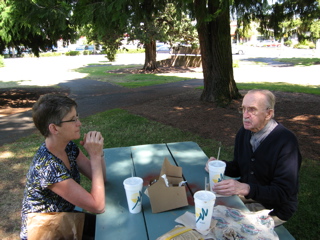





 Living: the ultimate team sport