A mixed bag of jokes while on vacation: No. 5
At a party the hostess served a guest a cup of punch and told him it was spiked. Next, she served some to a minister.
“I would rather commit adultery than allow liquor to pass my lips!” he shouted.
Hearing this, the first man poured his punch back into the bowl and said, “I didn’t know we had a choice!”
Come on, you KNOW you want to laugh. It’s o.k. It’s just a joke.
Techie Jokes for your weekend
There’s a new telephone service that lets you test your IQ over the phone.
It costs $3.95 a minute. If you make the call at all, you’re a moron.
If you’re holding on the line for three minutes, you’re a complete idiot.
Guilty as charged.
Another techie joke
Did you hear about the high-tech ventriloquist?
He can throw his voice mail.
One more techie joke for the weekend
Two executives in expensive suits stopped off at a small country bar. As the bartender served them, he heard a muffled “beep! beep!” sound and watched as one of the men calmly removed a pen from his inside coat pocket and began carrying on a conversation. When he was done talking, the exec noticed the bartender and the other customers giving him puzzled looks. “I was just answering a call on my state-of-the-art cellular pen,” he explained.
A short while later, another odd tone was heard. This time the second executive picked up his fancy hat, fiddled with the lining and started talking into it. After a few moments he put the hat back on the bar. “That was just a call on my state-of-the-art cellular hat,” he said matter-of-factly.
A few stools down, one of the locals suddenly let out a loud burp. “Quick!” he exclaimed. “Anybody got a piece of paper? I have a fax comin’ in!”
Financial fraud against the elderly: it’s a family affair.
A trusted family member would NEVER financially exploit their loved one – right?
WRONG.
All classes of people, and most age groups, become victims of financial fraud. The elderly, however, have been hit particularly hard. A recent Puget Sound Business Journal article (a Washington State publication) provides some astounding statistics for the state of Washington:
- reports of elder abuse grew by 30% in five years;
- 4,121 cases were reported to Adult Protective Services in all of 2010 and that number was already reached by November of 2011;
- the Washington State Office of the Attorney General only receives a fraction of the financial abuse cases because many go unreported; and
- the National Center of Elder Abuse in Washington, D.C. states that only one in 25 cases of elder abuse are ever reported.
So who are the perpetrators? These thieves are neighbors, caregivers (family related or not), best friends, and trusted financial professionals.
But nationally, nine out of 10 financial exploitation cases involve family members.
This type of abuse begins innocently enough “let me help you pay your monthly bills mother.” The adult child becomes a signatory on the bank accounts, keeps up with mom’s bills, but also pays him or herself a little here and there and before you know it, mom doesn’t have the financial means to live out her days. Certainly most family members are trustworthy and respectful of their elders and look out for their elders’ best interests but the statistics certainly paint a horrific picture, don’t they? And what’s worse, if the elderly victim has Alzheimer’s or other dementia, it doesn’t take much effort for anyone – family or stranger – to enrich their own bank account while draining mom and dad’s.
It’s virtually impossible for government agencies to monitor cases of elder abuse. The local agencies that help the indigent elderly are strapped financially. Budgets are being cut resulting in decreased staffing, and caseloads that are unmanageable and overlooked – but not for lack of trying!
So what can you do to protect those vulnerable adult victims that seemingly go unnoticed in our local communities? I provide some suggestions in my blog article, Elder Fraud: a few things you can do to protect your loved one. This article assumes that family members are trustworthy and selfless in their interests. Fortunately, that’s probably you, but obviously, elder fraud is a national problem so it’s vital that everyone be reminded of how easily thieves can take advantage of the older generation.
I’m certain this topic affects many of you and at the very least, angers the rest of you. I covet your input and look forward to your thoughts on this matter.
Three weekend jokes to ponder: Number 1
“What are you so happy about?” a woman asked the 98-year-old man.
“I broke a mirror,” he replied.
“But that means seven years of bad luck.”
“I know,” he said, beaming. “Isn’t it wonderful?”
Three weekend jokes to ponder: No. 2
One day a man spotted a lamp by the roadside. He picked it up, rubbed it vigorously and a genie appeared.
“I’ll grant you your fondest wish,” the genie said.
The man thought for a moment, then said, “I want a spectacular job – a job that no man has ever succeeded at or has ever attempted to do.”
“Poof!” said the genie.
“You’re a housewife.”
Three weekend jokes to ponder: No. 3
A juggler, driving to his next performance, is stopped by the police. “What are those machetes doing in your car?” asks the cop.
“I juggle them in my act.”
“Oh, yeah?” says the doubtful cop. “Let’s see you do it.” The juggler gets out and starts tossing and catching the knives.
Another man driving by slows down to watch. “Wow,” says the passer-by. “I’m glad I quit drinking. Look at the test they’re giving now!”
Voices of the bored retirees.
- “I’m trying to decide what to do with the rest of my life.”
- “I’m a frustrated fish out of water since retiring two years ago.”
- “I’m desperate to find something to fill my time!”
- Woman in her 80’s: “What am I supposed to do with the rest of my life? I feel helpless and hopeless without worthwhile connections.”

I attended a class four and a half years ago comprised of people in their 50’s through their 80’s. This class was designed to make our Senior years count. I just now stumbled on notes that I took in that class wherein each class member was asked to make a comment about their current state in life. The above four comments are just some of those statements.
Desperation and sadness all around me. I recall now that the mood of this class was one of desperation and sadness as those who yearned for retirement their whole working life found themselves frantically trying to fill their days. Their feelings were summed up in these words:
- depressed
- lack of purpose
- short-sightedness
- emptiness
- loss of self
Gerontologist, S. Barkin puts it this way regarding our responsibility to be actively walking through our senior years, and I paraphrase,
What do we want to do for the time remaining in our life? We all should be mining our experiences and the wisdom therein to help with our present and future paths.
As I mentioned in my article, Retirement planning: it’s not what you think, all of us have a history of life skills that should not be put up on a shelf and never used again. Instead we should be retooling those skills into something that is meaningful and enjoyable to us and beneficial to others. The students in my class had many thoughts – mostly unfocused and therefore not very productive – but those thoughts had yet to turn into action.
The first step is to decide what is significant to you and act on it.
Aging well starts with the mind but it’s in the doing that makes it count. We all have a choice when we find ourselves at a loss of purpose: we can stay stuck, or we can actively make a difference in the local community around us. Baby Boomers are the first generation of peoples to have such a long life span. We’re living longer so we have more time to pass our knowledge down to others and use our skills in a valuable way. As the sports company Nike says in one of their ad campaigns: JUST DO IT!
Snail Mail (personal) vs Electronic Mail (impersonal)
I’m thrilled that instant information rules our day for the most part and I’m SUPER thrilled that we can communicate via Blogging, but I’m also a proponent of posted/written communication.
First of all: Blogging.
I think us Bloggers relish the opportunity to “be published” on the Internet because not many of us will ever have a byline in a syndicated newspaper, and book-publishing just seems too hard a goal to attain. With that said, however, I write with this in mind: job counselors often advise employees to dress for the job they want, not for the job they currently hold, so I’m Blogging with a publishing intent that takes me out of my home-office and into the homes of others. If I can’t get others to read my articles, I may as well be writing in a personal journal. So blogging is a great venue in which to reach the masses.
But I LOVE the written word. I own a Kindle, actually, I’m on my second Kindle, and that’s the only way I read books, be they fiction or non-fiction. I’m such a voracious reader, I’m convinced Kindle was invented just for me. 🙂 So when I say I love the written word, what I’m really saying is that I love letter writing. I own stationery, n. paper and other materials needed for writing, and I have a large accordion file that holds greeting cards, n. a decorative card sent to convey good wishes. (Definitions from the Concise Oxford English Dictionary, 11th Edition, 2004.) I love sending cards and I love receiving cards, but mostly I love sending them.
Nicole Brodeur, Seattle Times staff columnist wrote a piece that appeared in our local newspaper on January 13, 2012: For The Love of A Letter. She writes how wonderful it is to receive a piece of mail with our name on it, written in hand, which becomes “a bit of humanity among the bills and slick circulars.” She correctly states that the written letter is becoming a dying art, so much so that the United States Postal Service faces a very bleak, if not brief, future. Certainly e-mail is quick and doesn’t require one of those pesky, ever-changing-in-value postal stamps. Evites are quick and oh so engaging – NOT- as we read respondents’ comments about why they can’t attend. But Evites are pretty darn impersonal. Ted Kennedy Watson, owner of two Seattle shops with all things paper, states in Ms. Brodeur’s article that he “gets ‘hundreds’ of emails a day, some invitations to events that, en masse, lose some of their luster. You start to feel more included than invited.”
En masse communications – you’re simply one of the many e-mail addresses in someone’s global e-mail address book. I know we’ll always rely on this form of instant communication – I certainly do – but Ms. Brodeur hits it on the nail when she says that she hopes that “we don’t tweet or tap away the value of putting thoughts to paper, of taking the time.” (Even a “Dear John” written letter is more personal and respectful than a “Dear John” e-mail or text message.) She talks about letters that she’s saved over the years which instantly brought to mind one of my most valuable letters; one which I keep in my fireproof safe: the last letter my mother ever wrote to me. My parents still lived in Hawaii when I moved to the Seattle area in June of 1994 and my mother and I spoke on the phone at least two times a week. But it was her letters that I relished the most. One of those letters arrived in my mailbox on September 22nd, 1994. I read it, placed it to the side, and went about the rest of my day. Two days later my mother died in her sleep quite suddenly and inexplicably. When I received the news in a phone call from my father that day I frantically looked around for my mom’s letter hoping that I had not tossed it in the recycle bin. Glory hallelujiah – I had not. So two days before my mother died, I have her thoughts on paper, in her handwriting, and signed “Love, Mom” at the bottom of the second page.
Somehow I don’t think a saved e-mail could ever render the memories and the sentiments that my mother’s handwritten letter does every time I retrieve it from the safe to read it.
Facebook (I have an account) and Twitter, and other social sites can continue to do what they do, but let’s not dispense with the antiquated and/or archaic practice of putting pen to paper. Please?
Chilly jokes for those of us buried in snow: No. 2
Two guys, Jimmy and Johnny, were standing at heaven’s gate, waiting to be interviewed by St. Peter.
Jimmy: “How did you get here?”
Johnny: “Hypothermia. You?”
Jimmy: “You won’t believe it. I was sure my wife was cheating on me, so I came home early one day hoping to find the guy. I accused my wife of unfaithfulness and searched the whole house without any luck. Then I felt so bad about the whole thing, I had a massive heart attack.”
Johnny: “Oh, man. If you had checked the walk-in freezer, we’d both be alive.”

Chilly jokes for those of us buried in snow: No.1
 Two ministers died and went to heaven. St. Peter greeted them and said,
“Your condos aren’t ready yet. Until they’re finished, you can return to earth as anything you want.”
“Fine,” said the first minister. “I’ve always wanted to be an eagle soaring over the Grand Canyon.”
“And I’d like to be a real cool stud!” said the second minister.
Poof! Their wishes were granted.
When the condos were finished, St. Peter asked an assistant to bring back the two ministers.
“How will I find them?” the assistant said.
“One is soaring over the Grand Canyon,” St. Peter replied. “The other may be tough to locate. He’s somewhere in Detroit – on a snow tire.”
Greetings Baby Boomers! What’s on your mind?

I love to write; I love to talk; but I also really, really, love to listen.
I placed this Blog entry in the Personal Struggles category of my Blog because I’m struggling to assure that what I’m providing on this Blog meets your needs and interests.
Sure, my ego would be stoked by having more Followers and more page hits – and I welcome all that have an interest – but that’s not my biggest concern. What’s missing for me is reader input in the form of Comments. A lack of comments is not the readers’ fault, rather, I think I’m missing the boat regarding the nature of my Blog entries because they don’t encourage Comments.
Are my articles too long? Are they not sufficiently pertinent to your ongoing interests? Is the subject matter too limited in scope? If so, in what direction would you like me to go? I’ll go just about anywhere with my Baby Boomer Content because I’m not an expert on a zillion topics but I am interested in at least that many.
If you have the time, I’d love to hear from you. And I can pretty much promise that I won’t be offended by any constructive criticism you provide. Society is like a bird. It has two wings, and a bird can not fly when one of its wings is broken. My wing isn’t broken, it just needs to be pointed in the right direction. I hope you’re willing to help me do so. I love what I do and cherish this venue where I can hone my skills and increase my knowledge because along with listening comes the benefit of learning something new. I can hardly wait to hear from you.
Retirement planning – it’s not what you think.
How do you define using your time in a meaningful way? If you’re getting ready for retirement – or are already retired – how are you going to spend those 40+ hours you previously filled at your job? “That’s easy!”, you say. “I’m gonna do whatever I want to do, whenever I want to do it: sleep in, read, play golf, travel; I’ll have no problem filling in the time!”
Now fast forward a year or two: you’re bored; your spouse is sick of you just hanging around the house; you’re feeling like there’s something more you could be doing; and even with doing whatever you’ve wanted to do, something’s missing. You wish there was more to this long sought after retirement phase of your life.

You’re not alone. The founding Director of the Stanford Center on Longevity, Laura L. Carstensen, correctly states in a recent AARP article, that “people are happiest when they feel embedded in something larger than themselves.” As we all know, we are living longer. In order to make good use of these added years, we need to ask ourselves what we can offer others in these bonus years of our lives. Should we continue in what might be our restricted scope of the past: getting by, doing what we can for ourselves and our family, but rarely reaching out beyond that confined scope? If you feel as I do, that’s not nearly satisfying enough.
What should our lives look like now that most people spend as many years as “old people” as they do rearing children?
How should societies function when more people are over 60 than under 15?
Ms. Carstensen is certain that today’s generations of older people will set the course for decades to come and that “change will happen, one person at a time.” I personally think that too often we think that any “doing” that we do must be grandiose in scale; or remarkable and newsworthy in order to be worthwhile. If I felt that way, I don’t think I’d even make an effort to give of my skills, my time and my passion to my community. Why bother? It won’t do any good, right? WRONG!
“If every person over 50 makes a single contribution, the world could be improved immeasurably.”
Think about it: us Baby Boomers have a history of life skills that can benefit so many! How sad it would be if the engineer, the lawyer, the CPA, the household family manager, the medical professional, and other highly skilled people put those skills on the shelf, never to be used again? What a waste! I’m not saying you continue to be that engineer, lawyer, and the like in your retirement. What I am saying, however, is that your past experience, regardless of its nature, can be used for the good of others but perhaps reshaped into a different form.
The bulk of my employment experience has been in the legal field and the senior housing industry, but at this stage of my life I’m not specifically involved in being a paralegal, or a senior housing manager. What I am doing, however, is combining those skills and directing them towards areas for which I am very compassionate, e.g. advocacy for older adults, and counsel for those taking care of a loved one with dementia. You too can contribute to your local community by applying your skills in ways that benefit others and are meaningful to you. I would be of no use to anyone if I didn’t believe my personal Baby Boomer motto: Committed to strengthening my community one person at a time – not one society at a time; not one State at a time, and certainly not the world. But I can motivate myself to strengthen my community one person at a time.
At what do you excel and what do you like to do? As an older adult, perhaps retired, you now have the luxury of doing what you LIKE and WANT to do, not just what brings home steady income and puts food on the table. Whoo hoo! What a luxury!!!
LET’S TALK ABOUT THIS SOME MORE:
What are you doing now to plan for a satisfactory remainder of your life?
How are others currently benefiting from your knowledge-base and how did you find the new venue in which to share your knowledge?
If you’re retired: How satisfied are you in this stage of your life? If you’re satisfied: why? If you’re not satisfied: why not?
Open Wide and Say Ha! Three medical jokes for your week.
FIRST JOKE:
A woman accompanied her husband when he went for his annual checkup. While the patient was getting dressed, the doctor came out and said to the wife, “I don’t like the way he looks.”
“Neither do I,” she said, “but he’s handy around the house.”
SECOND JOKE:
Three doctors were on their way to a convention when their car had a flat. They got out and examined the tire. The first doctor said, “I think it’s flat.”
The second doctor examined it closely and said, “It sure looks flat.”
The third doctor felt the tire and said, “It feels like it’s flat.”
All three nodded their heads in agreement. “We’d better run some tests.”
In this Blogger’s humble opinion, I guess that’s a hint at why the health-care system is broken. Yes? No? Probably. Which leads us to the LAST JOKE of the week:
A physician went to heaven and met God, who granted him one question. So the physician asked, “Will health-care reform ever occur?”
“I have good news and bad news,” God replied. “The answer is yes, but not in my lifetime.”
Honesty is NOT always the best policy.
Bear with me – don’t judge me quite yet.

If you are primarily responsible for a loved one with Alzheimer’s or other dementia, or perhaps you assist an elderly relative who relies on you for help, do you find yourself telling little white lies? Do you stretch the truth a bit in order to keep the peace? Without doing any harm to your loved one or anyone else, do those little white lies help you accomplish tasks on behalf of your loved one, thus improving their life? Congratulations – you understand that honesty isn’t always the best route to take and you’re in good company.
How do you jump over the hurdles of negotiating with a loved one for whom you provide care? Here are a few examples that come to mind.
Scenario one: the need to get creative in order to leave the house for personal business. For example, if telling your wife that you’re going to a caregiver support group meeting makes her mad, sad, or distrustful of your intentions, (“I’m sure you’re going to say bad things about me!”), why not tell your spouse that you’re going out with the guys, and you promise you will be back in two hours. Then make sure you’re back on time! If you’re not comfortable with that lie, by all means, every month you can continue to explain how helpful this caregiver support group is to you and how much it helps you be a better husband; and month after month your wife will not understand your rationale and will feel ashamed. Knowing that you’re going to a support group only confirms how miserable she’s made your life. Read the rest of this entry »
Life can turn on a dime.
If ever there is an example of how life can turn on a dime, it’s Congresswoman Gabrielle Giffords’ tragic experience. January 8, 2012 marks one year since Ms. Giffords was shot in the head while meeting with her constituents in Tucson, Arizona.
The bullet traveled 1000 feet per second into her brain and not only did she survive, even her neurosurgeons termed her recovery a miracle. Is Ms. Giffords back to 100%? No. Will she be? There is a strong hope that she will. As her husband said to Diane Sawyer when asked if he’s holding out too much hope: “You can’t have too much hope! That’s not practical!” In her ABC special on 20/20 chronicling Congressman Giffords’ and her husband, Astronaut Mark Kelly’s journey, Diane Sawyer characterized their endeavors in this manner:
The courage & love you bring when the life you live, is not the life you planned.
 Life turns on a dime in many ways: in relationships; in difficult financial times; and in sickness and in health, to name just a few.
Some of you reading this Blog are in the midst of a life trauma that you certainly didn’t plan, and from which you wish you were released. What challenge do you face? Did you see it coming?
One story of life’s changes. I volunteer as a Facilitator for an Alzheimer’s Association caregiver support group. Every member of our group has a loved one with some sort of dementia diagnosis. Some are in the early stages, some are in the middle stages, and three in particular recently experienced the end stage.
RRRING! A telephone rings in the middle of the night and life changes for caregivers gearing up for the Holidays with their family.
In the wink of an eye, life as they knew it took a sharp turn. It’s the Holiday season and suddenly one set of caregivers hires in-home hospice care for their parent and another caregiver rides in an ambulance with her spouse to a local hospice center because of a terminal change in health. Within days both sets of caregivers arrange memorial services for which they hadn’t planned at this stage of their loved one’s life.
BANG! Six lives are lost, and Gabrielle Giffords’ and Mark Kelly’s lives change forever.
Congresswoman Giffords loved spending time with her constituents. The night before she was shot, she took a long bike ride with a friend and was eager for the next day to begin. A week later she and her husband were to undergo in vitro fertilization so they could start planning the birth of their first child together. And those attending this gathering, both staff and general citizenry, hoped for a successful and enjoyable experience. The bottom line is that you can’t plan for what you can’t see coming.
Oftentimes when we hear of tragedies such as those mentioned above, we naively say to ourselves, “Those are the types of things that happen to other people; not us.” Well, the truth of the matter is, those types of things happen to people, and that’s us.
Congresswoman Giffords’ neurosurgeons stated that they don’t know where in the brain one finds charm, optimism, humor or charisma. Certainly no where in the brain can one find sufficient prescience that allows us to see what’s coming around the corner.
No matter how hard we try; no matter how careful we are; life turns on a dime. And sometimes, the life we live becomes the life we did not plan.
I received inspiration for this article from the caregiver heroes with whom I am acquainted, and from Gabrielle Giffords and Mark Kelly in their book: Gabby: A Story of Courage and Hope.
Living long enough to put your foot in your mouth.
Many years ago I attended a very large wedding at my church. Big bridal party; all dressed to-the-nines. While mingling after the wedding prior to walking into the church reception hall, I chatted with a couple who would be getting married a couple months hence.
“Weren’t those groomsmen’s shiny gray tuxedos atrocious?” I said. “What were they thinking when they decided on those colors?!!!” To which the future bride and groom then stated, “Uh – those are the exact same tuxedos we chose for our upcoming wedding!” Oops.
I give you the above real-life example as a lead-in to the following wedding joke humor:
“How lovely you look, my dear!” gushed a wedding guest to the bride. The guest then whispered to the bride, “Whatever happened to that dizzy blonde your groom used to date?”
“I dyed my hair, ” replied the bride.
Oops!
What would your loved one want?
More frequently than I can tolerate, I have visited long-term care (LTC) facilities during Holiday celebrations: July 4th, Christmas, New Years Eve, etc., and I find residents in the dementia wing with accoutrements, e.g., July 4th hats, reindeer horns, festive party hats, that the resident with Alzheimer’s or other dementia would NEVER consider wearing if they had a choice.
My suggestion: before you allow anyone to adorn your parent, spouse, grandma/grandpa, aunt/uncle with a party adornment, ask yourself this question:
What would ______ want?
Why do facility employees feel obligated to dress up their residents with what can only be described as hideous garments/accessories during Holiday seasons? It’s demeaning. It’s borderline abusive. It’s just not right unless the resident himself has chosen to wear such accessories.
Becoming a clown does not equate to living a dignified existence.

Prior to living in long-term care facilities, these senior citizens lead distinguished lives, fought in wars, managed households and families, and most likely survived tough financial times. These men and women just happen to be older now, but no less important; no less dignified. In one of my earlier articles, Be an advocate for your aging loved one, I stated, “If your loved one no longer has a voice in which to defend or advocate for herself, who better to do so than you?” Chances are in these costumed situations during the Holidays, your loved one doesn’t even see themselves in a mirror, and if they do see themselves, the image they’re seeing may not be comprehensible to them. Would they want to look like a child wearing a season-appropriate party hat? Would they have worn that hat in public prior to the advancement of dementia?
This brings to mind another article, Senior citizens are NOT children! In that article, I broached the topic of talking down to Senior Citizens by using cutesy names: caregivers do it, customer service employees do it, DON’T YOU DO IT! We have to get out of the mindset that our older population is somehow less worthy of respect simply because of their advancing age. If anything, the opposite should be occurring. All of us should honor the lives that were – and the lives that still remain. This station in life, these circumstances, are not who they are. They are simply where they are right now. Use the memories that you retain of your loved one to promote the true person they are. Don’t let others – caregivers or well-meaning friends – define your parent/spouse/family member. It is my firm belief that regardless of the severity of a person’s Alzheimer’s or other dementia, the essence of the person remains in tact. Make it your responsibility to enhance other people’s understanding of your loved one by correctly defining their true essence.
Dignity and quality of life are a right, not a privilege.
Secret letters – no longer a secret.
Grandma was preparing dinner when her grandson Bradley came into the kitchen.
“What has grandma’s darling been doing all day?”
“I’ve been playing mailman,” replied Bradley.
“Mailman?” asked grandma. “How could you do that when you had no letters?”
“I had a whole bunch of letters,” said Bradley. “I found them in that old trunk up in the attic, all tied up with ribbon. I put one in every mailbox on your street!”
Negotiating to Yes
I really appreciate this article by Lark Elizabeth Kirkwood because teamwork is a theme/process that is applicable to so many areas of our lives. Employed in a small or large company? Applicable. Volunteer for non-profits? Applicable. Family members trying to play on their strengths in a caregiving situation? Applicable.
Thank you Lark for showing us that teamwork isn’t just for sports teams any more.
A granddaughter’s first wedding.
Attending a wedding for the first time a little girl whispered to her grandmother, “Why is the bride dressed in white?”
“Because traditionally, white is the color of happiness,” her grandmother explained. “Today is the happiest day of her life!”
Her granddaughter thought about this for a moment.
“So why is the groom wearing black?”
Optimism amongst the chaos.
In the book, Gabby, by Gabrielle Giffords and Mark Kelly, Congresswoman Giffords’ husband, Mark, provides statements about optimism that have greatly encouraged me. Here are just a few:
- “I saw how optimism is a form of therapy and hope is a form of love.”
- “Doctors at TIRR, the rehab hospital, told us that our optimism and encouragement could make a great difference in Gabby’s recovery…”
- “To be of help to a brain-injury patient, we were told, families need to find a way to balance pragmatism and optimism.”
In a Time Magazine article published December 13, 2011, Congresswoman Giffords addresses the struggles she and her husband have endured as they continue to adjust to the “new normal” brought about as a result of a bullet that pierced her brain on January 8, 2011 when she was reaching out to her Congressional district in Arizona. So many of us have new normals as we walk, or fall, head first into Baby Boomerism. This normal may involve a loved one who has a fatal or debilitating illness. This new normal may be characterized as our own bodily/physical struggles inherent with our age. Each of us have some sort of chronic something-or-other that inhibits our ability to function at 100%.
What is the chronic something-or-other that inhibits your ability to function at 100%?
The above question is a rhetorical one. Neither myself nor the public need to know the specifics – but you know the specifics and you’re the one making long-term adjustments as a result.
What processes do you follow to unearth the optimism that exists somewhere in your psyche? How do you overcome your personal challenges so that you end most days victorious, rather than defeated?

For me, it’s acceptance. For me, acceptance doesn’t mean giving in or giving up; rather, acceptance means being o.k. with how things currently are and finding ways to succeed within that new normal. This mentality or attitude is more optimistic than you may think. Again, for me, I decided to allow optimism to nurture the hope that oftentimes is buried deep within me. Things could very well change for the better – which doesn’t have to be defined as being 100% problem-free. Nope. If I garner optimism at the start of each day, I’m making a conscious and aware decision to acknowledge and celebrate even the smallest of victories that might occur in the next 24-hours. If I wait for a humongous, star-spangled mega-victory, I may wait forever. Instead, I attempt to be aware of even the smallest improvements/goodnesses in my day so that my life is filled with many victories to celebrate. The previous sentence says that “I attempt” to garner optimism throughout my day. I don’t always succeed – but I try.
What small victory can you celebrate today?
What works for you? The rest of us would love to celebrate that victory with you.
Granddaughter and Grandma humor
A granddaughter watched, fascinated, as her grandmother smoothed cold cream on her face.
“Why do you do that?” she asked.
“To make myself beautiful,” said the grandmother, who then began removing the cream with a tissue.
“What’s the matter?” asked the granddaughter? “Giving up?”
Some late, late in life humor.
The judge was trying to change the mind of a woman filing for divorce. “You’re 92,” he said. “Your husband is 94. You’ve been married for 73 years. Why give up now?”
“Our marriage has been on the rocks for quite a while,” the woman explained, “but we decided to wait until the children died.”
Visiting a loved one at a long-term care facility.
Your Dad lives in a long-term care (LTC) facility and you’ve found that these visits really take a lot out of you and your Dad. You’re bored, your Dad is bored, and you’re beginning to wonder if these visits are even worth it. Do you want some encouraging ideas to make your visits beneficial to everyone involved? Here are some suggestions that might take the hurt out of the equation.
ACKNOWLEDGE THAT THE LTC FACILITY IS NOW YOUR DAD’S HOME.
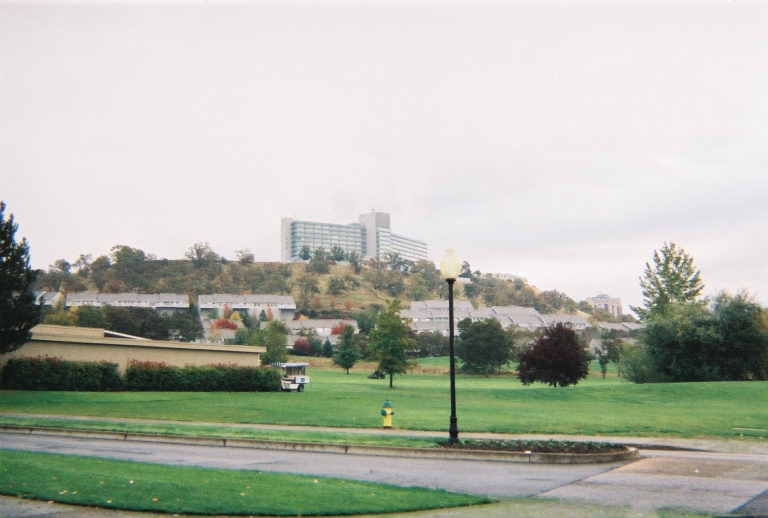
The longer your Dad lives in this LTC facility, the more it will feel like his home. That’s a hard pill to swallow when you’re accustomed to visiting him on his home turf. His new normal is his 200 square foot (if he’s lucky) LTC apartment. Remember how painful it was for your Dad to move away from the family home to his apartment in the facility? One can not minimize the difficulty of downsizing a lifetime of emotional attachment to a household of personal objects to a mere few that will fit in his small living space. Respect for the remaining space allotted to him will go a long way towards making him more comfortable when you invade that space.
HOW I ADJUSTED TO MY DAD’S LTC LIVING SITUATION.

I would never attempt to offer any advice if I too hadn’t been through what you’re going through. At the age of 84 my father was diagnosed with Alzheimer’s. Dad lived in a Continuing Care Retirement Community (CCRC) in Oregon state. At the time of his diagnosis he was living in a decently sized one-bedroom apartment “on campus” and for a few years was able to function quite well in that space. When I visited from Seattle, it was pretty challenging coming up with ways in which to engage him and make my visit a valuable time for him. He was still active, however, so we went on picnics, took walks, shopped for needed personal items, and our days were filled with purposeful activities. As his disease progressed, however, he moved to the dementia unit of the CCRC and shared a room with another gentleman who also had dementia. Now what? I certainly can’t visit him in his room, and the common areas were populated with other residents who presented challenges to creating a valuable visiting experience for both my father and me. Visits outside the CCRC campus became more and more difficult as my dad’s ability to function outside of his routine rapidly decreased. How could just sitting with him in the dementia unit’s living room make any difference in his day?
IT’S NOT ABOUT YOU – IT’S ABOUT YOUR LOVED ONE.
Well, it is about you, to be sure, but if your loved one’s experience is a good one, chances are your experience will be equally as satisfying. Depending upon your loved one’s executive function, your activity options may not be limited at first. You’re still able to take your loved one to movies and museums. You’re able to go out to dinner and attend family gatherings. You pick your Dad up, he’s happy to go with you, and your time with him is about as normal as it gets. If Dad is physically or cognitively impaired, however, your activity options decrease considerably.
BEING PRESENT WHEN YOU’RE PRESENT.
I think you’ll be amazed at how far a smile and a pleasant attitude will go when visiting your parent or other loved one. You’re of the opinion that you have to be doing, doing, doing to have a successful LTC visit. If being active is a thing of the past, I encourage you to simply be present when you’re visiting Mom, Dad or your spouse. Does he still like to read or watch TV? There’s no reason why he can’t continue to do that while you sit nearby and use your laptop or read a good book. When was the last time you had nothing but time in which to do so? Consider this down-time as some sort of blessing in disguise. Does Dad like certain types of movies – or one in particular – that you can put in the DVD player for his entertainment? Watch that movie with him even though it’s the 100th time you’ve done so. It’s difficult for us to define the movie-watching experience as quality time spent with Dad, but for him it may be just what he needs that day. I know very well how slowly time passes when visiting a loved one whose world has been significantly diminished. But imagine, if you can, being your Dad’s age and unable to come and go as you please. When you visit him, you bring the outside world to him and give the day a whole new meaning.
WHY VISIT DAD IF HE DOESN’T RECOGNIZE ME ANYMORE?
This is one of the most challenging times for a son, daughter (or spouse) to go through when our loved one’s cognitive levels continue to decline. (Please check out other articles on this subject under this Blog’s “Alzheimer’s/Dementia” tab for additional encouragement.) You’ll be doing yourself and your loved one a favor by not trying to force him to recognize you. The Alzheimer’s Association suggests that it is far easier for you to walk into his or her world than it is for him to be present in yours. When you walk into his room for a visit, simply announce yourself, “Hi Dad, Irene is here for a visit.” You don’t even need to qualify your name by saying, “your daughter, Irene.” Your title is not as important as who you are when you visit him. Smile. Speak in a lively tone – not loud, just lively – and let him feel your friendliness and your love. Caregivers can’t give your loved one the love that you have for him – only you can. As difficult as it is to seemingly have lost your identity with him – and it truly is difficult – the fact remains that you are his/her daughter/son/spouse and only you can love him like a family member can.
I sure don’t own the franchise on ideas to employ when visiting at a LTC facility. What has worked for you? What do you suggest? Your ideas may be just the thing that helps someone else weather this difficult time.
Baby Boomer Dating: a pick-up line that backfired
A divorced man in his 50’s finally felt that after 3 years, he was ready to put himself out there again. It didn’t go so well. “I went to a singles bar,” he told a friend, “walked over to this 30-something year old woman and asked, “Where have you been all my life?”
She said, “Teething.”
Alzheimer’s Heartache: young family members adjusting to a grandparent or parent with dementia.
The 7-year-old child says, “I don’t want to visit Grammy anymore. She doesn’t remember me and she scares me!”
This is a major dilemma with adult children whose parent has dementia. It’s difficult for the adult to reconcile their parent’s disease progression – and they have a fairly comprehensive understanding of the disease that is robbing them of their parent. Now imagine a child’s inability to comprehend the disease. All they know is that Grandma seems upset when the child visits and on top of that, no longer recognizes him. When one considers that adult children sometimes dread visits with their mother or father with Alzheimer’s or other dementia, it seems easier to just let those visits slide for the younger members of the family. My daughter was an adult when her Grandpa was diagnosed with Alzheimer’s. I can only proffer a guess at what I might have tried in order to make her visits with him a comfortable experience.
Should parents force their children to visit the person whom the child has started to fear?
Forcing anyone to do anything isn’t always the best strategy to follow. In these circumstances, it could almost be considered cruel. My grandparents lived in a different country than my family. Us three kids saw our grandparents maybe six times before they died. Having the opportunity to live near an older relative would have been a novelty for me as I’ve always envied those who grew up with Grandma and Grandpa nearby. With that said, however, I acknowledge that close proximity alone in this situation is not a sufficient motivator.
How can grandchildren still maintain a relationship with their Grandma and Grandpa?
The distracted visit – visiting but doing his own thing as well. If the parents are able to provide some sort of distracting activity while visiting Grandma, the child might get more accustomed to their grandparent’s behavior. The child casually observes how mom and dad interact with Grandma – while still being able to watch their favorite video or play with their hand-held electronic game – and gradually feels more secure being there. Over time, but certainly not immediately, he may realize that Grandma is no longer someone to be feared and may attempt his own interaction with her.
Parents visit without the child and provide engaging updates to their child when they get home. Parents can keep their child connected by telling him the funny/cute thing Grandma said that day when they visited and also making the child aware of the positive things that are happening in Grandma’s life to balance out the overwhelming negative that pervades it. Who knows, this reporting tactic might actually lead to the child’s “distracted visit” next week. Curiosity may be just the ticket that gives the child the desire to see Grandma.
There’s SO much more that needs to be said on this topic.
I haven’t even addressed the issue of early-onset dementia that thrusts young children and teens into an extremely challenging relationship with a parent whose disease robs their children of the guidance that their parent might normally provide during their adolescence. What can you, the Baby Boomers and More Blog audience, contribute to that very unfortunate, and ever-increasing reality, in today’s world?
I’m very much looking forward to what you can add – successes and failures – that will benefit those of us searching for advice and guidance.
Baby Boomers: what topics interest you?
What do you want to read and comment on? I thoroughly enjoy this blogging experience but it’s not satisfying enough for me to have a one-way written conversation. My family would be the first to say that once I get going, it’s hard to shut me up. (As of March 2016, I’ve posted 700 articles.)
But I want to enhance my own Baby Boomer experience with your wisdom, advice, successes, even failures. It’s in those practical experiences that we grow the most.
So I sincerely covet your input as to what would draw you to my “Baby Boomers and More” Blog more frequently. What topics interest you enough that you would provide comments and even contribute your own articles that I’ll press/link to my own Blog site?
Truth be told? This is not just my site – it’s out there for everyone. I hope you’ll be candid and honest with your input. Bring it on – I’m good and ready for your Baby Boomer Blog ideas.
Preserving your loved one’s dignity.
The more a person becomes dependent on others, the more protection he needs. A person with dementia needing the assistance of others is considered a vulnerable adult. He can’t defend himself or speak up for himself. He can’t demand exceptional care, courtesy, and respect. As his advocate – that’s where you come in. When he doesn’t have a voice – you step in to be that voice. Your reward will be great if you succeed in doing so.
Part of what I do in my working life is to advocate for vulnerable adults by doing what I can to promote dignity and quality of life for those I have the privilege to serve. As a family member, or good friend, to an adult with dementia, your task is a monumental one because along with your caregiving role, you must also excel at the task of advocacy. In my blog article, “Be an Advocate for your Loved One” posted on this blog November 14, 2011, I discuss the various ways in which you can advocate for your loved one. This current article is the last article in my “Understanding Alzheimer’s and other dementia” series and it addresses the issue of dignity and privacy.

As those of us who have, or have had, loved ones with dementia we know without a shadow of doubt, that our loved one’s current condition does not reflect the pre-Alzheimer’s/dementia person. A grandmother who previously never spoke the “F-word” now speaks it as though it were just another word in her vocabulary. A previously modest and distinguished gentleman now routinely removes his clothes in front of others, and/or may be inclined to grope his caregivers or other residents. A former globally recognized businessman, sought after for his abundant knowledge in his field, now needs others to feed him and has lost the ability to string a meaningful sentence together. Our loved one’s new normal is shocking to those of us who are close to the person with dementia, and completely foreign to those who are not.
Keeping people informed about your loved one’s condition.
Those who definitely have an attachment to your loved one: friends, coworkers, close neighbors, and of course family members, will probably appreciate knowing what’s going on with him. It’s important to use discernment when deciding who needs to know – and who doesn’t. And thanks to e-mail and texting, we can update people immediately and thoroughly with no need to pick up the phone. That’s truly a bonus, isn’t it? You’re already stressed and emotionally drained by your situation so having to conduct numerous telephone calls and provide the same update to several people would be prohibitive at best.
But with the ease of e-mail comes the temptation to be too thorough in the e-mail missive. You’ve already discerned who needs to be kept updated; now you need to use judgment on how much you say and how you say it. Does your neighbor really need to know about your husband’s incontinence? How would it benefit your mother’s former coworkers to learn that their former Marketing Executive now drools throughout the day and can no longer feed herself? More to the point – ask yourself this question: How would my spouse/parent/partner/sibling/friend feel if they knew I was providing all the gory details of their dementia progression to those near and dear to them? The answer, I believe, is obvious. If they could, your loved one would say, “Please don’t let everyone know what I’ve been reduced to.” Showing respect for your loved one includes protecting her privacy, and thereby her dignity. And I’ll tell you from experience – those on the receiving end of the information would rather you be brief and not overly descriptive.
Celebrate the uniqueness of your loved one.

Your loved one is not just some generic living and breathing person in the Early, Middle or Late stage of Alzheimer’s. He may not be able to do everything he previously could – maybe he’s not even able to speak – but you can still celebrate him as a human being. Everyone mourns what’s been lost; hardly any one celebrates their loved one’s remaining attributes. I learned a lesson from my father during the middle stages of his dementia. I was quick to finish his sentences, or rush him along by answering people’s questions for him. My dad didn’t have to use words to express his displeasure when I did that. He slumped in his chair, looked at me, and let out an exasperated sigh. I stopped right then and there and made no further attempts to rush him as he conversed. Doing so would take away one of the abilities he still had – talking and getting his point across. It may have taken him a long time to complete his thought, but he still had the ability to do so. Please don’t take away the remaining vestiges of your loved one’s independence and abilities. If you feel compelled to feed your loved one just because they take a long time to eat their meal, you’re training them to rely on you for that assistance when they could have been doing it on their own. Who cares if it takes 60 minutes instead of 15 to finish a plate of food? If they’re still able to feed themselves – celebrate that ability. Don’t take it away for your own convenience.
Walk into their reality – don’t force them to enter into yours.
We’ve all experienced conversations with our loved one wherein he or she talks about things that didn’t really happen, although they are convinced that they did. What’s the harm in agreeing with them and going along with their story. Your wife says, “Didn’t you enjoy that trip to the Grand Canyon we took with the kids a few years ago?” O.K. – first of all you don’t have any children, and second of all, you’ve never been to the Grand Canyon. Instead of trying to convince her of what’s real – and making her feel bad/ashamed in the process – talk about the great view, or how all the kids fell asleep in the car and missed the entire gorgeous spectacle. I can guarantee that if you change your paradigm regarding this development, both you and your loved one will be better off. The Alzheimer’s Association has a great adage that they offer us caregivers to help us along the way. If you don’t insist – they can’t resist. I challenge you to go with the flow instead of trying to paddle upstream. Don’t cause contention. A little make-believe goes a long way and harms no one.
AARP magazine reviewed the book Dancing with Rose: Finding Life in the Land of Alzheimer’s by Lauren Kessler. This memoir by Ms. Kessler is portrayed as “an Alzheimer’s tale that’s warm, uplifting, even hopeful – qualities not normally associated with the illness. This odd dichotomy – joy atop a ravaging disease – makes this book a refreshing standout.” Alzheimer’s and other dementia have the ability to peel away a person’s former mask to allow what’s underneath to surface – pleasant or not. What Ms. Kessler learned in her journey with her mother is that “if viewed from a different perspective, Alzheimer’s is not the end of personhood.”
Yes – dementia changes who your loved one is. It oftentimes reduces him or her to childish, and then infantile behavior. But they are still a person. They are no less worthy of your respect and your compassion. This hardest task of your life will end some day. In the interim, may you be merciful to your loved one and may those with whom you are associated support you along the way.
 Living: the ultimate team sport