Health & Wellness
Meet Sue Anne W. Kirkham, author of Loving Zelda – A Stepdaughter’s Caregiving Journal

by Sue Anne W. Kirkham
How it all began:
It was late October when my husband, Jack, and I showed up at my father and stepmother’s townhouse to walk their two dogs—a duty we’d taken on several months earlier, after they announced they no longer felt up to the task. At 84, my father suffered from respiratory and circulatory problems; at 81, my stepmother showed early signs of dementia, with some Parkinson’s-like tremors erupting, just to keep things interesting. I was determined that they not be forced by these circumstances to give up their pets. On this day, Dad greeted us at the door with another shocker. “We have to move into assisted living.” No hello. No how ya doin? Just this stark declaration.
Dad and Zelda had always been younger than their years in every respect. He continued his career as a psychologist into his late 70s, and the warm, witty, delightful woman he married in 1972 had always been active and ready for a new adventure. Each enjoyed absorbing hobbies, and they eagerly traveled the globe together for most of their 32-year marriage.
As Jack and I herded the pups that chilly autumn day, I remained troubled by the prospect of a radical change in lifestyle for my beloved father and stepmother. So I hatched a plan: leave my dreary clerical position and devote myself to lightening their load and injecting some sparkle back into their lives. I would carve out a new weekday vocation as companion/housekeeper/social director/exercise coach/assistant cook.
I kept a journal from Day One as, over the next 18 months, Zelda suffered incremental losses of mental acuity. Less noticeably, my father’s COPD was cranking toward a dramatic climax that none of us anticipated. While I focused on finding enough fingers to plug the ever-multiplying holes in the home-front dike, Dad’s staunch self-sufficiency propelled him through his own physical deterioration. Meanwhile, I watched Zelda—former organizer of Fourth of July kitchen band marches—fade into confusion. To be at her side through the slow, agonizing loss of her Self would prove to be the most affecting experience of my life. It soon became clear that the course I was chronicling was strewn with striking contrasts: moments of high hilarity and wrenching despair; snapshots of the struggle for dignity in the face of decline; arcs of mood between fear and optimism, gratitude and resentment. Hobbling my efforts to navigate these troubled waters was the crushing blow of friends and family members challenging my motives, questioning my trustworthiness.
This enterprise had much to teach me about life and death, human limitations, faith, and endurance. The struggle, as they say, was real. But the joys and rewards were every bit as genuine.
Why I wrote about it:
As my time with Dad and Zelda ended, a fresh commitment shaped my mission: I had been seeking a book topic I felt passionate about. This was that subject. I would share our experiences, unique amidst all the universal similarities, to promote understanding and support others confronting the challenge of caring for those who once cared for us. I chose the memoir format because, as dementia robbed Zelda of her voice, my journal became the story; it painted a complete and authentic picture for readers. Memoir also allowed for the interweaving of family history, a fleshing out of characters, and a means of affirming through narration the individual’s continuing worth, untainted by the loss of physical and cognitive abilities.
ABOUT THE AUTHOR
 Sue Anne Kirkham is a freelance writer who blogs atwww.yourrecipesforlife.com. She has published print articles on aging and family relations as well as online profiles of inspiring everyday heroes, and essays on health-conscious living and the peculiarities of contemporary culture.
FOLLOW THE AUTHOR:
FOLLOW THE AUTHOR:
Author website: www.lovingzelda.com
Author Facebook page: @LovingZeldaCaregiving/
Twitter: @SueAnneKirkham1
LinkedIn: Sue Anne Kirkham
This Week’s Good News!

This story out of Ashton, Maryland is sure to pull at your heartstrings. A pound dog was saved just in time to become a very welcome resident of a senior living residence. So much joy abounds in this story – I thought it would be the perfect Good News to close out the month of October.
This Week’s Good News!
One of my sisters-in-law died of breast cancer earlier this year. It was – and remains – an event that is prominent in our minds and in our hearts. This story warmed my heart, as I hope it does yours. A former Pittsburgh Steelers running back is fighting the disease that took his mother’s life.
This Week’s Good News!
There is a science to being kind, and UCLA in California has set out to prove it! They opened up the world’s first Research Institute on the Science of Kindness, which I’m sure you’ll agree is something the world needs right now. Check it out for yourself!
12 years ago seems like yesterday
 Twelve years ago today, my father died from complications of Alzheimer’s disease. That morning I had received a call from the memory care unit where Dad had lived for several years. The nursing manager of that unit said if I wanted to see my father again before he died, I should come as soon as possible. (I had spent a week with him the month before and knew that his prostate cancer would most likely hasten his death.) I first called my husband at work to let him know I would find a flight from Seattle, WA to Medford, OR and be gone…for how long? I didn’t know. Then while on the phone with my brother and sister, I booked my flight online with a tentative return, threw the very minimum of clothing in an overnight bag, and headed to SeaTac International Airport.
If you have read my novel, Requiem for the Status Quo, you’ve pretty much read the account of what transpired for me at my father’s bedside; some of the happenings that day/evening were altered, but the gist of what transpired are contained in Chapters 41 & 42.
Upon my return to Seattle, my energy level was depleted yet still on alert. When you have a loved one with a debilitating disease, a state of alertness is the norm – the status quo of constantly being in a state of emergency, if you will. You keep waiting for the phone to ring with the latest development – such as it did for the last time on October 13, 2007 – but that phone number’s appearance on my Caller ID had ceased.
What hadn’t ceased was the business of dying – all the financial and estate matters one cannot ignore – but because of my father’s diligence and organization leading up to his Alzheimer’s diagnosis, much of what I needed to do on behalf of his estate and us survivors, was readily dispatched in the months that followed my father’s death.
But the “now what?” of life post-caregiving was front and center for me. Initially, I wanted absolutely nothing to do with anything having to do with dementia. I continued to financially support my local Alzheimer’s Association and participated in one more Walk to End Alzheimer’s, but that was it. Then my heart called and I became an Alzheimer’s Association caregiver support group facilitator and shortly thereafter, I entered the world of long-term care advocacy by becoming a Washington State LTC ombudsman, both of which I did for five years.
Then my heart spoke to me again, this time it said, “How about writing about your experience as Dad’s caregiver?” I ignored that thought until I no longer could – it wouldn’t leave me alone! I dragged out all of Dad’s records and my numerous journals, sat at my dining table, and over many months’ time, outlined how I would honor my father’s journey and my family’s experience within the pages of a book that might benefit others.
That was five years after my father’s death. My book was published five years later.
Now twelve years after the end of my father’s Alzheimer’s journey,
my book still manages to make its way into the hands of those who need it.
If you, or someone you know, needs encouragement and a renewed sense of hope,
please make your way to your favorite bookstore, or find it right here.
Blessings to you today, and always.

This Week’s Good News!
When restaurants see a need and meet that need, I get goosebumps and want to spread the good news of such good deeds. Wait until you read this story that shows the value in not ignoring another person’s hunger.
This Week’s Good News!
What do farming, cancer, and the kindness of others have in common? Read this extraordinary and touching story to find out. Goodness abounds, it really does.
This Week’s Good News!
I love it when children extend a hand to those in need. This story spotlights an Arkansan youngster and her mother who made a difference in the lives of many children who don’t have something most of us take for granted: shoes.
This Week’s Good News!
I’m returning to 35,000 feet for this story of a retiring pilot’s glorious send-off by passengers. You will be wonderfully entertained by what you hear.
This Week’s Good News!
The kindness of neighbors is front and center in this week’s Good News story. A young boy’s patriotism is honored and nurtured in one particular West Hartford, Connecticut neighborhood. Delightful, truly delightful.
September is World Alzheimer’s Month

In celebration of the many former and current family caregivers in the world, and in honor of their loved ones with Alzheimer’s or other dementia, AlzAuthors has released the eBook of Volume II of Alzheimer’s & Dementia Caregiving Stories. The introductory price is only $1.99. Be sure to get your copy now!
This Week’s Good News!
Kindness at 35,000 feet is this week’s Good News story. Traveling in an airplane alone can be an uncomfortable event. What an elderly woman asked of her seat mate, and his response, will warm your heart.
This Week’s Good News!
I absolutely love seeing a variety of age groups doing something grand for others. We all have the same number of hours in a day and choosing to use a few of those hours to benefit others can go a long way toward improving our little corner of the world. I hope this story about a very industrious young man who lives not far from me, impresses you as much as it did me.
This Week’s Good News!
Generosity and selflessness abound in this family that lives in the northern part of Western Washington. This story will blow your mind and provide a clear definition of what it means to be a family.
This Week’s Good News!
Last week’s good news spotlighted a couple in their 100s who got married to live happily ever after in their remaining years. This week’s post spotlights the wedding industry again but shines the light on an unexpected flower girl who nailed her flowery performance!
This Week’s Good News!
This story warmed my heart in a very big way. The newly married bride is 103 and her groom is 100. Between the two of them, they have four spouses whom they loved dearly before they departed this earth. It looks like these two love birds hold the secret to happily ever after. Wait until you read about their Ohio-based love!
Status Quo or Same-O Same-O
How often have you felt defeated because your day-to-day existence is somewhat routine and boring?
 The life of a family caregiver, attending to a loved one with a disease or malady that is all-encompassing, is never Same-O Same-O. Any semblance of status quo flies out the window shortly after taking on this learn-as-you-go caregiver role. The boring life about which the family caregiver used to complain no longer exists as she or he memorializes that long-abandoned way of living. My memorial to status quo existed while attending to my father during his Alzheimer’s journey.
Requiem for the Status Quo speaks of that memorial to things that once were.
This Week’s Good News!
The following good news comes from the town in which I live, Redmond, Washington. This story proves you’re never too old to have a grand ol’ time.
This Week’s Good News!
Last week I posted an article that focused on the impact children can have on adult lives. This week’s article shines a spotlight on the doggies in our lives.
This Week’s Good News!
Children can have an extraordinary impact on adult behavior, as is seen in this recent article that really got me excited the other day. Enjoy!
This Week’s Good News!
Heroes come in all shapes, sizes, and ages. Wait until you see how an Ohio 8 year old’s quick thinking put an end to an incident that certainly would have ended in tragedy.
This Week’s Good News!
We go about our day, rushing from one place to another, hoping beyond all hope traffic will accommodate that day’s To Do List. What about if you were an overworked delivery driver, knowing your workday’s ending would depend on you delivering every package in your truck or van, and you witness a person struggling on a very busy city street? You have to decide whether to turn a blind eye (surely someone else will intervene and offer help, perhaps someone far less busy than I) or take time out from your duties and be one person’s Good Samaritan for the day. This story illustrates what happened when a generous choice was made.
This Week’s Good News!
When on the receiving end of a generous act of kindness that saved a loved one’s life, not everyone is given the opportunity to pay it forward in a meaningful way. Oftentimes, such heroic acts fall into the category of a chance encounter so there would be no opportunity to reconnect with that lifesaver again, right? Fortunately, another chance encounter happened for Becca Bundy, the mother of the young girl who received optimal medical treatment by a first responder on the scene three years earlier. Who would have guessed this mother would be able to return a life-saving favor to that same, first responder, years later?
Sustenance for the family caregiver
In a recent interview with Oprah Winfrey, New York Times columnist and author, David Brooks, eloquently responded to Oprah’s statement where she said, “I hear that authors write the books they need to read.” Mr. Brooks’ response:
We writers are beggars who tell other beggars where we found bread.
He further explained that statement by saying:
We found it here, we want to share it with you.
 That is what the more than 200 AlzAuthors have in common. Each author may describe their quest or mission somewhat differently, but no doubt many of them would agree that the impetus to write about their personal experiences was a call to action they could not ignore.
As a member of the AlzAuthors community, I personally feel that the more mainstream the conversation surrounding the Alzheimer’s and dementia experience becomes, the more the AlzAuthors’ vision will be realized:
Our vision is to lift the silence and stigma of Alzheimer’s and other dementias.

May you find sustenance within the AlzAuthors community.
This Week’s Good News!
Like so many of us, Solen Aref may have forgotten some of what she learned through her younger school days, but she remembered something extraordinarily important that helped save a person’s life. Wait until you read Solen’s story.
This Week’s Good News!
Robert Smiley walked many miles in the shoes of those who are currently fighting homelessness and addiction. This story will warm your heart: once Robert turned his life around, he set out to help others still traveling on the path of addiction.
My extraordinary success as an author
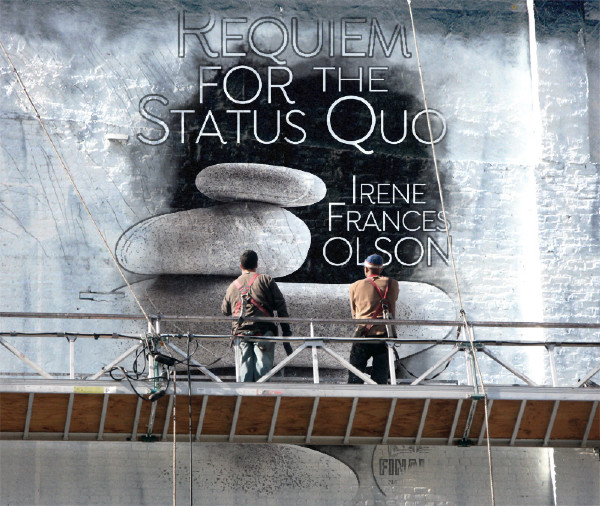
A lot of time and effort go into writing a book. Regardless of the genre, much needs to take place prior to that work of art arriving in the public’s eye to be consumed. The writing process is grueling: outlining; picking character names – developing those characters to become who you need them to be, killing off characters that don’t add anything to the storyline or content; researching anything and everything having to do with absolutely every topic you decided to include within the front and back covers of your project; pounding out page after page of your shitty first draft – because every first draft is shitty; editing, cutting and pasting, throwing out your manuscript and then retrieving it from the garbage because you can’t bear to give up on something that initially seemed to mean so much to you.
But the preparation for my novel began years before I knew I would even be writing it.
 My life changed forever when my father was diagnosed with Alzheimer’s disease. Up until that point, AD was something that happened to other people. Just like everyone else, I was afraid of it – had friends whose parents or other loved ones were diagnosed with it – but just like everyone else, I really and truly did not think it could get close enough to harm me, but it did. You see, I had hoped my professional work in the assisted living and memory care field would be as close as I would ever get to the dreaded disease that is always fatal, but I was wrong.
As my author bio states: Having previously worked in memory care, she was not new to the disease, nor was her family immune.
Years after my father’s death I chose to prolong my involvement with all things dementia, venturing forth into one of the most competitive fields around because it appears that everyone … everyone … has a story to tell, and many have chosen to tell it. With well over 8 million books currently available on Amazon and just a fraction of those touted as Best Sellers, a person would be crazy to even think about adding to those numbers!
Or that person would be brave.
Bravery sounded better than crazy to me, knowing that putting myself out there would leave me vulnerable, exposed before every critic who, although a reader and not an author, would not shy away from tearing apart my completed labor of love. But I wanted something positive to result from my father’s and my family’s Alzheimer’s experience so rather than shying away from risking failure, you know, doing nothing that might prove disheartening, I chose to lay my heart out on the line.
And I am a success.
I am a success, not because Requiem for the status quo made it to Oprah’s book club and/or the New York Times’ Annual Top Books list, and certainly not because of any wealth publishing a novel has brought me…relatively few authors make money in this field. I am a success because I let my love for my father be translated into a novel, creatively based on my own family’s experience, so that others – whether a million in number or just a thousand – could find some encouragement and hope through the ashes of my family’s grief.
And guess what, others read my story and told me time and again how much it resonated with them; how my writing seemed to mirror what they too went through, or were currently going through. Readers thanked me for my story … they thanked me! If that isn’t success, then I don’t know what is.
All I can say is, “You’re very welcome.”
This Week’s Good News!
A New Jersey mom took her son to a skate park on his fifth birthday as recommended by her son’s behavior therapist who is treating the youngster’s autism and ADHD. You will perhaps be surprised by how her son was treated by some older boys who frequented this same skate park. Read all about it here.
A book for family caregivers
Although my novel, based on my own caregiving experiences for my father, focuses on the challenges faced by those caring for someone with Alzheimer’s disease or other dementia, it also benefits Every Caregiver – that universal person who finds her or himself as the primary individual caring for a loved one with a debilitating illness.
My prayer is that Requiem for the status quo helps everyone struggling to balance their own needs with that of their loved one.
Allow me to introduce my mother
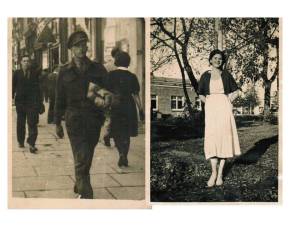
Patricia Constance Conroy Desonier: born on May 6th, 1917, she married my father on May 26th, 1947,
and died in her sleep on September 24, 1994.
My mother never complained about how much pain she experienced in her life. Diagnosed with rheumatoid arthritis as a teenager, she lived with this debilitating condition, staying as active as she wanted to be. When I was a young adult, I told Mom how much I respected her for her activity level, knowing each deformed joint in her body never let her forget the disease that got progressively worse as the years wore on. Mom’s response, “If I stay at home and do nothing, I’ll still hurt. I’d much rather be active, doing something I love, and hurt more.” Nothing stopped my mother – absolutely nothing. She took neighborhood walks; she golfed using special clubs with thickened grips; she made all our clothing; she painted the insides of each home I lived in and stripped and restored wood furniture that stayed with the family in various iterations throughout our lives.
Mom encouraged me to write from a very early age. As a four-year-old, she let me pound on her manual typewriter, typing gibberish but encouraging me to read my “stories” to the family at dinner time. My current soft activism can be attributed to both my parents, but especially to my mother. I say “soft” activism, not because I pull punches, but because I learned how to have an impact on others without offense, without judgment, and with a kindness that speaks far louder than words. Like my mother, I won’t stand for injustice; also like my mother, I won’t dish out unjust behavior just so my voice can be louder than the offending voice. I guess the phrase, “Kill ’em with kindness” is applicable in this respect. My mother killed many a person in that manner.

Mom didn’t miss out on seeing all of her grandchildren, including my daughter, Erin, above, but she did miss out on meeting my extraordinary husband, Jerry, and his two daughters, which she would have welcomed as her own granddaughters. Dad had the privilege of getting to know my husband and he met my additional two daughters, and for that, I am truly grateful. I honor Mom today – her birthday – and every day because she deserves the same honor and respect she bestowed on others, including my father with whom she was married for forty-seven years.
I love you Mom and am so pleased you live within me.
 Living: the ultimate team sport