Family issues
This Week’s Good News!
 One of my sisters-in-law died of breast cancer earlier this year. It was – and remains – an event that is prominent in our minds and in our hearts. This story warmed my heart, as I hope it does yours. A former Pittsburgh Steelers running back is fighting the disease that took his mother’s life.
This Week’s Good News!
Angels exist everywhere, and if you’ve ever been touched by one, you’ll agree. This story out of Milford, OH will touch you like none other. I certainly hope each of us meets an angel like the one portrayed in this brief story. If you’re having a not so great day or week, this angel is sure to improve your outlook.
12 years ago seems like yesterday
 Twelve years ago today, my father died from complications of Alzheimer’s disease. That morning I had received a call from the memory care unit where Dad had lived for several years. The nursing manager of that unit said if I wanted to see my father again before he died, I should come as soon as possible. (I had spent a week with him the month before and knew that his prostate cancer would most likely hasten his death.) I first called my husband at work to let him know I would find a flight from Seattle, WA to Medford, OR and be gone…for how long? I didn’t know. Then while on the phone with my brother and sister, I booked my flight online with a tentative return, threw the very minimum of clothing in an overnight bag, and headed to SeaTac International Airport.
If you have read my novel, Requiem for the Status Quo, you’ve pretty much read the account of what transpired for me at my father’s bedside; some of the happenings that day/evening were altered, but the gist of what transpired are contained in Chapters 41 & 42.
Upon my return to Seattle, my energy level was depleted yet still on alert. When you have a loved one with a debilitating disease, a state of alertness is the norm – the status quo of constantly being in a state of emergency, if you will. You keep waiting for the phone to ring with the latest development – such as it did for the last time on October 13, 2007 – but that phone number’s appearance on my Caller ID had ceased.
What hadn’t ceased was the business of dying – all the financial and estate matters one cannot ignore – but because of my father’s diligence and organization leading up to his Alzheimer’s diagnosis, much of what I needed to do on behalf of his estate and us survivors, was readily dispatched in the months that followed my father’s death.
But the “now what?” of life post-caregiving was front and center for me. Initially, I wanted absolutely nothing to do with anything having to do with dementia. I continued to financially support my local Alzheimer’s Association and participated in one more Walk to End Alzheimer’s, but that was it. Then my heart called and I became an Alzheimer’s Association caregiver support group facilitator and shortly thereafter, I entered the world of long-term care advocacy by becoming a Washington State LTC ombudsman, both of which I did for five years.
Then my heart spoke to me again, this time it said, “How about writing about your experience as Dad’s caregiver?” I ignored that thought until I no longer could – it wouldn’t leave me alone! I dragged out all of Dad’s records and my numerous journals, sat at my dining table, and over many months’ time, outlined how I would honor my father’s journey and my family’s experience within the pages of a book that might benefit others.
That was five years after my father’s death. My book was published five years later.
Now twelve years after the end of my father’s Alzheimer’s journey,
my book still manages to make its way into the hands of those who need it.
If you, or someone you know, needs encouragement and a renewed sense of hope,
please make your way to your favorite bookstore, or find it right here.
Blessings to you today, and always.

This Week’s Good News!
When restaurants see a need and meet that need, I get goosebumps and want to spread the good news of such good deeds. Wait until you read this story that shows the value in not ignoring another person’s hunger.
This Week’s Good News!
I love it when children extend a hand to those in need. This story spotlights an Arkansan youngster and her mother who made a difference in the lives of many children who don’t have something most of us take for granted: shoes.
September is World Alzheimer’s Month

In celebration of the many former and current family caregivers in the world, and in honor of their loved ones with Alzheimer’s or other dementia, AlzAuthors has released the eBook of Volume II of Alzheimer’s & Dementia Caregiving Stories. The introductory price is only $1.99. Be sure to get your copy now!
This Week’s Good News!
Generosity and selflessness abound in this family that lives in the northern part of Western Washington. This story will blow your mind and provide a clear definition of what it means to be a family.
Status Quo or Same-O Same-O
How often have you felt defeated because your day-to-day existence is somewhat routine and boring?
 The life of a family caregiver, attending to a loved one with a disease or malady that is all-encompassing, is never Same-O Same-O. Any semblance of status quo flies out the window shortly after taking on this learn-as-you-go caregiver role. The boring life about which the family caregiver used to complain no longer exists as she or he memorializes that long-abandoned way of living. My memorial to status quo existed while attending to my father during his Alzheimer’s journey.
Requiem for the Status Quo speaks of that memorial to things that once were.
Sustenance for the family caregiver
In a recent interview with Oprah Winfrey, New York Times columnist and author, David Brooks, eloquently responded to Oprah’s statement where she said, “I hear that authors write the books they need to read.” Mr. Brooks’ response:
We writers are beggars who tell other beggars where we found bread.
He further explained that statement by saying:
We found it here, we want to share it with you.
 That is what the more than 200 AlzAuthors have in common. Each author may describe their quest or mission somewhat differently, but no doubt many of them would agree that the impetus to write about their personal experiences was a call to action they could not ignore.
As a member of the AlzAuthors community, I personally feel that the more mainstream the conversation surrounding the Alzheimer’s and dementia experience becomes, the more the AlzAuthors’ vision will be realized:
Our vision is to lift the silence and stigma of Alzheimer’s and other dementias.

May you find sustenance within the AlzAuthors community.
My extraordinary success as an author
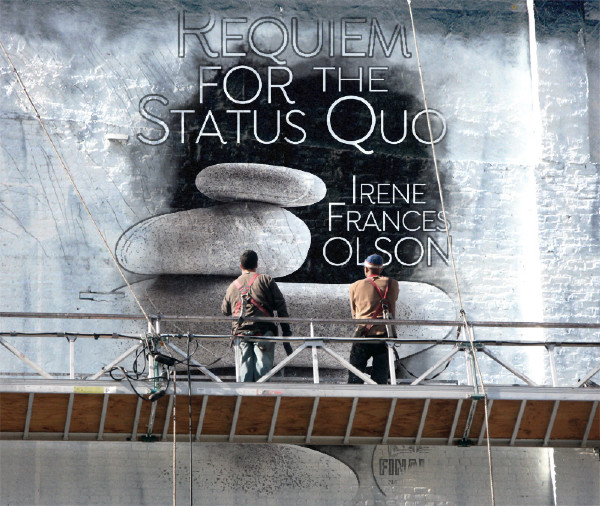
A lot of time and effort go into writing a book. Regardless of the genre, much needs to take place prior to that work of art arriving in the public’s eye to be consumed. The writing process is grueling: outlining; picking character names – developing those characters to become who you need them to be, killing off characters that don’t add anything to the storyline or content; researching anything and everything having to do with absolutely every topic you decided to include within the front and back covers of your project; pounding out page after page of your shitty first draft – because every first draft is shitty; editing, cutting and pasting, throwing out your manuscript and then retrieving it from the garbage because you can’t bear to give up on something that initially seemed to mean so much to you.
But the preparation for my novel began years before I knew I would even be writing it.
 My life changed forever when my father was diagnosed with Alzheimer’s disease. Up until that point, AD was something that happened to other people. Just like everyone else, I was afraid of it – had friends whose parents or other loved ones were diagnosed with it – but just like everyone else, I really and truly did not think it could get close enough to harm me, but it did. You see, I had hoped my professional work in the assisted living and memory care field would be as close as I would ever get to the dreaded disease that is always fatal, but I was wrong.
As my author bio states: Having previously worked in memory care, she was not new to the disease, nor was her family immune.
Years after my father’s death I chose to prolong my involvement with all things dementia, venturing forth into one of the most competitive fields around because it appears that everyone … everyone … has a story to tell, and many have chosen to tell it. With well over 8 million books currently available on Amazon and just a fraction of those touted as Best Sellers, a person would be crazy to even think about adding to those numbers!
Or that person would be brave.
Bravery sounded better than crazy to me, knowing that putting myself out there would leave me vulnerable, exposed before every critic who, although a reader and not an author, would not shy away from tearing apart my completed labor of love. But I wanted something positive to result from my father’s and my family’s Alzheimer’s experience so rather than shying away from risking failure, you know, doing nothing that might prove disheartening, I chose to lay my heart out on the line.
And I am a success.
I am a success, not because Requiem for the status quo made it to Oprah’s book club and/or the New York Times’ Annual Top Books list, and certainly not because of any wealth publishing a novel has brought me…relatively few authors make money in this field. I am a success because I let my love for my father be translated into a novel, creatively based on my own family’s experience, so that others – whether a million in number or just a thousand – could find some encouragement and hope through the ashes of my family’s grief.
And guess what, others read my story and told me time and again how much it resonated with them; how my writing seemed to mirror what they too went through, or were currently going through. Readers thanked me for my story … they thanked me! If that isn’t success, then I don’t know what is.
All I can say is, “You’re very welcome.”
This Week’s Good News!
A New Jersey mom took her son to a skate park on his fifth birthday as recommended by her son’s behavior therapist who is treating the youngster’s autism and ADHD. You will perhaps be surprised by how her son was treated by some older boys who frequented this same skate park. Read all about it here.
A book for family caregivers
Although my novel, based on my own caregiving experiences for my father, focuses on the challenges faced by those caring for someone with Alzheimer’s disease or other dementia, it also benefits Every Caregiver – that universal person who finds her or himself as the primary individual caring for a loved one with a debilitating illness.
My prayer is that Requiem for the status quo helps everyone struggling to balance their own needs with that of their loved one.
Allow me to introduce my mother
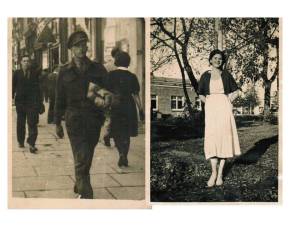
Patricia Constance Conroy Desonier: born on May 6th, 1917, she married my father on May 26th, 1947,
and died in her sleep on September 24, 1994.
My mother never complained about how much pain she experienced in her life. Diagnosed with rheumatoid arthritis as a teenager, she lived with this debilitating condition, staying as active as she wanted to be. When I was a young adult, I told Mom how much I respected her for her activity level, knowing each deformed joint in her body never let her forget the disease that got progressively worse as the years wore on. Mom’s response, “If I stay at home and do nothing, I’ll still hurt. I’d much rather be active, doing something I love, and hurt more.” Nothing stopped my mother – absolutely nothing. She took neighborhood walks; she golfed using special clubs with thickened grips; she made all our clothing; she painted the insides of each home I lived in and stripped and restored wood furniture that stayed with the family in various iterations throughout our lives.
Mom encouraged me to write from a very early age. As a four-year-old, she let me pound on her manual typewriter, typing gibberish but encouraging me to read my “stories” to the family at dinner time. My current soft activism can be attributed to both my parents, but especially to my mother. I say “soft” activism, not because I pull punches, but because I learned how to have an impact on others without offense, without judgment, and with a kindness that speaks far louder than words. Like my mother, I won’t stand for injustice; also like my mother, I won’t dish out unjust behavior just so my voice can be louder than the offending voice. I guess the phrase, “Kill ’em with kindness” is applicable in this respect. My mother killed many a person in that manner.

Mom didn’t miss out on seeing all of her grandchildren, including my daughter, Erin, above, but she did miss out on meeting my extraordinary husband, Jerry, and his two daughters, which she would have welcomed as her own granddaughters. Dad had the privilege of getting to know my husband and he met my additional two daughters, and for that, I am truly grateful. I honor Mom today – her birthday – and every day because she deserves the same honor and respect she bestowed on others, including my father with whom she was married for forty-seven years.
I love you Mom and am so pleased you live within me.
A wealth of books about Alzheimer’s disease

AlzAuthors is a community of more than 200 extraordinary authors who have written about Alzheimer’s disease and other dementia. Today I am spotlighting those books written by the community’s supportive management team, of which I am a member. Please take time to visit the six books spotlighted below. I truly believe you will be glad you did. Let AlzAuthors light your way through Alzheimer’s and dementia.

Alzheimer’s Daughter – a memoir by Jean Lee. A poignant accounting of a family’s life after both parents were diagnosed with Alzheimer’s disease on the same day.

Blue Hydrangeas – an Alzheimer’s love story by Marianne Sciucco. A touching account of a couple’s journey into Alzheimer’s and of the love that never succumbed to the disease.

Somebody Stole My Iron: A Family Memoir of Dementia by Vicki Tapia. This engaging memoir offers useful information from experts within the field of Alzheimer’s research, personal lessons the author learned along the way, and ideas and tips for managing the day-to-day ups and downs of dementia.

Weeds in Nana’s Garden by Kathryn Harrison. A heartfelt story of love that helps explain Alzheimer’s disease and other dementias geared toward the children in our lives.

Motherhood: Lost and Found – a memoir by Ann Campanella. A memoir of the ordinary and extraordinary courage of those who endure debilitating and even crushing illness, and those who suffer with them when they do so.

Requiem for the Status Quo by Irene Frances Olson. A novel that explores the delicate balance of families upended by Alzheimer’s disease and how they manage their loved one’s needs with their own.
This Week’s Good News!
You will absolutely fall in love with this story about a retiree who improves the lives of numerous children, every school day. He does so much for this school in Washington state that is located in an impoverished area just south of Seattle, he was assigned his very own parking space right at the front of the property. There are school volunteers, and then there’s Mr. Preyer, a man who has something to offer every single child at Tukwila Elementary School.
This Week’s Good News!
We have all been on flights where, lo’ and behold, walking down the aisle to find their seats is a parent and her or his baby and if you’re like me, you silently prayed, “Please, please, please don’t let that baby be seated anywhere near me!” Okay, maybe you didn’t exactly say that prayer but I know you had those thoughts. Well, a mother boarded a plane for a 10-hour flight with her four-month-old baby and you just know there were passengers thinking about how their extended flight experience may turn out to be. Well, the mother had a contingency plan, which this article spells out. I was amazed by what she did!
Is time your enemy or your friend?

Sometimes statements or concepts I hear repeatedly over the years suddenly come to mean something new to me and when they do, wow! My life is set on edge, but in a good way.
I was listening to a podcast the other day focused on the concept of stress and anxiety in the workplace and in our private lives. The statement, “We oftentimes declare time to be our enemy when we have so very much to do and so little time in which to do it” came up and suddenly, a new perspective about time settled within my thoughts and within my heart, which made me boldly declare out loud:
Time is my very good friend, because I still have time.
That was it – very simple – but I know the reason for that revelation came about because as of January 24, 2019, my extraordinary sister-in-law, Wendy, no longer had time at her disposal. I know Wendy wanted more time to spend with her husband, three adult children, her sisters and brothers, her good friend Gary who also happened to be her boss, and so many other people she cherished, and who cherished her. But through no fault of her own, decades of life were stolen from her by the ugly injustice of cancer.
I cared for my sister-in-law greatly. I choose to honor her by respecting the time with which I have been gifted, just as Wendy so beautifully spent the time given her.
Won’t you do the same?
This Week’s Good News!

Wow! Talk about making lemonade out of lemons! Joe Bahr suffered the loss of his brother, Marty, to Alzheimer’s disease. Joe and Marty made a deal before Marty passed on. Check out here what that deal entailed. What a legacy Marty left for the rest of us!
Get your discounted copy today!
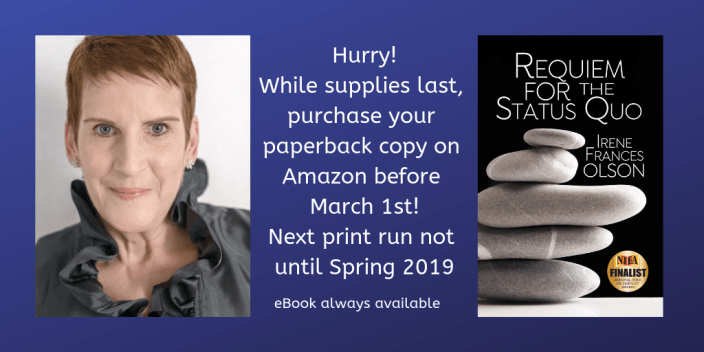
And if you act now, there are a few copies available that are ridiculously priced for under $13. Act now while supplies last!
This Week’s Good News!
Good news abounds in Harrison, Arkansas, and a 5th grader is the one who set this story in motion.
Ruby Kate Chitsey spends lots of time in nursing homes because her mother is a nurse practitioner and Ruby Kate loves to join her mother while she’s at work. Ruby noticed something at nursing homes that wasn’t getting the attention she felt it deserved. Wait until you read this brief story about how this young girl took charge of making life in nursing homes better for those who live within.
Hurry while supplies last! Discounted price!
Requiem for the status quo was picked up by a publisher two years ago this month. The eBook and audiobook will continue to be available on Amazon through Black Rose Writing until the end of 2019. I am arranging for different publishing options for the paperback version, however, and will be releasing that paperback later this year.

In the meantime, my publisher and I reduced the paperback price for the month of February so those who want to add this book to their library can do so at a discounted price. If you are a Prime member, shipping is FREE! When I self-publish my novel I’ll be sure to send out an announcement so you’ll again have access to the paperback version through Amazon. And of course, the eBook is still available on Amazon and will continue to be available forever and a day. (I will self-pub the eBook at the end of the year.)
Let these recent reviews encourage you to get your copy today!
Jill W. I’ve never written a review when I’m only halfway through a book, but I wanted the author to know sooner rather than later, how much her book has affected me emotionally. My family has been dealt the dreaded card of dementia so reading REQUIEM FOR THE STATUS QUO has been difficult since we’re living Coleen and Patrick’s nightmare now. I find myself only able to read pieces at a time because the author has done a superb job of making Patrick and his family’s battle with this horrible disease, so real. Last night as I read, I found myself laughing and then crying. This book is a must read for anyone touched by Alzheimer’s or dementia.
Ann C. Irene Frances Olson writes believable fiction. Her characters are kind, funny and endearing — even in their flaws. When Colleen takes over her father Patrick’s caregiving because of his advancing memory issues, the reader can’t help but be moved by the tender relationship between them. The effervescent Colleen finds herself in a challenging life situation — pulled between her father’s condition, her working life, her brother’s disdain for her father’s illness and her own desire for companionship. Having experienced the devastation that Alzheimer’s can bring to a family, it was both heartbreaking and a joy to follow Colleen’s path. Yes, there was loss, but the author helps us see the beauty and courage in facing the inevitable challenges of aging and how it’s possible to do it with grace and love.
Jason This book is about the many faces of Alzheimer’s, from those how bear the thief in their brain to those who must cope with and care for loved ones. The story is straightforward and written with love, it is a daughter’s anthem of love for her father while also being a support for others facing the journey of incremental loss. Colleen describes it best when she identifies Alzheimer’s as a thief robbing us of our memories and our future. If you or a loved one are walking this journey, this story is sure to give both a sense of how to make this journey possible and how to mourn with others on the path.
This Week’s Good News
I am so thrilled to offer this local story in a town called Lake Stevens where both of my husband’s daughters live. We take for granted the comfort and warmth of our homes or apartments when some people’s reality is not having any way in which to heat their abodes. This featured family is chopping hundreds and hundreds of cords of wood and giving it away to anyone who needs it. Their good deeds have been featured nationally and in other countries. One of the family members was astounded at the reach of their simple act of kindness. “It’s amazing to see because a lot of people out there don’t believe that good exists, and we’re showing that it still does,” said Henry.
Good news travels fast, yes?
This Week’s Good News
I found some good news to share with you this week that came from a website devoted to good news. I must say, I was thrilled to find the site because doing a regular search for positive news on mainstream media left me high and dry. Jen Kremer wrote 365 love letters to her peers. Like so many of us who don’t believe in the success rate of New Year’s resolutions, Jen tried something different that proved effective beyond belief.
“This was an experiment that absolutely altered the course of my life and the way I go through life,” she continued, “and it cost me nothing.”
The really great news about what Ms. Kremer accomplished is that she positively affected the lives of 365 individuals; it’s safe to say she absolutely made the day of 365 individuals who received a letter. But I’m not going to spoil it for you. Please click on the link above and rejoice in how the easiest and smallest of efforts can change the lives of many, including the person who made the effort.
My Best Intentions
I learned something very valuable from two writer friends, Jill and Ann, both of whom live in North Carolina. Instead of New Year’s resolutions, Jill and Ann set a New Year intention and that intention is in the form of a single word. Jill selected MINIMIZE for 2019 and Ann selected ENLARGE.
The word-intention I have selected for 2019 is ACCEPTANCE.

You may be saying to yourself, “Oh, oh, sounds like Irene is giving up, lacking in hope, settling for less. Quite the contrary is true, and I’ll tell you why.
I chose the word ACCEPTANCE because applying that word in my life allows me to be more understanding and acknowledging of those with whom I may hold differing opinions. (Accepting does not equate to agreeing, it simply means I accept a person’s right to hold ideas and opinions that are not identical to mine.) ACCEPTANCE also provides me with greater ease of life as I accept reality rather than fight what can’t be changed. I read recently that arguing with reality can be harmful to one’s health; I’m not going to waste a minute on such fruitless efforts.
The concept of ACCEPTANCE started to seep into my consciousness when early in 2018, I watched the TED video, A love letter to realism in a time of grief. In less than twenty minutes of your time, you will witness what Mark Pollock & Simone George learned about reality and about the difference between being an optimist and being a realist. Here’s a teaser explanation that will perhaps explain why I came to choose my 2019 word-intention.
Optimists rely on hope alone and end up disappointed. Realists accept the brutal facts and keep hope alive. Acceptance knows that grief is a raging river and you have to get in it because when you do, it carries you to the next place; it eventually takes you to the open land where it will turn out okay in the end.
I guess if you don’t get into the river, you’ll get stuck and never have the opportunity to find out what lies just beyond the bend. I have stepped into the river, and although I might step out from time to time during this new year, I feel confident I will get back in because of the desire not to miss out on what I cannot see. You see, because I’m not perfect, I’ve set ACCEPTANCE as an intention, rather than a resolution.
With resolutions, it’s all or nothing, baby; the pressure is on to change that something-or-other you discovered and have resolved to change. Sometimes resolutions get abandoned within the first 30-days, others don’t get much farther into the new year because many of us decide to just give up and take up that resolution the following year, or the one after that.
Intentions, however, have a more compassionate energy because they are not tied to outcomes. When I slip up I hope to view that shortcoming with less criticism and simply start over because the next moment presents a brand new opportunity. If I were to break my resolution, however, I think I would look at that setback as a failure because of messing up the “fix” I had decided to make in my life. With an intended action, however, I am on a path to create, rather than fix. Creating seems to allow a bit more leeway, don’t you think?
I leave you with the words of Socrates to explain my decision to intend, rather than resolve:
The secret of change is to focus all your energy not on fighting the old, but on building the new.
To make changes, a strategy has to be effective. Intention does that for me.
BREAKING NEWS: Goodness abounds!
Goodness abounds, yes, it does.
We don’t hear or read about it enough but trust me, hatred and evil have got nothing on goodness and kindness in our world.

It has been said that it is the horrific stories that make headlines and quite frankly, that is true. Newspapers, magazines, television and social media news outlets clamber after Breaking News in their attempts to be the first to offer their take on ongoing incidents. Clamber means to “climb, move, or get in or out of something in an awkward and laborious way.” Can’t you visualize hungry journalists doing just that: pushing others out of the way, pulling yet others down in their singular effort to be first?
I am all for free journalism; without it I would not be writing this 990th post, so bring it on in all its raging color…however, wouldn’t it be rewarding to have our day interrupted by Breaking News that reports on the good and kind incidents that occur as well?
All right, I’ll do just that. Allow me to introduce you to two wonderful souls who have brought light into the darkness. This is Breaking News of the very best kind.
Sophie Andrews is a person who learned the hard way – one of the hardest – that The best way to help is often just to listen. Sophie was on death’s door – you have to listen to the 14-minute TED talk to learn of the details when a volunteer at UK’s Samaritan helpline picked up the phone and changed 14-year old Sophie’s life forever. Years later, Sophie gave back and paid it forward by starting a helpline for some of the most vulnerable human beings in society who are lonely and without access or means for socialization. Her Silver Line fields more than 1500 calls a day, making the lives of more than 550,000 UK senior citizens brighter, fuller and healthier each year.

Dixon Chibanda, one of 12 psychiatrists in the entire country of Zimbabwe – a country of 16 million people – created a program to treat individuals in need of psychiatric or psychological counseling: The friendship bench program – or why I train grandmothers to treat depression. This program was birthed when a desperate young woman didn’t have the minimal bus fare needed to commute the 15 kilometers to meet with him in person and who suffered the tragic consequences. Dr. Chibanda created a program that brings care and hope to those in need powered by a limitless resource: grandmothers. Sitting on a bench, talking to someone who listens without judgment serves to make a difference in the mental health of thousands across his country and other countries as well – including the United States where a similar program has been started. Please take 12 additional minutes out of your day and listen to the TED talk I have linked above.

Listening – a free resource that is oftentimes not employed when needed the most; listening that actively tunes into the person speaking.
If you are someone who sets resolutions or intentions for the new year, perhaps practicing the art of listening might be at the top of your 2019 list.
I know it is on mine.
Time’s running out: discount book sale ends late 11/13

All of the books shown in this graphic are part of the AlzAuthors Caregiver Appreciation week-long sale, starting today, November 7th. You’ll see my novel, Requiem for the status quo, in the upper right corner that is priced at 99 cents from Nov 7th through 13th. To link to all the books you see above, click on the AlzAuthors link here. Simply click on the book’s image and it will take you directly to its page on Amazon, making it extremely easy to purchase as many titles as you please. And don’t forget to gift others with titles as well. It’s so easy to do and the recipients of your gifts will be so pleased that you’ve thought of them.
Grandma and Grandpa pods
I wrote this article five years ago and I’m posting it again today because it is one of the most viewed posts on my blog. Financial figures are five years old so current, 2018/2019 figures will be considerably higher.
I read a fabulous article in the “Home” section of today’s Seattle Times newspaper. It’s a throwaway section that I always read before I toss it into the recycle basket.

All of us are getting older – there’s no cure for that other than not growing older by leaving this earth before you’re ready – so where are all of us going to live – especially Granny and Pappy who can no longer safely live on their own?
Long-term care (LTC) facilities have priced themselves out of most households’ bank accounts and the alternative solution of having grandparent sitters is cumbersome and expensive in itself. What’s an adult child to do? If you have space on your property to have a guest house newly built or better yet, if you’re willing to turn your sunporch or guesthouse into accommodations for mom and dad, the original outlay of funds will pay for itself because you will have avoided the need for a facility’s ultra-expensive long-term care services.
One company that makes the pods spotlighted in the Seattle Times’ article is called Home Care Suites. Disclaimer: I am not advocating for this company’s product. I am merely pulling information out of the article and presenting it to the reader so you can do research that applies to your situation and your budget.
The pods made by this company range in size from 256 to 588 square feet with prices ranging from $42,000 to $83,000. This is no drop in the bucket but let’s consider the cost of facility care. Genworth (who sells long-term care insurance) states that the average monthly fee for assisted-living (AL) was $3,300 in 2012. I think that’s a very naive figure based on my experience of having worked in the LTC housing industry. Maybe Genworth’s lower number is just the cost for monthly rent – but what about care services? Cha-ching!!! Now you’re looking at double that amount and the cost will only go higher as care needs increase. But even at only $3,300 per month, that amounts to $158,400 for a four-year period. See how do-able the pod concept seems now?
Many of the AL service needs are simple monitoring of a resident – tasks that you can do for your loved one: waking them up, helping them get dressed, a certain amount of medication assistance, meal provision. Many seniors living in AL facilities don’t need the massive hands-on care of bathing assistance, toileting services, physical therapy, etc. I know for a fact that if a family member has the time – and a little patience – they can provide these lower acuity services on their own for quite some time before securing hands-on medical care for the elder member of their household.
Skipping ahead to after Grandma and Grandpa/Mom and Dad have passed on, you now are left with an added structure on your property which you can transform back into the porch or game room of its earlier existence, or simply leave as is as a guest room that may accommodate someone else in your family. I have to believe that your initial investment in constructing a pod is an investment that you won’t regret. And don’t forget – the costs for such a project aren’t necessarily out of your own pocket. Perhaps Grandma or Grandpa are willing to pull some of their savings out from underneath their mattress and contribute to the cost of this alternative living arrangement that would certainly be more attractive to them than a lengthy stint at an AL facility or nursing home. Just saying.
The Alzheimer’s Community
 I have been closely involved in matters regarding Alzheimer’s disease and other dementia for eighteen years now: long-term care (LTC) housing, memory care, Alzheimer’s support group facilitator, and Washington State LTC Ombudsman. But it took me becoming a published author of a novel that focuses on a family’s Alzheimer’s disease experience before I finally found my Alzheimer’s community.
AlzAuthors is a group comprised of over 170 published authors (as of this writing) who have published fiction and non-fiction books reflective of their personal Alzheimer’s experience. The six members of the AlzAuthors Management Team (Team) is the Alzheimer’s community about which I speak.
The Team’s motto says it all:
We can sing a lonely song, or form a choir and create harmony.
Without exception, the authors featured on our site and each member of our Management Team had the experience of struggling with the learn-as-you-go-task of caring for someone with cognitive impairment. We all made mistakes, and we learned from them, but we also had successes, and we celebrated them.
As a recent addition to the AlzAuthors Management Team, I became even more convinced that my personal Alzheimer’s community resides within this group. The support, the kindness, the giving nature reflected within the Team is incomparable in my experience, and we are not just keeping it to ourselves. AlzAuthors is spreading their influence into numerous parts of the world…which is kinda why they asked me to join the team as their Global Outreach Coordinator. The six of us know our presence is evident in more countries than just the United States, but our imagination and passion is boundless so we have set out to become a household word in small and large communities throughout the world.
Why AlzAuthors? Because this 100% volunteer group has brought together some of the best books on Alzheimer’s and other dementia in one central location: our bookstore. We’ve categorized those books to make the personal caregivers’ or professionals’ shopping experiences an easy one with categories such as: Caring for Parents or Grandparents, Caring for Spouses or Partners, Living with Dementia, and Children and Teen books, to name a few. We know a caregiver’s “free” time is limited or non-existent, so we’ve done our best to make their shopping experience an easy one. They simply click on the cover of the book they’re interested in and they are taken directly to Amazon to make the paperback, eBook, or audiobook purchase.
We’re working hard so you don’t have to.
 And finally, we understand the journey of unpaid (family & friend) caregivers because:
- We have experienced the loss of a loved one with dementia.
- We know the pain of being forgotten.
- We all have witnessed decline.
- We have provided countless hours of caregiving.
- We know many others have experienced the same and we believe in the power of sharing those stories.
Sorrow Passes and We Remain
 I found a letter dated July 28, 1883, written by Henry James to his friend Grace Norton, in a reference book. He wrote a letter of encouragement to her as she was desolate, depressed, and determined not to live. I post portions of it here should anyone out there feel as Grace did, in need of life-saving encouragement.
********
You are not isolated, verily, in such states of feeling as this – that is, in the sense that you appear to make all the misery of all mankind your own; only I have a terrible sense that you give all and receive nothing – that there is no reciprocity in your sympathy – that you have all the affliction of it and none of the returns.
I don’t know why we live, but I believe we can go on living for the reason that life is the most valuable thing we know anything about and it is therefore presumptively a great mistake to surrender it while there is any yet left in the cup.
Sorrow comes in great waves, but it rolls over us, and though it may almost smother us it leaves us on the spot and we know that if it (sorrow) is strong, we are stronger, inasmuch as it passes, and we remain.
My dear friend, you are passing through a darkness in which I myself in my ignorance see nothing but that you have been made wretchedly ill by it; but it is only a darkness, it is not an end, or the end.
Don’t think, don’t feel, any more than you can help, don’t conclude or decide – don’t do anything but wait. Everything will pass … and the tenderness of a few good people, and new opportunities, and ever so much of life, in a word, will remain.
You are marked out for success, and you must not fail. You have my tenderest affection and all my confidence.
Dynamite storybook for seniors with dementia
 I was asked to write a story or two for an anthology of short, short, stories that would be read to seniors with cognitive impairment. I jumped at the opportunity. That anthology, The Mighty Ant, is now available in paperback on Amazon.
I am one of 33 contributors to this collection of short stories for seniors who suffer from dementia and other related memory or cognitive disorders. This book is the culmination of a project from editor and contributor, Jessica Bryan, who is a caregiver and advocate for caregivers. Several years ago she began to notice that her mother, who suffers from Alzheimer’s disease, lost focus and could no longer read lengthy books. Jessica began reading to her mother and found that simple, short stories were easier for her to understand. The Mighty Ant is filled with these kinds of fiction and non-fiction stories.
The proceeds from the sales of the books will be donated to a local Council on Aging. The generous contributions of authors like myself have come from all over the world. The result is a book with different perspectives, reminiscences, and tales that reflect not only local culture, but a variety of customs, ethnicities, and lifestyles.
I am honored to have my two stories titled, A Neighborly Friendship and A Sweetheart of a Story included in this collection. A Sweetheart of a Story was selected as the final story in the book because the editor felt it was the perfect selection to provide a sweet ending to the anthology. Buy a copy or ten or more for yourself and others…perhaps your local memory care community would love to include the reading of this book to their senior activity schedule! Currently only $12 for this 322-page large print storybook.
- ← Previous
- 1
- 2
- 3
- …
- 12
- Next →
 Living: the ultimate team sport