In the book, Gabby, by Gabrielle Giffords and Mark Kelly, Congresswoman Giffords’ husband, Mark, provides statements about optimism that have greatly encouraged me. Here are just a few:
“I saw how optimism is a form of therapy and hope is a form of love.”
“Doctors at TIRR, the rehab hospital, told us that our optimism and encouragement could make a great difference in Gabby’s recovery…”
“To be of help to a brain-injury patient, we were told, families need to find a way to balance pragmatism and optimism.”
In a Time Magazine article published December 13, 2011, Congresswoman Giffords addresses the struggles she and her husband have endured as they continue to adjust to the “new normal” brought about as a result of a bullet that pierced her brain on January 8, 2011 when she was reaching out to her Congressional district in Arizona. So many of us have new normals as we walk, or fall, head first into Baby Boomerism. This normal may involve a loved one who has a fatal or debilitating illness. This new normal may be characterized as our own bodily/physical struggles inherent with our age. Each of us have some sort of chronic something-or-other that inhibits our ability to function at 100%.
What is the chronic something-or-other that inhibits your ability to function at 100%?
The above question is a rhetorical one. Neither myself nor the public need to know the specifics – but you know the specifics and you’re the one making long-term adjustments as a result.
What processes do you follow to unearth the optimism that exists somewhere in your psyche? How do you overcome your personal challenges so that you end most days victorious, rather than defeated?
My wonderful sister, on my left, and I at a Napa winery - tasting wine of course! Cheers!
For me, it’s acceptance. For me, acceptance doesn’t mean giving in or giving up; rather, acceptance means being o.k. with how things currently are and finding ways to succeed within that new normal. This mentality or attitude is more optimistic than you may think. Again, for me, I decided to allow optimism to nurture the hope that oftentimes is buried deep within me. Things could very well change for the better – which doesn’t have to be defined as being 100% problem-free. Nope. If I garner optimism at the start of each day, I’m making a conscious and aware decision to acknowledge and celebrate even the smallest of victories that might occur in the next 24-hours. If I wait for a humongous, star-spangled mega-victory, I may wait forever. Instead, I attempt to be aware of even the smallest improvements/goodnesses in my day so that my life is filled with many victories to celebrate. The previous sentence says that “I attempt” to garner optimism throughout my day. I don’t always succeed – but I try.
What small victory can you celebrate today?
What works for you? The rest of us would love to celebrate that victory with you.
Your Dad lives in a long-term care (LTC) facility and you’ve found that these visits really take a lot out of you and your Dad. You’re bored, your Dad is bored, and you’re beginning to wonder if these visits are even worth it. Do you want some encouraging ideas to make your visits beneficial to everyone involved? Here are some suggestions that might take the hurt out of the equation.
ACKNOWLEDGE THAT THE LTC FACILITY IS NOW YOUR DAD’S HOME.
Southern Oregon CCRC where my Dad lived.
The longer your Dad lives in this LTC facility, the more it will feel like his home. That’s a hard pill to swallow when you’re accustomed to visiting him on his home turf. His new normal is his 200 square foot (if he’s lucky) LTC apartment. Remember how painful it was for your Dad to move away from the family home to his apartment in the facility? One can not minimize the difficulty of downsizing a lifetime of emotional attachment to a household of personal objects to a mere few that will fit in his small living space. Respect for the remaining space allotted to him will go a long way towards making him more comfortable when you invade that space.
HOW I ADJUSTED TO MY DAD’S LTC LIVING SITUATION.
My distingushed Dad in the 1980's.
I would never attempt to offer any advice if I too hadn’t been through what you’re going through. At the age of 84 my father was diagnosed with Alzheimer’s. Dad lived in a Continuing Care Retirement Community (CCRC) in Oregon state. At the time of his diagnosis he was living in a decently sized one-bedroom apartment “on campus” and for a few years was able to function quite well in that space. When I visited from Seattle, it was pretty challenging coming up with ways in which to engage him and make my visit a valuable time for him. He was still active, however, so we went on picnics, took walks, shopped for needed personal items, and our days were filled with purposeful activities. As his disease progressed, however, he moved to the dementia unit of the CCRC and shared a room with another gentleman who also had dementia. Now what? I certainly can’t visit him in his room, and the common areas were populated with other residents who presented challenges to creating a valuable visiting experience for both my father and me. Visits outside the CCRC campus became more and more difficult as my dad’s ability to function outside of his routine rapidly decreased. How could just sitting with him in the dementia unit’s living room make any difference in his day?
IT’S NOT ABOUT YOU – IT’S ABOUT YOUR LOVED ONE.
Well, it is about you, to be sure, but if your loved one’s experience is a good one, chances are your experience will be equally as satisfying. Depending upon your loved one’s executive function, your activity options may not be limited at first. You’re still able to take your loved one to movies and museums. You’re able to go out to dinner and attend family gatherings. You pick your Dad up, he’s happy to go with you, and your time with him is about as normal as it gets. If Dad is physically or cognitively impaired, however, your activity options decrease considerably.
BEING PRESENT WHEN YOU’RE PRESENT.
I think you’ll be amazed at how far a smile and a pleasant attitude will go when visiting your parent or other loved one. You’re of the opinion that you have to be doing, doing, doing to have a successful LTC visit. If being active is a thing of the past, I encourage you to simply be present when you’re visiting Mom, Dad or your spouse. Does he still like to read or watch TV? There’s no reason why he can’t continue to do that while you sit nearby and use your laptop or read a good book. When was the last time you had nothing but time in which to do so? Consider this down-time as some sort of blessing in disguise. Does Dad like certain types of movies – or one in particular – that you can put in the DVD player for his entertainment? Watch that movie with him even though it’s the 100th time you’ve done so. It’s difficult for us to define the movie-watching experience as quality time spent with Dad, but for him it may be just what he needs that day. I know very well how slowly time passes when visiting a loved one whose world has been significantly diminished. But imagine, if you can, being your Dad’s age and unable to come and go as you please. When you visit him, you bring the outside world to him and give the day a whole new meaning.
WHY VISIT DAD IF HE DOESN’T RECOGNIZE ME ANYMORE?
This is one of the most challenging times for a son, daughter (or spouse) to go through when our loved one’s cognitive levels continue to decline. (Please check out other articles on this subject under this Blog’s “Alzheimer’s/Dementia” tab for additional encouragement.) You’ll be doing yourself and your loved one a favor by not trying to force him to recognize you. The Alzheimer’s Association suggests that it is far easier for you to walk into his or her world than it is for him to be present in yours. When you walk into his room for a visit, simply announce yourself, “Hi Dad, Irene is here for a visit.” You don’t even need to qualify your name by saying, “your daughter, Irene.” Your title is not as important as who you are when you visit him. Smile. Speak in a lively tone – not loud, just lively – and let him feel your friendliness and your love. Caregivers can’t give your loved one the love that you have for him – only you can. As difficult as it is to seemingly have lost your identity with him – and it truly is difficult – the fact remains that you are his/her daughter/son/spouse and only you can love him like a family member can.
I sure don’t own the franchise on ideas to employ when visiting at a LTC facility. What has worked for you? What do you suggest? Your ideas may be just the thing that helps someone else weather this difficult time.
The 7-year-old child says, “I don’t want to visit Grammy anymore. She doesn’t remember me and she scares me!”
My daughter in 1st grade. Would she have been able to handle visits with her Grandpa at that age?
This is a major dilemma with adult children whose parent has dementia. It’s difficult for the adult to reconcile their parent’s disease progression – and they have a fairly comprehensive understanding of the disease that is robbing them of their parent. Now imagine a child’s inability to comprehend the disease. All they know is that Grandma seems upset when the child visits and on top of that, no longer recognizes him. When one considers that adult children sometimes dread visits with their mother or father with Alzheimer’s or other dementia, it seems easier to just let those visits slide for the younger members of the family. My daughter was an adult when her Grandpa was diagnosed with Alzheimer’s. I can only proffer a guess at what I might have tried in order to make her visits with him a comfortable experience.
Should parents force their children to visit the person whom the child has started to fear?
Forcing anyone to do anything isn’t always the best strategy to follow. In these circumstances, it could almost be considered cruel. My grandparents lived in a different country than my family. Us three kids saw our grandparents maybe six times before they died. Having the opportunity to live near an older relative would have been a novelty for me as I’ve always envied those who grew up with Grandma and Grandpa nearby. With that said, however, I acknowledge that close proximity alone in this situation is not a sufficient motivator.
How can grandchildren still maintain a relationship with their Grandma and Grandpa?
The distracted visit – visiting but doing his own thing as well. If the parents are able to provide some sort of distracting activity while visiting Grandma, the child might get more accustomed to their grandparent’s behavior. The child casually observes how mom and dad interact with Grandma – while still being able to watch their favorite video or play with their hand-held electronic game – and gradually feels more secure being there. Over time, but certainly not immediately, he may realize that Grandma is no longer someone to be feared and may attempt his own interaction with her.
Parents visit without the child and provide engaging updates to their child when they get home. Parents can keep their child connected by telling him the funny/cute thing Grandma said that day when they visited and also making the child aware of the positive things that are happening in Grandma’s life to balance out the overwhelming negative that pervades it. Who knows, this reporting tactic might actually lead to the child’s “distracted visit” next week. Curiosity may be just the ticket that gives the child the desire to see Grandma.
There’s SO much more that needs to be said on this topic.
I haven’t even addressed the issue of early-onset dementia that thrusts young children and teens into an extremely challenging relationship with a parent whose disease robs their children of the guidance that their parent might normally provide during their adolescence. What can you, the Baby Boomers and More Blog audience, contribute to that very unfortunate, and ever-increasing reality, in today’s world?
I’m very much looking forward to what you can add – successes and failures – that will benefit those of us searching for advice and guidance.
What do you want to read and comment on? I thoroughly enjoy this blogging experience but it’s not satisfying enough for me to have a one-way written conversation. My family would be the first to say that once I get going, it’s hard to shut me up. (As of March 2016, I’ve posted 700 articles.)
But I want to enhance my own Baby Boomer experience with your wisdom, advice, successes, even failures. It’s in those practical experiences that we grow the most.
So I sincerely covet your input as to what would draw you to my “Baby Boomers and More” Blog more frequently. What topics interest you enough that you would provide comments and even contribute your own articles that I’ll press/link to my own Blog site?
Truth be told? This is not just my site – it’s out there for everyone. I hope you’ll be candid and honest with your input. Bring it on – I’m good and ready for your Baby Boomer Blog ideas.
Whether your aging parent lives in a long-term care (LTC) facility or in his or her own home, if you live more than an hour away from them, you’re their long distance caregiver. What are you doing to protect them, and yourself, during this trying time?
As I mentioned in Part I of this article, published December 3, 2011, bridging the gap between you and your parent can be a difficult task. Being able to monitor your parent’s day-to-day life from a distance, especially when a parent has dementia, is a frightening task, and it’s one for which you need suitable support. What follows are suggestions gleaned from my experiences with my father.
If your parent lives in a long-term facility:
If you haven’t done so already, meet all the department heads entrusted with your parent’s care. Do what you can to be on record as the go-to person. If you are your parent’s health care representative and/or financial representative, make sure that the facility has the appropriate legal documents in your parent’s file. Whether a crisis arises or you simply need to discuss your parent’s condition, making sure the staff know of your legal authority to discuss care will make your, and their, job a smoother one. If you don’t have those specific legal documents in place, and if your parent is still able to designate you as the approved contact regarding care, do so as soon as possible.
When it’s time for your parent’s care conference, a time when the resident – if able – and care staff discuss the resident’s plan of care, be present by phone. This is a more common occurrence than you may think. Share your observations of your parent’s behavior, phone abilities – or lack thereof – and don’t be shy about asking detailed questions about your parent’s care, regardless of how intimate the details. As your parent’s advocate, you have the right to question the staff’s care plan – and you should.
Meet your parent’s primary care physician. Be sure that he/she has it on record that you are your parent’s health care representative. Being able to talk to my father’s doctor to discuss all of his medical conditions, as well as all treatments, including medications, kept me in-the-know and enabled me to keep my siblings informed. My brother and sister were also a big part of my dad’s life and they were also long distance caregivers. They told me time and again how appreciative they were that I was on top of dad’s care, and that I was able to keep them informed at all times.
If your parent lives at home and is in the early stages of dementia:
Follow point 3 above because even if both of your parents live in the home, you probably can not rely on them to be on top of their own care. The parent without dementia is the on-site caregiver, and at his or her advanced age, might not be able to adequately function on his own behalf, forget trying to do so for his spouse with dementia. If your parent is living alone without the presence of a family member, you have no choice but to nurture a relationship with his/her medical team so that you know what treatment your parent is receiving; what medications have been prescribed; and what long-range care goals should be addressed.
Engaging the help of trusted friends, church members, and neighbors might provide some sort of care continuity as they do drop-in wellness checks of your parent. If you have people who are able to provide this type of observational visiting, I suggest you utilize web services, such as the following, that can help get you organized: Lotsa Helping Hands, which is “Free, private, web-based communities for organizing friends, family, and colleagues – your circles of community – during times of need. Easily coordinate activities and manage volunteers with our intuitive group calendar”; or Caring Bridge which is “Free, personal and private websites that connect people experiencing a significant health challenge to family and friends, making each health journey easier.” Additionally, Caring From a Distance provides resources that are available in your parent’s local area: “Whether you live across-the-world or an hour away, you and your family face special challenges. Where can you find the local resources they require? How can you, your family, and friends communicate in an emergency?”
What if the burden is too much for you to bear?
You’re in good company. If I had been familiar with the services listed above I think my caregiving journey would have been a smoother one. But believe it or not, this type of caregiving challenge is one that is relatively new in the grand scheme of things. If you’re losing ground as your parent’s long distance caregiver, it might be time to consider the services of a Geriatric Care Manager. The National Association of Professional Care Managers is a non-profit resource that can put you in touch with someone who might be able to provide the bridge you’re looking for.
Consider the cost of managing your parent’s care from a distance:
time off from work;
driving and flying time to your parent’s location;
hotel accommodations, food and other travel expenses; and
the emotional and physical toll on yourself.
Paying a Geriatric Care Manager to manage your parent’s care, whether he lives at a long-term care facility or in his own home, may greatly pay off in the long run.
Whatever you choose, and which ever direction you take, I hope you will carefully consider the best option for your particular situation. As I’ve said in past articles, only you know what is the best fit for your family. Consider all the alternatives and move forward confidently.
Numerous authority figures are entrusted with your loved one’s care – most of them a fraction of their age. If you can’t be a physical presence for your loved one what will you do to bridge the gap between physical absence and an effective long distance presence?
My mother and my daughter, circa 1976.
My father was diagnosed with Alzheimer’s at the age of 84 and died in 2007 at the age of 89. By the time of his diagnosis he had been living in a Continuing Care Retirement Community (CCRC) for seven years. His wife, my mother, died a month before they both were to move to this CCRC located in Oregon state. My mother was truly looking forward to the move with my dad but on September 24, 1994, she was granted the wish that she had thrown into the universe many years earlier – that when her time came, she wanted to die in her sleep. My father still moved to the Oregon CCRC because at the age of 77, he knew he still had a valid reason to move there. Both he and mom didn’t want to be a burden to us three children, so moving into a retirement community that would meet all the needs of his aging body and mind was dad’s gift to us.
Dad, myself, and his wife Barbara on his 87th birthday.
A few years after my mother’s death, dad married a resident of the CCRC and they had a wonderful late-in-life marriage. Dad’s wife, Barbara, died from complications of Parkinson’s in 2003 so once again, dad became a widower, but this time his biggest challenge was that he was in the early stages of Alzheimer’s disease. He was still able to live semi-independently in an assisted living apartment at the complex and he was able to perform his activities of daily living (ADLs.) Of us three adult children, the job of being dad’s caregiving team leader quite naturally fell to me. I had worked in the senior care industry for several years so I was quite familiar with caregiving lingo and body frailties, not the least of which was Alzheimer’s and other dementia.
Dining room at my father's facility.
Initially, the miles that separated us wasn’t all that challenging. He was still active, was fully capable of getting himself up in the morning, taking his medications, getting to the dining room, etc. Us children would call dad frequently – and he still had the ability to call us – and we continued our visits throughout the year and although his dementia was obvious to us, we knew he was in good hands and that he was functioning quite well. The staff was very attentive to him and if they had concerns, as his health care representative and financial power of attorney, they kept me abreast of the latest, the greatest, and the ever-increasing not-so-greatest.
The not-so-greatest happened one frightful evening. Dad called me telling me that he felt very agitated and he couldn’t stop walking around his apartment; he couldn’t settle down; he didn’t know what was going on. I asked him if he had recently taken any medication and he replied, “Just some cough syrup.” “How much did you take?” “I don’t know.” So while I had my father on my home phone line, I called the front desk of the facility on my cell phone and told them that my father was having an emergency in apartment #94 and a nurse needed to get there immediately. I kept my dad on the phone and told him that a nurse was on the way to see him and that he would be taken care of very soon. The nurse arrived quickly, and the emergency was averted.
Bottom line? We now knew that dad was no longer capable of managing his own medications. He took way too much cough syrup that evening and it caused his heart to race, resulting in extreme agitation. This precipitating event was the start of his noticeable decline and medication management became the first ADL for which my dad needed assistance.
The above example barely scratches the surface of what many of you are dealing with. Your long distance eyes and ears seem thoroughly ineffective and you’re concerned about your loved one’s well-being. There is hope for the long distance caregiver. It’s not the same as being there, but this hope somewhat bridges the long distance caregiving gap. Part II of this article, published December 4, 2011, addresses some practical steps you can take to help in your caregiving journey.
As family members, we are desperate to believe that dad’s driving is absolutely fine. We try to convince ourselves that even with dementia, dad presents no hazard to himself or others and we even trick ourselves into believing it. When a precipitating, oftentimes, climactic event occurs, our best-case-scenario dream becomes a nightmare.
My family was one of the lucky ones – those in the very small minority whose loved ones come to their own decision to retire their automobile keys. My dad decided that he wasn’t comfortable driving anymore and stopped driving cold turkey. Boy did we dodge a bullet! I know, however, that more often than not- male or female – your loved one will be very resistant to any suggestion that their driving experience come to an end. And it’s not always a case of dementia causing the questionable driving behavior. Declining hearing and/or vision, combined with slow response times, can render just about anyone a hazard to humanity behind the wheel.
Be supportive, not argumentative.
Whatever you do, acknowledge that this function of your loved one’s life equates to independence – going wherever you please, whenever you please. Imagine being told that you have to give up that freedom. How would you feel? Very carefully consider what steps will be most successful in addressing this issue with your loved one.
Make serious efforts to preserve the dignity and pride of the person while protecting the safety of that person and others;
Involve your loved one in the discussion; by doing so you emphasize that person’s ability to be a part of the solution which might bring about a more successful outcome;
Be realistic and honest with yourselves. Don’t take comfort in the fact that the person with dementia “only drives to the store and back” or “only drives in her immediate residential area.” Many accidents occur during the shortest and most mundane trips;
If you’re the primary point person for your loved one, enlist the help of other family members and friends, and/or a respected professional – such as a doctor or lawyer – to support you in your efforts.
What does the law have to say on the matter?
Just about every state in the Nation has driving restrictions for those who exhibit questionable driving aptitude. I’m about to provide some links to laws that are applicable in the State of Washington but I’m certain that similar statutes exist in most states. In Washington Sate, the Revised Code of Washington, RCW 46.20.207 states that the Department of Licensing can cancel any license wherein the driver is not competent to operate a motor vehicle under RCW 46.20.031 which addresses a person’s inability to safely operate a vehicle due to physical or mental disability or disease. RCW 46.20.305 further details the reexamination process for those who fall within this category. This is not a laughing matter to be sure. Not only is your loved one at risk, but everyone within sight of his vehicle is unknowingly being subjected to your loved one’s dangerous driving. Imagine how you will feel if an innocent person dies or becomes disabled as a result of your family member’s driving. And there are liability issues to consider.
Who shares liability in these types of circumstances?
The Western and Central Washington State Chapter of the Alzheimer’s Association has much to say on this matter. You can request and receive, free of charge, their booklet, At the Crossroads: Family Conversations about Alzheimer’s Disease, Dementia & Driving. In a separate article, Seattle elder law attorney, Janet L. Smith outlines our legal obligations as family members of those who drive with dementia. Are you letting your wife or husband drive with diminished abilities? According to this article by Ms. Smith, because Washington is a community property state, the marital community is generally responsible for any injury or damage caused by either spouse. This article further states that an attorney-in-fact, acting under a Durable Power of Attorney, opens himself up for possible legal action should the impaired driver cause significant damage to another. In both of these circumstances you simply need to ask yourself if you feel comfortable enough to take that risk, knowing that the driver is unfit but taking no action to prevent that person from driving. It all boils down to a matter of conscience, and a matter of moral obligation. Only you can decide what type of risks you’re willing to take and/or the degree of responsibility you’re willing to shoulder.
Consider the frequency and severity of these signs and symptoms of dementia-impaired driving:
inability to locate familiar places;
failure to observe traffic signs, perhaps because they may no longer understand what they mean;
making slow or poor decisions in traffic, such as slow response times, and making incorrect responses to traffic conditions;
driving at an inappropriate speed – usually too slow;
becoming angry or confused while driving.
Soft ways to eliminate driving opportunities.
Arrange an independent driving evaluation through the local AARP or your State Department of Licensing;
With the help of your loved one, assign driving responsibilities to family members, neighbors, and church friends;
Take your loved one on errands that she needs fulfilled and make a date of it – grabbing a cup of tea somewhere, or combining the errand with a lunch opportunity;
Drastic ways to eliminate driving opportunities that should only be employed as a last resort:
gain control over access to the car keys;
disable the car by removing the distributor cap, a battery cable, or the starter wire;
arrange to sell or donate the car;
secure a letter from a physician declaring the person incapable of safe operation of a vehicle and present it to the Dept. of Motor Vehicles/Department of Licensing.
I can not emphasize enough how important it is to make sure that you’ve assembled a team of well-intended friends and family members to fill in the transportation gaps. Helping Mom and Dad, or your spouse, maintain an acceptable level of independence will go a long way toward softening the blow of losing the ability to get behind the wheel on their own.
There are diagnostic tools in place that try to make sense of the symptoms of Alzheimer’s and other dementia; some are conclusive, while others are simply an educated guess because knowledge of this disease is evolving day by day in the medical and scientific fields. And for certain, no two people with the disease have the same manifestation thereof.
Whether or not an actual diagnosis is presented, you as family members, or perhaps as the patient, are struggling with this new reality and are attempting to carry on as normally as possible.
In the days ahead I am going to submit four articles addressing some of the challenges inherent with this disease. I am not an expert – I have no PhDs and no medical degrees – but what I do offer is advice gleaned from my own practical experience and from that of those with whom I have been fortunate to be acquainted.
The four articles will be as follows:
Denial: Roadblock to better health and better care.
Driving with dementia: the dangers of denial.
Long distance caregiving (provided in two parts.)
Preserving your loved one’s dignity.
My wonderful brother Don, and our dad in June 2005, a year after dad's Alzheimer's diagnosis.
As Charles Darwin once said: “It is not the strongest of the species that survive, nor the most intelligent. It is the one that is the most adaptable to change.”
I hope that ALL of us will have something to offer as these four articles are presented. I covet your input and hope that you feel free to provide it.
When an adult child’s earlier relationship with a parent has been wrought by abuse, how does the child manage to provide care to this parent who reigned verbal, physical, and/or sexual abuse upon him/her?
Is it possible? Yes.
Is caregiving required of an adult child in this circumstance? No.
Is the child wrong to turn his or her back on a parent requiring care and attention? Absolutely not.
Every individual’s situation is unique due to the extreme nature of this type of family dysfunction. There truly is no textbook answer that fits each circumstance. Not only is the situation unique but we’re talking about emotions – and how one deals with those emotions. We’re talking about the balance of how the previous harm has been handled and whether or not contact of a caregiving nature may prove newly damaging to the adult child/victim. For the purposes of this article, we will assume that the adult child has decided to participate in her abusive parent’s caregiving. CAVEAT: Anything I offer in this article is not based on personal experience, but rather, experiences that have been relayed to me through my work with adults who are also caregivers for their parent. I’m not an expert, I’m only an observer. I covet any input that my readers may be able to offer.
The caregiving well is shallow.
More likely than not, the well from which the child can draw may be very shallow. If the adult child has chosen to keep her distance from the abusive parent for many years, being suddenly thrust into one of the most difficult jobs she will ever perform could be a next to impossible task. Let’s say that she has decided to give it a try but she has been wise enough to set up an escape route that she will follow when the going gets tough. I don’t necessarily mean an actual, physical escape route. Rather, she has established the upper limit that she will bear should matters get out of hand emotionally or physically. She makes a commitment to herself that sets a comfortable threshold after which she will walk away, guilt free, knowing she made a valiant effort. She is strong enough to acknowledge that at some point she may need to cease all caregiving efforts.
As I mentioned in a September 2011 Blog entry, “Deathbed promises and how to fulfill them,” (found in the Caregiving category of this site) even adult children with a fabulous relationship with their parent struggle greatly in their caregiving efforts. Whether you end up being a hands-on caregiver (providing the care in your parent’s home or yours) or you find yourself as the primary family contact with the staff caring for your parent at a long-term care (LTC) facility, you are pulled into the intimate aspects of a parent’s life and it is not an easy role in which to function.
Feeling obligated vs protecting oneself.
Too often, we do things out of a feeling of obligation rather than heartfelt compassion. In the situations outlined above, obligation will either be the only thing that places you in the caregiver role, or it will convince you that you’re not emotionally available to walk down that rut-filled path. I am an advocate for vulnerable adults – I live by that mantra – but in this situation I feel that the person needing the most advocacy is the adult child who still struggles with the effects of a past abusive relationship with a parent. If you are not able to provide the caregiving, please know that there are others who can do so in your place. You don’t have to be “it” ‘in this situation, and having someone else step in could very well be the best caregiving scenario for you, and your parent. If you ever find yourself in this role, please do not act alone. The community around you: churches, local government health service organizations (such as that found in Washington State), organizations that protect the abused, are an absolute required tool in your toolbox to be an effective caregiver, and an emotionally protected adult child.
Anyone out there who has been in this role or is currently in this role of taking care of an abusive parent?
Your input is very valuable and could very well help those struggling with this scenario. If you feel strong enough to share your story you have my thanks for opening up on this Blog.
The airline flight attendant gives pre-flight safety instructions:
“In case of a loss of airplane pressure, oxygen masks will drop from the overhead compartments. Put mask on yourself first before assisting children or those not able to help themselves.”
Why? Unless the able-bodied person is fed oxygen, he won’t be able to help any one else.
Whether you are actively providing care to your loved one or you are the point-person managing that care, you are stretched thin.
Your reserves are low.
Your tank is nearing empty.
You’re on the path to caregiver burnout – or you’ve already arrived.
You love to think that you can do it all:
have a full-time job, and a full-time family;
have numerous duties in your own household that obliterate any “idle” time during your day;
you’re on the community board or other volunteer activity; and, oh yah
you’re responsible for your aging parent’s, or spouse’s, day-to-day maintenance.
Not only are you burning the midnight oil; you’re burning the candle at both ends and about to self-destruct.
“But I have to do this. I have a lot of people counting on me to take care of dad. If I don’t do it, who will? I won’t be a dutiful son/daughter, if I walk away from all my responsibilities!”
Oftentimes what happens in these situations is a person ends up being of no good to anyone.
You’re taking more and more time off from work either due to your own illnesses or to attend to the needs of others;
Your spouse and children are suffering from the constant stress that your over-extension of commitments places on the household;
The project for which you volunteered at the PTA or Boy Scouts, or FILL IN THE BLANK, is dead in the water because you don’t have the time or energy to devote to the cause; but
Your loved one for which you provide care is doing just fine because he/she is receiving all of your attention.
Keep this up and you’ll be no good to anyone because a vehicle doesn’t run on an empty tank and neither can you. It’s time for you to attend your own “care conference” to come up with a realistic plan of how to direct your own health and well-being.
The “To Do” List vs the “Don’t Do” List:
You weren’t put on this earth to help everyone and despite your well-meaning belief that you can do it all – you can’t, and you’ll never be able to do so.
Write a list of everything you currently feel obligated to do each week. Now cross out a third of that obligation list. Do what you can to delegate duties and/or designate other willing people to carry a third of your burden. You should already start feeling better.
Now eliminate – or temporarily withdraw from – another third of your obligations. You won’t offend others by doing so if they know you well enough to understand your reasons for stepping back a bit. I’m certain they know that they will be able to count on you later when your life situation isn’t so acute. You’re not dropping out, you’re just putting yourself on pause.
Reconnect with the family in your household. Don’t risk losing your family. You need them on your team and they need you. They will be around long after the loved one for whom you’re providing care passes away. You want your family with you now, and you’ll want their support later.
Assemble a caregiving team. In my blog entries: Caregiving: The Ultimate Team Sport and Solo Caregiving I address the importance of reaching out to others and tapping into resources that will help you stay sane and healthy while on this caregiving path.
You owe it to yourself, and your loved one, to start taking care of yourself. So place your own well-being at the top of your priority list. I can pretty much guarantee that you won’t regret it.
Caregiving is one of the hardest jobs any of us will ever undertake. Please take time to read this article that I have added to my Blog that originally came from an AARP posting.
Imagine, if you can, sitting next to your spouse of 25 or more years, and experiencing for the first time that she no longer recognizes you. As a matter of fact, she’s quite scared of you, fearing eventual harm, and backs away, even screaming, because you’ve become a menacing figure in the room. Or your father, who you have diligently visited at the facility several days a week for a couple years; he looks at you with a questioning glare and asks, “Who are you? Why are you here?”
You can’t imagine this scenario unless, of course, it’s happened to you. I’m talking to you, the new-found stranger in your loved one’s life, in the hopes of softening the blow that the above scenarios have landed on you.
Oftentimes during the course of our loved one’s dementia, we’ve managed to find the humor in some of the ongoing episodes, e.g. observing your wife as she stands in front of a mirror, carrying on a one-sided conversation with her new BFF; or your husband’s acceptance of you as a nice lady and all (even though he doesn’t recognize you as his wife), but he tells you he’s not gonna have sex with you because he’s already married; or perhaps you’re admiring the outfit your mother has chosen to wear for the day, only the bra and panties are worn on the outside of her blouse and pants and it’s time to take her to church! Kind of funny, right? But these odd behaviors take on a whole different light when, by their very nature, they cut you off from the loved one with whom you have shared so much history.
My dad's final resting place - one month after my last visit.
I first learned that my father no longer recognized me when I walked into his Oregon hospital room – he had been admitted with an ongoing prostate issue – and after spending a good portion of the day with him, he stood up to shake my hand and said, “Well Jim, it was nice of you to drop by but I have things to do.” Needless to say a) I’m his daughter; and b) my name is Irene. My 89 year old father was five years into his dementia by that time – and as it turned out, only one month away from dying – but the good news is that I had just experienced a really wonderful day with him and I felt very close and in-tune to him.
Did it feel weird for him to call me a name not mine? You betcha – especially since it was a male name – but let’s face it, my hair is pretty darn short so maybe I reminded him of a friend of his and that’s the name that came to him first. Unfortunately, his incorrect identification of me only happened once because the next time I saw him, he was in a coma dying from prostate cancer. What I would have given for many more opportunities to have passed off as his friend Jim. It was not to be.
The loss we experience with non-recognition. I think the biggest loss that is felt by family members is that their loved one no longer shares the same family history. No longer are we able to talk about old times; no longer can we reflect on the road trips, the Holidays, or the day-to-day memories that make a family unique. Nope – we’re on our own and even if we have other siblings with whom to share these stories, it’s just not the same. Imagine being the only child and your last remaining parent no longer has the ability to be a part of the stories and histories that keep your legacy alive. That’s a difficult pill to swallow to be sure. There are no amount of condolences, hugs, and “I’m so sorries,” that will take away this very real pain.
I think the only gift I have to offer those experiencing this scenario is to say that only YOU can provide the love that your father/mother/spouse/sibling can receive. A caregiver can’t take your place; a well-intentioned volunteer can’t take your place. Only you can transmit the familial love that will make a difference in your loved one’s life.
Whether your name is Jim, or sweetie, or heh-you: please know that you hold the only genuine love that can make a difference in your loved one’s life. If you can believe that – your visits might be a little less painful when you’re no longer the acknowledged spouse, adult child, or sibling of your loved one.
Do you feel as though you don’t visit your loved one often enough at the long-term care (LTC) facility in which they live? Try to acknowledge that guilt is a feeling that may not necessarily reflect an accurate reality of how attentive you are towards your loved one.
The local caregiver.
Many people have expressed their concerns to me that they’re just not doing enough for their loved one who lives in a LTC facility. Even when a caregiver visits Mom several days a week, the caregiver still feels guilty for not making more of an effort to be there for her.
Guilt is a valid feeling – I believe all feelings are valid – but the feeling of guilt may not accurately reflect what is going on. Let’s face it, most of us are hard on ourselves. The old adage, “we’re our own worse critic” came about resultant from generations of people who unfairly beat themselves into the ground.
At a recent gathering I attended, a woman expressed how guilty she felt for not visiting her mother more often than she thought appropriate. Another person, also a caregiver, suggested that this person ask herself whether or not she felt she was doing the best she could in this situation. “If you are, then perhaps your feeling of guilt is based on emotion rather than reality.” Whether five visits a week or one visit a month – if that’s the best a person is able to do, then it’s sufficient.
Some of us caregivers simply need to cut ourselves some slack. Even when the loved one we’re visiting has no concept of the passage of time and is not able to discern whether they’ve been visited as recently as the last hour or as long ago as last year, we still berate ourselves for not being there more frequently.
Caveat: I need to add that even if your loved one doesn’t a) recognize you, and b) can’t quantify the passage of time, you are still a wonderful addition to that person’s life. No staff caregiver can take your place when it comes to providing a loving presence for your Mom who lives in a facility. Just being there with a smile, a hug, and speaking words of compassion can do wonders towards brightening Mom’s day.
The long-distance caregiver.
One of many walks my father and I took around his facility
My biggest role as a caregiver was that which I performed long distance for my father who lived in a dementia unit in a Southern Oregon assisted living facility. I felt like I was doing something truly valuable for him while I was there but as soon as I boarded the plane for Seattle the guilt enveloped me. Usually, the first night of my return was spent crying because I felt I had been impatient with him, or I acted flustered when I had to answer a question that my father had already asked me no less than two dozen times prior. I relived every moment of my visit, criticizing this and that about what I did, or didn’t do. I was a wreck. I had to talk myself into believing that dad did have a good time and dad was genuinely happy to see me, and by golly, I didn’t do that bad of a job as a caregiver daughter.
I could then relax knowing that he was being well-cared for in my absence; my visits augmented that care, and I could rest on that fact rather than falling back on my guilt. The NY Times article, Being There and Far Away sheds some light on the long distance caregiver’s experience. I hope you’ll take the time to read the article as I believe it will touch on some topics that all caregivers may experience.
As I mentioned in my Blog entry, Deathbed Promises and How to Fulfill Themtake a deep breath and shed the mantle of guilt you’re wearing. It doesn’t do you any good and it gets in the way of you being the best caregiver you can be. Cut yourself some slack and don’t be so hard on yourself.
My recent blog, “Caregiving: The Ultimate Team Sport” assumes the person providing care for a loved one has a wealth of family members upon which to draw for support. When that is not the case it can be difficult to find willing team members to provide that support. This article provides advice to the solo caregiver and to his/her friends, business associates, neighbors, and community contacts.
Garage Sale fundraiser for the local Alzheimer’s Association.
CAREGIVER: BE BOLD – ASK FOR WHAT YOU NEED.
Those people with whom you have contact probably know that you’re the only one carrying the ball when it comes to caregiving but they can’t possibly understand the degree of difficulty you’re experiencing. Assuming that to be the case, your friends, business associates, and neighbors may not feel the need to reach out to you with assistance. Now is the time to be very transparent with them and tell them what you need.
Having dinner with my dad and his late-in-life Bride.
DINING ALONE IS A DRAG – NOW’S THE TIME TO ASK FOR WHAT YOU WANT.
There is no shame in inviting yourself to dinner. If these are true friends/acquaintances of yours, they will welcome you into their home. Once you’ve invited yourself a couple times, true friends and valuable neighbors will start to invite you into their dining room on an ongoing basis. Besides, they’ve probably been wondering what they could possibly do to help you out in your situation and you’ve just presented a very easy way in which they can do so. Heck – they’re going to cook dinner for themselves anyway; one or two extra people aren’t going to throw a huge wrench into their meal plans.
My wonderful Dad, circa 1960’s, being a jokester.
ATTENTION WELL-MEANING FRIENDS & NEIGHBORS!
I think the rule of thumb in these situations is to assume that your friend the solo caregiver needs a hand with something, so ask him what he needs. Let’s look at the difference between the following offers of assistance.
“Hey Sam, call me if you ever need some help.”
“Hey Sam, could you use a little extra help around the garden? I’m all caught up with my yard work and would like to help you in any way I can.”
Hey Sam, we always cook for a crowd and always have some leftovers. I’d like to give you some leftovers in disposable containers that you can freeze and use any time you don’t feel like cooking for yourself.”
In the 1st example, you’re leaving it up to Sam to feel comfortable enough to inconvenience you (in his mind) with a request for help. You’re basically forcing him to ask for help. In the 2nd and 3rd examples, you’ve given Sam an offer of tangible, definable assistance that shows that you really mean it when you say you’re willing to help out. If neither of those offers fit within Sam’s current needs, you’re still making it easier for him to ask for help with something else: “Wow Larry, thanks so much for your offers but what I could really use is help figuring out the health insurance issues that have kept me awake at night. How about having a beer with me, and between the two of us, maybe we can make some sense of this mess in which I find myself.”
Friends, work associates and neighbors – your solo caregiver friend needs help and you could be just the right person with the skill that he needs. Some day you may find yourself in a similar situation and will know first hand how difficult it is to be a solo caregiver. If it takes a village to raise a child, it must take at least that to help someone with the burden of being a solo caregiver.
A team is only as good as its members. If the playbook isn’t carefully followed, success is unattainable.
The scenario for this article centers around care for Mom. It doesn’t matter if Mom is still living at home and cared for primarily by one of her adult children OR Mom is living in a care facility receiving care for her day-to-day needs outside of the home. Either way, the brothers and sisters of this caregiving team are in for the challenge of their lives. What follows is a simple, yet complex, listing of destructive traits that could get in the way of the family’s caregiving goal. All definitions are directly from the Oxford English Dictionary, 11th Edition, 2004.
EGO. n. a person’s sense of self-esteem or self-importance. Brothers and sisters, please check your egos at the door. The exercise of one’s ego is so self-involved that the input of others, most likely controlled by their own egos, clashes with an individual’s perspective. Acknowledge that egos are front and center, but either check them at the door, or put them high up on a bookshelf to be retrieved at a more appropriate time, and work together for the common good, not one’s own good.
SELFISH(NESS). adj. concerned chiefly with one’s own personal profit or pleasure at the expense of consideration for others. I’m seeing a trend here. Ego and selfishness go hand-in-hand and truly have no place in a team dynamic.
COMPETITION. n. the activity or condition of competing against others. A successful sports team does not compete against its own members – it saves that for its opponents. Your brothers and sisters are your allies, not your opponents, so you will all benefit from considering each other as such. You want the same thing – the best care experience for your mother – so your common goal will be more effectively reached when all of you play on and for the same team.
SENIOR(ITY). n. a person who is a specified number of years older than someone else. Just because you’re older than your sister doesn’t mean your input is more valuable than hers. Your younger siblings are just that – they’re younger, not stupid. I know that sounds harsh but I’ve seen this time and again where siblings maintain the same perspective of their childhood sibling relationships and it becomes a barrier towards moving forward as adults. Once you reach a certain adult age, those differences no longer exist. It’s hard to break away from the age hierarchy paradigm, but break away you must.
SHARED RESPONSIBILITY. You’ll rarely find a family that carries the caregiving burden equally. Some members will do more than others, either by virtue of their proximity to Mom, and/or due to their abilities. But a greater percentage of tasks does not necessarily equate to a greater percentage of input regarding Mom’s caregiving. Arguably one could say, “You don’t care enough to help out so we don’t care about what you have to say.” One could say that but doing so is counterproductive.
I list the above traits because they can be very destructive when complex issues of aging and caregiving come into play. Imagine trying to come to a consensus of opinion regarding an appropriate level of care for Mom at any given time, or managing the financial dilemmas often inherent with the caregiving process; or the emotion-packed subject of end-of-life issues. Respect for each others’ opinions will go a long way towards paving the road with fewer speed bumps.
A caveat: I acknowledge that some family histories are far more complicated, and more dysfunctional, than others. Because of the unhealthy years that many children have experienced growing up, far more is on the table when working with one’s siblings. In those circumstances, a third-party unbiased counselor can be a valuable addition to the care team.
My question to you wonderful caregivers out there who have wrestled with this caregiving team challenge: how did you iron out the difficulties, or did you?
If you do not have any family members, please look at my article Solo Caregiving.
What’s a pitcher without a catcher? A quarterback without a receiver? A point guard without a center? Individuals – that’s what they are. They are not a team. Caregiving should never be an individual effort because quite frankly, one person can not do it all.
Take a deep breath; think happy thoughts; and do your best.
Whether the primary caregiver actually does hands-on-care or is the primary “manager” of a loved one’s day-to-day life, that caregiver needs all the support he or she can get. For the purposes of this article we’re going to assume that the loved one, Mom, lives in a long-term care (LTC) facility cared for by professionals. As with every sports team, there is a General Manager of the team – responsible for the overall smooth running of the team, and then there are the individual team members without whom there would be no support whatsoever. Let’s look at the responsibilities of each person on the team. GENERAL MANAGER: whether self-assigned or chosen, the GM is usually Mom’s primary contact/visitor. He or she will also be the main point of contact with the staff at the LTC facility and as such, should definitely be on the “approved list” of people with whom the care staff can discuss every aspect of Mom’s care. Getting on the approved list might involve one or both of the following:
Facility Care Plan/Residential Agreement. Because of the restrictions resulting from the enactment of HIPAA anyone other than the actual patient/resident must be given permission to receive confidential information regarding another individual’s health condition. There is usually a section on LTC facility agreements and/or care plans wherein a primary family member is listed and approved as the person who can have access to all confidential information regarding the resident’s/loved one’s care. Similarly you’ll want to be on the approved list for Mom’s doctors so you’re able to freely communicate with medical personnel regarding any ongoing health concerns. If Mom is able, she will need to sign the necessary documents that indicate her decision to allow that confidential health information be shared with you.
Power of Attorney for Health Care. This legal document allows someone, usually a family member, to speak on behalf of a loved one who may not be able to do so on her own. I’m not a lawyer so I’m not offering any advice regarding this document but the attached link will give you a thumbnail sketch addressing when the appropriateness of such a document comes into play.
Now back to the General Manager’s duties: the GM needs to play on the strengths of each team member.
Alzheimer’s Walking Team: myself, my hubby and my brother
Hold a family meeting – even involving those living out of town via telephone or skype – to discuss the strengths that each possesses and ones’ willingness to exercise those strengths. Once those team members’ tasks have been assigned or volunteered for, it’s up to the General Manager to provide oversight to assure each task is being accomplished, and to discern if any team member needs assistance completing tasks. As you can see, taking on the role of General Manager carries a lot of responsibility and quite frankly, anyone who assumes this role needs to be good and ready to carry a heavy load. The good news, however, is that the GM is not alone – there are additional members of the team.
FINANCE MANAGER. Your older sister is a finance whiz who’s very comfortable crunching numbers. She gets to take over the day-to-day system of bill paying, investment monitoring, and the like. You might even arrange for all mail to go to this sister’s home so that she has immediate access to timely financial information.
INSURANCE MANAGER. One of your brothers who works in the health insurance industry understands the ins and outs of private insurance and as it relates to Medicare. Congratulations, his strength will contribute greatly to the whole. But you don’t have to work for an insurance company to excel at this task. Some of us – yes, I’m one of them – really “gets it” when it comes to reconciling Explanations of Benefits (EOB) documents from health insurance companies. The Insurance Manager will work hand in hand with the Finance Manager to assure that any balances due a particular medical professional or institution is paid. This can really get sticky when attempting to make sure that everyone who is responsible for paying a part of the medical service – private insurance companies and Medicare – have paid their part prior to sending out a check for the balance. But effective Finance & Insurance Managers can successfully get the job done.
TRANSPORTATION MANAGER.Your other sister has recently retired, or has a very flexible work schedule, and has the ability to take Mom to the various doctor appointments that occur each month. Terrific.
Anyone need a cab?
That sister will be doing the running around with Mom and can make sure each appointment is scheduled, attended, and summarized. Since she’s going to these appointments with Mom, she can sit in on the appointment and bring up issues about which the family has concerns; she can take notes on what transpires during the doctor visit; then she can report the medical updates to the family so everyone is on the same page every step of the way. This sister will also need to be on the approved HIPAA document that the physician’s office requires in order for her to communicate and interact in such a way as to be on top of Mom’s ongoing health care.
FAMILY DYNAMICS THAT GET IN THE WAY OF EFFECTIVE MANAGING. Let’s face it, not every family gets along well enough to avoid the bumps in the caregiving road. If family dynamics were strained to begin with, you can certainly expect those dynamics to be heightened in stressful situations – and caring for Mom is certainly one of them. My article “Family dynamics that hamper caregiving success,” addresses family dysfunction and offers advice on how to lessen its impact on your caregiving team.
A team’s success is attainable – but each member has to dedicate themselves to the task at hand for that to happen.




What do you want to read and comment on? I thoroughly enjoy this blogging experience but it’s not satisfying enough for me to have a one-way written conversation. My family would be the first to say that once I get going, it’s hard to shut me up. (As of March 2016, I’ve posted 700 articles.)
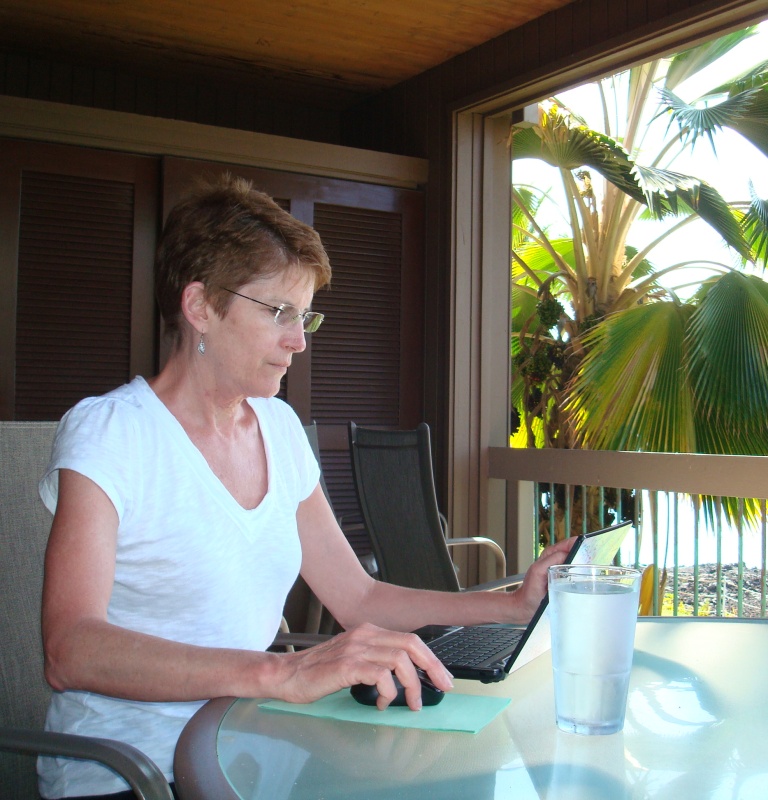
 As I mentioned in Part I of this article, published December 3, 2011, bridging the gap between you and your parent can be a difficult task. Being able to monitor your parent’s day-to-day life from a distance, especially when a parent has dementia, is a frightening task, and it’s one for which you need suitable support. What follows are suggestions gleaned from my experiences with my father.
 You’re in good company. If I had been familiar with the services listed above I think my caregiving journey would have been a smoother one. But believe it or not, this type of caregiving challenge is one that is relatively new in the grand scheme of things. If you’re losing ground as your parent’s long distance caregiver, it might be time to consider the services of a Geriatric Care Manager. The National Association of Professional Care Managers is a non-profit resource that can put you in touch with someone who might be able to provide the bridge you’re looking for.


 My family was one of the lucky ones – those in the very small minority whose loved ones come to their own decision to retire their automobile keys. My dad decided that he wasn’t comfortable driving anymore and stopped driving cold turkey. Boy did we dodge a bullet! I know, however, that more often than not- male or female – your loved one will be very resistant to any suggestion that their driving experience come to an end. And it’s not always a case of dementia causing the questionable driving behavior. Declining hearing and/or vision, combined with slow response times, can render just about anyone a hazard to humanity behind the wheel.
 Just about every state in the Nation has driving restrictions for those who exhibit questionable driving aptitude. I’m about to provide some links to laws that are applicable in the State of Washington but I’m certain that similar statutes exist in most states. In Washington Sate, the Revised Code of Washington, RCW 46.20.207 states that the Department of Licensing can cancel any license wherein the driver is not competent to operate a motor vehicle under RCW 46.20.031 which addresses a person’s inability to safely operate a vehicle due to physical or mental disability or disease. RCW 46.20.305 further details the reexamination process for those who fall within this category. This is not a laughing matter to be sure. Not only is your loved one at risk, but everyone within sight of his vehicle is unknowingly being subjected to your loved one’s dangerous driving. Imagine how you will feel if an innocent person dies or becomes disabled as a result of your family member’s driving. And there are liability issues to consider.
The airline flight attendant gives pre-flight safety instructions:


Do you feel as though you don’t visit your loved one often enough at the long-term care (LTC) facility in which they live? Try to acknowledge that guilt is a feeling that may not necessarily reflect an accurate reality of how attentive you are towards your loved one.
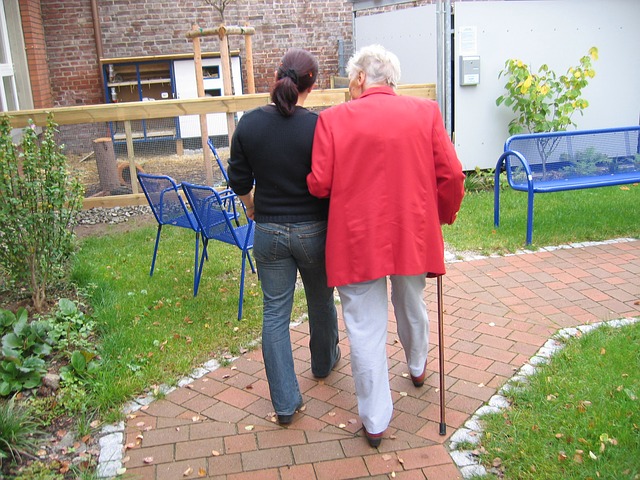




 The scenario for this article centers around care for Mom. It doesn’t matter if Mom is still living at home and cared for primarily by one of her adult children OR Mom is living in a care facility receiving care for her day-to-day needs outside of the home. Either way, the brothers and sisters of this caregiving team are in for the challenge of their lives. What follows is a simple, yet complex, listing of destructive traits that could get in the way of the family’s caregiving goal. All definitions are directly from the Oxford English Dictionary, 11th Edition, 2004.


 Living: the ultimate team sport