We don’t have to live a long life to have difficult episodes that we want to move on from and forget. We escape those times and are better off as a result. We are so relieved to be done with those times but guess what? We aren’t done with them.
Case in point: my father died from Alzheimer’s complications October 2007; I was the primary person involved with managing his care. A few months after Dad died, another family member was diagnosed with dementia and the caregiving journey started all over again, but my experience with Dad helped with my sister-in-law’s disease journey. And now years after she died, I find my experience still coming into play to benefit others, because let’s face it, dementia is alive and well in our world, in our cities, and in our neighborhoods. It is still difficult to draw upon my previous personal experiences from which I thought I had escaped, but it is affirming to know that because I had those experiences, others can be helped.
Whether past experiences center around health issues, relationship issues, financial devastation, or any number of not so great life experiences, we all learned something from them, and because we learned something from them, others can be guided through their own similar circumstances.
If you are able, let your own life lessons become those from which others can benefit. But if you struggle to resurrect those hard learned lessons due to the difficulty of doing so, I support you in stepping away because only you know what you can handle while still supporting your own mental health.
My two novels are available in eBook format for practically free and are very affordable in paperback.
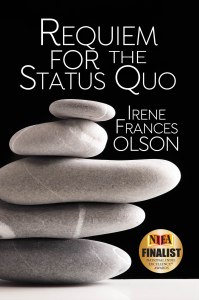
Requiem for the Status Quo is a work of fiction based on real events in which I was personally involved, and it effectively portrays the role family caregivers play in caring for loved ones with Alzheimer’s and other forms of dementia.
A Jagged Journey, also fiction, addresses the attitudes you and I exhibit and witness in a world that should allow for diversity and differing beliefs.
My thoughts about being a family caregiver, having been there AND done that.
Even with all the book knowledge a person can garner, caregiving “mistakes” are bound to happen. The following tips are provided to active and former family caregivers who struggle with what they consider failed attempts at getting the caregiving task done correctly.
Perfection is highly overrated. No one, absolutely no one, expects you to do everything correctly 100% of the time.
Don’t be so hard on yourself. Why? See Tip #1 above and Tip #3 below.
Caregiving is difficult, so CELEBRATE the wins! Give yourself a High Five! Sometimes you will have just the right way of doing or saying something that wipes out every other time you feel you didn’t do or say something correctly. Tally up the victories and CELEBRATE them!
Carefully choose your confidantes. Having acquaintances who are slow to judge but quick to affirm will be just the nourishment your body and soul will need.
If you are doing your best, that is all that is needed. But you say, “I could have done better!” No. You did the best with what you knew at the time, therefore you are to be congratulated. Instead, ask yourself, “Did I give it all that I could in the moment?” Yes, you did.
“Mistakes” are simply learning opportunities. Even today, years after my family caregiving experience, I remind myself that when something in my life isn’t going quite as planned, I can still learn something from that lesson, which is an “unmistakably” good thing, don’t you think?
I wrote a novel about my own caregiving experience. Just like my caregiving skills were a work in progress, so too was this novel, published a few years after my father passed from Alzheimer’s disease. May you or someone you know benefit from it.
AND MAY I JUST SAY, PAY AS MUCH ATTENTION TO THE GOOD YOU HAVE DONE AS YOU PAY TO WHAT YOU THINK YOU DIDN’T DO CORRECTLY.
CELEBRATE EACH VICTORY, REGARDLESS OF HOW SMALL, AND YOU’LL HAVE MANY PARTIES TO POST ON YOUR CALENDAR.
So this happened a few years ago: I wrote a novel about my personal experiences being a caregiver for my father who was diagnosed with Alzheimer’s disease in his early 80s.
The novel genre usually means fiction, but everything within my book depicts either my personal experience or those of caregivers with whom I supported as an Alzheimer’s Association group facilitator.
I don’t think enough positive attention is given to the phrase status quo. When you are caring for someone with a health condition, boy oh boy do you hope and pray for a return to the pre-caregiver status. Being a caregiver for a loved one creates the desire to enter back into a time when illness or upheaval were not present, both for the caregiver’s sake and that of the person for whom they provide care.
Perhaps you, too, have been or are currently a caregiver, or you are hoping for a return to a time devoid of chaos and uncertainty, and you need a diversion from this, that, or the other that permeates your purview. Maybe my novel will plant a seed of hope in you that you thought had dried up forever.
That is my hope for you. That is my prayer for you.
First of all – take a deep breath and shed the mantle of guilt you’re wearing. Now let’s address your dilemma.
When your father was on his deathbed you made a promise to take care of your mother in her old age. Now she is at the point of not being able to care for herself and you realize that you’re absolutely not cut out for – nor are you capable of – taking her under your roof to provide the care that she needs. What’s a dutiful son or daughter to do?
I’m not advocating that you break your promise to your father but I am suggesting that you consider redefining what that promise looks like. You promised your father that you would take care of your mother and that’s exactly what you’re going to do. Taking care of your mother is not solely defined as moving her into your home and taking care of all her basic needs until she dies. Very few people have the ability or the means to provide 24-hour care in their home. You made that promise with the best intentions and you can still honor your promise without dishonoring your father. Keep in mind that loving your mother doesn’t guarantee your success as her caregiver. Even adult children with a fabulous relationship with their parent struggle greatly in their efforts. And if your relationship with your mother is tenuous at best, try picturing the scenario of you as caregiver and her as recipient of that care. What effect will that have on her, you, and the remainder of your household?
Let’s clarify how best to care for your mother.
Why can’t caring for your mother mean that you’re honest enough to admit that you’re not the best caregiving option? Do your best to find the care alternative that will provide her an optimal quality of life, e.g. adult daycare, errand and housekeeping services, assisted living. Do the research and consult the experts to confidently fulfill your promise to your father by securing the best care solution for your mother. If that solution involves selecting an assisted living facility, there are many resources available to you that can make this move a successful one for everyone involved. As her son or daughter you will be able to lovingly help her transition into a residential location with like-minded older adults where she can receive the care that will fulfill the promise you made to your father.
Now imagine the NEW normal that your mother and your family can experience.
Your mother lives nearby in an assisted living residence. She has companions with whom she enjoys spending time. She receives three wholesome meals a day and when she, or you, feel like seeing each other, you’re just a short drive away! The time she spends at your house will be as a pampered visitor – not an inpatient (or impatient) relative. It’s probably difficult right now for you to see this as a viable option, but I think in time, you’ll find that everyone, including your father, will be pleased with the outcome.
How often have you felt defeated because your day-to-day existence is somewhat routine and boring?
The life of a family caregiver, attending to a loved one with a disease or malady that is all-encompassing, is never Same-O Same-O. Any semblance of status quo flies out the window shortly after taking on this learn-as-you-go caregiver role. The boring life about which the family caregiver used to complain no longer exists as she or he memorializes that long-abandoned way of living. My memorial to status quo existed while attending to my father during his Alzheimer’s journey. That is why I wrote this novel, based on facts from my time caring for my father.
Do you feel as though you don’t visit your loved one often enough at the long-term care (LTC) facility in which they live? Try to acknowledge that guilt is a feeling that may not necessarily reflect an accurate reality of how attentive you are towards your loved one.
The local caregiver.
In my past Alzheimer’s Association work, many caregivers expressed their concerns that they were not doing enough for their loved one who lived in a LTC facility. Even when a caregiver visited Mom several days a week, the caregiver still felt guilty for not making more of an effort to be there for her.
Guilt is a valid feeling, but the feeling of guilt may not accurately reflect what is going on. Let’s face it, most of us are hard on ourselves. The old adage, “we’re our own worse critic” came about resultant from generations of people who unfairly beat themselves into the ground.
At a gathering I attended several years ago, a woman expressed how guilty she felt for not visiting her mother more often than she thought appropriate. Another person, also a caregiver, suggested that this person ask herself whether or not she felt she was doing the best she could in this situation. “If you are, then perhaps your feeling of guilt is based on emotion rather than reality.” Whether five visits a week or one visit a month – if that’s the best a person is able to do, then it’s sufficient.
Caregivers simply need to cut themselves some slack. Even when the loved one they’re visiting has no concept of the passage of time and is not able to discern whether they’ve been visited as recently as the last hour or as long ago as last year, caregivers still berate themselves for not being there more frequently.
Caveat: I need to add that even if your loved one doesn’t a) recognize you, and b) can’t quantify the passage of time, you are still a wonderful addition to that person’s life. No staff caregiver can take your place when it comes to providing a loving presence for your Mom who lives in a facility. Just being there with a smile, a hug, and speaking words of compassion can do wonders towards brightening Mom’s day.
The long-distance caregiver.
One of many walks my father and I took around his facility
My biggest role as a caregiver was that which I performed long distance for my father who lived in a dementia unit in a Southern Oregon assisted living facility. I felt like I was doing something truly valuable for him while I was there but as soon as I boarded the plane for Seattle the guilt enveloped me. Usually, the first night of my return was spent crying because I felt I had been impatient with him, or I acted flustered when I had to answer a question that my father had already asked me no less than two dozen times prior. I relived every moment of my visit, criticizing this and that about what I did, or didn’t do. I was a wreck. I had to talk myself into believing that dad did have a good time and dad was genuinely happy to see me, and by golly, I didn’t do that bad of a job as a caregiver daughter.
I could then relax knowing that he was being well-cared for in my absence; my visits augmented that care, and I could rest on that fact rather than falling back on my guilt. The NY Times article, Being There and Far Away sheds some light on the long distance caregiver’s experience. I hope you’ll take the time to read the article as I believe it will touch on some topics that all caregivers may experience.
As I mentioned in my Blog entry, Deathbed Promises and How to Fulfill Themtake a deep breath and shed the mantle of guilt you’re wearing. It doesn’t do you any good and it gets in the way of you being the best caregiver you can be. Cut yourself some slack and don’t be so hard on yourself.
In November of 2024, my brother had knee replacement surgery. My brother doesn’t live alone, he lives with his pup, Ramona; she is the quintessential loving doggie everyone dreams of having.
She is so well-loved by the neighbors, that with my brother’s inability to take Ramona on her two times a day walks, the neighbors took over that duty so that my brother’s dog could get exercise and attend to her daily doggie business. Shortly after the substitute dog walker neighbors started their daily tasks, they told my brother that Ramona wouldn’t take the time to do said business and refused to take an extended walk through the vast neighborhood.
Everyone concluded that the dog’s reason for wanting to truncate her walk was no doubt due to her attentiveness to my brother’s needs: she didn’t want to be away from the house, and more importantly, her daddy – my brother. What if Daddy fell while Ramona was away? What if he needed her undivided attention, usually proffered by placing her head on my brother’s knee and lovingly looking deeply into my brother’s eyes?
How can the walkers not understand that her appointed rounds involved more than just sniffing every leaf in the neighborhood but also included being available 24/7 to her housemate, my brother? Quite frankly, when I spent time with my brother at his house during his recovery, Ramona followed him everywhere he ambled – assisted by his walker or his cane – never losing sight of him, even though she knew her Aunt Irene was providing her daddy with all the care he could possibly require.
Dedication. Attentiveness. Love personified…or should I say dog-i-fied? Thank you, Ramona, for being such a devoted caregiver to my brother.
At seventy years of age, the end of 2023 saw me setting out to make space in my home’s storage areas. My husband and I weren’t running out of storage space, but in an effort to help our adult children should either my husband or I be out of the picture – which of course will happen eventually – we dragged out the under-the-stairs storage bins filled with photos, mementos, and journals to lessen the emotional impact on our adult daughters when the time does come, whether tomorrow or many years from now.
Doing so meant the emotions would no doubt come barreling down on me. Boy did they.
As many of you know, I was the caregiver for my father after he was diagnosed with Alzheimer’s disease. When caring for my father after his Alzheimer’s diagnosis, I kept meticulous journals on the progression of the disease from which he died in October 2007. I kept those journals so I could provide in-the-moment accurate updates to my brother and sister so those journal entries were VERY detailed about incidents I would rather not revisit.
But revisit them I did, and although the emotions that came through were raw, letting them bombard and fill me was a necessary step so that in the future our daughters would not have to wonder what they should do with all the anguish-filled words I put down on paper in those journals. You see, once I recently re-read my journals, I shredded them, knowing I didn’t need them for future reference. Over the course of several days, I digested their emotional impact and then eliminated them – remembering all that occurred, but not needing to save such records for decades to come. Bags and bags of shredded and disposed business effects and medical records were a gift I consciously gave to our daughters well in advance so they would not be put through the decision-making process of trying to figure out what the heck to do with Mom’s emotional ramblings and Grandma and Grampa’s business and health records that have been in my possession for so many years. My husband and I have already streamlined our own personal business effects so although at our passing our daughters will have to pour over them and address what is necessary at that time, at least they won’t have the much older generation’s business matters with which to contend.
But along with the somewhat devastating emotions experienced while going through the storage bins came joyful emotions in discovering decades of old keepsakes that shed a light on who my parents and grandparents were in the 1800s and 1900s. The most cherished keepsake were my parents’ love letters to each other a week before they got married in the 1940s. They were so in love with each other and did not hesitate to put that love into words as a gift to each other a few days before their May 26th wedding day. I made copies of those letters for our adult children and my siblings. Needless to say, good vibes prevailed in our hearts as a result!
Making space for storage purposes – and for emotional purposes – is an arduous task but the cleansing benefits can very much be worth the effort. I made space for the emotions to enter and pass through me and somehow or another, I survived that herculean task. Keep in mind, this is not a job for the faint of heart, but if you have it in you, you just might feel as lighthearted and/or relieved as I do now. And for me, that makes the task’s anguish a fading memory rather than a landmine waiting to be discovered.
Last year, I became aware of a neighbor’s struggle with his wife’s newly diagnosed dementia. “Reggie” is in his early 70’s, as am I. Reggie is retired; I am as well. I retired from the long-term care industry working with adults whose conditions are most often associated with aging – Alzheimer’s and other dementia being at the forefront.
Along with that professional experience, I also had hands-on personal experience for both my father, who died from Alzheimer’s disease in 2007, and my sister-in-law, who died from mixed dementia in 2012. Additionally, I worked as an Alzheimer’s Association caregiver support group facilitator for five years. When Reggie advised me of his household’s situation, I filled him in on my varied experiences – simply to add credence to any advice I might offer him – and then I provided information that I thought might help address the various situations he very openly discussed with me over several months’ time. I was thrilled that he joined a nearby caregiver support group that I had recommended because let’s face it, we all could use a little help from a friend, or like-experienced individuals, as the stresses of life present themselves – right? Trust me when I say, that even with all my long-term care experience, I still struggled to apply that textbook knowledge to real life, in-the-moment situations with my loved ones. A little help goes a long way.
Caring for a loved one is always on-the-job training, even during the best of times.
When my neighbor openly disclosed to me that he would be leaving for an out of state trip, I texted him resources that could be of help to him – resources that might assure his wife’s safety and his enjoyment of what I was certain was a much needed and much deserved break from 24/7 caregiving. As my casual neighborly conversations continued with him thereafter, I provided advice in my ongoing friendly efforts to help his wife, and therefore him. When Reggie told me that he had ultimately decided to have another female neighbor, with whom the wife is familiar, check in on his wife for dinner each night while he was out of state, I strongly suggested his wife could benefit from more attentive care in his absence. I brought up several What If scenarios that might pop up during the greater amount of time his wife would be alone. He stated “that would never happen” and “she’s never done that before” to which I suggested it might be more prudent to assume that what would never happen would, and what she would never do, she would do. Reggie stuck with his original plan. Caveat: just before he left for his trip, both my husband and I were recovering from being enmeshed in the hell that is Covid so being more than casual eyes on the prize during his absence was not an option.
The story has an eventual happy ending but getting there was problematic.
A few days in to his multi-day trip, I observed Reggie’s wife walk by my house to walk the dog on her own. She hadn’t walked in the neighborhood alone or with someone else for quite some time. I let her get far enough ahead of me and then followed her to make sure she got home safely. Upon my return, I texted her husband first to ask if he was home; he was not. I sent a second text to let him know that I was concerned because his wife had just gone on a solo walk with the dog. He did not respond to that text, although upon his return, Reggie’s take on his wife’s out-of-the-ordinary behavior was a positive one, in that he was thrilled that she was able to accomplish something that hadn’t been in her wheelhouse in the recent past. Go figure! It’s always a good thing when something positive comes about from a potentially negative event.
I am sorry that one of my What Ifs came true – and thankfully, there were no negative repercussions – but it probably could have been avoided had the neighbor trusted the information provided to him to assure his, and therefore his wife’s, well-being. I don’t need or want to be right, but if my personal and/or professional experiences can somehow help someone, that realized benefit is good for the community. My take on life is that individually we all know some things, but not all things, so I am constantly on the lookout to learn something new that just might augment and benefit my life and the lives of my loved ones.
Full disclosure: ACCEPTING SOMEONE ELSE’S HELP IS A DIFFICULT THING TO DO. I am ashamed to say that I too am guilty of dismissing well-intentioned assistance from kind neighbors, most recently assuring a neighbor a couple blocks from me that she need not make meals for my husband and me while we were convalescing from the very debilitating effects of Covid – a virus we avoided for four years but when it invaded our home, my husband and I fell gravely ill. I regret turning down the offered meals because that gift of meals was a communal generosity that I failed to truly acknowledge at the time. Similarly, I hope Reggie learns something from the What If that came about in his absence, and going forward I pray he is more open to those in our neighborhood community who truly only want the best for him and his wife.
When we don’t know or understand a situation, may we all be open to receiving and applying lessens that just may ease the burden of not knowing. We all need community. We can all benefit from community. If we haven’t learned that fact in the past four-plus years, I fear we/I haven’t learned a thing.
I documented my personal dementia caregiving experiences in my novel Requiem for the Status Quoin my ongoing effort to help those who find themselves in similar family caregiving situations.
The voracious demon has no respect for its unsuspecting prey; I personally met it twice and lost two loved ones to it. Although younger citizens manage to avoid being consumed by this fiend, those older have little defense against its murderous appetite.
“I’m not going!” Amanda is tired of her husband’s persistent attempts to take her on a surprise outing. Giving up is not an option for Seth, however, so he resorts to lying.
“Okay, you don’t have to accompany me, but I thought you’d want to pick out the size of the emerald for your ring. I’ll just wing it and hope you like it.”
Amanda put her hands on her hips. “Why didn’t you tell me? I would have dressed better. Give me ten minutes and I’ll be good to go.” Seth wasn’t proud of his deception, but the concern he felt outweighed any questionable ethics at play.
As soon as Amanda returned wearing a different outfit, Seth pulled her into a hug. “You’ve made me the happiest man in all of Seattle.” Amanda pulled away from him, “Just Seattle? Last night you talked about the whole world, not just our little corner of it. Where are we going? To Tiffany’s?”
Twenty minutes later, Seth pulled his vintage Chevy into a parking space marked Patients-Only. Amanda looked around. “We shouldn’t park here, there must be a space closer to the store than this one.” Seth didn’t look at her when he said, “I parked here for a reason.”
“Okay, you’re being creepy. I want you to back up and head to the jewelry store!”
Seth turned to his wife. “You’re sick, Amanda. You’ve got that … brain disease. We’re seeing a specialist today to get us the help you need.”
Amanda crossed her arms, hurt more than angry at Seth’s trickery. “I’m not really sick-sick, and I don’t care about some silly ol’ emerald, let’s go to that car show in South Seattle you mentioned the other day.”
“The car show was two months ago. I took photos of you behind the wheel of that shiny red Corvette, remember?” Seth got out of the car, opened the passenger door, and crouched beside her. “I love you so much, but I can’t protect you. The doctor said the types of tests he’s going to perform won’t hurt. I’d like to know what we’re dealing with so we can be prepared for what’s to come.”
Seth couldn’t stand to see his wife cry. Eventually Amanda composed herself. “What about my anniversary gift? I want to celebrate!”
“We celebrated our anniversary four months ago.”
Amanda wiped her face. “Now you’re just being stupid. We didn’t celebrate our anniversary yet. We got married in August and it’s only – whatever month it is right now. Take me away from here.”
“In February, twenty-five years ago, we vowed to love each other forevermore, and we renewed those vows four months ago. I’m just as much in love with you now as I was then which is why I want you to have a thorough medical exam. Please, Amanda, do this for me?”
Seth helped his wife out of the car and held her close. “I wish this wasn’t happening, but it is. This nice doctor will spend a few hours with you while I go shop for a new tool for my workshop.”
“You won’t forget that I’m here, will you? You’ll take me home afterwards?”
“Of course.”
Amanda said, “Okeydokey, but you have to cross your heart and hope to die, or I won’t believe you.” Seth took a step away from his wife. “Cross my heart and hope to die, you’ll always be the apple of my eye. When years and years have passed us by, I’ll still be your favorite guy.” Seth kissed her forehead, nose, and lips, then taking Amanda’s hand, they walked into the Seattle Urban Medical Clinic.
The imp makes itself known by gradually invading the privacy of the victim’s brain. Helpless family members struggle to hold on to those infected by a plague that can strip their loved ones of all functional abilities.
A week later Seth met with Dr. Mishra to go over the neurological findings, prior to a joint appointment with Amanda. “Your wife’s case is one of the most aggressive I’ve seen. Historically, early onset victims tend to have a stronger strain of the disease which oftentimes manifests itself in extremely unpredictable behaviors. Your wife is a poster child for that profile. Her primary care physician indicated that her symptoms became very pronounced six months ago. Tell me about those symptoms.”
“Didn’t Dr. Tobias provide that information in her notes?”
“She did, but I’d like your take on it.”
Seth dove in. “Amanda used to be a fastidious person but that started to change. I always left for work an hour before her so I was never home when she showered to get ready for her job at an accounting firm downtown.”
“Does she still hold that job?”
“No.” Seth continued. “One Sunday morning I concluded she hadn’t showered in a while. She insisted she had. I figured I’d encourage her by asking her to join me in the shower, which she did. Afterwards I suggested that maybe she only thought she had showered. She started to cry and accused me of thinking she was ugly. I just let it go and hoped that little episode would correct itself in time.”
“Did it?”
“No, and her lack of personal hygiene shifted to the house. One day I didn’t get home from the office until late. I had helped her plan dinner menus for the entire week and that evening’s meal was chicken stir fry. I cut up the chicken in the morning and put the raw pieces in a zip-bag with Teriyaki sauce to marinate in the fridge. When I got home, she finalized dinner preparations while I headed upstairs to change. Back downstairs, she sat at the dining table with a proud smile on her face and said, ‘Voila!’ but the dishes at each of our place settings were filled with cooked rice and uncooked chicken. She was just about to put a forkful in her mouth when I grabbed her hand. When I explained that the chicken was raw, she ran upstairs and locked herself in the bathroom. From that point forward we agreed that I would make dinner every night.”
“How was she with household chores?”
“She couldn’t figure out how to do the day-to-day stuff: vacuuming, laundry, you name it.”
The doctor asked, “What lead to her leaving her job?”
“There were days when Amanda didn’t go to work because she forgot she had a job. One day she arrived two hours late and simply sat in her office, not knowing what she was supposed to do. Her boss called me that day and said Amanda wasn’t well and should go home. She also talked about Amanda’s ongoing erratic work behavior. That was Amanda’s last day at work.”
“How was your wife’s general health at the time?”
“My wife seemed healthy. She didn’t have any of the conditions common with aging. Heck, she went through menopause, and I wasn’t even aware of it.”
“Consider yourself lucky.”
“I do.”
“Look, doctor, this is old news. My wife endured several hours of testing, and I expected you to tell me something new. You said she has an aggressive type of the disease, what does that mean?”
Dr. Mishra turned the computer screen around toward Seth. “Your wife’s brain has been invaded in such a way that the frontal portion is shrinking dramatically.”
Seth looked at the MRI image. “No way, that can’t be Amanda’s brain, you’re mistaken.”
“There’s no mistake. The testing conclusively indicated that her behaviors, and the decline in her ability to perform many daily activities, indicate an abnormal variant of the disease.”
“What else will this ‘variant’ do to her?”
“Your wife could lose her ability to speak and walk, and eventually her organs will not function effectively.”
Seth leaned on the front of the doctor’s desk. “This disease, when will it take her away from me?
“Less than five years if she’s lucky.”
“If she’s lucky? What’s lucky about that?”
Amanda’s mother stayed at home with Amanda while Seth attended monthly dementia caregiver support group meetings. Seth felt encouraged but was equally as discouraged when other members’ loved ones joined the ranks of the deceased. He knew he couldn’t change the course of his wife’s illness but was determined to do all he could to maintain her dignity until the end.
World governments have failed to adequately reduce the percentage of those who fall victim to the perils of this demon disease.
Unfortunately, Seth and Amanda’s journey is just one of countless cases where unsuspecting peoples’ lives have been ruined in a world where Alzheimer’s and other dementia – the demon murderers – show little sign of abating.
HELPFUL RESOURCES:
AlzAuthors, an extraordinary resource of hundreds of vetted reading content about all types of dementia.
My life is still shaped by my personal experience as a dementia caregiver for my father who died from Alzheimer’s disease on October 13th, 2007. As is indicated in my previous post, I didn’t want to write about my experience, but I couldn’t help but do so in my effort to honor those affected by this always terminal illness. I am glad I did, to which this review attests:
The author, who has closely experienced the cruelty of Alzheimer’s in a loved one, has shown a great deal of courage and consummate determination in writing this tale.
This well-paced and brilliantly written story is at once poignant, agonizing, funny in places and all-consuming. The reader will have difficulty putting it down but had best keep a box of tissues at hand. It made this hardened, former combat solider weep like a school child through much of the second half.
I have emerged from this novel with greater sensitivity to the whole continuum of dementia and its emotional impact on those who must find a way of dealing with its encroachment on their lives. There are not enough superlatives in the English language to give justice to a description of this novel by an obviously compassionate, energetic, and witty author. It is worthy of six stars. – R. Bruce Logan, author of BACK TO VIETNAM:TOURS OF THE HEART
REQUIEM FOR THE STATUS QUO and all of Mr. Logan’s books can be found on Amazon or wherever you buy your books.
I lived the dementia caregiver’s journey. When it was time to write about it after my father’s death from Alzheimer’s disease, I chose the Fiction genre, rather than Non-Fiction. That’s what worked for me, and I am pleased that it also worked for readers. This review warmed my heart as it was exactly what I was hoping for.
The story-telling format is a gentle way to learn about symptoms and progression of this eventually terminal ailment. Most revealing were the passages depicting Colleen’s exchanges within her caregiver support group. This technique allows the author to educate her readers about the varied behavioral challenges faced by the patient and sometimes not-so-patient caregivers.
The author also manages, through well-written dialogues with Colleen’s siblings and her best friend, to do a lot of teaching without overwhelming technical medical jargon or lecturing.
This novel is a tender one about a family who manages to help their father maintain his dignity throughout a grueling and heartbreaking journey.– Elaine H., British Columbia, CANADA
Spotlight on Care is an extraordinary podcast developed by the University of California at Irvine Mind Institute.
I was honored to participate in this podcast service very recently and provide it to you at this time. It is only 25 minutes long, a perfect length to grab your attention and then let you be on your way. If you know of a family caregiver who might also benefit, please share it with them.
How about family caregivers who live near their loved one?
This Spotlight on Care audio podcast, only 25 minutes in length, will encourage you greatly. I was the long distance caregiver for my father who died in 2007 from Alzheimer’s disease. This recent podcast produced by the University of California at Irvine MIND institute provides a snippet of how I succeeded, or failed, in my efforts to make my father’s experience as carefree as possible. I was just like you: figuring it out as I went along, picking and choosing methods that might help both my and my father’s experience. Looking back, I can celebrate that I did my best, and that’s all that matters.
Doing your best doesn’t demand perfection, just your best.
Both of my novels address the impermanence of life, while also addressing how difficult some situations can be when we’re fully enmeshed in them. Requiem for the Status Quo speaks of the difficulties of a dementia diagnosis on the patient and on the family members who care for her/him, while A Jagged Journey exposes the reader to life with all its catastrophic imperfections. Both novels also shine a spotlight on the fact that bad times don’t stick around forever.
The good news and the bad news of impermanence in these situations is that we have to accept that along with being in favor of bad times not hanging around forever, we have to acknowledge and even accept that good times are subject to the same fleeting characteristic.
Take comfort in knowing, however, that tomorrow – or the next hour – may reward you greatly.
What has been your experience surrounding such opposites as appear in our lives?
Because we’re alive, we will always be challenged in life. Sometimes those challenges involve medical issues – as a patient or as a family caregiver as depicted in the novel REQUIEM FOR THE STATUS QUO.
Changing the status quo of our beliefs
Other times, those challenges pertain to functioning in an appropriate manner in the diverse country in which we live, such as those found in the novel, A JAGGED JOURNEY.
I wrote these two novels in an effort to meet those challenges and did so by putting personal caregiving experiences and community observations down on paper.
Both novels are very reasonably priced, regardless of the format readers choose. May you, or someone you know, benefit from my literary efforts.
October 13th 2007, my father died from complications of Alzheimer’s disease. That morning I had received a call from the memory care unit where Dad had lived for several years. The nursing manager of that unit said if I wanted to see my father again before he died, I should come as soon as possible. (I had spent a week with him the month before and knew that his prostate cancer would most likely hasten his death.) I first called my husband at work to let him know I would find a flight from Seattle, WA to Medford, OR and be gone…for how long? I didn’t know. Then while on the phone with my brother and sister, I booked my flight online with a tentative return, threw the very minimum of clothing in an overnight bag, and headed to SeaTac International Airport.
If you have read my novel, Requiem for the Status Quo, you’ve pretty much read the account of what transpired for me at my father’s bedside; some of the happenings that day/evening were altered, but the gist of what transpired are contained in Chapters 41 & 42.
Upon my return to Seattle, my energy level was depleted yet still on alert. When you have a loved one with a debilitating disease, a state of alertness is the norm – the status quo of constantly being in a state of emergency, if you will. You keep waiting for the phone to ring with the latest development – such as it did for the last time on October 13, 2007 – but that phone number’s appearance on my Caller ID had ceased.
What hadn’t ceased was the business of dying – all the financial and estate matters one cannot ignore – but because of my father’s diligence and organization leading up to his Alzheimer’s diagnosis, much of what I needed to do on behalf of his estate and us survivors, was readily dispatched in the months that followed my father’s death.
But the “now what?” of life post-caregiving was front and center for me. Initially, I wanted absolutely nothing to do with anything having to do with dementia. I continued to financially support my local Alzheimer’s Association and participated in one more Walk to End Alzheimer’s, but that was it. Then my heart called and I became an Alzheimer’s Association caregiver support group facilitator and shortly thereafter, I entered the world of long-term care advocacy by becoming a Washington State LTC ombudsman, both of which I did for five years.
Then my heart spoke to me again, this time it said, “How about writing about your experience as Dad’s caregiver?” I ignored that thought until I no longer could – it wouldn’t leave me alone! I dragged out all of Dad’s records and my numerous journals, sat at my dining table, and over many months’ time, outlined how I would honor my father’s journey and my family’s experience within the pages of a book that might benefit others.
That was five years after my father’s death. My book was published five years later.
Now almost fifteen years after the end of my father’s Alzheimer’s journey,
my book still manages to make its way into the hands of those who need it.
If you, or someone you know, needs encouragement and a renewed sense of hope,
please make your way to your favorite bookstore, or find it right here.
Your parent is diagnosed with Alzheimer’s disease or other dementia and as their biological child you wonder, “Will that be my fate?”
In 2019, an article of mine, Me Worry? Not on your Lifewas published on the CogniHealth website, a company that in partnership with Alzheimer Scotland, developed a caregiver aid for those – especially family members – providing care for a loved one with Alzheimer’s disease or other dementia. (Please note that the linked post references an extraordinary non-profit that I am still a part of but no longer serve in a managerial capacity, having retired from doing so.)
I chose the topic of whether or not dementia might be passed along to biological family members because as a daughter who witnessed the decline of her father as a result of dementia, I certainly had an opinion on the matter. Does one need to worry their entire life about the chance of acquiring Alzheimer’s disease?
I hope you will read my article that while transparent and painfully clear, also provides many rays of hope and encouragement for those in similar circumstances.
At the very least, I am certain you will come away with a clearer understanding of how little value worry contributes to ones’ life.
My recent post, Caregiving: The Ultimate Team Sport assumes the person providing care for a loved one has a wealth of family members upon which to draw for support. When that is not the case, it can be difficult – but not impossible – to find willing team members to provide that support. This article provides advice to the solo caregiver and his/her friends, business associates, neighbors, and community contacts.
THIS IS NOT AN ALL-ENCOMPASSING INFORMATIONAL POST, BUT IT IS A START.
CAREGIVER: BE BOLD – ASK FOR WHAT YOU NEED.
Those people with whom you have contact probably know that you’re the only one carrying the ball when it comes to caregiving but they can’t possibly understand the degree of difficulty you are experiencing. Assuming that to be the case, your friends, business associates, and neighbors may not feel the need to reach out to you with assistance. Now is the time to be very transparent with them and tell them what you need. Easier said than done, I know, but a challenge worth pursuing. Here’s just one suggestion – one that could provide respite and community support.
DINING ALONE IS A DRAG – NOW’S THE TIME TO ASK FOR WHAT YOU WANT
If you are able to leave the house for a meal, there is no shame in inviting yourself to dinner. If these are true friends/acquaintances of yours, they will welcome you into their home. Once you’ve invited yourself a couple times, true friends and valuable neighbors will start to invite you into their dining room on an ongoing basis. Besides, they’ve probably been wondering what they could possibly do to help you out in your situation and you’ve just presented a very easy way for them to do so. Heck – they’re going to cook dinner for themselves anyway; one or two extra people aren’t going to throw a huge wrench into their meal plans.
!!!ATTENTION WELL-MEANING FRIENDS & NEIGHBORS!!!
I think the rule of thumb in these situations is to assume that your solo caregiver friend needs a hand with something, so ask him what he needs. Let’s look at the difference between the following offers of assistance.
Hey Sam, call me if you ever need some help.
Hey Sam, could you use a little extra help around the garden? I’m all caught up with my yard work and would like to help you in any way I can.
Hey Sam, we always cook for a crowd and always have some leftovers. I’d like to give you some leftovers in disposable containers that you can freeze and use any time you don’t feel like cooking for yourself. (Especially needed for the caregiver not at liberty to leave their loved one alone.)
In the 1st example, you’re leaving it up to Sam to feel comfortable enough to inconvenience you (in his mind) with a request for help. I know I’m being somewhat judgmental when I say the following, but I’m gonna say it anyway: The first example of help is an empty offer – an offer that doesn’t carry much weight. Why? It comes across as an expected social comment without any true meat on its bones. You’re basically doing the minimal amount of due diligence while forcing the caregiver to ask for help. In the 2nd and 3rd examples, you’ve given Sam an offer of tangible, definable assistance that shows that you really mean it when you say you’re willing to help out. If neither of those offers fit within Sam’s current needs, you’re still making it easier for him to ask for help with something else: “Wow Larry, thanks so much for your offers but what I could really use is help figuring out the health insurance issues that have kept me awake at night. Can you come over for a cup of coffee, and between the two of us, maybe we can make some sense of this mess in which I find myself.”
Friends, work associates and neighbors – your solo caregiver friend needs help and you could be just the right person with the skill that he needs. Some day you may find yourself in a similar situation and will know first hand how difficult it is to be a solo caregiver. If it takes a village to raise a child, it must take at least that to help someone with the burden of being a solo caregiver.
What’s a pitcher without a catcher? A quarterback without a receiver? A point guard without a center? Individuals – that’s what they are – they are not a team. Caregiving should never be an individual effort because quite frankly, one person cannot do it all.
Take a deep breath; think happy thoughts; and do your best.
Whether the primary caregiver actually does hands-on-care or is the primary “manager” of a loved one’s day-to-day life, that caregiver needs all the support he or she can get. For the purposes of this article we’re going to assume that the loved one, Mom, lives in a long-term care (LTC) facility cared for by professionals. As with every sports team, there is a General Manager of the team – responsible for the overall smooth running of the team, and then there are the individual team members without whom there would be no support whatsoever. Let’s look at the responsibilities of each person on the team. GENERAL MANAGER: whether self-assigned or chosen, the GM is usually Mom’s primary contact/visitor. He or she will also be the main point of contact with the staff at the LTC facility and as such, should definitely be on the “approved list” of people with whom the care staff can discuss every aspect of Mom’s care. Getting on the approved list might involve one or both of the following:
Facility Care Plan/Residential Agreement. Because of the restrictions resulting from the enactment of HIPAA anyone other than the actual patient/resident must be given permission to receive confidential information regarding another individual’s health condition. There is usually a section on LTC facility agreements and/or care plans wherein a primary family member is listed and approved as the person who can have access to all confidential information regarding the resident’s/loved one’s care. Similarly you’ll want to be on the approved list for Mom’s doctors so you’re able to freely communicate with medical personnel regarding any ongoing health concerns. If Mom is able, she will need to sign the necessary documents that indicate her decision to allow that confidential health information be shared with you.
Power of Attorney for Health Care. This legal document allows someone, usually a family member, to speak on behalf of a loved one who may not be able to do so on her own. I’m not a lawyer so I’m not offering any advice regarding this document but the attached link will give you a thumbnail sketch addressing when the appropriateness of such a document comes into play.
Now back to the General Manager’s duties: the GM needs to play on the strengths of each team member.
Alzheimer’s Walking Team: myself, my hubby and my brother
Hold a family meeting – even involving those living out of town using virtual means – to discuss the strengths that each possesses and ones’ willingness to exercise those strengths. Once those team members’ tasks have been assigned or volunteered for, it’s up to the General Manager to provide oversight to assure each task is being accomplished, and to discern if any team member needs assistance completing tasks. As you can see, taking on the role of General Manager carries a lot of responsibility and quite frankly, anyone who assumes this role needs to be good and ready to carry a heavy load. The good news, however, is that the GM is not alone – there are additional members of the team.
FINANCE MANAGER. Your older sister is a finance whiz who’s very comfortable crunching numbers. She gets to take over the day-to-day system of bill paying, investment monitoring, and the like. You might even arrange for all mail to go to this sister’s home so that she has immediate access to timely financial information, in addition to online access of course.
INSURANCE MANAGER. One of your brothers who works in the health insurance industry understands the ins and outs of private insurance and as it relates to Medicare. Congratulations, his strength will contribute greatly to the whole, but you don’t have to work for an insurance company to excel at this task. Some of us – yes, I’m one of them – really “gets it” when it comes to reconciling Explanations of Benefits (EOB) documents from health insurance companies. The Insurance Manager will work hand in hand with the Finance Manager to assure that any balances due a particular medical professional or institution is paid. This can really get sticky when attempting to make sure that everyone who is responsible for paying a part of the medical service – private insurance companies and Medicare – have paid their part prior to sending out a check for the balance, but effective Finance & Insurance Managers can successfully get the job done.
TRANSPORTATION MANAGER.Your other sister has recently retired, or has a very flexible work schedule, and has the ability to take Mom to the various doctor appointments that occur each month. Terrific.
Anyone need a cab?
That sister will be doing the running around with Mom and can make sure each appointment is scheduled, attended, and summarized. Since she’s going to these appointments with Mom, she can sit in on the appointment and bring up issues about which the family has concerns; she can take notes on what transpires during the doctor visit; then she can report the medical updates to the family so everyone is on the same page every step of the way. This sister will also need to be on the approved HIPAA document that the physician’s office requires in order for her to communicate and interact in such a way as to be on top of Mom’s ongoing health care.
FAMILY DYNAMICS THAT GET IN THE WAY OF EFFECTIVE MANAGING. Let’s face it, not every family gets along well enough to avoid the bumps in the caregiving road. If family dynamics were strained to begin with, you can certainly expect those dynamics to be heightened in stressful situations – and caring for Mom is certainly one of them. My article “Family dynamics that hamper caregiving success,” an article of mine from 2011 that addresses family dysfunction and offers advice on how to lessen its impact on your caregiving team.
A team’s success is attainable – but each member has to dedicate themselves to the task at hand for that to happen.
Here’s a post from the past that draws lots of attention. Bringing it into the present today.
First of all – take a deep breath and shed the mantle of guilt you’re wearing. Now let’s address your dilemma.
When your father was on his deathbed you made a promise to take care of your mother in her old age. Now she is at the point of not being able to care for herself and you realize that you’re absolutely not cut out for – nor are you capable of – taking her under your roof to provide the care that she needs. What’s a dutiful son or daughter to do?
I’m not advocating that you break your promise to your father but I am suggesting that you consider redefining what that promise looks like. You promised your father that you would take care of your mother and that’s exactly what you’re going to do. aking care of your mother is not solely defined as moving her into your home and taking care of all her basic needs until she dies. Very few people have the ability or the means to provide 24-hour care in their home. You made that promise with the best intentions and you can still honor your promise without dishonoring your father. Keep in mind that loving your mother doesn’t guarantee your success as her caregiver. Even adult children with a fabulous relationship with their parent struggle greatly in their efforts. And if your relationship with your mother is tenuous at best, try picturing the scenario of you as caregiver and her as recipient of that care. What effect will that have on her, you, and the remainder of your household?
Let’s clarify how best to care for your mother.
Why can’t caring for your mother mean that you’re honest enough to admit that you’re not the best caregiving option? Do your best to find the care alternative that will provide her an optimal quality of life, e.g. adult daycare, errand and housekeeping services, assisted living. Do the research and consult the experts to confidently fulfill your promise to your father by securing the best care solution for your mother. If that solution involves selecting an assisted living facility, there are many resources available to you that can make this move a successful one for everyone involved. As her son or daughter you will be able to lovingly help her transition into a residential location with like-minded older adults where she can receive the care that will fulfill the promise you made to your father.
Now imagine the NEW normal that your mother and your family can experience.
Your mother lives nearby in an assisted living residence. She has companions with whom she enjoys spending time. She receives three wholesome meals a day and when she, or you, feel like seeing each other, you’re just a short drive away! The time she spends at your house will be as a pampered visitor – not an inpatient (or impatient) relative. It’s probably difficult right now for you to see this as a viable option, but I think in time, you’ll find that everyone, including your father, will be pleased with the outcome.
And I’m writing about it again, but I’m going to let Dr. Bernie S. Siegel be my mouthpiece on this one because he addresses the importance of making a difference in the lives of others in this excerpt from: 365 Prescriptions for the Soul. Here’s the selection verbatim:
SAND DOLLARS
It is the greatest of all mistakes to do nothing because you can only do little; do what you can. -Sydney Smith
Perhaps you have heard the story about the boy on the beach throwing washed-up sand dollars back into the water. A man walks by and asks, “Why are you doing that? There are thousands of them washed up. You can’t make a difference.”
The boy picks one up and throws it back into the ocean, “I did for that one.”
Remember, by changing one life you change the world. Every action has its effects. So make a difference and help someone get back into the ocean of life. You need not risk your life carrying them through the surf, but find out what they need to get back into the swim. Then help them do it.
My first novel, Requiem for the Status Quo, released in July of 2017, speaks of the brutal protracted loss of someone suffering from Alzheimer’s or other dementia. Caregivers for a loved one with dementia witness the gradual loss of someone they love over an extended period of time.
Once my father was diagnosed with Alzheimer’s disease, it took four years for him to leave me. I was devastated the moment he took his last breath on October 13th, 2007, but my heart was continuously ripped apart during the years leading up to that final breath.
48 months, 208 weeks, 1460 days, 35,040 hours, and 2,102,400 minutes of ongoing departures from my and his life.
The characters in my novel have a front row seat to their loved one’s measured departure from this earth. That departure might appear as more-than-a-senior-moment of forgetfulness; an inability to perform simple tasks; struggling to come up with the name of the spouse to whom a person has been married for half a century; or the complete change in personality from a loving spouse to an actual threat to the other spouse’s life.
Loss is a life event from which recovery has no prescribed length of time, but recovery does eventually occur. In time, we live a minute where we can truthfully acknowledge that during that brief snippet of time, we didn’t feel the pain and despair as deeply as before. When that happens, dear friends and readers, I encourage you to celebrate that moment because if you wait for the big events for which you might hold a celebration, you just might be waiting for a very long time.
Celebrate even the smallest of victories and joys that come your way. Doing so will guarantee you many more reasons to be grateful, to experience joy, and perhaps to even witness the life-giving feeling that hope can bring.
I wrote Requiem for the Status Quo to honor my father, other loved ones like him, and all those current caregivers who are just trying to mess up less today than they did yesterday.
Perfection isn’t possible, but when you’ve done your best, you’ve done your best.
I celebrate you.
Requiem is available where all books are sold, or readily ordered if not currently in stock. On Amazon, the eBook is $1.99 and the paperback, is less than $7.
I started blogging about my Mom, Amie, after she moved in with us―after the Alzheimer’s, the congestive obstructive pulmonary disease (COPD), and the schizophrenia nearly killed her living alone. I wrote close to twenty-five posts, after which, I compiled them into my book, The Dementia Chronicles. I hoped our story would help others who found themselves as a caregiver for someone they loved.
During a visit from Phoenix with my sister and grandmother, Mom fell down the last step of our stairs and broke her hip. Within two years of that visit, Mom had moved from Phoenix to Friday Harbor, Washington to live in a separate home on our island property.
Back in May 2003, on our wedding day, Bob had to assist my Mom to walk a mere five-hundred feet from her house to our backyard where we held the ceremony. A month later, Mom was in the ER experiencing her first respiratory attack after having smoked for fifty years.
For a spell, Mom kept at bay what doctors later diagnosed as COPD. In 2010, during another visit to the ER, x-rays showed scarring within and around her bronchial tubes, invading her lungs. Mom declined steadily after that with cognition red flags frequently appearing.
By 2013, she complained of electricians stealing her checks, hackers breaking into her old college records and stealing her social security number―two of the many stand-out issues she insisted were true. By September 2014, she could no longer drive so we disabled the car engine and lied to her, telling her the car was broken and that I would drive her anywhere she wanted to go.
Mom was furious. Her anger became exacerbated, exhibited by bouts of paranoia and more detailed hallucinations. As she grew physically weaker, we knew we had to move her into our home. So, in November 2014 we set out to revamp our garage into a studio apartment. It turned out beautifully―complete with an enormous stone fireplace to keep her warm. It was so wonderful, my husband, Bob, threatened to move down there himself.
Mom fought against the move, but the only other choice was putting her into a memory care facility. With few choices on the island where we live, she would have gone to a facility on the mainland―a four-hour ferry ride or costly thirty-minute flight away – not viable options.
After transitioning her to the studio apartment, Mom tried to escape. I found her huddled by our front door gasping for air, holding her cane and, sitting dutifully next to her dog, Teddy, his own leash in-hand.
But, the hallucinations grew stronger.
Within a month of the move, the big hallucination occurred. She believed someone had snuck into her apartment, shimmied across the floor on his back over to her fireplace and had stuffed crumpled newspaper into the chimney flue causing smoke to billow. It was a cold October but she opened all her windows to air out the room anyway. There was no smoke. There was no man stuffing newspaper. What there were, were sounds―tinny “plunks” whenever the gas fireplace kicked on and off.
After a month of fighting the hallucinations and failing, I started Mom on anti-psychotics and anti-anxiety meds. Within a few days, the visions calmed.
When she normalized, I learned many things, like, how much Mom loved grilled cheese sandwiches and chocolate shakes. The in-home nurses told me I had earned an unofficial OTJ nursing degree.
One month later, after I finally figured out how to manage our lives with Mom’s, she died. I didn’t go out or to church for four months.
I still have moments when I hear Mom call for me―that’s how PTSD is. I remember screaming, anger flaring about anything and everything for six months after she died―fortunately, it was short-lived. But this is the thing, if I had a choice to do it again, I’d do it all over, the same way, but with more chocolate shakes and grilled cheese sandwiches for Mom.
AUTHOR BIO
Susan Wingate is a #1 Amazon bestselling author of over fifteen novels, many of which are award-winners. She writes across both fiction and nonfiction genres and typically sets her stories in the Pacific Northwest where she is the president of a local authors association. She writes full-time and lives in Washington State with her husband, Bob.
Frontline workers, and every other person living in the age of Covid-19, find themselves stressed beyond their abilities. Wouldn’t it be great to have a break where you need not travel anywhere? Look at what this meditation company is doing for said people.
GRANNY CAN’T REMEMBER ME: A CHILDREN’S BOOK ABOUT ALZHEIMER’S
by Susan McCormick
Granny Can’t Remember Me, my lighthearted picture book about Alzheimer’s disease and dementia, was motivated by our family’s experience with my mother’s Alzheimer’s. My sons witnessed her agitation when she knew her memory was failing, yet we learned how to shape our conversations so they were pleasurable for all. My boys always started a visit with my mom with, “Hi, Granny, it’s me, James, or it’s me, Peter.” This set my mother up to know she was the grandmother and this was her grandchild. If not for those clear introductions, my sons would be greeted with, “Which one are you?” I wrote this book for children like mine, who need coping skills for this sometimes scary and sad all-too-common family situation.
We learned not to ask any questions, because this would make my mother anxious and worried. Before her Alzheimer’s progressed, my lawyerly mom would try to figure out why she didn’t know the answer, and she would often try to fake an answer or turn the conversation away from the question. This upset her. So, my boys would just state the facts and start a conversation. “Today is Friday and it’s root beer floats and milkshakes day. I love root beer floats and milkshakes.” Then my mom could join in with, “I love chocolate milkshakes best of all.” In the book, six-year-old Joey doesn’t ask his Granny what she ate for lunch because he knows she can’t remember.
Another trick was to have a story my boys knew my mother enjoyed, usually about Albert, our huge, slobbery Newfoundland dog. The boys could say, “Albert got stuck in the pantry and ate an entire bag of flour.” Then my mom would say, “Oh, Albert, what a dog! What a mess!” They could tell the same story over and over; my mom always loved it and couldn’t remember that she’d heard it before, which always presented an interesting conversation topic. Alternatively, they encouraged my mom to tell her favorite stories. In Granny Can’t Remember Me, Joey hears Granny’s stories again and again, how Mom cut Uncle Jim’s hair playing barbershop or when Jim got a bump on his head playing catch with rocks.
We never questioned anything my mom said. When I told her James wanted to learn to drive a manual transmission but couldn’t find a car with a stick shift, my mom brightened and said, “My car is a stick shift, he’s welcome to borrow it.” Instead of telling my mom she hadn’t driven in years and that her car was long gone, I said, “Thank you, I’ll let him know.” She beamed, knowing she was helping. In Granny Can’t Remember Me, Joey knows his grandmother’s dog was alive long before he was born, but he doesn’t tell this to Granny, he just goes along with her story.
These methods, not asking questions, going with the flow of the mind of the person with dementia, and telling favorite stories, served my boys and our family well. In the book, though Granny can’t remember Joey likes soccer and rockets and dogs, with the endearing stories of her Three Best Days, Joey knows she loves him just the same. Granny Can’t Remember Me shows a boy’s acceptance and love for his grandmother despite her unfortunate illness. I hope the story helps other families dealing with dementia as well.
Author Bio
Susan McCormick is an author and doctor who lives in Seattle. She also wrote The Fog Ladies, a cozy murder mystery with spunky senior sleuths set in an elegant apartment building in San Francisco. She graduated from Smith College and George Washington University Medical School, with additional medical training in San Francisco and Washington, DC. She served as a doctor for nine years in the US Army before moving to the Pacific Northwest. She is married and has two boys. Her mother and father-in-law had Alzheimer’s disease.
Leave it to Reno, Nevada to figure out how to use dance to benefit those with cognitive impairment. This story spotlights a wonderful dance club that is making a grand impact on the lives of those with dementia and their loved ones.
Fourteen years ago, my mother was diagnosed with an aggressive form of breast cancer. She was a brilliant woman who’d spent the majority of her career in the legal field as a very sought-after court reporter. But as her disease progressed to her brain, her physical and mental health slowly declined. The woman I knew, the one who could add columns of numbers in her head and spell medical terms longer than her arm, slowly lost the ability to balance her checkbook and manage her meds.
It soon became evident that someone would have to step in and help my father manage her care.
Unlike a lot of caregivers, I was fortunate. I have two sisters and a brother. All of us agreed to give one week a month to come “take care of Mom.” But I lived 8 hours away and had to make the long drive alone. Added to the strain of doing my part for Mom, I had a husband, a drama business, and two teenagers still living at home.
For two years, I juggled Mom’s care and my family. It was the most wonderful thing I’ve had the privilege of doing. It was also the most stressful, exhausting, and one of the saddest times in my life. When Mom’s thoughts were clear, we’d reminisce about old times, or I’d ask questions about her childhood. I did my best to collect her knowledge of our family tree. But as cancer progressed in her brain, the good days became fewer and her thinking became more like that of someone suffering from Alzheimer’s disease.
Mom had little notebooks everywhere with jottings that made no sense and her actions became dangerous. One day she drove her motorized wheelchair to the curb, slid into her old Lincoln, left her scooter on the side of the road, and drove herself to Walmart. When she got to the store, she realized that without help, she couldn’t get to the motorized cart she needed to navigate Walmart. She sat in the Walmart parking lot for thirty minutes, had a good cry, then turned around and drove home. Fortunately, she didn’t wreck the car, she found her way home, and her scooter was right where she left it.
To keep from crying about Mom’s deterioration, I learned to laugh. Humor became my key to surviving the horrible process of watching pieces chip off of this person I’d always thought was invincible. Watching Mom deal with her impending death taught me a lot about how I wanted to die. There were things I wanted to do and so many things I wanted to say while I still could. Most importantly, I gained a deeper appreciation for each day and the importance of faith, friends, and family.
But I wasn’t sure what to do with the stress I felt for how much time taking care of Mom was taking away from caring for my family. We’d just moved to a new city. My teenage children were adjusting to a new home, new school, and trying to make new friends. The burden of taxiing them to all of their activities fell to my husband. Every time I missed one of their activities, I was swamped with guilt. When I was with Mom, I felt like I was failing my kids. And when I was with my family, I worried that Mom’s care would fall through the cracks.
While this fictional story does not depict the exact journey I had with my mother, many of the feelings portrayed in the three-book series come from the ups and downs I experienced during the caregiving process. When I did the research into the different types of dementia, I realized the dilemmas that arose during my intense period of caregiving were not unique to me. Millions of you are currently sacrificing your time, money, and efforts to care for an aging parent. Your struggle is real.
My prayer is that this three-book series will give you permission to laugh, rest, and to ask for help when you feel pulled in a thousand different directions. That you will experience love on the deepest level when you give love to another—whether or not they give love to you. That by your loving actions you will teach your children what it means to love, even when it’s difficult. That you’ll find something to laugh about every day. And that, in the end, you’ll forgive yourself for feeling like you failed everyone who had you sandwiched between two impossible choices.
Lynne Gentry Author Bio
Lynne Gentry is an actor/director turned award-nominated fiction author who loves using her crazy imagination to entertain audiences with her books. Her varied works range from the highly-praised time travel series (Carthage Chronicles) to two laugh-out-loud romantic comedy series (Mt. Hope Southern Adventures and the Women of Fossil Ridge). She recently released a co-written medical thriller (Ghost Heart) with author friend Lisa Harris. RT Reviews calls Lynne Gentry a Top Pick author and one to watch. Readers say her writing is extraordinary and her stories exceptional. When Lynne is not creating enchanting new worlds, she’s laughing with her family or working the cancer wards with her medical therapy dog. Find out more about Lynne and her books at www.lynnegentry.com.
 We don’t have to live a long life to have difficult episodes that we want to move on from and forget. We escape those times and are better off as a result. We are so relieved to be done with those times but guess what? We aren’t done with them.
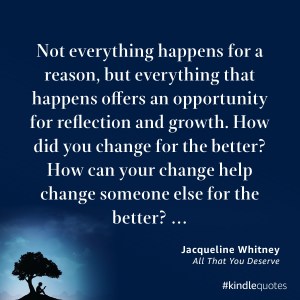 If you are able, let your own life lessons become those from which others can benefit. But if you struggle to resurrect those hard learned lessons due to the difficulty of doing so, I support you in stepping away because only you know what you can handle while still supporting your own mental health.
 My thoughts about being a family caregiver, having been there AND done that.
 Family Caregiver Challenges
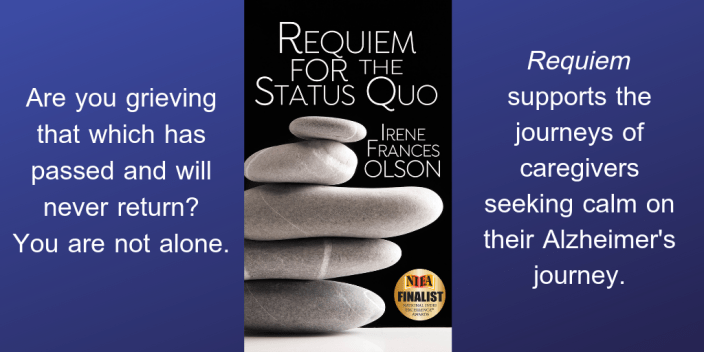 The life of a family caregiver, attending to a loved one with a disease or malady that is all-encompassing, is never Same-O Same-O. Any semblance of status quo flies out the window shortly after taking on this learn-as-you-go caregiver role. The boring life about which the family caregiver used to complain no longer exists as she or he memorializes that long-abandoned way of living. My memorial to status quo existed while attending to my father during his Alzheimer’s journey. That is why I wrote this novel, based on facts from my time caring for my father.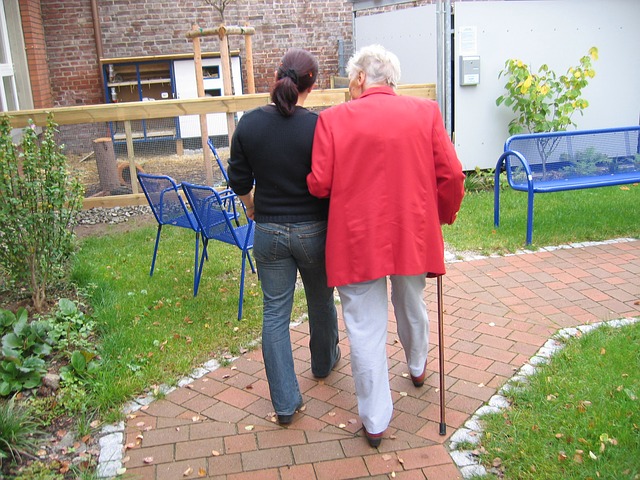

 In November of 2024, my brother had knee replacement surgery. My brother doesn’t live alone, he lives with his pup, Ramona; she is the quintessential loving doggie everyone dreams of having.
 Everyone concluded that the dog’s reason for wanting to truncate her walk was no doubt due to her attentiveness to my brother’s needs: she didn’t want to be away from the house, and more importantly, her daddy – my brother. What if Daddy fell while Ramona was away? What if he needed her undivided attention, usually proffered by placing her head on my brother’s knee and lovingly looking deeply into my brother’s eyes?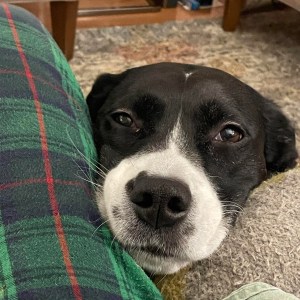
 At seventy years of age, the end of 2023 saw me setting out to make space in my home’s storage areas. My husband and I weren’t running out of storage space, but in an effort to help our adult children should either my husband or I be out of the picture – which of course will happen eventually – we dragged out the under-the-stairs storage bins filled with photos, mementos, and journals to lessen the emotional impact on our adult daughters when the time does come, whether tomorrow or many years from now.
 But revisit them I did, and although the emotions that came through were raw, letting them bombard and fill me was a necessary step so that in the future our daughters would not have to wonder what they should do with all the anguish-filled words I put down on paper in those journals. You see, once I recently re-read my journals, I shredded them, knowing I didn’t need them for future reference. Over the course of several days, I digested their emotional impact and then eliminated them – remembering all that occurred, but not needing to save such records for decades to come. Bags and bags of shredded and disposed business effects and medical records were a gift I consciously gave to our daughters well in advance so they would not be put through the decision-making process of trying to figure out what the heck to do with Mom’s emotional ramblings and Grandma and Grampa’s business and health records that have been in my possession for so many years. My husband and I have already streamlined our own personal business effects so although at our passing our daughters will have to pour over them and address what is necessary at that time, at least they won’t have the much older generation’s business matters with which to contend.
 But along with the somewhat devastating emotions experienced while going through the storage bins came joyful emotions in discovering decades of old keepsakes that shed a light on who my parents and grandparents were in the 1800s and 1900s. The most cherished keepsake were my parents’ love letters to each other a week before they got married in the 1940s. They were so in love with each other and did not hesitate to put that love into words as a gift to each other a few days before their May 26th wedding day. I made copies of those letters for our adult children and my siblings. Needless to say, good vibes prevailed in our hearts as a result!
 Making space for storage purposes – and for emotional purposes – is an arduous task but the cleansing benefits can very much be worth the effort. I made space for the emotions to enter and pass through me and somehow or another, I survived that herculean task. Keep in mind, this is not a job for the faint of heart, but if you have it in you, you just might feel as lighthearted and/or relieved as I do now. And for me, that makes the task’s anguish a fading memory rather than a landmine waiting to be discovered.
 Lessening the burden of another.
 When my neighbor openly disclosed to me that he would be leaving for an out of state trip, I texted him resources that could be of help to him – resources that might assure his wife’s safety and his enjoyment of what I was certain was a much needed and much deserved break from 24/7 caregiving. As my casual neighborly conversations continued with him thereafter, I provided advice in my ongoing friendly efforts to help his wife, and therefore him. When Reggie told me that he had ultimately decided to have another female neighbor, with whom the wife is familiar, check in on his wife for dinner each night while he was out of state, I strongly suggested his wife could benefit from more attentive care in his absence. I brought up several What If scenarios that might pop up during the greater amount of time his wife would be alone. He stated “that would never happen” and “she’s never done that before” to which I suggested it might be more prudent to assume that what would never happen would, and what she would never do, she would do. Reggie stuck with his original plan. Caveat: just before he left for his trip, both my husband and I were recovering from being enmeshed in the hell that is Covid so being more than casual eyes on the prize during his absence was not an option.
 Full disclosure: ACCEPTING SOMEONE ELSE’S HELP IS A DIFFICULT THING TO DO. I am ashamed to say that I too am guilty of dismissing well-intentioned assistance from kind neighbors, most recently assuring a neighbor a couple blocks from me that she need not make meals for my husband and me while we were convalescing from the very debilitating effects of Covid – a virus we avoided for four years but when it invaded our home, my husband and I fell gravely ill. I regret turning down the offered meals because that gift of meals was a communal generosity that I failed to truly acknowledge at the time. Similarly, I hope Reggie learns something from the What If that came about in his absence, and going forward I pray he is more open to those in our neighborhood community who truly only want the best for him and his wife.
 The voracious demon has no respect for its unsuspecting prey; I personally met it twice and lost two loved ones to it. Although younger citizens manage to avoid being consumed by this fiend, those older have little defense against its murderous appetite.
 I lived the dementia caregiver’s journey. When it was time to write about it after my father’s death from Alzheimer’s disease, I chose the Fiction genre, rather than Non-Fiction. That’s what worked for me, and I am pleased that it also worked for readers. This review warmed my heart as it was exactly what I was hoping for.
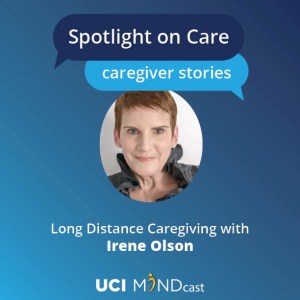 This Spotlight on Care audio podcast, only 25 minutes in length, will encourage you greatly. I was the long distance caregiver for my father who died in 2007 from Alzheimer’s disease. This recent podcast produced by the University of California at Irvine MIND institute provides a snippet of how I succeeded, or failed, in my efforts to make my father’s experience as carefree as possible. I was just like you: figuring it out as I went along, picking and choosing methods that might help both my and my father’s experience. Looking back, I can celebrate that I did my best, and that’s all that matters.
 Changing the status quo of our beliefs
 October 13th 2007, my father died from complications of Alzheimer’s disease. That morning I had received a call from the memory care unit where Dad had lived for several years. The nursing manager of that unit said if I wanted to see my father again before he died, I should come as soon as possible. (I had spent a week with him the month before and knew that his prostate cancer would most likely hasten his death.) I first called my husband at work to let him know I would find a flight from Seattle, WA to Medford, OR and be gone…for how long? I didn’t know. Then while on the phone with my brother and sister, I booked my flight online with a tentative return, threw the very minimum of clothing in an overnight bag, and headed to SeaTac International Airport.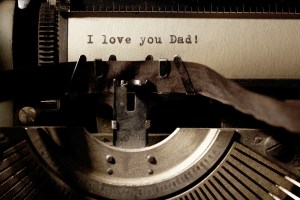
 Your parent is diagnosed with Alzheimer’s disease or other dementia and as their biological child you wonder, “Will that be my fate?”





 It is the greatest of all mistakes to do nothing because you can only do little; do what you can. -Sydney Smith
 My first novel, Requiem for the Status Quo, released in July of 2017, speaks of the brutal protracted loss of someone suffering from Alzheimer’s or other dementia. Caregivers for a loved one with dementia witness the gradual loss of someone they love over an extended period of time.
 ABOUT AMIE, by Susan Wingate

 GRANNY CAN’T REMEMBER ME: A CHILDREN’S BOOK ABOUT ALZHEIMER’S
 Author Bio
 by Lynne Gentry


 Living: the ultimate team sport