21st Century Living
How Are You?

The only thing I want to say is that:
You are enough.
You are worthy.
Any difficulties you are currently experiencing will get better in time because…
Nothing is permanent.
Be well. Get well. Stay well.
Stronger Together
Whether you follow the “It takes a village” concept – or simply believe that our lives can be positively enhanced by others – you most likely believe, as I do, that two is better than one; three is better than two; four is better than three . . .
Mind you, I am perfectly capable of accomplishing many things for which I require very little – if any – assistance. But when I attempt to do something that may benefit from others’ participation, I’m open to it.
Ariel and Shya Kane, authors of several books, including Practical Enlightenment have the following to say about not going it alone. I quote verbatim from their chapter “You Can’t Do it Alone”:
Independence and freedom are the background upon which many of our lives are played. So we may not be making use of our support system of friends around us because we’re locked into an unexamined need to prove we can do it alone . . .
Having someone to talk to, to share ideas with, to support you in going for excellence and not quitting on yourself is a rare gift. When you are feeling down and it all seems too hard to continue, those are the moments that a community can support you in rediscovering well-being. It’s easy to get discouraged. Life is full of disappointments, but when you realize you’re not traveling that road alone, you can keep going.
The simple point I want to make today, however, is that I believe we need to make a concerted effort to pull away from the Me, Myself, and I paradigm and adopt an Us outlook. Doing so opens up so many healthy possibilities:
- we’ll be more aware of the needs around us;
- conversely, we’ll be more inclined to accept help when offered;
- we’ll be giving others – friends and strangers – an opportunity to exercise their strengths in the midst of our weaknesses;
- we’ll build community where previously none existed;
- we’ll release positive energy into our little portion of the universe, rather than infect that same space with selfishness, hatred, and bitterness.
 It’s virtually impossible to be a violent person – in actions or in words – if we’re practicing what is listed in the above bullet points. If we truly live our lives outwardly, we’ll create a binding strength that will make us stronger as individuals, while also creating an indestructible civilization that can stand up against anything that gets thrown in its path. I certainly can’t say the same for the Me, Myself, and I method of existence.
No. I alone can not do it. No one can.
The sooner we realize that fact, the better off we’ll all be.
The Need for Kindness
 The other day, I discovered something about myself and about the way of kindness.
It’s really easy to be kind when life is going grand.
The kindness gene resides within me, just as it does in you if you feed it and let it flourish. What I can say for myself is that at the very least, my intentions are pure.
With that said, however, when I’m feeling far less than 100%, I have to work hard at not letting others be on the receiving end of that less-than-whole person I’ve become. I’ve had a lousy night of sleep? Ugh, I must rein in my struggles and not take it out on the receptionist at the doctor’s office or the supermarket employee. I sincerely don’t want to be responsible for ruining someone else’s perfectly, gloriously healthy, well-slept day. (Gawd, I’m envious of those who have been given the gift of sleep.) All it takes is one look, one word – or the omission of a word – to spew miserableness onto someone else.
Kindness is a way of life for me, but sometimes it threatens to take a break from the norm, and that’s when it’s needed the most in the world. You see, I’m not the only person who has less-than-stellar days. I’d be self-centered to think I’m the only person the world takes a dump on now and again. Everyone in this world is vulnerable – everyone – and far too many are on the brink of giving up. We are all in this together, in good times and in bad.
I vow to not contribute to the latter.
Be You
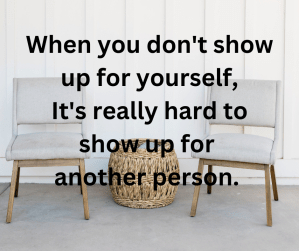 This will be a very short post to encourage you to be who you are. Although I am only mentioning three aspects of being (two of which that are personally applicable to me) I think we can all agree that as individuals, we have the right to express ourselves and be ourselves in the best way possible to live authentically. It’s really the easiest task you can fulfill: TO BE YOU.
If you express yourself by what you wear or by the color of your hair, that to others may seem out of the norm: Continue to express yourself in that manner.
If, like me, your language is sometimes what is considered “swearing like a sailor”: Continue to swear like a sailor, taking into consideration sensitive young ears that aren’t ready to hear such words or in circumstances that just about everyone would consider inappropriate. I trust you to choose your audience with care as I do when swearing mightily like a sailor when I feel circumstances warrant such expletives.
And finally, but perhaps the most important of all, at least to me:
If you tend to care deeply about and for others, a caring that can cause you to lose sleep or peace of mind from time to time, or perhaps your caring is considered going overboard to some: Continue to care deeply because if each of us can improve our little corner of the world, maybe each and every corner of the world will eventually be kinder than it was before we started caring so deeply.
Whatever you do, please be you.
Love who you love. Love your neighbor as yourself. Spread kindness to your neighbor.
EVERYONE IS YOUR NEIGHBOR.
Life Experiences That Hurt and Help
 We don’t have to live a long life to have difficult episodes that we want to move on from and forget. We escape those times and are better off as a result. We are so relieved to be done with those times but guess what? We aren’t done with them.
Case in point: my father died from Alzheimer’s complications October 2007; I was the primary person involved with managing his care. A few months after Dad died, another family member was diagnosed with dementia and the caregiving journey started all over again, but my experience with Dad helped with my sister-in-law’s disease journey. And now years after she died, I find my experience still coming into play to benefit others, because let’s face it, dementia is alive and well in our world, in our cities, and in our neighborhoods. It is still difficult to draw upon my previous personal experiences from which I thought I had escaped, but it is affirming to know that because I had those experiences, others can be helped.
Whether past experiences center around health issues, relationship issues, financial devastation, or any number of not so great life experiences, we all learned something from them, and because we learned something from them, others can be guided through their own similar circumstances.
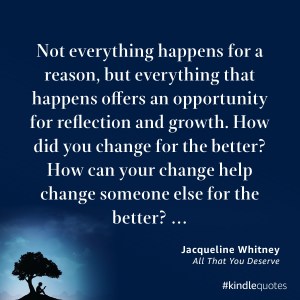 If you are able, let your own life lessons become those from which others can benefit. But if you struggle to resurrect those hard learned lessons due to the difficulty of doing so, I support you in stepping away because only you know what you can handle while still supporting your own mental health.
Caring Starts at Home
Source: 7 Ways To Help Your Kids Embrace Kindness – By Lucy Martial
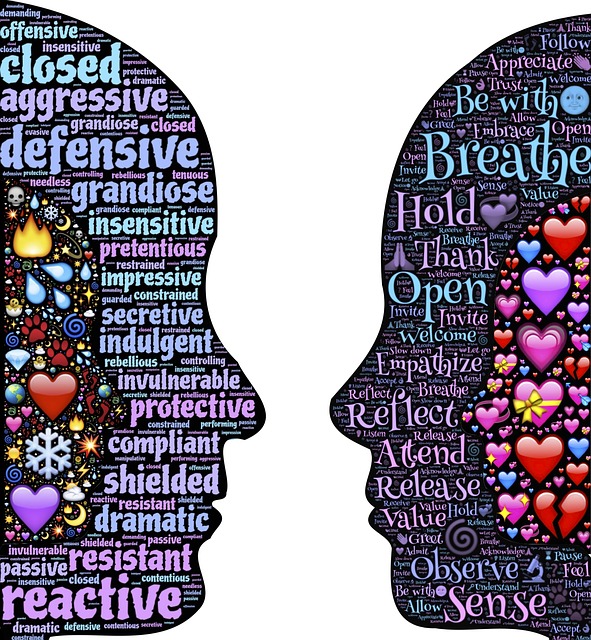 We’ve all heard the admonishment that we should lead by example. The intent of that statement focuses on providing good examples for not only our own children and grandchildren, but also our neighbors’ children, school students, and all other young people with whom we come in contact.
If we live in such a way that our words and actions positively influence the younger set among us, we are to be rewarded. But if our actions negatively influence children, we’ve done them – and the world – a grave disservice.
The article attached above from the Kindness Blog – a website that ONLY provides stories that focus on kindness – lists seven suggestions for effectuating kindness in children.
My post today focuses on two of the article’s very apt suggestions:
Be aware of your actions
As I stated at the beginning of this article, good or bad, your actions are making an impact on children. The Kindness Blog article points out that the bad habits our children pick up are oftentimes not noticed by the adult because he sees them every day. And let’s face it, if the behavior the child exhibits is something the adult also exhibits, he’s not going to see anything wrong with it anyway.
Reward their kindness
Oftentimes adults are very quick to point out when a child does or says something wrong, so much so that children may get the feeling they can’t do anything right.
I think adults need to strike a healthy balance between admonishment and reward.
 I’m not a child psychologist, but this I do know: children like to please adults and will behave in such a way to do so. Think of these seemingly mundane activities for which an adult has an opportunity to reward or compliment a child:
- A child stops on the sidewalk, picks up a piece of trash (not his own) and tosses it into a garbage receptacle;
- Walking with another adult who passes by a begger on the corner, a child stops, turns around and says, “Hi. I hope you have a good day today.” Or maybe that same child reaches into her pocket, pulls out some change and drops it into the begger’s cup;
- Exiting a grocery store with her mother, a child sees an elderly person struggling with her canvas bag of groceries; the child introduces herself and offers to carry the woman’s grocery bag to her car.
If those behaviors by a child aren’t rewarded, he or she may get out of the habit of doing similar acts in the future.
Now, wouldn’t that be a shame?
Don’t Give Up!
 Gosh, sometimes nurturing the hope factor is quite difficult, isn’t it?
Throughout our lives, we all have something going on that requires hopefulness. But sometimes, circumstances don’t allow for that “skill” to carry us through the tough times. Or is that just me?
For the past year of my life, I have been the Champion of Hope for any and everyone who expresses despair or hopelessness in my presence. Then certain things changed for me wherein I became the despairing person and I found myself in the depths of yuckiness, also known as the Yuck Zone.
Just like every skill, however, practice becomes an ongoing and ever present need so that the skill we are trying to maintain becomes second nature to us.
I have to remind myself that I have witnessed so much in my seventy-two years of life – some of it directly affecting me and some of it just a part of the grand scheme of being a human in a world that at its worst is scary as hell and at its best is less scary – and I actually have come through all of that human experience 100% of the time.
100% of the time!
But even more important than relying on that past successful history, is remembering to spend more time with those people with whom I have community because together we can keep ourselves out of the Yuck Zone that does its best to bury us. That doesn’t mean I isolate myself from the world, rather, I make sure my hope tank doesn’t run on empty.
So the encouragement I offer to you and to myself is to surround ourselves with “angels” that build us up, not break us down. It’s a wonderful thing to help others, while also helping ourselves, don’t you think?
Weekend Misery
 I recently had a doctor’s appointment on a Friday. After the Medical Assistant called my name, I followed her down the hallway to the exam room. I asked how her day was going, and she mumbled a response that didn’t sound too positive. My response, “Well, at least it’s Friday and tomorrow starts your weekend.”
“That’s no better.”
Oh. I apologized and restated my encouragement, saying that I guess sometimes work can be a healthy escape from what awaits us at home.
I learned at least two things that day:
- Sometimes reaching out to others can appear to fall flat
- Not everyone has a welcoming and peaceful home life
But I don’t regret reaching out to the Medical Assistant with kindness because maybe, just maybe, my presence as her patient inserted a welcome glimmer of friendship into her day. Some glimmer attempts can certainly fall flat, but I am also quite certain that just the opposite can be true.
Something To Look Forward To
My hometown NFL team, the Seattle Seahawks, will play in the Super Bowl on February 8, 2026. WOW! This is an exciting time for Seahawks fans, as I am sure it is for the New England Patriots’ fans as well!
But the theme for this brief post is the joy of having something to look forward to that doesn’t have to be Super Bowl big. My thought is that the type of excitement a football match creates doesn’t have to be the only positive excitement that exists in our world.
Heck, like I said in an earlier post, I look forward to turning over each month’s new calendar page; something I get to do twelve times each year! You see, I simply like looking forward to something new! So when we are surrounded by late-breaking news that can oftentimes ruin our day, isn’t it great to have a “something to look forward to” event in our back pocket?
- Maybe it’s tomorrow’s breakfast with a new cereal we just purchased.
- Perhaps the event we are looking forward to is simply looking out the window to see if the flowering plant outside that window has a new bloom?
- Okay, now don’t make fun of me, but I love it when I have used the last sheet of a paper tablet, and I can replace it with a new, full of sheets fresh paper tablet!
I know that’s weird, but I am glad that so many of the events I look forward to aren’t expensive or grandiose ones, because that means I experience many positive events on an ongoing basis throughout my life!
And that is me in a nutshell. Always looking for the positive.
An Example of Great Brain Usage
 A class of approximately 25 Senior Citizens enrolled in a Logic class at the local community college. This class proved to be very interesting but also VERY challenging.
A week before the final exam, their Professor sympathized with their concerns about what was sure to be a difficult Final Exam, especially given the fact that the Senior Citizens in the class hadn’t sat in a classroom or been faced with this type of exam process in quite some time. The Professor gave each student permission to fill an 8.5 x 11 sheet of white paper with what they felt would help them correctly answer the exam questions.
On the day of the exam, student by student filed into the classroom with their white pieces of paper filled with notations that they felt would help them through the exam. The last student to enter brought in a blank piece of white paper and placed it on the floor to the left of him in the aisle. Shortly thereafter, a more traditionally aged college student walked in and stood within the confines of the piece of paper. Wow – now that’s weird.
Turns out the student who stood on the white piece of paper had a Master’s Degree in Logic and provided all the answers to the Senior Citizen who invited him to participate in the exam with him. This Senior Citizen student got all the answers right because he followed the guidelines suggested by the Professor: fill the 8.5 x 11 sheet of paper with what he felt would help him correctly answer the exam questions.
That’s using your brain! Seems logical to me!
Sprucing up our Connections
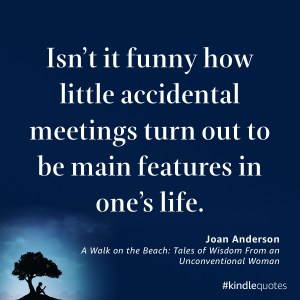
A good friend of mine calls the above types of connections Glimmers.
I wonder where you experience glimmers? I am quite certain that not a day goes by when I am in public that I haven’t been involved in an accidental meeting with someone, or several someones. Just ask my husband…there isn’t an elevator – or a store checkout counter – where I have not reached out to a stranger for that very short glimmer of friendship.
You don’t have to bug the heck out of someone to make a connection, wherein they are frantically trying to get away from you. All that is needed is a smile, a kind word, a compliment about their sparkly boots – which occurred last year in a medical facility elevator – or even just wishing a stranger a positive day of sorts.
Give it a try. You just might have made that stranger’s day with that accidental meeting’s mini conversation.
And may I add, I hope someone does the same for you someday soon that will make you feel better than you did just moments before.
AND TRUST ME, THAT’S NO ACCIDENT.
A New Year Practice Every Minute of the Day
 This second post of 2026 proposes that every day be treated as if one does a New Year.
I am going to try to provide you with wisdom that might help you get a good start on 2026, and every day you’ve been given. Here’s what Dr. Bernie Siegel has to say in his book 365 Prescriptions of the Soul:
How can you possibly have a new year? You are the same person, and the world doesn’t start again with a clean slate just because a calendar page has been turned. Your troubles don’t miraculously disappear. Your life was anything but new when you awoke on the first day of this year; it was simply a way of measuring the passage of time. Why make such a fuss over it?
I guess it’s because we like new starts. There’s something refreshing about having the opportunity to start all over again. Not unlike second chances, I treat the commencement of a new year as an opportunity to do better. Unless you’re perfect, you too like the idea of a fresh start.
But instead of relying on 365 days to do better, I can do better in the next minute. Right now, I can do better. I can think of and speak more kindly towards others and myself. I can promote a healthier lifestyle and make plans to construct a better me and a better world, so why take all 365 days of the year to do so?
I have the chance to live my best life now, and so do you. To borrow another quote from Dr. Bernie Siegel, here’s some encouragement to make a new year more palatable.
When every evening is New Year’s Eve and every day you awaken to is New Year’s Day, you are living life as it was intended.
That makes sense to me, so you know what? I’m gonna get right on it!
Won’t you join me?
Where Am I?
Do you have a difficult time trying to figure out what direction you’re facing or what direction you’re traveling?
 ME TOO!!!
In general, I know some of the locations of the world’s countries and continents – because I have certainly seen them on a globe or other map – but in my own neighborhood? Not so much. I have lived in the same house for 23 years, and I still ask my husband what direction our neighbors across the street are. If you’re wondering, it’s East…because I just asked him.
It’s not that I don’t care, I really do, but I think directional bearings fall almost to the bottom of my abilities, with mathematics – or arithmetic, as we used to call it when I was lots younger – at the very bottom of my list.
 My eight-year-old grandson excels at math. Just the other day, he was testing his – and therefore our – multiplication skills. What’s 24 x 24? What’s 36 x 36? I am not ashamed to say that with my cell phone somewhat hidden underneath the dining table, I activated my calculator app and came up with the answer to that last query. But I was very honest, so that holding up the answer and facing the calculator toward Lucas, I asked, “Is this the right answer?” Of course it was, but he discerned the answer without electronic assistance.
So, I am weak when it comes to directional arrows, and I am super weak when all things numbers are involved, but I am strong in spelling, word definitions, and – for the most part – sentence and paragraph structure.
The bottom line, however, is that what makes us all unique is our varied abilities, and when combined, all those individual parts make a whole, and that’s a very good thing. You complement me, and I complement you, and we all somehow make it through each day we are given. Keep in mind, complement is not the same as compliment, the latter word coming into play when I boost your ego by saying something nice about you.
ANYWAY, let us all celebrate our similarities but also our differences because that, my friends, is what makes the world go around…and speaking of gravitational force, don’t get me started with my science deficits. Suffice it to say, I can probably talk my way out of figuring out the science of our world by writing an essay of some sort…like this one!!!
Time To Move On
I am not trying to be dramatic, controversial, or disturbing. Nope! This is just how I am when a new year is peeking around the corner. It’s all I can do NOT to hang up next year’s home office wall calendar in October when I first purchase it. I force myself to wait until at least the day before the new year before doing so.
Guaranteed, I won’t wait that long this year.
Don’t get me wrong, I do this calendar page turning every month of the year so that by the time there are a couple days remaining in the month…FLIP! There’s a new month’s calendar page to grace my wall. Does that mean I don’t live in the present? Probably. But for me, it’s a comfort to look ahead and hope for the best.
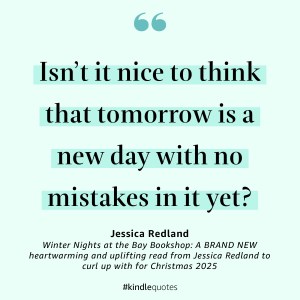
I think the above sentiment is appropriate when hoping for a better new year, both globally and locally. It works for me; I hope it works for you.
The Bravery of Kindness
Why does it take bravery to be kind? Because sometimes we have to reach out to someone when doing so feels uncomfortable; uncomfortable because offering a kindness that might be rejected would be embarrassing. Or perhaps the intended recipient might take offense at the gesture, thereby cancelling out the kindness meant to be shared.
That’s where intuition comes into play.
The other day, the employee who checked our groceries at our neighborhood store wore a pin that indicated she was a US Air Force veteran. That was when my intuition started to buzz. I asked how her Holidays were going, and she said her son, who is on active US military duty, wouldn’t be coming home for Christmas this year. That really got my intuition buzzing…CORRECTION…my intuition was jumping around in my body.
As a member of a local botanical garden that has an extraordinary Holiday light display throughout the gardens in December, I had two free passes in my wallet. I asked “Laurie” if she was familiar with the gardens’ annual light display. Boy, was she. Her face lit up. I pulled out the passes and handed them to her. “Would you like to go this year?” She started to cry, saying she and her husband wanted to go, but it didn’t seem possible this year. She looked me in the eyes and, through her tears, said, “This means so much to me.” Let me tell you, it meant a great deal to me as well.
I have been working on amping up my bravery. As a matter of fact, BRAVERY is my word for 2026. I am very glad I was able to exercise my bravery muscles to go along with the kindness I felt compelled to extend at the grocery store.
My encouragement to everyone is just this: trust your gut.
And talk about trusting your gut, please enjoy this prime example of where bravery and courage come into play. It’s quite a dramatic piece from an extraordinary blog I follow, Boomer Banter.
Discounted Books For You!
My two novels are available in eBook format for practically free and are very affordable in paperback.
Requiem for the Status Quo is a work of fiction based on real events in which I was personally involved, and it effectively portrays the role family caregivers play in caring for loved ones with Alzheimer’s and other forms of dementia.
A Jagged Journey, also fiction, addresses the attitudes you and I exhibit and witness in a world that should allow for diversity and differing beliefs.

Unsaid Words? Don’t wait until it’s too Late.
AND LET ME TELL YOU…I KNOW OF WHAT I SPEAK.

My sister, Mary, was born 8 months before me; my parents adopted her after my mother suffered three miscarriages. As sometimes happens, before the ink was dry on the adoption papers, my mother became pregnant with me. Yay me!!!
Suffice it to say, being so close in age, my sister and I grew up together, sharing the same experiences and often the same friends. We are still very close, even though we don’t live in the same state.
Several years ago, after our mother and father had passed away, my sister located her birth mother, met her, and had a few occasions to get together with her and her other daughters, even though her birth mother lived in eastern Canada and my sister resides in California.
 Because I erroneously believed I would have all the time in the world to thank my sister’s biological mother for placing Mary up for adoption, I missed out on that opportunity because Cathy died a few years after my sister first connected with her.
Cathy’s decision to provide the best possible home for my sister was an extraordinary gift for which I wanted to express my gratitude. Still, I procrastinated and never told Cathy what a blessing her first daughter is to me. In my recent history, this is by far the biggest regret I harbor in my heart.
Kind words left unsaid benefit no one.
Diversity At Its Best!
I was recently tasked with writing my quarterly column for an Australian online publication, Grandparents Day Magazine, with that issue’s New Year’s theme being: JUNGLE. The first thought that came to my mind regarding that theme was diversity.
The Merriam-Webster Dictionary defines diversity as: The quality or condition of having or being composed of differing elements.
That being the case, a jungle certainly encompasses that definition. Although the jungle is known to be without much variation in seasons – it is humid and hot for most of the year – it contains a wide variety of elements. One could spend a lifetime recording them and not compile a comprehensive list of all that exists there.
One site in my online research noted that there are nearly 40,000 plant species, 1,300 bird species, 3,000 types of fish, 427 species of mammals, and approximately 2.5 million insects.
OH MY GOODNESS! As I said in my post’s title, Diversity At Its Best!
 The jungle’s diversity, and that which exists all around us where we live and breathe, makes me happy.
We all have examples of diversity in our human experience. My goodness, my neighborhood in my Washington state town is comprised of homes of varying sizes, differing ages of residents, and, most certainly, a diverse ethnic composition that highlights what living is all about.
And is it necessary to point out that the residents of every country in the world have differing religious and political leanings? At least in the United States where I live, divisions currently exist that have never been wider in my lifetime, and I have lived on this earth 72 years thus far. That division does not make me happy.
I would like to use the jungles of the world as a healthy example of diversity, and although the jungle can also be characterized as a scary place to be …lions and tigers and bears, oh my! … it is still a natural example of diversity at its best, from which perhaps all of us in the world could learn a lesson or two.
May it be so.
Create a Season of Calm

Being kind to yourself is most definitely a serious matter. You deserve to be treated with the same gentleness you would treat others for whom you care.
If the Holidays are starting to get to you, do what is needed to bring some calm and control back into your life, even if that means disappointing others. Again, you matter just as much as those you might have to disappoint, so I would advise you to try a little kindness toward yourself, a kindness you so very much deserve.
And if you’re doing absolutely well right now and can exercise some outward gentleness, check in on individuals who might need a reminder that they matter and that someone was thinking of them. You don’t have to make a huge effort – especially if doing so depletes your own reserves – but a phone call, a text, or a hello in passing – could mean the difference between making their day and not.
Do what you can, and start with yourself.
A Little Goes A Long Way
I learned something years ago that when people donate or tithe to a church or other organization, a good rule of thumb is equal sacrifice. I love that thought because 10% of, say, $25, and 10% of $2500 is a different amount but an equal sacrifice for those concerned.
 If you are like my household, you have a spare change jar/container that accumulates pennies (now out of circulation in the US), nickels, dimes, and quarters. We don’t like the jingle jangle of coinage in our pockets or wallets.
The other day, my husband and I decided to do something with that change that, quite frankly, was just collecting dust and tarnishing where it accumulated. We took the jar down to the nearest Coinstar kiosk, deciding that if there was a donation option for providing food to the needy, we would select that charity. BINGO! There was!!! This photo shows you what an accumulated $53.06 over the years was able to do for Feeding America, our chosen donation recipient. According to their website $1 = 20 meals so our spare change that we weren’t using equates to 1060 meals!!!
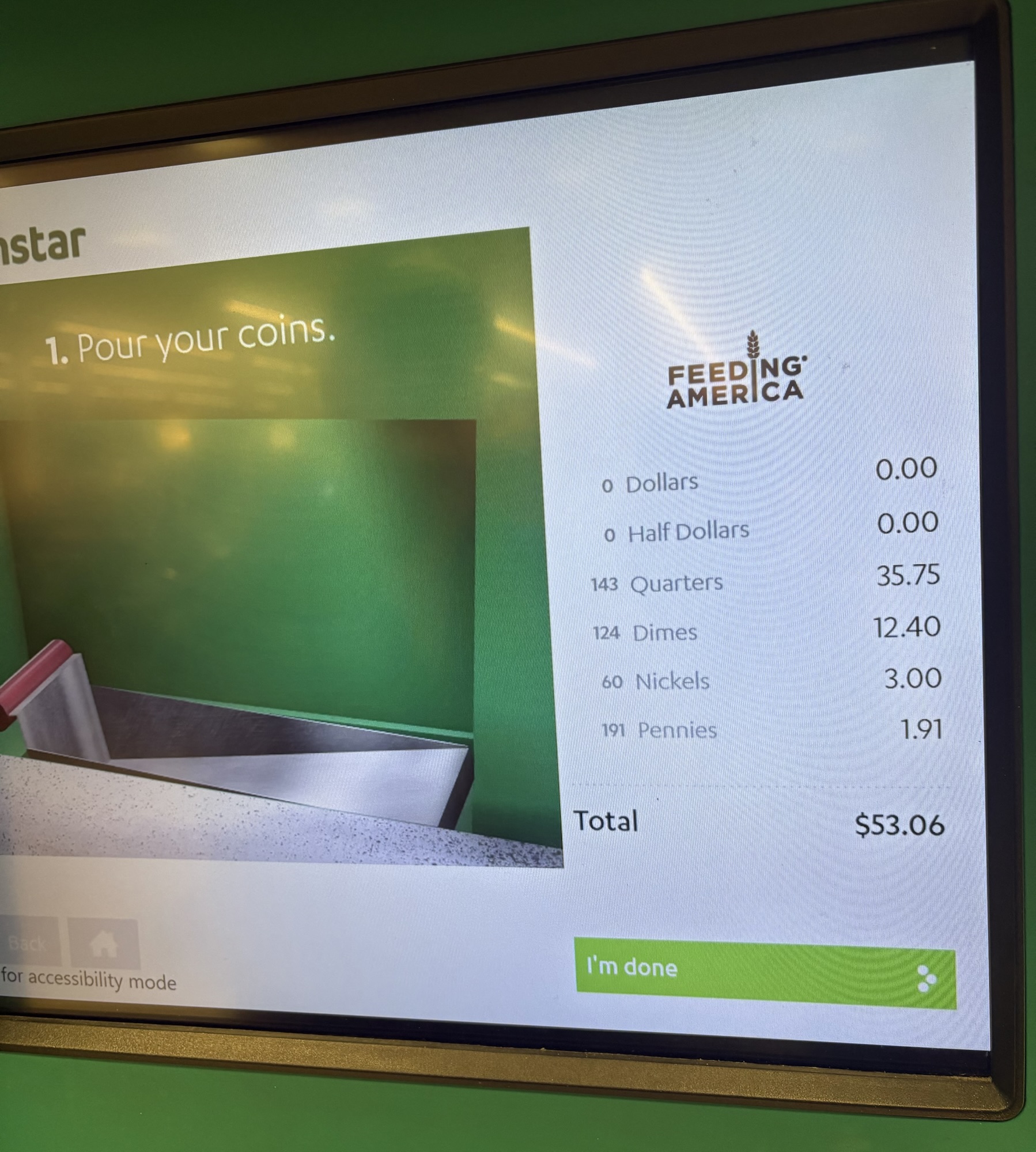
The point I want to make, however, is that there is no such thing as a donation being not enough or too small because adding up all those coins means many people can benefit from any donation amount. I want to encourage you to never feel that what you have to offer is not enough. Every amount provides an impact. It all matters and it all counts.
Celebrating Caregivers
 My thoughts about being a family caregiver, having been there AND done that.
Even with all the book knowledge a person can garner, caregiving “mistakes” are bound to happen. The following tips are provided to active and former family caregivers who struggle with what they consider failed attempts at getting the caregiving task done correctly.
- Perfection is highly overrated. No one, absolutely no one, expects you to do everything correctly 100% of the time.
- Don’t be so hard on yourself. Why? See Tip #1 above and Tip #3 below.
- Caregiving is difficult, so CELEBRATE the wins! Give yourself a High Five! Sometimes you will have just the right way of doing or saying something that wipes out every other time you feel you didn’t do or say something correctly. Tally up the victories and CELEBRATE them!
- Carefully choose your confidantes. Having acquaintances who are slow to judge but quick to affirm will be just the nourishment your body and soul will need.
- If you are doing your best, that is all that is needed. But you say, “I could have done better!” No. You did the best with what you knew at the time, therefore you are to be congratulated. Instead, ask yourself, “Did I give it all that I could in the moment?” Yes, you did.
- “Mistakes” are simply learning opportunities. Even today, years after my family caregiving experience, I remind myself that when something in my life isn’t going quite as planned, I can still learn something from that lesson, which is an “unmistakably” good thing, don’t you think?
I wrote a novel about my own caregiving experience. Just like my caregiving skills were a work in progress, so too was this novel, published a few years after my father passed from Alzheimer’s disease. May you or someone you know benefit from it.
AND MAY I JUST SAY, PAY AS MUCH ATTENTION TO THE GOOD YOU HAVE DONE AS YOU PAY TO WHAT YOU THINK YOU DIDN’T DO CORRECTLY.
CELEBRATE EACH VICTORY, REGARDLESS OF HOW SMALL, AND YOU’LL HAVE MANY PARTIES TO POST ON YOUR CALENDAR.
BREAKING GOOD NEWS!
Goodness abounds, yes, it does.
We don’t hear or read about it enough, but trust me, hatred and evil have got nothing on goodness and kindness in our world.

It has been said that it is the horrific stories that make headlines, and quite frankly, that is true. Newspapers, magazines, television, and social media scramble to break news in their attempts to be the first to offer their take on ongoing incidents.
I am all for free journalism; without it, I would not be writing this 1,303rd post, so bring it on in all its raging color. But wouldn’t it be rewarding to have our day interrupted by breaking news that reports on the good and kind incidents that occur as well?
All right, I’ll do just that. Allow me to introduce you to this wonderful soul who has brought light into the darkness. This is Breaking News of the very best kind.
Sophie Andrews is a person who learned the hard way – one of the hardest – that the best way to help is simply to listen. Sophie was on death’s door – you have to listen to this 14-minute TED talk to learn of the details when a volunteer at the UK’s Samaritan helpline picked up the phone and changed 14-year-old Sophie’s life forever. Years later, Sophie gave back and paid it forward by starting a helpline for some of the most vulnerable people in society who are lonely and without access or means for socialization. Her Silver Line fields thousands of calls a day, making the lives of countless UK senior citizens brighter, fuller, and healthier each year.

Listening – a free resource that is oftentimes not employed when needed the most; listening that actively tunes into the person speaking.
If you are someone who sets resolutions or intentions for the upcoming new year, perhaps practicing the art of listening might be at the top of your 2026 list.
I know it is on mine.
Truthful Living #4
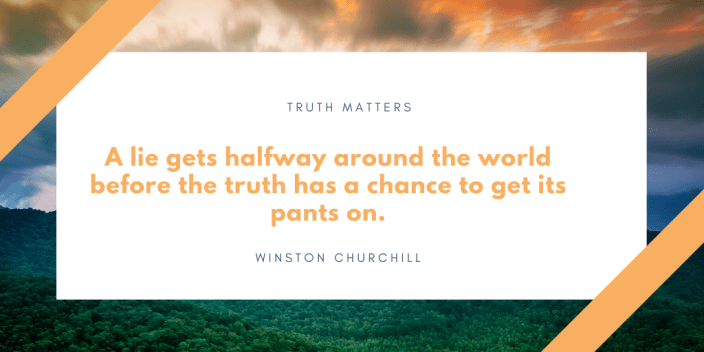
Put on your big boy and big girl pants and let truth be your mantra and your standard.
Truthful Living #3

One cannot be a good person if truth is not a part of their character. A moral person can be respected. If one is not moral, why would I follow that person?
I wouldn’t. Would you?
Truthful Living #2
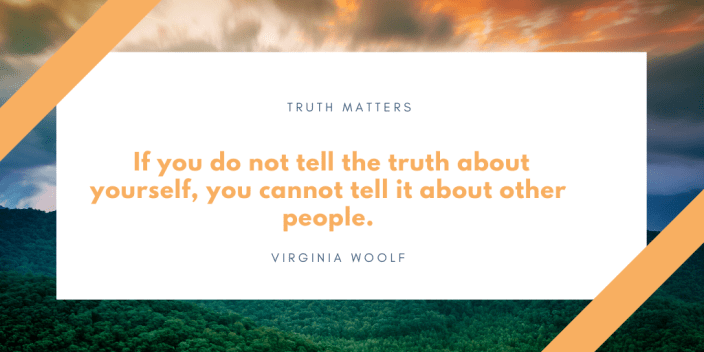
And if you cannot practice self-compassion, you know not how to be compassionate towards others.
There is certainly a lot of room/space for compassion to take its rightful place amongst humanity.
May it start with me.
Truthful Living # 1
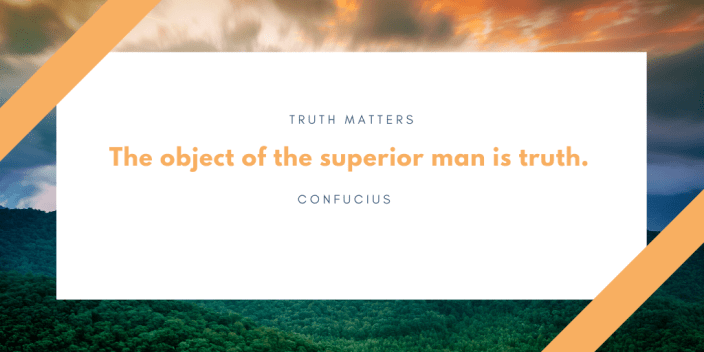
Direct focus on the truth should net us lots of superior people!
It would be a lie to tell you that I have never lied, because I have. We all have in one shape or form, but what I am referring to in this brief post is that we should turn away from anyone who directly misinforms us when matters of import are front and center.
Connecting With Others

A previous post I wrote several years ago addressed the good we can do in our little corner of the world. Today’s post talks about that little corner in which we find ourselves.
We find community in various settings, including our home, our extended family, our employment, and our day-to-day contacts near and far. I would offer that even when we take our doggies to the off-leash dog park and let them run around with the other dogs, we can find ourselves in community.

But what if when at the dog park, we keep to ourselves and choose not to converse with any of the other humans; are we still in community? Yes, we are, because we are like-minded individuals giving our doggies a romp in the park with other doggies because we know it will inordinately please our four-legged friends. Our common goal in making the effort to go to the dog park is more or less the same: doggie community enjoyment.
What this very brief post is saying today is that community does not have to be a structured and organized grouping of people. It can consist of the lone walker in the neighborhood, coming upon another lone walker and sharing a smile and a greeting, even in passing. For myself, I relish every person-sighting – whether on my neighborhood strolls or six feet away from another customer at the grocery checkout. Other people! There are other people in this world, not just my lonesome self!!!!
Over the years, my eyes have been opened to discover community in places and in circumstances not recognized before. I hope you find similarly healthy connections as you go about your own daily routines.
Seeking Status Quo
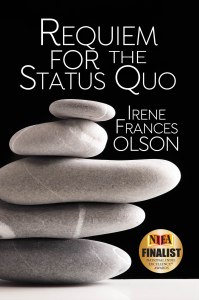 Family Caregiver Challenges
So this happened a few years ago: I wrote a novel about my personal experiences being a caregiver for my father who was diagnosed with Alzheimer’s disease in his early 80s.
The novel genre usually means fiction, but everything within my book depicts either my personal experience or those of caregivers with whom I supported as an Alzheimer’s Association group facilitator.
I don’t think enough positive attention is given to the phrase status quo. When you are caring for someone with a health condition, boy oh boy do you hope and pray for a return to the pre-caregiver status. Being a caregiver for a loved one creates the desire to enter back into a time when illness or upheaval were not present, both for the caregiver’s sake and that of the person for whom they provide care.
Perhaps you, too, have been or are currently a caregiver, or you are hoping for a return to a time devoid of chaos and uncertainty, and you need a diversion from this, that, or the other that permeates your purview. Maybe my novel will plant a seed of hope in you that you thought had dried up forever.
That is my hope for you. That is my prayer for you.
Celebrating the Differences
 I absolutely love the different ways our UK neighbors label things that many of us, at least us in the United States, label differently.
One of those words is QUEUE.
One very friendly definition of the word Queue is: a line or sequence of people or vehicles awaiting their turn to be attended to or to proceed. Doesn’t that sound civilized? It denotes an attitude of: I don’t mind at all waiting in this crowd to take care of business once I find myself at the front of the queue.
My husband and I had the experience of waiting in our vehicle for one hour in a 2-mile (3.2 km) queue the other day, trying to enter a Washington state national park. There wasn’t anything exciting – or relaxing – about the effort, but queuing is what we did.
Speaking of that national park, I love that parking lots in some countries are called car parks. It’s almost as though the vehicle is being treated to an entertaining adventure as we diligently park it within the lines of the designated spaces. And in some of those car parks, one can find trollies discarded by shoppers who have completed their weekly food shopping.
And the elevators found in the United States would be called lifts in the UK, and I must say, I am very much enamored by the thought of being given a lift somewhere, even if it’s just from one floor to another. Giving someone a lift is a courteous thing to do, don’t you think? “Why, thank you for the lift! That was very generous of you!”
The list of different terms that I am quite enamored with include: nappy instead of diaper, torch instead of flashlight, bin instead of trash (see what I mean by civilized?), and the favorite that I have found myself saying lately is knackered instead of exhausted. Like just the other day when we spent seven hours traveling to and from that US national park (1 hour of which was in a queue), my husband and I were absolutely 100% knackered by the time we arrived home to prepare our sandwich and chips and a glass of plonk after visiting the loo.
 ANYWAY, I think you understand that countries have their own way of saying things, and such differences don’t bother me at all. Now, if you’ll excuse me, I am going to reward myself with a biscuit for completing this mini exposé and say bollocks to anyone who disagrees with me. Time to sit in front of the telly and relax a bit! Cheers and Bob’s your uncle!!!
I Appreciate You!
 What a terrific statement that is, isn’t it? This statement was made twice in my presence the other day. The first time was when I said it to the grocery store checker that morning, an employee who was stretching her back and then leaning on the check stand. I asked her, “Has it already been a day for you?” To which she responded, “You have no idea how long it has already been.” I told her I was sorry and that I hoped she got relief soon, then I said,
I appreciate you, I really do.
Later that same day, I was at a medical office, having turned in some paperwork to the front desk employee who then said the following to me,
I appreciate what you have done, thank you so much.
I felt acknowledged, and I felt like my presence mattered to her. I felt present.
One definition of appreciation is:
Recognition and enjoyment of the good qualities of someone or something.
Wow. That must be why the grocery employee expressed her pleasure with my statement earlier that day and why I felt so present and worthwhile during my very brief encounter with medical staff a few hours later.
Please extend your appreciation to others as you go through your day today. You just might save that person from having the worst day of their life.
 Living: the ultimate team sport