Identification: Who are you?
When referring to identification in this post, I am talking about human characteristics – specifically, emotional and mental states.

For example, I tend to be anxious – allowing anxiety to rob me of my peace, and oftentimes, rob me of my sleep. But being anxious is not my identity. I get anxious but that is not who I am.
Being labeled (pigeonholed) by others is one thing, and it’s harmful, but even more so, labeling ourselves does each of us a huge disservice.
I may have anxiety, but I am not anxiety. Someone else may have ADHD, but that person is not ADHD, they have ADHD tendencies. If someone suffers from depression, their identity is not depressed person, rather, she/he is a person who gets depressed. According to the Merriam Webster dictionary, to put someone in a pigeonhole is to, unfairly think of or describe someone or something as belonging to a particular group, only having a particular skill, etc. For example, actors don’t want to be pigeonholed as only having comedic skills; a talented actor wants to be thought of as having more range than that. Similarly, a lawyer is also a parent, a spouse, a friend – not just a mediator or adjudicator. My gastroenterologist’s whole identity isn’t wrapped up in her specific field of medical expertise – thank the good Lord – she is also a hiker, a mommy, and an accomplished baker.
If I place myself inside the box of anxiety, I may have the tendency to remain there longer than is healthy. If I live outside of that box and only end up there from time to time, I have more range as a human being and can branch out and experience calm and peace as a natural state. I am not anxious person Irene, I am Irene the mother, spouse, grandmother, sister, friend, and as luck would have it, published author.
ANOTHER WAY IN WHICH WE LABEL PEOPLE IS BY THEIR DISEASE.
When my father suffered from Alzheimer’s disease, he wasn’t his disease, he was everything he was before the disease and even everything he became after diagnosis. He had limitations, don’t get me wrong, but those limitations didn’t define who he was: an extraordinary human being. When my sister-in-law was diagnosed with breast cancer, that was one horrible aspect of her life but that didn’t define who she was before she died. She was a wife, a mother, a sister, a friend; she was a caring person with a keen sense of humor; she was the goddess of her wonderful household who kept it running like a fine-tuned engine.
Labeling limits our perception of who someone is in their essence.
There are so many directions this post could have gone – physical characteristics, gender identity, race, ethnicity – instead, I decreased the scope because emotional, mental, and medical matters have been weighing upon me as of late, so that’s where I went with this 500 word post. That was enough for me, I hope it was enough for you.
Be well, y’all.
Falling Into A New Season

I love Autumn. I know it signals the end of summertime fun and weather, but there are years when such characteristics are best left behind.
I always welcome the possibilities inherent with a new season, a new calendar year, or simply a new year of life. Having survived my 68th birthday earlier this year, I came to the realization that aging truly is a privilege, and the longer we live, the more opportunities abound for the taking.
Whether you are 28, 48, 68, or 88-and-counting, you rarely don’t have the choice of whether to try something new – or leave something behind. Sometimes our chosen career path or passion loses its shine. Other times, relationships that in the past were nurturing to both individuals lose their nourishment and become like a slow-acting poison that nonetheless harms or kills the spirt.
Walking away from what we’re accustomed to is difficult, but oftentimes extremely necessary.
You don’t live long on this earth before said walking away becomes a reality, and it’s those first steps that are the most difficult. I’ve embarked on that path in my professional life and in my personal life, knowing I was doing the right thing but nevertheless grieving the separation.
If new endings and beginnings beckon you as you approach the new season’s landing, my wish for you is that doing so strengthens your reserve to celebrate the one life you’ve been granted. And please always remember, even the smallest of victories warrant a celebration.
SO PARTY ON!
Adulting Is Hard
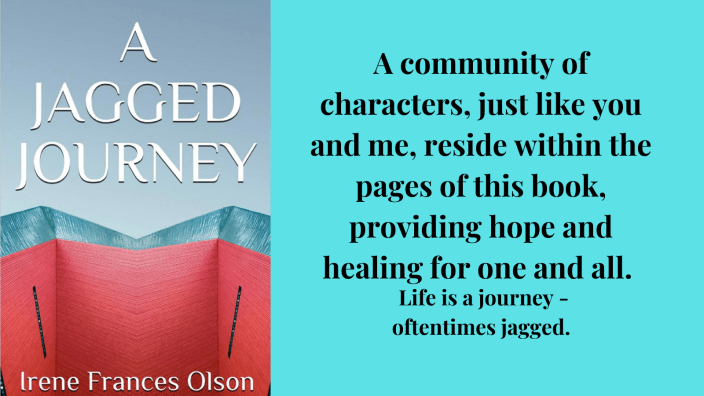
Life is not an easy venture, regardless of who we are or how we were raised. But we get up every morning, stumble through our wake-up routines, and plod through the day because that’s what the human condition requires.
We all know that some days are easier than others – just as some years are worse than previous years – but when the not-so-good times start piling up day after day, we tend to wonder if we’ll ever get to the other side of the bad.
Life is most definitely a contact sport. Scrapes and bruises are bound to hit many of us in debilitating ways.
The fictional characters in this new novel are acquainted with yours and my experiences. They’ve had it tough, and they’ve had it easy, and how their lives panned out reflects outcomes not unlike those we’ve all endured.
Misery loves company isn’t what the author had in mind with the writing of A Jagged Journey but she knew that those going through a tough time could benefit from how Charlie, Hannah, Gretchen, and the book’s many other true-to-life characters, handle the challenges that come their way.
The outcomes aren’t all touchy-feely and rainbow-laden, but that’s not how real life pans out for you and I anyway.
May this well-crafted story keep you company during the highs – and the lows – in which you find yourself, and may you experience the joy and hope that so many previous readers of Journey have enjoyed.
Life Gets Lifey
Boy oh boy, does life get lifey. As you are well-aware, who we are now was most likely shaped by who we were as a child, a teenager, a young adult, and so on.

I confess, I have blamed some of my not-so-stellar behavior on anything and everything that wasn’t me. Each time I did that, however, I was wrong. My life experiences definitely molded and shaped me, but they didn’t have to define me.
That was the case for Gretchen Marks, a prominent character in my novel, A Jagged Journey. From the very first time you meet her, you’ll find it quite easy to judge her for the behavior she exhibits, and when you read this novel, you’re more than welcome to do so. Quite frankly, it would be extraordinarily unusual for you not to.
Gretchen had a history that shaped her character, and she had the choice to fall back on that history or adjust her perspective as an independent adult. What did she do? Did Gretchen take responsibility for the way she responded to her distant past, or did she choose the easy – yet infinitely more difficult – route of assigning blame to her demons, rendering her blameless?
Gretchen may prove to be the fictional character you love to hate, especially compared to the extraordinary characters found within the pages of this novel. And I figure you’ll hate her either because her mere existence is an insult to your general sense of compassion for human kind, or your Gretchen-hatred will feel far too close for comfort.
Either way, I feel assured you will find hope and redemption with my latest fictional release. A Jagged Journey tells a story about you and me. I hope you conclude it does so in a fair and truthful manner.
Life’s Challenges
 It’s so tempting to turn the other way when we witness something that offends us, or to cringe when we ourselves think or say something of which we are ashamed and wished we had done better. Well, at least one character in my second novel, A Jagged Journey, has a few opportunities to cringe and correct when confronted with their own abashed behavior.
In particular, those of you who have already ventured into the pages of my second novel have met Dr. Gretchen Marks and know of what I speak. From the outsider’s perspective, it looks like Gretchen leads a life of leisure in her 20th floor Seattle penthouse apartment when she’s not treating high-end clients at her luxurious counseling practice. In a book review, one of my readers characterized Gretchen as someone to be throttled posthaste and let me tell you, I relate to that character assessment with a “Hear! Hear” and a “I couldn’t agree with you more!”
But there’s a reason why I created a somewhat despicable element in my story and it’s because I really, really, want to believe that everyone can undergo an about-face in their way of thinking and come out the other side treating others with the respect they deserve. Readers will get a peek into perhaps why Gretchen is the way she is, while also asking themselves if what has transpired in her life gives her license to push against what most would consider common decency toward one’s fellow man. I’m not going to provide a spoiler by revealing what transpires in the end, because quite frankly, I think readers will walk away with differing conclusions because their own life experience might very well paint a different picture from someone else’s.
I’m anxious to hear your thoughts on the matter once you’ve read A Jagged Journey and can leave an honest review on Amazon or elsewhere. It took me several years to finalize this book because I wanted to get it right while offering characters everyone will fall in love with – and there are many – alongside those we just might love to hate. As one of my book promotions has so accurately stated:
Life is imperfect, because it is lived by imperfect people, just like you and me.
A Story For Now, and Always
At close to sixty-eight years of age, it took me quite some time to realize that perfection isn’t reachable – at least not by me – and thankfully it is not a goal to which I strive. My second novel features delightful, and not so delightful, characters who are far from perfect but who reflect you, me, your coworker, and the person in line in front of you at the grocery store. Characters who face the truth of their circumstances and wobble between making something better of those circumstances or who get gobbled up by them and end up no better off.
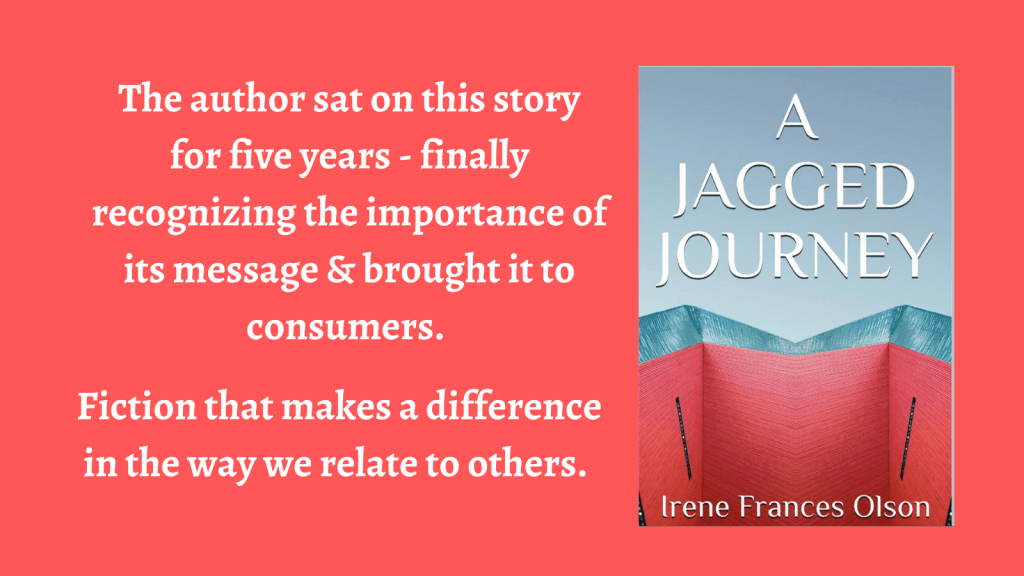
A salient nugget of truth I’ve learned as an adult is that regardless of my past, my failures, or even my successes and regardless of the influences that have had the most impact on me, I can learn from those experiences, or I can stay stuck right where I am. We all have a choice to move forward and adopt what benefited us and discard that which did not.
A Jagged Journey speaks of similarly challenged people who make decisions that will change their lives forever, with some happily-ever-afters, and some? Not so much.
I hope you will lend an ear to what these people have to say. I did, and I am changed as a result.
Why Bother?
 We’ve all read about the effectiveness of vaccines, most recently the vaccines to prevent Covid-19 virus infection.
 My post today is a brief one in which I am not offering my opinion, but I am offering data from the Centers for Disease Control and Prevention (CDC) data, Yale Medicine, and WebMD.
I’ve heard people state – whether directly to me or through social media – that getting the Covid vaccine doesn’t guarantee we won’t acquire Covid-19 so why bother getting it? The Moderna and Pfizer vaccines are not 100% effective toward warding off the virus, but they are in the mid-90s percentile of effectiveness. Click this Yale Medicine link to see how successful they can be at warding off the virus and therefore preventing its spread.
The flu vaccine is nowhere near as effective as Covid vaccines but it is a vaccine many acquire each and every year as new flu vaccines are developed to fight the upcoming flu season – the vaccine changes each year to keep up with flu virus variants. This CDC link outlines the 2019-2020 flu vaccine efficacy to be between 25% and 55% depending on a person’s age.
Another bit of data I find extraordinarily helpful is this WEB MD link that spotlights how effective our Covid preventative measures have been toward making the current flu season almost non-existent, compared to previous years’ infection rates. Let’s face it, wearing masks, being diligent about hand washing, and limiting exposure to others seems to illustrate how the same measures we’re employing to prevent Covid transmission have had an amazing side effect: very limited flu virus transmission. That’s not my opinion, thus far 2020-2021 flu is a non-issue.
“But Covid is still an issue and people are still dying from it.” True. Covid is a virus, but it is not the flu. Covid has proven to be far more transmissible and deadly than the flu with which we’re familiar. Because of that fact, in the United States, bothering to get the Covid vaccine is an inconvenience 81 million fully vaccinated people have chosen to experience, with 202 million doses given nationwide as of April 15, 2021. There have been some rare cases of breakthrough Covid infection post vaccination, but viral loads are low, and the transmission rate to others is greatly reduced. Given the data provided, we all should be able to decide whether risking infection is something with which we are comfortable, and whether vaccination to reduce infection is an option to consider.
New Book Release!

I am so very excited about my latest novel – now available in paperback and eBook! Just as REQUIEM FOR THE STATUS QUO was a work directly from my heart, A JAGGED JOURNEY has come from my heart as well – but in a very different way. I hope you will read my new novel’s synopsis and grab a copy for yourself. eBook just $3.99; Paperback just $11.99.
Last Sneak Peek of A JAGGED JOURNEY
 This final novel excerpt before A Jagged Journey is released on April 15th, introduces you to a key character, psychologist Gretchen Marks, and her unlikely friend, Amit Singh, an Uber driver who comes to her aid when no one else is available. Gretchen’s life has taken a cruel detour, in part because of her way of being, in part because life is oftentimes no respecter of persons.
“Are we going to the same place today, Doctor, where you have previously visited?”
“Yes, please.” Gretchen glanced at Amit and then out the side window. “Unfortunately, it will be a place I visit every day for a few weeks. If I had my choice, I’d rather have a root canal, but it appears God has chosen to punish me so I get to have these treatments instead.”
“I do not know what this root canal is of which you speak. Is that something to do with the hair on the top of one’s head?”
A smile broke out on Gretchen’s face at the innocence projected by her driver. “That’s a good one, Amit. Thank you for making my day.”
“A good one you say?”
“A root canal involves the teeth, not the scalp. It’s when a really bad tooth needs a lot of work, and it’s not enjoyable at all. But given how my treatments make me feel, I think the dental work would seem like child’s play…it would seem like something far easier than what I’m doing.”
“I see, yes, my splendid wife, Faria, had something similar to that soon after we arrived in this country – there was a cavity in one of her teeth. And you indicated that these treatments you are enduring are a punishment from God?”
Gretchen thought it was just like a foreigner to take idioms literally, but she had to admit his way of thinking was somewhat refreshing. “It’s just an expression people sometimes use when things aren’t going well for them. And a contrary statement might apply if, when we arrive at our destination, there’s a parking space available at the front where you can pull in and let me out. If that were to happen, I might say, “Well, I must have done something right in my life and now God is rewarding me.”
“Thank you, Dr. Gretchen Marks, for your very thorough explanation about expressions Americans use in their speaking.”
Amit and Gretchen arrived at their destination, Amit pulled into an open space right in front of the building. “I see, Dr. Marks, that you must have done something right because God has graced us with this parking space.”
He parked the car and stepped out to assist Gretchen. He guided her out of her seat by her elbow and helped her step over the curb. “There you are, Dr. Marks.”
“You know, you can call me Gretchen.”
“Oh no, Doctor, you have attained a very important status in life that accords great respect. Unless it offends you, I will continue to address you as Doctor.”
“That’s fine, Amit, and regarding this parking space?”
“Yes, Dr. Marks?”
“It was because of your good works that God arranged for this space to be available. I’m quite certain my past works didn’t warrant such a benefit.”
“Either way, it is good that we are able to claim it, yes?”
Gretchen fumbled with her purse for a tip. “Yes, it is very good. I’ll see you after my appointment later today and I will call you a half hour before I am done.”
Gretchen’s appointment did not go well as she received some devastating news – said news put Gretchen on the defense when her Uber driver picked her up later that day.
Amit picked up Gretchen at the appointed time and although he tried to engage the doctor in conversation, he wasn’t entirely successful. At one point, Gretchen lashed out at him.
“Amit, are you a United States citizen?”
He looked at her in the rear-view mirror. “Not currently, but that is my goal, Dr. Marks.”
“How long have you lived in this country?”
“Four years, Doctor.”
“What’s taking you so long to become a citizen?”
Amit drove a couple blocks then asked Gretchen a question. “How many amendments does the Constitution have?”
“What? What has that to do with anything?”
“Twenty-seven.”
“Excuse me?”
“Amendments. Name one of the writers of the Federalist Papers that were written in support of the Constitution of the United States.”
“I have no idea. I’m not sure I’m even familiar with those papers.”
“I am. James Madison and Alexander Hamilton were two of the writers.”
“Good for you, you’ve memorized the answers on the civics exam for citizenship, that doesn’t make you a US citizen.”
“In this country it does.” Amit pulled up in front of Gretchen’s condo. Looking straight ahead, he had one more question for her. “Who lived in America before the Europeans arrived?”
Gretchen looked at her lap, then out her side window. “You win, Amit, and I’m sorry for being such a horrible person today. My doctor gave me some bad news and it’s made me angry at the world.”
Amit got out of the vehicle, opened Gretchen’s door, and helped her out. “This bad news, is it something you want to talk about with Amit?”
She patted the hand that rested gently on her forearm. “Maybe tomorrow, Amit. Will I see you at eleven?”
“It would be my extreme pleasure, Dr. Marks, thank you.”
There are many characters that are a part of the lives of those with whom you have already met: Charlie Brooks, the high school teacher and his fellow teacher Jamila Sanders. Single mother, Hannah Palmer and her engaging son, Sammy. And now, Dr. Gretchen Marks, and her Uber pal, Amit Singh. The cast of characters you will meet in A Jagged Journey are varied in age, life experience, and intent. I hope to see you soon, within Journey’s pages.
Another Excerpt From My New Novel!
Time to introduce single mother, Hannah Palmer and her young son, Sammy! Sammy’s father – Hannah’s ex-boyfriend from high school – is white. Hannah’s mother is Black and her father is White. This scene takes place after Hannah has discovered that her biracial son has been bullied at school because of his African American and Caucasian background.
Prior to discussing the issue with her son, Hannah met with the chaplain at Seattle Children’s Hospital where she worked to put together a plan that would assure Sammy of how good a person he was. Armed with the chaplain’s suggestions, she sat down with her son to discuss her own childhood experience, and his, with bullying.
“But Mom, I don’t understand why they called you an Oreo cookie. I like Oreo cookies so wouldn’t that be a good thing?”
Hannah didn’t consider the fact that her son might miss the message those kids from her childhood sent her that day; now she had to explain it.
“You know how an Oreo is white on the inside and black on the outside?
“Right, that’s what’s so fun about them, I always lick the cream inside and then eat the cookie part. It’s like having two desserts in one cookie.”
Sammy’s mom stood up from the dining table where the two of them were seated and put her mug of green tea in the microwave to reheat.
“Well, Sweetie, the point they were making is that I looked Black on the outside, but because I was with parents that were both White and Black, they said I was White on the inside, you know, because your Grandpa’s White.”
“Well that’s just stupid. You’re just you. You’ve always been that way, and I’ve always been the way I am.”
Hannah retrieved her mug and sat next to her son.
“It’s stupid, you’re right, but those kids hurt my feelings because the voices they used when making fun of me were really mean-sounding. They weren’t trying to be funny, they were trying to be cruel.”
Sammy looked down at his lap. “I get it now, that’s the kind of voices the kids at school used when they said I was a nothing. I knew they were wrong, I’m not a nothing, but they hurt my feelings.”
Hannah’s eyes watered but she was able to smile because she knew Sammy would weather this event and still be okay. “I’m glad you know who you are because you’re an amazing boy and you’re the best son a mother could ever hope to have.”
Sammy put his arms around Hannah. “Thanks, Mom, you’re the best too.”
He looked up at her. “I love you.”
Hannah kissed her son’s forehead. “I love you too.”
 Words said with cruelty – or even disguised as being in jest – can hurt young and old alike. Words matter and they always will. That is why my self-publishing arm is called Words Matter Press. I hope you’ll download my second novel, A Jagged Journey, which is now available for preorder for only $3.99 and available for your reading pleasure on April 15th.
A JAGGED JOURNEY excerpt!
I love the new story I crafted and I LOVE THE CHARACTERS!!!
This brief excerpt takes place on a Monday in a classroom at the Seattle high school where Charlie Brooks, an Environmental Science teacher, and Jamila Sanders, school Spanish teacher, discuss Charlie’s current relationship after a Friday date that didn’t go at all as Charlie had planned.
Charlie crossed his arms in front of him. “I didn’t do any school work this weekend, I didn’t trust myself to grade the papers fairly. My students didn’t deserve for me to take out my anger and hurt on their assignments.”
“That was very thoughtful of you.”
“It was, wasn’t it? Anyway, I spent most of the weekend at a gym I hadn’t been to in weeks, and boy was I focused, so focused, in fact, that on Saturday one of the attendants had to remind me not to monopolize the equipment. I guess one of the other customers complained that I wasn’t following proper gym etiquette.”
“Gym etiquette? You see, that’s why I’ve never joined a gym. Working out is hard enough without having to worry about being polite. Jeez, I don’t know how you do it.”
“Well, like I said, I hadn’t gone in weeks because there was too much macho pressure feeling like I had to perform better than the guy next to me. My membership period expires this month. I cancelled the auto renewal when I left the gym on Saturday.”
“Good for you, no one deserves that kind of stress.”
Charlie stood up and paced in front of the classroom. “And guess what I did Sunday that was a sure sign I had fallen into the deep end?”
Jamila tapped the side of her head, looked up, and conjectured, “You drank yourself into oblivion?”
“No.”
“Um, you did some baking, and if you did do some baking, why didn’t you bring me any?”
“Baking? Hardly.”
Jamila slapped her hands on both sides of her face. “No way, you went to a ‘gentleman’s club.'”
Charlie couldn’t decide whether to crack up or be offended. “How long have you known me? You think I’d frequent that kind of a place, a place that if one of my student’s parents saw me might mean the end of my job?”
“Okay, yeah, you’re right, but what did you do on Sunday that was so utterly unbelievable?”
Charlie placed his hands on the back of his chair. “I went to Mass.”
Now it was time for Jamila to laugh. “You went to church? In all the years I’ve known you, I think I can count on one hand the number of times you told me you had gone to church. And wait a minute … you went to a Catholic church? Since when did that become the religion of choice for you?”
“It isn’t, okay? I just wanted to go someplace that might offer some amount of solace in my time of need and that church was a convenient one.” Charlie started to laugh at himself. “In answer to your next question, no, it didn’t help. And get this, I actually walked up and took communion. I was just mimicking the people in front of me, I didn’t know what the heck I was doing. By the time I turned around to walk back to my seat, I felt like a heathen of magnanimous proportions and walked right past my seat and out of there as fast as I could.”
“Didn’t you even get a receipt?”
Charlie did a double-take. “What are you talking about?”
“A receipt, the weekly church bulletin. I used to give my parents a hard time when they went to Mass. They complained the whole way there, and then at the end of the service when we walked out, we were handed a bulletin and my parents would say, ‘Well, at least we got our receipt.’ Happened every week.”
“No receipt for me. God, I’m such a loser.”
Jamila picked up her backpack. “You are not a loser. I don’t have friends who are losers.”
A Jagged Journey will introduce you to characters similar to those with whom we come in contact at work, play, and everywhere in between. If you’ve given up hope trying to find goodness and kindness in the immediate world around you, be assured you just might find what you’re looking for within the pages of this novel. I write because I figure just about everyone needs someone in their corner to help them along life’s troubled way. Although A Jagged Journey portrays the ups and downs inherent with life as we know it, I believe it just might serve as the catalyst to fill up your hope tank – a tank that may be hovering around empty right about now. This book will be released on April 15, 2021, and is now available for preorder.
A Jagged Journey
 Our lives never follow a straight path. We make turns, we leap or crawl over speed bumps and roadblocks, and when needed, we take breaks along the way while battling the insistent urge to just give up. More often than not, however, we keep going – we move forward, one step at a time, hoping for the best.
A Jagged Journey, now available for pre-order, is a novel that follows the pothole-filled lives of disparate characters between the ages of seven and seventy-seven who are far from perfect and for the most part, are not hesitant to admit it. Set in the Pacific Northwest of the United States, the diversity inherent within that region is front and center and will have readers laughing and crying in equal measure.
Laughing because the youngest character, Sammy, is a kick-in-the-butt delight when his honesty comes through loud and clear, challenging every adult with whom he comes in contact to sit up and pay attention.
And crying, because readers will see themselves in the imperfect childhoods that can find adults sinking or swimming in their grown-up years.
Ms. Olson’s new novel was written for anyone eighteen years and older as there are a few – and very far between – language elements within its’ covers. Readers won’t find any gratuitous sex or violence, however; just loving friendships and relationships that will challenge even the hardest of hearts to open up to the many joys that life has to offer.
Although her second novel does not have the same focus as Requiem for the Status Quo with its’ storyline filled with the caregiver and loved one’s journey with Alzheimer’s and other dementia, you will always find that element in every novel she writes, including this latest, A Jagged Journey.
Worth the Price of Admission
 A year after the Covid spread became a verifiable pandemic, I received my 1st dose of the vaccine that will open up the possibility of arriving at herd immunity…depending on the percentage of people who agree to voluntarily submit themselves to the needle.
The global community has been immersed and drowning in a disaster that will become future school students’ history lessons on what can happen when a not-detectable-by-eye virus travels the world on the backs of unsuspecting travelers.
I’ve lived sixty-seven years and therefore have already lived through news events and disasters that are currently a part of history books everywhere. Trust me when I say, I would rather have a boring life experience than be able to recount the tragedies that have befallen my country and our world over the past six decades. The current pandemic is just one of many, but it’s currently front and center in my life, and in the lives of many.
On Thursday, February 25, 2021, after weeks and weeks of concerted effort, I submitted myself to the vaccine needle. I didn’t make finding a vaccine appointment a full-time job, but my dedication to doing so was sincere and robust. The day before I received my shot, my husband and I were preparing to go outside to enjoy the beautiful Pacific Northwest weather. “I’ll join you in a few minutes…I just want to check the vaccine websites one more time before I go out and play.”
And lo’ and behold, when I checked the 4th of as many appointment sites, a 1 pm appointment the very next day just a few blocks from my house showed as being available and I signed up for it as fast as I could, not wanting it to slip out of my hands.
THE VACCINE EXPERIENCE – GLORIOUS!!!!!
Three other similarly aged people stood behind me in line as I checked in – early! – for the privilege of moving forward in a vaccinated world. For me, the price of admission into that world is a sore arm, and that is all. But even if more uncomfortable side effects were guaranteed as a result of acquiring the vaccine, my husband and I were committed to getting vaccinated because a couple days of discomfort beat any day of having Covid. (My husband will acquire the vaccine when his age makes him eligible.)
Before I left the neighborhood pharmacy where I acquired my 1st dose, the pharmacy tech scheduled me for my 2nd dose, which will occur a few weeks later. I walked out of that pharmacy floating on air – and not because I was experiencing delirious or detrimental vaccine side effects. Nope! I was merely feeling what it’s like to be moving toward the other side of Covid, and closer and closer to once again being able to spend time gathering with loved ones with a greatly reduced chance of acquiring or spreading the virus that could make us severely ill, or even usher us into the great beyond.
Many express their desire to get back to normal, but I don’t think normal will ever return, nor should it. Just as after 9/11 we all adjusted our normals to accommodate our present experience, so too will we adjust our normal as a result of this virus experience that as of today’s date has killed 508,000 US people, and 2.5 million people world-wide.
BUSINESS AS USUAL WON’T AGAIN BE OUR NORMAL, BUT OUR RESILIENT ABILITY TO RESPONSIBLY MOVE FORWARD WILL SERVE US WELL.
A Change of Heart
 For many of us, our 2020 outlook was dingy at times and full of sharp edges at other times. It’s now a new year, and boy did it arrive in an explosive way. Last year, and its current new year counterpart, have kind of felt like we’ve experienced an entire lifetime of uncertainty tempered by acute feelings of fear and anxiety with no relief!
Who of us want that to be our 2021 way of being?
Not me. Same-o, same-o just doesn’t work for me. We cannot change what has transpired and have marginal ability to shape what is to come, but I relish the opportunity to control what is within my personal ability to control:
MY RESPONSE.
I choose to enter this new year by altering the way I respond to it. When I change my outlook, I have the chance of changing my response. When I change my response, I might be able to paint the way others choose to respond. If that sounds too good to be true, please know it is not. Everything we say and do influences those around us – whether someone living in our own household or the strangers we encounter in the community. We can choose to come from a place of possibilities rather than defeat; from a place of nourishment rather than a viral place of bitterness.
We are all harboring sad and bitter emotions – many of them resultant from the events of 2020. We can’t change the past, but we can create a better present that might turn into a more hopeful future. And let me tell you a secret…sometimes you just have to fake it until you make it. Who knows, you might be so convincing, you’ll be able to drop your efforts at fakery and actually flourish in your new found well-being.
I want that for me, and I want that for you.
Won’t you give it a try with me?
Of Barnacles and Candy…Oh My!
Definition of a barnacle: A marine crustacean with an external shell that attaches itself to a variety of surfaces. One of those surfaces that non-marine barnacles attach to is aging human skin. There, I’ve said it, aging human skin! Mine to be exact! So said my dermatologist at my most recent annual skin cancer screening appointment. But wait, lest you think the only aging attribute one can look forward to is crusty, discolored skin, let me introduce you to one of the sweetest parts of aging in which one can luxuriate: the candy bowl.
 My husband and I have put out an easily accessible candy bowl filled with mini chocolates of numerous varieties for the past seven years – there is no mini-sized chocolate we have not tasted. When purchasing provisions at the grocery store the other day, I told the store clerk and bagger, “We’re just trying to keep alive the stigma of old people eating candy. Doing our part to support one of the oldest clichés of our generation.”

I will say, however, that if my husband and I didn’t have the gift of willpower regarding sweets, we would have never started this 365 days of the year tradition. If each of us ate 3 mini-treats a day, I would be surprised. When it comes to candy, we really don’t have a problem stopping at one or two. (Probably can’t say the same for glasses of wine, however.)
Am I thrilled that my skin is old enough to have barnacles? No, but I am thrilled and grateful that I am a woman of a certain age who can boast about barnacles and eating candy in one, celebratory post.
And may I conclude by saying:
I hope to live long enough to keep spotlighting – and celebrating – aging matters for many years to come.
This Week’s Note of Truth!
May I live such that my integrity will remain intact the length of my days.

Retail Frontline Heroes
This past Saturday night, after giving two weeks’ notice, a close family member had his last shift at a local grocery store. A wonderful 72-year old man, he joined the grocery chain’s employment rolls in November 2019, looking for some extra income, but primarily to be a part of a community of people for 20 hours a week.

Then Covid hit. At the advice of his doctor, he masked up, shielded up, and exercised extraordinary precautions so he could continue his frontline retail experience and stay safe. He never got Covid from his retail experience but he – and his fellow employees – endured verbal and physical abuse during the course of their workday. Here are just a few examples:
- People entering the store, ignoring the state-mandated mask requirement, and verbally attacking store employees when handed a mask to wear while shopping.
- Others walking into the store to purchase late-night snacks, not wearing a mask, and berating the masked store employees and customers by shouting comments such as, “Enjoy this fake pandemic, you f*cking clowns!”
- And on my family member’s last grocery store shift, witnessing a female grocery clerk being assaulted after she unlocked the liquor cabinet for the assailant because he said he wanted to buy a bottle of booze. She unlocked the cabinet, he pushed her aside and ripped the liquor bottle right out of the clerk’s hands, and ran away.
Frontline workers are there for us: medical workers, law enforcement officers, garbage handlers, postal workers, shipping company workers, restaurant workers, retail employees, and so many others who want or need to work so our day-to-day lives will be more palatable.
2020 has been very difficult for all of us, but those difficulties do not warrant abusive and cruel behavior toward others. If ever there was a time for gifting others with kindness and respect – the same kindness and respect we all crave – this year sets itself up as a prime example. Fortunately, beautiful stories of kindness have made their way into the public’s eye, but hidden stories, such as those provided above, are far too prevalent.
Be well and stay well, everyone, and please spread love and compassion to those who are simply trying to make a living by serving you. Anything less is unsatisfactory.

This Week’s Note of Truth!
And if you cannot practice self-compassion, you know not how to be compassionate towards others.

This Week’s Note of Truth!
Reality isn’t always kind, but unconditional love is one of the most generous gifts we can give someone.
I Am SO Angry Right Now!
Those close to our household have taken great measures to be safe in this age of Covid-19. The household with which we have had most contact over the past several months is that of our youngest daughter and her husband, with their son, and as of September 9th, their daughter.

The plan was to add our granddaughter to our current care day schedule, once a week, but now that Covid stats in our state are so ridiculously high – as is the case in too many states in the “United” States – our two households have decided to curtail all further contact for the time being.
This decision was made, not because our personal households have faltered, but because too many households have failed all around us, making avoidance of the virus more problematic. No one enjoys the inconvenience, but because some have rebelled against the inconvenience, we are no closer to containing the virus.
Had civilization as a whole been less selfish, we wouldn’t be dealing with this upsurge in cases…we would be adjusting to a new normal that is FAR better than the ongoing abnormal we are currently experiencing.
I am so f*cking angry right now. As a result of the selfishness of far too many people, my household is currently being robbed of a healthy relationship with the newest addition to our family. Please understand me when I say, I know we are not the only individuals affected by a pandemic that hasn’t been handled correctly from the get-go. My husband and I are healthy and we want for nothing. Millions have been affected far worse than has my household with our seemingly minor personal issue.
But I beg of you, please, to allow me this mini-pity party while I mourn this inconvenient loss.
This Week’s Note of Truth!
In good times and in bad – the truth is one of the most valuable assets we can own.
This Week’s Note of Truth!
There’s an old hymn about not hiding your light…This little light of mine, I’m gonna let it shine. Let us let the truth shine in all we do.
I Am Ignorant

At twenty-one years of age, I was a newlywed living on the eastern side of Washington State.
In 1974 I had married my high-school sweetheart who was enrolled in the Masters of Business Administration (MBA) program at a local Washington university. I met my then-husband in high school while living in Honolulu, Hawaii where my family moved in 1965.
It was a beautiful, spring day when my husband and I walked hand-in-hand through the streets of the eastern Washington city looking for a restaurant where we could have a weekend lunch date. We approached a corner, my husband pushed the WALK button so we could cross the street, and when it flashed green we proceeded to walk across the street.
A woman approached us from the other direction on the crosswalk, pointed her finger at us, and yelled,
Thou shalt not mix with other races! You are an abomination!
I am white, my former husband, Chinese.
My happily married, joyful self was astounded at the hatred and intolerant attitude thrust our way. We had never encountered such vehemence when living in Hawaii as a young couple, so please understand how hurt and shocked I was. I was so taken aback, the first words that came out of my mouth were, “F*ck you!” My twenty-one-year-old self stood up for herself and her marriage partner in the quickest way she knew how.
As of this writing, in all my sixty-seven years of life, that is the only me-directed racism I have ever experienced. But that is not the case for people of color.
- I have never been pulled over for driving while being white.
- I’ve never been asked to prove that I belong in the neighborhood in which I was walking or riding my bike.
- To my knowledge, I have never been followed through a department store by a store employee or store security personnel while shopping as a white woman.
- Again, to my knowledge, I have never been turned down for a job for which I was highly qualified because of the color of my skin.
My current husband of twenty years and I have three daughters between us. My daughter is a beautiful mixture of Caucasian and Chinese, my husband’s daughters are Caucasian. While our girls were growing up, we instructed them on how to be safe when out and about; we helped them recognize dangerous, every-day situations they should try to avoid but we’ve never had to have “the talk” that so many parents have had to have with their non-white children, especially their sons.
- If asked, show law enforcement your hands and ask permission to get something from your vehicle’s glovebox.
- Don’t wear your hood out on the street and don’t put your hands in your pockets.
- If you get stopped, don’t run.
- And by God, please, please, just get home alive.
I have an educated knowledge and keen awareness of the issue but I lack sufficient experience to truly understand the challenges faced by many people of color. I am ignorant in the sense that other than that one incident forty-six years ago, I have not been personally hurt – emotionally or physically – in the manner in which so many have been, and still are.
I understand the sentiment, All Lives Matter, but Brené Brown offers the following in her book, Braving the Wilderness – The Quest for True Belonging and the Courage to Stand Alone:
I believe Black Lives Matter is a movement to rehumanize black citizens. All lives matter, but not all lives need to be pulled back into moral inclusion…the humanity wasn’t stripped from all lives the way it was stripped from the lives of black citizens.
It is my hope that one day soon, we will all get it right. The general public learns more each and every time an incident of racism makes it to the news, but shouldn’t we have learned something more by now, given the number of horrid headline incidents that have occurred nationwide?
We all can do better.
I will do better.
This Week’s Note of Truth!
I have to believe that we all can handle the truth to get us through the toughest of times.

